Reviewed by our editorial team Updated
Why Visit Jodrell Bank Observatory
Visiting Jodrell Bank Observatory is one of the most fascinating and unusual travel experiences in the United Kingdom. Located in the peaceful countryside of Cheshire, this internationally famous scientific site combines space exploration, Cold War history, UNESCO heritage, giant engineering, and interactive visitor attractions into a destination that feels completely different from a traditional museum or landmark.
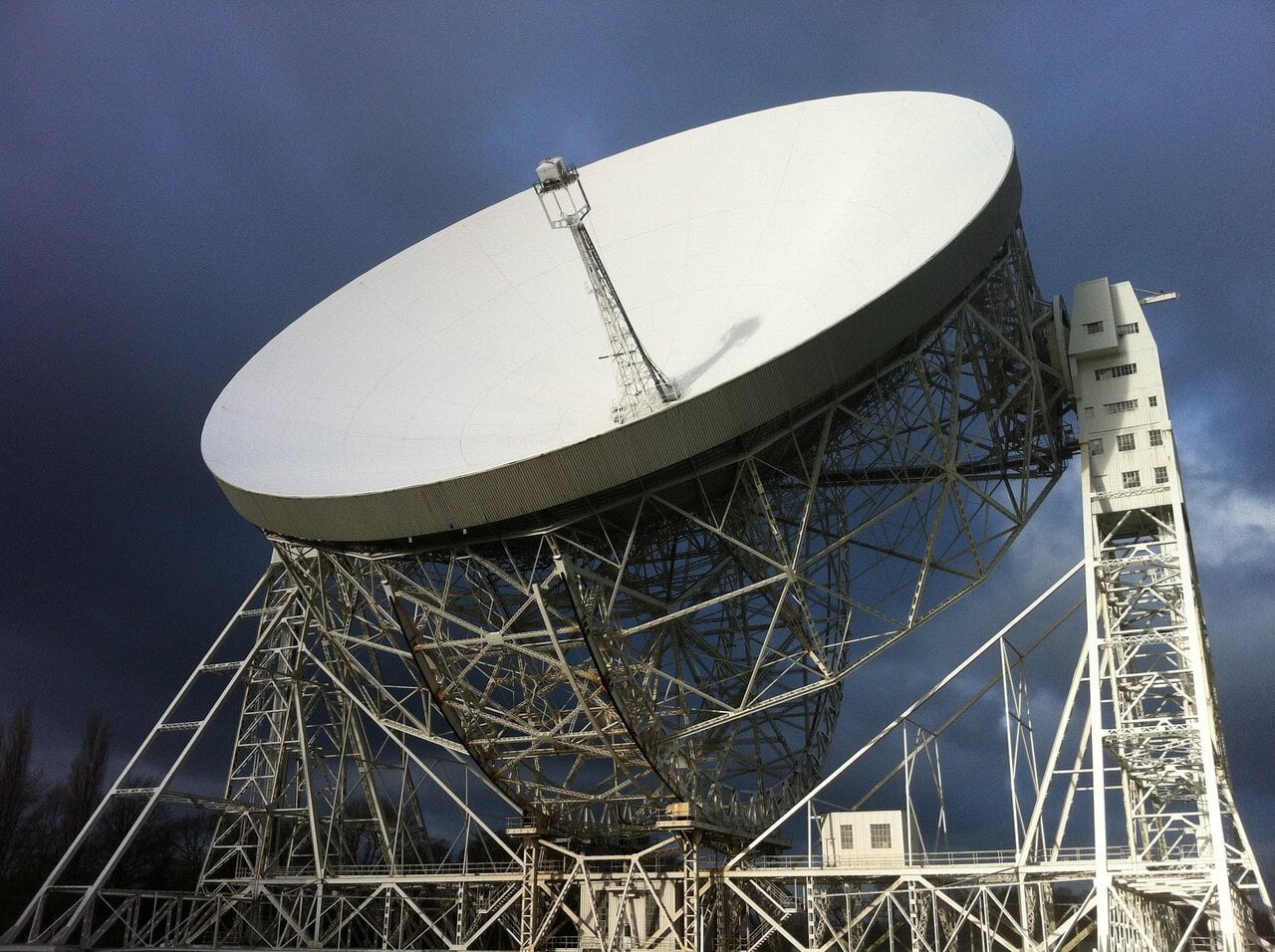
For most visitors, the experience begins the moment the gigantic Lovell Telescope appears above the surrounding landscape. The sheer scale of the telescope is difficult to appreciate until you stand beneath it. Towering over the countryside, the enormous white structure dominates the skyline and instantly creates a sense of awe. Even travellers with little prior interest in astronomy often leave deeply impressed simply because the engineering is so visually dramatic and historically important.
One of the reasons Jodrell Bank Observatory works so well as a visitor attraction is that it balances serious science with accessible storytelling. The exhibitions explain complex subjects such as radio astronomy, black holes, satellites, space communication, and the search for extraterrestrial signals in a way that remains engaging for casual visitors, families, and enthusiasts alike. Rather than feeling overly technical, the observatory feels immersive and surprisingly approachable.
The site also carries enormous historical significance. During the height of the Cold War and the Space Race, Jodrell Bank became one of the most important scientific listening stations on Earth. Scientists here tracked early Soviet and American space missions, monitored satellites, and contributed to some of the defining technological developments of the twentieth century. This gives the attraction a fascinating crossover appeal between science tourism, industrial heritage, and even elements of dark tourism connected to the nuclear era and geopolitical tensions of the period.
Another major advantage is the location itself. Unlike crowded city attractions, Jodrell Bank Observatory sits within open countryside, giving the site a calm and spacious atmosphere. Visitors can walk through landscaped grounds, explore outdoor science areas, and photograph the telescope from multiple viewpoints without the intense crowds often found at major urban museums. On clear days, the setting feels remarkably peaceful considering the global scientific importance of the observatory.
The observatory also works extremely well as part of a wider regional itinerary. Travellers staying in Manchester, Liverpool, Chester, or the Peak District can easily visit as a day trip. Because of its unique mix of architecture, engineering, science, history, and family friendly experiences, Jodrell Bank Observatory stands out as one of the most distinctive attractions in northern England and one of the most underrated UNESCO sites in the country.
Quick Facts About Jodrell Bank Observatory
| Feature | Details |
|---|---|
| Location | Lower Withington, Cheshire, England |
| UNESCO Status | UNESCO World Heritage Site since 2019 |
| Famous For | The gigantic Lovell Telescope and pioneering radio astronomy |
| Nearest Major City | Manchester |
| Best For | Families, science enthusiasts, photographers, UNESCO travellers, day trips |
| Recommended Visit Time | Around 3 to 5 hours |
| Main Attraction | The fully operational Lovell Telescope |
| Nearest Train Stations | Goostrey, Macclesfield, and Crewe |
| Parking | Large on-site visitor parking available |
| Indoor Attractions | Science exhibitions, galleries, Space Dome, interactive displays |
| Outdoor Attractions | Telescope grounds, science gardens, walking areas |
| Accessibility | Most major visitor areas are accessible |
| Best Time to Visit | Spring, summer, and clear autumn days |
| Ideal Trip Type | Day trip from Manchester, Liverpool, or Chester |
Best for two or three nights. The widest choice of rooms, with filters for free cancellation and included breakfast.
View staysBest for groups who want one address and separate bedrooms rather than three hotel rooms.
See holiday homesBest as a last check before booking. Compares hotel rates across several sites in one search.
Compare ratesWhat Is Jodrell Bank Observatory?
Jodrell Bank Observatory is one of the world’s most important centres for radio astronomy and scientific research. Established in the countryside of Cheshire shortly after the Second World War, the site became internationally famous for helping humanity explore and understand the universe using radio signals rather than traditional optical telescopes.
The observatory was founded by pioneering British physicist Sir Bernard Lovell, who originally began using radar equipment left over from wartime military technology to study cosmic rays and meteor activity. What started as an experimental research project rapidly evolved into one of the most influential astronomy facilities on Earth. Over time, the site developed into a global centre for scientific discovery, helping researchers study planets, quasars, pulsars, black holes, and distant galaxies.
Unlike traditional observatories that rely on visible light, Jodrell Bank Observatory uses enormous radio telescopes capable of detecting radio waves from deep space. This allows scientists to observe phenomena that cannot be seen using normal telescopes alone. The observatory has played a role in tracking spacecraft, monitoring satellites, and contributing to major international scientific collaborations for decades.
The site became especially significant during the Cold War and the early Space Race. During this period, Jodrell Bank monitored Soviet and American missions and became one of the few locations in the world capable of tracking spacecraft across huge distances. This gave the observatory both scientific importance and geopolitical significance during one of the most tense periods of modern history.
In recognition of its extraordinary contribution to science and engineering, the observatory received official UNESCO World Heritage Site status in 2019. UNESCO recognised the site not only for its scientific achievements but also for the preservation of historic radio astronomy infrastructure and its role in transforming humanity’s understanding of the universe.
Today, Jodrell Bank Observatory continues to function as both an active research centre and a major visitor attraction. Scientists still work on-site, while visitors can explore exhibitions, gardens, science installations, and the iconic telescope itself.
The Lovell Telescope
The enormous Lovell Telescope is the defining feature of Jodrell Bank Observatory and one of the most iconic scientific structures in the world. Standing dramatically above the Cheshire countryside, the telescope remains one of Britain’s greatest engineering achievements and continues to attract visitors from across the globe.
Completed in 1957, the telescope was originally known as the Mark I Telescope before later being renamed after observatory founder Sir Bernard Lovell. At the time of construction, it was the largest fully steerable radio telescope on Earth. Even today, decades later, it remains one of the largest and most recognisable radio telescopes ever built.
The scale of the structure is astonishing when viewed in person. The massive white dish stretches across the skyline, while the surrounding steel support framework gives the telescope an almost futuristic appearance. From certain viewpoints within the grounds, the telescope feels less like a scientific instrument and more like a gigantic moving building.
What makes the Lovell Telescope so important is not only its size but its scientific achievements. Over the decades, the telescope has helped track early Soviet spacecraft, monitored space probes, observed quasars and pulsars, and contributed to international astronomy projects studying deep space. During the Cold War, the telescope even tracked the launch vehicle carrying Sputnik, helping establish Jodrell Bank as one of the leading observatories in the world.
Despite being more than half a century old, the telescope remains operational today. Scientists continue to use it for radio astronomy research, meaning visitors are not simply viewing a preserved historic structure but an active piece of scientific infrastructure still contributing to modern discoveries.
Photographically, the telescope is one of the most impressive landmarks in northern England. The combination of huge engineering, open skies, and countryside surroundings creates dramatic viewing conditions throughout the year. Early morning light, sunset conditions, and misty Cheshire weather can all give the structure a completely different atmosphere.
Things to See at Jodrell Bank Observatory
Although the giant telescope is the headline attraction, there is far more to explore across Jodrell Bank Observatory than many first-time visitors expect. The site has developed into a substantial science and heritage attraction with exhibitions, gardens, interactive installations, and family focused experiences spread throughout the grounds.
One of the most important modern additions is the striking First Light Pavilion. This large exhibition space was designed to celebrate the history of radio astronomy and the achievements of Sir Bernard Lovell. Inside, visitors can explore immersive displays explaining how scientists use radio signals to study the universe, while large multimedia installations help bring complex scientific concepts to life. The architecture itself is impressive, with the curved structure designed to reflect the shape and movement of the telescope nearby.
The observatory’s exhibitions cover a huge range of topics including black holes, space exploration, satellites, galaxies, signals from deep space, and the history of the Space Race. Interactive displays allow visitors to experiment with sound waves, communication systems, and radio signals in a way that feels engaging rather than overly technical.
The outdoor areas are equally enjoyable, particularly during good weather. The landscaped grounds include science themed walking trails, open lawns, outdoor exhibits, and excellent viewpoints towards the Lovell Telescope. Many visitors spend significant time simply walking around the telescope itself, photographing the structure from different angles as it slowly rotates overhead.
Families visiting with children will find plenty designed specifically for younger visitors. Interactive science zones, educational installations, and seasonal events help make the observatory feel accessible to all age groups rather than purely academic.
Another highlight is the sense of atmosphere across the site. Because the observatory sits in open countryside rather than inside a city, the experience feels spacious and calm. On quieter weekdays, the combination of giant scientific machinery, open skies, and peaceful Cheshire landscapes creates a surprisingly memorable environment unlike almost any other attraction in Britain.

Jodrell Bank Observatory Tickets & Prices
Tickets for Jodrell Bank Observatory are generally considered very good value, particularly because standard admission now includes an annual pass rather than a single day entry ticket. This means visitors can return multiple times within a year without paying full admission again, making the observatory especially appealing for families, science enthusiasts, photographers, and travellers living within reach of Manchester or the wider north west England region.
Admission includes access to the main exhibitions, landscaped grounds, outdoor science areas, and viewing zones around the enormous Lovell Telescope. Visitors can also explore the impressive First Light Pavilion, interactive science displays, and seasonal programmes operating throughout the year.
| Ticket Type | Approximate Price | Notes |
|---|---|---|
| Adult | £14 to £18 (€16–€21 / $18–$23) | Includes annual return access |
| Child | £8 to £10 (€9–€12 / $10–$13) | Includes annual return access |
| Family Tickets | £40 to £55 (€46–€64 / $51–$70) | Best overall value for groups |
| Students & Seniors | Discounted | ID may be required |
| Under 4s | Free | Free admission |
| Special Events | Varies | Astronomy evenings and seasonal events |
One of the biggest advantages of the annual admission system is flexibility. Visitors no longer need to feel pressured to see everything in a single visit. Many people return later in the year to experience different weather conditions, temporary exhibitions, seasonal astronomy events, or simply to photograph the telescope under changing skies.
Booking online in advance is still strongly recommended during school holidays, summer weekends, and major science events, particularly since the observatory has become increasingly popular following its UNESCO World Heritage Site designation.
Special astronomy evenings and science programmes are usually ticketed separately and may not always be included within standard annual admission. These events often sell out well in advance, especially during meteor showers, school holidays, or nationally promoted science weekends.
Because the observatory is much larger than many first time visitors expect, most travellers spend between 3 and 5 hours exploring the site properly. The annual ticket system therefore adds considerable long term value, particularly for repeat regional visitors.
Opening Hours & Best Time to Visit
Jodrell Bank Observatory is normally open throughout most of the year, although exact operating hours can vary slightly depending on the season, special events, and school holiday schedules. In general, daytime visitor hours usually begin during the morning and continue into the late afternoon.
Most visitors aim to arrive earlier in the day, particularly during weekends and holiday periods. Arriving shortly after opening gives you quieter access to the exhibitions, better parking availability, and cleaner photography opportunities around the Lovell Telescope before the site becomes busier.
The best time of year to visit depends heavily on what type of experience you want. During spring and summer, the observatory grounds look especially impressive, with green open spaces and longer daylight hours allowing more time to explore outdoors. Clear blue skies also create excellent conditions for photographing the massive white telescope structure against the surrounding countryside.
Autumn can be particularly atmospheric. Low sunlight, mist across the Cheshire fields, and dramatic cloud formations often create incredible photography conditions around the observatory. The telescope itself looks especially striking during sunrise and sunset periods when warm light reflects off the huge steel structure.
Winter visits tend to be quieter and calmer. Although weather conditions can sometimes be colder and wetter, indoor exhibitions become more relaxed to explore without crowds. Seasonal astronomy events and science programmes can also make winter visits rewarding for enthusiasts.
Travellers interested in photography should pay close attention to weather forecasts. Clear days offer dramatic long distance views of the telescope, while cloudy or misty conditions can create a far more cinematic and mysterious atmosphere around the site.
If possible, weekday visits outside school holidays generally provide the best overall experience. The observatory feels far more peaceful when visitor numbers are lower, allowing you to spend more time appreciating both the scientific importance and the unusual atmosphere of the location.
How to Get to Jodrell Bank Observatory
Despite its rural setting in the Cheshire countryside, Jodrell Bank Observatory is relatively easy to reach from several major cities in northern England. The observatory sits between Manchester, Crewe, and Macclesfield, making it accessible by car, train, taxi, and limited public transport connections.
For most visitors, travelling by car is the easiest and most convenient option. The observatory is located close to major road networks including the M6 motorway, making it straightforward to reach from cities such as Manchester, Liverpool, Birmingham, and Sheffield. Large on-site parking facilities make driving particularly practical for families and day trippers.
Travelling from Manchester is especially simple. By car, the journey usually takes around 45 to 60 minutes, depending on traffic conditions. Many visitors combine the observatory with wider exploration of the Peak District, Cheshire villages, or nearby historic towns.
Visitors travelling from Liverpool can normally reach the observatory within around 1 hour and 15 minutes by car. From London, driving typically takes between 3 and 4 hours, depending on traffic and departure point.
Public transport journeys require a little more planning. The nearest railway stations are Goostrey, Macclesfield, and Crewe. From these stations, visitors usually continue by local taxi services, as direct public transport connections to the observatory itself remain limited.
Many travellers visiting from Manchester choose to take a train to Macclesfield or Goostrey before completing the final part of the journey by taxi. This option works well for visitors who prefer not to drive, although journey times are naturally longer than travelling by car.
Because the observatory sits within open countryside rather than inside a city centre, mobile signal and public transport flexibility can occasionally be more limited than urban attractions. Planning return transport in advance is therefore highly recommended, particularly for evening events or off-season visits.
Best for finding routes the airlines do not sell as a single ticket. Combines carriers to bring the fare down.
Search flightsBest for short trips. Install the eSIM at home and arrive with working data, no shop queue.
Browse eSIMsBest when public transport has stopped, or when you are travelling with children and bags.
Book a transferNearest Train Stations to Jodrell Bank
Although there is no railway station directly beside Jodrell Bank Observatory, several nearby stations provide relatively convenient access for visitors travelling by train. The most commonly used stations are Goostrey, Macclesfield, and Crewe, each offering different advantages depending on where you are travelling from.
The closest station geographically is Goostrey Station, located only a short distance from the observatory itself. However, despite being nearby, walking between the station and the observatory is not especially practical for most visitors due to rural roads and limited pedestrian infrastructure. Most travellers arriving at Goostrey continue by taxi for the final section of the journey.
For visitors travelling from Manchester, Macclesfield Station is often the easiest option. The station has strong rail connections to both Manchester Piccadilly and London Euston, making it useful for both regional and national visitors. From Macclesfield, taxi journeys to the observatory usually take around 20 to 30 minutes depending on traffic.
Crewe Station is another major access point and one of the most important railway hubs in the country. High speed services from London, Birmingham, Liverpool, Scotland, and North Wales all connect through Crewe, making it particularly convenient for long distance travellers. Taxi transfers from Crewe to Jodrell Bank Observatory generally take around 30 minutes.
Rail travellers should plan carefully for return journeys, particularly later in the day or during evening astronomy events. Taxi availability in rural Cheshire can become more limited outside peak daytime hours, especially during quieter seasons.
For visitors interested in combining railway travel with wider regional sightseeing, the observatory works well alongside trips to Manchester, Chester, Liverpool, or scenic rail journeys through northern England. This makes Jodrell Bank Observatory a strong addition to broader transport themed or UNESCO themed travel itineraries across the UK.
| Station | Approx Distance to Jodrell Bank | Main Rail Connections | Typical Transfer Method | Approx Transfer Time |
|---|---|---|---|---|
| Goostrey | 3 miles / 5 km | Manchester, Crewe | Taxi | 10 minutes |
| Macclesfield | 11 miles / 18 km | Manchester, London, Stoke | Taxi | 20 to 30 minutes |
| Crewe | 18 miles / 29 km | London, Liverpool, Birmingham, Scotland | Taxi | 30 minutes |
| Wilmslow | 16 miles / 26 km | Manchester Airport, London | Taxi | 25 to 35 minutes |
| Manchester Piccadilly | 27 miles / 43 km | National rail hub | Car or train + taxi | 45 to 70 minutes total |
Parking, Accessibility & Visitor Facilities
One of the biggest advantages of visiting Jodrell Bank Observatory is how well organised and visitor friendly the site feels once you arrive. Despite the observatory’s enormous scientific importance and rural location, the attraction has been designed to accommodate families, casual tourists, photography enthusiasts, and accessibility needs extremely well.
Large on-site parking areas make arriving by car straightforward even during busier periods. Most visitors choose to drive because public transport connections into rural Cheshire are more limited than in nearby cities such as Manchester or Liverpool. The main car parks are located close to the visitor entrance, reducing walking distances and making the site relatively convenient for families with children or visitors carrying equipment.
Accessibility across much of the observatory is generally very good. The newer visitor facilities, exhibition spaces, and major pathways were designed with accessibility in mind, and most core attractions can be reached without significant difficulty. Smooth paths connect the main visitor buildings with the outdoor exhibition areas and telescope viewpoints, allowing wheelchair users and visitors with reduced mobility to explore much of the site comfortably.
Inside the visitor complex, modern facilities help make longer visits more practical. Clean toilets, baby changing areas, seating spaces, and indoor rest areas are available throughout the site. The observatory café is particularly popular, offering meals, drinks, snacks, and light lunches with views towards the surrounding grounds. During warmer weather, many visitors choose to sit outdoors while enjoying views of the massive Lovell Telescope slowly rotating above the landscape.
The gift shop is also worth visiting, especially for travellers interested in astronomy, engineering, or science themed souvenirs. Books, educational toys, telescope related gifts, and space themed merchandise are all commonly available, making it one of the more distinctive attraction shops in northern England.
Photography facilities are another underrated strength of the observatory. The wide open grounds allow visitors to capture the telescope from multiple angles without feeling crowded or restricted. Unlike many urban attractions where viewpoints are limited, the spacious Cheshire setting creates excellent opportunities for landscape photography, long lens shots, and dramatic sky compositions.
Overall, Jodrell Bank Observatory feels impressively modern and easy to navigate while still preserving the atmosphere of a working scientific facility. The combination of good facilities, open space, and striking engineering helps create a much more comfortable visitor experience than many travellers initially expect.
Best Day Trips Combined with Jodrell Bank
Because of its location in the heart of north west England, Jodrell Bank Observatory works exceptionally well as part of a larger regional itinerary. Many visitors combine the observatory with nearby cities, countryside destinations, heritage attractions, or scenic driving routes, turning the visit into a full day or even a wider weekend trip across Cheshire and beyond.
The most popular combination is undoubtedly Manchester. Located less than an hour away, the city provides an excellent contrast to the peaceful observatory setting. Travellers can spend the morning exploring the giant telescope and science exhibitions before returning to Manchester for museums, restaurants, football attractions, shopping, or nightlife. The pairing works especially well because the observatory offers a calmer countryside experience while Manchester provides urban energy and transport convenience.
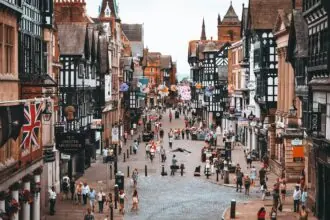
Another excellent pairing is Chester, one of England’s most historic cities. Combining Jodrell Bank Observatory with Chester creates a fascinating contrast between medieval heritage and futuristic scientific exploration. Visitors can explore the famous Roman walls, cathedral, and historic shopping streets before heading into rural Cheshire to experience one of the world’s most important astronomy centres.
The observatory also fits naturally into Peak District itineraries. Travellers already exploring the national park can visit Jodrell Bank while travelling between Manchester and the countryside areas around Bakewell, Castleton, or Buxton. The huge telescope rising above the flat Cheshire landscape creates a memorable visual contrast to the hills and valleys of the Peak District itself.
Industrial heritage travellers may also combine the observatory with sites such as Quarry Bank Mill, Ironbridge Gorge, or the Anderton Boat Lift, creating a broader engineering and scientific themed itinerary across northern England. This crossover between science, industry, and infrastructure tourism is one of the strongest long term content opportunities connected to the observatory.
For travellers staying in Liverpool, visiting Jodrell Bank as part of a wider north west England road trip also works well. The journey through Cheshire countryside is relatively straightforward, and the observatory offers a completely different atmosphere from the busy waterfront and cultural attractions of Liverpool itself.
Because the observatory is so visually unique, it also appeals strongly to photographers exploring the region. Many visitors combine the telescope with countryside drives, canal photography, heritage railways, or sunset landscape photography across Cheshire and the Peak District.
Jodrell Bank Observatory and UNESCO Status
In 2019, Jodrell Bank Observatory officially became a UNESCO World Heritage Site, placing it alongside some of the most important cultural and scientific locations on Earth. This recognition confirmed the observatory’s extraordinary contribution not only to British science but to humanity’s understanding of the universe itself.
UNESCO awarded the designation because of the observatory’s pioneering role in the development of radio astronomy. Unlike many UNESCO sites that focus primarily on ancient history, castles, or religious architecture, Jodrell Bank represents modern scientific achievement and twentieth century technological innovation. This makes it one of the most unusual UNESCO sites in the entire United Kingdom.
A major reason for the designation was the preservation of the site’s historic scientific infrastructure. Many of the observatory’s buildings, research areas, and engineering systems remain closely connected to the early development of radio astronomy after the Second World War. UNESCO recognised that the site demonstrates how humanity entered a new scientific era where the universe could be explored through radio signals rather than traditional optical observation alone.
The observatory’s global scientific influence was also central to the UNESCO decision. Researchers at Jodrell Bank Observatory contributed to tracking early satellites, studying deep space phenomena, and supporting some of the most important scientific projects of the twentieth century. During the early years of the Space Race, the site became internationally recognised for its ability to monitor spacecraft and radio transmissions across vast distances.
Unlike some UNESCO locations that function largely as preserved monuments, Jodrell Bank remains an active scientific facility today. Scientists continue conducting research on-site while visitors explore the exhibitions and grounds around them. This creates a rare combination of historic preservation and ongoing scientific relevance that few UNESCO sites can offer.
For travellers interested in UNESCO tourism, the observatory stands out because it feels completely different from more traditional heritage destinations. Instead of ancient ruins or medieval architecture, visitors experience giant radio telescopes, space science, engineering innovation, and Cold War history. This uniqueness is a major part of what makes Jodrell Bank Observatory such an important and memorable destination within the UK UNESCO network.
Learn More from UNESCO
This destination is connected to a UNESCO World Heritage Site, recognised for its outstanding cultural, historical, or natural importance. You can explore official listings, background information, and protected heritage sites through UNESCO’s global database.
Cold War, Space Race & Scientific History
Beyond astronomy alone, Jodrell Bank Observatory has deep connections to the political tensions, technological competition, and scientific breakthroughs that shaped the twentieth century. This historical background gives the site a fascinating atmosphere that extends far beyond a normal science museum experience.
During the early years of the Cold War, the observatory became one of the most strategically important scientific listening stations in the world. The enormous Lovell Telescope was capable of tracking objects in space at a time when satellite technology and rocket development were transforming global politics. As the Soviet Union and the United States competed for dominance during the Space Race, facilities like Jodrell Bank suddenly became internationally significant.
One of the observatory’s most famous moments came during the launch of Sputnik, the world’s first artificial satellite, in 1957. Jodrell Bank successfully tracked the rocket carrying the satellite, helping establish the observatory’s global reputation almost overnight. This achievement placed the site at the centre of one of the defining moments of modern technological history.
Throughout the following decades, the observatory continued tracking spacecraft, satellites, and deep space missions. Scientists at Jodrell Bank monitored Soviet probes, American space missions, and international astronomy projects during a period when nuclear tensions and scientific competition shaped global politics.
This connection to Cold War technology creates an unusual crossover with dark tourism and military history themes. Although the observatory itself was not a military base, its role in monitoring space activity placed it within the wider atmosphere of Cold War surveillance, nuclear fears, and geopolitical rivalry. Visitors interested in radar systems, early warning technologies, or scientific infrastructure connected to the Cold War often find the site especially compelling.
The engineering story is equally impressive. Building the gigantic Lovell Telescope during the 1950s was an extraordinary achievement requiring advanced steel construction, complex mechanical systems, and precision scientific engineering on a scale rarely attempted at the time. Even today, the structure remains visually futuristic despite being decades old.
This combination of science, politics, engineering, and Cold War history gives Jodrell Bank Observatory a depth that many visitors do not initially expect. It is not simply a telescope in a field. It is a place deeply connected to humanity’s attempts to understand space during one of the most technologically and politically dramatic periods in modern history.
Photography Tips at Jodrell Bank
For photographers, Jodrell Bank Observatory is one of the most visually dramatic attractions in the entire United Kingdom. The combination of gigantic scientific engineering, open Cheshire countryside, changing skies, and futuristic structures creates photography opportunities that feel completely different from traditional castles, cathedrals, or city landmarks.
The huge Lovell Telescope naturally dominates almost every composition. Standing beneath the enormous moving structure gives a real sense of scale that photographs often struggle to fully capture. Wide angle lenses work especially well close to the telescope itself, allowing photographers to emphasise the immense white dish against the sky and surrounding landscape.
Lighting conditions completely transform the atmosphere of the observatory. During bright summer afternoons, the telescope looks clean, futuristic, and sharply defined against deep blue skies. In contrast, cloudy weather, mist, or rain can make the observatory feel cinematic, isolated, and almost otherworldly. Low fog drifting across the Cheshire fields often creates especially striking conditions around the giant structure.
The best photography conditions usually arrive during the golden hour shortly after sunrise or before sunset. Warm sunlight reflects beautifully across the steel framework of the telescope and creates strong shadows across the engineering details. Sunset skies behind the rotating dish can produce some of the most impressive travel photography opportunities in northern England.
One of the observatory’s biggest strengths for photographers is space. Unlike crowded city attractions where viewpoints are restricted, Jodrell Bank Observatory offers large open areas and multiple angles for capturing the telescope. Visitors can shoot detailed close ups of the engineering structure, wider landscape compositions, or long distance views showing the telescope rising above the countryside.
The observatory also works extremely well for social media and content creation. The telescope is instantly recognisable, highly unusual, and visually powerful even in simple smartphone photography. Combined with the modern architecture of the First Light Pavilion, the site provides strong opportunities for Instagram, travel blogs, YouTube content, and wider travel photography projects.
During special astronomy evenings, night photography becomes another major attraction. Illuminated telescope structures, dark countryside skies, and astrophotography events can create spectacular long exposure opportunities that feel completely different from daytime visits.
Best for short city stops where being central matters more than the room. Dorms and private rooms both listed.
See hostelsBest arranged before you fly rather than after. Covers claim handling, plus lounge access on eligible delays.
Explore AirHelp+Best if your room is not ready yet. Left luggage booked in advance, so you are not hunting for a locker.
Check storageWhere to Stay Near Jodrell Bank Observatory
Most visitors treat Jodrell Bank Observatory as a day trip destination, but there are several excellent places to stay nearby depending on the type of trip you want to build around your visit. Options range from countryside hotels and boutique inns to larger city stays in Manchester, Chester, and nearby Cheshire towns.
For travellers wanting the closest and quietest experience, rural Cheshire accommodation works particularly well. Staying in villages near the observatory allows visitors to enjoy the peaceful countryside atmosphere that surrounds the site. Country pubs with rooms, converted farm stays, and boutique hotels are all common throughout the region, often providing a far more relaxed experience than city centre accommodation.
Many visitors choose to base themselves in Manchester instead. This option gives access to significantly more hotels, better public transport connections, restaurants, nightlife, and additional attractions while still allowing an easy day trip to the observatory. Manchester works especially well for international visitors arriving via Manchester Airport or travellers combining the observatory with football, music, or museum tourism.
Chester is another strong option, particularly for travellers interested in combining Jodrell Bank Observatory with historic attractions and countryside exploration. The city’s Roman walls, cathedral, and medieval streets provide a strong contrast to the futuristic scientific atmosphere of the observatory itself.
Visitors exploring the wider Peak District sometimes stay around Macclesfield, Buxton, or surrounding countryside areas. This creates a particularly scenic itinerary combining astronomy, national park landscapes, heritage railways, and rural England travel experiences.
Accommodation availability can tighten significantly during school holidays, major astronomy events, and summer weekends. Booking ahead is strongly recommended if visiting during peak travel periods, especially for countryside hotels where room numbers may be limited.
Because the observatory sits in a relatively rural location, having a car can significantly improve accommodation flexibility. Visitors with their own transport can easily combine the observatory with countryside stays, canal villages, market towns, and wider exploration of north west England.
Food & Drink Near Jodrell Bank
Although Jodrell Bank Observatory sits within quiet countryside rather than a major city, there are still plenty of good food and drink options both on-site and throughout the surrounding Cheshire area.
Inside the observatory itself, the visitor café provides meals, snacks, coffee, cakes, and light lunches throughout most opening hours. Large windows and outdoor seating areas help create a relaxed atmosphere, with many visitors enjoying views towards the grounds and telescope while taking a break between exhibitions.
The surrounding Cheshire countryside is known for traditional English pubs, rural dining, and locally sourced produce. Many nearby villages contain historic inns serving classic British food including Sunday roasts, pies, steaks, and seasonal dishes. For travellers wanting a more traditional countryside experience, combining the observatory with a rural pub lunch works particularly well.
Nearby towns such as Knutsford, Macclesfield, and Alderley Edge offer a wider range of restaurants, cafés, bakeries, and gastropubs. Visitors staying in Manchester or Chester naturally gain access to far larger food scenes including international dining, modern British restaurants, and late evening options.
One advantage of visiting the observatory is that the surrounding region feels much calmer and less commercialised than major tourist hotspots. Dining nearby often feels more local and relaxed compared with heavily tourist focused destinations elsewhere in England.
Travellers planning a full day around the observatory often combine their visit with countryside drives through Cheshire villages or canal areas, stopping at farm shops, tea rooms, or traditional pubs along the route. This slower style of travel fits the atmosphere of the observatory particularly well.
Because public transport options are more limited in rural Cheshire, visitors relying on taxis or train connections should plan meal timing carefully, especially during evening astronomy events or winter visits when some nearby venues may close earlier than expected.
Nearby Attractions
One of the biggest strengths of Jodrell Bank Observatory is how easily it connects with other attractions across north west England. The observatory works naturally within wider itineraries covering cities, countryside, industrial heritage, UNESCO sites, and scenic travel experiences.
The most obvious nearby destination is Manchester, located less than an hour away. Combining the observatory with Manchester creates a varied itinerary mixing science, architecture, football, museums, nightlife, and transport heritage. Visitors can easily pair the futuristic atmosphere of Jodrell Bank with attractions such as the Science and Industry Museum, historic railway heritage, or the city’s famous music culture.
Historic Chester is another excellent pairing. The Roman walls, cathedral, black and white Tudor buildings, and riverside setting provide a dramatic contrast to the giant radio telescope and modern science exhibitions at the observatory.
The surrounding Peak District National Park also sits within easy reach. Travellers exploring Bakewell, Castleton, Buxton, or scenic driving routes through the national park can comfortably include Jodrell Bank within a broader countryside itinerary.
For industrial heritage enthusiasts, the observatory links naturally with several important engineering and UNESCO themed destinations across the region. Sites such as the Anderton Boat Lift, Ironbridge Gorge, and Quarry Bank Mill create excellent crossover opportunities between science, transport, and industrial history tourism.
Rail enthusiasts may also combine the observatory with scenic northern England rail journeys or heritage railways. The region’s strong railway infrastructure makes it relatively easy to build wider transport themed itineraries connecting cities, industrial heritage, and UNESCO sites together.
Families travelling through the area can additionally combine the observatory with countryside parks, canal walks, historic estates, and nearby market towns. Because the attraction appeals to both adults and children, it fits particularly well into broader regional road trips across northern England.
Rupert’s Handy Travel Tips

Rupert loves places that feel genuinely different, and Jodrell Bank Observatory definitely falls into that category. Seeing the gigantic Lovell Telescope slowly moving above the countryside feels far more impressive in person than most visitors expect.
- Arrive early if you want the best photography conditions around the telescope before the site becomes busy.
- Check the weather forecast carefully. Bright sunshine looks fantastic, but misty or cloudy weather can make the observatory feel even more dramatic and atmospheric.
- Allow more time than you think. Many visitors expect a quick stop but end up spending several hours exploring the exhibitions and grounds.
- If travelling by train, pre-book taxis in advance. Rural Cheshire is very different from central Manchester, and transport options can become limited later in the day.
- Combine the observatory with Chester or Manchester to create a much stronger full day itinerary across north west England.
Want to meet the reindeer behind our travel tips? Find out more in our page Who is Rupert?.





Frequently Asked Questions About Jodrell Bank Observatory
Is Jodrell Bank Observatory worth visiting?
Yes, Jodrell Bank Observatory is absolutely worth visiting, especially for travellers interested in science, engineering, UNESCO sites, Cold War history, or unusual attractions in northern England. The enormous Lovell Telescope alone makes the visit memorable, while the exhibitions and landscaped grounds add significant depth to the overall experience.
How long do you need at Jodrell Bank Observatory?
Most visitors spend around 3 to 5 hours exploring the observatory properly. Travellers interested in photography, astronomy, engineering, or the science exhibitions may easily stay longer, particularly during special events and astronomy evenings.
Can you go inside the Lovell Telescope?
No, visitors cannot normally enter the operational telescope structure itself. However, you can get very close to the telescope from several viewing areas throughout the observatory grounds, allowing excellent opportunities to appreciate the scale of the engineering.
What is the nearest train station to Jodrell Bank Observatory?
The closest railway station is Goostrey, although many visitors also use Macclesfield or Crewe because of stronger rail connections and easier taxi availability.
Is Jodrell Bank Observatory suitable for children?
Yes, the observatory is very family friendly. Interactive science displays, outdoor exhibits, educational activities, and open spaces make it popular with children as well as adults.
Why is Jodrell Bank a UNESCO World Heritage Site?
The observatory received UNESCO World Heritage Site status because of its pioneering contribution to radio astronomy, space science, and twentieth century scientific development. UNESCO recognised both the scientific achievements and the preservation of historic radio astronomy infrastructure.
Can you visit Jodrell Bank Observatory without a car?
Yes, although travelling by car is generally easier. Visitors can reach nearby railway stations such as Goostrey, Macclesfield, or Crewe before completing the final part of the journey by taxi.
What is the best time of year to visit Jodrell Bank Observatory?
Spring, summer, and clear autumn days usually provide the best overall experience, especially for photography and exploring the outdoor areas around the telescope.
Further Reading & Related Guides
If you are building a wider trip around Jodrell Bank Observatory, it is well worth exploring more of north west England while you are in the region. Many travellers combine the observatory with time in Manchester, where you can explore museums, football stadiums, railway heritage, shopping districts, and one of the UK’s most influential music cities through our Manchester Travel Guide, or our guide to the best things to do in Manchester for a fuller rundown of the city’s top attractions.
The observatory also works extremely well alongside a visit to Liverpool, particularly for travellers interested in culture, waterfront history, architecture, and transport heritage. Our Liverpool Travel Guide covers everything from the Albert Dock and Beatles attractions to ferries, museums, and local transport across the city.
If you are planning a wider regional itinerary, our Day Trips from Manchester Guide includes countryside escapes, historic towns, UNESCO sites, scenic rail journeys, and attractions that combine naturally with a visit to Jodrell Bank Observatory.
For international travellers or visitors relying heavily on mobile navigation and online tickets, our eSIM Travel Guide explains how to stay connected across the UK and Europe without needing to swap physical SIM cards while travelling.