Reviewed by our editorial team Published
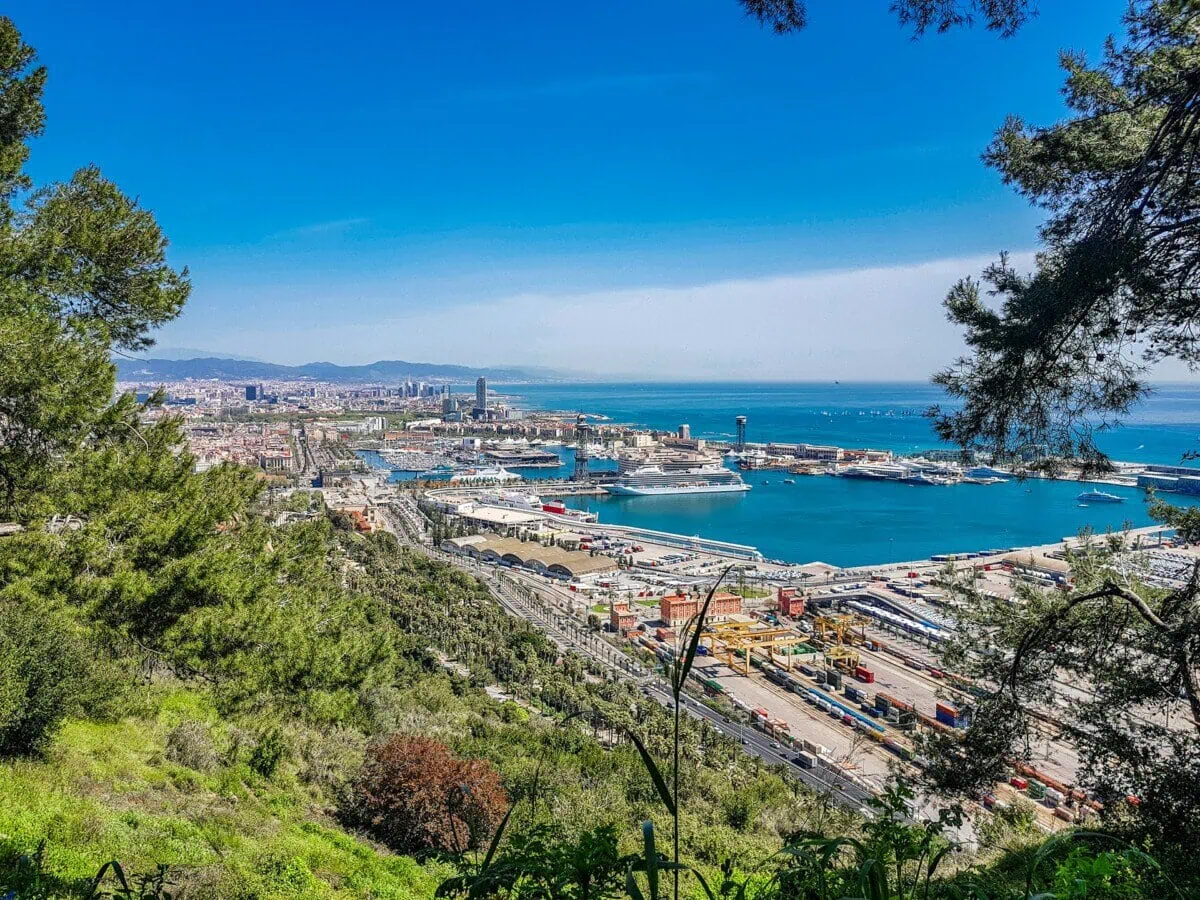
Barcelona is one of the busiest passenger ports in the western Mediterranean, and its ferry terminals open up three genuinely different kinds of trip. From the same stretch of harbour you can reach the Balearic Islands in a matter of hours, sail overnight to Italy, or join a long-haul crossing to Morocco. Each route suits a different kind of traveller, and knowing which quay and operator to look for makes the whole trip far less confusing.
Three destinations dominate the schedule board. Palma de Mallorca, Menorca and Ibiza are all reachable directly from Barcelona, with Baleària, Trasmediterránea and Grandi Navi Veloci (GNV) between them running the bulk of the sailings. Genoa in mainland Italy and Porto Torres in Sardinia extend the network east into Italy, while GNV’s Morocco sailings to Tangier and Nador stretch it further still, into genuine long-haul territory rather than a quick hop.
Every operator covered here carries vehicles as well as foot passengers, and the longer crossings run overnight with private cabins available alongside cheaper reclining seats. Booking a cabin is worth it on anything over about seven hours, and it becomes close to essential on the Italy and Morocco routes, which run well over a full day at sea.
This guide works through each route individually, covering realistic crossing times, which operator to book with, and what to expect at the terminal itself. A few genuine caveats get flagged rather than glossed over, particularly around the Morocco crossings and the Sardinia route, since schedules on the longer international sailings can shift between seasons and are worth a direct check before booking.
The table below summarises every route on this page, so operators, crossing times and frequency can be compared at a glance before reading further. Full detail on each route, including terminal information and practical booking advice, follows underneath.
| Route | Operator(s) | Approx. Crossing Time | Approx. Frequency |
|---|---|---|---|
| Barcelona to Palma de Mallorca | Baleària, Trasmediterránea, GNV | 3h30 (fast) / 7-8h (conventional) | Several sailings/week, year-round |
| Barcelona to Menorca (Maó/Ciutadella) | Baleària | 3h30 (fast, to Ciutadella) / 7-9h (conventional) | Several sailings/week, reduced off-season |
| Barcelona to Ibiza | Baleària, Trasmediterránea | Around 7h45-9h | Several sailings/week, reduced off-season |
| Barcelona to Genoa (Italy) | GNV | 20h30-21h30 | Around 2-3 sailings/week |
| Barcelona to Porto Torres (Sardinia) | Grimaldi Lines | Not confirmed this session; check directly | Seasonal, verify before booking |
| Barcelona to Tangier | GNV | 31h (outbound) / 37h (return) | A few sailings/week |
| Barcelona to Nador | GNV | Around 28h45 | A few sailings/week |
Routes at a Glance: Duration, Timing and Vehicles
The table above covers crossing times and frequency in detail. This one adds two things it leaves out, whether a sailing typically runs by day or overnight, and whether a vehicle can travel alongside foot passengers on that specific route.
| Destination | Operator(s) | Approx. Duration | Day or Overnight | Vehicles Permitted |
|---|---|---|---|---|
| Palma de Mallorca | Baleària, Trasmediterránea, GNV | 3h30 (fast) / 7-8h (conventional) | Both options | Yes |
| Menorca (Ciutadella/Maó) | Baleària | 3h30 (fast) / 7-9h (conventional) | Both options | Yes |
| Ibiza | Baleària, Trasmediterránea | 7h45-9h | Mostly overnight | Yes |
| Genoa (Italy) | GNV | 20h30-21h30 | Overnight, multi-night | Yes |
| Porto Torres (Sardinia) | Grimaldi Lines | Not confirmed, check directly | Typically overnight | Yes |
| Tangier | GNV | 31h outbound / 37h return | Overnight, multi-night | Yes |
| Nador | GNV | Around 28h45 | Overnight, multi-night | Yes |
Palma de Mallorca: The Busiest Balearic Crossing
Barcelona to Palma is the busiest ferry route out of the city, and it works equally well as a quick hop or a relaxed overnight crossing. Baleària, Trasmediterránea and GNV all sail it, between them offering roughly 16 departures a week across the year.
Baleària’s fast ferry covers the distance in around 3 hours 30 minutes, while the conventional overnight sailings on all three operators take closer to 7 to 8 hours. The slower boats typically leave Barcelona in the evening and dock in Palma the following morning, which suits anyone happy to sleep through the crossing rather than sit through it.
Foot passenger fares start from around €25 (£22/$29) each way in the off-season, rising through spring and summer. All three operators carry cars, motorbikes and bicycles, so this route doubles as the starting point for a proper road trip once you land, and our Mallorca Ferry Routes guide covers the island side of the crossing in more depth.
Palma’s own terminal sits right at the edge of the old town, a short walk or taxi ride from the cathedral. Arrival at the correct numbered terminal building matters, since Palma’s port is large and split across several stations rather than one shared hall.
Barcelona to Palma, Mallorca Ferry Times & Departures
Use Ferryhopper to check live sailings between Barcelona and Palma, Mallorca in both directions. Select your travel date to compare scheduled ferry departures, sailing times and available tickets.
Select the date you want to travel. The times shown on the right-hand side are the scheduled departure and arrival times for each ferry.
Availability can change quickly, particularly during weekends and the summer season. Some sailings may stop accepting bookings a few hours before departure. If a timetable is blank, there may be no available sailings for today. Try moving to a later date to check future services.
This is the timetable for the outward direction. Use it to check sailings from Barcelona to Palma, Mallorca for the date you plan to travel.
This is a separate timetable for the opposite direction. It does not select a return ticket for the journey above. Use it to check sailings from Palma, Mallorca to Barcelona.
Want to compare different routes and other ferry options?
Compare routes, operators, sailing times and prices with Ferryhopper or Direct Ferries.
Best for a short trip. Compare rooms by neighbourhood, price and guest rating before you book.
Compare hotelsBest for families, or any stay past about four nights. A kitchen and a washing machine start paying for themselves.
Browse rentalsBest as a last check before booking. Compares hotel rates across several sites in one search.
Compare ratesMenorca: Maó or Ciutadella
Menorca is reachable directly from Barcelona too, though it is worth being clear about which port a given sailing actually uses. Baleària runs both a conventional service, landing at either Maó or Ciutadella, and a genuine fast ferry option, and the two are not interchangeable when it comes to journey time.
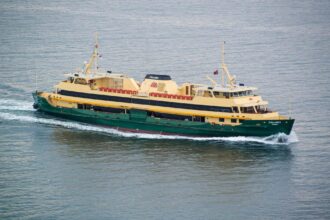
The conventional crossing takes somewhere between 7 and 9 hours depending on the exact sailing and whether Maó or Ciutadella is the destination. Baleària’s fast ferry, the Margarita Salas, cuts that down to roughly 3 hours 30 minutes, but it runs specifically to Ciutadella rather than Maó, so anyone set on the capital needs the slower boat.
Fares on the fast service start from around €44 (£38/$51) each way for a foot passenger, with the conventional overnight sailing typically priced similarly or a little less depending on demand. Vehicles are carried on both services, though space on the fast ferry is more limited than on the larger conventional vessels.
Maó, Menorca’s capital, sits at the head of a long natural harbour and suits travellers heading straight into the old town. Ciutadella is smaller and quieter, and works better for anyone planning to explore the island’s west coast first rather than double back from the east.
Barcelona to Ciutadella, Menorca Ferry Schedules & Tickets
Check the current Barcelona to Ciutadella, Menorca ferry schedule with Ferryhopper. Change the date to compare available crossings, departure times and bookable tickets for both directions.
Select the date you want to travel. The times shown on the right-hand side are the scheduled departure and arrival times for each ferry.
Availability can change quickly, particularly during weekends and the summer season. Some sailings may stop accepting bookings a few hours before departure. If a timetable is blank, there may be no available sailings for today. Try moving to a later date to check future services.
This is the timetable for the outward direction. Use it to check sailings from Barcelona to Ciutadella, Menorca for the date you plan to travel.
This is a separate timetable for the opposite direction. It does not select a return ticket for the journey above. Use it to check sailings from Ciutadella, Menorca to Barcelona.
Want to compare alternative ferry routes and more sailing options?
Compare routes, operators, sailing times and prices with Ferryhopper or Direct Ferries.
Ibiza: The Longest Balearic Crossing
Ibiza is the furthest of the three Balearic islands from Barcelona by sea, and the crossing reflects that. Baleària and Trasmediterránea both run the route, with journey times sitting between roughly 7 hours 45 minutes and 9 hours depending on the vessel and whether the sailing runs direct or calls elsewhere first.
Most departures run as overnight sailings, leaving Barcelona in the evening and arriving into Ibiza Town the next morning. A private cabin makes far more sense than a reclining seat on a crossing this long, especially in peak summer when the boats run full.
Foot passenger fares start from around €25 (£22/$29) each way outside peak season, climbing noticeably through July and August when Ibiza’s demand spikes. Vehicles, motorbikes and bicycles are all accepted, making this a genuine option for anyone wanting a car on the island without arranging a local hire.
Sailings are less frequent than the Palma route and drop further outside summer, so it is worth checking the specific date rather than assuming a daily departure. Booking ahead matters more here than on the shorter Balearic crossings, since the popular summer sailings sell out weeks in advance.
Barcelona to Ibiza (all ports) Ferry Crossings & Times
Compare ferry crossings between Barcelona and Ibiza (all ports) with Ferryhopper. The live timetable shows scheduled departure and arrival times so you can choose a suitable sailing in either direction.
Select the date you want to travel. The times shown on the right-hand side are the scheduled departure and arrival times for each ferry.
Availability can change quickly, particularly during weekends and the summer season. Some sailings may stop accepting bookings a few hours before departure. If a timetable is blank, there may be no available sailings for today. Try moving to a later date to check future services.
This is the timetable for the outward direction. Use it to check sailings from Barcelona to Ibiza (all ports) for the date you plan to travel.
This is a separate timetable for the opposite direction. It does not select a return ticket for the journey above. Use it to check sailings from Ibiza (all ports) to Barcelona.
Looking for different ferry routes or other ferry options?
Compare routes, operators, sailing times and prices with Ferryhopper or Direct Ferries.
Genoa: The Overnight Route to Italy
Barcelona to Genoa is a genuine long-haul crossing rather than a quick hop, and it is worth planning around properly rather than treating as a shortcut. GNV runs the route alone, with the outbound Barcelona to Genoa sailing taking around 20 hours 30 minutes and the return Genoa to Barcelona leg around 21 hours 30 minutes, both sailed direct.
Departures run at roughly two to three times a week rather than daily, so this is a route to plan a trip around rather than book at short notice. The crossing spans a full night and most of the following day, which makes a private cabin close to essential rather than a luxury.
GNV’s ships on this route carry vehicles alongside foot passengers, and plenty of travellers use the crossing specifically to bring a car into Italy or Spain without the long drive around the French coast. Onboard facilities typically include a restaurant, bar and outdoor deck space, which matters given how much of the journey happens at sea.
Genoa itself connects onward into the rest of northern Italy by train within an hour or two, making this route a realistic alternative to flying for anyone already planning a longer Italian trip. Booking well ahead is sensible given the limited weekly departures.
Barcelona to Genoa Ferry Timetable & Tickets
View the Ferryhopper timetable for ferries between Barcelona and Genoa. Select a date to check sailing times, available departures and ticket options for the outbound and return journey.
Select the date you want to travel. The times shown on the right-hand side are the scheduled departure and arrival times for each ferry.
Availability can change quickly, particularly during weekends and the summer season. Some sailings may stop accepting bookings a few hours before departure. If a timetable is blank, there may be no available sailings for today. Try moving to a later date to check future services.
This is the timetable for the outward direction. Use it to check sailings from Barcelona to Genoa for the date you plan to travel.
This is a separate timetable for the opposite direction. It does not select a return ticket for the journey above. Use it to check sailings from Genoa to Barcelona.
Compare other ferry routes, sailings and ticket options.
Compare routes, operators, sailing times and prices with Ferryhopper or Direct Ferries.
Porto Torres: Reaching Sardinia by Sea
A ferry connecting Barcelona directly to Sardinia does exist, but it is worth being precise about who actually runs it. Grimaldi Lines, not GNV, operates the Barcelona to Porto Torres service, sailing from its own dedicated terminal in the port rather than the shared international building GNV and Trasmediterránea use.
This route runs on a more limited, seasonal pattern than the Balearic or Genoa crossings, and exact current crossing times and weekly frequency were not fully confirmed this session. Anyone planning around this specific sailing should check Grimaldi Lines’ own site directly for the current timetable before booking, rather than relying on a fixed schedule here.
What is confirmed is that the route exists and carries both foot passengers and vehicles, docking in Porto Torres on Sardinia’s north-west coast. Our dedicated Sardinia Ferry Routes guide covers the island’s onward connections and other mainland crossings in far more depth.
Given the limited frequency, this is not a route to plan a trip around at short notice. Treat any online crossing-time figure with caution until it is confirmed directly against the current season’s published timetable, since seasonal Mediterranean routes like this one change more readily than the Balearic crossings.
Barcelona to Porto Torres, Sardinia Ferry Departures & Schedules
Use Ferryhopper to compare scheduled ferry departures between Barcelona and Porto Torres, Sardinia. Choose your travel date to see available sailings, journey times and tickets in both directions.
Select the date you want to travel. The times shown on the right-hand side are the scheduled departure and arrival times for each ferry.
Availability can change quickly, particularly during weekends and the summer season. Some sailings may stop accepting bookings a few hours before departure. If a timetable is blank, there may be no available sailings for today. Try moving to a later date to check future services.
This is the timetable for the outward direction. Use it to check sailings from Barcelona to Porto Torres, Sardinia for the date you plan to travel.
This is a separate timetable for the opposite direction. It does not select a return ticket for the journey above. Use it to check sailings from Porto Torres, Sardinia to Barcelona.
Want to check different routes and more ferry choices?
Compare routes, operators, sailing times and prices with Ferryhopper or Direct Ferries.
Tangier and Nador: The Long Haul to Morocco
GNV runs two long-haul sailings from Barcelona to Morocco, and both need to be understood as genuine multi-night crossings rather than a quick hop across the strait. Barcelona to Tangier takes around 31 hours outbound and 37 hours on the return leg, with fares starting from roughly €87 (£75/$102) outbound and €94 (£81/$110) return.
GNV markets this as a direct sailing with no scheduled intermediate port, and that length is largely explained by the real distance involved: the ship has to round the Iberian Peninsula and pass through the Strait of Gibraltar rather than cutting straight across open water. This is a long-haul sailing rather than a short direct hop, and it is worth budgeting the better part of two days for it either way.
Barcelona to Nador is the second option, taking around 28 hours 45 minutes in each direction, with fares from roughly €96 (£83/$112) outbound and €75 (£65/$88) return. Both routes run a few times a week rather than daily, and both carry vehicles alongside foot passengers.
It is worth being upfront about something these routes are not. The short, frequent Spain to Morocco ferries most travellers picture, crossing the strait in under an hour, sail from Algeciras and Tarifa in southern Spain, not from Barcelona. Barcelona’s own Morocco option is genuinely this long overnight-plus sailing, so it suits a different kind of trip entirely.
Barcelona to Morocco (all ports) Ferry Tickets, Times & Crossings
Check Ferryhopper for upcoming ferries between Barcelona and Morocco (all ports). The live schedule lets you compare crossing times, departure times and available tickets for both legs of the journey.
Select the date you want to travel. The times shown on the right-hand side are the scheduled departure and arrival times for each ferry.
Availability can change quickly, particularly during weekends and the summer season. Some sailings may stop accepting bookings a few hours before departure. If a timetable is blank, there may be no available sailings for today. Try moving to a later date to check future services.
This is the timetable for the outward direction. Use it to check sailings from Barcelona to Morocco (all ports) for the date you plan to travel.
This is a separate timetable for the opposite direction. It does not select a return ticket for the journey above. Use it to check sailings from Morocco (all ports) to Barcelona.
Still comparing ferry routes, crossing times and prices?
Compare routes, operators, sailing times and prices with Ferryhopper or Direct Ferries.
Ferry Terminal and Getting There
Barcelona’s port runs three separate ferry terminals rather than one shared building, and matching your ticket to the right one matters more here than at many other Mediterranean ports. Baleària operates from its own dedicated terminal, while GNV shares an international terminal with Trasmediterránea at Moll de Sant Bertran, and Grimaldi Lines uses a third terminal of its own elsewhere in the port.
The GNV and Trasmediterránea terminal at Moll de Sant Bertran sits within the wider port area rather than right beside La Rambla, and it is a taxi or bus ride from the city centre rather than a comfortable walk. Foot passengers should generally allow at least an hour before departure to check in, with vehicles needing considerably longer.
Getting to the port by public transport usually means a bus connection from Plaça d’Espanya or a taxi from the city centre, since none of Barcelona’s ferry terminals sit directly on a metro line. Our Barcelona public transport guide covers the bus and metro network for the rest of the city. Drivers heading to the port can generally find parking near the terminals, though it fills up fast around peak summer departures.
Because the exact terminal building can differ by operator and even by specific sailing, the single most useful habit is checking the terminal name printed on your own ticket rather than assuming every ferry leaves from the same quay. A wrong terminal guess with a heavy suitcase is a genuinely bad way to start a long crossing.
Best if you can move a day either way. Shows how the fare changes across the month.
Compare flightsBest for anyone whose home plan charges by the megabyte abroad. Pay a fixed price up front.
Check eSIMsBest after a long flight or a late landing. Price agreed before you travel, and no taxi queue.
Check transfersBooking Your Ferry from Barcelona
Each operator sells tickets directly through its own site, and booking directly is a sensible default for a straightforward single-route trip. GNV, Baleària and Trasmediterránea all run their own booking systems, with fares that move with demand in much the same way as flights.
A ferry comparison site becomes genuinely useful when comparing operators on the same route, particularly on the Palma crossing where three companies compete directly. Booking a known travel date a few weeks ahead generally beats waiting until the last minute, especially through July and August when the Balearic routes fill up fastest.
For anything over about seven hours at sea, weighing up a private cabin against a reclining seat is worth doing before booking rather than after. A closed cabin door and a proper bed make a real difference on the overnight Balearic crossings, and they move from nice-to-have to close to essential on the Genoa and Morocco routes.
Vehicle space needs adding to the same booking as your passenger ticket rather than arranged separately at the port. Anyone bringing a hire car should confirm with the rental company beforehand that the agreement actually allows the vehicle to leave Spain or cross to the islands, since standard cover does not always extend to a ferry crossing.
Taking a Car on the Ferry
Every operator covered on this page, Baleària, Trasmediterránea, GNV and Grimaldi Lines, carries cars, motorbikes and campervans alongside foot passengers on every route out of Barcelona. Vehicle space is booked as part of the same reservation as passenger tickets rather than arranged separately at the port, with pricing based on the vehicle’s length rather than a flat fee.
Boarding with a vehicle follows a different queue to foot passengers, with cars called forward deck by deck once check-in closes rather than walking straight up a gangway. Drivers should expect to arrive earlier than foot passengers and to stay with the vehicle through check-in, security and the drive onto the car deck itself.
Fuel tanks should be kept low and handbrakes left on for the crossing, standard practice on car decks that are not accessible once the ship is at sea. Anyone with a hire car should double check with the rental company before booking, since not every agreement permits the vehicle to leave mainland Spain, particularly on the Balearic and international routes.
Cabins vs Seats: What the Choice Actually Looks Like
The cabin-or-seat choice depends almost entirely on whether a sailing runs by day or overnight. Daytime crossings, such as Baleària’s fast ferries to Palma or Ciutadella, are short enough that a reclining seat or a spot on the outdoor deck is perfectly comfortable, and most passengers never look at a cabin.
Overnight sailings change that calculation. On the conventional Palma, Menorca and Ibiza crossings, a reclining seat is workable for a budget traveller, but a private cabin turns a seven to nine hour overnight sailing into something closer to a proper night’s sleep, arriving in far better shape for whatever the next day holds.
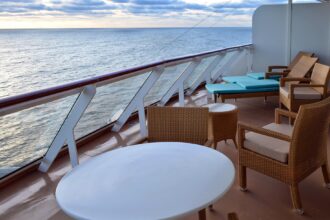
On the Genoa and Morocco routes, where crossings run well over twenty hours, a cabin moves from comfort to something close to essential. Cabins range from a basic interior twin up to larger outside cabins with a window on some ships, and prices scale accordingly, so it is worth comparing the seat-only fare against the cheapest cabin upgrade before assuming seats are the budget option.

Overnight Ferry Strategy
An overnight ferry works best when treated like an overnight train rather than a daytime crossing with beds attached. Boarding usually opens two to three hours before departure, and getting on early means a proper look around, a meal before the restaurant queue builds, and the cabin key in hand before the ship gets busy.
Cabins should be booked at the same time as the passenger ticket rather than left until boarding, since the cheaper interior cabins sell out first on popular summer sailings. Bringing earplugs and an eye mask is worth doing regardless of cabin class, since engine noise and other passengers moving around the corridors are a normal part of any overnight sailing.
Most overnight ships run a restaurant, a bar and a shop that stay open for several hours after departure, so there is no need to bring a full dinner aboard. Arriving groggy the next morning is normal even with a cabin, so it is worth building a slower first hour or two into plans at the other end rather than a tight connection straight off the gangway.
How Early to Arrive for Boarding
Foot passengers without a vehicle should generally allow at least an hour before departure on the Balearic routes, and closer to two hours on the Genoa and Morocco sailings, where check-in and security take longer and close well before the ship actually departs. GNV specifically closes check-in one hour before departure on its international routes, so arriving right at that cutoff risks missing boarding entirely.
Drivers should add real time on top of that. Baleària’s own guidance recommends around ninety minutes before departure for a vehicle on its standard routes, and GNV asks for two hours on domestic Balearic sailings, rising to four or five hours before departure on the international Genoa and Morocco crossings once queuing, check-in and loading onto the car deck are all accounted for.
These are minimums rather than a target, and arriving with extra margin matters more here than at most transport hubs, since a missed check-in on a twice-weekly Genoa or Morocco sailing means a multi-day wait for the next one rather than a same-day rebooking. Printing or downloading boarding documents in advance also avoids losing time to a queue at the terminal desk.

Rupert’s Handy Travel Tips
Planning a ferry crossing from Barcelona? Here are a few tips to help you plan it.
- Check which terminal you need: Baleària, GNV/Trasmediterránea and Grimaldi Lines all use different terminals at the port, so match the building to your ticket rather than the nearest one.
- Book a cabin for anything overnight: the Genoa and Morocco crossings run well over a day at sea, so a private cabin is worth every euro.
- Confirm Menorca’s arrival port: the fast ferry goes to Ciutadella, not Maó, so double-check before assuming you’ll land near the capital.
- Verify long-haul routes before booking: the Porto Torres crossing runs a limited seasonal schedule, so check the operator’s current timetable directly rather than an old one.
- Add vehicles at booking, not at the port: car and motorbike space needs to go on the same reservation as your ticket.
- Book Balearic summer sailings early: July and August fill up fast, especially on the Ibiza and Menorca routes.
Want to meet the reindeer behind our travel tips? Find out more in our page Who is Rupert?.




Frequently Asked Questions
Is there a direct ferry from Barcelona to Mallorca?
Yes, Baleària, Trasmediterránea and GNV all sail Barcelona to Palma, with a fast ferry option around 3 hours 30 minutes and conventional overnight sailings taking roughly 7 to 8 hours.
Does the Barcelona ferry to Menorca go to Maó or Ciutadella?
Both, depending on the sailing. Baleària’s conventional service can land at either port, while its faster Margarita Salas ferry runs specifically to Ciutadella rather than Maó.
Is the GNV ferry from Barcelona to Tangier really direct?
GNV markets it as a direct sailing with no scheduled stop, but the 31 to 37 hour crossing time reflects the genuine distance involved rounding the Iberian Peninsula through the Strait of Gibraltar, so it should be treated as a long-haul sailing rather than a quick hop.
Can I get a short ferry from Barcelona to Morocco?
No, the short, frequent crossings across the Strait of Gibraltar sail from Algeciras and Tarifa in southern Spain, not Barcelona. GNV’s Barcelona routes to Tangier and Nador both run as genuine multi-night sailings instead.
Does a ferry run from Barcelona to Sardinia?
Yes, Grimaldi Lines sails Barcelona to Porto Torres, though it runs a more limited seasonal schedule than the Balearic or Genoa routes, so it is worth checking the operator’s current timetable directly before booking.
How long is the ferry from Barcelona to Genoa?
Around 20 hours 30 minutes outbound and 21 hours 30 minutes on the return leg with GNV, sailed direct and running roughly two to three times a week.
Can you take a car on the ferry from Barcelona?
Yes, every route covered on this page carries vehicles alongside foot passengers, though car and motorbike space needs booking in advance as part of the same reservation.
Which terminal do I need at the Port of Barcelona?
It depends on the operator: Baleària has its own terminal, GNV shares an international terminal with Trasmediterránea at Moll de Sant Bertran, and Grimaldi Lines uses a separate terminal elsewhere in the port.
Further Reading
If Mallorca is the plan once you arrive, our dedicated Mallorca Ferry Routes guide picks up where this page leaves off, covering the island’s own terminals and onward connections to Ibiza and Menorca. It is a useful companion for anyone planning a longer Balearic itinerary rather than a single crossing.
Travellers continuing on to Sardinia should also read our island-wide Sardinia Ferry Routes guide, which covers Porto Torres alongside Olbia and Cagliari and the wider network of Italian and French crossings. It fills in detail this page only has room to summarise for the single Barcelona link.
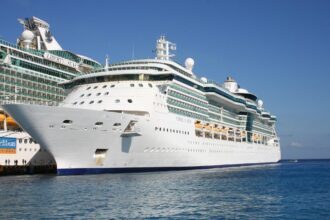
Arriving on a cruise ship rather than a passenger ferry is a genuinely different experience at Barcelona, since cruise ships dock at dedicated terminals rather than the ferry quays covered above. Our Barcelona Cruise Port Guide covers those terminals and how to get ashore.
For the practical side of any of these crossings, GNV’s own route and timetable pages and Baleària’s official booking site are the most reliable sources for exact departure times and current fares on any given date, since both change seasonally and are worth checking directly before booking.