Reviewed by our editorial team Published
Arriving at EuroAirport Basel Mulhouse Freiburg
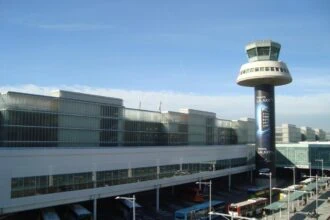
EuroAirport Basel Mulhouse Freiburg is one of the more unusual arrivals experiences in Europe. It is a single airfield, sitting entirely on French soil just outside Saint-Louis, yet it is jointly run for Switzerland, France and, to a lesser extent, Germany under a binational treaty dating back to 1949.
The airport’s defining feature is its dual exit. Inside the same terminal building, arriving passengers choose between a Swiss exit and a French exit, each with its own customs and border checks, before stepping out onto the corresponding country’s road network. There is no exit specifically for Germany, so travellers heading to Freiburg simply use whichever side suits their onward transport and continue by road or bus from there.
Most visitors passing through this airport are heading for Basel, and this guide is written with that traveller in mind. A dedicated customs-free road links the Swiss exit directly into the city, which is why most public transport, taxis and private transfers described below depart from that side of the terminal.
The airport also serves as a genuine gateway to two other countries. Mulhouse lies around 20 kilometres to the south-west in France, while Freiburg im Breisgau is roughly 46 kilometres away across the German border. We cover both later in this guide, alongside the bus, taxi, private transfer and car hire options for reaching central Basel.
EuroAirport at a Glance
EuroAirport carries the IATA code BSL for Basel, MLH for Mulhouse and EAP for the airport itself, a reflection of the three names it operates under depending on which country’s booking system you use. It is often described as the world’s only true binational airport, governed by a joint board with equal French and Swiss representation and German advisers.
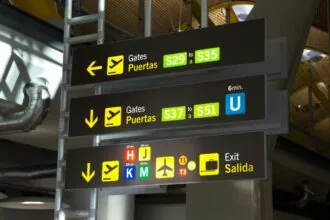
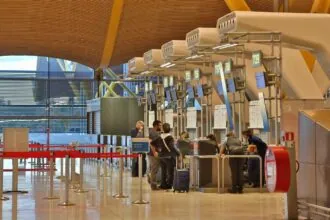
Inside the terminal, the layout mirrors this arrangement. After passport and customs checks, passengers physically separate into a Swiss arrivals hall and a French arrivals hall, each with its own exit, taxi rank, car hire desks and onward transport links, even though both sides began the journey through the same building.
Car hire, taxis and currency exchange are available on both the Swiss and French sides, so it is worth deciding your onward direction before you reach the arrivals hall. Choosing the wrong exit is not a disaster, since covered walkways connect the two, but it can add a few extra minutes to your journey.
Unlike some European airports, EuroAirport has no railway station of its own. Rail travellers rely on a short bus connection to reach the nearest stations, a detail that shapes almost every transport decision covered in this guide.
Best for a short trip. Compare rooms by neighbourhood, price and guest rating before you book.
Compare hotelsBest for families, or any stay past about four nights. A kitchen and a washing machine start paying for themselves.
Browse rentalsBest if you have already picked a hotel. Checks the big booking sites for the same room and shows who is cheapest.
Check dealsHow Far Is Basel City Centre?
Basel city centre lies around 3.5 kilometres north-west of EuroAirport, making it one of the closer airport-to-city distances in Europe. In practice, this short distance is felt most on the road, since the Swiss exit connects directly to Basel via a dedicated customs-free route.
By bus, the journey to Basel SBB railway station takes around 20 minutes, and this is currently the only direct public transport link between the terminal and the city. Taxis and private transfers cover the same distance in roughly 15 to 20 minutes, depending on traffic on the approach roads.
Because EuroAirport has no station of its own, rail travellers need to build in a short connecting journey rather than expecting to step straight from arrivals onto a platform, as is possible at airports such as Geneva. Once you reach Basel SBB, however, the city’s tram and rail network takes over and connections are excellent.
This short overall distance means most visitors, whatever transport they choose, can expect to be settling into their hotel within half an hour of clearing arrivals, provided they head straight for the Swiss exit rather than lingering on the French side.
Taking the Bus into Basel
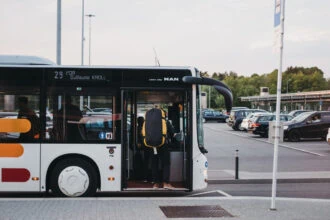
For most travellers, the airport bus is the best way to reach central Basel. Line 50, operated by BVB (Basler Verkehrs-Betriebe), runs directly from the Swiss exit to Basel SBB railway station, terminating right on the station forecourt so trams and onward trains are only steps away.
The stop is a short, clearly signed walk from the Swiss arrivals hall, and services run frequently throughout the day, typically every 7 to 10 minutes from around 04:30 until close to midnight. The journey to Basel SBB takes approximately 20 minutes.
A short-distance single ticket costs around CHF 5 (£5/€5/$6) and can be bought from ticket machines at the stop, through the local transport app, or on some services with a contactless card. These tickets fall within the standard Basel TNW fare zone, so the same ticket works on connecting trams once you reach the city.
For a one-off airport trip, buying a paper or contactless ticket from the machine at the stop is usually simpler than downloading anything new. Regular visitors can also use the TNW Tickets app, the region’s official ticketing app covering BVB services including the airport bus, or FAIRTIQ, a check-in and check-out app that works across most of Switzerland’s public transport.
Because bus 50 is the only direct public transport service linking the terminal to Basel, it is worth checking current timetables before an early or very late flight, even though frequencies remain generous for most of the operating day. For the majority of visitors travelling light, it is the simplest and cheapest way into the city.
Trams and Onward Local Transport
Basel’s extensive tram network does not reach the airport terminal directly, so trams are best thought of as the second stage of the journey rather than the first. Once bus 50 delivers you to Basel SBB, several tram lines depart from the forecourt to destinations across the city.
One useful onward connection is Tram 2, which runs from Basel SBB towards Badischer Bahnhof, the city’s German railway station and a useful hub for travellers continuing towards Freiburg or other destinations in Germany by rail.
Basel’s compact centre means many hotels and attractions, including the Old Town and the Rhine waterfront, are within easy tram or walking distance of the main station. Tickets purchased for the airport bus are usually valid within the same fare zone, so onward tram travel rarely requires a second purchase for short hops.
Taxi Services and Typical Fares
Taxi ranks are available on both the Swiss and French sides of the terminal, positioned just outside each arrivals hall. For a journey into Basel, travellers should use the Swiss-side rank, since it connects straight onto the customs-free road into the city.
A typical fare from EuroAirport to central Basel is around CHF 50 (£45/€53/$63), with a journey time of roughly 15 to 20 minutes depending on traffic. Licensed operators generally accept major credit and debit cards, though carrying a little cash in Swiss francs is a sensible backup.
Fares from the French-side rank are quoted in euros rather than Swiss francs, and can differ noticeably from the Swiss-side rates for an equivalent distance, so it is worth confirming which side you are collecting a taxi from before agreeing a price. Always use an official rank rather than accepting an offer from someone approaching you inside the terminal.
For solo travellers on a budget, the airport bus is considerably cheaper than a taxi. However, for small groups, late-night arrivals, or anyone carrying heavy luggage, a taxi remains a fast and straightforward option into the city.
Private Transfers and Door-to-Door Options
A pre-booked private transfer offers the smoothest possible arrival at EuroAirport, particularly given the extra layer of choosing between the Swiss and French exits. A driver monitors your flight, meets you at the correct side of the terminal, and takes care of luggage before setting off directly for your destination.
This can be especially useful for families, business travellers, or anyone arriving late at night when public transport frequencies drop. It also removes any uncertainty over which exit to use, since the operator will already know whether you are heading into Basel, Mulhouse or Freiburg.
Journey times for a transfer into central Basel are broadly similar to a taxi, generally 15 to 20 minutes, though most operators quote a fixed price agreed before travel rather than a metered fare. This can make budgeting easier, particularly for groups splitting the cost between several passengers.
Private transfers are also a practical choice for the longer runs to Mulhouse or Freiburg, where public transport options are less frequent than those serving Basel. Most operators can arrange a cross-border pickup from either exit, which is not something every taxi firm will offer as a matter of course.
Compare Airport Transfer Companies
Pre-booking your airport transfer can save time and reduce stress when you arrive. Whether you need a private taxi, shared shuttle or executive transfer, comparing providers can help you find the best price and service for your journey.
We’ve selected three trusted airport transfer companies so you can compare prices, vehicle options, cancellation policies and customer reviews before you travel.
Car Hire at EuroAirport
Car hire desks operate on both sides of the terminal, with major international companies including Avis, Hertz, Europcar, Sixt and Enterprise maintaining separate counters on the Swiss side and the French side. Which desk you choose matters more here than at most airports, since it affects the documentation and insurance attached to your vehicle.
A car collected from the Swiss desks is generally set up for Swiss roads, and Switzerland’s motorways require a valid vignette, which is normally already included with a Swiss-registered rental. A car collected from the French desks is better suited to onward driving in France or Germany, where motorway tolls and rules differ.
For visitors staying solely in central Basel, car hire is rarely necessary, since the bus, taxi and tram network cover the city comfortably. It becomes far more useful for travellers planning to explore the wider tri-border region, including day trips into the Alsace countryside or across into the Black Forest around Freiburg.
Before driving away, double-check which country’s breakdown cover and insurance apply, since crossing between Switzerland, France and Germany within a single afternoon is entirely normal for visitors based at this airport, but not every rental agreement covers all three without a quick conversation at the desk.
Compare Car Hire Prices in Basel
If you are planning to explore beyond Basel, hiring a car can give you much more flexibility over where you go and how long you spend there.
Compare prices through Discover Cars and EconomyBookings to check vehicles, rental conditions and offers from multiple car hire companies before you book.
Best for long or awkward journeys. Builds one itinerary out of separate flights.
View flightsBest for anyone whose home plan charges by the megabyte abroad. Pay a fixed price up front.
Check eSIMsBest when public transport has stopped, or when you are travelling with children and bags.
Book a transferReaching Mulhouse from EuroAirport
Mulhouse sits around 20 kilometres south-west of the airport, on the French side of the border, and is reached using the French exit rather than the Swiss one. The most economical route combines a short local bus with a regional train.
The DistriBus line 11 shuttle runs from the French side of the terminal to Saint-Louis SNCF station in around 10 to 15 minutes, with tickets available for roughly €3 (CHF 3/£3/$4) using an SMS-based system. From Saint-Louis, direct trains run onward to Mulhouse, Colmar, Sélestat and Strasbourg approximately every 30 minutes.
A taxi from the French-side rank straight to Mulhouse’s central station typically costs around €60 (CHF 56/£52/$71) by day, rising to roughly €85 to €90 after dark, with a drive of around 25 to 30 minutes depending on traffic.
Travellers heading beyond Mulhouse into the wider Alsace region often continue by rail towards Colmar, a popular day trip destination in its own right, which our guide to visiting Colmar covers in more detail.
Reaching Freiburg from EuroAirport
Freiburg im Breisgau lies around 46 kilometres south-southwest of the airport, on the edge of Germany’s Black Forest, and is the furthest of the three cities this airport serves. There is no exit dedicated to Germany, so travellers can use either the Swiss or French side depending on which onward service they plan to catch.
A direct coach service, including a dedicated airport shuttle, runs from the terminal to Freiburg’s central bus station roughly hourly, with a journey time of around 60 minutes. Long-distance coach operators also serve the same route at varying frequencies, so it is worth comparing timetables before booking.
Given the distance, a taxi to Freiburg is considerably more expensive, typically €155 (CHF 146/£133/$183) or more by day and rising further at night, so most budget-conscious travellers opt for the coach or a self-drive rental instead.
There is no direct rail link between EuroAirport and Freiburg, since the airport itself has no station, so rail travellers typically connect via Basel SBB or Basel Badischer Bahnhof and continue north into Germany from there. This makes the coach the more straightforward option for most first-time visitors.
Comparing Your Transport Options
Choosing the best way to leave EuroAirport depends heavily on your destination, since Basel, Mulhouse and Freiburg each involve a different exit, journey time and price. The table below summarises the main options for a typical solo or couple’s journey.
| Option | Destination | Journey Time | Approximate Cost |
|---|---|---|---|
| Bus 50 (Swiss exit) | Basel SBB | 20 minutes | CHF 5 (£5/€5/$6) |
| Taxi (Swiss exit) | Central Basel | 15–20 minutes | CHF 50 (£45/€53/$63) |
| Private transfer | Central Basel | 15–20 minutes | Varies, fixed price |
| DistriBus 11 + train | Mulhouse | Around 40–45 minutes total | From around €3 (CHF 3/£3/$4) + train fare |
| Taxi (French exit) | Mulhouse | 25–30 minutes | From €60 (CHF 56/£52/$71) |
| Coach/shuttle | Freiburg | Around 60 minutes | Varies by operator |
For most visitors heading into Basel, bus 50 remains the best combination of speed, reliability and low cost. Taxis and private transfers close that gap considerably when travelling with luggage, at odd hours, or in a small group.
Which Transfer Option Is Best?
For the majority of travellers heading into Basel, the airport bus is the clear recommendation. Bus 50 is frequent, affordable, and delivers passengers directly to Basel SBB, from where trams and trains fan out across the city and the wider region.
A taxi makes sense for late arrivals, small groups sharing the fare, or anyone with heavy luggage who wants to avoid a bus stop transfer. Just be sure to use the Swiss-side rank if Basel is your destination, since French-side fares are calculated differently.
A private transfer is worth considering for families, business travellers, or anyone unsure which exit to use, since the driver will already know your destination and can meet you at the correct side of the terminal. It is also the most practical option for the longer runs to Mulhouse or Freiburg.
Finally, car hire comes into its own for anyone planning to explore beyond Basel itself, whether that means the Alsace vineyards around Colmar or the edge of the Black Forest near Freiburg. Choosing the right desk on the right side of the terminal will save both time and paperwork later in the trip.
Nearest Train Station and Onward Journeys
EuroAirport has no station of its own, so which side you exit through decides which train station you reach first. The Swiss exit leads to Basel SBB, while the French exit leads to Saint-Louis SNCF, and the right choice depends on where you are heading next.
For onward travel into Switzerland, Germany or further afield, the Swiss side is the better choice. Bus 50 reaches Basel SBB in around 20 minutes, and from there trains fan out across Switzerland and into Germany via Basel Badischer Bahnhof.
For a quicker route into France, the French exit is often more direct. The DistriBus line 11 shuttle reaches Saint-Louis SNCF in around 10 to 15 minutes, and regional TER trains from there run onward to Mulhouse, Colmar and Strasbourg without needing to backtrack through Basel.
In practice, the choice comes down to direction rather than distance, since both stations sit a short hop from the terminal. Head for Basel SBB if continuing into Switzerland or Germany, and for Saint-Louis if staying in France or heading further into Alsace.
Whichever side you land on, buy your ticket close to departure rather than in advance, since both routes run frequently enough that pre-booking rarely helps. A short-distance ticket or the TNW Tickets app covers the Swiss side, while an ordinary SNCF ticket is all that’s needed from Saint-Louis.
Late-Night and Early-Morning Arrivals
Bus 50 covers most of the day but stops running close to midnight and does not restart until around 04:30, so flights landing outside this window need a backup plan. Basel’s citywide Moonliner night network keeps trams and buses moving on weekend evenings, but it does not extend out to the terminal itself.
Passengers on the very first or very last bus 50 departures can still buy tickets through the TNW Tickets app or with FAIRTIQ, so there is no need to search for a working ticket machine at an odd hour. Both apps work the same way regardless of the time of day.
A taxi rank stays open around the clock on the Swiss side of the terminal, making it the most reliable option once the bus stops for the night. Expect to pay close to the standard CHF 50 (£45/€53/$63) daytime fare, though some operators add a modest surcharge for very early or late pickups.
A pre-booked private transfer removes any guesswork for a genuinely awkward arrival time, since the driver tracks the flight and waits regardless of delays. This is worth arranging in advance for anyone landing well before dawn or well after midnight, particularly with young children or heavy luggage in tow.
Travellers with some flexibility can also simply wait inside the terminal until bus 50 resumes, since EuroAirport’s arrivals hall stays accessible and services restart early enough that a short delay rarely disrupts the day ahead. Checking the current bus 50 timetable before booking a very early or very late flight is the simplest way to avoid an unplanned taxi fare altogether.

Rupert’s Handy Travel Tips
Flying into EuroAirport Basel Mulhouse Freiburg? Here are a few things that catch first-time visitors out.
- Pick your exit before you land: decide whether you need the Swiss or French side, since it changes which bus, taxi rank and car hire desk you use.
- Head for the Swiss exit for Basel: the customs-free road into the city runs from this side, and bus 50 to Basel SBB departs from here too.
- Carry both currencies if you can: Swiss francs are needed on the Basel side, while euros are the norm on the French side, and cards are not always accepted for small fares.
- Freiburg takes longer than it looks: at around 46 kilometres away, allow a full hour on the coach and don’t assume there is a quick rail shortcut.
- Book Mulhouse trains ahead in peak season: the DistriBus and connecting train combination works well, but check timetables before an early departure.
- Confirm your rental car’s paperwork: a car collected from the French desks may need extra checks before crossing into Switzerland, and vice versa.
Want to meet the reindeer behind our travel tips? Find out more in our page Who is Rupert?.


Best for short city stops where being central matters more than the room. Dorms and private rooms both listed.
See hostelsBest if you have ever given up on a claim. AirHelp checks whether the flight qualifies and pursues it for you.
See the benefitsBest for the gap between checking out and your train. Drop bags at a shop or hotel nearby and carry on.
Store your bagsFrequently Asked Questions about EuroAirport Transfers
Does EuroAirport have its own train station?
No. Unlike some European airports, EuroAirport has no railway station on site. Rail travellers reach the network via a short bus connection, most commonly bus 50 to Basel SBB.
What is the difference between the Swiss and French exits?
They are two separate arrivals halls within the same terminal, each with its own customs check, exit onto the road network, taxi rank and car hire desks. The Swiss exit connects directly to Basel, while the French exit leads towards Saint-Louis and Mulhouse.
Which exit should I use for Freiburg?
Either can work, since no exit is dedicated to Germany. Most travellers use whichever side connects to their chosen coach or shuttle service, then continue into Germany by road.
How do I get from EuroAirport to Basel city centre?
The most direct route is bus 50 from the Swiss exit to Basel SBB, taking around 20 minutes. Taxis and private transfers cover the same distance in a similar time.
How much does the airport bus to Basel cost?
A short-distance single ticket costs around CHF 5 (£5/€5/$6), valid within the standard Basel fare zone and also usable on connecting trams.
Is there a direct bus to Freiburg?
Yes. A coach and dedicated shuttle service run from the terminal to Freiburg’s central bus station roughly hourly, taking around 60 minutes.
How do I reach Mulhouse from the airport?
The DistriBus line 11 runs from the French exit to Saint-Louis SNCF station, where direct trains continue to Mulhouse roughly every 30 minutes. A taxi from the French-side rank is also available for a more direct journey.
Are taxi fares fixed or metered at EuroAirport?
This can vary between operators on the Swiss and French sides, so it is worth confirming the likely fare before setting off. Always use an official rank rather than an unlicensed driver approaching you inside the terminal.
Can I hire a car for a Switzerland, France and Germany road trip from here?
Yes, and this is one of the airport’s genuine advantages. With desks on both the Swiss and French sides, EuroAirport is a practical starting point for a road trip that touches all three countries in a single day.
Further Reading & Related Guides
Once you’ve settled into Basel itself, our guides to Things to Do in Basel and Basel Christmas Markets cover the city in more depth, while our Day Trips from Basel guide looks at the tri-border rail trips worth adding once you’ve explored the centre.
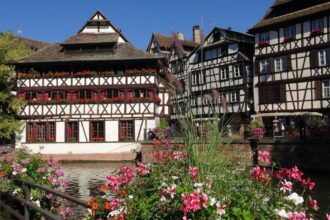
EuroAirport’s reach into the Alsace countryside makes it a useful starting point well beyond Basel itself. Travellers connecting through Mulhouse or Saint-Louis often continue towards the region’s most photogenic town, and our guide to visiting Colmar covers its canals and half-timbered streets in detail.
Strasbourg lies further north but shares much of the same Alsace and Rhine borderlands character, and travellers weighing up their options may find it useful to compare our Strasbourg Airport Transfers guide against this one, or to look ahead at the best day trips from Strasbourg for inspiration once you arrive in the region.
For visitors planning to continue deeper into Switzerland by rail once they reach Basel, our Interrail Switzerland Pass guide explains the scenic lines and mountain routes that make onward travel from this tri-national airport particularly rewarding.