Reviewed by our editorial team Updated
Discover Colmar
Often described as the most beautiful town in Alsace, Colmar feels like a place lifted straight from the pages of a fairy tale. Colourful half-timbered houses, flower-filled balconies, peaceful canals and cobbled streets combine to create one of the most picturesque destinations in France, while its rich history, outstanding museums and world-famous wines ensure there’s far more to discover than simply taking photographs.
Located in the heart of the Alsace Wine Route, Colmar has been shaped by both French and German influences over the centuries. This fascinating cultural mix can be seen everywhere, from the architecture and cuisine to the local traditions and language. Despite welcoming visitors from around the world, the town has retained an authentic atmosphere that makes wandering its historic streets a genuine pleasure.
Whether you’re enjoying a boat trip through Little Venice, admiring Renaissance buildings, sampling local Riesling and Gewürztraminer, browsing bustling markets or simply relaxing in a café overlooking one of the canals, Colmar offers the perfect blend of history, culture and slow-paced Alsatian charm.
This guide will help you plan the perfect visit, covering the town’s most important attractions, hidden corners, seasonal highlights and practical tips to help you make the very most of your time in one of Europe’s most enchanting towns.
At a Glance: Why Visit Colmar?
| At a Glance | Details |
|---|---|
| Best known for | Little Venice (La Petite Venise), the canals and a timber-framed Old Town |
| Unmissable museum | The Unterlinden Museum, home to the Isenheim Altarpiece |
| Local claim to fame | Birthplace of Bartholdi, sculptor of the Statue of Liberty |
| Getting there | Regular trains from Strasbourg, Mulhouse, Basel and Paris; close to the A35 by car |
| Station to Old Town | Around 15 minutes on foot |
| Getting around | Compact enough to explore entirely on foot |
| Best seasons | Spring for flowers, autumn for the grape harvest, December for the Christmas Markets |
| Wine Route base for | Eguisheim, Riquewihr, Kaysersberg, Ribeauvillé, Turckheim and Hunawihr |
| How long to stay | An afternoon at a minimum, several days to see it properly |
Few places capture the imagination quite like Colmar. Compact enough to explore entirely on foot, yet filled with enough attractions to occupy several days, it offers an ideal combination of history, architecture, art, food, wine and beautiful scenery.
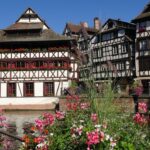
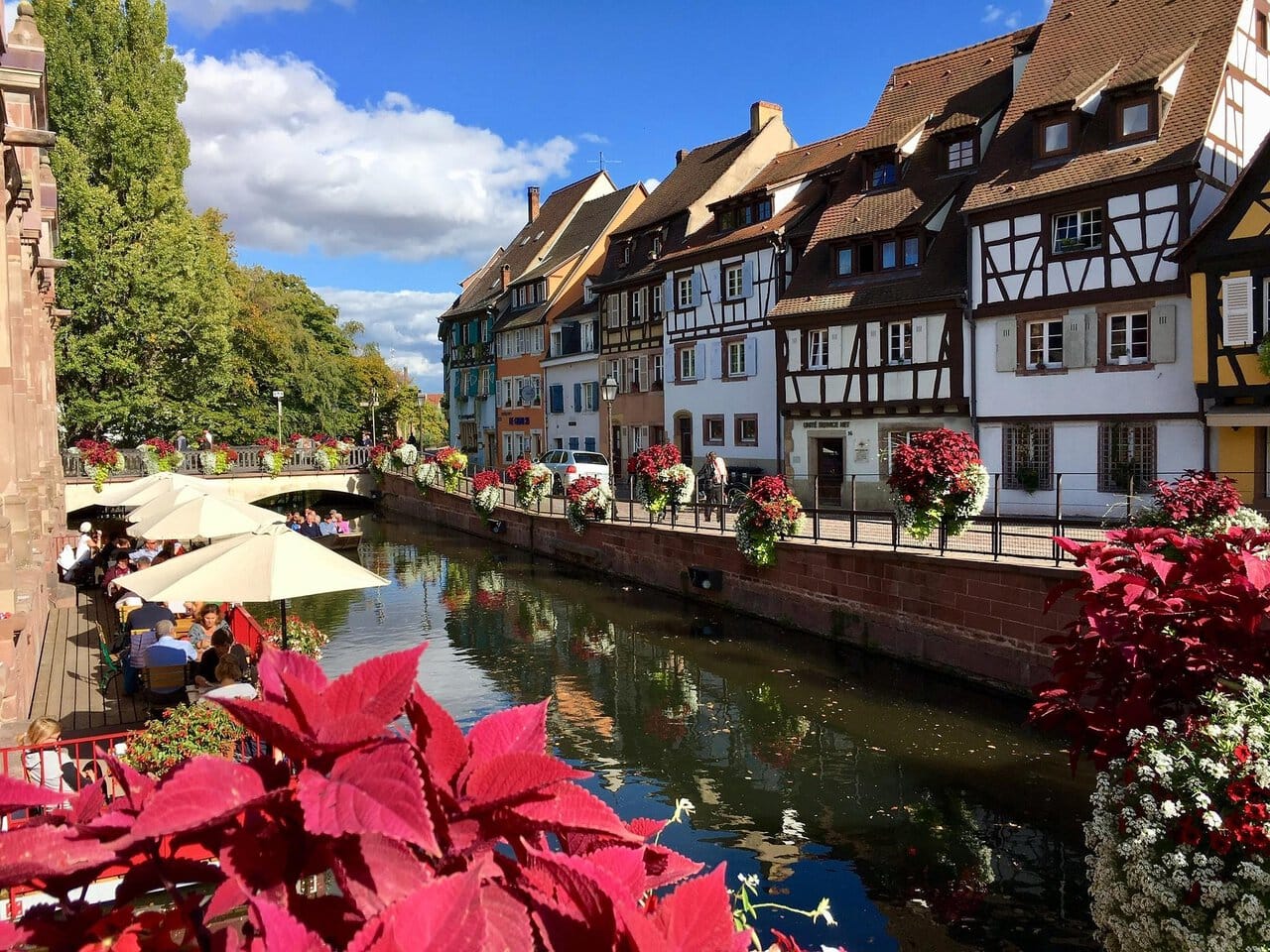
The town is perhaps best known for Little Venice (La Petite Venise), where colourful medieval houses line tranquil canals crossed by elegant stone bridges. It is one of the most photographed locations in France and provides the classic image many people associate with Alsace.
Beyond the canals lies a wonderfully preserved Old Town, filled with timber-framed houses, historic churches, Renaissance mansions, lively squares and narrow streets lined with independent boutiques and traditional Alsatian restaurants. Around almost every corner you’ll discover another building that seems to belong on a postcard.
Colmar is also one of the cultural highlights of eastern France. The outstanding Unterlinden Museum houses the world-famous Isenheim Altarpiece, while the Bartholdi Museum celebrates the life of the sculptor who created the Statue of Liberty. Combined with excellent markets, canal cruises and easy access to the surrounding vineyards, Colmar offers something for almost every type of traveller.
Whether you’re spending a single afternoon here or using the town as your base for exploring the Alsace Wine Route, Colmar is a destination that rewards slow exploration and regularly exceeds visitors’ expectations.
Best if you want daily housekeeping and a front desk. Filter by area first, then by price.
Check availabilityBest for longer stays. Whole apartments and houses, so you are not eating out three times a day.
View rentalsBest as a last check before booking. Compares hotel rates across several sites in one search.
Compare ratesWhen is the Best Time to Visit Colmar?
One of the greatest attractions of Colmar is that every season offers a completely different experience. Whether you prefer colourful flowers, vineyard landscapes, festive markets or peaceful winter streets, there is never a bad time to visit.
Spring sees the town burst into colour as flowers decorate balconies, bridges and public squares. Temperatures are generally mild, making it an excellent time for exploring the historic centre on foot without the larger crowds of summer.
During summer, Colmar comes alive with outdoor cafés, street performers and long daylight hours. The canals sparkle beneath blue skies, restaurants fill their terraces and the surrounding vineyards provide beautiful green backdrops. Although this is one of the busiest seasons, the atmosphere remains relaxed and welcoming.
Many travellers consider autumn to be the perfect time to visit. Vineyards surrounding the town turn brilliant shades of gold, orange and red, while the annual grape harvest creates a lively atmosphere throughout the region. It’s also one of the best seasons for enjoying Alsatian wine and regional cuisine.
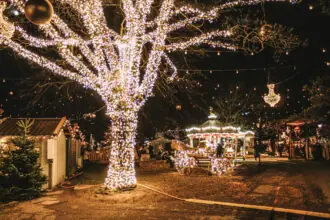
For many people, however, December is simply magical. Colmar hosts one of the most famous Christmas Markets in Europe, with beautifully decorated streets, festive lights, wooden chalets and seasonal music transforming the entire town into a winter wonderland. Every district hosts its own market, creating an unforgettable festive atmosphere that attracts visitors from across the world.
Whatever season you choose, Colmar combines beautiful architecture, outstanding food and a relaxed pace of life that makes it one of the highlights of any visit to Alsace.
How to Get to Colmar
Despite its medieval appearance, Colmar is exceptionally easy to reach and is well connected to the rest of France and neighbouring countries by train, road and air.
For many visitors, travelling by train is the simplest option. Colmar railway station is served by regular regional and high-speed services linking the town with Strasbourg, Mulhouse, Basel, Paris and numerous other destinations. The station is located around 15 minutes’ walk from the historic centre, making it easy to begin sightseeing almost immediately after arrival.
If you’re travelling by car, Colmar sits close to the A35 motorway, making it an excellent stop on a wider tour of Alsace, Germany or Switzerland. Several well-signposted public car parks are located around the edge of the Old Town, allowing visitors to leave their vehicle before exploring on foot.
The nearest airports include Strasbourg Airport, EuroAirport Basel-Mulhouse-Freiburg and Karlsruhe/Baden-Baden Airport, all of which offer convenient onward connections by train or road.
Colmar is also one of the highlights of the Alsace Wine Route, making it an ideal base for exploring famous villages including Eguisheim, Riquewihr, Kaysersberg, Ribeauvillé, Turckheim and Hunawihr.
Whichever route you choose, arriving in Colmar is straightforward, leaving you free to begin discovering one of France’s most enchanting towns almost immediately.
Getting Around Colmar
One of the greatest advantages of visiting Colmar is that you rarely need any form of transport once you arrive. The historic centre is wonderfully compact, allowing you to reach almost every major attraction within a 10 to 20-minute walk. Exploring on foot is by far the best way to appreciate the town’s colourful architecture, hidden courtyards and charming canals.
The Old Town is largely pedestrianised, creating a relaxed atmosphere where you can wander at your own pace without worrying about traffic. Cobbled streets connect attractive squares, medieval buildings and quiet canals, while countless cafés provide the perfect excuse to stop for a coffee or a glass of local Alsatian wine.
If you’re staying outside the centre, Colmar also has a reliable local bus network operated by Trace Colmar, linking the railway station, residential districts and surrounding villages. Tickets can be purchased before boarding or using contactless payment where available, making it an easy option for reaching accommodation outside the historic centre.
Cycling is another excellent way to explore. Colmar is relatively flat, with dedicated cycle paths connecting many parts of the town and extending into the surrounding vineyards. Several local companies hire bicycles and electric bikes, allowing visitors to combine the town with short rides along sections of the famous Alsace Wine Route.
If you’re using Colmar as a base for exploring nearby villages, having a hire car provides the greatest flexibility. Destinations such as Eguisheim, Riquewihr, Kaysersberg, Turckheim and Ribeauvillé are all within 30 minutes’ drive, making Colmar one of the best places to base yourself while discovering the wider region.

Exploring Little Venice
No visit to Colmar is complete without spending time in Little Venice (La Petite Venise), the town’s most famous and most photographed district. This picturesque neighbourhood perfectly captures the fairytale atmosphere that has made Colmar one of France’s most beautiful towns.
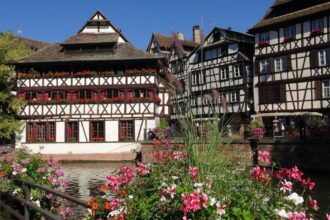
The district follows the gentle course of the River Lauch, where colourful half-timbered houses stand shoulder to shoulder beside peaceful canals crossed by elegant stone bridges. Flower-filled balconies overflow during spring and summer, while traditional shutters and steep tiled roofs create scenes that appear almost too perfect to be real.
Take your time wandering the narrow streets surrounding the canals. Every bridge provides another beautiful viewpoint, while the constantly changing reflections in the water create endless opportunities for photography. Early mornings are particularly rewarding, when the streets remain quiet and the soft light brings out the vibrant colours of the historic buildings.
One of the highlights is taking a boat trip through the canals. These gentle cruises provide a completely different perspective of Little Venice, allowing you to glide beneath low bridges while learning about the district’s fascinating history. For centuries, this area was home to fishermen, market gardeners and wine merchants, all of whom relied on the waterways to transport goods through the town.
Today, Little Venice is also one of Colmar’s most popular places to relax. Riverside cafés and restaurants line the canals, making it an ideal place to enjoy lunch, a glass of Riesling or simply watch the boats drift quietly past.
Whether you’re visiting in the colourful warmth of summer, beneath the golden leaves of autumn or surrounded by the festive lights of the Christmas Markets, Little Venice remains the unmistakable heart of Colmar and one of the most enchanting places in Alsace.
Wander Through the Historic Old Town
Beyond Little Venice, Colmar’s beautifully preserved Old Town invites visitors to slow down and simply enjoy getting lost among its maze of medieval streets. This is where the town’s rich history comes to life, with almost every corner revealing another remarkable building, peaceful square or hidden courtyard.
Begin your walk around the lively Place de l’Ancienne Douane, one of Colmar’s oldest and most attractive squares. At its centre stands the historic Schwendi Fountain, while colourful buildings, cafés and restaurants surround the square on every side. It’s the perfect place to pause and absorb the relaxed atmosphere before continuing your exploration.
Just a short stroll away you’ll discover the magnificent Koïfhus, or Old Customs House, the oldest public building in Colmar. Dating back to the fifteenth century, it once served as the commercial heart of the town, where merchants gathered to trade wine, grain and other goods arriving from across the region.
As you continue through the Old Town, you’ll encounter beautifully preserved Renaissance mansions, timber-framed houses, elegant merchant residences and quiet lanes lined with independent boutiques selling everything from local wines and artisan chocolates to handmade ceramics and traditional Alsatian decorations.
One of the greatest pleasures of exploring Colmar is that there is no fixed route. Some of the most memorable discoveries come from turning down an unfamiliar alleyway or wandering into a quiet square where colourful façades, flower-filled balconies and centuries-old buildings create scenes worthy of a painting.
Allow yourself plenty of time to explore without an itinerary. Colmar rewards curiosity, and it’s often the unexpected corners that become visitors’ favourite memories of this remarkable Alsatian town.
Visit the Unterlinden Museum
One of France’s finest art museums sits just a few minutes’ walk from the heart of Colmar. Housed inside a beautifully preserved thirteenth-century Dominican convent, the Unterlinden Museum combines medieval architecture with world-class collections spanning more than 7,000 years of history.
The museum’s greatest treasure is undoubtedly the extraordinary Isenheim Altarpiece, created by Matthias Grünewald and Nicolaus of Haguenau during the early sixteenth century. Widely regarded as one of the greatest masterpieces of Renaissance religious art, the altarpiece attracts visitors from around the world and is considered one of the most important works on display anywhere in France.
Beyond the Isenheim Altarpiece, the museum features an impressive collection of Alsatian paintings, sculptures, archaeological finds, decorative arts, religious artefacts and works by renowned artists including Pablo Picasso, Claude Monet and Pierre-Auguste Renoir. Modern galleries blend seamlessly with the historic convent buildings, creating a fascinating contrast between old and new.
Allow at least two to three hours if you wish to explore the museum properly. Information is presented in several languages, while thoughtfully designed exhibitions make it enjoyable whether you’re an art enthusiast or simply curious about the history of Alsace.
Even if museums aren’t normally high on your list, the Unterlinden Museum is well worth visiting. It provides valuable insight into the region’s artistic and religious heritage and is undoubtedly one of the cultural highlights of any trip to Colmar.
Best for finding routes the airlines do not sell as a single ticket. Combines carriers to bring the fare down.
Search flightsBest for anyone whose home plan charges by the megabyte abroad. Pay a fixed price up front.
Check eSIMsBest if you would rather not work out the transport on arrival. Book it now and forget it.
View transfersDiscover the Maison Pfister and Historic Landmarks
Among Colmar’s many beautiful buildings, none is more recognisable than the magnificent Maison Pfister. Built in 1537, this remarkable Renaissance house has become one of the town’s defining landmarks thanks to its richly decorated façade, elegant timber galleries and distinctive octagonal turret.
Although the house is privately owned and cannot usually be visited inside, it’s one of the most photographed buildings in Alsace. Take time to admire the intricate painted murals, carved wooden balconies and impressive architectural details that perfectly demonstrate the prosperity enjoyed by Colmar during the sixteenth century.
Just a short walk away you’ll find several more historic highlights. The impressive Koïfhus (Old Customs House) once served as the commercial centre of the town, where merchants gathered to trade goods arriving from across the region. Today it remains one of Colmar’s most important medieval buildings and frequently hosts exhibitions and seasonal events.
Continue towards the elegant Maison des Têtes, another architectural masterpiece famous for the more than 100 sculpted heads decorating its façade. This extraordinary Renaissance building is now home to a luxury hotel and restaurant but remains one of the finest examples of historic architecture in the town.
As you explore, keep an eye out for the many beautifully preserved merchant houses, guild buildings, fountains and historic squares scattered throughout the Old Town. Together they tell the story of a prosperous trading centre that flourished for centuries at the heart of the Alsace Wine Route.
Take a Canal Boat Trip
Seeing Colmar from the water offers a completely different perspective on one of France’s most picturesque towns. A gentle canal boat trip through Little Venice allows you to admire the colourful half-timbered houses, flower-filled balconies and historic bridges from angles that simply aren’t possible on foot.
The traditional flat-bottomed boats glide quietly along the River Lauch, following the same waterways that once carried wine, vegetables and other goods through the town. During the journey, experienced boatmen share stories about the history of the district, explaining how fishermen, market gardeners and wine merchants helped shape Colmar’s development over the centuries.
The cruises generally last around 25 to 30 minutes, making them easy to fit into your day without taking up too much sightseeing time. Although the route is relatively short, it provides countless opportunities to admire the colourful buildings reflected in the calm water while passing beneath charming stone bridges and alongside beautifully restored houses.
Boat trips operate throughout much of the year, although schedules naturally vary depending on weather conditions and the season. During spring and summer, flowers spill from balconies and window boxes, while autumn brings golden colours to the surrounding trees. Even during the Christmas Markets, the canals provide a wonderfully peaceful contrast to the bustling festive streets.
Whether it’s your first visit to Colmar or your fifth, a canal cruise remains one of the most relaxing and enjoyable ways to appreciate the beauty of Little Venice and should be considered one of the town’s essential experiences.
Explore Colmar’s Markets and Shopping Streets
Shopping in Colmar is about far more than simply buying souvenirs. The town’s historic streets are filled with independent boutiques, artisan workshops, specialist food shops and traditional Alsatian stores, making it one of the best places in the region to browse for unique gifts and local produce.
Begin around the lively Place de l’Ancienne Douane and continue along the surrounding pedestrian streets, where you’ll discover everything from handmade ceramics and local artwork to beautifully crafted Christmas decorations, artisan chocolates and regional delicacies. Many of the buildings housing these shops date back several centuries, making shopping here an attraction in its own right.
A highlight is the Marché Couvert de Colmar (Covered Market), a beautiful nineteenth-century market hall located beside Little Venice. Here you’ll find stalls selling Alsatian cheeses, fresh bread, charcuterie, cakes, local honey, fruit, vegetables and freshly prepared meals. It’s an excellent place to experience everyday life in Colmar while sampling some of the region’s finest produce.
Wine lovers should also visit one of the many specialist wine merchants scattered throughout the Old Town. As the capital of the Alsace Wine Route, Colmar is an excellent place to purchase bottles of Riesling, Gewürztraminer, Pinot Gris, Muscat, Sylvaner and the increasingly popular Crémant d’Alsace directly from local producers.
If you’re visiting during December, the shopping experience becomes even more magical. The streets fill with beautifully decorated wooden chalets selling handmade gifts, festive ornaments, local food and seasonal treats as part of Colmar’s famous Christmas Markets.
Whether you’re searching for a memorable keepsake or simply enjoying the atmosphere, Colmar’s historic shopping streets are every bit as enjoyable as its museums and monuments.

Experience Alsatian Food and Wine
One of the greatest pleasures of visiting Colmar is discovering the rich culinary traditions of Alsace. Influenced by both French and German cuisine, the region has developed a distinctive food culture that perfectly complements its internationally renowned wines.
A visit wouldn’t be complete without trying a traditional flammekueche (tarte flambée). This thin, wood-fired flatbread is topped with cream, onions and bacon, although modern restaurants often offer variations featuring local cheeses, mushrooms or seasonal vegetables. It’s the perfect dish to share over lunch with a glass of chilled Riesling.
Another regional favourite is choucroute garnie, a hearty meal of sauerkraut, sausages, ham and potatoes, while baeckeoffe combines slow-cooked meat, potatoes and vegetables baked together in a traditional earthenware dish. Those with a sweet tooth should also sample Kougelhopf, the region’s famous ring-shaped cake, which is equally delicious with coffee or as a dessert.
Colmar is also one of the best places in France to discover Alsatian wines. The surrounding vineyards produce internationally acclaimed Riesling, Gewürztraminer, Pinot Gris, Pinot Blanc, Muscat, Sylvaner and sparkling Crémant d’Alsace. Many restaurants serve wines by the glass, allowing you to compare several varieties during your visit.
If you’d like to learn more, consider visiting one of the town’s specialist wine bars or joining a guided tasting. Knowledgeable staff explain the characteristics of each grape variety, helping you discover why Alsace has earned such a respected reputation among wine lovers around the world.
Dining in Colmar isn’t simply about eating; it’s an opportunity to experience centuries of regional tradition in surroundings every bit as memorable as the food itself.
Visit Colmar’s Churches and Religious Heritage
Although many visitors come to Colmar for its colourful streets and canals, the town is also home to several remarkable churches that reflect its long and fascinating history.
The most impressive is the Collégiale Saint-Martin, often referred to as Saint Martin’s Church. Constructed between the thirteenth and fourteenth centuries, this magnificent Gothic building dominates the heart of the Old Town with its soaring stone walls, beautifully carved entrance and striking stained-glass windows. Although sometimes mistakenly called a cathedral, it has never officially held that status, yet its size and grandeur certainly give that impression.
Step inside to admire the peaceful interior, impressive vaulted ceilings and centuries-old religious artwork before taking a few moments to appreciate the quiet atmosphere away from the busy streets outside.
Another important landmark is the Dominican Church (Église des Dominicains), famous for housing Martin Schongauer’s masterpiece, The Madonna in the Rose Garden. This beautiful fifteenth-century painting is regarded as one of the finest examples of late Gothic art in the region and attracts visitors from across the world.
As you continue exploring Colmar, you’ll also encounter smaller chapels, religious monuments and historic buildings that reflect the town’s centuries as an important centre of faith, trade and culture. Together they add another fascinating layer to Colmar’s already rich history and provide a welcome contrast to the bustling cafés, markets and shopping streets nearby.
Explore the Covered Market
A visit to the Marché Couvert de Colmar (Covered Market) offers a wonderful glimpse into everyday life in Alsace. While many visitors admire the colourful buildings and historic streets, the market provides an opportunity to experience the region through its food, local produce and friendly atmosphere.
Opened in 1865 and designed by the renowned architect Louis-Michel Boltz, the attractive red-brick building stands beside the River Lauch on the edge of Little Venice. Large windows flood the interior with natural light, while the iron framework reflects the elegant market halls that became popular throughout France during the nineteenth century.
Inside, you’ll find an excellent selection of independent traders selling fresh fruit and vegetables, artisan breads, Alsatian cheeses, charcuterie, cakes, chocolates, flowers, fresh seafood and locally produced specialities. Several stalls also prepare hot meals, making it an excellent place to enjoy lunch while sampling authentic regional flavours.
One of the highlights is browsing the specialist delicatessens selling products from across Alsace, including locally produced mustards, jams, honeys, fruit liqueurs, herbs, spices and beautifully presented gift hampers. It’s an ideal place to pick up edible souvenirs to take home.
At the rear of the market, large windows overlook the canal, while outside you’ll often see the traditional sightseeing boats gliding quietly past. The combination of excellent food, historic architecture and picturesque surroundings makes the Covered Market one of Colmar’s most enjoyable attractions, whether you’re shopping for supplies or simply soaking up the atmosphere.
Best if you would rather spend the money on the trip than on the room. Compare hostels by location and rating.
Search hostelsBest arranged before you fly rather than after. Covers claim handling, plus lounge access on eligible delays.
Explore AirHelp+Best if your room is not ready yet. Left luggage booked in advance, so you are not hunting for a locker.
Check storageDiscover Colmar’s Parks and Green Spaces
Although Colmar is best known for its medieval streets and colourful canals, the town also offers several attractive parks and gardens where you can escape the crowds and enjoy a slower pace for an hour or two.
The largest is the beautiful Champ de Mars, a spacious public park located just a short walk from the historic centre. Wide tree-lined avenues, colourful flower displays, fountains and open lawns make it a popular place for both visitors and locals to relax. During the warmer months you’ll often find families enjoying picnics, children playing beneath the trees and musicians performing in the park.
One of the park’s most recognisable landmarks is the elegant carousel, which has become a favourite with younger visitors and adds to the fairytale atmosphere that defines much of Colmar. Nearby cafés provide pleasant places to enjoy a drink while watching the world go by.
Another attractive green space is the area surrounding Little Venice, where riverside walks follow the gentle course of the River Lauch. These peaceful paths provide wonderful views back towards the colourful houses reflected in the water and are particularly enjoyable during the early morning or evening when the busiest crowds have dispersed.
If you enjoy photography, these quieter parks and riverside walks often provide some of the best opportunities to capture Colmar from a different perspective. The combination of mature trees, historic buildings and tranquil waterways creates scenes that change beautifully throughout the seasons.
Whether you’re taking a short break between sightseeing or simply looking for somewhere peaceful to unwind, Colmar’s green spaces provide a welcome contrast to the bustling streets of the Old Town.
Admire the Bartholdi Museum
Many visitors are surprised to discover that Frédéric Auguste Bartholdi, the sculptor who created the Statue of Liberty, was born in Colmar. His former family home has been transformed into the fascinating Bartholdi Museum, offering an insight into the life and work of one of France’s most celebrated artists.
Located in the heart of the Old Town, the museum occupies the elegant eighteenth-century house where Bartholdi spent his childhood. Inside, visitors can explore a collection of original sketches, architectural drawings, personal belongings, photographs, letters and detailed scale models of many of his famous monuments.
Naturally, the highlight is learning about the creation of the Statue of Liberty, officially titled Liberty Enlightening the World. The museum explains how Bartholdi developed his designs, collaborated with Gustave Eiffel on the internal structure and eventually saw the completed statue gifted by France to the United States.
You’ll also discover that Bartholdi created numerous other monuments across Europe, many of which are far less well known than his New York masterpiece. Interactive displays and informative exhibits help explain his artistic career and the lasting impact of his work.
Even if you’re only vaguely familiar with the Statue of Liberty, the museum provides a fascinating connection between Colmar and one of the world’s most recognisable landmarks. It’s an excellent addition to any visit and offers a different perspective on the town’s cultural importance beyond its medieval streets and colourful canals.
Follow the Colmar Wine Route
Sitting at the heart of the famous Alsace Wine Route, Colmar is one of the best places in France to discover the region’s internationally acclaimed wines. Vineyards begin almost on the edge of the town, and within just a few minutes’ drive you’ll find yourself surrounded by rolling hills covered in vines, charming wine villages and family-run wineries that have been producing wine for generations.
The Route des Vins d’Alsace stretches for around 170 kilometres, passing through more than 70 wine-producing villages between Marlenheim and Thann. Colmar sits almost in the middle of the route, making it the perfect base for exploring nearby villages such as Eguisheim, Turckheim, Kaysersberg, Riquewihr, Ribeauvillé and Hunawihr, all of which are famous for both their medieval charm and outstanding wines.
Many wineries welcome visitors throughout the year, offering guided cellar tours, vineyard walks and wine tastings. You’ll have the opportunity to sample classic Alsatian grape varieties including Riesling, Gewürztraminer, Pinot Gris, Pinot Blanc, Muscat, Sylvaner and the region’s excellent sparkling wine, Crémant d’Alsace.
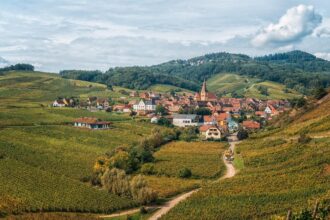
Even if you’re not a wine enthusiast, the surrounding countryside is worth exploring. Scenic roads wind gently through vineyards, passing colourful villages, castle ruins and spectacular viewpoints overlooking the Vosges Mountains and the Rhine Plain. During autumn, when the vines turn brilliant shades of gold, orange and red, this becomes one of the most beautiful drives anywhere in France.
Whether you spend an afternoon visiting a single winery or several days touring the surrounding villages, the Alsace Wine Route is one of the main reasons Colmar has become such a popular destination.

Explore the Alsace Wine Route by Hop-On Hop-Off Bus
If you want to discover more than just Colmar, the KUT’ZIG Hop-On Hop-Off Bus offers one of the easiest ways to explore the famous Alsace Wine Route without hiring a car. This distinctive red open-top convertible bus links some of the region’s most beautiful wine villages, allowing you to hop off, explore, and rejoin the next bus whenever you’re ready.
The route connects Colmar, Ribeauvillé, Riquewihr, Kaysersberg, Turckheim and Eguisheim, making it possible to visit several medieval villages in a single day. Each destination has its own character, from Riquewihr’s remarkably preserved medieval streets and Eguisheim’s circular lanes lined with colourful half-timbered houses to Kaysersberg’s historic centre and vineyards.
The service operates as a continuous loop throughout the day, with tickets valid from 8:30am until 7:00pm. You can board at either Colmar Railway Station or the Colmar Tourist Office near the Unterlinden Museum, before travelling through the vineyards at your own pace. Along the journey, the bus provides multilingual audio commentary via its free mobile app, which also lets you track the bus in real time, view timetables and discover recommended attractions, restaurants and wineries along the route.
One of the biggest advantages of the service is that it removes the stress of driving through unfamiliar villages or finding parking during the busy summer season. Instead, you can simply enjoy the scenery, visit historic centres, browse local markets, sample Alsatian specialities such as tarte flambée, kougelhopf and baeckeoffe, or stop for wine tastings before continuing your journey.
The service normally operates from early April until mid-October, with daily departures during the summer months and weekend services during spring and autumn. Children under three travel free with a paying adult, while wheelchair users can be accommodated with advance notice.
For visitors staying in Colmar who want to experience the surrounding vineyards and villages, this is one of the most convenient and enjoyable day trips in the region, combining sightseeing, local food, wine and spectacular scenery without needing a car.
Visit the Toy Museum
Families visiting Colmar should make time for the excellent Toy Museum (Musée du Jouet), one of the town’s most enjoyable attractions for both children and adults. Housed inside a former cinema, the museum showcases an impressive collection of toys spanning more than 200 years, offering a nostalgic journey through childhood across the generations.
The museum displays thousands of exhibits, including dolls, teddy bears, model railways, construction toys, board games, clockwork toys, miniature vehicles and beautifully crafted doll’s houses. Many displays trace the evolution of toys from the nineteenth century to the modern day, making it fascinating for visitors of all ages.
One of the highlights is the large working model railway, where detailed landscapes, stations and miniature trains delight both children and railway enthusiasts. Interactive exhibits throughout the museum encourage younger visitors to play and explore rather than simply looking at displays behind glass.
Temporary exhibitions are held throughout the year, while family-friendly activities are often organised during school holidays and festive periods. The museum is particularly useful if you’re visiting Colmar with children or looking for an enjoyable indoor attraction during wet weather.
Although it isn’t as famous as the Unterlinden Museum, the Toy Museum provides a fun and relaxing change of pace and demonstrates that Colmar offers much more than medieval streets and historic buildings.
Best Photography and Viewpoints
It’s almost impossible to take a bad photograph in Colmar, but knowing where to go and when to visit can make a huge difference. With its colourful half-timbered houses, peaceful canals, flower-filled balconies and elegant squares, the town offers outstanding photographic opportunities throughout the year.
The most iconic viewpoint is undoubtedly Little Venice, particularly from the bridges crossing the River Lauch. These locations provide classic views of brightly painted houses reflected in the calm water, especially during the early morning, when the canals are at their quietest and the light is soft.
Another favourite location is Place de l’Ancienne Douane, where the colourful buildings surrounding the historic Koïfhus create one of Colmar’s most recognisable scenes. Nearby streets lined with timber-framed houses also reward visitors who enjoy architectural photography.
Don’t overlook the quieter backstreets. Some of the town’s most charming photographs can be taken away from the busiest tourist routes, where ivy-covered buildings, hidden courtyards and flower-filled windows create intimate scenes full of character.
If you’re visiting during autumn, the warm colours of the surrounding vineyards provide an additional backdrop, while December transforms Colmar into one of Europe’s most photogenic festive destinations as thousands of lights illuminate the streets and Christmas decorations appear throughout the town.
Finally, consider returning to Little Venice after sunset. As the historic buildings reflect in the softly lit canals and the crowds begin to thin, Colmar takes on an entirely different atmosphere that many visitors consider even more beautiful than during the day.

Visiting During the Christmas Markets
For many travellers, Colmar reaches its absolute best during the Christmas season. From late November until the end of December, the town transforms into one of the most magical festive destinations in Europe, with beautifully decorated streets, sparkling lights and several traditional Christmas Markets spread throughout the historic centre.
Rather than hosting one large market, Colmar creates multiple themed Christmas Markets, each with its own distinctive atmosphere. Wander between the charming wooden chalets in Place des Dominicains, browse handmade gifts in Place Jeanne d’Arc, enjoy festive food around Place de l’Ancienne Douane and discover family-friendly entertainment in Little Venice, where the canals and colourful houses create an unforgettable backdrop.
Throughout the markets you’ll find stalls selling handmade decorations, artisan crafts, Alsatian pottery, wooden toys, candles, local wines, Christmas ornaments and beautifully wrapped regional delicacies. The scent of mulled wine, gingerbread, roasted chestnuts and freshly baked pastries fills the streets, adding to the festive atmosphere.
As darkness falls, Colmar becomes even more spectacular. Thousands of lights illuminate the medieval buildings, bridges and canals, while festive music drifts through the streets and beautifully decorated shop windows create scenes that seem almost too perfect to be real.
If you’re planning a Christmas visit, book your accommodation many months in advance, as hotels often sell out quickly. Arriving early each morning also allows you to enjoy the markets before the largest crowds arrive.
Whether you’re travelling with family, friends or as a couple, experiencing Colmar’s Christmas Markets is one of the most memorable festive experiences anywhere in France and a fitting highlight of any visit to this remarkable Alsatian town. For 2026 dates, prices and every market square, see our Colmar Christmas Markets guide.

Rupert’s Handy Travel Tips
Planning a visit to Colmar? Here are a few practical tips to help you make the most of the town and the surrounding Alsace Wine Route:
- Explore Little Venice early: The canals and bridges are at their quietest in the morning, giving you more space to enjoy the views and take photographs before the busiest tour groups arrive.
- Allow more than a few hours: Colmar is compact, but its museums, markets, historic buildings, canal cruises and restaurants can comfortably fill a full day. Staying for two or three nights also gives you time to explore the surrounding wine villages.
- Book seasonal experiences ahead: Canal boats, accommodation and popular restaurants can become busy during summer, the autumn wine season and the Christmas Markets, so advance reservations are worth making.
- Explore the Wine Route without driving: The KUT’ZIG Hop-On Hop-Off Bus connects Colmar with Ribeauvillé, Riquewihr, Kaysersberg, Turckheim and Eguisheim, making it one of the easiest ways to visit several villages while still being able to enjoy the local wine.
- Use the train for regional journeys: Colmar has straightforward rail connections with Strasbourg, Mulhouse and Basel, so you can visit without a car and still include the town within a wider Alsace itinerary.
Want to meet the reindeer behind our travel tips? Find out more in our page Who is Rupert?.




Frequently Asked Questions
Is Colmar worth visiting?
Absolutely. Colmar is one of the most beautiful towns in France, famous for its colourful half-timbered houses, peaceful canals, outstanding museums, excellent food and its central location on the Alsace Wine Route.
How long do you need in Colmar?
A full day is enough to explore the main attractions, including Little Venice, the Old Town, the Unterlinden Museum and a canal boat trip. However, two to three days allows time to enjoy the town at a slower pace and explore the surrounding wine villages.
Can you explore Colmar on foot?
Yes. The historic centre is compact and largely pedestrianised, making it easy to reach almost every major attraction within a short walk.
Is Colmar good for families?
Yes. Families will enjoy the Toy Museum, canal boat trips, parks, pedestrian streets and seasonal events, particularly the famous Christmas Markets.
What food should I try in Colmar?
Don’t miss regional specialities including flammekueche, choucroute garnie, baeckeoffe, Kougelhopf and locally produced Alsatian wines such as Riesling, Gewürztraminer and Crémant d’Alsace.
When are Colmar’s Christmas Markets?
The markets usually run from late November until the end of December, although exact dates vary each year. They are widely regarded as some of the finest Christmas Markets in Europe.
Can you visit Colmar without a car?
Yes. Colmar has excellent rail connections with Strasbourg, Mulhouse, Basel and Paris, while the town itself is very easy to explore on foot.
Is Colmar a good base for exploring Alsace?
Definitely. Thanks to its central location, Colmar is one of the best bases for visiting Eguisheim, Riquewihr, Kaysersberg, Turckheim, Ribeauvillé, Hunawihr and many other villages along the Alsace Wine Route.
Further Reading
Basing yourself in Strasbourg first? Our Things to Do in Strasbourg guide covers the cathedral and old town, our Day Trips from Strasbourg guide covers Colmar alongside Riquewihr, Eguisheim and Château du Haut-Koenigsbourg, while our Strasbourg Airport Transfers guide covers arriving in the region.
Planning a longer trip? Our Alsace Wine Route Road Trip guide brings together Strasbourg, Colmar and the region’s fairytale villages into a complete 10-day itinerary.