Reviewed by our editorial team Updated
Discover the Ultimate Alsace Wine Route Road Trip
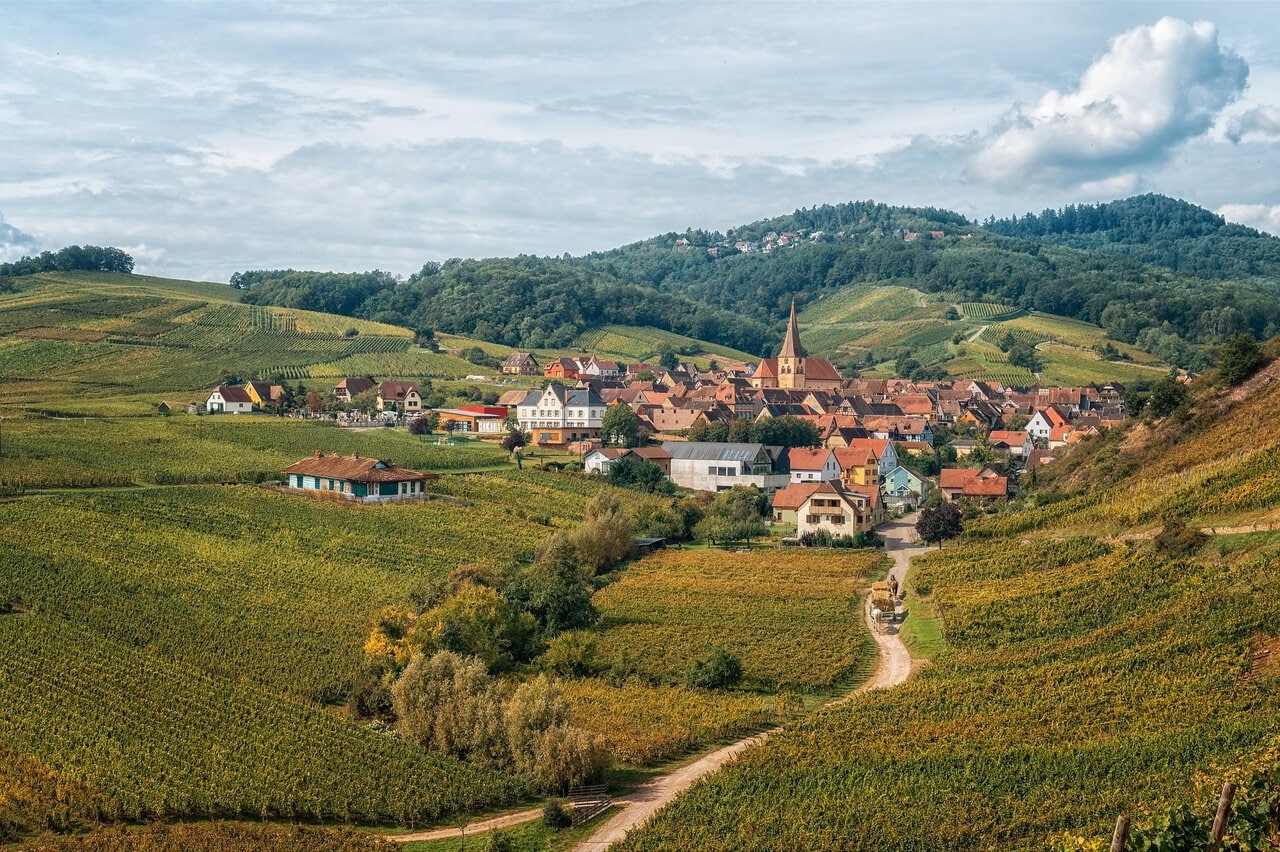
The Alsace Wine Route is one of Europe’s most rewarding road trips, combining colourful medieval villages, rolling vineyards, dramatic mountain scenery and centuries of history into a journey that’s surprisingly easy to explore. Stretching for around 170 kilometres between the northern and southern reaches of Alsace, the route passes through some of the most beautiful villages in France, many carrying the official Les Plus Beaux Villages de France classification.
Unlike many road trips that focus on covering long distances, this itinerary is designed to be enjoyed at a slower pace. The roads are short, the scenery constantly changes and every few kilometres you’ll discover another village filled with half-timbered houses, flower-filled balconies, cobbled streets, welcoming wine cellars and traditional Alsatian restaurants.
Along the way you’ll explore the magnificent city of Strasbourg, wander the canals of Colmar, visit spectacular castles overlooking the Rhine Plain, climb mountain roads through the Vosges, sample some of France’s finest white wines and discover villages that seem almost untouched by time.
Whether you’re travelling during the famous Christmas Markets, visiting in summer when vineyards glow beneath blue skies or arriving in autumn as the vines turn golden, the Alsace Wine Route offers unforgettable scenery throughout the year.
This guide brings together the region’s most iconic destinations into one relaxed itinerary, helping you experience the very best of Alsace without spending your holiday constantly packing suitcases or driving long distances.
At a Glance: Route, Distance and Driving Times
One of the greatest advantages of an Alsace Wine Route road trip is how compact it is. Unlike many driving holidays that involve several hours on the road each day, the distances here are refreshingly short, leaving far more time to explore villages, enjoy leisurely lunches and stop whenever another beautiful viewpoint appears.
The complete itinerary covers approximately 170 to 220 kilometres, depending on the optional detours you choose. Daily driving is generally between 20 minutes and one hour, making this one of the most relaxed road trips in France.
Rather than changing accommodation every night, this itinerary recommends using just two carefully chosen bases.
Spend the first part of your trip in Strasbourg, giving yourself plenty of time to explore the city’s magnificent cathedral, UNESCO-listed historic centre and nearby villages such as Obernai, Andlau and Mittelbergheim.
The second half of the itinerary is based around Colmar, arguably the perfect location for exploring the southern section of the wine route. From here you’ll be within easy reach of Eguisheim, Turckheim, Kaysersberg, Riquewihr, Hunawihr, Ribeauvillé, Bergheim, Neuf-Brisach and several spectacular mountain drives through the Vosges.
Because the route forms a natural north-to-south journey, you can easily begin wherever suits your travel plans, whether you’re arriving by air, rail or continuing from another part of Europe. The itinerary remains equally enjoyable in either direction.
Best for a short trip. Compare rooms by neighbourhood, price and guest rating before you book.
Compare hotelsBest for families, or any stay past about four nights. A kitchen and a washing machine start paying for themselves.
Browse rentalsBest for double-checking. Runs the same search across several booking sites so you are not leaving money behind.
Compare pricesWhen is the Best Time to Visit Alsace?
One of the joys of Alsace is that every season offers a completely different experience.
Spring brings blossoming vineyards, colourful flower displays and pleasantly mild temperatures that are perfect for walking through the region’s historic villages before the busiest tourist crowds arrive. Restaurants reopen their outdoor terraces, vineyards become increasingly green and the surrounding countryside feels wonderfully peaceful.
Summer offers long daylight hours, bustling cafés and warm weather that makes exploring the vineyards particularly enjoyable. Vineyards stretch across the hillsides in vibrant shades of green, while outdoor festivals and wine events take place throughout the region. Although this is one of the busiest periods, the villages never feel quite as crowded as many destinations along the Mediterranean coast.
Autumn is considered by many to be the finest time for an Alsace road trip. Vineyards turn spectacular shades of gold, orange and red, the grape harvest begins and wineries welcome visitors eager to sample the year’s production. Combined with cooler temperatures and quieter roads, it creates ideal touring conditions.
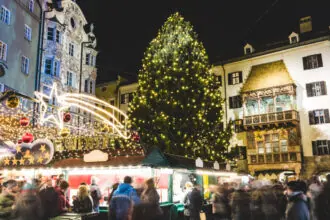
For many travellers, however, nothing compares to December. Strasbourg, Colmar and the surrounding villages transform into one of the world’s greatest festive destinations as the famous Alsace Christmas Markets open. Streets sparkle with lights, traditional wooden chalets fill the town squares and centuries-old buildings provide the perfect backdrop for one of Europe’s most magical winter experiences.
Whatever time of year you choose, Alsace offers beautiful scenery, outstanding food and welcoming villages that reward slow, relaxed exploration.
Choosing Where to Begin Your Road Trip
One of the biggest advantages of this itinerary is its flexibility. Because the route is relatively compact, there’s no single “correct” place to begin your journey. Instead, you can simply join the itinerary wherever it best suits your overall travel plans.
Many visitors naturally begin in Strasbourg, the largest city in the region and home to one of Europe’s finest historic centres. Spending several days here provides an excellent introduction to Alsace before continuing south through the vineyards and villages towards Colmar.
Others prefer to begin in Colmar, particularly if they’re planning to focus on the southern villages of the Alsace Wine Route, including Eguisheim, Riquewihr, Kaysersberg and Ribeauvillé, before finishing in Strasbourg.
Because daily driving distances are short, it also works perfectly as a circular itinerary. Whether you arrive by car, train or plane, you can simply adapt the route to your own schedule without missing any of the major highlights.
The important thing isn’t where you begin; it’s allowing yourself enough time to enjoy the journey. Some of the most memorable moments in Alsace come from stopping at a family-run winery, discovering an unexpected viewpoint across the vineyards or wandering into a quiet village square that wasn’t originally on your itinerary. This road trip has been designed to leave room for exactly those experiences.
Hiring a Car in Alsace
Although Alsace has one of the best regional rail networks in France, hiring a car gives you the freedom to experience the region properly. While major destinations such as Strasbourg, Colmar, Obernai and Sélestat are all easily reached by train, many of the smaller wine villages, scenic viewpoints and mountain roads are far easier to enjoy with your own vehicle.
A car allows you to travel at your own pace. Instead of working around train and bus timetables, you can stop whenever a vineyard catches your eye, visit a family-run winery for a tasting, enjoy lunch in a quiet village square or pull over at one of the many panoramic viewpoints overlooking the Rhine Plain and the Vosges Mountains.
A small or medium-sized car is highly recommended. Villages such as Riquewihr, Eguisheim, Kaysersberg and Ribeauvillé all have narrow historic streets where parking can be limited. Fortunately, each village has well-signposted public car parks located just outside the old town, allowing you to leave the car behind and explore on foot.
When comparing rental companies, check what is included in the price. Unlimited mileage, roadside assistance and suitable insurance cover are all worth considering, particularly if you intend to add optional mountain drives or continue into neighbouring Germany or Switzerland after completing the itinerary.
The roads themselves are a pleasure to drive. The famous Route des Vins d’Alsace passes through vineyards, orchards and rolling countryside, while the higher roads into the Vosges Mountains offer spectacular scenery and very little traffic outside the busiest holiday periods. Driving here is generally relaxed, making it an ideal destination even if you’re not used to European road trips.

Choose Car Hire for your destination
A rental car may be the most practical option if you want to explore areas beyond central your destination without being tied to bus or train schedules.
Comparing both Discover Cars and EconomyBookings can help you see a broader range of prices and vehicle options before booking.

Where to Stay Throughout the Road Trip
One of the biggest advantages of exploring Alsace is that you don’t need to change hotels every night. The region is compact enough that just two carefully chosen bases allow you to explore almost every major attraction while keeping daily driving to a minimum.
For the first part of your journey, stay four nights in Strasbourg. The city itself deserves at least two full days, while its location makes it an excellent base for exploring Obernai, Andlau, Mittelbergheim, Mont Sainte-Odile and Château du Haut-Koenigsbourg. In the evenings, Strasbourg offers an outstanding choice of restaurants, wine bars and cafés, together with one of France’s most beautiful historic centres.
For the second half of the itinerary, move south and spend five nights in Colmar. Widely regarded as the heart of the Alsace Wine Route, Colmar provides easy access to almost every famous wine village within 30 minutes’ drive. Destinations such as Eguisheim, Turckheim, Kaysersberg, Riquewihr, Hunawihr, Ribeauvillé, Bergheim, Neuf-Brisach and Munster are all comfortably reached as day trips.
Using just these two accommodation bases transforms the experience. Rather than repeatedly packing suitcases and checking into new hotels, you’ll have time to enjoy relaxed breakfasts, evening walks through beautifully illuminated old towns and leisurely dinners without worrying about another early departure the following morning.
Both Strasbourg and Colmar offer accommodation to suit every budget, from boutique guesthouses within historic buildings to luxury hotels overlooking canals, vineyards and medieval squares. Booking well in advance is highly recommended if you’re travelling during December, when the famous Christmas Markets attract visitors from around the world.
Explore Strasbourg and the Grande Île (Day 1)
Begin your road trip by discovering one of Europe’s most captivating cities. Strasbourg blends French and German influences more successfully than almost anywhere else, creating a unique atmosphere where Gothic cathedrals, half-timbered houses, canals and modern European institutions sit comfortably alongside one another.
Start your morning at the magnificent Strasbourg Cathedral, whose soaring 142-metre spire dominated the world’s skyline for more than two centuries. Take time to admire the extraordinary Gothic façade before stepping inside to see the remarkable Astronomical Clock, one of the cathedral’s greatest treasures.
From the cathedral, wander through the narrow streets of the Grande Île, the UNESCO World Heritage-listed historic centre that forms the heart of Strasbourg. Elegant squares, traditional Alsatian restaurants, artisan shops and colourful buildings appear around almost every corner, making it one of the most enjoyable cities in France to explore on foot.
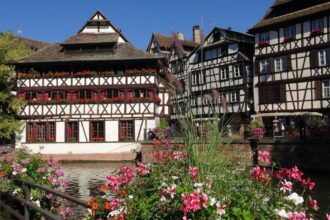
Continue towards La Petite France, where peaceful canals wind between beautifully preserved half-timbered houses once occupied by fishermen, tanners and millers. Cross the historic bridges, pause beside the water and simply enjoy the relaxed atmosphere before stopping for lunch at one of the many waterside restaurants.
During the afternoon, consider taking one of Strasbourg’s excellent canal cruises. Lasting around 70 minutes, these boat trips provide a fascinating introduction to the city’s history while passing landmarks including the Covered Bridges, Barrage Vauban, the European Parliament and the picturesque canals of the old town.
Finish your first day with dinner in the historic centre before enjoying an evening stroll through the illuminated streets. Strasbourg is particularly beautiful after dark, when the cathedral and surrounding buildings are lit dramatically, providing the perfect beginning to your Alsace adventure.
Discover Obernai, Mittelbergheim and Andlau (Day 2)
Leave Strasbourg after breakfast and begin your first journey along the Alsace Wine Route, heading south towards a collection of charming wine villages that are often overlooked by visitors rushing straight to Colmar. Today’s route is relatively short, allowing plenty of time to wander, enjoy long lunches and stop whenever another vineyard view catches your eye.
Your first destination is Obernai, one of the prettiest towns in northern Alsace. Surrounded by medieval walls and colourful half-timbered buildings, Obernai has all the charm of the region’s more famous villages but with a more relaxed atmosphere. Spend the morning strolling through the historic centre, admiring the timber-framed houses around the Place du Marché, climbing the old ramparts and enjoying coffee beneath the colourful façades.
From Obernai, continue around 15 minutes south to Mittelbergheim, officially recognised as one of Les Plus Beaux Villages de France. Unlike many Alsatian villages, its beautiful Renaissance houses are built from distinctive golden sandstone rather than timber, giving the village a completely different appearance. Mittelbergheim is also famous for producing excellent Sylvaner wines, making it a wonderful place to stop at one of the many independent wineries for a tasting.
After lunch, drive just 10 minutes further to Andlau, another delightful wine village with a fascinating history. Dominated by the impressive Abbey of Saints Peter and Paul, Andlau combines historic buildings with peaceful streets lined by traditional winegrowers’ houses. The abbey itself is well worth visiting, particularly for its remarkable Romanesque carvings and centuries of history.
If time allows, explore one of the nearby vineyard walking trails before returning to Strasbourg. The drive back takes around 40 minutes, giving you another opportunity to enjoy the beautiful scenery of vineyards stretching towards the Vosges Mountains.
Today’s journey is intentionally gentle. Rather than trying to see too much, it introduces you to the quieter side of the Alsace Wine Route, where excellent wines, welcoming villages and relaxed countryside set the tone for the rest of your road trip.
Best if you can move a day either way. Shows how the fare changes across the month.
Compare flightsBest for short trips. Install the eSIM at home and arrive with working data, no shop queue.
Browse eSIMsBest when public transport has stopped, or when you are travelling with children and bags.
Book a transferVisit Mont Sainte-Odile and Château du Haut-Koenigsbourg (Day 3)
Today combines two of the most spectacular landmarks in Alsace. One offers breathtaking mountain views and centuries of religious history, while the other is one of the finest medieval castles in France.
Begin with the scenic drive to Mont Sainte-Odile, located around 45 minutes from Strasbourg. Rising high above the vineyards, this historic monastery has welcomed pilgrims for more than a thousand years and is dedicated to Saint Odile, the patron saint of Alsace.
Spend time exploring the peaceful monastery complex before stepping outside to admire the extraordinary panoramic views across the Rhine Plain, the Black Forest in Germany and, on exceptionally clear days, the distant Swiss Alps. If you enjoy walking, follow part of the mysterious Pagan Wall, an ancient stone fortification whose origins remain uncertain and continue to intrigue historians today.
After lunch, continue approximately 45 minutes south to Château du Haut-Koenigsbourg, one of the highlights of the entire road trip. Standing high above the vineyards, the castle dominates the surrounding countryside and appears much as it would have during the Middle Ages thanks to its careful restoration.
Allow several hours to explore its defensive towers, furnished rooms, drawbridges, armouries and panoramic battlements. Information panels throughout the castle explain how it protected one of the most important routes through Alsace for centuries, while the views from the walls stretch across vineyards, forests and villages in every direction.
On your return journey to Strasbourg, consider stopping briefly in Sélestat if time allows, or simply enjoy the scenic drive back through the vineyards before spending your final evening in the city.
Explore Sélestat and Arrive in Colmar (Day 4)
After checking out of your Strasbourg accommodation, begin the short drive south to Sélestat, one of Alsace’s oldest and most historic towns. Often overlooked by visitors heading directly towards Colmar, Sélestat rewards those who stop with beautiful architecture, fascinating history and a much quieter atmosphere than many of the region’s better-known destinations.
Start in the attractive old town, where colourful buildings surround peaceful squares and centuries-old churches reflect the town’s importance during the Middle Ages. One of Sélestat’s greatest treasures is the Humanist Library, a UNESCO-listed collection preserving priceless manuscripts and early printed books that helped shape Renaissance Europe.
Take time to wander through the historic streets before enjoying lunch in one of the town’s traditional Alsatian restaurants.
During the afternoon, continue the 25-minute drive to Colmar, your base for the remainder of the road trip. After checking into your accommodation, spend the rest of the day getting your bearings rather than trying to fit in too much sightseeing.
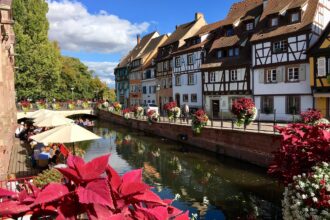
A gentle walk through the historic centre introduces you to colourful canals, flower-filled balconies and beautifully preserved half-timbered houses that have made Colmar famous around the world. Stop for an ice cream beside Little Venice, browse the independent boutiques or simply enjoy a glass of local Riesling while watching the world go by.
You’ll have a full day to explore Colmar tomorrow, so there’s no need to rush. Instead, relax into the slower pace of southern Alsace and enjoy your first evening in what many consider to be the region’s most beautiful town.
Discover Colmar (Day 5)
Today is dedicated to Colmar, widely regarded as the jewel of Alsace and one of the most beautiful towns in France. Although compact enough to explore on foot, Colmar is packed with enough history, architecture, museums and picturesque streets to comfortably fill an entire day.
Begin your morning in the enchanting district of Little Venice (La Petite Venise). Here, colourful half-timbered houses line peaceful canals where small boats drift slowly beneath flower-covered bridges. Arriving early allows you to enjoy the neighbourhood before the busiest crowds arrive and provides some of the best opportunities for photography.
From there, wander through the historic centre, where almost every street reveals another beautifully preserved medieval or Renaissance building. Don’t miss the magnificent Maison Pfister, one of Colmar’s finest historic houses, the impressive Koïfhus (Old Customs House) and the bustling Place de l’Ancienne Douane, where cafés spill into the square during the warmer months.
Art lovers should make time for the outstanding Unterlinden Museum, home to the world-famous Isenheim Altarpiece, widely regarded as one of the greatest masterpieces of Renaissance religious art. Even if museums aren’t normally your priority, the collection is considered one of the finest in France.
For lunch, choose one of the traditional winstubs serving local Alsatian specialities such as flammekueche, choucroute garnie or baeckeoffe, accompanied by a glass of locally produced Riesling or Gewürztraminer.
During the afternoon, consider taking a boat trip through Little Venice, offering a different perspective of the canals and historic buildings. Afterwards, spend time browsing Colmar’s independent boutiques, wine shops and artisan stores before enjoying another relaxed evening in one of Alsace’s most atmospheric towns.
Visit Eguisheim and Turckheim (Day 6)
Today’s journey explores two of the most charming villages along the Alsace Wine Route, each with its own distinctive character yet both surrounded by vineyards producing some of the region’s finest wines.
Begin with the short 15-minute drive to Eguisheim, officially recognised as one of Les Plus Beaux Villages de France. Built in a unique series of concentric circles around its historic centre, Eguisheim is unlike any other village in Alsace. Narrow cobbled lanes wind between brightly coloured half-timbered houses overflowing with flowers, creating one of the most photographed locations in the region.
Spend the morning wandering without a map. Every corner reveals another colourful courtyard, fountain or timber-framed house, while numerous wine cellars invite visitors to sample local wines produced from the surrounding vineyards. Don’t miss the central square, the medieval castle and the many stork nests perched high above the rooftops. The white stork is the symbol of Alsace, and Eguisheim is one of the best places to see them.
After lunch, drive approximately 20 minutes to Turckheim, another beautiful wine village with a fascinating medieval history. Unlike many neighbouring villages, Turckheim still retains much of its original defensive walls and impressive town gates, giving visitors a real sense of stepping back in time.
Stroll through the peaceful streets before walking sections of the old fortifications or following one of the vineyard paths leading into the surrounding countryside. If you’re visiting between May and October, consider returning after dinner to witness Turckheim’s unique Night Watchman Tour, during which the traditional night watchman walks the streets singing historic evening calls that have been performed for centuries.
After another enjoyable day among the vineyards, return to Colmar, where you’ll spend the evening preparing for tomorrow’s journey deeper into the heart of the Alsace Wine Route.
Explore Kaysersberg and the Vosges Mountains (Day 7)
Today combines one of Alsace’s most beautiful villages with the spectacular scenery of the Vosges Mountains, offering a perfect contrast between medieval architecture and natural landscapes.
Begin with the 20-minute drive from Colmar to Kaysersberg, a village regularly voted among the most beautiful in France. Built beside the River Weiss, Kaysersberg is instantly recognisable thanks to its fortified bridge, colourful half-timbered houses and the ruined imperial castle overlooking the rooftops.
Spend the morning wandering through the historic streets before climbing to the castle ruins. The short uphill walk rewards you with magnificent views across the vineyards, surrounding villages and distant mountains. Afterwards, browse the artisan shops and local bakeries before enjoying lunch in one of the village’s traditional restaurants.
During the afternoon, leave the vineyards behind and head west into the Vosges Mountains. As the road climbs through forests and alpine scenery, you’ll discover a completely different side of Alsace.
If weather conditions are favourable, follow part of the famous Route des Crêtes, one of France’s most scenic mountain roads. Originally constructed during the First World War, it now provides spectacular viewpoints overlooking both the Vosges Mountains and the Alsace Plain. Alternatively, visit Lac Blanc, a beautiful mountain lake surrounded by walking trails and panoramic viewpoints, making it an excellent place to stretch your legs before returning to lower ground.
The combination of charming villages, mountain scenery and spectacular viewpoints makes today one of the most varied days of the entire itinerary. Return to Colmar in the evening, perhaps enjoying a final stroll through the beautifully illuminated old town before another overnight stay.
Visit Riquewihr, Hunawihr and Ribeauvillé (Day 8)
Today explores what many people consider to be the most picturesque section of the Alsace Wine Route. The villages are only a few kilometres apart, allowing you to spend less time driving and more time wandering medieval streets, visiting vineyards and enjoying the relaxed pace of life that makes this region so special.
Leave Colmar after breakfast and drive approximately 20 minutes to Riquewihr. Frequently described as one of the most beautiful villages in France, Riquewihr looks almost exactly as it did during the sixteenth century. Colourful half-timbered houses, cobbled lanes, ancient town walls and flower-filled balconies create an unforgettable first impression.
Spend the morning exploring the village on foot. Walk beneath the fortified gateways, climb the historic Dolder Tower, browse the independent wine merchants and artisan shops, and take your time discovering the quiet alleyways that branch away from the main street. Riquewihr is particularly famous for producing outstanding Riesling and Gewürztraminer, making it an excellent place to enjoy a vineyard tasting before lunch.
Just five minutes further north lies the peaceful village of Hunawihr. Smaller and quieter than its neighbours, Hunawihr sits among rolling vineyards and offers a wonderfully authentic atmosphere. Wander through the village to the fortified Church of Saint-Jacques-le-Majeur, which rises above the surrounding vines and provides beautiful views across the countryside.
If time allows, visit the nearby NaturOparC, where visitors can learn more about the region’s famous white storks and native wildlife. The centre plays an important role in conservation and offers an interesting stop for families as well as wildlife enthusiasts.
Continue another five minutes to Ribeauvillé, one of Alsace’s liveliest wine towns. Unlike some of the smaller villages, Ribeauvillé has a wider choice of restaurants, cafés and boutiques, making it an excellent place to spend the afternoon.
Walk along the colourful Grand Rue, admire the elegant Renaissance buildings and medieval squares, and, if you’re feeling energetic, follow one of the walking trails leading towards the ruins of the three castles that overlook the town from the surrounding hills. Even from below, the castles create one of the most recognisable skylines in Alsace.
After dinner in Ribeauvillé, make the short drive back to Colmar, reflecting on a day spent exploring some of the most iconic villages anywhere along the Alsace Wine Route.
Best if you would rather spend the money on the trip than on the room. Compare hostels by location and rating.
Search hostelsBest for anyone flying more than once or twice a year. Handles the compensation claim so you are not chasing the airline.
See AirHelp+Best for a day with a suitcase and nowhere to put it. Find a storage point near where you already are.
View storageDiscover Bergheim and Neuf-Brisach (Day 9)
Your final full day combines two very different but equally fascinating destinations. One is a peaceful medieval wine village hidden behind remarkably complete defensive walls, while the other is one of Europe’s finest examples of military planning and a UNESCO World Heritage Site.
Begin with the short drive to Bergheim, a charming village that many visitors overlook despite it being one of the best-preserved settlements in Alsace. Encircled by almost complete medieval ramparts, Bergheim immediately feels quieter and less commercial than some of its better-known neighbours.
Spend the morning walking sections of the historic walls before wandering through the colourful streets lined with flower-covered half-timbered houses and traditional winegrowers’ homes. Several excellent wineries welcome visitors for tastings, while the surrounding vineyards provide gentle walking routes with beautiful views back towards the village.
After lunch, continue around 20 minutes to Neuf-Brisach, one of the most remarkable fortified towns in Europe. Designed by the legendary military engineer Sébastien Le Prestre de Vauban during the late seventeenth century, the entire town was built from scratch as a perfectly symmetrical fortress to defend France’s eastern frontier.
Today, Neuf-Brisach is recognised as a UNESCO World Heritage Site, and walking around its enormous star-shaped fortifications is one of the highlights of any visit. The layout remains astonishingly intact, with wide streets radiating from the central square and massive defensive walls surrounding the town.
Take time to walk along the ramparts, visit the central Place d’Armes and explore the fascinating visitor centre explaining Vauban’s revolutionary approach to fortress design. If you’re interested in military history or architecture, Neuf-Brisach is unlike anywhere else in France.
Return to Colmar for your final evening on the Alsace Wine Route, perhaps celebrating with one last traditional Alsatian meal and a glass of local wine.
Explore Munster and the Route des Crêtes (Day 10)
The final day of your road trip leaves the vineyards behind once more and heads into the spectacular landscapes of the Vosges Mountains. This is the perfect finale, combining dramatic scenery, traditional mountain villages and one of France’s most enjoyable scenic drives.
Drive approximately 30 minutes from Colmar to the attractive mountain town of Munster, best known around the world for producing the famous Munster cheese. Spend the morning exploring the town before visiting one of the local cheese shops to sample this distinctive regional speciality. Even if you’re not usually a fan of strong cheeses, it’s worth learning about the centuries-old traditions that have shaped farming life throughout the Vosges.
From Munster, begin climbing towards the famous Route des Crêtes. This spectacular mountain road follows the high ridges of the Vosges, linking a series of panoramic viewpoints with sweeping views across the forests, lakes and valleys below. On clear days, you can often see across the Rhine Plain towards Germany’s Black Forest, while looking west across the rolling peaks of the Vosges.
Stop frequently along the route to enjoy the scenery. Popular viewpoints, mountain passes and walking trails provide plenty of opportunities to stretch your legs, while traditional fermes-auberges (mountain farm restaurants) serve hearty Alsatian dishes made using local produce.
If time permits, take a short walk around Lac Blanc, one of the region’s most beautiful mountain lakes, before beginning the drive back towards your accommodation.
The combination of vineyards, medieval villages, castles and mountain scenery perfectly captures everything that makes Alsace such a rewarding destination. Whether you’re ending your journey here or continuing to another part of Europe, you’ll leave having experienced one of the most beautiful and varied road trips in France.
Optional Extensions to Your Alsace Road Trip
If you have a few extra days available, there are plenty of opportunities to extend this itinerary beyond the classic Alsace Wine Route. Thanks to the region’s location at the crossroads of France, Germany and Switzerland, it’s easy to combine the vineyards of Alsace with mountain scenery, historic cities and even additional countries.
One of the best additions is Freiburg im Breisgau in neighbouring Germany. Located just across the Rhine, this vibrant university city is famous for its magnificent cathedral, medieval streets and lively market squares. It’s an excellent destination for a full day and offers a fascinating contrast to the villages of Alsace.
Another worthwhile extension is Basel, where France, Germany and Switzerland meet. The city combines outstanding museums, an attractive medieval old town and beautiful walks along the River Rhine, making it a rewarding destination for anyone interested in art, history or architecture.
Nature lovers should consider spending additional time in the Vosges Mountains. Extend your drive along the Route des Crêtes, visit more mountain lakes, tackle one of the region’s hiking trails or enjoy lunch at one of the traditional fermes-auberges, where local cheeses and mountain specialities remain an important part of Alsatian culture.
If you’re travelling during December, allow an extra day or two simply to experience more of the famous Christmas Markets. Beyond Strasbourg and Colmar, villages such as Riquewihr, Kaysersberg, Eguisheim and Ribeauvillé all host beautiful festive markets, each with its own unique atmosphere.
Finally, wine enthusiasts could easily spend several additional days visiting family-run wineries throughout the region. Many estates welcome visitors for guided tastings, vineyard tours and cellar visits, providing an excellent opportunity to learn more about Riesling, Gewürztraminer, Pinot Gris, Sylvaner and Crémant d’Alsace directly from the producers themselves.

Budgeting for Your Alsace Road Trip
Compared with many other regions of France, Alsace offers excellent value for money, particularly because the driving distances are relatively short and many of the region’s greatest attractions can be enjoyed free of charge.
Your largest expenses will usually be car hire and accommodation. Booking both well in advance is strongly recommended, especially if you’re travelling during the Christmas Market season, when demand is exceptionally high and hotel prices rise significantly.
Fuel costs remain relatively low throughout this itinerary because the total distance covered is modest. Most daily drives are less than an hour, meaning you’ll spend far less on petrol than on many longer European road trips.
Food is another highlight of visiting Alsace. Traditional winstubs and village restaurants often offer excellent value, serving generous portions of regional dishes such as flammekueche, choucroute garnie, baeckeoffe and local desserts. Village bakeries are ideal for affordable breakfasts or picnic lunches, while local wineries often provide tastings for modest fees.
Many of the itinerary’s highlights, including villages such as Eguisheim, Riquewihr, Turckheim, Ribeauvillé, Kaysersberg, Bergheim and Hunawihr, are completely free to explore. Admission charges mainly apply to attractions such as Château du Haut-Koenigsbourg, museums, canal cruises and certain historic monuments.
Travelling during spring or autumn often provides the best balance of lower accommodation prices, quieter roads and pleasant weather, while still allowing you to enjoy everything that makes Alsace so special.
Driving Tips for Alsace
Driving in Alsace is generally relaxed and enjoyable, making it one of the easiest regions in France for a self-drive holiday. Roads are well maintained, signposting is excellent and distances between attractions are refreshingly short.
Most villages have large public car parks located just outside their historic centres. Rather than trying to drive through narrow medieval streets, simply park on the edge of the village and spend the rest of your visit exploring on foot. This is usually inexpensive and often far less stressful.
If you’re travelling during the Christmas Markets, arrive as early as possible. Villages such as Riquewihr, Eguisheim, Kaysersberg and Colmar attract huge numbers of visitors, and car parks frequently fill before mid-morning. Early starts also provide the opportunity to enjoy quieter streets and better photography before the crowds arrive.
The famous Route des Vins d’Alsace is well signposted throughout its entire length, making navigation straightforward even if you decide to leave your planned itinerary for a while. Don’t be afraid to take the occasional detour through the vineyards; you’ll often discover small wineries, scenic viewpoints and peaceful villages that many visitors never see.
Finally, remember that some of the region’s finest views are found on the roads themselves. Rather than treating the drive as simply travelling between destinations, allow time to stop safely at viewpoints overlooking the vineyards, the Rhine Plain and the Vosges Mountains. In Alsace, the journey is every bit as rewarding as the destinations themselves.
What to Pack for Alsace
Packing for Alsace is relatively simple, but a few carefully chosen items will make your road trip considerably more enjoyable.
Comfortable walking shoes are essential. Villages such as Riquewihr, Eguisheim, Kaysersberg and Ribeauvillé are best explored on foot, with cobbled streets, uneven surfaces and occasional hills becoming part of the experience.
If you’re visiting wineries, consider leaving a little extra space in your luggage. Many travellers return home with bottles of local Riesling, Gewürztraminer, Pinot Gris or Crémant d’Alsace, and it’s worth planning ahead if you intend to make a few purchases.
Weather conditions vary throughout the year. Spring and autumn can bring cool mornings and warm afternoons, making lightweight layers ideal. During summer, pack sunglasses, sunscreen and a reusable water bottle for exploring the vineyards, while winter visitors should bring a warm waterproof coat, gloves and sturdy footwear for wandering the Christmas Markets.
A camera is highly recommended. Between the colourful half-timbered houses, medieval castles, flower-filled villages, vineyard landscapes and spectacular mountain viewpoints, Alsace offers countless opportunities for memorable photographs.
Finally, pack slowly and leave a little room. The artisan food shops, Christmas markets, pottery workshops and independent wine merchants you’ll encounter along the route make it surprisingly easy to return home with far more than you arrived with.

Rupert’s Handy Travel Tips
Planning an Alsace Wine Route road trip? These simple tips will help you make the most of one of France’s most beautiful driving routes:
- Don’t rush the villages: It’s tempting to tick off as many places as possible, but villages such as Eguisheim, Riquewihr, Kaysersberg and Ribeauvillé are best enjoyed slowly. Leave plenty of time to wander the back streets, browse local shops and stop for lunch.
- Use Strasbourg and Colmar as your bases: Staying several nights in each city means less packing, shorter daily drives and more time enjoying the region instead of checking into hotels every evening.
- Arrive early during the Christmas Markets: If you’re visiting in December, popular villages become extremely busy by late morning. Early starts make parking easier and let you enjoy quieter streets before the crowds arrive.
- Buy wine at the vineyard: Many independent wineries sell directly to visitors, often at better prices than you’ll find elsewhere. If you’re driving, leave some spare room in your luggage for a few bottles to take home.
- Enjoy the journey as much as the destinations: Some of the best moments come between the villages. Stop at scenic viewpoints, vineyard roads and family-run wineries whenever something catches your eye. The freedom to do exactly that is why this road trip is so special.
Want to meet the reindeer behind our travel tips? Find out more in our page Who is Rupert?.




Frequently Asked Questions
How many days do you need for the Alsace Wine Route?
A 10-day itinerary gives you enough time to explore Strasbourg, Colmar, the famous wine villages, the Vosges Mountains and several historic castles without feeling rushed. If you’re short on time, the route can easily be adapted into a 5 to 7-day trip.
Do you need a car for the Alsace Wine Route?
While many towns are served by trains, a hire car is the best way to explore the smaller villages, vineyards and mountain roads. It gives you the flexibility to stop at wineries, viewpoints and hidden villages whenever you wish.
What is the most beautiful village in Alsace?
This is largely a matter of personal preference, but Riquewihr, Eguisheim, Kaysersberg, Ribeauvillé and Hunawihr are consistently ranked among the most beautiful villages in both Alsace and France.
When is the best time to drive the Alsace Wine Route?
Spring, summer and autumn are all excellent, but many visitors consider autumn the most beautiful thanks to the golden vineyards and grape harvest. December is equally magical when the famous Christmas Markets transform the villages.
Can you visit wineries along the route?
Yes. Hundreds of family-owned wineries welcome visitors throughout Alsace, with many offering guided tastings and cellar tours featuring the region’s famous white wines and sparkling Crémant d’Alsace.
Is the Alsace Wine Route suitable for families?
Absolutely. Alongside the villages and vineyards you’ll find castles, wildlife parks, mountain walks, scenic train rides, boat trips and plenty of open spaces for children to enjoy.
Can you combine the Alsace Wine Route with Germany or Switzerland?
Yes. Thanks to its location on France’s eastern border, it’s easy to extend your road trip into Germany or Switzerland, with destinations such as Freiburg and Basel making excellent additions.
Is this itinerary suitable during the Christmas Markets?
Yes. In fact, it’s one of the best times to visit. Strasbourg, Colmar, Eguisheim, Kaysersberg, Riquewihr and many other villages host some of Europe’s most spectacular Christmas Markets.
Further Reading
Basing yourself in Strasbourg or Colmar along the way? Our Day Trips from Strasbourg guide covers Riquewihr, Eguisheim and Château du Haut-Koenigsbourg in full, while our Visiting Colmar guide covers the jewel of Alsace in detail.
Arriving by air? Our Strasbourg Airport Transfers guide compares trains, taxis, private transfers and car hire options for reaching the region.
Continuing further into eastern France? Our Visiting Metz guide and Visiting Reims guide cover two more of the Grand Est’s finest historic cities.