Reviewed by our editorial team Published
In the far southeastern corner of Estonia, close to the village of Saatse in the Setomaa region, a short stretch of ordinary rural road once carried Estonian traffic briefly out of the European Union and into Russian territory before delivering it back onto Estonian soil less than a kilometre later. Locals and journalists call the anomaly the Saatse Boot (Saatse saabas in Estonian), a nickname drawn from the unmistakable boot-shaped outline the Russian finger of land traces on a map.
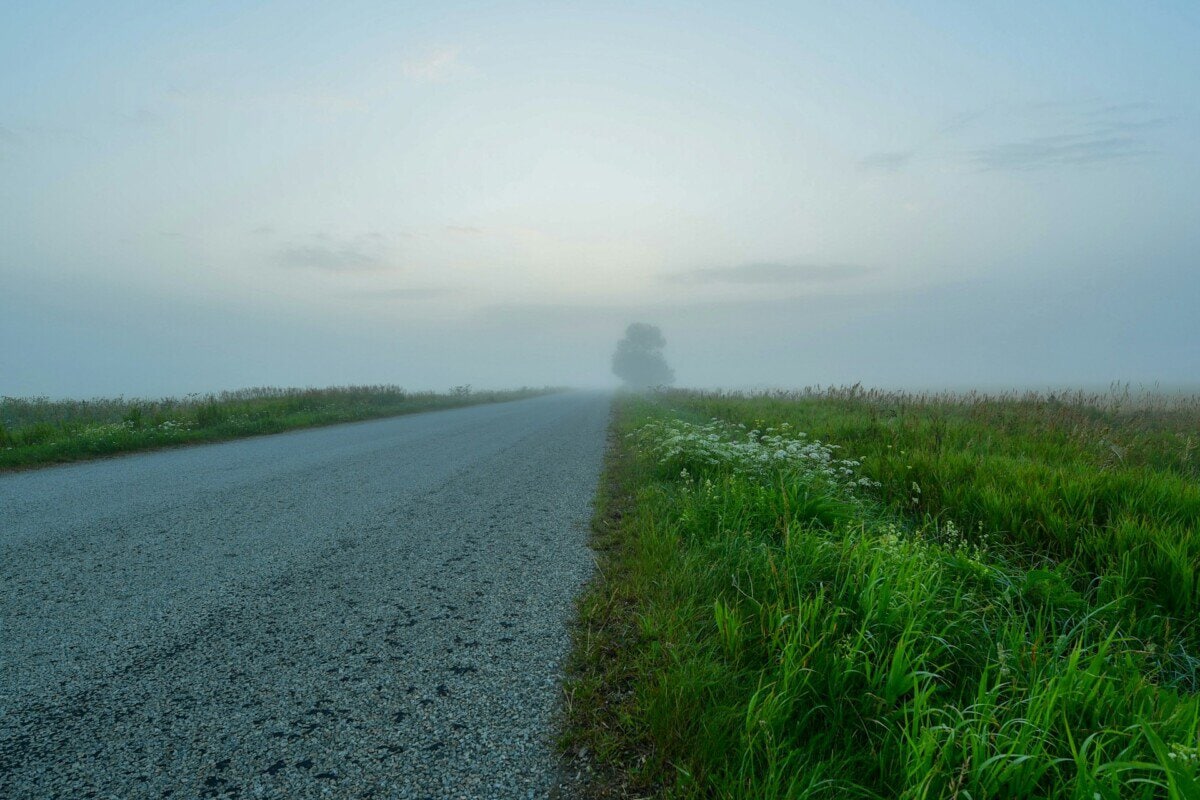
The Boot was never a border crossing in any conventional sense, and for decades it was one of the strangest short drives in Europe rather than anything resembling a checkpoint. A car travelling between two Estonian villages briefly left the EU and NATO’s external frontier, passed through a sliver of the Russian Federation with no gates, stamps or formalities, then re-entered Estonia within about a kilometre, all without the driver needing so much as a passport.
That oddity exists because of a Soviet-era administrative line rather than any deliberate act of diplomacy. Officials redrew a small local boundary near Saatse in the 1950s for reasons of farmland ownership, and nobody expected that internal line to matter again until Estonia’s 1991 restoration of independence turned it overnight into a real international border.
The road itself has not carried ordinary traffic since October 2025, when Estonian authorities permanently closed it after an unusual build-up of Russian personnel was spotted on the Russian side while Estonian cars were still using it. This page sets out exactly what changed, why, and what a traveller can realistically expect to find in Setomaa today.
What makes the Saatse Boot worth its own page, alongside the Friendship Bridge crossing covered in our guide to Things to Do in Narva, is that it is Estonia’s other, far stranger meeting point with Russia, a place where the border itself is the attraction rather than a fortress facing it across a river. It also sits deep inside the culturally distinct Seto homeland, giving a visit here a genuine double interest beyond the border oddity alone.
Where the Saatse Boot Actually Is
The Saatse Boot sits deep in Setomaa, the small, culturally distinct corner of southeastern Estonia that borders Russia’s Pskov Oblast. The anomaly takes its name from the nearby village of Saatse, though the affected stretch of road actually runs a little further north, linking the tiny hamlets of Lutepää and Sesniki.
The road itself is Estonia’s own state road 18178, officially the Värska–Ulitina road, a minor rural route that happened to be built decades ago straight across a finger of land that later became foreign territory. Two separate sections cross onto Russian soil before returning to Estonia, a longer stretch of roughly 870 metres and a much shorter 27-metre section known locally as the Lutepää Triangle.
This is genuinely rural, forested country, closer to the Latvian border than to any Estonian city, and the surrounding villages are tiny and thinly populated even by Estonian standards. Anyone approaching the area is already well off Estonia’s main tourist trail, deep in a landscape of pine forest, small lakes and scattered farms rather than anywhere near a conventional sightseeing route.
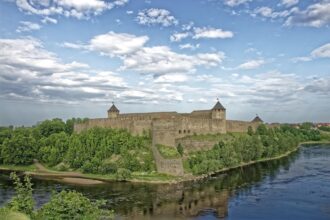
Estonia shares roughly 294 kilometres of land and river border with Russia, and this site’s other dedicated Estonia-Russia border page, the Narva guide linked above, covers the far busier and more visible crossing point at the Friendship Bridge in the country’s northeast. The Saatse Boot is the quieter, stranger opposite number to that, a crossing that isn’t really a crossing at all, tucked into the deep south rather than announced by twin castles facing off across a river.
Reaching the area at all requires a car, since no meaningful public transport runs this far into rural Setomaa, and the nearest towns of any size, Võru and Põlva, both sit a substantial drive away. Anyone planning to see the Boot in person should treat it as part of a wider Setomaa road trip rather than a standalone destination worth a special journey of its own.
How a Soviet Boundary Became a Real Border
Estonia lost a substantial amount of territory to Russia during the Soviet period, when roughly 3,000 square kilometres east and southeast of the country’s pre-war borders were folded into the Russian Soviet Federative Socialist Republic in 1944. The Saatse Boot itself was created a little later, in 1957, when Soviet planners redrew a small local boundary near Saatse to tidy up which farmland belonged to which collective.
None of this mattered while both sides of the line sat inside the same country. The boundary was a purely internal administrative line between two constituent Soviet republics, the sort of division a local farmer might barely notice, right up until the Soviet Union itself began to collapse.
Everything changed when Estonia restored its independence in 1991. The same line that had separated Estonian SSR farmland from Russian SFSR farmland instantly became the external frontier between an independent Estonia and the Russian Federation, without either side redrawing so much as a single fence post.
Estonia and Russia have never fully settled their shared border on paper as a result. A border treaty negotiated in the 2010s reportedly included a plan to swap the Boot and a similar nearby anomaly for an equivalent parcel of Estonian land elsewhere along the frontier, but the agreement stalled before ratification and has never been revived by either government.
That unresolved status is the direct reason the anomaly survived so long, since fixing it needs a negotiated, ratified treaty between two governments rather than a unilateral decision by either side. Only the road itself, not the underlying land or the border line, has now actually changed, and the next section covers exactly what that means today.
Best if you want daily housekeeping and a front desk. Filter by area first, then by price.
Check availabilityBest for longer stays. Whole apartments and houses, so you are not eating out three times a day.
View rentalsBest for double-checking. Runs the same Estonia search across several booking sites so you are not leaving money behind.
Compare pricesCan You Still Drive Through the Saatse Boot
For most of its existence, the Saatse Boot worked on a simple, informal rule: a car or bicycle could pass through the Russian stretch without a visa or any border check, provided it never stopped and nobody got out. Warning signs in Estonian, Russian and English lined the road to remind drivers of exactly that, and pedestrians were never permitted to use the stretch at all.
That arrangement no longer exists. Estonian authorities temporarily closed the road on 10 October 2025 after border guards spotted an unusually large group of Russian personnel on the Russian side while Estonian traffic was still using it, and on 16 October 2025 the government made that closure permanent, installing concrete blocks and fencing across both affected sections.
As of this page’s research in September 2026, the road remains closed and there is no indication it will reopen in its old form. Estonia’s Transport Administration has instead been building a temporary detour around the smaller Lutepää Triangle section, in use since late October 2025, and a longer permanent bypass around the main Boot section that runs entirely on Estonian soil, with completion officially targeted for around October 2026.
Even the bypasses carry unusual restrictions of their own, since parts of the new detour still run close enough to the border that signs prohibit stopping, walking or lingering along it for safety reasons. Local residents who once used the direct road now face a considerably longer drive to reach neighbouring villages, and Estonian border guards have said they now use detours too rather than the old direct route.
Because this situation has changed rapidly over the past year, and because Estonia’s whole eastern border posture has tightened noticeably since Russia’s invasion of Ukraine, nothing in this section should be treated as a permanent fact. Anyone actually planning to travel in the area should check current guidance from Estonia’s Police and Border Guard Board directly before setting out, since local closures and detour routes here have already changed more than once in a short space of time.
What Happens If You Break Down
Because the old road is currently closed to all traffic, the practical question of what happens if you break down inside the Russian stretch does not apply right now. The answer, drawn from how the crossing worked for decades before the closure, is still worth understanding, both for context and in case any similar arrangement ever returns once a new road opens.
The historical rule was unambiguous: a driver whose vehicle failed inside the Boot was expected to stay inside the car rather than get out, and to contact the Saatse border station for help rather than attempt to walk back into Estonia on foot. Stepping outside the vehicle, even to change a tyre a few metres from the Estonian side, would technically have counted as an unauthorised entry into Russian territory.
Whether Estonian emergency services could physically reach a stranded vehicle inside that stretch is not something clearly documented in any source checked for this page, and it would be dishonest to invent a confident answer. What is documented is that Estonian border guards have said plainly they cannot act on Russian territory and cannot guarantee anyone’s safety once inside it, which is part of why the road was closed rather than left open under a stricter rule.
That same uncertainty is part of why this specific stretch attracted so much attention from journalists over the years, since the honest answer to “what if something goes wrong” was always closer to stay put and wait than any clearly rehearsed emergency protocol. It is a genuinely unusual position for a modern European road to have been in, and one more reason the closure, however inconvenient for local residents, removed a real point of risk rather than just an inconvenience.
Once the new bypass fully opens, any breakdown on the replacement route should be an entirely normal Estonian roadside matter, since the new road is being built to stay on Estonian territory throughout. Anyone driving in this area today, on the current detours, should still take the same basic precautions as any remote rural drive, a charged phone, adequate fuel and a clear sense of the nearest settlement.
Is the Saatse Boot Safe to Visit
Visiting the Setomaa villages around the Saatse Boot is, in the ordinary sense, entirely safe. This is a quiet, sparsely populated corner of an EU and NATO member state, not a conflict zone, and the villages here go about a completely normal rural Estonian life.
The specific risk this page needs to be honest about sits right at the border line itself, not across the wider region. The October 2025 closure happened precisely because Estonian border guards observed unusual Russian military movement on the Russian side of what was, until then, an open stretch of road, and officials have said openly they closed it because they could not guarantee anyone’s protection once inside Russian territory.
Tourist curiosity has repeatedly caused real problems here even during ordinary periods, with visitors stopping to photograph the border signs or the boundary line itself, which is against the rules and has led to fines of roughly €80 to €200 (£70-£175/$90-$220). Foreign visitors unfamiliar with the local rules have been disproportionately responsible for these incidents, according to Estonian border police.
This sits inside a wider pattern our Narva guide already covers in detail, since Estonia’s entire border posture with Russia has hardened noticeably since 2022, with tightened crossing hours, suspended vehicle traffic and now a permanently closed road here at Saatse. None of that reflects a specific danger to ordinary tourists staying on the correct side of any line, but it does mean this is not somewhere to approach with outdated assumptions from an older guidebook.
The sensible approach is straightforward: stay well back from any boundary marker or warning sign, never attempt to stop or photograph anything directly at a crossing point, and check current official guidance before travelling rather than relying on this page, or any other, as the final word. Setomaa itself, away from that immediate border line, remains a genuinely rewarding and safe place to spend a day or two.

The Seto People and Their Corner of Estonia
The Saatse Boot sits inside Setomaa, home to the Seto, a small Finno-Ugric ethnic and linguistic minority whose homeland has straddled the Estonia-Russia border since that border was first drawn. Around 15,000 Setos live on the Estonian side today, speaking a distinct South Estonian dialect that outsiders often struggle to follow even with fluent standard Estonian.
What sets the Seto apart most clearly from their Estonian neighbours is religion. While most Estonians are Lutheran or non-religious, the Seto are traditionally Orthodox Christian, a legacy of centuries under the religious influence of the historic monastery town of Pechory, just across the modern border in Russia, which remains the Seto’s historic spiritual centre.
That distinct identity produces a genuinely rich living culture rather than a museum piece. Seto leelo, a haunting polyphonic style of folk singing traditionally performed by women, earned a place on UNESCO’s Intangible Cultural Heritage list in 2009, and it is still sung at festivals across the region today.
The best-known Seto event is Seto Kingdom Day, an annual gathering where locals elect a ceremonial king for the year and crown a leelo group’s lead singer as Mother of Song, alongside craft stalls, traditional food and music running through the day. Wayside Orthodox chapels known as tsässon, small timber shrines scattered through the forest, give the whole region a visibly different character from the rest of rural Estonia.
Värska, Obinitsa and Saatse itself each hold small museums dedicated to Seto farming life and heritage, and the Seto Village Belt driving and cycling route strings the region’s churches, museums and cafes together into a genuinely coherent day out. Anyone drawn to the Boot for its border novelty finds a far deeper reason to linger once they actually spend time among the Seto villages around it.
Why Anyone Is Actually on This Road
The Värska–Ulitina road exists for an entirely mundane reason, not as a novelty detour, since it is the most direct way for people living in the string of small villages east of Värska, places like Sesniki and Lutepää, to reach Värska and the wider Estonian road network without a long loop around. Roughly 191 local residents depend on some version of this route for everyday life, not sightseeing.
For a visitor, the honest reason to come out this way is Setomaa itself rather than the road anomaly alone. Värska, the region’s main hub, has its own working mineral spa built around naturally occurring sulphurous mud and mineral water, alongside a proper Seto farm museum and an Orthodox church dedicated to St George.
From Värska, the road network continues on to Obinitsa, home to a well-regarded Seto museum and the striking Singing Mother monument, and further still to Meremäe and the Luhamaa border crossing, one of Estonia’s genuine, still-functioning vehicle crossings into Russia. Treating the Boot as one stop on a longer loop through these villages makes for a far more satisfying day than driving out purely to see a closed road.
Before the closure, plenty of visitors did also come specifically to experience the oddity of briefly leaving the EU by car, and that novelty value is real even now the road itself is shut. Standing at the current barrier and understanding what the road used to do is still a genuinely interesting stop for anyone already exploring this part of Estonia, just not the drivable curiosity it once was.
Anyone building an itinerary around this corner of the country should allow a full day for Setomaa rather than trying to fit it in alongside somewhere far away like Tartu or Tallinn on the same trip. The region rewards slow travel by car, with small distances between genuinely interesting stops rather than one single headline attraction to rush toward.

Rupert’s Handy Travel Tips
Rupert recommends treating the Saatse Boot as a place to understand and respect rather than a novelty to chase, especially while the old road stays closed and the new bypass is still being finished.
- Check before you travel: confirm the current road and border status with Estonia’s Police and Border Guard Board, since closures and detours here have changed more than once in a short space of time.
- Never stop at a boundary marker: resist the urge to photograph a border sign up close, even where the road is open, since this is exactly what has led to fines for other travellers.
- Carry ID at all times: bring a passport or ID card when exploring border villages, since checks and questions from border guards do happen in this specific area.
- Build in extra driving time: the detours around the closed sections add real distance and can be narrow, so do not assume the old journey times still apply.
- Give Setomaa proper time: pair the Boot with Värska and Obinitsa, since the Seto culture around it is a genuinely bigger draw than the closed road on its own.
Want to meet the reindeer behind our travel tips? Find out more in our page Who is Rupert?.




Frequently Asked Questions
Is the Saatse Boot still open to drive through in 2026?
No. Estonia permanently closed the road through the Boot in October 2025 after unusual Russian military activity nearby, and as of this page’s research it remains closed while replacement bypass roads are completed.
What exactly is the Saatse Boot?
It is the informal name for an 800-900 metre stretch of Estonian road, route 18178, that runs briefly through Russian territory near the village of Saatse in Setomaa, created by a Soviet-era administrative boundary that became an international border in 1991.
Did you need a visa to drive through it?
No visa was ever required for a vehicle passing straight through without stopping, though pedestrians were never permitted to use the stretch at all, only cars and bicycles.
What was supposed to happen if a car broke down inside the Boot?
Drivers were told to stay inside their vehicle and contact the Saatse border station rather than step outside, though official guidance on how quickly help could actually reach a stranded car is not clearly documented anywhere.
Is Setomaa safe to visit?
Yes, the wider Setomaa region is a normal, safe part of Estonia, and the specific risk that led to the road’s closure was confined to the immediate border line itself rather than the surrounding villages.
What is the Seto connection to this area?
The Boot sits inside Setomaa, homeland of the Seto, an Orthodox Finno-Ugric minority with their own dialect, UNESCO-listed leelo singing tradition and distinct culture well worth visiting in its own right.
Further Reading
Travellers curious about Estonia’s other, far more visible meeting point with Russia should read our guide to Things to Do in Narva, which covers the Friendship Bridge crossing and gives a useful sense of how differently the country’s two main border oddities actually work in practice.
Setomaa sits within striking distance of Tartu, Estonia’s second city and a natural base for exploring the country’s southeast, and anyone building a wider itinerary should also check our guide to day trips from Tallinn for how a Setomaa detour might fit alongside the capital’s other easy excursions.