Reviewed by our editorial team Published
Tallinn sits on the southern shore of the Gulf of Finland, and for a growing number of travellers each summer the first real sight of Estonia is the spire-studded skyline of the Old Town rising beyond the harbour wall. The Estonian capital has become a genuine fixture of Baltic capitals cruising, sitting alongside Stockholm, Helsinki and Riga on itineraries that once leaned almost entirely on Scandinavia, with the odd call further east towards St Petersburg before that route largely disappeared.
The Port of Tallinn recorded 118 cruise ship calls and close to 190,000 cruise passengers in 2025, an increase of 18 calls on the year before and part of a wider surge across the Baltic cruise market. That growth sits inside a much larger passenger operation, since the same harbour also handles well over eight million ferry passengers a year on the short hop to Helsinki alone, making cruise traffic a fast-growing but still relatively small slice of a genuinely busy working port.
What sets Tallinn apart from most Baltic cruise calls is not the numbers so much as the geography. The city’s dedicated cruise terminal sits close enough to the medieval Old Town that walking, rather than a coach transfer, is the realistic way most passengers reach the historic centre, and that single fact shapes almost everything else in this guide.
This page covers the practical business of a Tallinn cruise call in full: which terminal ships actually use, how far the walk into the Old Town really is, the shuttle bus, tram and taxi alternatives, what facilities exist at the terminal itself, and how to make the most of a typical six to ten hour call without overreaching. Wherever a specific detail could not be independently confirmed, that has been said plainly rather than guessed.
Tallinn’s Cruise Port at a Glance
The table below summarises where things stand for the 2026 season, checked against the Port of Tallinn’s own figures and current terminal information, before the detailed sections that follow cover each part in full.
| Aspect | Detail |
|---|---|
| Cruise Terminal | Dedicated Cruise Terminal, Old City Harbour (Logi 4/2), opened 2021 |
| Distance to Old Town | Around 1-1.2km, roughly a 15-20 minute walk to the Great Coast Gate |
| 2025 cruise calls | 118 ship calls, around 190,000 cruise passengers |
| Ferry terminals (separate) | Terminal A (Eckerö Line & Viking Line, Helsinki) and Terminal D (Tallink, Helsinki & Stockholm) |
| Nearest tram | Tram T2, Old City Harbour stop, roughly every 10 minutes |
| Cruise season | April-October, plus a small number of winter calls; peak June-August |
Old City Harbour and the Dedicated Cruise Terminal
Tallinn’s passenger port is the Old City Harbour, known locally as Vanasadam, run by the Port of Tallinn immediately north of the medieval centre. The harbour is best known for its two scheduled ferry terminals, Terminal A and Terminal D, but cruise ships do not use either of them.
Cruise vessels instead dock at a separate, purpose-built Cruise Terminal at Logi 4/2, an award-winning building completed in 2021 with a Green Key certification for its environmental credentials. Full details of the building, its rooftop promenade and its use as an events space are published directly by the Port of Tallinn, which remains the most reliable source for anything that changes season to season.
The terminal sits on dedicated cruise quays extended in stages, including a 421-metre berth built between 2013 and 2014 specifically to accommodate larger modern ships up to around 340 metres in length. That investment reflects how much cruise traffic has grown here over the past decade, moving well beyond the occasional mid-size vessel.
For passengers, the practical upshot is a modern, quiet building rather than a crowded commuter ferry hall, since the Cruise Terminal handles nothing but cruise disembarkation and reboarding. Signage throughout points clearly towards the walking route, tram stop and taxi rank, all of which sit within a short distance of the gangway itself.
Best if you want daily housekeeping and a front desk. Filter by area first, then by price.
Check availabilityBest for families, or any stay past about four nights. A kitchen and a washing machine start paying for themselves.
Browse rentalsBest if you have already picked a hotel. Checks the big booking sites for the same room and shows who is cheapest.
Check dealsHow Many Ships Call: Tallinn’s Cruise Season in Numbers
The Port of Tallinn’s own figures for 2025 show a cruise season that grew significantly rather than merely held steady. A total of 118 cruise ship calls brought close to 190,000 passengers ashore, an increase of 18 calls on 2024 and a clear sign that Tallinn’s profile among Baltic capitals cruises continues to rise.
Those calls came from 50 different vessels, of which 11 made their first-ever call at the port, suggesting cruise lines are actively adding Tallinn to itineraries rather than simply repeating an established handful of ships. Fifteen calls in 2025 saw a ship remain in port across two days rather than the standard single afternoon.
Winter cruising, once essentially unheard of in the Baltic, has also arrived at Tallinn. Five calls between November and December 2025 brought 15,588 passengers ashore outside the traditional April to October season, part of a broader trend of shoulder and off-season Baltic sailings that industry reporting describes as growing faster than any other segment.
German passengers made up 44% of Tallinn’s 2025 cruise arrivals, with American visitors close behind at 27%, a figure that had roughly doubled year on year. British passengers accounted for a further 14%, itself a 5% rise, rounding out a passenger mix that skews heavily towards these three nationalities rather than a broad international spread.
Which Cruise Lines Sail to Tallinn
A broad mix of cruise lines includes Tallinn on their Baltic itineraries, from large mainstream operators through to smaller, more specialist ships. Confirmed 2026 calls include vessels from TUI Cruises, AIDA Cruises, MSC Cruises, Norwegian Cruise Line, P&O Cruises and Princess Cruises, spanning German, British and American passenger markets.
Ship sizes vary considerably across this mix, from mid-size vessels carrying around 2,300 to 3,000 passengers up to larger ships such as TUI’s Mein Schiff Relax, which carries over 4,000 passengers on its own. That range means a single sailing day at Tallinn’s cruise terminal can look very different depending on which specific ship happens to be in port.
Confirmed 2026 calls cluster heavily into September and October, alongside a smaller number of dedicated winter sailings in November and December, matching the wider pattern of growing off-season Baltic cruising described in the previous section. Travellers checking a specific sailing should confirm Tallinn’s inclusion directly against that line’s own itinerary rather than assuming.
Not every Baltic capitals cruise calls at every port, and some operators favour a Scandinavia-heavy route with only Stockholm and Helsinki, leaving Tallinn and the wider Baltic states as an optional extension. Checking a sailing’s full port list before booking remains the only reliable way to know whether Tallinn is genuinely included.
Walking From Ship to Old Town
The single biggest reason Tallinn stands out among Baltic cruise ports is how close the ship actually gets to the historic centre. Independent cruise guides and the city’s own tourism site put the distance at somewhere between roughly 1 and 1.2 kilometres, translating into a walk of around 15 to 20 minutes at a normal pace.
The route itself runs along a flat, paved waterfront path from the Cruise Terminal towards the Old Town’s medieval gates, most commonly the Great Coast Gate beside Fat Margaret’s Tower. Passengers heading this way do not need a map to follow it, since signage and the sheer visibility of the Old Town’s spires make the direction obvious from the gangway itself.
This walkability is genuinely unusual by cruise port standards, where a coach transfer or a long walk through an industrial dock area is far more typical. Because the walk is so manageable, a large proportion of Tallinn’s cruise passengers skip organised transport altogether and simply follow the waterfront on foot in both directions.
The one caveat worth flagging honestly is the Old Town itself once inside it, since the medieval streets are heavily cobbled and can be genuinely hard going underfoot, especially with tired legs after a full day of sightseeing. Comfortable, broken-in shoes matter more on a Tallinn cruise call than on almost any other Baltic port day.
Anyone building a return buffer into their day should treat the walk back as taking the same 15 to 20 minutes it took on the way in, rather than assuming a faster pace after a long day. Missing an all-aboard time over a short walk is an entirely avoidable mistake.
Shuttle Buses, Trams and Public Transport
Because the walk into the Old Town is so manageable, organised shuttle buses are far less essential at Tallinn than at most cruise ports, though some cruise lines and local operators still run one on sailing days. Where offered, these typically cost somewhere in the region of €5-10 (£4-9/$6-11) return, dropping passengers at the edge of the Old Town rather than deep inside its pedestrianised streets.
For passengers who would rather use public transport than walk or pay for a shuttle, Tallinn’s tram network reaches the Old City Harbour directly. Tram T2 stops close to the harbour area and runs roughly every 10 minutes from around 5:30am to midnight, connecting the port with the wider city on the same integrated ticketing system used throughout Tallinn.
A standard public transport ticket costs around €2 (£2/$2) and can be bought by tapping a contactless bank card directly, without needing to find a ticket machine or app in advance. This is the same ticketing system covered in our Tallinn Airport Transfers guide, so travellers arriving by air and leaving by sea, or the other way round, use identical tickets throughout.
Hop-on hop-off sightseeing buses also call near the cruise terminal on many sailing days, offering a slower loop around the wider city for passengers wanting to cover more ground than the Old Town alone. A typical day pass runs to somewhere around €20-25 (£17-21/$22-28), worth weighing against simply walking if the Old Town is the main priority for a short call.
Taxis and Private Transfers from the Port
A taxi rank sits outside the Cruise Terminal for passengers who would rather not walk or wait for a tram, and given how short the distance already is, fares into the centre are correspondingly low. Independent cruise guides put a metered taxi fare from the port at somewhere around €5-10 (£4-9/$6-11) for the short hop.
Ride-hailing apps, principally Bolt since Estonia is the company’s home market, offer a similar journey with the fare shown upfront before booking. Bolt is generally considered better value than a street taxi for this specific route, since pricing is transparent and there is no risk of an inflated flat rate aimed at cruise passengers.
A pre-booked private transfer arranged through a cruise line or an independent operator is another option, though given the short distance involved it offers more in comfort and certainty than in genuine time saved over walking or a tram. This tends to suit travellers with mobility needs, young children or simply a preference for door-to-door pickup.
Whichever option is chosen, the practical difference between them at Tallinn is smaller than at almost any other Baltic cruise port, since even the slowest option, walking, still gets passengers into the Old Town well within 20 minutes. That compresses the usual taxi-versus-walk debate into a genuine convenience choice rather than a time-critical one.
Facilities at the Cruise Terminal
The Cruise Terminal itself is a modern, purpose-built facility rather than a converted industrial shed, and its architecture has won awards since opening in 2021. The building holds a Green Key environmental certification and includes an 850-metre rooftop promenade where passengers can walk, sit or simply take in the view over the harbour before or after going ashore.
Independent cruise guides consistently describe free WiFi throughout the terminal building, along with a tourist information point, small souvenir shops and at least one ATM either inside or immediately outside the entrance. These specific amenities are not spelled out in the same depth on the Port of Tallinn’s own site, which focuses more on the building’s design and its use as an events venue, so they are worth treating as generally reliable rather than officially guaranteed.
Currency exchange specifically is harder to confirm as a dedicated terminal facility, and since Estonia uses the euro and card payments are accepted almost everywhere in the city, most cruise passengers will not need to exchange cash at all. Anyone arriving with only non-euro currency should plan to use a card or withdraw euros from an ATM rather than assume an exchange desk will be staffed on every sailing day.
The terminal’s interior leans heavily on Estonian timber and greenery rather than a purely functional waiting hall, and it doubles as an event space capable of holding around 1,400 people outside of cruise season. For passengers, the practical effect is a genuinely pleasant space to wait in either direction, a modest but real advantage over the more utilitarian terminals found at many comparable Baltic ports.
Best for long or awkward journeys. Builds one itinerary out of separate flights.
View flightsBest if you want maps and messaging working the moment you switch your phone on.
See eSIM plansBest if you would rather not work out the transport on arrival. Book it now and forget it.
View transfersMaking the Most of a Single Day in Port
Most Tallinn cruise calls last somewhere between six and ten hours, and the port’s unusual closeness to the Old Town means that window goes considerably further here than at almost any other Baltic stop. A typical call gives a fit and organised traveller a genuinely comfortable half-day inside the UNESCO-listed medieval centre, rather than the rushed dash some other ports demand.
Because this guide focuses specifically on getting ashore and using the time well, it is worth reading alongside our dedicated Best Things to Do in Tallinn guide, which covers Town Hall Square, Toompea Hill and the city’s other headline sights in far more depth than a shore-day section can. That guide, alongside our Tallinn UNESCO guide, is the better starting point for deciding exactly what to prioritise once ashore.
For a shorter six-hour call, most experienced visitors recommend concentrating entirely on the Old Town itself rather than venturing further afield, since the walk in and out alone already accounts for a meaningful chunk of the day. A longer eight to ten hour call opens up realistic time for a short excursion beyond the medieval core, such as Kadriorg Palace or one of the city’s museums, without sacrificing time in the Old Town itself.
Building in a buffer of at least 30-45 minutes before the ship’s all-aboard time remains sensible regardless of how the day is spent, since the walk back, while short, still takes real time after a full day exploring. Old Town’s narrow lanes are easy to lose track of time in, and missing an all-aboard call is a serious problem rather than a minor inconvenience.
DIY Exploring or a Ship-Organised Excursion
Tallinn is one of the clearest cases among Baltic cruise ports where independent exploring genuinely outperforms a ship-organised excursion for most passengers. With the Old Town reachable on foot in under 20 minutes and its streets easy to navigate without a guide, there is comparatively little a coach-based tour adds that a confident traveller cannot achieve alone.
Ship-organised excursions still make sense in specific circumstances, particularly for passengers wanting a guided introduction to the Hanseatic history covered in our UNESCO guide, or for anyone travelling with mobility needs who would rather have transport arranged and a fixed return time guaranteed. A group tour also removes any risk of misjudging the walk back and missing the ship.
For everyone else, the case for going independently is strong precisely because Tallinn rewards unstructured wandering more than a fixed itinerary. Narrow medieval lanes, hidden courtyards and quiet corners away from Town Hall Square are exactly the kind of detail a fixed-route coach excursion tends to miss entirely.
A reasonable middle ground, used by many experienced cruise passengers, is booking a short guided walking tour of the Old Town’s headline sights for the first hour or two ashore, then spending the remaining time exploring independently at their own pace. That combination gives the historical context of a guide without giving up the flexibility that Tallinn’s compact, walkable centre makes so easy to use well.
The Cruise Terminal Is Not the Ferry Terminal
Tallinn’s Old City Harbour handles both cruise ships and the busy scheduled ferry routes to Helsinki and Stockholm, and it is worth being clear that these use physically separate facilities. Cruise ships dock at the dedicated Cruise Terminal, while the passenger ferries covered in our own Ferry Routes from Tallinn guide use Terminal A and Terminal D elsewhere in the same harbour.
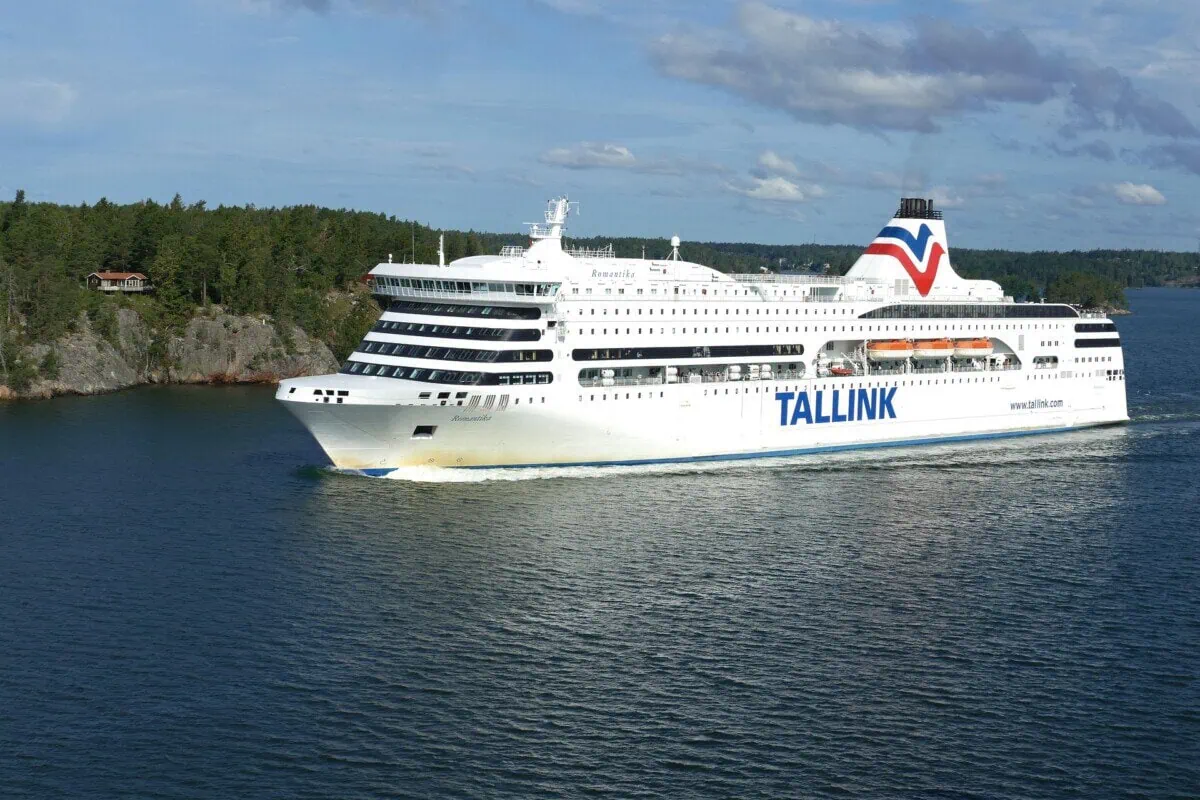
Terminal A serves Eckerö Line and Viking Line sailings to Helsinki, while Terminal D handles Tallink’s services to both Helsinki and Stockholm, and neither building is the one a cruise passenger will walk through on disembarkation day. A separate Terminal B sits connected to Terminal A to help manage passenger flow on the Helsinki route specifically, again with no cruise involvement.
This distinction matters mostly for anyone researching Tallinn online and finding ferry-focused information that does not quite match their own cruise itinerary, since search results for the port frequently blend the two kinds of traffic together. A cruise passenger following directions meant for a Helsinki ferry passenger could easily end up at the wrong building entirely.
In practice, cruise line documentation and the ship’s own port information will always specify the Cruise Terminal by name, so this is more a point of clarity for independent research than a genuine risk of confusion once aboard. Anyone combining a cruise call with a later, separate ferry trip should simply treat the two as different destinations within the same wider harbour.

When Tallinn’s Cruise Season Runs
Tallinn’s cruise season follows the broader Baltic pattern, running principally from April through October, with the busiest months for ship calls typically falling across June, July and August. Outside that window, reduced daylight and colder conditions make Baltic Sea cruising far less common, though it is no longer entirely absent, as the winter figures below show.
Summer brings the most reliable weather for a day ashore, with average highs typically in the high teens to low twenties Celsius and long daylight hours thanks to Tallinn’s northern latitude. Rain remains possible even in peak summer, usually arriving as short showers rather than the kind of prolonged wet spell that would spoil a shore day entirely.
Notably, the Port of Tallinn recorded five genuine winter cruise calls in November and December 2025, bringing over 15,000 passengers ashore well outside the traditional season. This kind of shoulder and winter cruising is a genuinely newer development across the Baltic, and travellers on one of these calls should pack considerably more warmly than a summer sailing would require.
Shoulder-season calls in April, May, September and October bring noticeably cooler temperatures and a higher chance of persistent rain than midsummer, so passengers on early or late-season sailings should pack proper layers rather than relying on a summer wardrobe. Baltic weather this far north can turn quickly regardless of the calendar date, whatever the season’s average suggests.
Combining a Cruise Call with a Longer Stay in Estonia
Some travellers use a Tallinn cruise call purely as an introduction before returning independently for a longer stay, while others extend a cruise itinerary with a pre- or post-cruise night or two in the city itself. Both approaches make particular sense here, given how much more of Tallinn rewards exploration than a single shore day can realistically cover.
Anyone flying in independently around a cruise date should read our dedicated Tallinn Airport Transfers guide, which covers the tram, bus and taxi options from Lennart Meri Tallinn Airport in detail, including the direct Tram T2 connection towards the Old City Harbour area covered throughout this guide.
For a deeper understanding of what makes the Old Town itself worth a longer visit, our Tallinn UNESCO guide covers the medieval fortifications, Toompea Hill and the city’s Hanseatic history in far more depth than a single afternoon ashore allows. Travellers extending their stay by even one extra night typically find that additional context genuinely changes how the Old Town reads once they are back inside it.
Anyone planning to get around the wider city rather than sticking to the Old Town alone should also look out for our Tallinn Public Transport guide, which covers the tram and bus network referenced throughout this page in considerably more depth. Combining that network with the walkability covered here makes an extended Tallinn stay noticeably easier to plan than in most comparable European capitals.
Accessibility at the Cruise Terminal
The Cruise Terminal itself, opened in 2021, was built to modern accessibility standards and is largely step-free from the gangway through to the waiting hall, taxi rank and tram stop nearby. Cruise lines typically coordinate directly with the terminal for any passenger requiring particular assistance during disembarkation, the same as at most modern European cruise facilities.
The walking route into the Old Town, while genuinely convenient for most passengers, does involve some uneven paving once inside the historic core itself, where cobbled medieval streets are the norm rather than the exception. Travellers with mobility concerns may prefer a taxi or Bolt for at least the return leg, even where the outbound walk feels manageable.
Wheelchair-accessible taxis can generally be arranged with advance notice through the terminal, a chosen shore excursion operator or the cruise line itself, and organised tours running on busier call days typically offer at least one accessible vehicle option. Confirming specific accessibility needs directly with the cruise line before travel remains the most reliable way to guarantee suitable transport on arrival.
For passengers with particular requirements, contacting the Port of Tallinn or the relevant cruise line directly ahead of the sailing date is generally more reliable than relying on general guidance alone, since facilities and available support can vary depending on which specific berth a ship is assigned within the wider cruise quay.

Rupert’s Handy Travel Tips
Tallinn is about as easy as Baltic cruise ports get, so knowing exactly where to walk and which terminal is which saves any confusion on the day.
- Walk if you can: it’s only 15-20 minutes to the Great Coast Gate, one of the shortest walks of any Baltic cruise port.
- Don’t mix up the terminals: your ship uses the Cruise Terminal, not Terminal A or Terminal D, which are for the Helsinki and Stockholm ferries.
- Download Bolt before you land: it’s Estonia’s home-grown ride-hailing app and shows your fare upfront.
- Wear proper shoes: Old Town’s cobbles are hard going after a full day on your feet.
- Check the season: five genuine winter cruise calls reached Tallinn in late 2025, so don’t assume the port is summer-only.
- Set a return alarm: the walk back to the terminal takes the same 15-20 minutes it did on the way in.
Want to meet the reindeer behind our travel tips? Find out more in our page Who is Rupert?.




Best for solo travellers and anyone watching the budget. Dorm beds and private rooms in the same search.
Browse hostelsBest if you have ever given up on a claim. AirHelp checks whether the flight qualifies and pursues it for you.
See the benefitsBest for a day with a bag and nowhere to put it. Find a storage point near where you already are.
View storageFrequently Asked Questions About Tallinn’s Cruise Port
How far is the Tallinn cruise terminal from the Old Town?
Around 1 to 1.2 kilometres, roughly a 15 to 20 minute walk to the Great Coast Gate near Fat Margaret’s Tower.
Do cruise ships use the same terminal as the Helsinki and Stockholm ferries?
No. Cruise ships dock at a dedicated Cruise Terminal, while the ferries use Terminal A and Terminal D elsewhere in the Old City Harbour.
How many cruise ships call at Tallinn each year?
The Port of Tallinn recorded 118 calls and around 190,000 cruise passengers in 2025, an increase of 18 calls on 2024.
Is it easy to walk into Tallinn’s Old Town from the cruise terminal?
Yes, via a flat, paved waterfront path, although the cobbled medieval streets inside the Old Town itself can be tough underfoot.
Is there a shuttle bus from the Tallinn cruise terminal?
Some cruise lines and local operators run one, typically around €5-10 (£4-9/$6-11) return, though many passengers skip it given how short the walk is.
What tram connects the cruise terminal to the city?
Tram T2 stops near the Old City Harbour and runs roughly every 10 minutes throughout the day.
Does Tallinn have a winter cruise season?
A limited but genuine one. Five calls in November and December 2025 brought over 15,000 passengers ashore outside the traditional April to October season.
Do I need a guided excursion to see Tallinn’s Old Town?
Not really, given the port’s proximity and the compact, easy-to-navigate medieval centre, although a short guided walk can add useful historical context.
Further Reading
If this cruise call is part of a longer stay in Tallinn, our Best Things to Do in Tallinn guide covers the city’s headline attractions, Cold War sites and wider Estonia excursions in far more depth than a single shore day allows.
Travellers arriving or leaving by air around their cruise dates should also read our Tallinn Airport Transfers guide, which explains the tram, bus and taxi options from Lennart Meri Tallinn Airport in full.
For the wider Baltic ferry network operating from the same harbour, though from entirely separate terminals to the cruise berth covered here, our Ferry Routes from Tallinn guide details the Helsinki and Stockholm crossings in depth, while our Tallinn UNESCO guide explores the medieval Old Town’s history and architecture that make the short walk ashore so worthwhile.
Anyone planning to explore beyond the Old Town on foot should also look out for our Tallinn Public Transport guide, which covers the tram and bus network referenced throughout this page, alongside the wider Estonia content already published across the site.