Reviewed by our editorial team Published
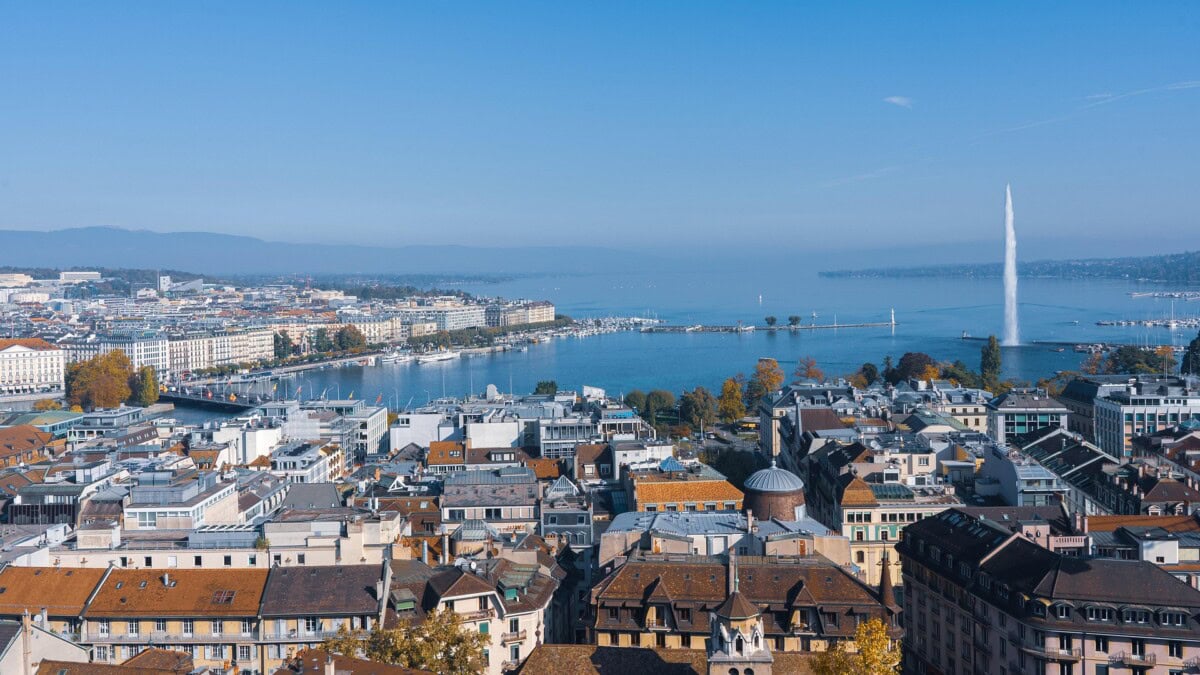
Geneva sits at the western tip of Lake Geneva, wedged between the Jura mountains and the French Alps, and functions as a genuinely unusual mix of Swiss precision and international diplomacy. It is Switzerland’s second-largest city but French-speaking rather than German, and it hosts more international organisations per head than almost anywhere else on earth, including the United Nations, the Red Cross and CERN.
That combination gives things to do in Geneva a split personality. One half of the city is medieval lanes, lakeside promenades and the towering Jet d’Eau fountain that has become its unofficial symbol, while the other half is glass-fronted diplomatic compounds, humanitarian museums and one of the world’s largest particle physics laboratories sitting just outside the city limits.
Most visitors arrive through Geneva Airport, one of the quickest airport-to-city-centre transfers in Europe, with the train reaching Cornavin station in under ten minutes. Geneva also doubles as a launchpad for the wider Alps, and travellers combining a city stay with a ski trip should look at our guide to Geneva Airport to ski resorts before booking transport onward.
What follows is a walk through the best individually developed things to do in Geneva, from the cobbled Old Town and its cathedral to the lakeside baths, the UN’s Palais des Nations and the CERN Science Gateway just outside the city. Each entry covers what makes the attraction worth the detour, how to reach it, roughly how long to allow, and current pricing where a ticket is involved.
| Attraction | Type | Good For |
|---|---|---|
| Old Town (Vieille Ville) | Historic quarter | First stop, cobbled streets, cafes |
| St. Pierre Cathedral | Cathedral, tower, archaeological site | History, views, architecture |
| Jet d’Eau | Lake fountain | Photos, city icon |
| Jardin Anglais and Flower Clock | Lakefront park | Strolling, photos, families |
| Broken Chair | Sculpture | Quick photo stop |
| Bains des Pâquis | Lakeside baths | Swimming, sauna, sunset views |
| Parc des Bastions | City park | Walking, giant chess, shade |
| Palais des Nations | UN Geneva, guided tours | Diplomacy, world affairs |
| Red Cross and Red Crescent Museum | Museum | History, humanitarian work |
| Patek Philippe Museum | Watchmaking museum | Watch enthusiasts, design |
| Museum of Art and History | Museum | Fine art, rainy days |
| Carouge | Artists’ quarter | Shopping, cafes, atmosphere |
| CERN Science Gateway | Science centre | Families, science fans |
| CGN Lake Cruises | Paddle steamer cruises | Scenery, Mont Blanc views |
Old Town (Vieille Ville): Cobbled Lanes and Geneva’s Oldest Quarter
Geneva’s Old Town, known locally as the Vieille Ville, climbs a low hill directly above the lake and forms the oldest surviving part of the city. Narrow cobbled lanes, tall shuttered townhouses and quiet inner courtyards give it a noticeably different feel from the glass diplomatic quarter just a few streets away.
It sits within easy walking distance of both Cornavin station and the lakefront, so most visitors simply wander up from wherever they are already staying. The natural entry point is Place du Bourg-de-Four, Geneva’s oldest square, lined with cafe terraces that fill up from late morning onward.
Beyond the square, look out for the Maison Tavel, generally regarded as Geneva’s oldest surviving private house and now a small museum of city history, and the arcaded Grand-Rue, where a plaque marks the birthplace of philosopher Jean-Jacques Rousseau. Antique shops and independent boutiques cluster along these same streets.
Wandering the Old Town costs nothing beyond time, and most visitors spend an hour or two here, longer if the cafes prove tempting. It also serves as the natural approach to St. Pierre Cathedral, which sits right at its centre and is covered in the next section.
Geneva by Open-Top Bus and Mini-Train
Visitors who would rather sit back than walk between sights can cover much of central Geneva on a combined sightseeing tour that pairs an open-top bus with two separate mini-trains. The bus loop runs through Geneva’s international district, passing the United Nations buildings and the wider cluster of humanitarian organisations that give the city its diplomatic reputation, with commentary pointing out what each one does. A first mini-train then winds through the Old Town’s narrow lanes, taking in St. Pierre Cathedral, the University of Geneva and the Reformation Wall at a pace too slow for a bus but comfortable for anyone who would rather not walk it.
A second mini-train, running only from June to mid-September, follows the lakefront through Geneva’s parks and gardens, with views across to Mont Blanc on a clear day. Altogether the three legs take around two and a half hours, though the ticket itself stays valid for a full 24 hours, so it is possible to split the tour into two shorter sittings rather than doing it all in one go. An audio guide is available in five languages, and while the bus is billed as hop-on hop-off, most of its stops work better as photo pauses than genuine boarding points. Tickets start from around CHF 35 (£32/€37/$40) per person, bookable online in advance.
Best if you want daily housekeeping and a front desk. Filter by area first, then by price.
Check availabilityBest for longer stays. Whole apartments and houses, so you are not eating out three times a day.
View rentalsBest if you have already picked a hotel. Checks the big booking sites for the same room and shows who is cheapest.
Check dealsSt. Pierre Cathedral: Towers, Relics and an Underground Roman Site
St. Pierre Cathedral anchors the Old Town both physically and historically, standing on a site that has held a place of worship since Roman times. Its exterior is a genuine architectural mismatch, a Gothic and Romanesque core topped with an eighteenth-century neoclassical facade, a combination that somehow works despite clashing on paper.
The cathedral is closely tied to John Calvin, who preached here during the Reformation, and his plain wooden chair still sits inside as a reminder of the building’s Protestant austerity. General admission to the cathedral interior itself is free, and it is open most days outside of services.
Beneath the cathedral, the archaeological site (Site archéologique) reveals foundations stretching back through Roman, early Christian and medieval building phases, viewed via walkways beneath the current floor. Entry to this underground site is also free, making it one of the best-value stops in the whole city.
Climbing the cathedral’s north tower costs CHF 7 (£6/€7/$8) and involves a spiral staircase of well over a hundred steps, rewarded with a genuinely wide panorama over the Old Town rooftops, the lake and, on a clear day, Mont Blanc itself. Allow roughly an hour to see the cathedral, the underground site and the tower together.
Geneva City Pass: Is It Worth the Money?
For visitors planning to pack in several paid attractions, the Geneva City Pass bundles free or discounted entry to around sixty activities across the city into a single ticket. Coverage runs well beyond the obvious museums, taking in lake cruises, guided tours and even outdoor extras like rafting and pedal-boat hire on the lake. A pass bought with transport included also covers the entire public transport network for its duration, meaning buses, trams, trains and the little shuttle boats that cross the harbour all become free to use.
The pass comes in 24, 48 and 72-hour versions, and the clock only starts running once the first activity is redeemed rather than from the moment of purchase, so there is no rush to use it the second it is bought. Typical savings include free entry to the International Museum of the Reformation, which otherwise costs CHF 13 (£12/€14/$15), and a complimentary round trip on the Salève cable car, normally around CHF 17 (£15/€18/$20). Each included activity can only be redeemed once and cannot be combined with other discounts, and both printed and digital versions of the pass are available.
Add up admission separately for a typical diplomatic-quarter day and the total climbs quickly. A Palais des Nations tour at CHF 25 (£23/€26/$30), the Red Cross and Red Crescent Museum at CHF 15 (£14/€16/$18) and the cathedral tower at CHF 7 (£6/€7/$8) already come to CHF 47 (£42/€49/$56) before a single tram fare is paid.
A museum-and-lake combination adds up just as fast. The Patek Philippe Museum at CHF 10 (£9/€11/$12), the Red Cross Museum at CHF 15 (£14/€16/$18) and a short CGN lake cruise at CHF 21 (£19/€22/$25) total CHF 46 (£41/€48/$55), and stacking both days of admissions across a 48-hour stay pushes the combined total to CHF 93 (£84/€98/$112).
The Geneva City Pass itself doesn’t publish one fixed rate to weigh directly against these totals, since pricing varies by tier and season. What matters is the shape of the maths: anyone realistically planning three or four paid attractions like these across a 48 or 72-hour stay is comfortably clearing CHF 90 (£81/€95/$108) in admissions alone, which is exactly the kind of total a multi-activity pass is designed to beat.
Jet d’Eau: Geneva’s Towering Lake Fountain
No list of things to do in Geneva gets far without the Jet d’Eau, the towering fountain that shoots lake water roughly 140 metres into the air and has become the city’s defining image. It began life in the 1880s as a pressure-release valve for a hydraulic power network before Geneva realised it made a rather spectacular landmark in its own right.
Around 500 litres of water per second are forced upward at roughly 200 kilometres per hour, and the fine spray drifts visibly across the harbour whenever the wind picks up. It runs during daylight hours nearly year round, pausing only in frost or particularly strong wind, and lights up after dark between spring and autumn.
The best vantage point is the Jetée des Eaux-Vives, the breakwater jutting out toward the fountain itself, reachable on foot along the lakefront promenade in around fifteen minutes from the Old Town. Standing at the end of the jetty on a breezy day means accepting you will get at least a little wet.
Seeing the Jet d’Eau costs nothing and takes as little as ten minutes, though most visitors linger longer for photographs, especially at sunset when the spray catches the light. It pairs naturally with a longer walk along the promenade toward the Jardin Anglais, covered next.
Jardin Anglais and the Flower Clock
Where the lake narrows into the Rône, the Jardin Anglais forms a small, formal lakefront park that has been Geneva’s favourite spot for a slow stroll since the nineteenth century. It sits directly between the Old Town and the harbour, so almost every walking route through central Geneva passes through it at some point.
Its best-known feature is the Flower Clock, a working timepiece planted with several thousand flowering plants that are replanted through the seasons to keep the display fresh. It has run since the 1950s and is often cited, with a touch of local pride, as having the largest second hand of any clock in the world.
Beyond the clock, the park offers shaded benches, lake views back toward the Jet d’Eau, and a genuinely good people-watching spot in warm weather, when locals picnic on the grass rather than crowd the paths. Ducks and swans work the shoreline just below, adding a bit of life to the scene.
Visiting is free and takes as little as fifteen minutes, though it is easy to linger far longer given the setting. Most itineraries link the Jardin Anglais with the Jet d’Eau and the Old Town into a single easy lakefront loop.
Broken Chair: A Giant Sculpture Facing the UN
Standing roughly twelve metres tall outside the Palais des Nations, the Broken Chair is a striking wooden sculpture of a chair missing one of its legs, created by artist Daniel Berset. It was installed in 1997 as a protest against landmines and cluster munitions, and has since become one of Geneva’s more unusual photo stops.
Its location on the Place des Nations, directly facing the UN’s Geneva headquarters, is deliberate, placing a symbol of civilian suffering right at the doorstep of the organisations working on disarmament and humanitarian law. The scale of the piece only really registers once you are standing beneath it.
Getting there is straightforward on tram lines 13, 15 or 18 to the Nations stop, a journey of around ten minutes from the city centre. Seeing the chair itself takes only a few minutes, but its position makes it an easy add-on to a visit to the Palais des Nations or the Red Cross museum nearby.
There is no charge to view the sculpture, and it sits in an open public square that is accessible at any time of day. Combining it with the two attractions covered next turns a five-minute photo stop into a half-day exploring Geneva’s international quarter.
Palais des Nations and UN Geneva
The Palais des Nations was built in the 1930s as the headquarters of the League of Nations and today serves as the United Nations Office at Geneva, the largest UN site outside New York. Its scale alone is worth the visit, with sweeping marble halls, extensive gardens and a globe donated by the United States sitting out front.
Entry is only possible on a guided tour, which takes visitors through the Assembly Hall and the Human Rights and Alliance of Civilizations Room, the latter famous for its dramatic painted ceiling. Tours run in multiple languages and last around an hour, led by UN staff rather than external guides.
Adult tickets cost CHF 25 (£23/€26/$30), with reduced rates of CHF 22 (£20/€23/$27) for students and seniors and CHF 14 (£13/€15/$17) for youth aged fourteen to seventeen. Booking is done through the official UN Geneva visitor platform, where new dates are released on the twentieth of each month for the following month.
Individual tour slots sell out quickly, so it is worth booking well ahead rather than turning up on the day. Arrive at the Pregny Gate at least thirty minutes early for the mandatory security screening, and bring photo ID, since it is checked before badges are issued.
Best for finding routes the airlines do not sell as a single ticket. Combines carriers to bring the fare down.
Search flightsBest for short trips. Install the eSIM at home and arrive in Geneva with working data, no shop queue.
Browse eSIMsBest after a long flight or a late landing. Price agreed before you travel, and no taxi queue.
Check transfersRed Cross and Red Crescent Museum
A short walk from the Palais des Nations, the International Red Cross and Red Crescent Museum tells the story of the humanitarian movement founded in Geneva by Henry Dunant in 1863. The building itself is worth noting, a striking modern structure set partly below ground level with a courtyard of stone figures representing crowds of refugees.
Inside, the museum leans heavily on immersive, emotionally direct exhibits rather than glass cases of artefacts, covering conflicts, disasters and the movement’s response to them from the nineteenth century through to the present day. Some sections deal with genuinely difficult subject matter, so it is worth pacing a visit accordingly with children.
A combined ticket covering both the permanent and temporary exhibitions costs CHF 15 (£14/€16/$18) for adults, with the museum open Tuesday to Sunday from 10am to 5pm and staying open until 8pm on Thursdays. It is closed on Mondays and a handful of public holidays through the year.
Most visitors need an hour and a half to two hours to do the exhibits justice, making it one of the more substantial museum visits in this guide. Its proximity to the Broken Chair and Palais des Nations makes it easy to fold into the same outing.
Patek Philippe Museum: Swiss Watchmaking Craftsmanship
Switzerland’s watchmaking heritage gets a dedicated home at the Patek Philippe Museum, tucked into a converted early-twentieth-century workshop building in the Plainpalais district. It houses one of the world’s finest collections of antique and modern watches, enamels and automata, much of it drawn from the manufacturer’s own archives.
The lower floors cover the tools and techniques of traditional watchmaking, including working demonstrations of enamelling and engraving, while the upper floors display centuries of finished pieces ranging from pocket watches to elaborate singing-bird automata. Even visitors with only a passing interest in horology tend to come away impressed by the craftsmanship on show.
Admission costs CHF 10 (£9/€11/$12) for adults, and the museum keeps slightly unusual hours: Tuesday to Friday from 2pm to 6pm, Saturday from 10am to 6pm, and Sunday from 2pm to 6pm, with Mondays closed entirely. It is worth checking these hours before planning a visit around them.
A visit typically takes around an hour, and the museum sits close enough to the Old Town and the Museum of Art and History, covered shortly, to combine easily with either. Photography is generally restricted inside, so this is one stop better appreciated in person than through a phone screen.
Museum of Art and History
The Museum of Art and History, known locally by its French initials MAH, is Geneva’s largest cultural institution, spread across a grand nineteenth-century building near the Old Town. Its collection ranges from archaeology and applied arts through to fine art, including works by Renoir, Rodin and a strong holding of Swiss painters.
Recently the museum introduced a pay-what-you-wish pilot scheme for its permanent collection, letting visitors decide their own admission price rather than face a fixed fee, a genuinely unusual approach among major European museums. Temporary exhibitions may still carry a separate charge, so it is worth checking what is showing before a visit.
The building itself is worth a look beyond the art, with a grand central staircase and galleries arranged around several light-filled courtyards. Labelling generally runs in French and English, so international visitors are not left guessing at the context of what they are looking at.
Allow at least an hour for a reasonably thorough visit, longer for anyone with a genuine interest in fine art. Its fully indoor galleries also make it a sensible fallback if lake weather turns, and it sits an easy walk from the Old Town’s cafes.
More Geneva Museums Worth a Detour
Geneva’s museum scene runs well beyond the handful covered with their own sections above, and a few more are worth knowing about even without a dedicated stop each. The International Museum of the Reformation, already mentioned as a City Pass saving earlier in this guide, sits right beside the cathedral at Cour de Saint-Pierre and traces the Reformation’s Geneva roots in detail.
It is open Tuesday to Sunday from 10am to 5pm, closed Mondays, with adult admission costing CHF 13 (£12/€14/$15). Its position directly beside St. Pierre Cathedral makes it an easy add-on to an Old Town morning rather than a special trip of its own.
Tucked into the Old Town on Rue du Puits-Saint-Pierre, Maison Tavel now serves as the city’s dedicated museum of local history, occupying the same building briefly namechecked earlier in this guide. Its rotating displays trace Geneva’s growth from a walled lakeside town into its current diplomatic role, anchored by period rooms and a large scale model of the pre-fortification city.
It follows the same pay-what-you-wish approach to its permanent collection as the Museum of Art and History, and is open Tuesday to Sunday from 11am to 6pm, closed Mondays.
Anyone with a deeper interest in world cultures should also consider the Musée d’ethnographie de Genève, known locally as the MEG, one of Switzerland’s two most significant ethnographic collections. It is open Tuesday to Sunday from 11am to 6pm, with adult admission at CHF 12 (£11/€13/$14) and free entry on the first Sunday of every month.
None of these three need a full half-day the way the Red Cross Museum or Palais des Nations do. That makes them easy to slot into a spare hour between the Old Town and the lakefront, rather than a day planned specifically around them.
Bains des Pâquis: Lakeside Swimming, Sauna and Sunset Views
Right where the lake meets the Rône, the Bains des Pâquis is a small artificial peninsula built in the 1930s that has become one of the most genuinely local things to do in Geneva. A little lighthouse marks the tip, and locals swim here through the summer and, for the hardier, straight through winter as well.
Beyond swimming, the site runs a proper hammam and sauna, a casual kiosk restaurant serving fondue and simple plates, and regular yoga or tai chi sessions on the deck at sunrise. It has a scruffy, unpolished charm that sets it apart from Geneva’s more manicured lakefront elsewhere.
Entrance to the beach area costs a token CHF 2 (£2/€2/$2) for adults and CHF 1 (£1/€1/$1) for children, while the hammam adds CHF 10 (£9/€11/$12) in summer or CHF 20 (£18/€21/$24) in winter. Bring coins, since the entrance booths run a fairly old-school cash operation.
Sunset is the best time to visit, when the peninsula fills with locals watching the light fade over Mont Blanc across the water. It sits a short walk from Cornavin station, making it an easy stop on either end of a day in the city.
Parc des Bastions: Giant Chess and the Reformation Wall
Just beyond the Old Town’s old fortifications, Parc des Bastions is Geneva’s largest central park, laid out over former military ramparts and shaded by mature chestnut trees. It gives the Old Town a genuine green counterpoint, somewhere to sit down after a morning of cobbled streets and church stairs.
Its best-known feature is a set of giant outdoor chess boards, waist-high pieces that regulars play with real concentration most afternoons, drawing a small crowd of onlookers even from people who have never played the game themselves. Watching a game in progress is one of Geneva’s quieter, more unexpected pleasures.
Along the park’s southern wall runs the Reformation Wall, a monumental row of statues depicting Calvin, Farel and other leading figures of the Protestant Reformation, unveiled in 1917 to mark the movement’s four-hundredth anniversary. The University of Geneva’s main building also borders the park.
Entry is free and open at all hours, and most visitors pass through for twenty minutes to an hour depending on how long the chess games hold their attention. It connects easily on foot to both the Old Town above and Plainpalais below, where the Patek Philippe Museum sits.
Best for solo travellers and anyone watching the budget. Dorm beds and private rooms in the same search.
Browse hostelsBest for anyone flying more than once or twice a year. Handles the compensation claim so you are not chasing the airline.
See AirHelp+Best for the gap between checking out and your train. Drop bags at a shop or hotel nearby and carry on.
Store your bagsCarouge: Geneva’s Italian-Style Artists’ Quarter
South of the city centre, Carouge feels like a different country entirely, and in a sense it once was. Built by the Kingdom of Sardinia in the eighteenth century as a rival to Calvinist Geneva, it kept its Italian-style low townhouses, wrought-iron balconies and courtyard gardens even after being annexed into Switzerland.
Today it is known locally as Geneva’s artists’ quarter, packed with independent ateliers, ceramicists, small design boutiques and relaxed cafe terraces that feel worlds away from the banking district downtown. The pace here is noticeably slower, and it rewards simply wandering rather than chasing a checklist of sights.
The main square, Place du Marché, hosts a lively flea market and produce market on Wednesday and Saturday mornings, a good reason to time a visit accordingly if browsing local crafts and antiques appeals. Carouge’s parish church and its distinctive rounded facades are also worth a slow look.
Tram lines 12 and 18 both run from the city centre to Carouge in around fifteen to twenty minutes, making it an easy half-day trip rather than a serious excursion. It costs nothing beyond a tram ticket to explore, though the boutiques will happily take more.
CERN Science Gateway: Free Family Science Outside the City
Just outside Geneva in Meyrin, CERN is the world’s largest particle physics laboratory and home to the Large Hadron Collider, the machine that confirmed the existence of the Higgs boson in 2012. Its new visitor centre, the Science Gateway, opened in 2023 in a striking building designed by architect Renzo Piano.
Inside, interactive exhibitions explain particle physics, the collider itself and CERN’s wider role in fundamental research, pitched at a level that works for curious families as well as physics students. Screenings, workshops and, when schedules allow, guided tours of parts of the actual research facility round out a visit.
Admission is genuinely free, but registration is required, and individual visitors are advised to book online up to a month ahead since slots fill quickly, particularly in school holiday periods. On-site registration is possible if capacity allows, though it is not something to rely on.
Tram line 18 runs directly from the city centre to CERN in around thirty to forty minutes, making it a straightforward, if slightly longer, half-day trip. Budget at least two to three hours once you factor in the exhibitions and travel time each way.
CGN Lake Cruises: Belle Époque Paddle Steamers on the Lake
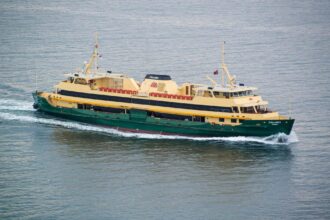
Lake Geneva is best appreciated from the water, and the Compagnie Générale de Navigation, known everywhere as CGN, runs the lake’s fleet of Belle Époque paddle steamers alongside more modern vessels. Several of the paddle steamers date back over a century and are still lovingly maintained, complete with polished wood decks and brass fittings.
Short circular cruises from Geneva’s harbour run around fifty-five minutes and cost CHF 21 (£19/€22/$25), giving a compact taste of the lake and its views back toward Mont Blanc without committing to a full afternoon. Longer two-hour circular routes cost CHF 33 (£30/€35/$40) and range further along the shoreline.
For a proper day out, one-way tickets run as far as Nyon for CHF 24 (£22/€25/$29) or all the way to Lausanne-Ouchy for CHF 47 (£43/€50/$57), with first-class seating available at a premium on most routes. These longer routes pass grand lakeside villas, vineyard slopes and views across to the French shore.
Boats depart from the Jardin Anglais landing stage in central Geneva, and timetables run more frequently in summer than winter, so it is worth checking the current schedule before planning a day around a specific departure. Onboard cafes sell drinks and light snacks on the longer routes.

Téléphérique du Salève: Cable Car Views Above the City
Just across the French border, the Téléphérique du Salève climbs from the valley floor at Étrembières to a viewing plateau high above Geneva in only a few minutes, one of the fastest ways to trade the city streets for genuine mountain air. The ride covers a striking amount of height in a short space of time, swinging up the mountain’s steep western face.
Reaching the base station is straightforward from central Geneva: TPG bus line 8 runs from Cornavin to the Veyrier-Douane stop, right at the Swiss-French border, followed by a walk of around ten minutes to the cable car itself. Drivers can also use one of two free car parks at the lower station.
At the top, the reward is a genuinely wide panorama back over Geneva, the lake and, on a clear day, Mont Blanc itself. The summit plateau has a network of hiking trails, a paragliding launch point for anyone tempted to come down a different way, and the Vertiges restaurant for those happy to simply sit with the view.
The cable car climb itself takes only around five minutes, though most visitors budget an hour or two at the top for a short walk and the view alone.
Opening hours shift with the seasons: roughly 9am to 6:45pm through spring, summer and early autumn, with later closing some weekday evenings, and a shorter four-day winter schedule from mid-January to the end of March.
A standard return ticket runs from around CHF 17 (£15/€18/$20). The ride is included free with the Geneva City Pass covered earlier in this guide, one of its better-value inclusions for anyone already holding one.
Shopping in Geneva
Geneva’s premier shopping street, Rue du Rhône, runs along the left bank of the lake and reads like a directory of the world’s biggest luxury houses. Louis Vuitton, Hermès, Dior and Bulgari all keep flagship boutiques here, alongside a dense cluster of Swiss watchmakers, since the city built its reputation on horology long before diplomacy arrived.
Window shopping costs nothing, and even visitors with no intention of buying tend to slow down outside the watch boutiques, where century-old names display pieces that can run to six figures. Weekday mornings and early afternoons are the quietest time to browse, since the street fills up once nearby offices empty out.
A more accessible alternative sits a short walk away at the Confédération Centre, a modern four-level mall on Rue de la Confédération near the Bel-Air tram stop. Its roughly thirty stores mix everyday fashion and electronics brands with a food hall, making it a practical stop for anything beyond souvenir shopping.
Back up in the Old Town, the Grand-Rue and the streets around Place du Bourg-de-Four hold a different kind of shopping altogether, independent antique dealers, small galleries and boutiques selling homeware and design objects rather than global brand names. It rewards slow browsing more than a shopping list.
For something cheaper and considerably more chaotic, the Plainpalais flea market sets up on the Plaine de Plainpalais every Wednesday and Saturday, plus the first Sunday of the month, running from around 6:30am into the afternoon. Stalls sell everything from vintage clothing to old books, furniture and jewellery, and haggling is entirely normal.
Nightlife in Geneva
Geneva’s evening scene is real, but it runs noticeably quieter than the club-heavy nightlife of a city like Barcelona or Berlin. Bars tend to wind down earlier here, and the city leans toward a good conversation over a drink rather than dancing until sunrise.
The Pâquis neighbourhood, already covered in this guide for its lakeside baths, doubles as Geneva’s liveliest after-dark district, with a dense cluster of bars and late-opening kitchens within walking distance of Cornavin station. It has a rougher, more international edge than the polished streets around the lake, and it stays busy later than almost anywhere else in the city.
South of the centre, Carouge‘s cafe terraces shift into a relaxed evening mode once the shops close, with wine bars and small restaurants spilling onto the square around Place du Marché. The atmosphere favours a slow glass of wine over a big night out, in keeping with the neighbourhood’s laid-back, artists’-quarter character.
Central Geneva, particularly around Rue du Rhône and the Old Town, skews toward upscale cocktail bars and hotel lounges rather than anything resembling a club scene. Prices here run high even by Geneva’s own standards, so it suits a couple of drinks rather than a long session.
In summer, several lakeside terrace bars open along the harbour and Jardin Anglais, making the most of long evenings and views back toward the Jet d’Eau. Outside the warmer months options thin out considerably, so anyone hoping for a genuinely late, loud night out should adjust their expectations accordingly.

Geneva with Children
Geneva’s biggest asset for families is right in front of the hotel windows: the lake itself. The little yellow shuttle boats known as the Mouettes cross the harbour in a few minutes and double as a cheap, genuinely enjoyable mini-cruise for young children, using the same tickets as the city’s buses and trams.
Bains des Pâquis, covered earlier in this guide as a spot for adults to swim and relax, works just as well for children in the warmer months, with shallow areas close to shore and plenty of space to run around on the surrounding deck. It costs only a token entrance fee and sits an easy walk from Cornavin station.
Parc des Bastions and its giant outdoor chess pieces tend to fascinate children even before they understand the rules, and the wider park has enough open grass and shade to let energy run off after a morning of museums. Bois de la Bâtie, a little further out, adds a small city farm alongside a proper playground, a combination that keeps most under-tens happy for a full afternoon.
The CERN Science Gateway, already covered as one of Geneva’s best free attractions, is pitched deliberately at families, with interactive exhibits that let children experiment with real physics concepts rather than just read about them. It is one of the rare Geneva attractions that manages to entertain adults and children in equal measure.
For a rainy afternoon or simply a change of pace, chocolate-making workshops run at several spots around the city, letting children mix and mould their own bars to take home, a fittingly Swiss way to fill an hour with a group of restless kids.
What to Do in Geneva on a Rainy Day
Geneva’s weather off the lake can turn quickly, and the city has enough indoor options to fill a full day when it does. The Museum of Art and History, already covered earlier in this guide, makes a natural first stop, with galleries arranged around light-filled courtyards that stay dry and comfortable regardless of what is happening outside.
The Natural History Museum of Geneva, set in Malagnou Park a short bus ride from the centre, holds one of Switzerland’s largest natural history collections across four floors, including Janus the two-headed tortoise, something of a local celebrity among younger visitors. Entry to the permanent collection is free, though it is worth checking current opening status before travelling, since parts of the museum have been closed for renovation.
Both the Patek Philippe Museum and the Red Cross and Red Crescent Museum, covered earlier in this guide, are fully indoor and substantial enough to fill an hour or two each, making either a sensible fallback when lake-facing plans fall through.
The Confédération Centre shopping mall doubles as an indoor rainy-day option in its own right, with around thirty shops and a food hall spread across four covered levels, enough to occupy a couple of hours without setting foot outside.
Geneva also has a handful of public indoor pools, and the Bains des Pâquis hammam and sauna stay open through the colder months precisely because so much of Geneva’s outdoor life depends on good weather. Between the museums, the mall and a warm swim, a wet day in Geneva rarely means a wasted one.
Is Geneva Expensive?
Geneva regularly ranks among the most expensive cities in Europe, and a short visit makes that plain from the first meal. A simple restaurant lunch commonly runs CHF 25–35 (£23–32/€26–37/$30–42), and even a coffee at a central cafe rarely costs much under CHF 5 (£5/€6/$6).
Accommodation is usually the biggest single cost of a Geneva trip, with central hotel rooms generally sitting in an upper-mid to luxury bracket rather than budget territory. Public transport is comparatively gentle on the wallet by comparison, and many hotels issue guests a free transport card covering trams and buses for the length of their stay.
The reassuring part is that several of Geneva’s best experiences cost nothing at all. Wandering the Old Town, watching the Jet d’Eau from the lakefront promenade, and stepping into the free archaeological site beneath St. Pierre Cathedral all cost precisely nothing beyond the time spent there.
Parc des Bastions and its giant outdoor chess boards are free to enjoy at any hour, and the Broken Chair sculpture outside the UN costs nothing beyond a short tram ride to reach it. CERN’s Science Gateway is also free with a booked slot, so building a day mostly around these free stops before choosing one or two paid attractions deliberately is the most realistic way to keep a Geneva trip from feeling relentlessly expensive.

A Day in Geneva
A single day in Geneva works best as one continuous loop rather than a scattered checklist. Start at Cornavin station, the city’s central transport hub, and head straight downhill toward the harbour before the streets fill up with the day’s foot traffic.
The lakefront promenade leads directly to the Jet d’Eau, the towering fountain that has become Geneva’s defining image, reachable on foot from the station in well under twenty minutes. Continuing along the water brings the walk naturally to the next stop.
That next stop is the Jardin Anglais, a small formal park built around the Flower Clock, a working timepiece replanted through the seasons and often cited locally as having the largest second hand of any clock in the world. It is a natural pause for photos before the route turns uphill.
From the Jardin Anglais, the walk climbs into the Old Town, where cobbled lanes lead past Place du Bourg-de-Four to St. Pierre Cathedral, worth a stop for its free underground archaeological site and the panoramic view from its tower. Allow roughly an hour here if the tower climb tempts a longer visit.
The Old Town flows straight into Parc des Bastions, Geneva’s largest central park, where giant outdoor chess boards and the Reformation Wall make an unhurried, shaded finish to the loop. It sits an easy walk from Plainpalais, useful for anyone with an extra hour before the day winds down.
Travellers more drawn to diplomacy than cathedrals can branch off after the Jet d’Eau toward Place des Nations instead, home to the Broken Chair sculpture, the Palais des Nations and the Red Cross and Red Crescent Museum. This international quarter alone can fill the second half of a day, in place of the Old Town route.
One focused day covers Geneva’s essential sights without feeling rushed, and a second morning leaves room to explore further afield. Anyone staying longer should look at our guide to day trips from Geneva for destinations reachable by train in under an hour.
Getting Around Geneva
Geneva’s public transport network, run by TPG, covers the compact city centre with trams, buses and trolleybuses that link every attraction covered in this guide. A single ticket type covers every mode, and services run frequently enough that Geneva rarely needs a car or taxi within the city itself.
Trams are the fastest way to reach the international quarter, with lines 13, 15 and 18 running from the centre out to Place des Nations, the Broken Chair and the Palais des Nations in around ten minutes. Line 18 continues further out to CERN, useful for anyone combining the science centre with the same trip.
Buses fill in the gaps trams do not reach, covering the route out to the Natural History Museum in Malagnou Park and the short hop to Carouge’s artists’ quarter south of the centre. Stops are well signed in French, and digital displays at most shelters show real-time arrivals for the next several services.
For crossing the harbour itself, the little yellow Mouettes, Geneva’s water shuttle boats, cut between the two lakefront banks in a few minutes using the same tickets as the buses and trams. They are a genuinely practical shortcut between Old Town-side hotels and the Paquis waterfront, not just a novelty ride for children.
Most visitors combine walking with one or two tram hops rather than relying on transport for a full day, since the Old Town, lakefront and Jardin Anglais sit within easy reach of each other on foot. Trams earn their keep mainly for the longer trips out to Place des Nations, Carouge or CERN.
Short single tickets and day passes are both available from machines at every stop, and validating a ticket before boarding is compulsory rather than optional, since inspections do happen. Visitors staying at many hotels also receive a free Geneva Transport Card covering the whole network for the length of their stay.

Rupert’s Handy Travel Tips
A few things I picked up wandering between the lakefront and the diplomatic quarter.
- Book Palais des Nations tickets the moment they release: new dates go live on the twentieth of each month and sell out fast.
- Reserve your free CERN slot early: Science Gateway admission costs nothing but individual bookings still need to be made up to a month ahead.
- Carry small coins for Bains des Pâquis: the entrance booth runs on a genuinely old-school cash system.
- Combine the Broken Chair, Palais des Nations and Red Cross Museum: all three sit within a few minutes’ walk of each other near Place des Nations.
- Time Carouge for market mornings: the flea market on Place du Marché runs Wednesday and Saturday mornings only.
- Climb the cathedral tower on a clear day: Mont Blanc only shows up from the top when the weather cooperates.
Want to meet the reindeer behind our travel tips? Find out more in our page Who is Rupert?.




Frequently Asked Questions
Is Geneva expensive to visit?
Yes, Geneva is one of the more expensive cities in Europe for food and accommodation, though several of its best attractions, including the Old Town, the Jet d’Eau and the archaeological site beneath the cathedral, are free or very cheap to visit.
How many days do you need in Geneva?
Two full days covers the city centre attractions comfortably, including the Old Town, the lakefront and one or two museums, while a third day allows time for CERN or a longer CGN cruise further along the lake.
Is CERN free to visit?
Yes, admission to the Science Gateway visitor centre is free, though individual visitors should register online, ideally up to a month in advance, since slots fill quickly during busy periods.
Can you swim in Lake Geneva?
Yes, Bains des Pâquis and several other lakefront spots are popular for swimming through the summer, and a hardy group of regulars continues through winter as well, aided by the site’s sauna and hammam.
Do you need to book Palais des Nations tickets in advance?
Yes, tours can only be joined with a pre-booked ticket, and slots for the following month are released on the twentieth of the current month, selling out quickly for individual visitors.
What language is spoken in Geneva?
French is the official language, though English is widely spoken given the city’s large international community, and most museums and attractions provide English-language information alongside French.
Is Geneva a good base for day trips into the Alps?
Yes, Geneva’s airport and rail links make it a practical base for reaching Chamonix, the French Alps ski resorts and nearby Annecy, all within roughly an hour of the city centre.
What is Geneva best known for?
Geneva is best known for hosting international organisations including the United Nations, the Red Cross and CERN, alongside its lakefront setting, the Jet d’Eau fountain and its long watchmaking heritage.
Further Reading
Arriving into the city is usually the easy part, and our guide to Geneva Airport to the city centre covers the train, bus and taxi options for the short journey from the terminal into Cornavin. Anyone continuing on to the mountains afterwards should also read our Geneva Airport to ski resorts guide, which breaks down transfer times and routes to the main Alpine resorts.
For travellers planning a longer rail-based trip through the Alps, our French Alps Ski Train Line guide explains how Geneva connects into the wider network of stations serving Chamonix, Albertville and beyond. It is worth reading alongside this guide if a Geneva stay is part of a bigger winter itinerary rather than a stand-alone city break.
Just across the French border, Annecy makes an easy and genuinely worthwhile add-on to a Geneva trip, and our full guide to things to do in Annecy covers its medieval old town, canals and lakeside setting in detail. Combining the two cities, whether as a day trip from Geneva or a short overnight stop, is one of the most popular extensions to a trip in this part of the Alps.
Geneva itself is only the starting point, and our guide to day trips from Geneva rounds up nine further destinations across the Alps and along the lake, from Nyon and Lausanne to Chamonix. Visiting between late November and Christmas Eve, our guide to Geneva’s Christmas markets covers L’Escalade, the lakeside chalets and the free ice rink in Parc des Bastions in full.