Reviewed by our editorial team Published
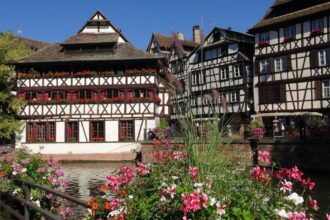
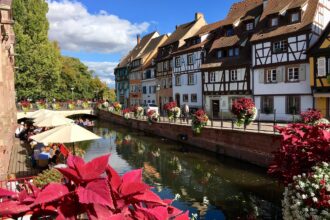
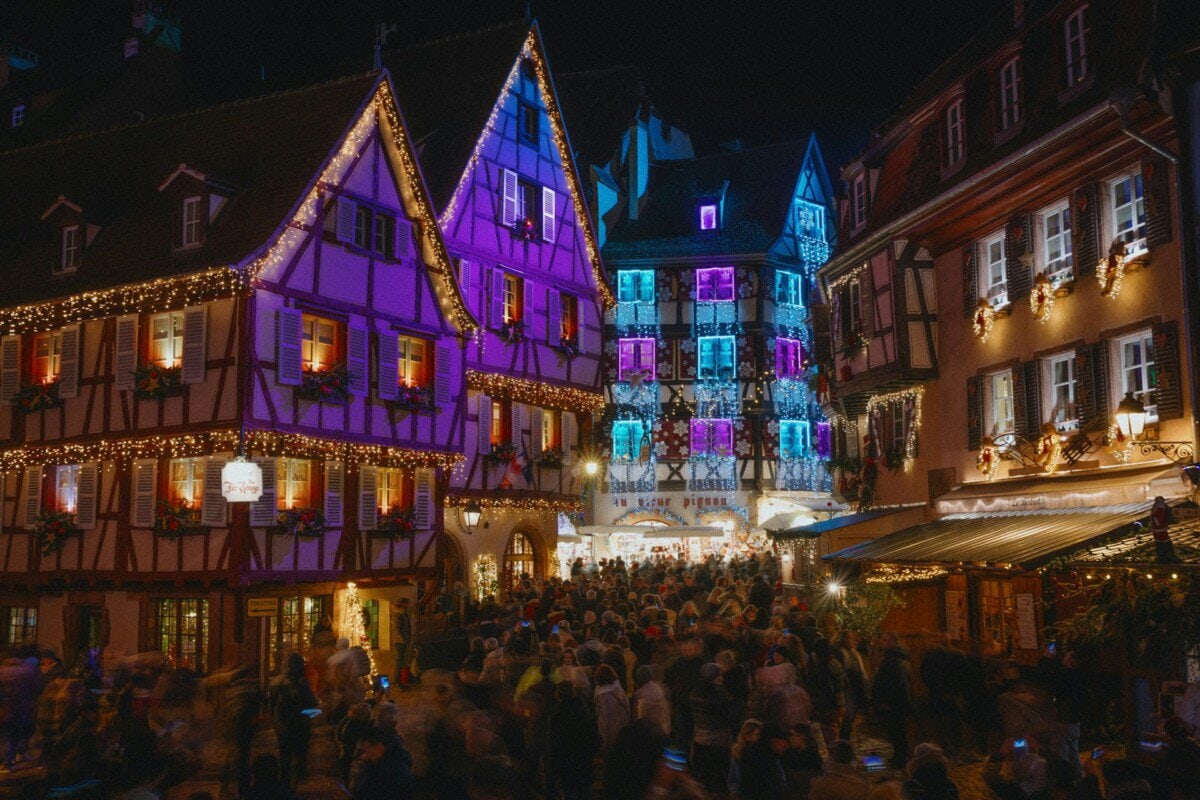
Colmar is routinely called the prettiest town in Alsace, and at Christmas that reputation only grows. The half-timbered houses of the old town are painted in soft pinks, blues and ochres, and from late November they are strung with lights, garlands and giant illuminated stars that turn the whole centre into something closer to a storybook illustration than a working French town.
Rather than one huge central market, Colmar spreads its festive stalls across six themed squares within easy walking distance of one another. Each has its own character, from a gourmet food market run by local chefs to a children’s market tucked into the canal-side Petite Venise quarter, so a visit naturally becomes a gentle wander rather than a single crowded stop.
The 2026 season runs from 23 November to 29 December, according to the official noel-colmar.com programme, broadly matching the pattern of recent years. Surrounding Alsace villages such as Eguisheim, Kaysersberg and Riquewihr run their own smaller markets on overlapping dates, making the wider region a genuine Christmas market trail for anyone based in Colmar for a few nights.
What sets Colmar apart from bigger festive cities is not scale but atmosphere. There is no giant wheel or towering official tree competing for attention here, and the appeal instead comes from candlelit canals, timber-framed facades and streets narrow enough that the lights feel close overhead rather than distant.
This guide covers where Colmar’s six markets actually are, what to eat, drink and do while wandering between them, how to make the most of the town’s famous Little Venice setting after dark, the entertainment and other Christmas events running alongside the stalls, and the practical details of getting there, staying nearby, and what to expect from opening hours, New Year’s Eve and December weather.
Colmar’s Christmas Markets at a Glance
| Market | Location | Best For | Highlights | Entry |
|---|---|---|---|---|
| Place des Dominicains | Beside the Dominican church | Traditional decorations | Around 60 wooden chalets, illuminated stained glass church | Free |
| Place de l’Ancienne Douane | By the Koïfhus and Schwendi fountain | Handicrafts and design | Spans both banks of the Lauch, Renaissance Koïfhus lit at night | Free |
| Place Jeanne d’Arc | Near the station side of the old town | Alsatian produce | Foie gras, charcuterie, regional wine and baked goods | Free |
| Place des Six Montagnes Noires | Petite Venise quarter | Families and children | Nativity scene, pony rides, mulled cider, Santa’s letterbox | Free |
| Koïfhus indoor market | Inside the medieval Koïfhus building | Local craftspeople | Around twenty ceramicists, glassmakers and woodcarvers | Free |
| Rue de la Montagne Verte | Gourmet market street | Food and chef demonstrations | Chef-run cabins, oysters, tasting menus | Free |
Entry to every one of Colmar’s markets is free, and all six sit within a compact old town that most visitors can cross on foot in under fifteen minutes. This makes the table above more of a suggested route than a set of separate outings, and most visitors end up passing through all six in a single unhurried afternoon and evening.
Where Colmar’s Six Markets Actually Are
Colmar’s Christmas markets are not spread across a whole city the way Vienna’s or Cologne’s are. All six sit within the compact medieval centre, close enough that visitors regularly walk a loop taking in every one in a single evening without needing transport between stops.
The largest is Place des Dominicains, where around 60 wooden chalets circle the square in front of a 14th-century church whose stained glass windows are lit from inside after dark. A short walk away, Place de l’Ancienne Douane straddles the Lauch river beside the Renaissance Koïfhus, Colmar’s old customs house, which is floodlit each evening and forms the backdrop for roughly 50 further chalets.
Place Jeanne d’Arc leans into regional produce, with stalls dedicated to Alsatian charcuterie, wine and baked goods rather than gifts, while the medieval Koïfhus building itself hosts an indoor market of roughly twenty local craftspeople, a useful stop on a cold or wet afternoon.
The two remaining markets sit at either end of the experience. Place des Six Montagnes Noires, in the canal-side Petite Venise quarter, is aimed squarely at families with pony rides and a nativity scene, and Rue de la Montagne Verte is a dedicated gourmet street where local chefs run their own tasting cabins rather than souvenir stalls.
Because every market is free and walkable from the next, there is no need to plan a rigid route. Most visitors simply follow the crowds and the lights from square to square, dipping into whichever market matches the mood, whether that is gift shopping, a glass of mulled wine or watching craftspeople at work.
Browse hotels and accommodation for your journey.
View staysExplore holiday homes and apartments for your trip.
See holiday homesCompare prices from multiple hotel booking sites.
Check dealsAlsatian Food and Drink at the Markets
Alsace sits on the border of French and German culinary traditions, and Colmar’s markets reflect that mix more than almost anywhere else in the region. Expect choucroute (Alsatian sauerkraut, usually served with sausage or pork), flammekueche (a thin, cream-topped Alsatian flatbread) and bredele, the small spiced biscuits baked across the region every December.
The signature drink is vin chaud, Alsace’s version of mulled wine, typically priced around €4 to €5 (£3.50 to £4.50 / $4.50 to $5.50) per cup, often served in a keepsake mug worth an extra deposit. At Place des Six Montagnes Noires, children’s stalls sell mulled cider instead, a gentler, non-alcoholic alternative that is just as popular with adults looking for something warm without the wine.
The Rue de la Montagne Verte gourmet market is where the food culture really stands out. Chef-run cabins serve everything from fresh oysters to full tasting plates, usually costing €8 to €15 (£7 to £13 / $9 to $16) per dish, and several chefs run live cooking demonstrations through the afternoon and evening.
For something sweet, look out for manalas (a brioche shaped like a small figure, traditionally eaten around St Nicholas Day) and pain d’épices, Alsatian gingerbread sold both plain and elaborately iced. Most bakery stalls sell small bags for around €3 to €6 (£2.50 to £5 / $3.50 to $6.50), making them an easy, affordable souvenir to bring home.
Colmar’s food stalls are noticeably less commercial than those in some larger festive cities, with several run directly by local producers and restaurants rather than seasonal market operators. That local ownership shows in the quality, and it is one reason regular visitors rate Colmar’s markets highly for food even though the town itself is small.
Little Venice by Candlelight: Colmar’s Fairytale Atmosphere
The single biggest reason Colmar draws Christmas visitors is not its markets in isolation, but the setting they sit inside. The Petite Venise quarter, where the Lauch river winds past pastel half-timbered houses, is the town’s signature image year round, and at Christmas it becomes genuinely magical after dark.
Small boats sometimes still operate short evening cruises along the canal during the festive season, drifting beneath windows strung with lights and past balconies dripping with fairy garlands. Even without a boat trip, simply walking the narrow quaysides at dusk, as the shopfronts light up one by one, is the experience most visitors remember longest.
Away from the canals, the old town’s timber-framed streets are narrow enough that decorations feel close overhead rather than strung high above a wide boulevard. Look out for the enormous illuminated Christmas tree on Place Rapp and the giant decorated stars and baubles suspended between buildings on Rue des Marchands, both popular spots for photographs.
Because the atmosphere is the main draw rather than market size, timing a visit matters more here than in bigger cities. Weekday evenings are noticeably quieter than weekends, and arriving around dusk, roughly an hour before markets close, gives visitors the lights without the daytime coach-tour crowds that pass through on busy Saturdays.
Colmar earns comparisons to a film set for a reason, and it genuinely does look staged in places. That is precisely the point of visiting: this is a Christmas market trip built around a walk through a beautiful, intimate old town, not around the scale of any single market.
Getting to Colmar and Where to Stay
Colmar has its own train station, a short walk or tram ride from the old town, with direct TGV services from Paris taking roughly 2 hours 45 minutes. Regional trains connect Colmar to Strasbourg in around 35 minutes and to Basel in about an hour, making it an easy add-on for travellers already exploring the wider Alsace or Rhine region.
The nearest major airports are Strasbourg and EuroAirport Basel-Mulhouse-Freiburg, both roughly an hour from Colmar by train or transfer, and Frankfurt is a viable option for travellers connecting internationally, roughly two and a half hours away by rail. Driving is straightforward too, though parking in the compact old town fills quickly on December weekends, so a car park a short walk outside the centre is usually the easier option.
Accommodation in Colmar books up well ahead of the festive weekends, particularly for half-timbered guesthouses overlooking Petite Venise. Expect to pay from around €90 to €150 (£78 to £130 / $98 to $164) a night for a well-located double room in December, rising further on peak weekends close to Christmas itself.
Many visitors base themselves in Strasbourg instead and add Colmar as a day trip, since the two sit only around 35 minutes apart by regional train and their Christmas markets have genuinely different characters: Strasbourg’s is grand and historic, while Colmar’s is intimate and scattered across pretty squares. Pairing the two into a single Alsace Christmas trip is one of the most popular ways to see the region during December.
For anyone without a car, it is entirely possible to see Colmar’s markets on foot from the station in a single day, though an overnight stay is worthwhile for the evening atmosphere that gives the town its reputation. The markets typically run until 7pm or 8pm, with the old town itself, its lit shopfronts and canal views, remaining worth walking well after the stalls close.

What You Can Do at Colmar’s Christmas Markets
Browsing the stalls is only part of a visit, and Colmar builds a genuine programme of activities around its six markets each December. On Place Rapp, a purpose-built synthetic sledging track stands roughly 4.5 metres high with three separate lanes and a 35-metre run, suitable for children from around age three. It typically runs from the season’s opening through to 2 January, priced at around €3 (£2.50/$3.50) per descent, and has become one of the more popular additions to the festive programme in recent years.
A large Ferris wheel operates at the Plateau Sportif de la Montagne Verte, close to the gourmet market, running daily through to 2 January. Tickets cost around €9 (£8/$10) for adults and €7 (£6/$8) for children under 120cm, and the wheel gives a genuinely different view over the old town’s rooftops and illuminated squares after dark.
Down in Petite Venise, short boat trips along the Lauch continue to run through the festive season when weather and water levels allow, drifting past lit-up balconies and half-timbered facades. Inside the medieval Koïfhus, roughly twenty local craftspeople, including ceramicists, glassmakers and woodcarvers, work and sell directly from their stalls, so it is genuinely possible to watch a piece being made rather than just buying it ready-finished.
Food lovers can catch culinary demonstrations at the Rue de la Montagne Verte gourmet market, typically staged by local chefs on Thursday and Friday afternoons, alongside occasional guest appearances from regional food producers. A handful of Colmar’s historic wine cellars also open for seasonal tastings during December, pairing Alsace’s white wines with the market’s food stalls for visitors keen to go beyond vin chaud.
Beyond the food, the markets sell plenty worth browsing for: hand-blown glassware, wooden ornaments, Alsatian textiles and locally made ceramics turn up across several of the six squares, particularly at the Koïfhus and Place de l’Ancienne Douane. Between the rides, the workshops and the food demonstrations, a full day in Colmar covers far more than a simple walk between market stalls.
Christmas Lights and Illuminations Across Colmar
Colmar’s festive lighting is not a one-night switch-on so much as a scheme built into the town’s infrastructure. The city was the first in France to install a large-scale computer-driven illumination network, using roughly 1,150 fibre-optic light sources across the old town, and won a special prize from the Académie des Arts de la Rue for the achievement back in 1997.
For the Christmas season specifically, the town adds tens of kilometres of garlands, hundreds of suspended baubles and illuminated spheres across the streets and squares, alongside video projections onto around twenty historic buildings. Unlike Strasbourg’s formal illuminations launch, Colmar has not publicised a single dedicated switch-on ceremony or date for recent seasons, so the honest answer is that the lights simply come on nightly from the day the markets open.
Illuminations typically start around 4:45pm in late November and 4:30pm once December’s shorter days set in, running until around 10pm on weekdays and 11pm on Fridays and Saturdays. That gives visitors a genuinely long window each evening to see the town lit, well beyond the hours the market stalls themselves stay open.
The decorative scheme is built around four recurring themes, water, air, earth and fire, expressed through changing colours across the year rather than a single fixed festive palette. At Christmas, that groundwork is layered with star-shaped market lights, baubles and garlands, which is part of why Colmar’s illuminations read as more integrated into the town’s fabric than a temporary festive overlay.
Because the whole old town takes part rather than just the market squares, it is worth allowing time to walk beyond the six markets themselves. Streets such as Rue des Têtes and the quaysides of Petite Venise are lit to the same standard as the markets, and several visitors rate the wider walk as highly as the markets themselves.
Entertainment and Other Christmas Events Beyond the Markets
Live entertainment runs alongside the stalls throughout the season, even if Colmar keeps it lower-key than some larger festive cities. Choirs and local musical ensembles perform Advent-themed programmes across the town’s squares and churches through December, with repertoires ranging from traditional French and Alsatian carols to classical Advent works such as excerpts from Handel’s Messiah.
Several of Colmar’s churches host dedicated Advent and Christmas concerts during the season, typically free or low cost to attend, and these tend to draw a mix of visitors and locals rather than being purely a tourist offering. Exact programmes change year to year, so checking local listings closer to a visit is worth doing if a specific concert matters to the trip.
Beyond music, the town’s video projections onto historic buildings effectively double as an evening entertainment in their own right, drawing crowds who simply stop to watch rather than shop. The markets’ craft and food demonstrations, covered in more detail above, add a further layer of things to do beyond simply working through the stalls.
Outside Colmar itself, the wider region keeps the festive programme going. Nearby villages including Eguisheim, Kaysersberg and Riquewihr run their own smaller markets with overlapping dates, several with their own concerts and lighting displays, making it realistic to build several evenings of different festive atmosphere without travelling far from a Colmar base.
Taken together, this wider programme is what separates a single evening spent walking the market stalls from a fuller Colmar Christmas trip. Visitors staying more than one night are well placed to catch at least one concert or performance beyond the markets themselves.
Compare routes and fares for your next trip.
Compare flightsChoose an Airalo eSIM and arrange mobile data before you arrive.
Browse eSIMsArrange a private pickup before travel instead of sorting transport after landing.
Book a transferShop, Transport and Attraction Opening Hours Over the Festive Period
General French shop hours in December are broadly what visitors would expect from a small historic town. Most independent shops open around 9am to 12pm and 2pm to 7pm on weekdays and Saturdays, while larger stores increasingly stay open through the middle of the day. Sunday trading is more tightly restricted here than in much of France, with Haut-Rhin among the departments imposing stricter rules, so most shops stay closed and only bakeries, florists and food shops can open until around 1pm on an ordinary Sunday.
Colmar does relax that rule for the festive run-up specifically. The town council authorises shops to open on a set number of Sundays before Christmas, four in the 2025 season, a local exception aimed squarely at Christmas shopping rather than a year-round change to trading hours.
25 December is a full public holiday across France, so shops, banks and most attractions close, with only bakeries opening for a few morning hours and a rotating system of on-call pharmacies covering essentials. Colmar then observes a second closure the rest of France does not: 26 December, Saint-Étienne’s Day, is a genuine public holiday across Alsace-Moselle, including Haut-Rhin, under a local law dating back to 1892, so shops and most attractions stay shut a full day longer here than in Paris or Lyon.
1 January follows the standard national pattern, closing shops, banks and most attractions again. Train services run a reduced, holiday-style timetable on both 25 December and 1 January, with fewer departures than a normal day, so checking SNCF timetables in advance matters more than usual around these two dates.
The Christmas markets themselves are the exception to most of this. They typically keep running with adjusted hours around 24 to 26 December rather than closing outright, since the stalls are the main reason most visitors are in Colmar in the first place. It is still worth confirming exact hours for that specific window before building a trip around it.
New Year’s Eve in Colmar
Colmar does not run a large, official fireworks display of its own in the way some bigger cities do, and there is no single headline event publicised by the town for 31 December. Visitors expecting a Paris- or Vienna-style countdown show should adjust expectations accordingly and treat New Year in Colmar as a quieter, more local occasion.
That said, the town’s festive infrastructure stays running well past Christmas. The sledging track on Place Rapp and the Ferris wheel at Montagne Verte both operate through to 2 January, and the illuminations remain lit through the same period, so the town keeps its festive atmosphere right into the New Year rather than switching it off on Boxing Day.
For an actual fireworks display, several nearby Alsace villages hold their own on 31 December, including Ribeauvillé and Kaysersberg Vignoble, both within easy reach of Colmar by car. Combining a quiet dinner in Colmar with a short drive out to a village display is a realistic way to build a proper New Year’s Eve around the town without relying on Colmar itself to provide it.
Restaurants in Colmar’s old town do put on New Year’s Eve menus, and given the town’s small size, tables at the better-known spots near the market squares book up well in advance. Booking ahead is genuinely necessary if a sit-down dinner is part of the plan, rather than something that can be arranged on the night.
Overall, Colmar suits visitors who want a calm, low-key way to see out the year among half-timbered streets and lingering Christmas lights, rather than those chasing a big organised countdown event. Anyone wanting fireworks specifically should plan for a short trip out to one of the surrounding villages instead.
Colmar’s December Weather
Colmar sits inland in the Alsace plain, sheltered somewhat by the Vosges mountains to the west, which keeps its December climate cold but not extreme. Average daytime highs run from around 7°C (44°F) at the start of the month down to roughly 5°C (41°F) by New Year, with overnight lows regularly dipping close to freezing, around 0.5°C (33°F) early in December and slipping just below freezing by month’s end.
Rain is more common than snow across the month, with a wet day around 27% of the time and rain accounting for most of that figure. Genuine snow-only days are relatively rare, making up roughly 1% of December days on average, so a visit is more likely to mean grey, damp evenings than a snow-covered old town.
That said, light snowfall does build up as the month progresses, with average accumulated snow depth rising from under a centimetre in early December to around 4cm by New Year’s Eve. A dusting on the half-timbered rooftops is a realistic possibility, particularly later in December, even if a heavy snowfall is not something to plan a trip around.
Given the cold, damp conditions, layering matters more than a single heavy coat. A waterproof outer layer, warm boots with good grip for the old town’s cobbles and canal-side paths, plus a hat and gloves for the long evening walks between markets, cover most of what a December visit actually needs.
Evenings are noticeably colder than daytime, so anyone planning to be out for the illuminations or a late dinner should dress for temperatures nearer the overnight lows than the daytime highs. Packing for grey, damp cold is the safer bet for a Colmar Christmas trip, with any snow best treated as a pleasant bonus rather than a guarantee.

Rupert’s Handy Travel Tips
Rupert thinks the real trick to Colmar is treating it as an evening town rather than a daytime one, since the lights are what make the visit special.
- Arrive around dusk: the half-timbered streets and canals look far more magical once the festive lights switch on than they do at midday.
- Base yourself in Colmar or Strasbourg: both work well, since the two towns are only about 35 minutes apart by regional train.
- Keep the keepsake mug: vin chaud is usually served in a small souvenir mug, and the deposit is often worth paying to keep.
- Visit on a weekday if you can: weekends bring noticeably heavier crowds, especially on the narrow Petite Venise quaysides.
- Wear comfortable shoes: the old town’s cobbles are charming but uneven, and you will likely walk further than expected between the six markets.
- Book accommodation early: Colmar’s guesthouses are small and fill quickly for December weekends, especially anything overlooking the canals.
Want to meet the reindeer behind our travel tips? Find out more in our page Who is Rupert?.




Frequently Asked Questions
When do the Colmar Christmas markets run in 2026?
The 2026 season runs from 23 November to 29 December, according to the official noel-colmar.com programme, in line with the pattern of recent years.
How many Christmas markets does Colmar have?
Colmar hosts six separate markets spread across different squares in the old town, each with its own theme, from gourmet food to children’s activities.
Is Colmar or Strasbourg better for Christmas markets?
They offer different experiences rather than a clear winner. Strasbourg’s market is grander and more historic, while Colmar’s is smaller, more intimate, and built around its famous canal-side setting.
Is it worth staying overnight in Colmar at Christmas?
Yes, if possible. The town’s atmosphere is strongest after dark, when the half-timbered streets and Petite Venise canals are fully lit, so a day trip alone misses much of the appeal.
Are Colmar’s Christmas markets free to visit?
Yes. All six markets are free to enter, with visitors only paying for food, drink, and any shopping along the way.
How do I get to Colmar for the Christmas markets?
Colmar has its own train station with direct TGV services from Paris in around 2 hours 45 minutes, plus regional trains from Strasbourg in about 35 minutes and Basel in around an hour.
Is there an ice rink at the Colmar Christmas market?
No. Colmar replaced its former ice rink with a synthetic sledging track on Place Rapp, alongside a Ferris wheel at Montagne Verte, so skating is not currently part of the festive programme.
What is the weather like at the Colmar Christmas markets?
December in Colmar is cold and often damp rather than deep snow, with daytime highs around 5-7°C (41-44°F) and overnight lows close to freezing, so warm layers and waterproof footwear matter more than expecting heavy snow.
Further Reading
Anyone planning a wider stay in the region should read our full guide to visiting Colmar, which covers the town’s half-timbered old town, canals, museums, and best neighbourhoods beyond the festive season.
Many visitors pair Colmar with nearby Strasbourg, whose own Christmas market, one of France’s oldest and largest, sits around 35 minutes away by regional train and makes a natural addition to an Alsace festive trip.
Since Colmar has no airport of its own, our Strasbourg Airport Transfers guide covers the fastest route in from Strasbourg Airport, the nearest major gateway to Alsace.
Anyone basing themselves in the region for longer should also read our Best Day Trips from Strasbourg guide, covering Riquewihr, Eguisheim and the rest of the Alsace Wine Route alongside Colmar itself.
Travellers weighing up Colmar against other festive destinations across the continent may also find our European Christmas Markets Guide useful, rounding up major markets by city, typical dates, and what makes each one distinctive.
For wider rail planning around the region, Alsace is well connected by regional and TGV services, and travellers combining Colmar with Paris, Strasbourg, or destinations further into Germany and Switzerland should check current timetables when booking, since Christmas period services can run to a modified schedule.