Reviewed by our editorial team Published
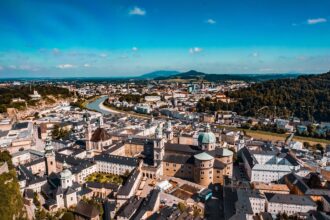
Salzburg is Mozart’s birthplace and the setting for much of The Sound of Music, and both of those legacies shape its Christmas season more than in almost any other European city. This is a place where the market stalls are only part of the story, and where choral singing, brass ensembles and candlelit concerts are woven into the festive programme as deliberately as the mulled wine and gingerbread.
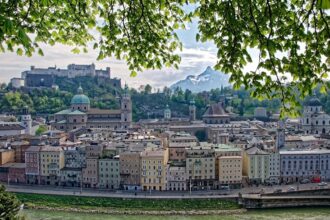
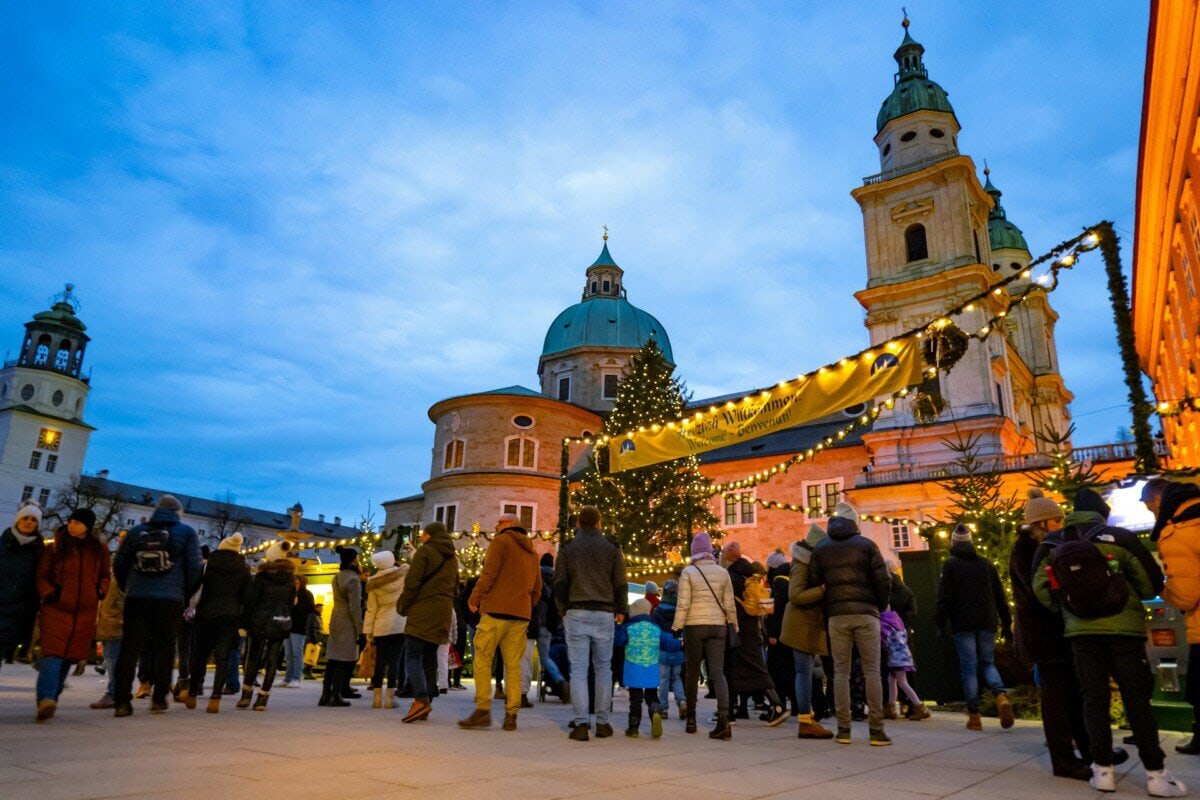
The centrepiece is the Salzburger Christkindlmarkt, held across the connected Domplatz and Residenzplatz squares beneath the cathedral, with roots tracing back to the late 15th century. Around a hundred wooden stalls sell Austrian crafts, decorations and food beneath a canopy of star-shaped lights, with the floodlit cathedral and fortress forming a backdrop few other markets can match.
Four further markets spread the season across the city, from a fortress-top market above the rooftops to a family-oriented gathering outside Mirabell Palace. Official 2026 to 2027 opening dates had not yet been published by salzburg.info at the time of writing, but based on the city’s usual pattern the main Christkindlmarkt is expected to run from around 19 to 20 November 2026 through 1 January 2027, and it is worth checking salzburg.info closer to the date to confirm.
What genuinely separates Salzburg from Austria’s grander capital is the musical programme running alongside the stalls. Weekly Advent singing, brass performances from the fortress walls and the city’s deep connection to both Mozart and the Von Trapp story give the markets a cultural depth that a shopping trip alone would miss entirely.
This guide covers where Salzburg’s five main markets are and what makes each different, the food, drink and activities worth seeking out, the Advent singing and music traditions that set the city apart, the city’s lights, New Year’s Eve and December weather, and the practical details of getting there and finding somewhere to stay.
Salzburg’s Christmas Markets at a Glance
| Market | Location | Best For | Highlights | Entry |
|---|---|---|---|---|
| Salzburger Christkindlmarkt | Domplatz and Residenzplatz | The signature Salzburg experience | Around 100 stalls, cathedral backdrop, weekly Advent singing | Free |
| Festung Hohensalzburg Market | Salzburg Fortress | Views and atmosphere | Torch-lit paths, Moravian stars, panoramic city views | Cable car or hike fee applies |
| Mirabellplatz Market | Outside Mirabell Palace | Families and locals | Sound of Music filming location, quieter than Domplatz | Free |
| Sternadvent | Former brewery courtyard, old town | A cosier, artisan alternative | Handmade crafts in a converted brewery setting | Free |
| Hellbrunn Palace Market | Hellbrunn Palace, south of the centre | Children and evening visits | Torch-lit pathways, large children’s activity area | Free entry to market, palace tours cost extra |
The Christkindlmarkt and Mirabellplatz markets sit within easy walking distance of the old town, while Hellbrunn and the fortress market both require a short bus ride, funicular or cable car. Most visitors treat the Christkindlmarkt as the main event and add one or two of the others depending on how much time they have.
The Christkindlmarkt and Salzburg’s Other Markets
The Salzburger Christkindlmarkt spans the connected Domplatz and Residenzplatz squares directly beneath Salzburg Cathedral, celebrating its 50th anniversary in 2024 and tracing roots back to the late 15th century, making it one of the oldest Advent markets anywhere in Europe. Around 100 stalls sell traditional decorations, gifts and Austrian specialities beneath an overhead canopy of illuminated stars.
High above the old town, the Festung Hohensalzburg market occupies the fortress grounds roughly 120 metres above the city, reached by funicular or on foot, with torch-lit pathways and Moravian star lanterns making the climb worthwhile after dark. It is smaller than the Christkindlmarkt but offers the best panoramic views of any market in Salzburg.
Mirabellplatz, outside the baroque Mirabell Palace made famous by its Sound of Music filming scenes, hosts a smaller, noticeably quieter market popular with families and locals rather than coach tour groups. A short walk into the old town leads to Sternadvent, a converted brewery courtyard hosting local artisans in a more intimate, undercover setting.
South of the centre, Hellbrunn Palace hosts a fifth market built around torch-lit paths and a large children’s area, reachable by regular city bus in around 20 minutes. It runs a genuinely different atmosphere from the busier central markets, and is worth the trip for families with young children in particular.
Most visitors spend an afternoon and evening at the Christkindlmarkt itself, then use a second day to reach one or two of the smaller markets depending on their interests, whether that is the fortress views, the palace setting at Mirabell, or Hellbrunn’s family-friendly programme.
Compare hotels and other places to stay in Salzburg.
Check availabilityBrowse apartments, holiday homes and self-catering stays in Salzburg.
View rentalsCompare prices for Salzburg hotels across multiple booking sites.
Check dealsAdvent Singing, Mozart and Salzburg’s Musical Season
Salzburg’s Christmas season is built around music in a way most other festive cities do not attempt. The Christkindlmarkt hosts a weekly public sing-along choir, open to anyone visiting, every Tuesday evening between 6pm and 8pm, alongside traditional wind music performed from a balcony above the square on Wednesdays, Thursdays and Saturdays.
These Advent singing concerts, a tradition running for more than 75 years in the city, mix folk music with Alpine melodies and are performed in churches and concert halls across Salzburg throughout December. Many are free or low cost, typically €10 to €25 (£9 to £22 / $11 to $27) for a ticketed church concert, and tickets for the more popular performances sell out well in advance.
Salzburg’s connection to Mozart runs deeper than a souvenir shop selling chocolate portraits. The composer was born in the city in 1756, and December brings a run of Mozart concerts in venues including the Mozarteum and Salzburg’s baroque churches, giving visitors a genuinely different evening option beyond mulled wine and market stalls.
Salzburg Cathedral runs its own dedicated concert series through Advent and Christmas called Musica Coelestis, distinct from both the Christkindlmarkt’s Tuesday sing-along and the separately famous Salzburger Adventsingen held at the Festspielhaus. Held inside the cathedral itself, the programme pairs choral and organ works with the building’s own acoustics, giving visitors a quieter, more contemplative alternative to an evening spent purely among the market stalls.
The city’s Sound of Music connection adds a second, more informal musical thread. Mirabell Palace and its gardens, used as filming locations for the 1965 film, sit directly beside a Christmas market, and guided Sound of Music tours continue to run through the festive season for visitors who want to combine both.
Just outside the city, the village of Oberndorf is where Silent Night (Stille Nacht) was first performed in 1818, and Salzburg leans heavily into that connection every December with performances of the carol across the city. For visitors with any interest in music, this cultural layer is what genuinely separates a Salzburg Christmas trip from a market visit anywhere else in Austria.
Food and Drink at Salzburg’s Markets
Salzburg’s markets serve classic Austrian festive food, with Punsch (a spiced punch, sometimes served with rum) and Glühwein (mulled wine) the two signature warming drinks. Expect to pay around €4 to €6 (£3.50 to £5 / $4.50 to $6.50) per cup, usually served in a souvenir mug that can be kept for a small deposit.
Food stalls lean toward hearty, cold-weather dishes such as Kaspressknödel (fried cheese dumplings), roasted chestnuts and Austrian sausages, typically priced from €6 to €12 (£5 to £10 / $7 to $13) per portion. Sweet stalls sell Mozartkugeln, the marzipan and pistachio chocolate balls named after the composer, alongside traditional gingerbread and roasted almonds.
The Christkindlmarkt’s central location beneath the cathedral makes it easy to combine a market visit with a stop at one of Salzburg’s historic coffee houses, several of which have been serving cakes and coffee since the 19th century. A slice of Salzburger Nockerl, the city’s famous soufflé dessert, is a popular way to warm up between markets.
Stalls at the smaller markets, particularly Sternadvent and Hellbrunn, tend to be more locally run and less geared toward tourists, and several regular visitors rate the food and craft quality there above the busier Christkindlmarkt itself, even if the setting is less dramatic.
As with most Austrian markets, cash remains useful for smaller stalls, though card payment is increasingly accepted across the main Christkindlmarkt. Budgeting around €25 to €40 (£22 to £35 / $27 to $44) per person for an evening of food and drink across two or three markets is a realistic estimate.
Getting to Salzburg and Where to Stay
Salzburg Airport sits around 4km from the old town, with buses and taxis providing quick transfers into the centre in well under 30 minutes. Salzburg’s train station is exceptionally well connected too, with direct services from Vienna (around 2 hours 20 minutes), Munich (around 1 hour 30 minutes) and Innsbruck, making it an easy add-on to a wider Austrian or Bavarian winter trip.
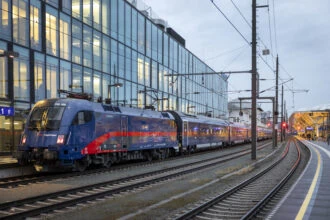
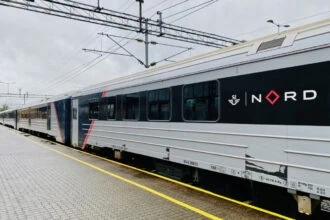
For a slower, more scenic arrival, night trains from Salzburg connect the city to destinations including Rome, Venice and parts of Scandinavia, and the reverse routes make Salzburg a practical overnight stop for travellers threading a longer European Christmas market trip together by rail.
Accommodation in Salzburg’s old town books up quickly for the festive season, with a well-located double room typically costing from around €110 to €180 (£95 to £157 / $120 to $196) a night in December. Staying just outside the historic centre, a short walk or bus ride from Domplatz, is usually noticeably cheaper without adding much to the journey time.
The old town itself is compact and walkable, so a car is rarely necessary once in Salzburg, though anyone planning to combine the trip with nearby Berchtesgaden or the Austrian Lake District may find a hire car useful for the wider region. Public transport, including buses to Hellbrunn and the funicular to the fortress, covers everything needed for the markets themselves.
December evenings in Salzburg regularly drop close to freezing, so proper winter layers matter more here than in milder parts of Europe. Markets typically run until around 8:30pm or 9pm, later than many smaller towns, giving visitors a genuinely long evening to combine shopping, food and a concert in the same trip.
What You Can Do at Salzburg’s Christmas Markets
Browsing the stalls is only one part of a Salzburg Christmas visit, and the city builds a genuine programme of activities around its five markets. The Eiszauber ice rink on Mozartplatz, right beside the main Christkindlmarkt, typically runs from mid-November through to the end of January, open daily from 10am to 10pm with shorter hours on 24, 31 December and 1 January. Adult admission costs around €6.50 (£5.50/$7), with children aged four to ten paying around €4 (£3.50/$4.50), and skate rental is available on-site.
Craft workshops run through December at several of the markets, giving visitors a chance to try their hand at traditional decorations rather than just buying them, and children’s programmes including face painting keep younger visitors entertained between stalls. At Hellbrunn Palace, the market’s children’s area goes further still, with live animals and small play houses alongside the usual torch-lit paths.
The funicular ride up to Festung Hohensalzburg is worth treating as an activity in its own right rather than simply transport, since the fortress market at the top gives the best panoramic view of the illuminated old town anywhere in Salzburg. Combining the ride with a mulled wine at the top makes for one of the more memorable single hours of a Salzburg Christmas trip.
For something less physical, guided Sound of Music tours continue to run through the festive season, taking in Mirabell Palace’s gardens and other filming locations that sit directly alongside the Christmas markets. It is a genuinely easy way to combine sightseeing with the festive programme rather than treating them as separate trips.
Beyond activities, the markets themselves sell plenty worth browsing for: hand-carved wooden ornaments, wool goods, glass baubles and traditional nativity figures turn up across all five markets, particularly at the smaller, more artisan-focused Sternadvent. Between the ice rink, the fortress views and the craft stalls, a Salzburg Christmas visit covers considerably more ground than the markets alone.
Christmas Lights and the Illuminated Old Town
Salzburg’s Christmas lighting is built around the canopy of star-shaped lights suspended above Domplatz and Residenzplatz, which turns the market square into one continuous illuminated ceiling rather than a scattering of individual stalls. The floodlit cathedral and fortress add a second layer above the market itself, visible from across much of the old town after dark.
Unlike some larger festive cities, Salzburg has not published a single dedicated lights switch-on ceremony with its own fixed date in recent years. The markets and their lighting open together as part of the season’s opening, traditionally the Thursday before the first Sunday of Advent, with a modest opening ceremony rather than a standalone illuminations launch.
Once lit, the illuminations stay on through the markets’ full opening hours, and the smaller markets carry their own lighting schemes too. Festung Hohensalzburg uses torch-lit paths and Moravian star lanterns rather than string lights, giving the fortress market a noticeably different, warmer character after dark than the more formally lit Christkindlmarkt below.
A small but genuinely charming touch runs through the main market too: the Christ Child makes an appearance at the Christkindlmarkt every Sunday afternoon at 4pm through the season, a tradition tied closely to the market’s own name and one that draws a steady crowd of families each week.
Because Salzburg’s old town is compact, it is entirely realistic to walk between all five illuminated markets in a single evening, taking in the cathedral backdrop, the fortress views and Mirabell Palace’s more understated lighting along the way. The whole route makes for a genuinely photogenic evening walk beyond just the market stalls themselves.
Shop, Transport and Attraction Opening Hours Over Christmas and New Year
General Austrian shop hours in December follow a fairly consistent pattern. Supermarkets typically open from around 7am to 7pm or 8pm on weekdays, department stores tend to open a little later and close by 6pm or 7pm, and by law shops cannot open before 6am or after 9pm at all. Saturdays close earlier still, usually by 6pm, and Sundays see almost everything shut, with only bakeries, souvenir shops and outlets inside train stations or airports staying open.
24 December is a working day but a short one for shops. Supermarkets such as Spar, Billa, Hofer and Lidl typically close between 1pm and 2pm, bakeries often stay open a little longer, until around 3pm, and shops inside major train stations and airports keep considerably longer hours, sometimes running to 10pm.
Both 25 December (Christmas Day) and 26 December (Stefanitag, St Stephen’s Day) are full national public holidays in Austria, so shops, banks and most attractions close on both days rather than just the one. The main exceptions are petrol station shops and a handful of station-based retailers and restaurants, so anyone relying on shops being open on Boxing Day, as they might elsewhere in Europe, needs to plan around it.
1 January is also a public holiday and follows the same closed pattern as Christmas Day. Public transport in Salzburg generally runs a reduced, Sunday-style timetable on all three of these dates, so checking bus and train times in advance is worth doing rather than assuming a normal weekday schedule.
The Christmas markets themselves are, again, the exception. The Christkindlmarkt and its neighbours typically keep running with adjusted hours around the holidays rather than closing outright, since the festive programme is the whole reason most visitors are in the city at that point, though it is worth confirming exact hours for 24 and 31 December specifically before relying on them.
Compare routes and fares for your journey to Salzburg.
Compare flightsUse an eSIM to get online without hunting for a local SIM after arrival.
See eSIM optionsHave a private airport pickup arranged before you travel.
Book a transferNew Year’s Eve in Salzburg
Salzburg runs a genuinely substantial New Year’s Eve programme under the name Altstadt-Silvester, centred on the Cathedral Square, Residenzplatz and Kapitelplatz. Live bands play from a stage on Kapitelplatz through the evening, and the atmosphere builds steadily as the old town fills with both visitors and locals ahead of midnight.
The countdown itself follows a distinctive local sequence. A gun salute is fired from Hohensalzburg Fortress at 4pm, followed by further shots from the Staatsbrücke, and international fireworks displays are shown on a large screen in the square in the run-up to midnight, before the cathedral bells ring in the New Year themselves.
At midnight, an official fireworks display launches from the fortress above the old town, visible across much of central Salzburg. Private fireworks and firecrackers are banned within the city, so this official display is the one show to plan around rather than something set off informally on the streets.
The celebrations continue into New Year’s Day itself, with music resuming on Kapitelplatz and food and drink stalls around the Cathedral staying open until around 6pm. A service is also held at St Peter’s Collegiate Church on New Year’s Eve for anyone wanting a quieter, more reflective way to mark the turn of the year.
Given the crowds, arriving in the old town with plenty of time before midnight is worth doing, and dressing as warmly as for any other December evening in Salzburg matters just as much on New Year’s Eve as it does earlier in the season. Restaurants near the main squares book up well in advance, so a table should be arranged ahead of the trip rather than on the night.
Salzburg’s December Weather
Salzburg’s alpine setting makes its December climate noticeably colder and snowier than most lowland European Christmas market cities. Average daytime highs run from around 5°C (41°F) at the start of the month down to roughly 3°C (37°F) by New Year, with overnight lows regularly dropping to around -1°C (30°F) early in December and closer to -3°C (27°F) by month’s end.
Snow is a genuine possibility rather than a rare event here, with snow-only days making up around 4% of December on average, well above the figure for markets further from the Alps. Combined with a further 5% of days seeing mixed rain and snow, a Salzburg Christmas visit has a realistic chance of at least some snow on the ground.
Average accumulated snow depth builds steadily through the month, from around 6cm in early December to roughly 8cm by New Year’s Eve, enough to genuinely whiten the old town’s rooftops and the fortress above it on a good year. It is worth noting this is an average rather than a guarantee, and a mild, snow-free December is still entirely possible.
Given the cold, proper winter layers matter more in Salzburg than in many other Christmas market cities, particularly for the more exposed fortress and Hellbrunn markets. A warm coat, waterproof boots with real grip, and a hat and gloves are genuinely necessary rather than optional extras for an evening spent walking between markets.
Evenings drop noticeably colder than daytime readings suggest, so anyone planning a late fortress visit or an evening at the ice rink should dress for temperatures closer to the overnight lows. Packing for genuine alpine cold, rather than a milder city chill, is the safer approach for a December trip to Salzburg.

Rupert’s Handy Travel Tips
Rupert thinks Salzburg rewards visitors who build a little music into their trip rather than treating it as just another market city.
- Book a concert in advance: Advent singing and Mozart performances are genuinely popular, and the best evenings sell out ahead of December.
- Join the Tuesday sing-along: the Christkindlmarkt’s public choir session runs 6pm to 8pm and is open to any visitor who wants to take part.
- Take the fortress market after dark: the views over Salzburg are worth the funicular ride, especially once the old town lights come on below.
- Pack proper winter layers: December evenings often sit close to freezing, and the fortress and Hellbrunn markets are more exposed than the central squares.
- Try Sternadvent for crafts: the converted brewery courtyard tends to have a calmer, more local atmosphere than the busier Christkindlmarkt.
- Keep the mug: Glühwein and Punsch are served in souvenir mugs, and the small deposit is usually worth paying to take one home.
Want to meet the reindeer behind our travel tips? Find out more in our page Who is Rupert?.




Frequently Asked Questions
When do the Salzburg Christmas markets run for 2026?
The main Christkindlmarkt is expected to run from around 19 to 20 November 2026 through 1 January 2027, based on salzburg.info and current market operator guidance, in line with the city’s usual pattern. Exact daily hours for the 2026 season should be checked closer to the date.
Where is Salzburg’s main Christmas market?
The Salzburger Christkindlmarkt is held across Domplatz and Residenzplatz, the connected squares directly beneath Salzburg Cathedral in the heart of the old town.
Is Salzburg or Vienna better for Christmas markets?
They suit different trips. Vienna offers a larger number of markets and a bigger city scale, while Salzburg’s markets are smaller but paired with a genuinely distinctive musical programme, including Advent singing and Mozart concerts.
What is the Advent singing tradition in Salzburg?
Salzburg hosts weekly public sing-along sessions at the Christkindlmarkt, plus a wider programme of Advent concerts across the city’s churches and concert halls, a tradition running for more than 75 years.
Are Salzburg’s Christmas markets free to enter?
Yes, all five main markets are free to browse. Visitors only pay for food, drink, concert tickets, and transport such as the fortress funicular.
How do I get from Salzburg Airport to the Christmas markets?
Salzburg Airport is around 4km from the old town, with buses and taxis reaching the Christkindlmarkt in well under 30 minutes.
Is there an ice rink at the Salzburg Christmas markets?
Yes. The Eiszauber ice rink operates on Mozartplatz beside the main Christkindlmarkt from mid-November through to the end of January, with adult admission around €6.50 (£5.50/$7).
What happens on New Year’s Eve in Salzburg?
Salzburg’s Altstadt-Silvester centres on Cathedral Square, Residenzplatz and Kapitelplatz, with live music, a fortress gun salute, cathedral bells at midnight and an official fireworks display launched from Hohensalzburg Fortress.
Further Reading
Anyone planning a wider stay should read our full guide to the best things to do in Salzburg, covering the old town’s museums, palaces, and attractions beyond the Christmas season.
Travellers flying in should check our Salzburg Airport to City Centre Transfers guide, which explains bus, taxi and private transfer options into the old town during the busy festive season.
For travellers continuing their trip overnight, our Night Trains from Salzburg guide covers sleeper routes to Rome, Venice and parts of Scandinavia, a practical way to combine Salzburg with other Christmas market cities.
Comparing Salzburg against other festive destinations before booking? Our European Christmas Markets Guide rounds up major markets across the continent by city, typical dates, and what makes each one distinctive.