Reviewed by our editorial team Updated
Why Visit Salzburg?
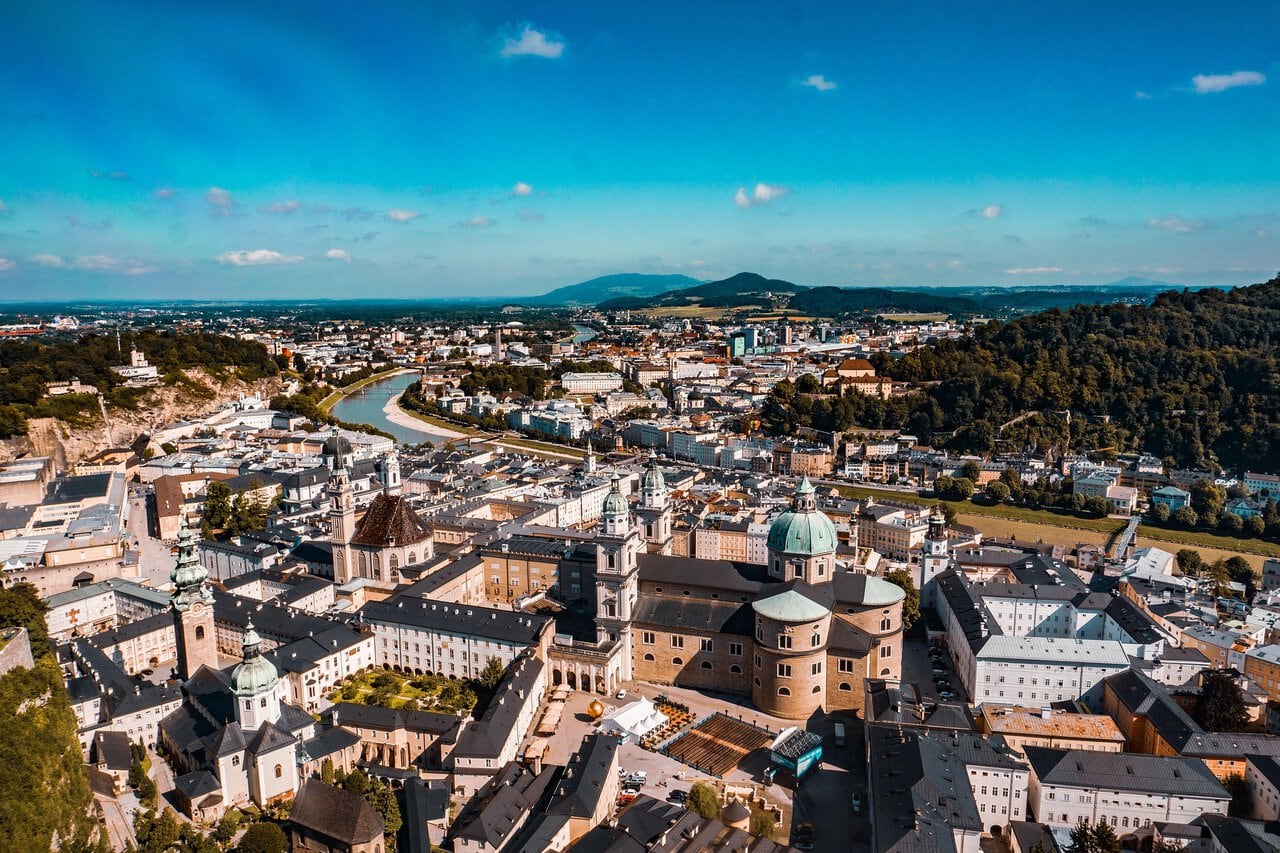
Nestled between the Eastern Alps and the winding Salzach River, Salzburg is one of Europe’s most beautiful and rewarding city destinations. Famous as the birthplace of Wolfgang Amadeus Mozart, the setting for The Sound of Music, and home to one of the continent’s most impressive medieval fortresses, the city combines history, culture, mountain scenery, and easy access to some of Austria’s most spectacular landscapes.
Unlike larger European capitals, many of Salzburg’s main attractions sit within walking distance of each other. Visitors can spend the morning exploring the narrow streets of the UNESCO-listed Old Town, enjoy lunch beneath the walls of Hohensalzburg Fortress, listen to Mozart in a historic palace during the evening, and still have time to plan a day trip into the nearby lakes and mountains of the Salzkammergut.
The city is also one of Austria’s most important transport hubs. High-speed rail services connect Salzburg with Vienna, Munich, and Innsbruck, while the nearby airport provides links across Europe. Whether you’re visiting for a weekend city break, using Salzburg as a base for exploring Austria, or stopping as part of a wider European rail adventure, there is no shortage of things to see and do.
Explore Salzburg Old Town
The heart of Salzburg is its remarkably preserved Altstadt (Old Town), one of the finest historic city centres in Europe. Designated a UNESCO World Heritage Site, the Old Town combines medieval streets, elegant squares, Baroque churches, and centuries of architectural history within a surprisingly compact area.
Many visitors begin at Getreidegasse, Salzburg’s most famous shopping street. The narrow lane is lined with traditional wrought-iron signs, historic buildings, independent shops, cafés, and restaurants. It is also home to Mozart’s Birthplace, one of the city’s most visited attractions.
Beyond Getreidegasse, the Old Town opens into a series of impressive squares including Residenzplatz, Mozartplatz, and Kapitelplatz. Each offers a different perspective on Salzburg’s history, from prince-archbishops and merchants to musicians and artists who helped shape the city over the centuries.
One of the joys of Salzburg is simply wandering. Hidden courtyards, ornate fountains, quiet churches, and panoramic viewpoints appear around almost every corner. The compact nature of the city means visitors can comfortably explore much of the historic centre on foot without needing public transport.
The Old Town is particularly atmospheric during the early morning and evening when many day visitors have left and the city regains a quieter, more authentic character. During December, the area becomes even more magical as Christmas markets, festive lighting, and seasonal stalls transform the historic streets.
See hotel options and places to stay in Salzburg.
Browse hotelsBrowse apartments, homes and self-catering accommodation in Salzburg.
Browse rentalsCompare hotel deals in Salzburg from multiple booking sites.
Compare pricesVisit Hohensalzburg Fortress
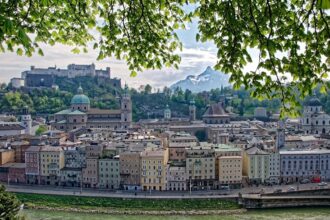
Dominating the skyline above Salzburg, Hohensalzburg Fortress is the city’s most recognisable landmark and one of the largest fully preserved medieval castles in Europe. Perched high above the Old Town on Festungsberg Hill, the fortress has watched over Salzburg for more than 900 years.
Visitors can either walk up the hill in around 20 to 30 minutes or take the historic funicular railway, which provides a much easier ascent while offering impressive views across the city. A ticket including the funicular costs from €14.50 (£12 / $17) for the basic pass, rising to €18 (£15 / $21) for the all-inclusive option covering every exhibition. Upon arrival, the scale of the fortress quickly becomes apparent. Massive walls, defensive towers, courtyards, and historic buildings create an impressive complex that rewards several hours of exploration.
The fortress was never successfully captured by enemy forces, a fact that highlights both its strategic location and formidable design. Inside, visitors can explore exhibitions covering military history, medieval life, and the development of Salzburg itself. One of the highlights is the magnificent Prince’s Chambers, considered among the finest preserved secular Gothic interiors in Europe.
The views alone justify the visit. From the fortress walls, visitors enjoy sweeping panoramas across the rooftops of Salzburg, the surrounding countryside, and the distant Alpine peaks. On clear days, the scenery stretches far beyond the city limits and provides some of the best photography opportunities in the region.
For many visitors, Hohensalzburg Fortress ranks as the number one attraction in Salzburg and provides an excellent introduction to the city’s history and geography.
Discover Mozart’s Salzburg
Few historical figures are as closely associated with a city as Wolfgang Amadeus Mozart is with Salzburg. Born here in 1756, Mozart spent his formative years in the city before achieving international fame as one of history’s greatest composers.
Mozart’s influence can be found throughout Salzburg. The most famous location is Mozart’s Birthplace on Getreidegasse, where visitors can explore rooms containing original documents, portraits, instruments, and exhibits covering his early life and musical development.
A second major attraction is Mozart’s Residence, where the composer later lived with his family. The museum offers further insight into his career, travels, and lasting legacy.
Even visitors with little interest in classical music will encounter Mozart throughout the city. Statues, monuments, concert venues, souvenir shops, and cultural events ensure that his presence remains woven into daily life. The annual Salzburg Festival, one of the world’s leading music and performing arts events, continues this tradition by attracting performers and audiences from around the globe.
Mozart’s connection to Salzburg is not merely historical. The city’s reputation as one of Europe’s great cultural destinations is built largely upon the foundation he helped create more than two centuries ago.
Attend a Mozart Concert at Mirabell Palace
While Salzburg offers numerous opportunities to learn about Mozart’s life, few experiences capture the spirit of the city quite like attending a live classical concert. Among the most popular venues is the magnificent Marble Hall of Mirabell Palace, widely regarded as one of the most beautiful concert halls in the world.
The hall itself is a major attraction. Built during Salzburg’s Baroque golden age, it once served as a grand reception room for the city’s prince-archbishops. Even before the musicians begin to play, visitors are surrounded by ornate architecture, chandeliers, marble detailing, and centuries of musical history.
Adding to the atmosphere is the fact that Leopold Mozart and his children, including a young Wolfgang Amadeus Mozart, performed here during the eighteenth century. Few concert venues can claim such a direct connection to one of history’s greatest composers.
Modern performances typically feature works by Mozart, Vivaldi, Haydn, Beethoven, and other classical masters, performed by accomplished chamber ensembles and soloists. The intimate size of the Marble Hall creates an experience that feels far more personal than attending a concert in a large theatre or concert arena.
Even visitors who do not normally listen to classical music often find these performances to be one of the highlights of their visit to Salzburg. The combination of music, history, architecture, and atmosphere creates a uniquely memorable evening in the city where Mozart’s story began.
Wander Through Mirabell Gardens
Immediately outside the palace lies another of Salzburg’s most famous attractions, the beautiful Mirabell Gardens. Free to enter and located just a short walk from the Old Town, the gardens provide one of the city’s most attractive green spaces.
Originally designed in the seventeenth century, the gardens are famous for their symmetrical layouts, colourful flower displays, fountains, sculptures, and carefully maintained pathways. Throughout the warmer months, they provide a peaceful escape from the busier streets of the city centre.
For many visitors, however, the gardens are most famous for their appearance in The Sound of Music. Several scenes from the film were shot here, including parts of the iconic Do-Re-Mi sequence. Fans of the movie often enjoy recreating scenes while exploring the grounds.
The gardens also provide excellent views towards Hohensalzburg Fortress, creating some of Salzburg’s most photographed vistas. Early mornings are particularly rewarding, as the gardens are quieter and the soft light enhances both the flowers and surrounding architecture.
Combined with the palace itself, Mirabell Gardens offer an ideal stop between visits to Salzburg’s major attractions and require very little time or planning to enjoy.
Follow the Sound of Music Trail
Few films have shaped a destination’s tourism industry as profoundly as The Sound of Music has shaped Salzburg. Released in 1965, the film has become one of the most successful and enduring musicals ever produced, introducing generations of viewers to the spectacular scenery, architecture, and landscapes of Austria.
While some visitors arrive in Salzburg because of Mozart, its Baroque architecture, or its Alpine setting, many others come specifically because of The Sound of Music. For countless travellers, standing in the locations where Maria and the von Trapp children sang, danced, and explored is a bucket-list experience that has been decades in the making.
The film’s connection to Salzburg extends far beyond a handful of filming locations. Throughout the city, visitors encounter places that played important roles in the movie, helping to create a unique blend of cinema history and real-world sightseeing. One of the most famous locations is Mirabell Gardens, where Maria and the children performed parts of the iconic Do-Re-Mi sequence. The gardens remain one of the most photographed spots in the city and attract fans from around the world.
Another major stop is Nonnberg Abbey, where the real Maria von Trapp lived as a novice before marrying Captain Georg von Trapp. Although not all scenes were filmed there, the abbey remains one of the most significant locations connected to the true story behind the film.
Visitors can also see Leopoldskron Palace, whose exterior was used as the von Trapp family home, along with several locations scattered throughout Salzburg’s historic centre. However, many of the most memorable scenes were filmed outside the city, which is why organised tours remain so popular.
A dedicated Sound of Music Tour allows visitors to venture into the spectacular countryside surrounding Salzburg. The route typically passes Lake Fuschl, the picturesque village of St. Gilgen, and the wider Salzkammergut region, an area of lakes, mountains, and traditional Austrian villages that many travellers consider among the most beautiful parts of the country.
One of the highlights for many visitors is Mondsee, where the famous wedding scene was filmed inside Mondsee Cathedral. Even travellers who are only casual fans of the film often find themselves impressed by the beauty of the church and its stunning setting beside the lake.
What makes these tours particularly successful is that they work on several levels. Dedicated fans enjoy the filming locations, movie trivia, and behind-the-scenes stories, while general visitors benefit from the opportunity to explore some of Austria’s most spectacular scenery. Guides frequently discuss not only the film itself but also the history of Salzburg, Austrian culture, and the fascinating story of the real von Trapp family.
More than sixty years after its release, The Sound of Music continues to define Salzburg for millions of visitors worldwide. Whether you are a lifelong fan who knows every song by heart or simply curious about one of cinema’s most famous productions, following the Sound of Music trail remains one of the most iconic experiences available in Salzburg.
Visit Nonnberg Abbey
Perched above Salzburg’s historic centre, Nonnberg Abbey holds a special place in both Austrian history and popular culture. Founded in approximately 714 AD, it is considered the oldest continuously operating convent in the German-speaking world.
The abbey is perhaps best known internationally as the convent where Maria von Trapp lived as a novice before marrying Captain Georg von Trapp, a story later immortalised in The Sound of Music. Visitors often recognise the abbey from scenes featured in the film, although many are surprised to discover how much deeper its history extends.
Despite its fame, Nonnberg Abbey remains an active religious institution. Visitors can admire the exterior buildings, explore the surrounding area, and attend services, but access to some sections remains restricted to preserve the daily life of the resident nuns.
The location itself is worth the walk. Situated above the city centre, the abbey offers a peaceful atmosphere and attractive views across parts of Salzburg. The route leading to the convent passes through quiet streets and historic surroundings that many tourists overlook.
For travellers interested in history, religion, architecture, or The Sound of Music, Nonnberg Abbey provides a fascinating glimpse into a different side of Salzburg’s heritage.
Search flights and useful route combinations for your trip.
View flightsChoose an Airalo eSIM and arrange mobile data before you arrive.
Browse eSIMsArrange a private airport pickup for your trip to Salzburg.
Check transfersSee Salzburg from the Hop-On Hop-Off Bus
Although Salzburg is a highly walkable city, there is still value in seeing it from a different perspective. The Salzburg Hop-On Hop-Off Bus provides an easy way to connect many of the city’s major attractions while also reaching places that sit beyond the historic centre.
Unlike the open-top buses commonly found in larger European cities, Salzburg’s service uses comfortable coaches equipped with multilingual audio commentary. The route covers many of the city’s key landmarks, including Mirabell Palace, Mozart’s Salzburg, Hellbrunn Palace, Leopoldskron Palace, and the areas surrounding the Old Town.
For first-time visitors, the service can be particularly useful at the start of a trip. Completing a full circuit provides an excellent overview of the city before deciding which attractions deserve more time later. The audio commentary also helps visitors understand Salzburg’s history, architecture, and cultural significance while travelling between stops.
One of the advantages of the Salzburg service is that some tickets include additional routes beyond the city centre. These can extend towards attractions such as the Salt Mines, Berchtesgaden, and areas connected with The Sound of Music, allowing visitors to cover more ground without needing to organise separate transport.
Travellers with limited time often find the hop-on hop-off bus a convenient way to maximise sightseeing while reducing the amount of walking required between attractions.
Ride the Untersberg Cable Car
While Hohensalzburg Fortress and Kapuzinerberg provide excellent views over Salzburg itself, the most spectacular panorama in the region can be found high above the city on Untersberg Mountain.
Located just a short distance south of Salzburg, the Untersberg Cable Car transports visitors from the valley floor to an altitude of approximately 1,776 metres in less than ten minutes. The journey itself is impressive, climbing steeply above forests, rocky cliffs, and Alpine meadows before reaching the summit station near the Austrian-German border.
The views from the top are extraordinary. On clear days, visitors can see across much of the Salzburg region, deep into Bavaria, and towards numerous Alpine peaks stretching across the horizon. Looking north, the city of Salzburg appears tiny beneath the mountains, while to the south the landscape becomes increasingly rugged and dramatic.
The summit area offers far more than just viewpoints. Walking trails lead across the mountain plateau, allowing visitors to explore the Alpine environment at their own pace. During summer, hikers can enjoy everything from short scenic walks to more demanding mountain routes. In winter, snow-covered landscapes transform the area into a spectacular high-altitude wonderland.
The mountain is also steeped in local folklore. According to legend, Holy Roman Emperor Frederick Barbarossa sleeps within the mountain, awaiting the day when Germany needs him once again. Stories such as these have helped make Untersberg one of the most famous mountains in Austrian folklore.
One of the greatest advantages of the attraction is its accessibility. Visitors can travel from Salzburg city centre to the cable car base station using public transport in around 30 minutes, making it one of the easiest Alpine experiences available from any major European city.
For travellers seeking the best scenery near Salzburg, the Untersberg Cable Car often becomes one of the highlights of the entire trip. The combination of dramatic mountain landscapes, panoramic views, hiking opportunities, and easy access makes it one of the region’s most rewarding attractions.
An additional benefit for visitors planning multiple attractions is that the Salzburg Card includes the Untersberg Cable Car, making it one of the most valuable inclusions in the pass and significantly increasing its overall value.
Cruise the Salzach River
Most visitors experience Salzburg from its streets, squares, and viewpoints, but a cruise along the Salzach River offers an entirely different perspective on the city.
The river has played a crucial role in Salzburg’s development for centuries. Historically, it served as an important transport route for the salt trade that helped make the city wealthy. Today, it provides a scenic setting for one of Salzburg’s most relaxing visitor experiences.
River cruises typically last around 40 minutes and pass many of the city’s most recognisable landmarks. As the boat glides through the heart of Salzburg, passengers enjoy unobstructed views of the skyline, church spires, fortress walls, and riverside architecture that define the city’s character.
Beyond the historic centre, the scenery becomes increasingly green and tranquil. The surrounding mountains gradually come into view, creating excellent opportunities for photography and offering a sense of how closely Salzburg is connected to the Alpine landscape that surrounds it.
The cruise is particularly popular during warmer months when passengers can enjoy the outdoor seating areas and appreciate the city from the water. However, even in cooler weather, the experience remains a pleasant and often overlooked addition to a Salzburg itinerary.
For visitors who have already explored the main sights on foot, the Salzach River cruise provides a welcome change of pace and a fresh perspective on the city.
Explore Hellbrunn Palace and the Trick Fountains
Located just south of the city centre, Hellbrunn Palace is one of Salzburg’s most entertaining attractions and offers something very different from the city’s churches, museums, and historic squares.
Built in the early seventeenth century as a summer residence for Prince-Archbishop Markus Sittikus, Hellbrunn was designed primarily for leisure and entertainment rather than political power. The result is a playful palace complex unlike any other in Austria.
Its most famous feature is the collection of Trick Fountains, a series of ingenious water-powered surprises designed to amuse guests and, occasionally, leave them unexpectedly soaked. Hidden jets, mechanical displays, and elaborate water features still operate today much as they did hundreds of years ago.
The palace grounds themselves are extensive and attractive. Visitors can explore landscaped gardens, woodland paths, ponds, sculptures, and historic buildings while enjoying a quieter atmosphere than that found in Salzburg’s busy centre.
Film fans may also recognise the famous gazebo used in The Sound of Music. Although it has been relocated from its original filming position, it remains one of the most photographed locations within the palace grounds.
Hellbrunn is particularly popular with families, but adults often enjoy it just as much. The combination of history, architecture, gardens, and playful engineering makes it one of Salzburg’s most distinctive attractions.
Visit Salzburg Cathedral
Standing proudly in the heart of the Old Town, Salzburg Cathedral is one of the most important religious buildings in Austria and one of the finest examples of Baroque architecture north of the Alps.
The current cathedral dates largely from the early seventeenth century, although Christian worship has taken place on the site for more than a thousand years. Its striking façade, twin towers, and magnificent dome dominate the surrounding squares and immediately draw the attention of visitors arriving in the historic centre.
Inside, the cathedral is equally impressive. Vast spaces, ornate decoration, beautiful frescoes, and intricate marble work create an atmosphere that reflects Salzburg’s historical importance as the seat of powerful prince-archbishops.
The cathedral also has a direct connection to Mozart, who was baptised here shortly after his birth in 1756. Throughout his life, Mozart maintained close links to Salzburg’s religious institutions, and many of his sacred compositions were written for performance within the city’s churches and cathedral.
Even visitors with little interest in religious history often find the building worthwhile simply for its architectural beauty and cultural significance. Located close to many of Salzburg’s other major attractions, the cathedral is easy to include in any exploration of the Old Town.
Walk Up Kapuzinerberg for the Best Views
While most visitors head straight for Hohensalzburg Fortress, one of Salzburg’s finest viewpoints is found on the opposite side of the Salzach River. Rising above the eastern bank of the city, Kapuzinerberg offers a quieter and more authentic perspective on Salzburg.
The wooded hill is criss-crossed by walking paths that climb steadily through forested slopes towards a series of viewpoints overlooking the Old Town. Along the way, visitors encounter sections of historic fortifications, peaceful woodland scenery, and occasional glimpses of the city appearing through the trees below.
One of the highlights is the Capuchin Monastery, which has occupied the hill since the late sixteenth century. The monastery itself is not the primary attraction for most visitors, but its presence adds to the peaceful atmosphere that makes Kapuzinerberg feel far removed from the busy streets below.
The reward for the climb is a collection of spectacular views. From various points on the hillside, visitors can admire Hohensalzburg Fortress, the towers of Salzburg Cathedral, the rooftops of the Old Town, and the surrounding Alpine landscape. Many photographers consider these viewpoints among the best in the city.
Unlike some of Salzburg’s major attractions, Kapuzinerberg remains relatively uncrowded. Visitors willing to spend an hour exploring the hill are often rewarded with some of the most memorable views of their entire trip.
Compare hostels and lower-cost places to stay in Salzburg.
Search hostelsAccess compensation support, eligible lounge benefits and faster payouts when flights go wrong.
See the benefitsLeave your luggage somewhere convenient and enjoy Salzburg hands-free.
View storageVisit the Salzwelten Salt Mine
The history of Salzburg is inseparable from salt. In fact, the city’s name literally means “Salt Castle”, reflecting the immense wealth generated by the region’s salt deposits over many centuries.
One of the best ways to understand this history is through a visit to Salzwelten Salzburg, located on the nearby Dürrnberg mountain. Widely regarded as one of Austria’s most enjoyable family attractions, the site combines history, technology, adventure, and spectacular underground scenery.
Visitors begin by dressing in traditional miners’ overalls before descending deep beneath the mountain. The experience includes underground train rides, interactive exhibits, historic mining tunnels, and even the opportunity to cross the underground border between Austria and Germany.
One of the highlights is the enormous underground salt lake, illuminated by dramatic lighting effects that create an almost otherworldly atmosphere. Visitors also descend deeper into the mine using traditional wooden miners’ slides, an experience that proves surprisingly popular with adults as well as children.
Beyond the entertainment value, the attraction provides fascinating insight into the industry that helped transform Salzburg into one of Europe’s wealthiest ecclesiastical states. Without salt, much of the city’s history, architecture, and cultural development would never have been possible.
The combination of history, scenery, and hands-on experiences makes Salzwelten one of the most distinctive attractions in the region and an excellent choice for visitors looking to venture beyond the city centre.
Take a Day Trip to Hallstatt
Few destinations in Europe are photographed as frequently as Hallstatt. Nestled between towering mountains and the shores of Lake Hallstatt, the village has become one of Austria’s most famous tourist destinations and is one of the most popular day trips from Salzburg.
Although Hallstatt attracts visitors throughout the year, the setting remains genuinely spectacular. Colourful houses appear to cling to the mountainside above the lake, church spires rise from the village centre, and dramatic peaks surround the settlement on all sides.
The journey itself is part of the experience. Travelling through the Salzkammergut region introduces visitors to some of Austria’s finest scenery, including lakes, forests, mountain villages, and rolling Alpine landscapes. Many organised tours include commentary on the region’s history and geography during the journey.
Upon arrival, visitors typically have several hours to explore independently. Popular activities include walking along the waterfront, visiting the historic market square, exploring the famous Bone House, and simply enjoying the extraordinary scenery that has made Hallstatt famous around the world.
Although Hallstatt can become busy during peak periods, its popularity is easy to understand. Few places combine natural beauty, history, and atmosphere as successfully. For visitors with limited time in Austria, a day trip from Salzburg offers one of the easiest ways to experience this remarkable destination.
Is the Salzburg Card Worth It?
For many visitors, the Salzburg Card is one of the best-value purchases available in the city. Rather than buying individual attraction tickets and public transport fares throughout your trip, the card bundles together many of Salzburg’s most popular experiences into a single pass. A 24-hour Salzburg Card starts at €35 (£30 / $41) in the low season, rising to €38 (£33 / $44) between April and October, with 48-hour and 72-hour options also available; current prices are listed on the official Salzburg Card page.
The biggest advantage is convenience. Instead of constantly calculating ticket prices or deciding whether a particular attraction is worth the admission fee, visitors can simply focus on sightseeing. The card includes unlimited public transport, making it easy to move between attractions, while also providing free entry to many of the city’s most famous sights.
Several attractions featured in this guide are included. Visitors receive free admission to Hohensalzburg Fortress, including the fortress funicular, along with entry to Mozart’s Birthplace, Mozart’s Residence, Hellbrunn Palace and the Trick Fountains, and numerous museums throughout the city. The card also includes the Salzach River Cruise, which means travellers planning to take the boat trip may already recover a significant portion of the card’s cost.
The value extends beyond the city centre. The card includes access to the spectacular Untersberg Cable Car, one of the region’s most impressive mountain experiences. On a clear day, the views stretch across Austria and into neighbouring Germany, making it one of the best excursions available from Salzburg.
Visitors also benefit from a range of discounts. These include reduced prices for Mozart concerts, the Hop-On Hop-Off Bus, guided walking tours, cultural performances, and attractions in the wider Salzburg region. Travellers planning a busy sightseeing schedule can often generate substantial savings compared with purchasing everything separately.
The Salzburg Card is particularly worthwhile for first-time visitors spending two or three days in Salzburg. A typical itinerary that includes Hohensalzburg Fortress, Hellbrunn Palace, Mozart’s Birthplace, a Salzach River Cruise, public transport journeys, and the Untersberg Cable Car will usually make the card pay for itself while also removing the hassle of buying multiple tickets.
However, the card is not essential for everyone. Visitors planning to spend most of their time wandering the Old Town, visiting churches, exploring Mirabell Gardens, and enjoying Salzburg’s atmosphere may find that individual tickets work out cheaper. The card delivers the greatest value when you actively visit several paid attractions within a short period.
For travellers who enjoy seeing as much as possible during their stay, the Salzburg Card remains one of the easiest ways to maximise both convenience and value while exploring one of Austria’s most beautiful cities.

Best Things to Do in Salzburg in Winter
Winter transforms Salzburg into one of Europe’s most atmospheric city destinations. Surrounded by snow-covered mountains and illuminated by festive lights, the city feels almost purpose-built for the colder months.
The most famous seasonal attraction is the Salzburg Christmas Market, held around Cathedral Square and Residenzplatz. Dating back centuries, it is considered one of Austria’s oldest and most traditional Christmas markets. Wooden stalls, seasonal food, handmade gifts, and festive music create a memorable atmosphere throughout the city centre.
Winter is also an excellent time to visit Hohensalzburg Fortress, where snow-dusted rooftops and mountain views create particularly impressive scenery. The contrast between the medieval architecture and surrounding Alpine landscape often makes this one of the most photogenic periods of the year.
Classical music performances become especially popular during winter. Attending a Mozart concert at Mirabell Palace feels particularly appropriate during the festive season, when the historic surroundings and intimate atmosphere combine to create a memorable evening.
Many visitors also use Salzburg as a base for exploring nearby ski resorts. Destinations including Zell am See, Kitzbühel, Saalbach-Hinterglemm, Obertauern, and Schladming are all within relatively easy reach, allowing travellers to combine city sightseeing with winter sports.
For those willing to embrace colder temperatures, winter may actually be the most magical time to visit Salzburg.
Best Things to Do in Salzburg with Kids
Although Salzburg is often associated with classical music, history, and culture, it is also an excellent destination for families. The compact city centre, pedestrian-friendly streets, and variety of attractions make it easy to keep children entertained while still enjoying the city’s historic atmosphere.
One of the most popular family attractions is Hohensalzburg Fortress. Children often enjoy the funicular ride almost as much as the fortress itself, while the medieval walls, towers, and interactive displays help bring history to life. The panoramic views from the top also provide a memorable introduction to Salzburg and the surrounding mountains.
The Salzwelten Salt Mine is another family favourite. Underground trains, giant miners’ slides, interactive exhibits, and a boat ride across a subterranean salt lake create an experience that appeals to visitors of all ages. Many families consider it one of the highlights of their trip to Austria.
At Hellbrunn Palace, the famous Trick Fountains remain as entertaining today as they were hundreds of years ago. Hidden water jets and playful engineering surprises ensure that children are rarely bored, particularly during warmer months.
Families who enjoy outdoor activities should consider spending time in Mirabell Gardens, where wide paths, colourful flower displays, and open spaces allow children to explore safely. The gardens are also one of the easiest places to enjoy some of Salzburg’s famous scenery without spending money.
For families staying several days, a Hallstatt day trip can also be rewarding. The lakeside setting, ferry crossings, mountain scenery, and relaxed atmosphere provide a very different experience from city sightseeing and often become one of the most memorable parts of an Austrian holiday.
The combination of castles, mountains, gardens, museums, and interactive attractions makes Salzburg one of the most family-friendly city destinations in Central Europe.
How Many Days Do You Need in Salzburg?
The ideal length of stay depends largely on your interests and whether you plan to explore beyond the city itself.
Visitors with limited time can experience many of Salzburg’s highlights in a single day. A well-planned itinerary can include Mirabell Gardens, Mozart’s Birthplace, Salzburg Cathedral, Hohensalzburg Fortress, and an evening stroll through the Old Town. While this provides a good introduction, it can feel rushed.
For most travellers, two days in Salzburg is the sweet spot. This allows enough time to explore the major attractions at a comfortable pace while also enjoying experiences such as a Mozart concert, a river cruise, or a visit to Hellbrunn Palace. Two days also provide more opportunities to appreciate the atmosphere of the city rather than simply moving between landmarks.
Visitors staying three days or longer can begin exploring the surrounding region. Popular excursions include Hallstatt, the Salzkammergut lakes, the Salzwelten Salt Mine, and nearby Alpine destinations. This additional time transforms Salzburg from a city break into a broader Austrian travel experience.
Many travellers also use Salzburg as a base. Excellent rail connections make it easy to visit destinations such as Vienna, Innsbruck, Munich, and numerous ski resorts while returning to Salzburg each evening.
If your schedule allows, two to three days provides the best balance between city sightseeing and regional exploration.

Getting Around Salzburg
One of the reasons Salzburg is such an enjoyable city to visit is that it is remarkably easy to navigate. Unlike many European destinations where visitors spend a significant amount of time on public transport, Salzburg’s compact layout means that many of the city’s most important attractions sit within a relatively small area. This allows travellers to spend more time exploring and less time commuting between sights.
The historic Old Town, Mirabell Gardens, Salzburg Cathedral, Mozart’s Birthplace, Mozart’s Residence, and the lower station for Hohensalzburg Fortress are all located within comfortable walking distance of each other. Visitors staying near the centre often discover that they can spend an entire day sightseeing without needing any form of transport at all.
For attractions further afield, including Hellbrunn Palace, Salzburg Airport, and some residential districts, the city’s efficient public transport system fills the gaps. Modern buses and trolleybuses operate frequently throughout the day and provide excellent coverage across the city. The network is easy to understand, reliable, and generally much less intimidating than those found in larger European capitals.
Many first-time visitors also choose to purchase the Salzburg Card, which combines public transport access with free or discounted entry to many of the city’s leading attractions. Depending on your itinerary, the card can provide both convenience and significant savings.
Visitors looking for a broader overview of the city may prefer the Hop-On Hop-Off Bus, which combines transport with guided sightseeing. The route connects many of Salzburg’s major landmarks while providing historical and cultural commentary throughout the journey. For travellers with limited time, it can be an efficient way to understand the city’s layout before exploring individual attractions in greater detail.
The combination of walkability, reliable public transport, and compact geography means Salzburg is one of the easiest cities in Europe to explore independently.
One Day in Salzburg
If you only have one day in Salzburg, careful planning is essential, but it is still possible to experience many of the city’s most famous attractions. The compact nature of the historic centre allows visitors to cover a surprising amount of ground without feeling rushed.
Begin the morning at Mirabell Gardens, one of Salzburg’s most iconic locations and a perfect introduction to the city. From here, cross the Salzach River and enter the heart of the UNESCO-listed Old Town, where narrow streets, elegant squares, and centuries of history await around every corner. Spend time exploring Getreidegasse, visiting Mozart’s Birthplace, and admiring the impressive architecture of Residenzplatz and Mozartplatz.
By late morning, make your way to Hohensalzburg Fortress. Whether you choose to walk or take the historic funicular, the fortress provides both fascinating history and some of the best panoramic views in Austria. Allow sufficient time to explore the medieval buildings, museums, and viewing terraces.
After lunch, visit Salzburg Cathedral and continue wandering through the Old Town, taking time to appreciate the city’s unique atmosphere rather than simply moving from attraction to attraction. If time allows, a short Salzach River Cruise provides a different perspective on the city and surrounding mountains.
End the day with a traditional Austrian dinner before attending a Mozart concert at Mirabell Palace. The combination of world-class music and a magnificent historic setting creates a fitting finale to a day in one of Europe’s great cultural cities.
For travellers with limited time, this itinerary delivers the essential Salzburg experience while still allowing moments to appreciate the city’s beauty and atmosphere.
Two Days in Salzburg
With two days in Salzburg, visitors gain the luxury of slowing down and experiencing the city at a much more comfortable pace. Rather than simply ticking off attractions, you can begin to appreciate why Salzburg consistently ranks among Europe’s most rewarding city breaks.
The first day can focus on the city’s core highlights, including Mirabell Gardens, the Old Town, Mozart’s Birthplace, Salzburg Cathedral, and Hohensalzburg Fortress. By spreading these attractions across a full day, there is time to explore hidden courtyards, browse local shops, and enjoy the cafés that contribute so much to Salzburg’s charm.
The second day allows visitors to venture beyond the obvious landmarks. Begin with a visit to Hellbrunn Palace, where the famous Trick Fountains offer a playful contrast to the city’s more formal historic attractions. The surrounding gardens and parkland provide a pleasant escape from the busier parts of the centre.
Later in the day, consider a Salzach River Cruise or a ride on the Hop-On Hop-Off Bus to gain a broader understanding of the city and its surroundings. Both experiences provide perspectives that are difficult to appreciate solely on foot.
The evening is the perfect time to experience Salzburg’s musical heritage. Attending a Mozart concert in the Marble Hall of Mirabell Palace allows visitors to connect with the city’s cultural identity in a way that museums alone cannot provide. Even travellers who are not regular classical music fans often consider this one of the highlights of their trip.
Two days strikes an excellent balance between sightseeing and relaxation, allowing visitors to experience both Salzburg’s major attractions and its unique atmosphere.

Three Days in Salzburg
A three-day stay in Salzburg opens up possibilities that extend far beyond the city itself. By this point, most visitors will already have explored the principal attractions, allowing them to discover the wider region that makes Salzburg such a popular base for travel in Austria.
The additional day is best used for a regional excursion. The most famous option is undoubtedly Hallstatt, one of Austria’s most photographed destinations. Surrounded by mountains and positioned on the shores of a spectacular lake, Hallstatt offers scenery that feels entirely different from Salzburg while remaining easy to visit as a day trip.
Another excellent option is the Salzwelten Salt Mine at Dürrnberg. This attraction provides fascinating insight into the industry that helped create Salzburg’s wealth and identity. Underground train rides, miners’ slides, historic tunnels, and a vast subterranean salt lake combine to create one of Austria’s most unusual visitor experiences.
Travellers interested in nature may prefer exploring the wider Salzkammergut region. Lakes, mountains, charming villages, and panoramic viewpoints make this one of the most beautiful parts of Austria. Visitors can easily spend a full day discovering destinations such as St. Gilgen, St. Wolfgang, and Lake Wolfgangsee.
Those with a particular interest in music, history, or architecture may instead choose to spend the extra day exploring Salzburg itself in greater depth. Smaller museums, churches, viewpoints such as Kapuzinerberg, and neighbourhoods beyond the tourist centre reveal a different side of the city that many visitors never see.
Three days provides the ideal balance between city sightseeing and regional exploration. It allows travellers not only to see Salzburg’s famous landmarks but also to experience the landscapes, culture, and history that make this corner of Austria so special.
Christmas Markets in Salzburg
Salzburg’s Christkindlmarkt spreads across Domplatz and Residenzplatz beneath the floodlit cathedral, with around a hundred wooden stalls trading beneath a canopy of star-shaped lights. It’s one of the oldest Advent markets in Austria, with roots reaching back to the late 15th century.
Music sets Salzburg apart from other market cities. The Christkindlmarkt hosts a weekly public sing-along choir every Tuesday evening, alongside traditional wind music from a balcony above the square and a full programme of Advent and Mozart concerts through December.
For views, the Festung Hohensalzburg market sits high above the old town, reached by funicular, with torch-lit paths and Moravian star lanterns. Warm up with a cup of Punsch or Glühwein, or pick up a box of Mozartkugeln, the city’s famous chocolates.
Four further markets run alongside the main square, from a family-friendly gathering at Mirabell Palace to the cosy Sternadvent courtyard tucked inside a converted brewery. For 2026 dates, prices and the city’s full Advent programme, see our guide to Salzburg’s Christmas markets.

Rupert’s Handy Travel Tips
Visiting Salzburg? Here are a few tips that can help you make the most of your trip:
- Visit Hohensalzburg Fortress early: The views are often clearest in the morning and you’ll avoid the busiest crowds.
- Stay near the Old Town or Mirabell Gardens: Most major attractions are within walking distance, reducing the need for public transport.
- Book Mozart concerts in advance: Popular performances at Mirabell Palace can sell out during summer and Christmas market season.
- Allow time for Hallstatt: If your schedule permits, this is one of Austria’s most rewarding day trips from Salzburg.
- Use Salzburg as a rail hub: Excellent train connections make it easy to visit Vienna, Innsbruck, Munich, and the wider Austrian Alps.
- Pack comfortable shoes: Salzburg is best explored on foot, particularly within the historic Old Town.
Want to meet the reindeer behind our travel tips? Find out more in our page Who is Rupert?.




Frequently Asked Questions About Salzburg
Is Salzburg worth visiting?
Absolutely. Salzburg combines stunning Alpine scenery, a beautifully preserved UNESCO-listed Old Town, world-famous musical heritage, and easy access to attractions such as Hallstatt, the Salzkammergut, and numerous Austrian ski resorts. It is widely regarded as one of the most attractive cities in Central Europe.
How many days do you need in Salzburg?
Most visitors find that two to three days provides the ideal amount of time. Two days allows you to explore the major attractions comfortably, while three days provides enough time for a day trip to destinations such as Hallstatt or the Salzkammergut lake district.
What is Salzburg most famous for?
Salzburg is best known as the birthplace of Wolfgang Amadeus Mozart, the setting for The Sound of Music, and the home of the impressive Hohensalzburg Fortress. The city is also famous for its Baroque architecture, classical music tradition, and spectacular Alpine setting.
Can you walk around Salzburg?
Yes. One of Salzburg’s greatest strengths is its compact size. Most major attractions, including Mirabell Gardens, Mozart’s Birthplace, Salzburg Cathedral, and Hohensalzburg Fortress, can be reached on foot from the city centre.
Is Hohensalzburg Fortress worth visiting?
Yes. The fortress is widely considered Salzburg’s top attraction. Visitors can explore medieval buildings, museums, historic chambers, and enjoy some of the best panoramic views in Austria.
What are the best day trips from Salzburg?
Popular day trips include Hallstatt, the Salzkammergut, St. Wolfgang, Berchtesgaden, the Eagle’s Nest, and various Alpine destinations throughout western Austria.
Is Hallstatt worth visiting from Salzburg?
Yes. Hallstatt is one of Austria’s most famous destinations and can easily be visited as a day trip from Salzburg. The combination of lakeside scenery, mountain views, and historic architecture makes it one of the most popular excursions in the region.
What is the best time to visit Salzburg?
Salzburg is a year-round destination. Summer offers pleasant weather and long daylight hours, autumn provides colourful scenery and fewer crowds, winter brings Christmas markets and festive atmosphere, while spring offers mild temperatures and blooming gardens.
Do I need a car in Salzburg?
No. Most visitors do not need a car. The city is highly walkable, public transport is efficient, and day trips can easily be arranged by train, bus, or organised tour.
Is Salzburg expensive?
Salzburg is generally considered moderately expensive by European standards. Accommodation and dining can be costly during peak periods such as summer and Christmas markets, but there are options available for most budgets.
What is the best Mozart experience in Salzburg?
Many visitors combine a visit to Mozart’s Birthplace with an evening Mozart concert at Mirabell Palace. Together, these attractions provide an excellent introduction to Salzburg’s most famous resident.
Can you visit Salzburg as a day trip from Vienna?
Yes. Fast rail connections make it possible to visit Salzburg from Vienna in a single day. However, an overnight stay is strongly recommended if you want to experience the city’s atmosphere and major attractions properly.

Further Reading & Related Guides
If you’re planning a trip to Salzburg, our detailed Salzburg Airport Transfer Guide explains the quickest and easiest ways to reach the city centre from the airport. Travellers exploring Austria by rail should also read our Austria Interrail Pass Guide, which covers pass validity, reservation requirements, and how to get the best value from train travel across the country. If Salzburg is part of a wider Austrian adventure, our comprehensive Vienna Things To Do Guide and Innsbruck Things To Do Guide will help you plan the rest of your journey.
Rail travellers should also take a look at our dedicated WESTbahn Guide, which covers routes, ticket options, onboard facilities, and the destinations served by one of Austria’s most popular private train operators. If you’re travelling overnight, our Salzburg Sleeper Trains Guide explains the night train routes available from the city, including international services connecting Austria with destinations across Europe.
Visitors planning winter holidays will find our Ski Transfers from Salzburg Guide particularly useful. It explains how to reach major ski resorts including Zell am See, Schladming, Bad Gastein, Kitzbühel, Saalbach-Hinterglemm, and Obertauern using a combination of trains, buses, and transfers. Travellers looking to save money should also read our Einfach-Raus-Ticket Guide, which covers one of Austria’s most useful regional rail offers and can significantly reduce transport costs for groups exploring the country.
If you’re continuing your journey beyond Austria, our European High-Speed Trains Guide compares many of the continent’s leading rail operators and flagship routes, helping you plan longer rail adventures with confidence.
One of the most popular excursions from Salzburg is a visit to Eagle’s Nest and Berchtesgaden. Our dedicated Eagle’s Nest & Berchtesgaden Visitor Guide covers everything you need to know, including transport options, visiting independently, Königssee, Obersalzberg, opening dates, facilities, and whether the trip is worth adding to your Salzburg itinerary.
Finally, don’t forget to stay connected while travelling by reading our eSIM Apps Guide, which compares the best mobile data solutions for Austria and the rest of Europe without relying on expensive roaming charges.