Reviewed by our editorial team Updated
Why Innsbruck Is One of Austria’s Best City Breaks
Nestled between the dramatic peaks of the Tyrolean Alps, Innsbruck is one of the most visually spectacular cities in Europe. Few destinations combine a beautifully preserved medieval Old Town, world-class mountain scenery, imperial history, Olympic heritage, and outdoor adventure quite so successfully. Whether you’re visiting for a weekend city break, a longer Austrian itinerary, or as part of an Alpine road trip, the best things to do in Innsbruck offer an exceptional mix of culture, history, and mountain experiences.
What makes Innsbruck attractions particularly unique is their proximity to one another. Within a single day, visitors can explore centuries-old streets beneath the famous Golden Roof, ride a cable car to more than 2,000 metres above sea level, visit imperial palaces, enjoy traditional Tyrolean culture, and still have time to relax beside the River Inn.
The city’s compact layout also makes sightseeing remarkably easy. Many of the most important landmarks sit within walking distance of one another, while an excellent public transport network provides convenient access to attractions located further afield. This combination of accessibility and variety is one reason why Innsbruck continues to rank among Austria’s most rewarding city destinations.
How Many Days Do You Need in Innsbruck?
Most visitors find that two to three days in Innsbruck provides enough time to experience the city’s major highlights without feeling rushed. A shorter stay allows you to cover the most famous landmarks, while a longer visit provides opportunities to explore the surrounding mountains, museums, and nearby Alpine villages.
A single day is usually enough to visit the Old Town, admire the Golden Roof, climb the City Tower, and ride the spectacular Nordkette Cable Car. Visitors staying overnight can also enjoy an authentic Tyrolean Evening, experience the city’s restaurants, and admire the mountain scenery after the day-trippers have departed.
Two days opens up further possibilities. Attractions such as Ambras Castle, Bergisel Ski Jump, Swarovski Crystal Worlds, and the Alpenzoo become much easier to include without rushing between sights. Families, photographers, and mountain enthusiasts often appreciate the additional flexibility.
Those spending three days or more can begin exploring beyond the city centre. Excursions into the surrounding Alps, additional museums, and nearby destinations such as Seefeld become realistic options. Regardless of trip length, the variety of things to see in Innsbruck means there is rarely a shortage of experiences to fill your itinerary.
See hotel options and places to stay in Innsbruck.
Browse hotelsBrowse apartments, homes and self-catering accommodation in Innsbruck.
Browse rentalsCompare prices for Innsbruck hotels across multiple booking sites.
Check dealsBest Things to Do in Innsbruck at a Glance
Before exploring each attraction in detail, here’s a quick overview of the best things to do in Innsbruck.
| Attraction | Time Needed | Best For |
|---|---|---|
| Golden Roof & Old Town | 1–2 hours | First-time visitors |
| Nordkette Cable Car | Half day | Views and mountains |
| Innsbruck Cathedral | 30–60 mins | History and architecture |
| City Tower | 30 mins | Photography |
| Swarovski Crystal Worlds | Half day | Families and culture |
| Imperial Palace | 1–2 hours | History lovers |
| Ambras Castle | 2–3 hours | Museums and heritage |
| Tyrolean Evening | Evening | Local culture |
| Bergisel Ski Jump | 1–2 hours | Sports and views |
| Alpenzoo | 2–3 hours | Families |
| Patscherkofel Mountain | Half day | Hiking and scenery |
The beauty of Innsbruck sightseeing is the variety on offer. Visitors can move seamlessly between mountain adventures, medieval architecture, museums, and traditional Austrian culture without travelling far from the city centre.
See the Golden Roof and Innsbruck Old Town
No visit to Innsbruck is complete without spending time in the heart of the city’s historic centre. The Golden Roof (Goldenes Dachl) is the city’s most recognisable landmark and has become the symbol of Innsbruck itself. Completed in 1500 for Emperor Maximilian I, the ornate balcony is decorated with more than 2,600 gilded copper tiles, creating one of Austria’s most famous architectural sights.
Surrounding the Golden Roof lies the wonderfully preserved Old Town, a maze of colourful medieval buildings, narrow streets, arcades, cafés, and historic squares. Walking through this district is one of the most rewarding free activities in the city and provides an excellent introduction to Innsbruck’s rich history.
Many visitors choose to begin their sightseeing here because the area places them within easy reach of several major attractions including the City Tower, Imperial Palace, Court Church, and the station for the Nordkette Cable Car. The district also contains some of Innsbruck’s most photogenic streets, particularly during the early morning or evening when crowds are smaller.
While many European cities possess historic centres, few enjoy such a dramatic setting. The towering backdrop of the Nordkette Mountains rising directly behind the medieval streets creates one of the most distinctive urban landscapes anywhere in Europe.
Ride the Nordkette Cable Car to the Top of Innsbruck
Among all the best things to do in Innsbruck, nothing rivals the experience of travelling directly from the heart of a historic Alpine city to the high mountains in less than an hour. The famous Nordkette Cable Car carries visitors from central Innsbruck to an altitude of approximately 2,256 metres, creating one of the most dramatic city-to-mountain journeys in Europe. Few destinations allow you to leave a café beside medieval streets and stand amongst rugged Alpine peaks a short time later.
What makes the experience particularly remarkable is its accessibility. Unlike many famous mountain viewpoints that require long drives, winding mountain roads, or challenging hikes, the Nordkette begins just a short walk from Innsbruck Old Town. Visitors can spend the morning exploring the Golden Roof, the Imperial Palace, and the city’s historic centre before beginning their ascent into the Alps. The contrast between the bustling city below and the wild mountain landscape above is one of the reasons the attraction is consistently ranked among the very best experiences in Tyrol.
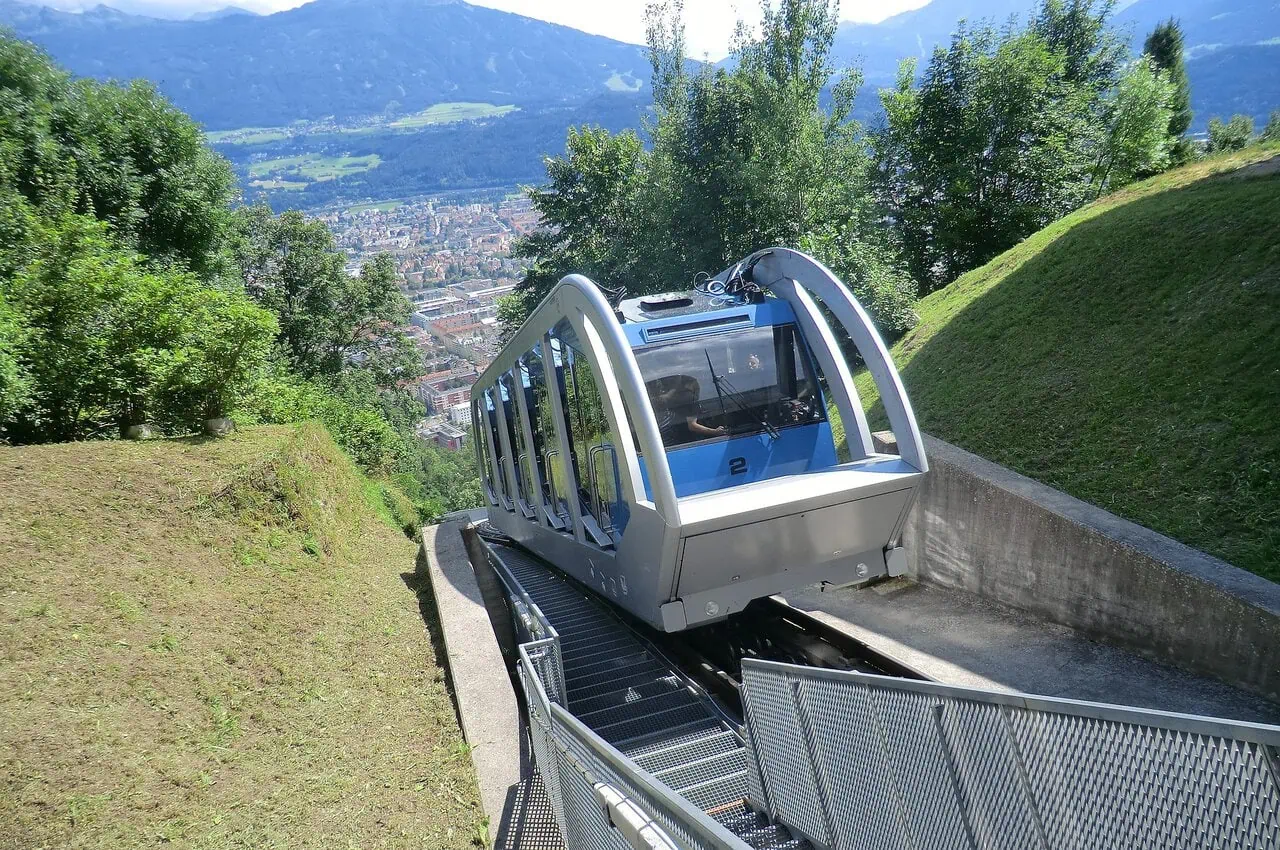
The journey starts at Congress Station, located close to many of Innsbruck’s main attractions. Here, passengers board the striking Hungerburg Funicular, designed by world-famous architect Zaha Hadid. Even before reaching the mountains, the futuristic stations are attractions in their own right. Their flowing, modern design contrasts dramatically with the historic architecture of Innsbruck and has become one of the city’s most recognisable architectural landmarks.
As the Hungerburg Funicular climbs above the rooftops, increasingly impressive views open across Innsbruck, the Inn Valley, and the surrounding mountain ranges. The first stage ends at Hungerburg, a hillside district overlooking the city. From here, visitors transfer to the first cable car for the ascent to Seegrube, located at approximately 1,905 metres above sea level.
For many visitors, Seegrube alone would justify the trip. The large viewing terraces offer spectacular panoramas across the city, while the surrounding peaks create a dramatic Alpine backdrop. The area features restaurants, cafés, viewing platforms, and walking routes, making it an ideal destination for visitors who prefer a gentler mountain experience. During the warmer months, Seegrube becomes a hub for hiking, mountain walking, and outdoor recreation. In winter, it transforms into one of Innsbruck’s most popular skiing and snow sports areas.
The final stage of the journey carries passengers from Seegrube to Hafelekar, often marketed as the famous Top of Innsbruck. Arriving at more than 2,250 metres, visitors step directly into a genuine high-Alpine environment characterised by dramatic rocky ridges, steep mountain slopes, and seemingly endless views. On clear days, the panorama extends across large parts of Tyrol, with numerous Alpine peaks stretching towards the horizon.
One of the most rewarding experiences is the short walk from the upper station towards the Hafelekar Summit. Although relatively easy, this route provides even more impressive views across Innsbruck, the Karwendel Mountains, and the surrounding valleys. Standing here offers a genuine appreciation of just how unique Innsbruck’s setting is. Very few European cities sit so close to such dramatic mountain terrain, and the perspective from Hafelekar highlights this extraordinary relationship between city and wilderness.
The attraction appeals to far more than hikers and outdoor enthusiasts. Modern lifts, cable cars, accessible viewing areas, restaurants, and visitor facilities make the experience suitable for a wide range of travellers. Families, photographers, day-trippers, and visitors with limited mobility can all enjoy a true Alpine experience without undertaking a demanding mountain expedition. This combination of accessibility and scenery is one of the reasons the Nordkette attracts hundreds of thousands of visitors each year.
The mountain offers a completely different experience depending on the season. During summer, visitors encounter green Alpine meadows, colourful wildflowers, and extensive walking trails. Autumn often provides some of the clearest visibility of the year, while winter transforms the landscape into a spectacular world of snow-covered peaks and ski slopes. On certain days, low cloud fills the valley below, allowing visitors to stand above a sea of clouds while the highest mountains remain bathed in sunshine. These conditions create some of the most spectacular photographs available anywhere in Austria.
For travellers with limited time in Innsbruck, the Nordkette offers perhaps the fastest and easiest way to experience the Austrian Alps. Rather than dedicating an entire day to travelling into the mountains, visitors can enjoy a genuine high-mountain adventure within minutes of the city centre. The combination of engineering, architecture, mountain scenery, spectacular viewpoints, and easy accessibility explains why the Nordkette Cable Car is widely regarded as not only the best attraction in Innsbruck, but one of the most unforgettable experiences in all of Austria.
Visit Innsbruck Cathedral (Cathedral of St James)
Standing proudly in the heart of the Old Town, Innsbruck Cathedral, officially known as the Cathedral of St James (Dom zu St. Jakob), is one of the city’s most important religious and architectural landmarks. While many visitors are initially drawn to the famous Golden Roof, the cathedral often proves to be one of the most surprising attractions in Innsbruck.
The current building dates largely from the early 18th century and is regarded as one of the finest examples of Baroque architecture in Tyrol. Its elegant twin towers dominate the surrounding skyline, while the richly decorated interior showcases impressive frescoes, intricate stucco work, and ornate altars.
The cathedral’s most famous treasure is the revered image of Maria Hilf (Mary of Succour), created by the celebrated artist Lucas Cranach the Elder. This historic painting has attracted pilgrims from across the Alpine region for centuries and remains one of the most significant religious artworks in Austria.
Even visitors with little interest in religious history often find themselves impressed by the building’s scale and craftsmanship. The cathedral offers a peaceful contrast to the busy streets outside and provides an opportunity to appreciate Innsbruck’s cultural heritage away from the crowds. For anyone interested in architecture, art, or history, it remains one of the most rewarding free things to see in Innsbruck.
Climb the Innsbruck City Tower
For one of the best views in the city without leaving the historic centre, head to the Innsbruck City Tower (Stadtturm). Rising above the medieval streets of the Old Town, this historic structure has watched over Innsbruck for more than 550 years and remains one of the city’s most popular viewpoints.
Completed in 1450, the tower originally served as a lookout point where guards monitored the city for fires, floods, and potential threats. Today, visitors can climb the 133 steps to the viewing platform located approximately 31 metres above street level.
The effort is rewarded with exceptional views across the rooftops of the Old Town. From the platform, visitors can clearly see the Golden Roof, the colourful historic buildings below, the flowing River Inn, and the dramatic backdrop of the Nordkette Mountains. The perspective is particularly impressive because it combines the city’s medieval architecture with the surrounding Alpine scenery.
Unlike mountain viewpoints that require transport and additional planning, the City Tower can easily be incorporated into a walking tour of the Old Town. Most visitors spend around 30 to 45 minutes at the attraction, making it an ideal stop between other major sights.
For photographers, the tower is especially worthwhile. The elevated position provides some of the best cityscape images available anywhere in Innsbruck and offers a completely different perspective from the mountain viewpoints above the city.
See the Colourful Houses Along the River Inn
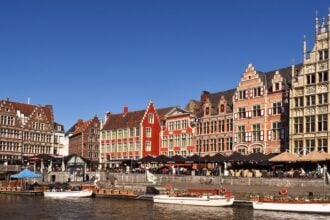
One of Innsbruck’s most photographed scenes is surprisingly simple. Along the banks of the River Inn, a row of colourful historic houses creates one of the city’s most iconic views and perfectly captures the charm of the Tyrolean capital.
The pastel-coloured buildings stand opposite the Old Town and are particularly striking when viewed from the riverside walkways and bridges. Behind them rise the imposing peaks of the Nordkette Mountains, creating a dramatic contrast between urban life and Alpine wilderness. This combination of colourful architecture and mountain scenery has become one of the defining images of Innsbruck.
Many visitors first encounter the famous view while crossing the Inn Bridge (Innbrücke), although the riverside promenades provide equally impressive perspectives. Early morning and late afternoon often offer the best lighting conditions, while winter snow on the surrounding mountains can create particularly spectacular photographs.
The area around the river is also ideal for a leisurely stroll. Numerous cafés, restaurants, and seating areas allow visitors to relax while enjoying views of the city and mountains. During warmer months, locals and visitors alike gather beside the river to enjoy the atmosphere and watch daily life unfold.
While it may not require an admission ticket or a detailed itinerary, the riverside district remains one of the most memorable and photogenic Innsbruck attractions.
Search routes and flight options for your trip to Innsbruck.
Search flightsChoose an Airalo eSIM and arrange mobile data before you arrive.
Browse eSIMsHave a private airport pickup arranged before you travel.
Book a transferVisit Swarovski Crystal Worlds from Innsbruck
Located in nearby Wattens, approximately 20 kilometres east of Innsbruck, Swarovski Crystal Worlds (Swarovski Kristallwelten) is one of Austria’s most unusual and popular attractions. Since opening in 1995, the site has welcomed millions of visitors and continues to be one of the region’s biggest tourist draws.
Created to celebrate the centenary of Swarovski, the attraction combines art, imagination, technology, and crystal design within a surreal and often surprising environment. Visitors enter through the famous Giant, a grass-covered sculpture whose mouth forms a cascading waterfall. Beyond lies a series of immersive exhibition spaces known as the Chambers of Wonder, where crystals are incorporated into imaginative artistic displays unlike anything found in a traditional museum.
Outside, visitors can explore beautifully landscaped gardens featuring the spectacular Crystal Cloud, an installation made from hundreds of thousands of sparkling crystals. Families will also find extensive playground areas, interactive exhibits, and open spaces that make the attraction suitable for visitors of all ages.
Many travellers choose the combined ticket that includes a return shuttle transfer from Innsbruck, removing the need to arrange independent transport. This makes visiting Swarovski Crystal Worlds remarkably straightforward, even for those with limited time in the city.
Although some visitors arrive expecting little more than a jewellery exhibition, most leave pleasantly surprised by the scale, creativity, and uniqueness of the experience. For families, photographers, and anyone seeking something different from traditional sightseeing, it ranks among the most distinctive things to do in Innsbruck.
Explore the Imperial Palace (Hofburg)
Standing beside the Old Town, the magnificent Imperial Palace (Hofburg Innsbruck) offers visitors a fascinating glimpse into the world of the Habsburg dynasty, one of Europe’s most powerful royal families. Although often overshadowed by Vienna’s grand palaces, the Innsbruck Hofburg is one of Austria’s most important historic residences and remains one of the city’s finest cultural attractions.
The palace’s history stretches back to the 15th century, but much of what visitors see today dates from the reign of Empress Maria Theresa in the 18th century. During her extensive renovations, the palace was transformed into an elegant Baroque residence worthy of the Habsburg Empire.
Inside, visitors can explore lavish state rooms, royal apartments, ceremonial halls, and beautifully restored interiors. The magnificent Giant Hall (Riesensaal) is often considered the highlight of the visit, featuring ornate decoration, impressive ceiling artwork, and portraits of the imperial family.
What makes the Hofburg particularly interesting is the insight it provides into daily life within the Habsburg court. Rather than simply displaying furniture and artwork, the palace helps visitors understand how emperors, empresses, and royal officials lived and governed during one of Europe’s most influential historical periods.
For anyone interested in Austrian history, royal heritage, or grand architecture, the Imperial Palace ranks among the most rewarding things to see in Innsbruck.
Visit the Court Church (Hofkirche)
Just a short walk from the Imperial Palace stands one of Innsbruck’s most remarkable historic buildings. The Court Church (Hofkirche) is famous throughout Austria for its extraordinary collection of bronze statues and its connection to Emperor Maximilian I.
Construction began in the 16th century, and although Maximilian himself is buried elsewhere, the church was designed as a monumental memorial to the emperor. At the centre of the building stands an elaborate tomb surrounded by 28 larger-than-life bronze figures, often referred to as the Black Men (Schwarze Mander).
These statues depict members of Maximilian’s family, historical heroes, and important figures connected to the Habsburg dynasty. Their imposing appearance creates one of the most unusual and memorable interiors found anywhere in Europe.
Beyond the famous statues, visitors can admire the church’s impressive Gothic architecture, intricate stonework, and beautifully crafted details. The building’s atmosphere feels very different from the more decorative Baroque churches elsewhere in Austria, giving it a unique character within Innsbruck’s collection of historic landmarks.
Because it sits adjacent to the Imperial Palace, many visitors combine both attractions into a single visit. Together they provide one of the most complete introductions to Innsbruck’s imperial past.
Explore Ambras Castle
Located on a hillside overlooking the city, Ambras Castle (Schloss Ambras) is one of the most beautiful and historically significant attractions in Innsbruck. Surrounded by landscaped grounds and commanding impressive views of the surrounding mountains, the castle offers a fascinating journey into Renaissance Europe.
The castle became famous through Archduke Ferdinand II, a passionate collector who transformed Ambras into one of Europe’s earliest museum complexes. His collections remain a major attraction today and help explain why the castle occupies such an important place in Austrian cultural history.
Visitors can explore the magnificent Spanish Hall, widely regarded as one of the finest Renaissance interiors in Europe. The richly decorated room is lined with portraits of Tyrolean rulers and remains one of the most impressive historic spaces in Austria.
Elsewhere within the castle, visitors discover the celebrated Chamber of Art and Wonders, which contains unusual scientific instruments, rare artefacts, curiosities from around the world, and remarkable objects collected during the Renaissance. The extensive armour collections are equally impressive and include ceremonial armour, tournament equipment, and military displays connected to some of Europe’s most influential historical figures.
The castle grounds themselves are worth exploring. Peaceful gardens, woodland paths, and panoramic viewpoints make Ambras an enjoyable destination even for visitors with only a passing interest in history.
For travellers looking to move beyond Innsbruck’s city centre attractions, Ambras Castle provides one of the most rewarding cultural experiences in the region.
Walk Along Maria-Theresien-Strasse
Few streets capture the atmosphere of modern Innsbruck better than Maria-Theresien-Strasse. Running through the heart of the city centre, this elegant boulevard combines historic architecture, shopping, cafés, restaurants, and mountain views into one of the most enjoyable places to spend time in Innsbruck.
Named after Empress Maria Theresa, the street has served as one of the city’s principal thoroughfares for centuries. Today it remains a lively gathering place where locals and visitors mingle throughout the day and into the evening.
One of the street’s most recognisable landmarks is St Anne’s Column (Annasäule), a striking monument erected in the early 18th century. Nearby, visitors can admire a variety of historic buildings, churches, and beautifully restored façades that showcase the city’s architectural heritage.
The real appeal of Maria-Theresien-Strasse lies in its atmosphere. Outdoor terraces spill onto the pavement, shoppers browse boutiques and department stores, and the surrounding Alpine scenery provides a constant backdrop. On clear days, the view towards the mountains at either end of the street is particularly impressive.
During the festive season, the street becomes even more attractive as Christmas decorations and market stalls transform the area into one of Innsbruck’s most atmospheric locations. Whether visiting for shopping, dining, photography, or simply people-watching, Maria-Theresien-Strasse remains one of the most enjoyable free things to do in Innsbruck.
Experience a Traditional Tyrolean Evening
While Innsbruck’s mountains and historic landmarks attract most visitors during the day, one of the most memorable cultural experiences takes place after the sun goes down. A Tyrolean Evening offers visitors the chance to experience authentic regional traditions through music, dance, costumes, and entertainment that have been part of Alpine life for generations.
The most famous performances in the city are hosted by the renowned Gundolf Family, whose shows have entertained visitors since 1967. These lively performances showcase traditional Tyrolean folk music, energetic dances, yodelling, alphorn music, and the famous Schuhplattler, a traditional dance involving rhythmic hand-slapping, foot-stamping, and remarkable athleticism.
What makes the experience particularly enjoyable is the atmosphere. Rather than feeling like a formal concert, the performances are designed to be fun, interactive, and welcoming. Visitors often find themselves clapping along, singing, and becoming immersed in the energy of the show.
Many tickets also include a traditional Austrian meal, allowing guests to sample regional specialities while enjoying the performance. Dishes such as roast pork, sauerkraut, apple strudel, and other Tyrolean favourites help create a complete cultural experience.
For visitors wanting something beyond sightseeing and museums, a Tyrolean Evening provides a wonderful introduction to local culture and remains one of the most entertaining things to do in Innsbruck after dark.
Compare hostels and budget-friendly accommodation around Innsbruck.
Browse hostelsAccess compensation support, eligible lounge benefits and faster payouts when flights go wrong.
See the benefitsUse convenient luggage storage around Innsbruck between arrival, check-in and departure.
Check storageVisit the Bergisel Olympic Ski Jump
Few attractions combine history, architecture, sport, and panoramic views as successfully as the Bergisel Ski Jump. Rising above Innsbruck on a hill south of the city centre, this remarkable structure has become one of the city’s most recognisable landmarks and one of the most unique visitor attractions in Austria.
One of Bergisel’s biggest advantages is how easy it is to visit. Unlike some Alpine attractions that require lengthy journeys into the mountains, Bergisel is located only a short distance from central Innsbruck. Visitors can reach the ski jump in around 10 minutes by car or taxi, while regular public transport services connect the city centre with the attraction throughout the day. Many visitors also choose to walk from the historic centre, with the journey typically taking around 30 to 40 minutes depending on pace. The route gradually climbs uphill but is straightforward and well signposted.
The site occupies an important place in sporting history. It was used during both the 1964 Winter Olympics and the 1976 Winter Olympics and continues to host international competitions as part of the prestigious Four Hills Tournament. Every winter, thousands of spectators gather here to watch elite ski jumpers launch themselves down the jump at astonishing speeds.
Today’s tower was designed by the world-renowned architect Zaha Hadid, whose futuristic structure transformed the ski jump into an architectural attraction as well as a sporting venue. The striking design stands out against the surrounding mountains and has become one of Innsbruck’s most photographed landmarks. Visitors can ascend to the viewing platform using modern lifts, making the attraction accessible to most travellers without requiring any significant physical effort.
The views from the top are exceptional. From the observation deck, visitors can enjoy sweeping panoramas across Innsbruck, the Inn Valley, and the surrounding Tyrolean Alps. Standing at the start of the jump provides a genuine appreciation of the courage required by professional ski jumpers, as the descent appears dramatically steeper when viewed from above than it does from ground level.
The attraction also includes exhibitions explaining the history of ski jumping, the Olympic legacy of Bergisel, and the engineering behind modern competitions. Many visitors choose to combine their visit with a meal or coffee at the Bergisel SKY Restaurant, which offers some of the finest dining views in Innsbruck.
Because of its combination of accessibility, Olympic heritage, modern architecture, and spectacular scenery, Bergisel is often regarded as one of the most rewarding attractions in Innsbruck and can easily be incorporated into even a short city break itinerary.
Explore Wilten Basilica
Although often overlooked by first-time visitors, Wilten Basilica is one of Innsbruck’s most beautiful churches and one of the finest examples of Rococo architecture in Austria. Located a short distance from Bergisel Ski Jump, the basilica is well worth adding to any sightseeing itinerary.
The current building dates largely from the 18th century and immediately impresses visitors with its elegant twin towers and richly decorated façade. Inside, the church becomes even more spectacular. Elaborate frescoes, gold detailing, ornate stucco work, and beautifully crafted altars create an interior that many visitors consider more impressive than some of Austria’s better-known churches.
The basilica occupies a site with an even older history. Religious buildings have stood here for centuries, and local legends connect the area with ancient Roman and early Christian traditions. This deep historical connection adds another layer of interest to a visit.
One of the most enjoyable aspects of Wilten Basilica is its relative tranquillity. While attractions in the Old Town can become busy during peak periods, the basilica often remains peaceful, allowing visitors to appreciate its artistic and architectural details at a relaxed pace.
For travellers interested in history, architecture, or photography, Wilten Basilica offers one of Innsbruck’s hidden cultural highlights.
Save Money with the Innsbruck City Card
For visitors planning to see several attractions, the Innsbruck City Card is often one of the smartest purchases available. Rather than paying separately for transport, museums, and major attractions, the card combines many of the city’s most popular experiences into a single pass.
Available in 24-hour, 48-hour, and 72-hour versions, the card includes entry to a remarkable range of attractions. Depending on the duration selected, visitors can gain access to museums, historic sites, cable cars, public transport, sightseeing buses, and even the shuttle service to Swarovski Crystal Worlds.
One of the card’s biggest advantages is its inclusion of the famous Nordkette Cable Car, which on its own represents one of Innsbruck’s most popular and expensive attractions. Visitors who plan to ride the Nordkette, visit museums, and use public transport frequently often discover that the card pays for itself very quickly.
The pass also includes access to attractions such as the Imperial Palace, Tyrolean museums, Ambras Castle, Bergisel Ski Jump, and many other sites throughout the city. Public transport operated by IVB is included as well, making it easy to move between attractions without worrying about purchasing individual tickets.
Visitors staying for two or three days typically receive the greatest value, particularly if they intend to visit multiple attractions each day. Families and first-time visitors often find the card especially useful because it simplifies planning and eliminates the need to purchase separate tickets throughout their stay.
For anyone intending to explore the city thoroughly, the Innsbruck City Card is one of the best-value sightseeing passes available in Austria.

Visit the Grassmayr Bell Museum
Among Innsbruck’s lesser-known attractions, the Grassmayr Bell Museum is one of the most fascinating. While it may not initially sound as exciting as mountain viewpoints or imperial palaces, visitors are often surprised by just how engaging this unique museum can be.
The Grassmayr family has been casting bells since 1599, making the business one of the oldest family-run bell foundries in Europe. Today, bells produced here can be found in churches, cathedrals, and public buildings across the world. The museum provides a rare opportunity to explore a living craft that has remained largely unchanged for centuries.
Visitors can learn how bells are designed, cast, tuned, and installed, while interactive exhibits explain the science of sound and vibration. One of the most memorable experiences involves standing inside large resonating structures where visitors can physically feel the power of sound waves moving through their bodies.
Unlike many traditional museums, the Grassmayr Bell Museum combines history, engineering, art, religion, and craftsmanship into a surprisingly immersive experience. The working foundry element also helps visitors understand that this is not simply a historical exhibition but an active business continuing centuries of tradition.
For travellers looking to discover something beyond Innsbruck’s headline attractions, the Grassmayr Bell Museum offers one of the city’s most unusual cultural experiences.
Explore Innsbruck Market Hall
For a glimpse into everyday life in the city, few places are more enjoyable than the Innsbruck Market Hall (Markthalle Innsbruck). Located close to the River Inn and only a short walk from the Old Town, this bustling food market has served locals for generations and remains one of the best places to experience the flavours of Tyrol.
Inside the market, visitors will find a wide variety of regional produce including cheeses, cured meats, pastries, breads, chocolates, wines, and fresh fruit and vegetables. Many stalls specialise in products from the surrounding Alpine region, allowing visitors to sample authentic Tyrolean ingredients and traditional Austrian foods.
The market also serves as an excellent lunch stop. Small cafés, bakeries, and food counters offer everything from local specialities to international cuisine. Whether you’re looking for a quick snack or a relaxed meal, the atmosphere is friendly and distinctly local.
One of the biggest attractions of the market is authenticity. Unlike some tourist-focused food halls, Innsbruck Market Hall remains heavily used by residents. This creates a more genuine experience and provides visitors with a chance to see how locals shop, eat, and socialise.
For food lovers, photographers, and travellers seeking a break from museums and historic sites, the market is one of the most enjoyable free things to do in Innsbruck.
Combine the Alpenzoo with the Top of Innsbruck
If you’re travelling with children or simply want to maximise your time on the Nordkette, one of the best-value experiences in the city is the combined Alpenzoo and Top of Innsbruck ticket. This popular package allows visitors to enjoy two of Innsbruck’s most famous attractions in a single day.
The Alpenzoo Innsbruck occupies a unique location on the mountainside above the city and is considered the highest zoo in Europe. Unlike traditional zoos that showcase animals from around the world, the Alpenzoo focuses on species native to the Alpine region. Visitors can observe lynx, wolves, brown bears, ibex, eagles, otters, and many other animals that inhabit the mountains surrounding Innsbruck.
After exploring the zoo, visitors continue their journey up the Nordkette via the Hungerburg Funicular and cable car system. This seamless combination of wildlife and mountain scenery makes the ticket particularly attractive for families and first-time visitors.
The summit experience at the Top of Innsbruck provides the spectacular Alpine views for which the city is famous. Standing more than 2,250 metres above sea level, visitors can admire breathtaking panoramas stretching across the Inn Valley and surrounding mountain ranges.
Because both attractions are linked by the same transport system, combining them into a single excursion feels remarkably natural. For many families, this package delivers an entire day of entertainment while also covering two of the city’s most iconic experiences.

Visit the Tyrolean State Museum
The Tyrolean State Museum Ferdinandeum is one of Austria’s most important regional museums and an excellent choice for visitors wanting a deeper understanding of Tyrol’s history, culture, and artistic heritage.
Founded in the 19th century, the museum houses an extensive collection covering everything from prehistoric archaeology and Roman artefacts to medieval religious art, traditional folk culture, and modern exhibitions. Its diverse displays help explain how the region evolved from an Alpine frontier into one of Austria’s most distinctive cultural landscapes.
Art lovers will find works by major Austrian and European artists, while history enthusiasts can explore exhibits documenting the development of Tyrol through centuries of political, social, and economic change. Traditional costumes, furniture, tools, and everyday objects provide fascinating insights into life in the Alps before the modern era.
One of the museum’s strengths is its ability to place Innsbruck within the wider context of Tyrolean history. Visitors who have spent time exploring castles, churches, and historic streets often find that the museum helps bring many of those sites to life by providing additional historical background.
For travellers interested in understanding the region beyond its famous mountain scenery, the Tyrolean State Museum is one of the most rewarding cultural attractions in Innsbruck.
Explore the AUDIOVERSUM Science Centre
For visitors looking for something a little different, the AUDIOVERSUM Science Centre offers one of the most unusual and interactive attractions in Innsbruck. Located close to Innsbruck Hauptbahnhof, this modern museum focuses on the science of hearing, communication, sound, and human perception.
Unlike traditional museums where visitors simply read information panels, AUDIOVERSUM encourages hands-on exploration. Interactive exhibits allow visitors to test their hearing, experiment with sound, and discover how the brain interprets the world around us. The result is an experience that is both educational and surprisingly entertaining.
The centre is particularly popular with families thanks to its engaging displays and practical demonstrations. Children enjoy the interactive elements, while adults often find themselves equally fascinated by the science behind hearing and communication.
Temporary exhibitions are frequently hosted alongside the permanent displays, meaning the experience can vary throughout the year. This helps make the attraction appealing even to repeat visitors.
Because the museum is located within the city centre, it is easy to combine with nearby attractions such as Maria-Theresien-Strasse, the Imperial Palace, or the Tyrolean State Museum. On rainy days especially, the AUDIOVERSUM provides an excellent indoor alternative to outdoor sightseeing.
For visitors seeking something beyond the usual castles, churches, and mountain viewpoints, it remains one of the more unusual Innsbruck attractions.
Visit Patscherkofel Mountain
While the Nordkette receives most of the attention from first-time visitors, many locals consider Patscherkofel Mountain to offer a more relaxed and authentic Alpine experience. Rising to 2,246 metres above sea level on the south-eastern side of Innsbruck, the mountain has long been associated with outdoor recreation and international winter sports. It famously hosted alpine skiing events during both the 1964 Winter Olympics and the 1976 Winter Olympics, cementing its place in Austrian sporting history.
Reaching the summit area is remarkably straightforward thanks to the modern Patscherkofelbahn Cable Car. The lower station is located in the village of Igls, approximately 15 to 20 minutes from Innsbruck city centre by public transport or car. The cable car climbs rapidly into the mountains, transporting visitors from around 1,000 metres elevation to the upper station at approximately 1,965 metres in just a few minutes. The journey itself is an attraction, with increasingly impressive views opening up across the Inn Valley, Innsbruck, and the surrounding Alpine landscape.
Upon reaching the upper station, visitors have access to a network of well-maintained walking and hiking trails suitable for a range of fitness levels. One of the most popular routes is the relatively easy walk to the Patscherkofel Summit, which typically takes around one hour each way and rewards hikers with spectacular panoramic views. Less demanding paths also lead through mountain meadows and forests, making the area accessible even for those who simply want to enjoy the scenery without undertaking a strenuous hike.
One of Patscherkofel’s greatest strengths is its atmosphere. While the Nordkette Cable Car can become extremely busy during summer weekends and peak tourist periods, Patscherkofel generally feels quieter and less commercialised. Visitors often find there is more space to enjoy the landscape, take photographs, and appreciate the Alpine environment without large crowds. For travellers seeking a peaceful mountain experience rather than a busy tourist attraction, this can be a significant advantage.
The mountain is also home to several traditional Alpine huts and mountain restaurants where visitors can enjoy Austrian specialities while admiring the views. On a clear day, the panoramas extend across Innsbruck, the Stubai Alps, the Karwendel Mountains, and numerous peaks stretching towards the Italian border. The changing light conditions throughout the day make Patscherkofel particularly popular with photographers, especially during early morning and late afternoon.
During the summer months, Patscherkofel attracts hikers, trail runners, mountain bikers, and families looking for an accessible Alpine excursion. In winter, the mountain transforms into a ski area offering pistes suitable for a range of abilities, as well as opportunities for winter walking and snow-based activities. Regardless of the season, Patscherkofel provides one of the easiest ways to experience the Austrian Alps from Innsbruck, combining Olympic history, outstanding scenery, and excellent accessibility within a short distance of the city centre.

Best Things to Do in Innsbruck with Kids
Families visiting Innsbruck are often surprised by how many attractions cater to children. The city combines outdoor adventure, wildlife experiences, interactive museums, and family-friendly transport systems, making it one of Austria’s best destinations for travelling with younger visitors.
The standout family attraction is undoubtedly the Alpenzoo Innsbruck. Home to hundreds of Alpine animals, the zoo offers opportunities to see species such as bears, wolves, lynx, eagles, and ibex while also providing spectacular views across the city below. The combination ticket with the Top of Innsbruck is particularly popular with families because it combines wildlife and mountain scenery within a single excursion.
Children also tend to enjoy Swarovski Crystal Worlds, where imaginative exhibits, interactive installations, playgrounds, and the famous Crystal Cloud create an experience that feels closer to an adventure park than a traditional museum. The attraction’s combination of art, technology, and outdoor spaces appeals to a wide range of ages.
The AUDIOVERSUM Science Centre provides another excellent option, particularly during poor weather. Interactive exhibits encourage children to learn through experimentation, making science accessible and enjoyable.
Families staying for several days often find the Innsbruck City Card particularly useful. With public transport and multiple attractions included, the card simplifies planning and can deliver significant savings compared with purchasing tickets separately.
The combination of mountains, animals, museums, and open spaces ensures that Innsbruck remains engaging for visitors of all ages.
Best Things to Do in Innsbruck in Winter
Winter is arguably the season when Innsbruck truly comes alive. Surrounded by snow-covered mountains and famous for its Olympic heritage, the city offers a unique combination of urban sightseeing and Alpine adventure that few European destinations can match.
A ride on the Nordkette Cable Car becomes even more spectacular during the colder months. Snow-covered peaks surround the city, while skiers and snowboarders carve their way down the mountain slopes. The contrast between Innsbruck’s historic centre and the winter landscape above creates some of the most memorable views in Austria.
The Bergisel Ski Jump is another winter highlight. Visitors can explore the venue that hosts part of the legendary Four Hills Tournament, one of the most prestigious events in international ski jumping. Watching athletes launch themselves from the top of the jump is an unforgettable experience for sports fans.
During December, Innsbruck’s Christmas markets transform the city into one of Austria’s most atmospheric festive destinations. Markets can be found throughout the Old Town and beyond, offering seasonal food, traditional crafts, and spectacular Alpine backdrops.
For visitors seeking cultural experiences away from the cold, attractions such as the Imperial Palace, Ambras Castle, Tyrolean State Museum, and Tyrolean Evening performances provide excellent indoor alternatives.
Perhaps the greatest advantage of visiting Innsbruck in winter is flexibility. Few cities allow visitors to spend the morning exploring medieval streets, the afternoon in the mountains, and the evening enjoying traditional Alpine culture without travelling significant distances.
Best Things to Do in Innsbruck When It Rains
Although Innsbruck is famous for its mountain scenery and outdoor activities, poor weather does not mean your sightseeing plans need to come to a halt. The city offers an impressive selection of museums, historic buildings, cultural attractions, and indoor experiences that can easily fill an entire day.
One of the best rainy-day attractions is the magnificent Imperial Palace (Hofburg). The lavish state rooms, historic apartments, and beautifully restored interiors provide a fascinating insight into the world of the Habsburgs while keeping visitors comfortably indoors. Nearby, the remarkable Court Church (Hofkirche) offers another excellent cultural experience thanks to its famous collection of bronze statues and impressive Gothic architecture.
For something completely different, visitors can head to Swarovski Crystal Worlds, where imaginative exhibitions, artistic installations, and immersive displays create one of Austria’s most unusual visitor attractions. Families often combine this with the AUDIOVERSUM Science Centre, whose interactive exhibits make learning about sound and communication both fun and engaging.
History lovers may prefer to spend time exploring Ambras Castle, the Tyrolean State Museum, or the fascinating Grassmayr Bell Museum. Each attraction provides a very different perspective on the region’s heritage while offering welcome shelter from the weather.
The city’s cafés also play an important role in Innsbruck’s rainy-day appeal. Traditional Austrian coffee houses provide ideal places to relax with a coffee and a slice of Apfelstrudel while watching the weather pass over the surrounding mountains.

Innsbruck Attractions Comparison Table
| Attraction | Time Needed | Family Friendly | Indoor/Outdoor | Included in City Card |
|---|---|---|---|---|
| Golden Roof & Old Town | 1–2 hrs | Yes | Outdoor | No |
| Nordkette Cable Car | Half day | Yes | Both | Yes |
| Innsbruck Cathedral | 30–60 mins | Yes | Indoor | No |
| City Tower | 30–45 mins | Yes | Both | Yes |
| Swarovski Crystal Worlds | Half day | Yes | Both | Yes |
| Imperial Palace | 1–2 hrs | Yes | Indoor | Yes |
| Court Church | 30–60 mins | Yes | Indoor | Yes |
| Ambras Castle | 2–3 hrs | Yes | Both | Yes |
| Tyrolean Evening | Evening | Yes | Indoor | Discount Available |
| Bergisel Ski Jump | 1–2 hrs | Yes | Both | Yes |
| Wilten Basilica | 30 mins | Yes | Indoor | No |
| Grassmayr Bell Museum | 1 hr | Yes | Indoor | Yes |
| Alpenzoo | 2–3 hrs | Excellent | Outdoor | Yes |
| Tyrolean State Museum | 1–2 hrs | Yes | Indoor | Yes |
| AUDIOVERSUM | 1–2 hrs | Excellent | Indoor | Yes |
| Patscherkofel Mountain | Half day | Yes | Outdoor | Yes |
Visitors planning to visit several attractions will often find that the Innsbruck City Card offers excellent value, particularly when combined with major attractions such as the Nordkette Cable Car, Ambras Castle, Bergisel Ski Jump, and the city’s museums.
Suggested One-Day Innsbruck Itinerary
If you only have a single day in Innsbruck, focus on the city’s highlights while making time for both the historic centre and the surrounding mountains.
Begin your morning in the Old Town, exploring the medieval streets around the Golden Roof and visiting the nearby Innsbruck Cathedral. Continue to the City Tower, where the panoramic views provide an excellent introduction to the city’s layout and spectacular mountain setting.
By late morning, make your way to the Nordkette Cable Car. The journey from the city centre to more than 2,250 metres above sea level remains one of Europe’s most remarkable urban-to-mountain experiences. Spend time enjoying the views at Seegrube and Hafelekar before returning to the city.
After lunch, visit either the Imperial Palace or Court Church, depending on your interests. Both attractions provide valuable insight into Innsbruck’s rich history and can be explored within a relatively short period.
As evening approaches, stroll along Maria-Theresien-Strasse and the banks of the River Inn, enjoying some of the city’s most attractive viewpoints. If time allows, finish the day with a traditional Tyrolean Evening, one of the most enjoyable cultural experiences available in Innsbruck.
This itinerary covers the essential highlights while providing a balanced introduction to both the city’s heritage and its Alpine surroundings.
Suggested Two-Day Innsbruck Itinerary
Two days allows visitors to experience Innsbruck at a more relaxed pace while including several additional attractions that are difficult to fit into a shorter stay.
On Day One, follow the core city itinerary by exploring the Old Town, visiting the Golden Roof, climbing the City Tower, and riding the Nordkette Cable Car. In the afternoon, add the Imperial Palace and Court Church before ending the day with a walk along Maria-Theresien-Strasse or a Tyrolean Evening performance.
On Day Two, begin with a visit to Ambras Castle, whose collections and gardens can comfortably occupy much of the morning. Continue to the Bergisel Ski Jump, where the combination of Olympic history, modern architecture, and panoramic views creates one of the city’s most distinctive experiences.
Families may wish to spend the afternoon at the Alpenzoo, while those interested in culture can choose between the Tyrolean State Museum, Grassmayr Bell Museum, or AUDIOVERSUM Science Centre. Visitors with additional time may also consider a trip to Swarovski Crystal Worlds or a mountain excursion to Patscherkofel.
A two-day stay provides enough flexibility to experience both Innsbruck’s famous highlights and several of its lesser-known attractions, creating a much more complete picture of the city and the wider Tyrol region.

Rupert’s Handy Travel Tips
Exploring Innsbruck? Rupert has spent plenty of time wandering the city’s historic streets and mountain viewpoints and has picked up a few useful tips along the way.
- Start your visit early at the Nordkette Cable Car. The mountain is often clearest in the morning and you’ll usually encounter smaller crowds than later in the day.
- The Innsbruck City Card can save a surprising amount of money. Visitors planning to ride the Nordkette, visit museums, and use public transport frequently should check whether the card works out cheaper than buying individual tickets.
- Keep an eye on the weather forecast. Alpine conditions can change quickly and mountain visibility can vary dramatically throughout the day.
- Wear comfortable footwear. Innsbruck’s Old Town is best explored on foot and attractions such as the City Tower, Ambras Castle grounds, and mountain viewpoints involve a fair amount of walking.
- Don’t rush through the Old Town. Many visitors head straight for the Golden Roof, but some of Innsbruck’s most attractive streets, courtyards, and viewpoints are found away from the main tourist routes.
- Allow plenty of time for the Top of Innsbruck. Rupert recommends stopping at Hungerburg and Seegrube rather than rushing directly to the summit.
- Visit the River Inn at sunset. The colourful riverside houses with the Nordkette Mountains behind them create some of the best photographs in the entire city.
Rupert’s favourite experience is taking the Nordkette Cable Car from the city centre to the Top of Innsbruck. Few places in Europe allow you to go from a medieval Old Town to high Alpine scenery quite so quickly.
Want more travel tips from Rupert? Visit our Who is Rupert? page to learn more about Appy Savvy Traveller’s favourite travelling reindeer.



Frequently Asked Questions About Things to Do in Innsbruck
What is the number one attraction in Innsbruck?
The Nordkette Cable Car and Top of Innsbruck is widely considered the city’s most spectacular attraction thanks to its incredible Alpine views and unique city-to-mountain journey.
Is Innsbruck worth visiting?
Yes. Innsbruck combines historic architecture, mountain scenery, imperial heritage, museums, and outdoor activities in a way that few European cities can match.
How many days should I spend in Innsbruck?
Most visitors find that two to three days is ideal. This allows enough time to see the major attractions while also exploring the surrounding mountains.
Can you walk around Innsbruck?
Absolutely. Most major attractions within the city centre are located within walking distance of one another, making Innsbruck an excellent city for exploring on foot.
Is the Innsbruck City Card worth buying?
For visitors planning to visit several attractions, use public transport, and ride the Nordkette Cable Car, the Innsbruck City Card often provides excellent value.
What is the best free thing to do in Innsbruck?
Walking through the Old Town, admiring the Golden Roof, and enjoying views of the colourful riverside houses along the River Inn are among the city’s best free experiences.
Is the Nordkette Cable Car worth it?
For most visitors, yes. The combination of breathtaking mountain scenery, easy accessibility, and panoramic city views makes it one of Austria’s most memorable attractions.
What can families do in Innsbruck?
Popular family attractions include the Alpenzoo, Swarovski Crystal Worlds, AUDIOVERSUM Science Centre, the Nordkette Cable Car, and the Innsbruck City Card.
What is Innsbruck famous for?
Innsbruck is famous for the Golden Roof, its spectacular Alpine setting, the Nordkette Mountains, Winter Olympic history, and its role as the historic capital of Tyrol.
Can you visit Innsbruck without a car?
Yes. Innsbruck has excellent public transport and a compact city centre, making it easy to explore without driving.
Further Reading & Related Guides
Innsbruck is one of Austria’s most rewarding destinations, combining a historic city centre with some of the most spectacular mountain scenery in Europe. Before beginning your sightseeing, our Innsbruck Airport to City Centre Transfers Guide explains the quickest and most convenient ways to travel from the airport into the heart of the city using public transport, taxis, private transfers, and car hire.
Many visitors use Innsbruck as a gateway to the surrounding Alps. If you’re planning a winter sports holiday, our Innsbruck Airport to Ski Resorts Transfers Guide covers transfer options to some of Tyrol’s most famous ski destinations, including St Anton, Ischgl, Sölden, Mayrhofen, and Kitzbühel. Understanding your transfer options before arrival can save both time and money.
Travellers exploring Austria by rail should also read our Interrail Austria Pass Guide, which explains how to use one of Europe’s most scenic rail networks to visit destinations across the country. If you’re considering travelling onwards overnight, our Night Trains from Innsbruck Guide and comprehensive European Sleeper Trains Guide provide inspiration for rail journeys to destinations across Europe.
Staying connected while travelling through mountain regions can be particularly useful. Our eSIM Guide for Travellers compares the best mobile data options for Austria and Europe, helping you access maps, attraction information, transport updates, accommodation bookings, and weather forecasts throughout your stay.
Whether you’re visiting for the mountains, the history, the winter sports, or simply the Alpine atmosphere, Innsbruck provides one of the most complete city-break experiences in Austria.