Reviewed by our editorial team Published
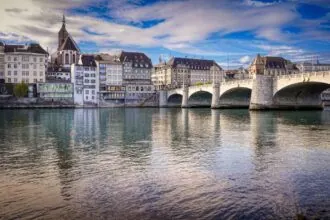
Basel sits at the exact point where Switzerland, France and Germany meet, a position that has shaped the city into one of the most quietly international places in the country. The Rhine cuts straight through the centre, splitting Basel into Grossbasel on the hillier southern bank and Kleinbasel on the flatter side opposite, with a handful of historic bridges tying the two halves together.
The city has built a genuine reputation as Switzerland’s art capital, home to more museums per head than almost anywhere else in Europe and anchored by the Kunstmuseum Basel, one of the oldest public art collections in the world. Art Basel, the international fair that now lends its name to sister events worldwide, still returns to its birthplace every June, though the city’s museum culture runs year round rather than around a single week.
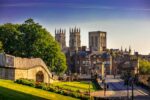
Basel’s Altstadt, the old town climbing up from the river on the Grossbasel side, is compact enough to explore on foot in a day yet dense with genuine medieval and Renaissance architecture. Red sandstone facades, narrow lanes and the twin spires of Basel Minster give the centre a distinct silhouette, while the daily market at Marktplatz keeps the square feeling lived in rather than preserved purely for visitors.
Warm summers bring a local tradition that surprises most first-time visitors, since locals genuinely swim the Rhine through the city centre, floating downriver with their belongings packed into a waterproof bag known as a Wickelfisch. It is one of the clearest signs that Basel, for all its museum grandeur, remains a working, everyday Swiss city rather than a place that only performs for tourists.
The sections below work through the individual sights that make up a proper visit, from the Minster and its Rhine-view terrace to the zoo, the Fondation Beyeler in nearby Riehen and some of the smaller specialist museums that reward a slower pace. Prices are given in Swiss francs with rough sterling, euro and dollar equivalents throughout, since Switzerland sits outside the eurozone and every ticket here is priced in CHF first.
| Category | Detail |
|---|---|
| Country | Switzerland |
| Language | Swiss German dialect, with French and English widely spoken |
| Currency | Swiss franc (CHF) |
| Nearest airport | EuroAirport Basel Mulhouse Freiburg |
| Best for | Art museums, old town walking, Rhine swimming in summer |
Basel Minster and the Pfalz Terrace
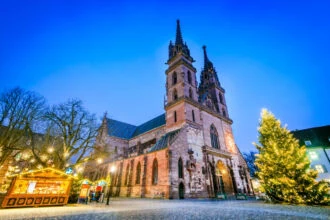
Basel Minster, or Basler Münster, is the single most recognisable building in the city, its red sandstone facade and glazed roof tiles visible from almost anywhere in the old town. Built mainly between the eleventh and fifteenth centuries, it blends Romanesque and Gothic styles and carries an intricate carved main portal along with stained glass that survived centuries of rebuilding after earthquake damage.
Inside, the cathedral is free to enter and holds the tomb of the humanist scholar Erasmus, who spent his final years in Basel, along with a quiet cloister worth a slow walk on its own. Climbing one of the twin towers costs a modest CHF 6 (£5/€6/$7) for adults and CHF 4 (£4/€4/$5) for students, with children under fourteen admitted free.
Directly behind the Minster, the Pfalz is a viewing terrace built on the site of a former bishop’s palace, reached through a gateway beside the cloister or down a short flight of steps toward the old ferry landing. The terrace looks straight out over the Rhine and the rooftops of Kleinbasel, with clear days offering a glimpse toward the tripoint where Switzerland, Germany and France converge.
Both the Minster and the Pfalz sit right at the heart of the old town, a five-minute walk uphill from Marktplatz or Barfüsserplatz on foot, and neither needs any advance booking. Allow around thirty to forty-five minutes to see the interior and terrace properly, longer if the tower climb is included, and note that the Pfalz itself is free at any time of day.
A Panorama Cruise Along the Rhine
Basel’s river frontage is best appreciated from the water, and the city’s veteran boat operator, Basler Personenschifffahrt, runs a regular panorama sightseeing cruise that loops past the old town along both banks of the Rhine. The boat leaves from the Schifflände landing stage, a short walk from Marktplatz on the Grossbasel side, right beside the Mittlere Brücke.
The cruise runs for around seventy-five minutes and passes several sights covered elsewhere in this guide from the water, including the twin spires of Basel Minster, the Pfalz terrace above the river and the stretch of bank near Museum Tinguely further downstream. Onboard commentary points out the landmarks along the way, and open-air deck seating makes for decent photographs in most weather.
It suits anyone who has already covered the old town on foot and wants a different angle on the same skyline, and it needs little planning beyond checking the day’s timetable, since sailings run on fixed departure times through the day rather than whenever a boat happens to fill up. Tickets are sold at the landing stage kiosk or can be booked in advance online.
The Schifflände sits right at the heart of the old town, a couple of minutes from Marktplatz, which makes the cruise an easy addition either side of a Minster or Rathaus visit rather than a dedicated half day. Allow the full seventy-five minutes on the water plus a little time either side for boarding.
Best for two or three nights. The widest choice of rooms, with filters for free cancellation and included breakfast.
View staysBest for groups who want one address and separate bedrooms rather than three hotel rooms.
See holiday homesBest as a last check before booking. Compares hotel rates across several sites in one search.
Compare ratesMarktplatz and the Rathaus
Marktplatz is Basel’s central square and has hosted a working market on this exact spot for centuries, making it one of the easiest places in the city to feel the rhythm of everyday local life rather than a purely historic backdrop. Stalls selling fresh produce, cheese, flowers and baked goods fill the square every day except Sunday, usually from early morning into the early afternoon.
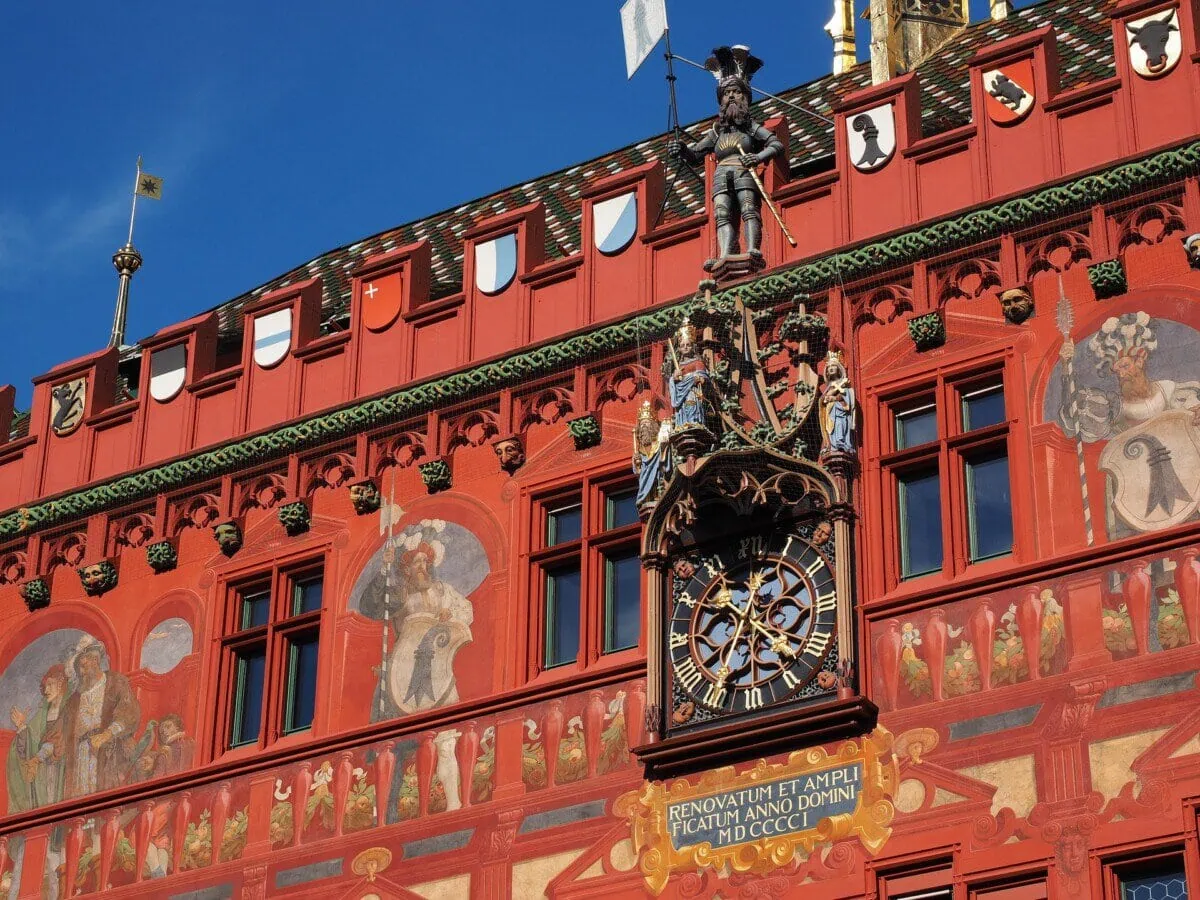
Presiding over the square is the Rathaus, Basel’s town hall, a Renaissance building finished in the early sixteenth century and painted a deep, unmistakable red with gold leaf detailing across its facade and inner courtyard. It remains a working seat of the cantonal government today, not a museum piece kept behind glass, and the courtyard is open to walk into during the day.
Frescoes and painted arcades line the inner courtyard, added and restored across several centuries, and give a good sense of how seriously Basel’s medieval merchant elite took civic display. Entry to the courtyard is free, though the council chambers themselves are generally only open on specific tour dates rather than to casual walk-in visitors.
Marktplatz sits right at the foot of the old town, a short walk from Basel Minster and directly served by trams running along the Rhine side of Grossbasel. A visit here needs no set amount of time and pairs naturally with a wider wander through the surrounding streets, with an early-morning stop the best way to catch the market at its liveliest.
Seeing Basel by Sightseeing Bus
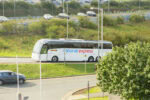
The Basel City Tour sightseeing bus is a hop-on-hop-off route that loops through the old town and out to sights further from the centre, calling at twelve stops along the way. Buses start from Tinguely Brunnen on Steinenberg, a couple of minutes from Theaterplatz and Barfüsserplatz, and tickets can also be bought straight from the driver or at the tourist information point on Barfüsserplatz.
Every seat carries its own iPad audio guide, triggered by GPS so the commentary matches whatever the bus is passing, and the guide is available in eight languages including English, French and German. A full loop takes around two hours, though the hop-on-hop-off ticket allows stepping off at any stop to look around before catching a later bus onward.
Tickets start from around CHF 24 (£22/€26/$29), and the same audio content can be downloaded free to a personal phone using an unlock code included with the ticket, useful for anyone who prefers to walk the route at their own pace. Free WiFi is available on board for the length of the ride.
The service runs Wednesday to Sunday, with the first departure usually around 11am, so it is worth checking the day’s schedule before planning a visit around it. It suits visitors short on time or keen to get an overview before picking out which sights from this guide to prioritise on foot.
Kunstmuseum Basel
The Kunstmuseum Basel holds one of the oldest public art collections anywhere in the world, with roots tracing back to a bequest of works by the Holbein family acquired by the city in the sixteenth century. Today the collection spans Hans Holbein the Younger and other Old Masters through to Picasso, Rothko and a genuinely strong body of contemporary work, split across the historic Hauptbau and the newer Neubau next door.
The scale of the holdings means a single visit rarely covers everything, and the museum runs a rolling programme of major loan exhibitions alongside its permanent galleries. A combined ticket covering both the collection and current special exhibitions runs to around CHF 30 (£27/€32/$36) for adults, with the permanent collection alone often available more cheaply and free entry for visitors under twenty.
The museum offers genuinely useful free windows for budget-conscious visitors, including free admission on the first Sunday of every month and shorter free viewing slots on selected weekday afternoons and evenings. It is closed on Mondays, with the Neubau keeping later hours on Wednesday evenings for anyone visiting after work.
The Hauptbau sits on St. Alban-Graben, a short walk south of Marktplatz and easily reached by tram from the main station or the old town. Budget at least two hours for a proper visit, longer if a major touring exhibition is on, and check the museum’s own listings ahead of time since gallery closures for rehanging do happen periodically.
A Ride on Basel’s Vintage Tram
Basel’s vintage tram offers a nostalgic way to see the city, running on ordinary tram tracks in restored carriages that date back several decades, complete with wooden seats, brass fittings and a noticeably slower running speed than the modern network. Departures leave from Centralbahnplatz, right outside the main railway station, and the route loops through the old town and across the Rhine past the Mittlere Brücke.
This is not a daily service, and it only runs on selected Sundays between spring and autumn rather than year round, so it is worth checking the exact dates before building a day around it. A ride lasts a little over an hour, with a guided front carriage offering commentary in English and German alongside a second carriage that runs without narration.
The tram ties in neatly with Basel’s own tram museum, which keeps a working collection of historic vehicles in its depot and opens to the public on some of the same Sunday dates through the warmer months. Both experiences appeal to transport enthusiasts and to families travelling with children who simply enjoy the novelty of an old-fashioned carriage.
The starting point at Centralbahnplatz is impossible to miss, directly outside Basel SBB station and a short walk from the zoo entrance covered earlier in this guide. Since departures are limited to specific Sundays, this is one to plan around a published seasonal timetable rather than turning up on spec.
Fondation Beyeler
The Fondation Beyeler is technically not in Basel itself but in the neighbouring municipality of Riehen, close enough that most visitors treat it as part of a Basel trip without a second thought. Built by architect Renzo Piano for the gallerists Ernst and Hildy Beyeler and opened in 1997, the building sits inside a genuinely beautiful setting of parkland, ponds and an adjoining historic villa.
The permanent collection leans heavily on twentieth-century modern art, with strong holdings of Picasso, Monet, Rothko and Giacometti among others, and the gallery regularly stages major touring exhibitions that draw visitors from across the region. Large glass walls along the building’s rear open the galleries directly onto the surrounding gardens, which is as much a part of the experience as the art itself.
Admission for adults aged twenty-five and over runs to around CHF 30 (£27/€32/$36), while everyone under twenty-five gets in free with valid identification at the ticket desk, a genuinely generous policy compared with most major European galleries. Opening hours run daily from 10am to 6pm, with the gallery staying open later on Wednesdays.
Getting there from central Basel is straightforward on tram 6, which runs directly to Riehen and drops passengers close to the entrance, a journey of around twenty minutes from the old town. Allow a good two to three hours for the gallery and its gardens, and combine the trip with a wander through Riehen’s own quiet village centre if time allows.
The Tinguely Fountain
Outside Theater Basel on Theaterplatz sits one of the city’s most playful public artworks, the Tinguely Fountain, also known as the Fasnachtsbrunnen. It was designed by the Basel-born kinetic sculptor Jean Tinguely and installed in 1977, replacing the theatre’s old orchestra pit with a shallow pool full of moving mechanical sculptures.
Ten separate cast-iron and steel sculptures spray, spin and splash water in constantly shifting patterns, each one built from salvaged theatre machinery and scrap metal in Tinguely’s signature style. The fountain runs continuously through the day, so there is no fixed schedule to plan around, and it tends to draw a steady crowd of both tourists and locals simply sitting and watching.
It is a genuinely good introduction to Tinguely’s work for anyone planning to visit the dedicated museum covered next, since it shows the same mechanical playfulness on a public, unticketed scale. The fountain is switched off during the coldest winter months to prevent damage from freezing, so it is worth checking locally if visiting outside the main season.
Theaterplatz sits a short walk from Marktplatz and Barfüsserplatz, making the fountain an easy add-on to an old town walk rather than a dedicated trip. Viewing is free at any time, and a bench nearby makes it a pleasant, low-effort stop of ten to fifteen minutes.
Best for long or awkward journeys. Builds one itinerary out of separate flights.
View flightsBest if you want maps and messaging working the moment you switch your phone on.
See eSIM plansBest if you would rather not work out the transport on arrival. Book it now and forget it.
View transfersMuseum Tinguely
Museum Tinguely holds the world’s largest collection of works by Jean Tinguely, housed in a purpose-built gallery on the banks of the Rhine slightly downstream from the old town centre. The building itself, designed by Mario Botta, opened in 1996 and was funded largely by the pharmaceutical company Roche, a major Basel employer with close ties to Tinguely during his lifetime.
Inside, galleries are filled with the artist’s kinetic sculptures, ranging from small tabletop pieces to room-sized mechanical assemblages built from scrap metal, motors and found objects that move, clatter and occasionally spray. The museum also runs a programme of temporary exhibitions pairing Tinguely’s work with other kinetic and sculptural artists, giving repeat visitors something new to see.
Standard adult admission costs around CHF 18 (£16/€19/$22), with reductions for students, seniors and holders of the Swiss Museum Pass, and the museum is closed on Mondays like most others in the city. The riverside setting includes a small sculpture garden and terrace overlooking the Rhine, worth a few extra minutes even outside the main galleries.
The museum sits a little further from the old town than most sights in this guide, best reached by tram or a pleasant walk along the Rhine promenade from the city centre. Allow around ninety minutes for a proper visit, and combine it with a walk along the river back toward Mittlere Brücke afterward.
Basel Zoo, the Zolli
Known affectionately to locals as the Zolli, Basel Zoo opened in 1874 and is one of the oldest zoos in Switzerland, still occupying its original site close to the main railway station rather than a modern out-of-town campus. Around six hundred species are kept across a mix of historic and thoroughly updated enclosures, with a strong record of successful breeding programmes for several endangered animals.
Highlights include a respected gorilla enclosure, an aquarium and vivarium building housing reptiles and marine life, and one of Europe’s longer-running captive breeding programmes for Indian rhinos. The zoo’s compact, walkable layout makes it easy to cover in a single visit without the long walks that larger out-of-town zoos often demand.
Adult admission runs to around CHF 22 (£20/€23/$27), with lower rates for children, students and family tickets, and the zoo stays open every day of the year including public holidays. Combined rail-and-entry tickets are sometimes sold by Swiss Federal Railways, which can shave a little off the combined cost for anyone arriving by train.
The main entrance sits directly opposite Basel SBB station, making it one of the easiest attractions in the city to reach on foot or by tram from almost anywhere in central Basel. Allow at least half a day to see the zoo properly, and note that the animal houses generally close slightly earlier than the outdoor grounds in winter.
Swimming the Rhine and the Wickelfisch
One of the most distinctive things to do in Basel in summer costs nothing at all, since jumping straight into the Rhine and swimming or floating downriver through the middle of the city is a genuine local pastime. The current is strong enough to carry swimmers along without effort, and on hot afternoons the river fills with locals doing exactly that between the upstream entry points and the old town bridges.
The essential piece of local kit is the Wickelfisch, a brightly coloured, fish-shaped waterproof bag invented in Basel specifically for this purpose, used to keep clothes, phones and shoes dry while floating downstream. It is sold at kiosks, sports shops and the tourist information office around the city and remains a genuinely popular, still-current local tradition rather than a novelty aimed purely at visitors.
Swimmers typically enter at a marked point upstream, such as near St. Alban-Tal or further along the bank, and exit using one of the metal ladders fixed to the riverside walls near the bridges in the old town. Water quality is monitored and generally considered good enough to swim safely in summer, though currents and river traffic mean it is not recommended for inexperienced swimmers or young children without supervision.
The best months for swimming run from roughly June to September, when the water has warmed enough to be comfortable rather than shockingly cold. There is no charge to swim and no set schedule, so it is simply a matter of turning up on a warm afternoon with a Wickelfisch in hand.
Mittlere Brücke and the Rhine Promenade
The Mittlere Brücke, or Middle Bridge, is the oldest crossing point over the Rhine in Basel, with a bridge recorded on this exact site since the thirteenth century, making it one of the earliest fixed river crossings anywhere along the entire Rhine. The current stone structure dates largely from a nineteenth-century rebuild, though it still carries the same symbolic weight as the link that first joined Grossbasel and Kleinbasel.
Crossing on foot takes only a few minutes and gives one of the best free views in the city, looking back toward the old town skyline with Basel Minster rising above the rooftops. A small chapel structure, the Käppelijoch, sits partway across and is one of the bridge’s more distinctive details.
On either bank, the Rhine promenade runs in both directions past cafes, small ferry landings and the occasional swimmer emerging from the water in summer. It is the natural spine connecting several sights in this guide, from the Pfalz terrace upstream to Museum Tinguely further downstream on the same bank.
Both the bridge and the promenade are free and open at all hours, with no set visiting time needed. Evenings tend to bring the best light for photographs, particularly looking upstream toward the Minster as the sun drops behind the old town.
The St. Alban District
Tucked into a quiet corner of Grossbasel between the Kunstmuseum and the river, the St. Alban district is one of the least crowded but most atmospheric parts of the old town. Its centrepiece is St. Alban-Tal, a narrow lane following a small canal that once powered a string of watermills and paper mills, giving the quarter a nickname among locals as Basel’s own little corner of Venice.
Old mill buildings and former craftsmen’s houses line the canal, many now converted into quiet residences and small studios, and the whole street has a distinctly slower, more residential feel than the busier lanes around Marktplatz. The neighbouring St. Alban-Tor, a surviving medieval city gate, marks the edge of the old fortifications and is worth a look on the same walk.
The district connects naturally to the Basel Paper Mill Museum, covered further down this guide, since the museum itself occupies one of the historic mill buildings along the same stretch of canal. A short stretch of the St. Alban-Rheinweg riverside path also runs alongside, giving direct access down to the Rhine.
There is no charge to wander the district, and it needs no set amount of time beyond a relaxed twenty to thirty minutes on foot. It sits an easy walk south of the Kunstmuseum, making it simple to combine both into a single afternoon.
The Spalentor
The Spalentor is widely considered the finest of Basel’s surviving medieval city gates, and one of the most photographed pieces of architecture in the entire old town. Built in 1400 as part of the city’s second ring of fortifications, its twin round towers and steep tiled roofs give it a genuinely fairy-tale silhouette that few other Swiss city gates can match.
The gate’s outer face carries decorative sculpture and a carved coat of arms, while the passage through it still functions as a working street entrance into the old town rather than a sealed monument. Traffic and pedestrians pass beneath it constantly, which keeps the Spalentor feeling like a genuine part of the city rather than a museum exhibit behind ropes.
It sits at the western edge of the Altstadt, a little further out than most of the central sights in this guide, roughly a fifteen-minute walk uphill from Marktplatz or a short tram ride from the city centre. The surrounding streets are quieter and more residential, making the walk out here a good change of pace from the busier lanes closer to the river.
Viewing the gate is free and takes only a few minutes, though the walk there and back through the surrounding old town streets easily fills half an hour or more. Early morning light tends to suit photographs of the towers best, before the street traffic beneath the arch picks up.
Best for solo travellers and anyone watching the budget. Dorm beds and private rooms in the same search.
Browse hostelsBest for anyone flying more than once or twice a year. Handles the compensation claim so you are not chasing the airline.
See AirHelp+Best for the gap between checking out and your train. Drop bags at a shop or hotel nearby and carry on.
Store your bagsThe Cartoon Museum
The Cartoonmuseum Basel is a genuinely unusual find for a city better known for Old Masters and modern art, dedicated entirely to caricature, comic strips and graphic satire. It is one of relatively few museums in Europe built specifically around this narrative art form, with a permanent collection that traces the medium from historic political caricature through to contemporary comic art.
Temporary exhibitions rotate regularly and have covered everything from classic newspaper strips to graphic novels and animation, giving the museum a genuinely current feel rather than treating cartooning purely as historical curiosity. The building itself, a converted townhouse in the old town, adds a bit of period character to what is otherwise a fairly modern art form on display.
Adult admission costs around CHF 14 (£13/€15/$17), making it one of the more affordable ticketed museums covered in this guide, and it is closed on Mondays in line with most other Basel museums. Family and reduced tickets are available for students and seniors.
The museum sits centrally in the old town, an easy walk from Marktplatz and the Kunstmuseum, making it simple to fold into a wider museum day. Budget around one hour for a visit, longer if a temporary exhibition happens to be a particular draw.
The Basel Paper Mill Museum
The Basler Papiermühle, or Basel Paper Mill Museum, occupies a genuine working mill building in the St. Alban district and tells the story of paper, writing and printing using the same watermills that once powered the industry here. It is one of the more hands-on museums in the city, with several stations letting visitors actually make a sheet of paper by hand from pulp.
Displays cover the history of papermaking, book printing and bookbinding, with working demonstrations of historic printing presses and a genuine sense of the craft skill involved before industrial production took over. The building’s own canal-powered wheel is still visible and functioning, giving a direct link back to the mills that once lined this stretch of water.
Regular adult admission costs around CHF 20 (£18/€21/$24), with a reduced rate of CHF 17 (£15/€18/$21) for seniors, students over sixteen and visitors with disabilities. The hands-on papermaking activities are usually included in the standard ticket rather than charged as an extra.
It sits a short walk from the Kunstmuseum along St. Alban-Tal, making it an easy pairing with a visit to the district covered earlier in this guide. Allow roughly one to two hours, particularly if trying the papermaking demonstration, which tends to be the highlight for visitors with children.
Basler Fasnacht
Anyone able to time a trip around it should know about Basler Fasnacht, one of the largest and most distinctive carnivals in Switzerland and a UNESCO-recognised piece of intangible cultural heritage. It runs for exactly seventy-two hours starting the Monday after Ash Wednesday, opening with the Morgenstraich, a citywide procession that begins in complete darkness at four in the morning.
Costumed groups known as cliques march through the old town wearing elaborate hand-painted masks and lanterns, accompanied by piccolo and drum music that fills the streets for the entire three days. Unlike many European carnivals, Fasnacht keeps a slightly satirical, politically pointed edge, with lantern designs and printed verses often poking fun at current events and public figures.
In 2026 the carnival falls on 23 to 25 February, with the Morgenstraich beginning at 4am on the Monday and the closing Endstraich marking the end of festivities at the same hour on the Thursday. Outside these dates, Fasnacht exists mainly through museum displays and local memory rather than anything visible on the streets.
Watching the procession is entirely free, though hotel rooms in the old town book up well in advance for carnival week. Arriving the night before to catch the Morgenstraich from a central vantage point, rather than trying to reach the old town in the pre-dawn crowds, is the more comfortable option.

Shopping in Basel
Freie Strasse is Basel’s oldest and busiest shopping street, running in a straight line from the Bankverein tram junction down to Marktplatz and the Rathaus. Traffic was banned here in 2020 and the whole street was repaved in pale quartzite, leaving a wide pedestrian stretch lined with a mix of international high-street names and smaller Swiss chains.
For something more distinctly local, Läckerli Huus sells Basel’s own spiced honey biscuit, the Basler Läckerli, from a shop close to the old town alongside a wider range of Swiss chocolate and confectionery, making it one of the easiest edible souvenirs to pick up before heading home.
The streets around Barfüsserplatz and Gerbergasse branch off from Freie Strasse and add a scatter of independent boutiques, bookshops and smaller Swiss design and print outlets alongside the larger department stores, a reminder of Basel’s long history as a centre for printing and publishing. Marktplatz itself, covered earlier in this guide, adds a daily fresh produce market rather than shopping in the retail sense.
As in the rest of Switzerland, most shops in Basel close on Sundays, so a shopping stop is best planned for a weekday or Saturday morning before the market stalls on Marktplatz pack up. Freie Strasse sits only a few minutes on foot from both the Minster and the main railway station, making it easy to fold into an old town walk.
Family-Friendly Basel
Basel Zoo, the Zolli, covered earlier in this guide, remains the single best-known day out for children in the city, and its compact, walkable layout makes it manageable even with a pushchair in tow. For a quieter alternative on the same day, the Naturhistorisches Museum sits centrally in the old town and keeps a genuinely popular life-size mammoth skeleton among its natural history displays.
Children under thirteen get in free at the Naturhistorisches Museum, and the mix of skeletons, taxidermy and geological displays tends to hold younger visitors’ attention far longer than a typical fine art gallery. It pairs naturally with the Basel Paper Mill Museum covered earlier, where children can make their own sheet of paper by hand as part of the standard ticket.
For time outdoors, Tierpark Lange Erlen is a free animal park on the edge of the city with deer, goats, donkeys and a large aviary set across shaded parkland, closer to a gentle countryside walk than a formal zoo visit. It works well as a half-day escape from the museums, with plenty of space for children to run around away from the old town’s cobbled lanes.
The Rhine swimming tradition covered earlier in this guide is enjoyed by local families too, though the current is genuinely strong and young children should only swim with close adult supervision and a properly fitted Wickelfisch rather than being left to float independently. Shallower paddling spots along the riverbank make a gentler introduction for anyone unsure about the open water.
What to Do in Basel on a Rainy Day
The Spielzeug Welten Museum Basel, or Toy Worlds Museum, is a reliably dry way to spend a couple of hours, spread across four floors near Barfüsserplatz and packed with historic dolls, teddy bears, miniature merchant shops and dolls’ houses. Adult admission runs to around CHF 7 (£6/€7/$8), with everyone under sixteen admitted free, making it an easy add-on to a wet-weather museum day.
For something more active, Hallenbad Rialto is a public indoor swimming complex close to the main station, with a twenty-five-metre lap pool, a smaller learner pool and a sauna suite covering Finnish, bio and infrared options. It runs through autumn, winter and spring, so it is available for almost any wet day that is not the height of summer, and entry costs only a few francs.
Basel’s museum density, mentioned at the start of this guide, means several of the city’s best sights are already fully indoor experiences regardless of the forecast, from the Kunstmuseum and Museum Tinguely to the Cartoon Museum and the Basel Paper Mill Museum, all covered earlier. A wet day is, if anything, a good excuse to prioritise these over the old town’s outdoor squares and viewpoints.
Freie Strasse and the shopping streets around Barfüsserplatz, also covered earlier, offer a way to stay largely under cover between shopfronts if the rain is only intermittent, with plenty of cafes to duck into along the way. Basel’s tram network reaches every option here directly, so a wet forecast is rarely a reason to change plans significantly.

A Day in Basel
A single day works best as a loop through the old town rather than a checklist of separate stops, since almost everything worth seeing sits within easy walking distance of each other. Begin early at Basel Minster, whose twin spires anchor the skyline, then step round to the Pfalz terrace behind it for a quiet look over the Rhine before the streets properly wake up.
From the Minster, the walk downhill toward Marktplatz takes only a few minutes and lands right in front of the market stalls at their liveliest. Spend a little time at the Rathaus courtyard next door, since its painted arcades reward a slow look and cost nothing to see.
From Marktplatz, wander through the surrounding lanes of the Altstadt, where red sandstone facades and narrow streets give a genuine sense of the old town’s medieval layout. This stretch has no fixed route, so drifting toward Freie Strasse or Barfüsserplatz suits whoever wants a look at the shops along the way.
By early afternoon, head further out to the Spalentor, Basel’s finest surviving city gate, roughly fifteen minutes on foot from Marktplatz through quieter residential streets. It is worth the walk out even though it sits at the western edge of the old town, away from the busier lanes near the river.
Close the day by heading back down toward the Rhine promenade, following the water past cafes and ferry landings toward the Mittlere Brücke. Crossing the bridge on foot gives one of the best free views back at the Minster, especially as the light drops toward evening.
This route covers the old town’s core sights without doubling back unnecessarily, leaving the museums, the zoo and Fondation Beyeler in Riehen for a second day. Anyone with only a few hours can still shorten it by dropping the Spalentor detour and looping straight from Marktplatz to the river, saving the walk out to the gate for a later visit.
Getting Around Basel
Basel’s tram network is the backbone of getting around, with lines radiating out from Barfüsserplatz and the main railway station to cover almost every corner of the city, day and night. Tickets cover a set zone and time window, and the same network reaches attractions well beyond comfortable walking distance.
The old town itself is compact enough that walking remains the better option for anything within it, since Marktplatz, Basel Minster, the Rathaus and the Spalentor sit within about fifteen minutes of each other on foot. Trams are more useful for stitching these walkable pockets to sights further out.
Tram 6 is the one to know for the Fondation Beyeler, running out to Riehen in around twenty minutes, while other lines serve Basel Zoo and Museum Tinguely from stops close to the main station and the riverside. None of these routes need advance booking or a specific ticket type beyond an ordinary fare.
Most first-time visitors default to walking wherever possible and only board a tram once a distance stretches beyond about half an hour on foot. Combining the two keeps a Basel itinerary flexible, letting a slow old town morning turn into a quick tram ride out to Riehen or the zoo after lunch.
Basel SBB station and Barfüsserplatz both function as natural transfer points where most tram lines cross, useful to remember when connecting between sights covered elsewhere in this guide. A day pass is worth considering for anyone planning several tram trips rather than paying per ride, and tickets can be bought from platform machines before boarding.

Rupert’s Handy Travel Tips
Basel rewards a bit of planning around its museums and its river, so here are a few tips before setting off.
- Buy a Wickelfisch before you swim: local kiosks and the tourist office sell them, and it is the accepted way to carry dry clothes downriver.
- Visit the Kunstmuseum on the first Sunday of the month: admission is free, though galleries can get busier than usual.
- Take tram 6 out to Riehen for the Fondation Beyeler: it is a genuine part of a Basel trip even though it sits in a separate municipality.
- Most museums close on Mondays: check opening days before building a museum-heavy itinerary.
- Book old town accommodation early for Fasnacht week: rooms sell out well ahead of the February carnival dates.
- Walk rather than tram between the old town sights: Marktplatz, the Minster, St. Alban and the Kunstmuseum are all within about fifteen minutes of each other on foot.
Want to meet the reindeer behind our travel tips? Find out more in our page Who is Rupert?.



Frequently Asked Questions About Things to Do in Basel
How many days do you need in Basel?
A single day covers the old town, Marktplatz and Basel Minster comfortably, but two or three days allow time to add the Kunstmuseum, Fondation Beyeler in Riehen and a proper swim in the Rhine without rushing.
Is Basel worth visiting if you are not interested in art?
Yes, the old town, the Rhine promenade, the zoo and the free public spaces such as the Pfalz terrace and the Spalentor all stand on their own, with the museums simply adding an extra layer for those who want them.
Can you really swim in the Rhine in Basel?
Yes, swimming and floating downriver through the city centre is a genuine local tradition through the warmer months, typically from around June to September, using a waterproof Wickelfisch bag to keep belongings dry.
Is Fondation Beyeler actually in Basel?
Not quite; it sits in Riehen, a separate municipality bordering Basel, but it is only around twenty minutes away by tram 6 and is treated as part of a Basel trip by most visitors.
Which museums are free to visit in Basel?
The Rathaus courtyard, the Tinguely Fountain and the Basel Minster interior are free year round, while the Kunstmuseum offers free entry on the first Sunday of every month and short free viewing windows on selected weekday afternoons.
What is the best way to get around central Basel?
Walking covers most of the old town sights easily, since the historic centre is compact, while the city’s tram network handles longer hops out to the zoo, Museum Tinguely or the Fondation Beyeler in Riehen.
When does Basler Fasnacht take place?
The carnival begins on the Monday after Ash Wednesday and runs for exactly seventy-two hours, falling on 23 to 25 February in 2026, with the Morgenstraich procession opening festivities at 4am on the first day.
Is Basel expensive compared with other Swiss cities?
Basel is broadly in line with Zurich and Geneva on museum and restaurant prices, though free attractions such as Rhine swimming, the old town walks and several public squares keep a visit affordable without ticketed sights.
Further Reading
Travellers arriving by air should start with our guide to Basel Airport Transfers, which covers the bus, taxi and transfer options from EuroAirport into the city centre. Once the sights above are covered, our Day Trips from Basel guide looks at the tri-border rail trips worth adding, and anyone visiting in December should also see our Basel Christmas Markets guide to Barfüsserplatz and Münsterplatz.
Anyone building a wider Swiss rail trip around a Basel visit should look at our Interrail Switzerland Pass guide, which covers how frequent services between Basel, Zurich, Geneva, Bern and Lucerne make a one-country pass genuinely useful for exploring beyond the city itself.
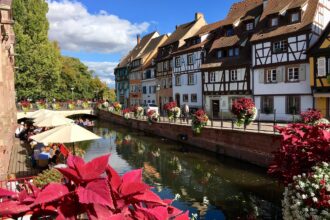
Basel’s position at the tripoint also makes it a natural base for exploring nearby France, and our guide to visiting Colmar covers the half-timbered canal town in Alsace that sits within easy reach by regular train, an easy addition for anyone with a spare day either side of Basel itself.
Between the museums, the old town and the Rhine, Basel rewards travellers willing to slow down rather than rush from sight to sight, and its position on the border makes it one of the easiest Swiss cities to combine with a wider European rail itinerary rather than visiting in isolation.