Reviewed by our editorial team Published
Trier calls itself Germany’s oldest city, and it has the ruins to prove it. Founded by the Romans as Augusta Treverorum more than two thousand years ago, it later served as an imperial capital under Constantine, and the result is a genuinely rare thing in northern Europe: a compact old town where a UNESCO World Heritage Roman gate, a Roman bridge still carrying traffic, and the ruins of two separate imperial bath complexes all sit within a fifteen minute walk of each other.
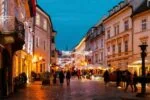
What keeps Trier from feeling like an open-air museum, though, is that it is also a working Moselle wine town with a proper university, so the Roman stonework shares the streets with wine bars, a lively student nightlife scene, and a food culture built around Riesling and regional cooking rather than souvenir stalls. Simeonstraße, the pedestrian shopping street running from the Porta Nigra to the Hauptmarkt, does brisk business year round, not just at Christmas.
This guide works through the city’s landmarks one at a time, Roman and medieval, then covers the parts most itineraries skip: where to shop, what to actually eat and drink, where to go if the Moselle valley weather turns wet, and where Trier’s nightlife actually happens once the museums close. Many visitors combine Trier with Luxembourg City, a short hop away on the free Luxembourg rail network, or fold it into a wider trip using an Interrail Germany Pass.
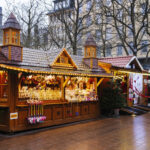
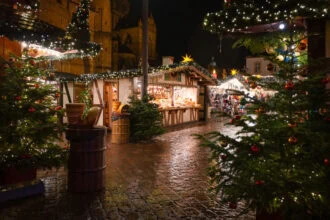
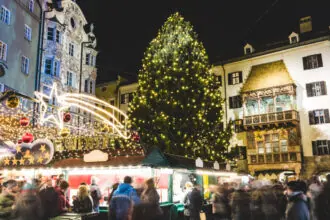
If you are visiting in the run-up to Christmas, the Hauptmarkt and the square beside the cathedral fill with wooden chalets for the Trier Christmas market, and it is worth reading that guide alongside this one. For the rest of the year, though, the same squares are simply Trier’s everyday old town, and that is what this guide covers below.
| Attraction | Type | Good For |
|---|---|---|
| Porta Nigra | Roman city gate | First stop, city icon, photos |
| Trier Cathedral (Hohe Dom) | Cathedral | History, architecture, relics |
| Liebfrauenkirche | Gothic church | Architecture fans, quiet visit |
| Basilica of Constantine | Roman throne hall | Scale, free entry, quick stop |
| Kaiserthermen | Roman imperial baths | Ruins, underground passages |
| Roman Amphitheatre | Roman arena | History, families, gladiator tours |
| Hauptmarkt and the Steipe | Medieval square | People-watching, cafes, markets |
| Karl Marx House | Birthplace museum | History buffs, a quieter hour |
| Rheinisches Landesmuseum | Archaeology museum | Roman artefacts, rainy days |
| Moselle Riverfront and Römerbrücke | Riverside walk, Roman bridge | Walking, cycling, river views |
| Moselle Wine Tasting | Vineyards and wine bars | Wine lovers, an afternoon out |
| Simeonstraße Shopping | Pedestrian shopping street | Souvenirs, boutiques, cafes |
| Food and Wine Tavern Scene | Restaurants and Winzerstuben | Regional cooking, evening meals |
| Viehmarktthermen and Indoor Options | Underground Roman baths | Rainy days, wet-weather plans |
| Nightlife and Evening Drinks | Bars, wine bars, student scene | Evenings out, later crowds |
Porta Nigra
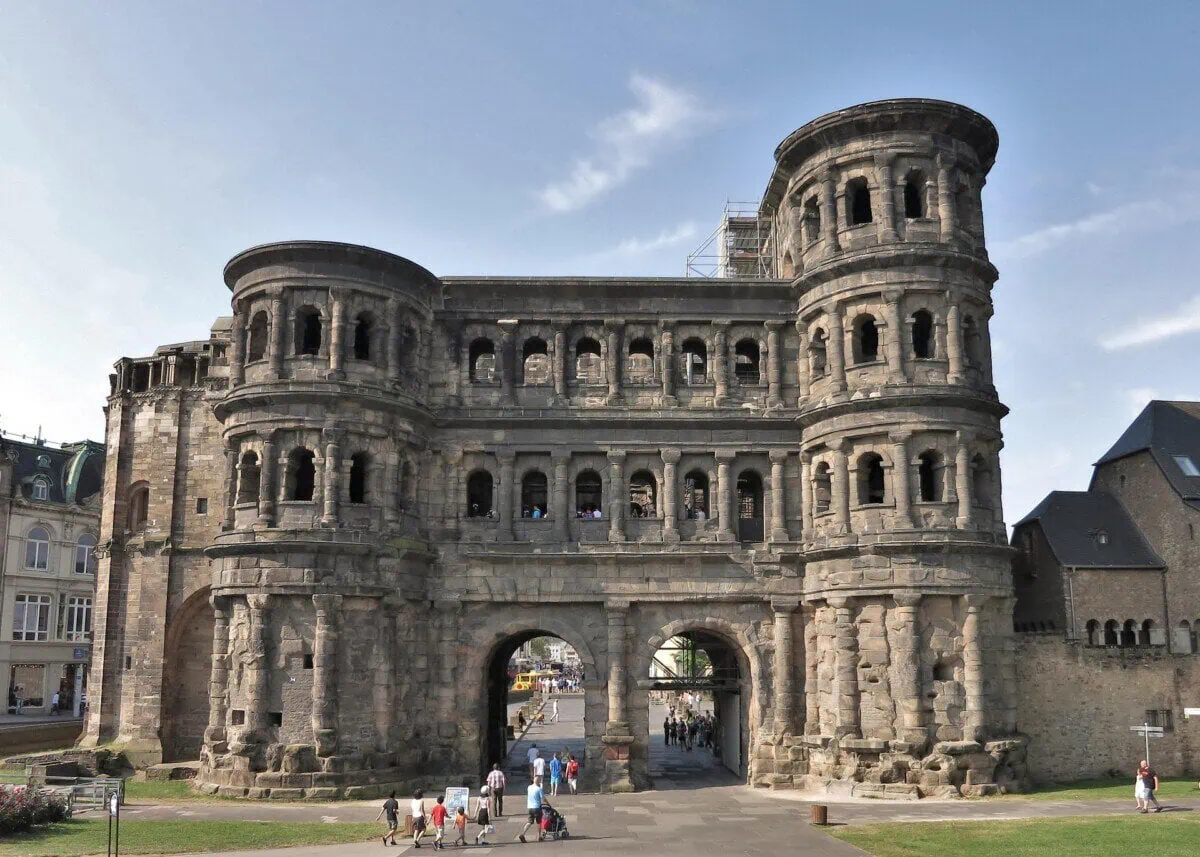
The Porta Nigra, or Black Gate, is Trier’s single most photographed landmark and the natural starting point for almost any visit. Built from huge blocks of grey sandstone around AD 170 as the northern gate into Roman Augusta Treverorum, it is widely described as the best-preserved Roman city gate north of the Alps, and its blackened, weathered surface gives the whole structure a genuinely dramatic presence.
The gate survived largely because a Greek monk named Simeon lived out his final years walled up inside it in the eleventh century, after which it was converted into a church and later a two-storey basilica, complete with an apse added to the eastern tower. That religious conversion is the reason so much of the original Roman stonework still stands, since later generations kept adapting the building rather than quarrying it for parts, which is exactly what happened to most other Roman structures across northern Europe.
Inside, a self-guided route climbs through the gate’s upper levels, with information panels covering both its Roman military role and its later life as a church, and the top floor gives a genuinely good vantage point back over Simeonstraße and the old town rooftops. The gate anchors Trier’s UNESCO World Heritage listing alongside the city’s other Roman monuments, and it is generally the first thing arriving train travellers see, since it stands directly at the top of the pedestrian street leading in from the station.
Trier Cathedral (Hohe Dom)
Trier Cathedral, known locally as the Hohe Dom, claims the title of Germany’s oldest cathedral, with a core structure dating back to a Roman-era hall built under Constantine in the fourth century. Later Romanesque and Gothic additions were layered onto that original footprint over the centuries, so the building reads today as a genuine architectural timeline rather than a single, uniform style.
The cathedral’s most famous holding is the Holy Robe, a seamless tunic venerated as the garment worn by Jesus at the crucifixion, kept in a side chapel and displayed to the public only on rare pilgrimage occasions rather than year round. Whether or not the relic itself draws you in, the sheer age of the surrounding stonework, some of it genuinely Roman rather than merely Roman-influenced, is reason enough to step inside.
Attached to the cathedral is the Domschatzkammer, the cathedral treasury, a small museum of ecclesiastical relics and reliquaries including a fragment said to be from the True Cross and an ornate portable altar. It is a compact, genuinely worthwhile add-on for anyone already visiting the cathedral, and its indoor setting makes it a sensible fallback if the weather outside has turned. The cathedral and the neighbouring Liebfrauenkirche together form the religious half of Trier’s Roman and medieval UNESCO World Heritage listing.
Best for two or three nights. The widest choice of rooms, with filters for free cancellation and included breakfast.
View staysBest for longer stays. Whole apartments and houses, so you are not eating out three times a day.
View rentalsBest for double-checking. Runs the same search across several booking sites so you are not leaving money behind.
Compare pricesLiebfrauenkirche
Right beside the cathedral, sharing a courtyard and, in places, an actual wall, stands the Liebfrauenkirche, widely regarded as one of the earliest Gothic churches built anywhere in Germany. Construction began in the first half of the thirteenth century, making it a near contemporary of the great French Gothic cathedrals that inspired its design, translated here into a distinctly German interpretation of the style.
What makes the Liebfrauenkirche genuinely unusual is its floor plan, laid out as a rounded shape with twelve supporting pillars arranged to echo a flower with twelve petals, a design rarely seen elsewhere and worth pausing to actually notice rather than walking straight through. Light pours in through tall Gothic windows onto pale stone, giving the interior a noticeably different feel from the cathedral’s heavier, older masonry next door.
Because it sits directly beside the cathedral and shares the same small square, the Liebfrauenkirche is easy to fold into the same stop rather than treating it as a separate errand across town. Entry is typically free, and a visit rarely takes more than twenty minutes, making it one of the simplest quick wins on this whole itinerary, especially if you are already standing in the Domfreihof having just left the cathedral.
Basilica of Constantine
A short walk from the cathedral stands the Basilica of Constantine, also known by its Latin name, the Aula Palatina, a vast brick throne hall built for the Roman emperor Constantine in the early fourth century. At roughly 67 metres long and 33 metres high, it is regarded as the largest surviving single-room structure to have come down from antiquity anywhere in the world, and the scale is genuinely disorienting once you step inside.
The building’s survival is almost accidental. Its thick Roman brick walls proved sturdy enough that later centuries repurposed rather than demolished it, and since the nineteenth century it has served as a working Protestant church, still used for regular services today rather than preserved purely as a museum piece. That living use is part of what makes a visit feel different from a typical ruin, since the hall is furnished, lit and genuinely in use rather than roped off behind glass.
Entry is usually free, and because the interior is essentially one enormous open volume with minimal decoration, a visit here is quick, a matter of minutes rather than an hour, which makes it easy to fold into a wider loop of the old town’s Roman sites. Standing at the far end and looking back down the full 67 metres toward the entrance is the single best way to appreciate just how ambitious the original building was for its era.
Kaiserthermen
The Kaiserthermen, or Imperial Baths, are the largest of Trier’s surviving Roman bath complexes and rank among the biggest bathing establishments built anywhere north of the Alps. Constructed in the fourth century, likely intended as a grand imperial bathhouse before being repurposed, the site’s towering red sandstone walls still give a real sense of the building’s original scale even in ruin.
What sets the Kaiserthermen apart from a purely above-ground ruin is the network of underground service corridors that once carried hot air, water and staff beneath the bathing halls, and much of that subterranean layer is open for visitors to walk through today. Exploring the tunnels gives a genuinely different perspective on Roman engineering than simply admiring walls from a viewing platform, since you are moving through the building’s working infrastructure rather than just its public face.
The site sits a short walk from the cathedral and amphitheatre, making it easy to combine into one Roman-focused afternoon, and several of the guided tours available in the city specifically link the Kaiserthermen with the Moselle riverside and Trier’s bathing culture more broadly. Sturdy shoes are worth wearing given the uneven underground surfaces, and the corridors stay a fairly constant, cool temperature regardless of the weather outside, a detail worth remembering if the day turns hot or wet.

Roman Amphitheatre
Trier’s Roman Amphitheatre, built around AD 100, once seated an estimated twenty thousand spectators for gladiatorial contests and public spectacles, making it one of the largest Roman entertainment venues surviving in Germany. It originally doubled as part of the city’s fortifications, built into a natural dip in the terrain on the edge of the old Roman town, a detail that still shapes the site’s layout today.
The genuine highlight for most visitors is descending into the underground cellars beneath the arena floor, the same passages once used to hold animals and, according to Roman practice, condemned prisoners before they were brought up into the arena above. Standing down there, looking up at the daylight through the access shafts, does more to convey the brutality of the original spectacles than the grassy, largely reconstructed seating tiers above ever could.
Several themed tours in the city lean specifically into this history, including guided experiences that follow the story of a fictional gladiator through the arena’s underground chambers, aimed at bringing the site’s grimmer purpose to life for visitors who want more than a plaque and a view. The amphitheatre sits slightly outside the tightest cluster of Roman sites, a genuinely pleasant ten-minute walk uphill from the Kaiserthermen through residential streets and a stretch of the old town wall.
Hauptmarkt and the Steipe
The Hauptmarkt is Trier’s medieval heart, a lively square ringed by gabled townhouses that has functioned as the city’s marketplace for over a thousand years. At its centre stands the market cross, erected in 958, a genuine artefact marking the moment Trier’s archbishop was granted market rights, and one of the oldest surviving monuments of its kind in Germany.
On the square’s northern side, the ornate Steipe building stands out immediately, its stepped gable and carved figures dating originally to the fifteenth century, though today’s structure is a careful postwar reconstruction after wartime damage. Formerly used for civic receptions and banquets, it now functions as a museum space, and its facade alone is worth photographing even if you do not go inside.
The Romanesque church of St Gangolf sits tucked into one corner of the square, easy to miss among the taller merchant houses but worth a look inside for its quieter, plainer interior compared with the cathedral. Beyond the architecture, the Hauptmarkt is simply where Trier gathers, ringed with cafe terraces in fine weather, hosting a regular farmers market selling Moselle produce, and forming the natural crossroads between Simeonstraße, the cathedral quarter and the river.
One Day in Trier: A Walking Route
Morning starts at the Porta Nigra as soon as it opens, since the Roman gate sits at the top of Simeonstraße and gives an easy first orientation to the old town. From there, walk south down Simeonstraße toward the Hauptmarkt, browsing the shopfronts along the way rather than rushing straight through.
At the Hauptmarkt, pause at the market cross and the Steipe before continuing into the cathedral quarter, where the Trier Cathedral and the neighbouring Liebfrauenkirche share a single courtyard. Covering both takes under an hour, and budgeting roughly two and a half hours for this opening stretch, including a coffee break, keeps the pace comfortable rather than rushed.
After lunch, a short walk from the cathedral leads to the Basilica of Constantine, where the sheer scale of the throne hall takes only a few minutes to absorb but rewards lingering. From there it is a brief walk to the Kaiserthermen, where the underground service corridors are worth the better part of an hour.
Sturdy shoes help underground, since the passages are uneven in places rather than flat like the streets above. Allow a further ten minutes uphill on foot from the Kaiserthermen to reach the Roman Amphitheatre, saving the last stretch of daylight for its underground cellars and the view back over the old town wall.
As evening falls, the walk back down into town passes close to Simeonstraße and the Hauptmarkt again, ready for dinner at a Winzerstube or a wine bar covered later in this guide. This route covers roughly four kilometres on foot across a full day, a comfortably paced loop with time built in for food, photographs and the occasional queue.
Best for finding routes the airlines do not sell as a single ticket. Combines carriers to bring the fare down.
Search flightsBest for short trips. Install the eSIM at home and arrive with working data, no shop queue.
Browse eSIMsBest after a long flight or a late landing. Price agreed before you travel, and no taxi queue.
Check transfersTrier’s UNESCO Roman Monuments
The Porta Nigra, the Roman Amphitheatre, the Kaiserthermen, the Barbara Baths, the Roman bridge over the Moselle, the Basilica of Constantine and the cathedral quarter are not separate UNESCO sites in their own right. They were inscribed together in 1986 as a single UNESCO World Heritage listing.
The formal title is Roman Monuments, Cathedral of St Peter and Church of Our Lady in Trier, and it recognises the city’s role as one of the four capitals of the late Roman Empire under the Tetrarchy. That historical status, rather than any single building, is what UNESCO actually protects here.
That collective status changes what a visitor should expect on the ground. There is no single UNESCO ticket and no shared entrance, since the designation covers several separate locations scattered across the old town rather than one bounded monument, and each site keeps its own opening hours, its own entry fee and its own ticket desk.
What the listing does confirm is authenticity rather than convenience. Every building on it, including the cathedral and the Liebfrauenkirche next door, is judged a genuine, well-preserved example of Roman or medieval architecture rather than a modern reconstruction, and seeing all of them means physically walking between each one across this guide’s individual sections.
Karl Marx House
Trier’s most famous native son is not a Roman emperor but Karl Marx, the philosopher and economist born in the city in 1818, and his birthplace at Brückenstraße 10 is now preserved as a museum. The Karl-Marx-Haus walks through his childhood, education and later career, alongside the wider history of Marxism and its global impact, run by the Friedrich-Ebert-Stiftung foundation rather than left as a static period house.
The exhibition covers original manuscripts, first editions and personal artefacts connected to Marx and his family, set within rooms that give a genuine sense of a comfortable nineteenth-century Trier household rather than a purely academic display. It is a noticeably different pace from the Roman sites elsewhere in the city, more reading and reflection than ruins and stonework, which makes it a good change of tempo partway through a longer day of sightseeing.
A large bronze statue of Marx, a gift from China unveiled in 2018 to mark the bicentenary of his birth, now stands in a small square not far from the Porta Nigra, and has become something of a photo stop in its own right, whatever visitors make of the politics attached to it. The house museum itself sits a short walk from the Hauptmarkt, easily combined with a Simeonstraße shopping stop either side.
A Hop-On Hop-Off Option for the Roman Sites
For visitors short on time, travelling with limited mobility, or simply keen to skip the uphill walk up to the Roman Amphitheatre, an open-top hop-on hop-off bus loops between Trier’s main sights with a recorded audio guide running throughout. The route typically covers the Porta Nigra, the Hauptmarkt, the cathedral quarter, the Kaiserthermen and the Amphitheatre, letting riders get off at any stop, look around, and pick up the next bus once they are done.
A ticket is usually valid for a full day, so it works equally well as a one-off orientation ride on arrival or as a way to string together the wider Roman sites in this guide without retracing your steps on foot. It is a genuinely useful add-on for families or anyone visiting outside the warmer months, when an open-top seat still beats standing at a bus stop in the rain.
Rheinisches Landesmuseum
For anyone who wants the Roman story explained properly rather than pieced together from information panels at individual ruins, the Rheinisches Landesmuseum Trier is the city’s principal archaeology museum and one of the most important of its kind in Germany. Its collection draws heavily on finds made across Trier and the wider region, presented in a way that connects directly back to the ruins you may already have walked past that same morning.
The undisputed highlight is the Neumagen wine ship relief, a remarkably detailed Roman carving of a cargo vessel loaded with wine barrels on the Moselle, found near the town of Neumagen-Dhron and now regarded as one of the finest pieces of Roman funerary art to survive anywhere. Elaborate floor mosaics, a substantial hoard of Roman coins, and everyday objects recovered from local excavations round out a collection that rewards a proper hour or two rather than a quick pass-through.
Because the museum sits directly across from the Basilica of Constantine, it fits naturally into the same stretch of a Roman-focused day, and its fully indoor galleries make it a genuinely strong option if the Moselle valley weather has turned. Labelling generally runs in both German and English, so international visitors are not left guessing at what they are looking at.
Moselle Riverfront and the Römerbrücke
Trier sits directly on the Moselle, and the river is a genuine part of the sightseeing rather than a backdrop to admire from a distance. A pedestrian and cycling promenade runs along the bank close to the old town, popular with joggers and locals out for an evening walk, and it makes a pleasant, flat, largely traffic-free stretch to cover on foot between sights.
The standout feature is the Römerbrücke, the Roman bridge, whose stone piers date back to the second century AD and still support a modern road deck carrying traffic today, making it widely cited as the oldest bridge in Germany still in active use. Standing on the riverbank looking up at those weathered Roman piers, still doing the job they were built for nearly two thousand years ago, is a quietly remarkable thing to see for free.
In warmer months, short river cruises depart from landings near the old town, offering an easy, low-effort way to see Trier’s skyline and the surrounding Moselle vineyards from the water, with some routes extending downstream toward the wine villages further along the valley. Even without boarding a boat, the riverfront is worth building into your route simply as a change of scenery from the tighter, stone-walled streets of the old town proper.
Moselle Wine Tasting
Trier is the effective capital of the Moselle wine region, one of Germany’s oldest and steepest wine-growing areas, and the vineyards climbing the valley’s slate slopes are visible from several points around the city itself. Riesling dominates, grown on some of the steepest commercially cultivated vineyard slopes in the world, which gives the local wine a distinctive mineral, slate-driven character that regulars come back for.
You do not need a car to taste it properly. Several Vinotheken, dedicated wine shops with tasting counters, operate around Simeonstraße and the Hauptmarkt, pouring flights from small, independent Moselle producers rather than the large commercial names found in supermarkets elsewhere. A handful of winemaking families also run their own tasting rooms and cellar tours within the city itself, meaning a genuine vineyard experience is possible without leaving Trier’s old town.
For a structured way to combine the city’s history with its wine, GetYourGuide – Trier: Guided City Walk with Wine Tasting is a two-hour walking tour through the old town that finishes with a proper regional tasting, and one of the highest-rated ways in the city to do both in a single outing. Anyone with a full day to spare can also head out into the valley itself, where small towns like Bernkastel-Kues and the villages around the Trier-Saarburg district run their own cellar-door tastings among the actual vines.
Best for short city stops where being central matters more than the room. Dorms and private rooms both listed.
See hostelsBest if you have ever given up on a claim. AirHelp checks whether the flight qualifies and pursues it for you.
See the benefitsBest if your room is not ready yet. Left luggage booked in advance, so you are not hunting for a locker.
Check storageShopping on Simeonstraße and Beyond
Simeonstraße runs in a dead straight line from the Porta Nigra down to the Hauptmarkt, and has been a pedestrian shopping street since 1971, making it Trier’s obvious spine for a browsing afternoon. It mixes department stores and familiar high-street chains with independent boutiques, a well-stocked bookshop, and several cafes tucked into genuinely old buildings, including a medieval wine cellar dating to around 1200 now trading as a restaurant.
Away from the main drag, the streets fanning out from the Hauptmarkt, particularly toward Fleischstraße and the smaller lanes near the cathedral, hold a better concentration of independent shops: ceramicists, small design stores, and the Vinotheken covered above. The Hauptmarkt itself hosts a regular farmers market, generally on Tuesday and Friday mornings, selling Moselle produce, cheese, flowers and baked goods directly from local growers rather than through a middleman.
For a genuinely Trier-specific souvenir, look beyond generic gift shops for anything referencing the Porta Nigra or the city’s UNESCO status, or simply take home a bottle from one of the Vinotheken rather than a mass-produced trinket. As in the rest of Germany, ordinary shops close on Sundays under federal law, so save any serious shopping for a weekday or Saturday rather than assuming Sunday browsing will be an option.
Trier’s Food and Dining Scene
Trier’s food scene leans heavily on its position at the heart of Moselle wine country, and the classic way to experience it is a Winzerstube, a wine tavern run by a local winemaking family, serving hearty regional cooking designed to sit alongside their own Riesling rather than compete with it. Expect dishes like Döppekoche, a baked potato casserole, alongside Saumagen and other rustic, filling regional staples built for a cold, damp valley climate.
Beyond the traditional taverns, Trier’s status as a university city supports a genuinely broad casual dining scene, with cafes, bakeries and informal restaurants clustered around the Hauptmarkt, Fleischstraße and the streets near the university itself, offering everything from proper German bakeries to more international options aimed at a younger crowd. It is a noticeably more varied food scene than the city’s compact size might suggest.
Worth trying alongside the wine is Viez, a tart, still cider unique to the Trier and Moselle region and quite different from sweeter ciders found elsewhere in Germany, traditionally served in a distinctive glass called a Boozem. Reibekuchen, potato pancakes, and roasted chestnuts also turn up outside the market season at food stalls and casual eateries, so the city’s savoury street-food side is not purely a Christmas-time thing.
Viehmarktthermen and Indoor Options
The Moselle valley has a genuinely damp reputation, and Trier has more indoor options for a wet day than its compact size might suggest. The single best is the Viehmarktthermen, the excavated remains of Trier’s third Roman bath complex, preserved beneath a striking glass pavilion on the Viehmarktplatz that lets visitors look down, and walk among, the ruins entirely under cover regardless of the weather outside.
Unlike the Kaiserthermen or the amphitheatre, where a real visit means being outdoors among open-air ruins, the Viehmarktthermen is a genuinely indoor experience from start to finish, making it the natural first move if rain sets in partway through a day of sightseeing. The Rheinisches Landesmuseum, Karl Marx House and the cathedral’s Domschatzkammer treasury, all covered earlier in this guide, are equally solid wet-weather fallbacks, each fully indoors with a genuine hour or more of content to fill.
For a longer rainy afternoon, Trier’s Vinotheken double as an indoor activity in their own right, since a seated tasting session is as sheltered as any museum visit while still being a genuine Trier experience rather than a consolation prize. Between the museums, the treasury and the underground bath excavations, it is entirely possible to fill a full day here without stepping outside for more than the walk between doors.

Nightlife and Evening Drinks
With a university founded in 1473 and restarted in the 1970s, Trier carries a genuine student-town energy after dark that its Roman old town does not always advertise by day. The streets around Neustraße and Viehmarktplatz, along with the lanes near the Hauptmarkt, hold the bulk of the city’s bars, ranging from relaxed student pubs to smarter cocktail spots, with a noticeably younger, later crowd than the daytime tourist trail suggests.
Wine bars are the local speciality, unsurprisingly given the setting, with several dedicated Weinstuben around the old town pouring flights of Moselle Riesling by the glass late into the evening, a lower-key alternative to a full sit-down Winzerstube dinner. These tend to fill up gradually rather than all at once, making a spontaneous wander between two or three spots an easy way to spend an evening without booking anything in advance.
For a livelier night, the Kornmarkt area and the streets just off it hold a cluster of later-opening bars and small clubs that pick up once the restaurants and Weinstuben start winding down, popular with the city’s student population, particularly toward the end of the week. Trier is compact enough that hopping between two or three different bars on foot rarely takes more than a few minutes, so there is little need to plan a fixed route in advance.
Is the Trier Card Worth It?
Trier does have a current tourist discount card, the Trier Card, sold through the official Trier shop for the 2026 season at €12 for a single adult. It is valid for two consecutive days from the date you activate it.
Its core benefit is free travel on all inner-city bus routes across zones 1 to 4, which covers most of what a visitor moving between the old town, the amphitheatre and the riverfront would actually need. That alone can justify the cost for anyone not planning to walk everywhere.
Beyond transport, the card adds a 10% discount on the main Roman sites, including the Amphitheatre, the Kaiserthermen and the Porta Nigra, plus larger discounts elsewhere, among them 25% off the Karl Marx House and 30% off the Cathedral Treasury. None of these individual discounts amounts to much on its own, since Roman site entry in Trier is already inexpensive.
The break-even case rests mostly on the bus travel, not the museum discounts. Anyone planning to ride the city bus a handful of times over two days recovers the card’s cost through transport alone, and visitors sticking to the compact old town on foot, which covers nearly everything in this guide, are unlikely to need it.

Rupert’s Handy Travel Tips
Here is what I have picked up trotting round Trier’s old town between wine stops.
- Start at the Porta Nigra: it sits right at the top of Simeonstraße, so it is the natural first stop arriving from the station.
- Buy a combined ticket if you can: several Roman sites offer joint admission, which works out cheaper than paying at each one separately.
- Keep the Viehmarktthermen for a rainy afternoon: it is the one major sight that is genuinely fully indoors from start to finish.
- Do your Simeonstraße shopping on a weekday or Saturday: ordinary shops close on Sundays under German law.
- Wear proper shoes underground: the Kaiserthermen and amphitheatre both have uneven stone passages beneath the main ruins.
- Ask for the Winzerstube menu, not the tourist one: wine taverns run by local winemaking families tend to pair food and Riesling far better.
- Combine Trier with Luxembourg City: the train ride is short, and Luxembourg’s own transport network is free right up to the border.
Want to meet the reindeer behind our travel tips? Find out more in our page Who is Rupert?.



Frequently Asked Questions
What is Trier best known for?
Trier is Germany’s oldest city and is best known for its Roman heritage, including the Porta Nigra, Kaiserthermen and Roman Amphitheatre, all part of a UNESCO World Heritage listing alongside its cathedral and Liebfrauenkirche.
How many days do you need in Trier?
Two full days is a comfortable pace, covering the main Roman sites, the old town and a proper wine tasting without rushing. A single long day is workable if you focus on the Porta Nigra, cathedral quarter and Hauptmarkt only.
Is Trier good for wine lovers?
Yes, Trier sits at the heart of the Moselle wine region and has several Vinotheken and winemaker-run tasting rooms within the old town itself, alongside easy access to vineyard villages further along the valley.
What can you do in Trier if it rains?
The Viehmarktthermen, an excavated Roman bath preserved beneath a glass pavilion, is genuinely indoors from start to finish, and the Rheinisches Landesmuseum, Karl Marx House and cathedral treasury are all solid wet-weather fallbacks.
Is Trier a good day trip from Luxembourg City?
Yes, Trier is a short train ride across the German border from Luxembourg City, and is a popular add-on for visitors basing themselves on either side of the border.
Does Trier have much nightlife?
Yes, Trier’s university gives it a genuine student-town nightlife scene, with bars concentrated around Neustraße, Viehmarktplatz and the Kornmarkt, alongside a strong local Weinstube culture for a quieter evening.
Further Reading
If your visit lands in late November or December, the Hauptmarkt and Domfreihof covered above transform for the season, and our guide to Trier Christmas Markets covers the stalls, the Winzerglühwein and the ice rink in full. Outside of December, treat this guide as the year-round companion, since almost everything above is open and worth visiting whatever the season.
For the short cross-border trip so many visitors build around Trier, our guide to Luxembourg’s free public transport explains how far the free CFL network gets you toward the German border before a separate ticket is needed. Anyone building a wider rail itinerary around Germany may also find our Interrail Germany Pass guide useful for planning a route that takes in Trier alongside other German cities. For the latest opening details on the city’s Roman monuments, the official Trier tourist information site is the best source to check before you travel.