Reviewed by our editorial team Updated
Why Luxembourg Doesn’t Need a Rail Pass at All
Every other country in this series is really about finding the right ticket, card or pass. Luxembourg breaks that pattern entirely. Since 1 March 2020, the Grand Duchy has made all public transport free nationwide, covering trains, trams and buses, for residents and visitors alike. There is no pass to buy, no card to register, and no fare to work out for the vast majority of journeys taken entirely within the country. You simply board and travel.
This makes Luxembourg one of the simplest countries in Europe to get around, and genuinely unique in a continent full of complicated ticketing systems. It remains the only nation on Earth offering completely free public transport across its entire territory, which is a genuinely remarkable policy to have rolled out nationally, given how much of this guide series is otherwise about finding the right hidden discount or overlooked pass in a much messier system.
Luxembourg is genuinely the one place in this guide series where there is nothing hidden left to find, because the discount is simply everything on offer domestically, applied automatically to every single journey without exception. That said, there are still two genuine exceptions worth understanding properly before you travel, one covering the paid supplement for 1st class rail seating and how to actually pay for it, and one covering journeys that cross into a neighbouring country, both of which this guide covers in genuine detail further down the page.
| Service | Cost | Notes |
|---|---|---|
| National and regional trains (CFL, 2nd class) | Free | Covers the entire domestic rail network |
| Buses (RGTR, TICE, AVL, city buses) | Free | More than 250 routes nationwide, including within Luxembourg City |
| Luxembourg City tram | Free | Currently one line, with further extensions planned |
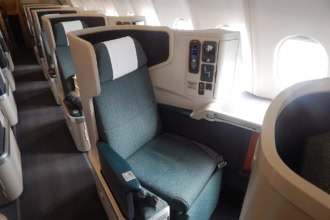
| 1st class rail seating | Paid supplement | Pay via the CFL go app in advance, or the conductor on board (surcharge applies) |
| Cross-border journeys into France, Germany or Belgium | Partly paid | The Luxembourg portion is free; the foreign portion still requires a ticket |
How Luxembourg’s Free Public Transport Actually Works
There is genuinely very little to explain, which is really part of the appeal for anyone tired of working out complicated fare systems elsewhere in Europe. Trains, trams and buses right across the country are free for anyone to use, resident or visitor alike, with no ticket, app, card or account required for standard 2nd class travel. You do not need to tap in or out, show identification, or register anywhere in advance. You simply walk onto the platform or board the bus and travel.
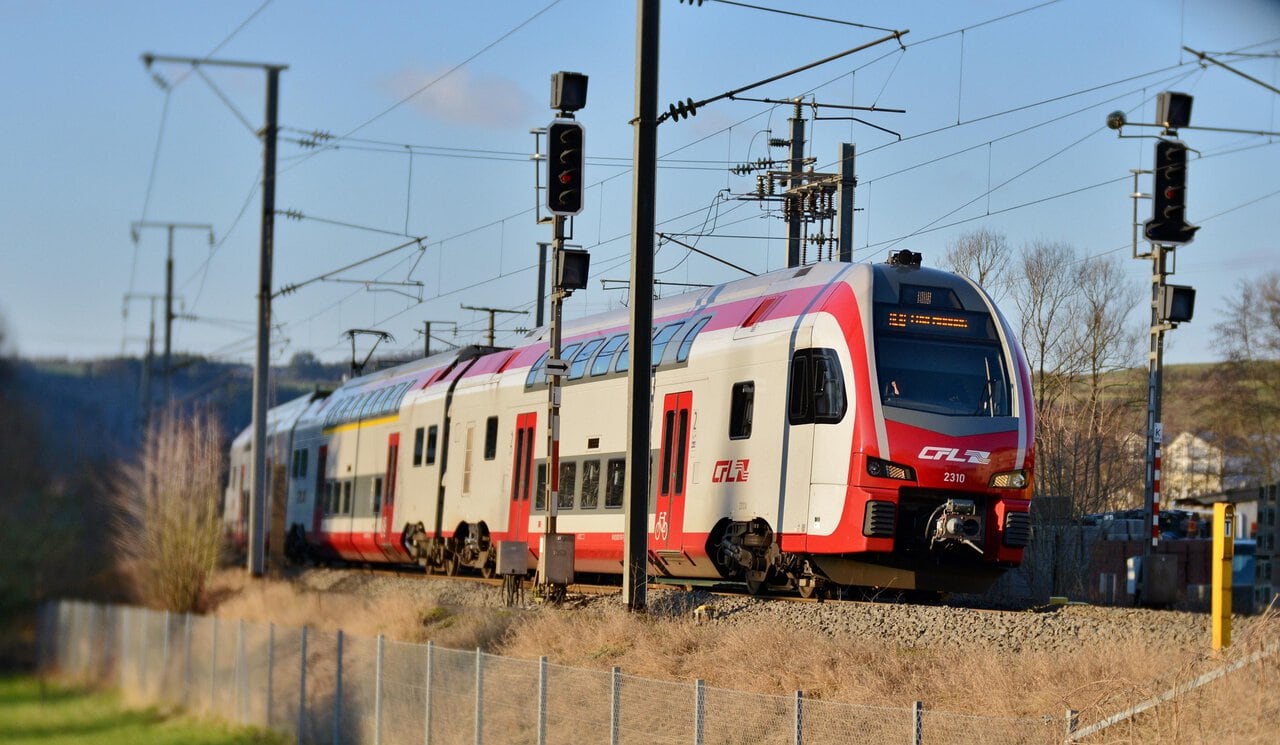
The bus network is the most extensive part of the system, covering more than 250 routes nationwide, with around thirty of those operating within Luxembourg City itself, meaning almost anywhere in the country can genuinely be reached without needing a car at all. The rail network, run by CFL, covers the country’s main towns and connects onward to the free bus network for the final stretch out to smaller villages and rural areas. The single tram line currently runs between the Central Train Station and Kirchberg, with further lines planned to open before 2035, all of which will also be entirely free once built and opened to the public.
The one domestic exception is 1st class rail seating, which still carries a small paid supplement on top of the otherwise free 2nd class service, and this is covered in detail in its own dedicated section further down this guide. For the vast majority of visitors, 2nd class is perfectly comfortable and there is rarely any real need to pay for the upgrade at all unless you specifically want the extra space and quiet.
Compare hotels and other places to stay in Luxembourg.
Check availabilityBrowse apartments, homes and self-catering accommodation in Luxembourg.
Browse rentalsCompare hotel deals in Luxembourg from multiple booking sites.
Compare pricesWhat Isn’t Included: Cross-Border Journeys
The one genuinely significant limit on Luxembourg’s free transport policy is geography rather than anything to do with class of travel or time of day. The policy applies only within Luxembourg’s own national borders, so a journey that continues into France, Germany or Belgium still requires a ticket for the portion of the trip outside Luxembourg, even though the Luxembourgish leg of that same journey remains entirely free of charge the whole way.
In practice, this means cross border commuters and day trippers pay considerably less than they would have before the policy began, since the Luxembourg portion of their fare has effectively been removed from the total cost. The journey is not entirely free unless it both starts and ends within the country itself. If you are planning a day trip across the border, for example from Luxembourg City out to Trier in Germany or Metz in France, budget properly in advance for a ticket covering only the foreign section of that particular route, since the Luxembourg half needs nothing at all.
This is genuinely worth bearing in mind if Luxembourg is one stop on a wider trip through the Benelux and Rhineland region rather than the entire destination for your visit, since the free travel genuinely only extends as far as the border itself and no further. Tickets for the international leg are typically bought through the relevant foreign operator’s own app or website rather than through anything Luxembourgish, since CFL’s free domestic system genuinely does not extend its own booking tools or ticketing across the border into a neighbouring country either.
The 1st Class Surcharge: How to Pay for the Upgrade
While every 2nd class seat on Luxembourg’s rail network is entirely free, 1st class remains the one part of the domestic system that still carries a genuine cost, and it is genuinely worth understanding exactly how that supplement is meant to be paid before you actually board the train. The cleanest way to pay is through the CFL go app, which lets you buy the 1st class supplement in advance and have it ready on your phone before the train even arrives, without needing to queue anywhere at the station itself.
It is also still possible to pay for a 1st class upgrade directly from the conductor once you are already on board, using cash, though this route carries its own small surcharge on top of the standard supplement, generally somewhere around one euro, sometimes a little more depending on the specific fare or destination involved, particularly on cross border routes. Passengers holding a recognised disability card are exempt from this particular onboard surcharge, though the underlying 1st class supplement itself still genuinely applies to everyone regardless of that particular onboard exemption.
CFL has been actively phasing out older ways of buying this supplement, including paper tickets and the mKaart card previously sold at stations, buses and dedicated sales centres, in favour of pushing everything through the CFL go app instead. In practice, this means visitors who specifically want 1st class seating are genuinely better off installing the app and paying in advance, rather than assuming a ticket office, sales centre or machine will still be available to sell them a paper supplement on arrival at the station itself.
Why Luxembourg Did This
The policy was part of the Luxembourgish government’s 2018 coalition agreement and rolled out nationwide on 1 March 2020, driven partly by environmental goals and partly by simple economics rather than pure idealism. Luxembourg has one of the highest rates of car ownership per capita anywhere in the European Union, and the resulting traffic congestion and air pollution were pushing the government to find ways to make public transport a genuinely easier choice than driving for daily commuters.
The financial case turned out to be considerably less dramatic than it might first sound. Even before the policy began, public transport in Luxembourg was already subsidised at somewhere between 90 and 94 percent, meaning ticket sales were only ever covering a small fraction of the actual running costs in the first place. Removing that remaining slice of ticket revenue altogether, and covering it through general taxation instead, removed a genuine barrier to use without changing the underlying economics of actually running the network all that dramatically in the years that followed.
The results have been genuinely striking since the policy took effect. Ridership on the Luxembourg City tram alone grew from around 6 million annual passengers in its early years to more than 31 million by 2024, and CFL, the national rail operator, reported 31.4 million passengers in 2025 alone. The policy has been particularly valued by students, lower income workers, and the genuinely large number of cross border commuters who travel into Luxembourg daily for work from France, Belgium and Germany, a group that makes up a significant share of the country’s workforce.
Using Luxembourg as a Base for Day Trips
Because the entire domestic network is free, Luxembourg makes an unusually low cost base for exploring the country’s castles, vineyards, forests and small towns without ever needing to think seriously about ticket costs along the way. A day spent hopping between Luxembourg City, the fortress town of Vianden, or the wine villages along the Moselle valley costs nothing beyond whatever you spend on food and admission to the attractions themselves during the day.
This also makes Luxembourg a genuinely practical, low risk base for travellers with a looser itinerary, since there is no financial cost at all to changing your mind, backtracking, or adding an extra stop partway through the day without planning it in advance. If your wider trip includes destinations just over the border, plan properly for a separate ticket on that specific international leg, but treat everything within Luxembourg itself as effectively already paid for the moment you arrive.
Because there is no ticket to lose, expire, or accidentally leave behind at a hotel room, it is also genuinely one of the easiest countries in Europe to travel around with young children in tow, since there is no ticket to keep track of for each individual family member across a busy day of sightseeing and moving between different towns, and nothing that can be misplaced partway through the trip.
How to Buy: App, Conductor or Cross-Border Ticket
For the vast majority of journeys within Luxembourg itself, there is genuinely nothing to buy at all, so the usual app versus station versus counter question that dominates every other guide in this series simply does not apply to standard 2nd class travel here at all. The only two situations where you actually need to purchase something are the 1st class supplement covered earlier in this guide, and any onward ticket for a journey that continues across the border into France, Germany or Belgium.
For the 1st class supplement, the CFL go app is genuinely the recommended channel, since CFL has been actively phasing out paper tickets and the older mKaart card at stations, sales centres and on buses in favour of pushing everything through the app instead. Buying in advance through the app means your supplement is ready before the train arrives, with no need to find a member of staff or a working machine once you are already at the platform.
If a ticket office, sales centre or machine is unavailable, or you simply decide you want 1st class once you are already on board, paying the conductor directly with cash remains possible, though it carries a small additional surcharge on top of the standard supplement, generally paid in cash directly to the conductor there and then. For cross border tickets specifically, these are generally bought through the relevant foreign operator’s own app or website, such as SNCF Connect for France or DB Navigator for Germany, since Luxembourg’s own free domestic system does not extend its booking tools across the border.

Rupert’s Handy Travel Tips
Luxembourg is refreshingly simple, so there isn’t much to plan, but here’s what’s worth knowing.
- Don’t hunt for a ticket machine: there genuinely isn’t one to find for standard 2nd class travel, so don’t waste time looking for somewhere to buy a ticket before boarding.
- Get the CFL go app for 1st class: it’s the easiest way to pay the supplement in advance, since paper tickets and the mKaart are being phased out at stations.
- Budget separately for cross-border trips: if you’re heading into France, Germany or Belgium, the foreign portion of the journey still needs a ticket.
- Paying the conductor for 1st class costs more: it’s possible to pay on board with cash, but it carries a small surcharge on top of the standard supplement.
- Use the bus for smaller villages: the rail network covers the main towns well, but the bus network is what actually reaches the countryside.
Want to meet the reindeer behind our travel tips? Find out more in our page Who is Rupert?.




Frequently Asked Questions
Is public transport really completely free in Luxembourg?
Yes, since 1 March 2020, trains, trams and buses across the entire country have been free for both residents and visitors, with the only exception being 1st class rail seating.
Do tourists need to register or buy anything to use it?
No, there is no card, app, account or ticket required for 2nd class travel. You simply board the train, tram or bus and travel.
How do I pay for 1st class on a Luxembourg train?
The CFL go app is the recommended way to pay the supplement in advance. You can also pay the conductor on board with cash, though this carries a small additional surcharge.
Is travel to neighbouring countries free too?
No, only the Luxembourg portion of a cross-border journey is free. Travel into France, Germany or Belgium still requires a ticket for the section of the trip outside Luxembourg.
Is Luxembourg the only country with free public transport?
It is the only country offering completely free public transport across its entire national territory, making it unique in Europe and, as far as is widely reported, worldwide.
Further Reading
This guide is part of our wider series on hidden rail passes and cheap train tickets across Europe, covering the overlooked discounts in six countries. If your trip continues across the border, our Euregio Ticket guide covers a separate cross-border day ticket linking parts of Germany, Belgium and the Netherlands, and our Belgium train tickets guide explains the new Belgian fare system for anyone continuing west.
For a wider European trip, our Interrail Pass guide explains when a multi-country pass makes sense for the legs of your journey outside Luxembourg, and our eSIM apps guide covers how to stay connected while checking cross-border timetables on the move.