Reviewed by our editorial team Updated
Why Cheap Train Tickets in Europe Are Hard to Find
Train travel in Europe looks simple, but the pricing system is anything but. Most travellers expect to search a route, pick a train, and buy a ticket. Instead, they are dealing with a fragmented system where prices vary widely, rules change by country, and the cheapest options are often hidden behind ticket types most people never see.
One of the first things travellers discover is Eurail or Interrail passes. These are well known, easy to understand, and heavily promoted as the default way to travel across Europe by train. For longer trips with lots of travel days, they can work well. But for many itineraries, especially shorter trips or journeys focused on just one or two countries, they are not always the best value.
The reason is simple. These passes charge you for flexibility, and if you are only travelling on a few days, or focusing on routes where cheaper ticket types exist, you can end up paying significantly more than necessary. In countries like Germany, Austria, and Switzerland, there are alternative tickets that can reduce costs dramatically, but they are rarely shown alongside standard search results.
At the same time, countries like France, Spain, and Italy use dynamic pricing on high speed trains, where fares increase as demand rises. This means that the price you see depends not just on the route, but on when you book and how busy that train is expected to be.
This combination of national pricing systems, dynamic fares, and hidden ticket types is why so many travellers overpay. The cheapest option is rarely the most obvious one. Saving money on train tickets in Europe is not about finding discounts after you search, it is about choosing the right type of ticket before you book.
For a quick overview before diving in, here is how six of the countries with the most overlooked ticket systems compare, each covered in full detail in its own dedicated guide.
| Country | Key Ticket(s) | Best For |
|---|---|---|
| Germany | Deutschland-Ticket, Bayern-Ticket, Länder-Tickets, Quer-durchs-Land-Ticket | Groups and regional day trips; the Deutschland-Ticket suits month-long stays |
| Spain | Renfe Spain Pass, Tarjeta Dorada, Más Renfe Joven | Multi-city itineraries and age-eligible travellers; open to non-residents |
| Portugal | Portugal Rail Pass, CP Tourist Pass (Green Rail Pass is residents-only) | City breaks and wider loops; check residency status before choosing |
| Belgium | Automatic distance-based fares, Train+ discount card | Regular travellers and under-26s/over-65s, who get an automatic 40% off |
| Czech Republic | All-Day Ticket, Group Weekend Ticket, Summer Ticket, ČD Dny 25 | Families and small groups, especially at weekends |
| Luxembourg | Free nationwide public transport (2nd class) | Everyone; only 1st class and cross-border legs cost anything |
How to Save Money on European Train Travel
Saving money on trains in Europe is not about one trick. It is about understanding a handful of systems that repeat across multiple countries. Once you recognise these patterns, you can consistently reduce the cost of your journeys.
The first and most powerful option is unlimited travel passes. These allow you to travel freely for a fixed price over a set period. In countries like the United Kingdom, the BritRail Pass gives visitors unlimited access to the network, while in Switzerland, the Swiss Travel Pass covers trains, buses, and even boats. These passes are ideal if you want flexibility and plan to move around frequently.
The second category is discount rail cards, which are often overlooked. Instead of replacing tickets, they reduce the price of everything you buy. The Swiss Half Fare Card is the standout example, cutting the cost of almost all transport by 50 percent. In France, the Carte Avantage reduces fares and places a cap on long distance ticket prices, which can make expensive routes far more affordable.
The third category is where the biggest hidden savings are found. These are regional day tickets, particularly in Central Europe. Tickets like the Einfach-Raus-Ticket in Austria or the Bayern-Ticket in Germany allow unlimited travel for a full day, often at a price that becomes incredibly cheap when shared between a group. This is where you see journeys costing under €10 per person, something that feels impossible if you only look at standard fares.
Finally, there are multi-journey passes, which are designed for travellers with a clear plan. These include products like the Spain Rail Pass or the Trenitalia Pass in Italy. They allow a set number of trips at a fixed price and can be excellent value if you are travelling between major cities.
Compare hotels and other places to stay for your trip.
Check availabilityExplore holiday homes and apartments for your trip.
See holiday homesCompare prices from multiple hotel booking sites.
Check dealsThe Best Hidden Rail Passes in Europe
When most travellers think about train travel in Europe, they focus on the obvious options. They search for tickets, compare prices, and often land on Eurail or Interrail passes as the default solution. What they rarely realise is that there is an entire second layer of ticketing that sits underneath these options, and in many cases, offers far better value.
These are national rail passes, regional day tickets, and discount cards that are designed around how each country’s network actually operates. Because they are built for domestic use, they are not always marketed internationally, and they are often missing from the major booking platforms that travellers rely on. This is why they remain hidden, even though they can deliver some of the biggest savings.
The advantage of these tickets is that they align with real travel patterns. In countries like Germany and Austria, they focus on regional travel and group pricing, which allows you to move around freely at a very low cost. In Switzerland, the system is built around integration, where trains, buses, boats, and mountain railways all work together under a single pricing structure. In places like the United Kingdom, regional passes and national visitor products provide flexibility that standard tickets cannot match.
What ties all of these together is that they are designed to solve specific problems. They either remove the need to buy individual tickets, reduce the cost of every journey, or unlock unlimited travel within a defined area. Once you understand these hidden rail passes, you stop chasing individual ticket deals and start using the system to your advantage.
Unlimited Travel Passes: The Easiest Way to Control Costs
For many travellers, the simplest way to manage train costs is to remove uncertainty completely. This is where unlimited travel passes become powerful. Instead of worrying about fluctuating ticket prices, booking windows, or route changes, you pay once and gain the freedom to travel as much as you like within a set period.
In the United Kingdom, the BritRail Pass allows visitors to travel across the national network without buying individual tickets. This can be particularly valuable on longer routes, where standard fares can quickly become expensive. In Switzerland, the Swiss Travel Pass goes even further, covering not just trains but also buses, boats, and even museum entry, making it one of the most comprehensive travel passes available anywhere in Europe.
Other countries offer similar, more focused versions of this idea. The Portugal Rail Pass provides unlimited national travel over a defined number of days for non-residents, while the Holland Travel Ticket in the Netherlands allows unlimited use of trains and urban transport for a single day. These passes are designed to simplify travel, especially if you are moving frequently or want the flexibility to make spontaneous decisions.
The main strength of unlimited passes is flexibility. You can change plans, add journeys, or take detours without increasing your costs. However, they work best when you actually use them. If you are only travelling occasionally, they can be less efficient than other options. When used properly, though, unlimited travel passes provide one of the easiest ways to control train costs while keeping your itinerary flexible.
Discount Rail Cards: The Smartest Way to Cut Every Fare
While unlimited passes are the most visible option, discount rail cards are often the most effective. Instead of replacing tickets, they reduce the cost of everything you buy. This makes them incredibly powerful, especially if you are travelling over several days or combining different types of journeys.
The standout example is the Swiss Half Fare Card, which reduces the cost of almost all transport by 50 percent. This includes not just trains, but also buses, boats, and many mountain railways, which are often the most expensive part of travelling in Switzerland. Because it applies to almost every journey, the savings can add up quickly, even on a relatively short trip.
In France, the Carte Avantage offers a different but equally useful approach. It reduces fares by around 30 percent and, crucially, places a cap on long distance ticket prices. This means that even if you are booking later or travelling on a busy route, you avoid the highest fares. Over multiple journeys, this can make a significant difference.
In Spain, a similar logic applies to the Tarjeta Dorada and Más Renfe Joven discount cards, which cut fares for older and younger travellers respectively and are open to non-residents, though with different amounts of faff to actually get hold of them.
The key advantage of discount cards is that they work alongside other pricing systems. You can still take advantage of cheaper advance tickets or regional fares, but at a lower cost. This flexibility makes them one of the most versatile tools for saving money. For many travellers, especially those not moving every day, a discount rail card can offer better value than an unlimited pass.

Regional Day Tickets: The Biggest Hidden Savings in Europe
If there is one category that consistently delivers the biggest savings, it is regional day tickets. These are some of the least visible options in European rail travel, yet they can offer extraordinary value, particularly in Central Europe.
Tickets like the Einfach-Raus-Ticket in Austria or the Bayern-Ticket in Germany allow unlimited travel for an entire day on regional trains. While they do not include high speed services, they cover extensive networks that reach most towns and cities. The real advantage comes from group pricing, where the cost per person drops significantly as more people travel together.
In practical terms, this means that a group of travellers can spend a full day moving across a region, making multiple stops, and exploring freely for a fraction of the cost of standard tickets. It is not uncommon for journeys to work out at under €10 per person, something that is almost impossible to achieve through normal booking methods.
These tickets are ideal for day trips, scenic routes, and flexible itineraries where speed is not the priority. They are also perfect for travellers who want to explore beyond major cities without worrying about ticket costs for each individual journey. The main trade-off is time, as regional trains are slower and may require more changes.
Despite this, the value is hard to beat. Regional day tickets are one of the most effective ways to unlock ultra-cheap train travel in Europe, and they remain one of the best-kept secrets for travellers who know how to use them.
Multi-Journey Rail Passes: The Best Option for Planned Routes
Not every trip needs unlimited travel. In many cases, the most efficient way to save money is to plan your key journeys in advance and use a multi-journey rail pass. These passes give you a fixed number of trips for a set price, allowing you to control costs while still keeping some flexibility.
In countries like Spain, the Renfe Spain Pass allows you to take a set number of journeys across the network, including high speed routes. Similarly, in Italy, both the Trenitalia Pass and the Italo Pass offer flexible travel bundles that can be used across major city-to-city routes. These passes are designed for travellers who know roughly where they are going but do not want to commit to specific trains at the time of booking.
The advantage of this approach is predictability. Instead of dealing with fluctuating ticket prices, you lock in your travel costs early. This can be particularly useful on popular routes where prices rise quickly, such as journeys between major cities. You also avoid the pressure of booking every train in advance, which can make planning more relaxed.
However, these passes work best when your itinerary is clear. If you are making only a small number of journeys, or travelling shorter distances, they may not offer the same level of savings as regional tickets or discount cards. The value comes from using them on longer routes where standard fares are higher.
Multi-journey passes are ideal for structured trips where you want cost certainty without losing flexibility, particularly on long-distance routes across Southern and Western Europe.
Cross-Border Rail Deals Most Travellers Miss
One of the most overlooked ways to save money on train travel in Europe is through cross-border regional tickets. These are designed for areas where multiple countries meet, and they allow you to travel freely across borders for a fixed price.
Examples include Euregio tickets, which operate in regions such as the borders between Germany, Belgium, and the Netherlands, or between France, Germany, and Luxembourg. These tickets typically allow unlimited travel for a full day on regional trains and local transport, covering multiple countries under a single ticket. Belgium’s Train+ card also extends its discount to the Belgian portion of several cross-border routes, including connections into Luxembourg, France, Germany and the Netherlands.
What makes these tickets so powerful is that they bypass the usual pricing barriers between countries. International tickets are often expensive, even for relatively short distances, but these regional passes treat cross-border travel as part of a single network. This means you can move between countries at a fraction of the normal cost.
These tickets are particularly useful if you are staying near a border or planning day trips that cross into neighbouring countries. They also open up travel options that many people do not consider, allowing you to explore multiple destinations without significantly increasing your budget.
Despite their value, these tickets are rarely promoted outside their local regions, which is why they remain underused. For travellers willing to explore beyond the obvious routes, cross-border rail deals can unlock some of the cheapest international travel in Europe.
Search routes and flight options for your journey.
Search flightsBrowse Airalo eSIM options for convenient travel data.
Check eSIMsCheck private airport pickup options and plan the first part of your journey in advance.
View transfersCheap Train Ticket Options by Country
This is where everything comes together. Each country in Europe approaches rail pricing differently, and understanding these differences is the key to consistently finding cheaper tickets. Some countries offer powerful regional day tickets, others rely on discount cards, and some are better suited to multi-journey passes or advance booking strategies.
Austria: Simple, Flexible, and Extremely Good Value
Austria is one of the easiest countries in Europe to save money on train travel, largely because of the Einfach-Raus-Ticket. This ticket allows unlimited travel on regional trains for a full day, and its real strength comes from group pricing, which reduces the cost per person significantly.
For travellers exploring regions such as the Salzkammergut or moving between smaller towns, this ticket offers outstanding value. You can make multiple stops, change plans throughout the day, and travel freely without worrying about individual fares. When split between a group, it often works out at under €10 per person, making it one of the cheapest ways to travel by train anywhere in Europe.
The trade-off is speed. The ticket is only valid on regional trains, so journeys take longer than on high speed services. However, for day trips and scenic travel, this is rarely a problem and can even enhance the experience.
Germany: The Best System for Cheap Regional Travel
Germany offers one of the most developed and flexible systems for low-cost train travel in Europe. The key products are the Länder tickets, such as the Bayern Ticket, the nationwide Quer-durchs-Land Ticket, and the subscription-based Deutschland-Ticket for longer stays. Our full German rail tickets guide covers all four in detail, including how non-residents without a German bank account can still get the Deutschland-Ticket through a regional operator’s app.
These tickets allow unlimited travel on regional trains for a full day, and like Austria, they become significantly cheaper when used by a group. They cover large areas, including major cities and rural regions, making them ideal for day trips and multi-stop itineraries.
The Quer-durchs-Land Ticket extends this concept across the entire country, allowing you to travel long distances at a very low cost, provided you are willing to use regional trains. While journeys take longer, the savings can be substantial, especially compared to standard long-distance fares.
Germany’s system stands out because of its consistency. Once you understand how these tickets work, you can apply the same logic across multiple regions, making it one of the easiest countries to navigate for budget-conscious travellers.
Switzerland: Expensive on the Surface, Affordable with the Right Card
Switzerland has a reputation for being one of the most expensive countries in Europe, and standard train fares reflect that. However, the system is designed in a way that rewards travellers who use the right ticket.
The most important product is the Swiss Half Fare Card, which reduces the cost of almost all transport by 50 percent. This includes trains, buses, boats, and many mountain railways, which are often the most expensive part of travelling in Switzerland. Even a small number of journeys can justify the cost of the card, and over several days, the savings become significant.
For travellers who prefer simplicity, the Swiss Travel Pass offers unlimited travel across the network, along with additional benefits such as museum entry. While it has a higher upfront cost, it removes the need to think about individual tickets.
The key to saving money in Switzerland is understanding that standard prices are only part of the picture. With the right card or pass, the cost of travel can be reduced dramatically.
United Kingdom: Flexible Passes and Regional Value
The United Kingdom is known for high train prices, but there are several ways to reduce costs if you know where to look. The BritRail Pass, available to non-residents, provides unlimited travel across the national network, making it a strong option for visitors planning to travel between multiple cities.
Alongside this, the UK offers a range of Ranger and Rover tickets, which provide unlimited travel within specific regions. These are less well known but can offer excellent value, particularly for day trips or short stays within a defined area.
Unlike some European countries, the UK does not have a single unified discount system for tourists, so the best option depends heavily on your itinerary. For longer journeys, booking in advance can still be very effective, but for flexibility and multi-stop travel, these passes can provide significant savings.
France: Discounts and Regional Passes That Cut Costs
France is often associated with high speed trains, and while services like TGV are fast and efficient, they can also be expensive if you book late. The key to saving money here is not a single pass, but understanding how discount cards and regional tickets work together.
The most useful product is the Carte Avantage, which reduces fares by around 30 percent and, importantly, places a cap on long distance ticket prices. This means that even on busy routes, you avoid the highest fares. For travellers making several longer journeys, this can quickly add up to meaningful savings.
Alongside this, France has an extensive network of TER regional trains, and many regions offer regional day passes that provide unlimited travel within a specific area. These are particularly useful for exploring beyond the major cities, where ticket prices are generally lower and flexibility is often more valuable than speed. If you’re planning to travel in the south of France, it’s also worth considering the Sudazur Card, which offers discounted fares across the Provence-Alpes-Côte d’Azur region and can provide excellent value for frequent regional journeys.
The strategy in France is to combine tools. Use discount cards for long-distance travel and regional passes for local exploration, and you can significantly reduce overall costs.
Compare hostels and lower-cost accommodation for your trip.
Search hostelsAccess compensation support, eligible lounge benefits and faster payouts.
See the benefitsUse convenient luggage storage between arrival, check-in and departure.
Check storageItaly: Flexible Passes for High Speed and Regional Travel
Italy’s rail network is built around fast, frequent connections between major cities, and this is where its ticketing system is strongest. Rather than relying only on unlimited national travel passes, Italy offers multi-journey options that work well for structured itineraries.
The Trenitalia Pass allows travellers to purchase a set number of journeys across the network, including high-speed routes, which is particularly useful if you plan to travel between cities like Rome, Florence, Milan and Venice.
Italy also has a strong regional rail offer. The Italia in Tour Pass is designed for travel on Regional trains, giving unlimited regional journeys over three or five consecutive days. It is especially useful for slower, more flexible trips where you want to explore coastlines, smaller cities, lakes, villages and rural areas without booking every journey separately.
While these passes offer flexibility, it is important to compare them with standard tickets. Italy often releases low advance fares, and in some cases these can be cheaper than using a pass. The value comes when you want flexibility, are booking later, or plan to make several journeys in a short period.
For travellers following a clear route between major cities, the Trenitalia Pass can provide useful cost control. For travellers exploring region by region, the Italia in Tour Pass may be the better fit.
Spain: Multi-Journey Passes and Smart Booking
Spain does not offer strong unlimited travel passes in the same way as Central Europe. Instead, the system is built around high speed rail and advance pricing, which means the cheapest tickets are often available if you book early.
The main structured option is the Renfe Spain Pass, which provides a set number of journeys that can be used across the network. This works best for travellers who are covering longer distances and want to lock in pricing across multiple trips. Our full Spain rail pass guide also covers the Tarjeta Dorada and Más Renfe Joven discount cards, both open to non-residents.
However, the real savings in Spain often come from combining this with advance booking. High speed services operated by Renfe, Ouigo, and Iryo can offer very low fares if you are flexible with timing and book early. On some routes, these tickets can be cheaper than using a pass.
The key to Spain is understanding that it rewards planning. If you book early, individual tickets can be extremely cheap. If you need flexibility, a multi-journey pass becomes more valuable.
Portugal: Simple Passes and Low-Cost Regional Travel
Portugal’s rail system is smaller and simpler than many of its European neighbours, but it still offers useful ways to save money, particularly for travellers moving between major cities or exploring specific regions.
The Portugal Rail Pass provides unlimited travel for 3 or 7 days and is reserved specifically for non-residents. Portugal’s cheapest product, the Green Rail Pass at around €20 a month, is the reverse: it is only available to Portuguese residents. Our full Portugal rail pass guide covers both, plus the CP Tourist Pass, which carries no residency restriction at all.
For shorter trips, standard fares are often relatively low, especially on regional services. This means that while the pass can be useful, it is important to compare it with individual tickets depending on how much you plan to travel.
Portugal’s strength lies in its simplicity. There are fewer ticket types to navigate, and costs are generally lower, making it easier to find value without complex planning.

Netherlands: Simple Day Tickets and Group Savings
The Netherlands offers one of Europe’s simplest rail ticketing systems, with a range of easy-to-use passes designed for day trips, regional exploration and short breaks rather than complex nationwide rail passes.
The Holland Travel Ticket is one of the most comprehensive options, offering unlimited travel for one day on Dutch trains as well as most trams, buses and metro services. It is ideal for visitors planning to combine several cities with local public transport.
If you’re staying in the capital, the Amsterdam & Region Travel Ticket provides unlimited travel throughout Amsterdam and the surrounding area, including Schiphol Airport, Haarlem, Zaanse Schans, Volendam and other popular destinations. It is an excellent choice for travellers using Amsterdam as their base.
For those planning a full day of rail travel, the NS Day Ticket offers unlimited journeys across the national rail network, making it a convenient option for exploring multiple Dutch cities in a single day.
Travellers heading to the south of the country should also consider the Euregio Ticket, which allows unlimited travel across parts of the Netherlands, Germany and Belgium within the Meuse-Rhine region. It is particularly useful for cross-border day trips between cities such as Maastricht, Aachen and Liège.
The Dutch rail network is compact, frequent and easy to navigate, meaning these simple ticket options often provide excellent value without the need for more complicated nationwide passes.
Belgium: A Brand New Automatic Pricing System
Belgium’s ticketing system was completely rebuilt between October 2025 and January 2026. SNCB, the national railway, scrapped its old Rail Pass, Standard Multi and fixed Youth/Senior tickets, and replaced them with a system that works out the best fare for you automatically, based on distance. Our full Belgium train tickets guide covers the new system in detail, since a lot of older advice about Belgium online is now out of date.
Under-26s and over-65s now get an automatic 40 percent discount on every ticket with no card or application needed, and there is also an automatic 30 percent weekend fare. For regular travellers, an optional card called Train+ caps the price of any single journey at €14 in 2nd class (€5.50 for youth, senior and BIM cardholders), and is open to non-residents with no Belgian address required.
Belgium’s relatively small size also works in your favour. Many major cities are within a short distance of each other, so the automatic distance-based pricing keeps costs down without needing to plan around a specific pass.
For most visitors, Belgium’s new system genuinely needs no planning at all, the cheapest fare is simply calculated and applied automatically at the point of booking.
Ireland: Simple Unlimited Travel Options
Ireland’s rail network is smaller, but it still offers useful options for travellers looking to explore the country without constantly buying individual tickets.
The Explorer Pass and Trekker Pass provide unlimited travel for a fixed number of days, covering routes between cities such as Dublin, Cork, Galway, and Limerick. These passes are designed for visitors who want to move around the country without worrying about ticket prices for each journey.
Because distances are relatively short and services are less frequent than in mainland Europe, these passes work best when you are planning multiple journeys over a limited period. For shorter trips, individual tickets may still be more cost-effective.
For travellers looking for simplicity, however, these passes provide an easy way to explore Ireland’s rail network with predictable costs.

Central Europe: Cheap Regional Travel with Day Tickets
In Central Europe, countries such as Czech Republic, Slovakia, and Hungary offer some of the cheapest train travel in Europe, but the structure is less standardised than in Germany or Austria. Instead of widely marketed national passes, the savings come from regional day tickets and low base fares.
In the Czech Republic, products like the Celodenní jízdenka (All-Day Ticket) allow unlimited travel within a region for a full day. There is also a genuinely excellent Group Weekend Ticket for up to five people, a seasonal Summer Ticket, and an online group discount called ČD Dny 25, all covered in our full Czech Republic rail tickets guide. These tickets are particularly useful for exploring areas outside major cities, where trains are frequent and distances are short. They work in a similar way to regional tickets in Germany, but are often cheaper due to lower overall pricing.
In Slovakia, the national operator offers comparable regional day tickets, giving travellers flexibility without needing to plan each journey individually. While the network is smaller, it still covers key routes between cities and into rural areas.
In Hungary, the system has evolved to include county-based travel passes, allowing unlimited travel within defined areas. While these are not always marketed to tourists, they can offer excellent value for day trips and regional exploration.
The key advantage across this region is cost. Even standard tickets are relatively inexpensive, so the savings from passes are not always as dramatic as in Western Europe. However, the flexibility provided by these regional day tickets makes them a strong option for travellers who want to explore beyond the main routes.
Northern Europe: Simple Systems but Fewer Bargains
In countries such as Sweden, Norway, and Finland, rail systems are efficient and well integrated, but they do not offer the same level of cheap ticket structures seen in Central Europe. Instead, the focus is on regional transport passes and simple pricing models, which can be convenient but are not always low cost.
In Sweden, regional transport authorities offer day passes that cover trains, buses, and local transport within a county. These can be useful if you are staying within a specific area, but they are often priced at a level where savings depend on heavy usage.
In Norway, the network is smaller and more focused on long-distance travel, with fewer structured pass options for short-term visitors. Tickets can be expensive, although scenic routes often justify the cost.
In Finland, regional day tickets exist in certain areas, but again, they are best suited to local travel rather than long-distance journeys across the country.
The overall pattern in Northern Europe is clear. These systems prioritise simplicity and integration rather than aggressive pricing. Savings are still possible, but they usually come from planning and route choice, rather than relying on a single ticket product.
Eastern and Balkan Europe: Low Base Prices Over Complex Passes
Across Eastern Europe and the Balkans, including countries such as Poland, Slovenia, Croatia, Romania, and Bulgaria, the approach to rail pricing is very different. Instead of offering structured passes or discount systems, these countries rely on low base fares, which often make complex ticketing unnecessary.
In many cases, standard tickets are already inexpensive, particularly on regional routes. This means that while some regional day tickets and limited passes do exist, they are not always widely used or heavily promoted, as the savings compared to standard fares are smaller.
For travellers, this can actually simplify the process. Rather than comparing multiple ticket types, it is often enough to buy individual tickets as needed. On longer routes, booking in advance can still help, but the overall cost is usually lower than in Western Europe.
The trade-off is that networks can be less frequent and slower, and ticketing systems may not always be as user-friendly. However, from a cost perspective, these countries often represent some of the best value for train travel in Europe.

Luxembourg: Free Public Transport Nationwide
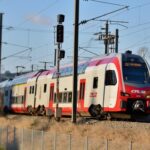
Luxembourg is unique in Europe, as it has removed the need for most tickets entirely. All public transport is free, including trains, buses, and trams across the country, for residents and visitors alike.
For travellers, this means that once you are in Luxembourg, you can move around freely without paying for individual journeys. While the country is small, this still provides a high level of flexibility, particularly for day trips and short stays. The only two things worth paying for are 1st class rail seating, which our full Luxembourg free public transport guide explains how to pay for via the CFL go app or the conductor on board, and any leg of a journey that crosses into a neighbouring country.
The main limitation is scope. This system applies only within Luxembourg, so international journeys still require tickets. However, within its borders, it represents the simplest possible approach to train travel.
From a cost perspective, Luxembourg is the easiest country in Europe, because there is nothing to pay at all for standard 2nd class travel.
Real Examples: How Much You Can Actually Save
Understanding the theory is useful, but the real value comes from seeing how these tickets work in practice. When used correctly, the savings can be significant, especially compared to standard point-to-point fares.
In Austria, a group using the Einfach-Raus-Ticket can travel across a region for a full day for a fixed price. Split between four or five people, this often works out at under €10 per person, even if multiple journeys are made. The equivalent set of individual tickets could easily cost several times that amount.
In Germany, the Bayern Ticket allows unlimited regional travel within Bavaria. Travellers moving between cities such as Munich, Salzburg, and smaller towns along the route can make multiple stops without increasing their cost. Compared to buying separate tickets, the savings build quickly, particularly for groups.
In Switzerland, the difference is even more striking when using the Swiss Half Fare Card. A journey that might normally cost a high price is immediately reduced by 50 percent, and this applies across trains, boats, and mountain railways. Over several days of travel, the total savings can be substantial, especially in a country where transport costs are otherwise high.
In the United Kingdom, travellers using a BritRail Pass can avoid the high cost of last-minute tickets on long-distance routes. Journeys between cities such as London, Manchester, and Edinburgh can become far more affordable when covered by a pass, particularly if multiple trips are made.
What these examples show is that the biggest savings do not come from chasing individual deals. They come from choosing the right ticket type at the start. Once you match your travel pattern to the right system, the cost of train travel in Europe drops dramatically.
When Rail Passes Are NOT the Cheapest Option
While rail passes and special tickets can offer excellent value, they are not always the cheapest way to travel. Understanding when not to use them is just as important as knowing when they work.
If you are travelling only once or twice, especially over short distances, buying individual tickets is often the better option. In countries with dynamic pricing, such as France, Spain, and Italy, booking early can secure very low fares, sometimes significantly cheaper than using a pass. On these routes, passes can end up costing more, particularly if you also need to pay additional reservation fees.
Low-cost train operators can also undercut traditional pricing structures. Services like OUIGO in France or low-cost high speed operators in Spain offer tickets at prices that passes cannot match, especially if you are flexible with your travel times. In these cases, the simplicity of a pass does not translate into better value.
Even with regional tickets, the balance depends on how much you travel. If you are only making one or two journeys in a day, a regional day ticket may not justify its cost. These tickets deliver their best value when you are making multiple trips or travelling as part of a group.
The key is to match the ticket to your travel pattern. Rail passes are powerful tools, but they are not universal solutions. The cheapest option is always the one that fits how you actually plan to travel.

How to Choose the Right Rail Pass for Your Trip
Choosing the right ticket is where most of the savings are won or lost. With so many different options across Europe, it is easy to default to what feels simplest, but the cheapest choice depends entirely on how you plan to travel.
The first thing to consider is how often you are travelling. If you are moving between cities every day, unlimited travel passes such as the BritRail Pass or the Swiss Travel Pass can quickly become good value. They remove the need to book individual tickets and allow you to change plans without increasing your costs. On the other hand, if you are only travelling a few times during your trip, these passes can be excessive, and cheaper options are usually available.
Next, think about how flexible your itinerary is. If you already know your routes, multi-journey passes like the Spain Rail Pass or the Trenitalia Pass can offer good value while keeping some flexibility. If your plans are more open, regional tickets or unlimited passes give you the freedom to adapt without worrying about rising prices.
Group size also makes a significant difference. Many of the best value tickets in Europe, especially in Germany and Austria, are designed around group travel. Tickets like the Einfach-Raus-Ticket or Länder tickets become dramatically cheaper per person when shared, making them one of the most effective ways to reduce costs.
Finally, consider whether you are travelling on high speed or regional trains. High speed routes are faster but usually more expensive, and they often require reservations. Regional trains are slower but are covered by many of the cheapest ticket types, including day passes and group tickets. Choosing between speed and cost is one of the most important decisions you will make.
There is no single best option. The right rail pass depends on your travel frequency, flexibility, group size, and choice of routes. When these factors align, the savings can be substantial.
Best Apps for Finding Cheap Train Tickets
Even with the right ticket strategy, having the right tools makes a difference. Train travel in Europe is spread across multiple operators, and no single platform covers everything perfectly. Using a combination of apps ensures that you can compare options and find the best value.
For booking and comparing routes, platforms like Trainline, Omio, and Rail Europe make it easy to search across multiple countries. These are particularly useful for checking standard fares and understanding how prices change across different times and routes.
For more complex journeys, especially those involving buses, ferries, or multiple transport types, apps like 12Go and Trip.com can provide additional options. These are useful when travelling across regions where rail networks are less integrated.
It is also worth remembering that some of the best value tickets, such as regional day passes or group tickets, are not always highlighted on major platforms. In these cases, checking the official operator’s website can reveal options that are otherwise easy to miss.
Using the right apps alongside the right ticket strategy gives you the best chance of consistently finding cheaper train travel across Europe.

Rupert’s Handy Travel Tips
Hunting down Europe’s hidden rail passes takes a bit of homework, so here’s what actually moves the needle.
- Check the operator’s own site before a booking platform: regional day tickets and group passes are frequently missing from Trainline, Omio and similar aggregators, even though they’re the cheapest option on offer.
- Work out your group size before you buy: many of the best hidden fares, like Germany’s Bayern-Ticket or the Quer-durchs-Land-Ticket, are priced to reward two or more people travelling together, not solo trips.
- Don’t assume a national pass beats regional day tickets: for a single region or a short stay, a country’s own regional day ticket usually undercuts a multi-country rail pass by some margin.
- Book long-distance fares early, regional tickets on the day: advance discounted fares on fast trains reward planning ahead, while regional day tickets are the same price whether bought a month or a minute before boarding.
- Recheck prices every year: tickets like the Deutschlandticket and Belgium’s new distance-based fares have changed significantly in the last two years, so a price you remember from an old trip may no longer be current.
Want to meet the reindeer behind our travel tips? Find out more in our page Who is Rupert?.




Frequently Asked Questions About Cheap Train Tickets in Europe
Are Eurail and Interrail passes worth it?
They can be, particularly for longer trips with frequent travel across multiple countries. However, for shorter itineraries or trips focused on one region, local tickets and national passes are often cheaper.
What is the cheapest way to travel by train in Europe?
There is no single answer, but the lowest costs usually come from regional day tickets, group travel deals, or discount rail cards used correctly.
Are regional trains always cheaper than high speed trains?
Yes, in most cases. Regional trains are slower but significantly cheaper, and they are often covered by unlimited day tickets and group passes.
Do I need to book train tickets in advance?
In countries with dynamic pricing, such as France, Spain, and Italy, booking early can reduce costs significantly. In Central Europe, where regional tickets are common, advance booking is often less important.
Can tourists use these rail passes?
Most of them, yes, including the BritRail Pass, Swiss Half Fare Card, and regional day tickets in countries such as Germany and Austria. A few are more restrictive: Portugal’s Green Rail Pass is residents-only, while the Portugal Rail Pass is reserved for non-residents. It is always worth checking residency rules before assuming a pass is open to you.
Further Reading & Related Guides
If you are planning a wider European trip, it helps to combine these ticket strategies with the right tools and routes. For longer journeys across multiple countries, our interrail pass guide explains when a pass can still offer good value and how to use it effectively. Our six dedicated country guides for Germany, Spain, Portugal, Belgium, Czech Republic and Luxembourg go into far more depth on each country’s specific tickets, non-resident eligibility, and how to actually buy them.
To make booking easier, our train booking apps guide compares the best platforms for finding tickets across Europe, helping you avoid overpaying and spot better options quickly. Staying connected is just as important when planning routes and checking tickets on the move, so our eSIM apps guide shows you how to stay online without expensive roaming charges.
By combining the right ticket types, the right booking tools, and a clear travel plan, you can consistently reduce the cost of train travel across Europe while keeping your journey flexible and efficient.