Reviewed by our editorial team Published
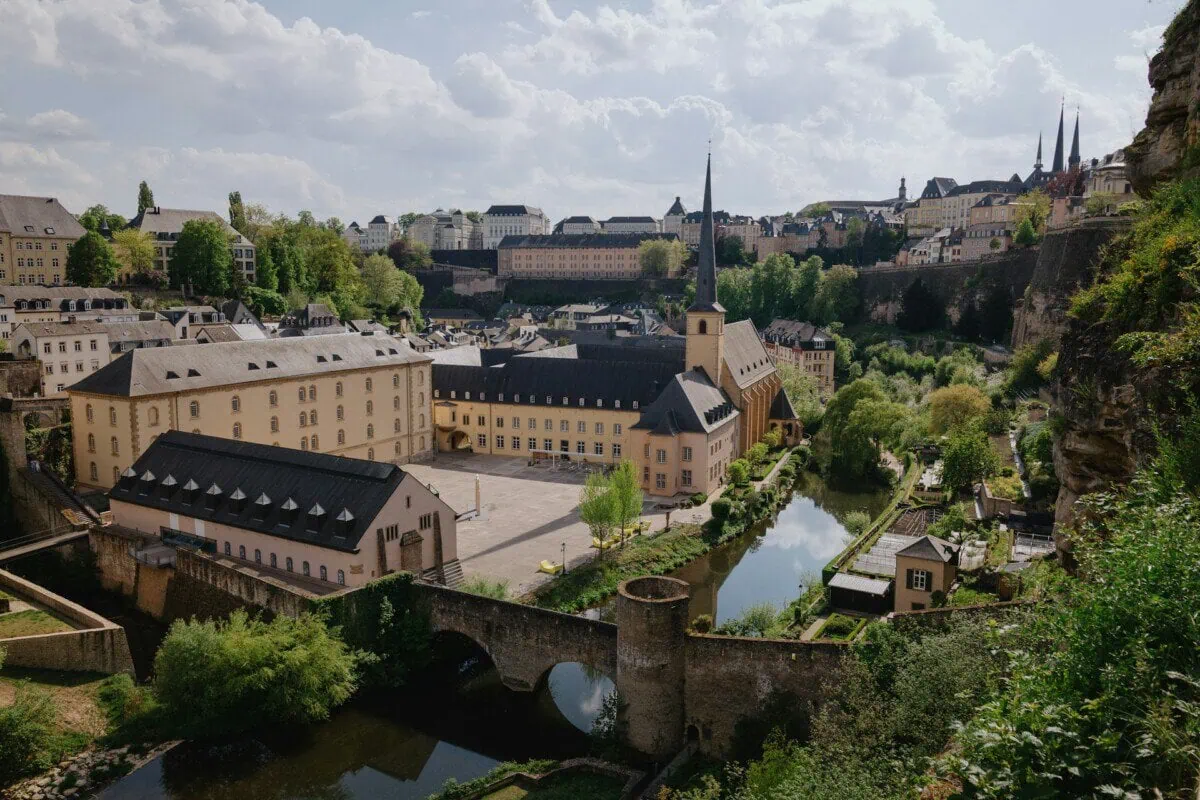
Luxembourg City is the compact, fortified capital of the Grand Duchy, built across a dramatic gorge where the Alzette and Pétrusse rivers cut deep valleys through sandstone rock. Its Old Town and fortifications earned UNESCO World Heritage status in 1994, and the whole historic core can be crossed on foot in under half an hour.
What makes the city unusual is its layers. Cobbled squares and a Gothic cathedral sit on the upper plateau, while the Grund and Pfaffenthal, two low-lying riverside districts, feel like separate villages a lift ride below.
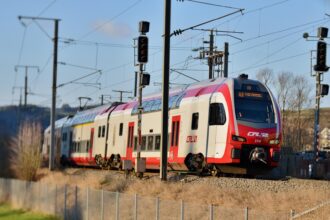
Getting around costs nothing. Luxembourg abolished fares on trains, trams and buses nationwide in 2020, and the free network (see our guide to Luxembourg’s free public transport) links every stop in this guide, plus the free Pfaffenthal lift that saves the steepest climbs.
This guide covers more than a dozen individually worth-it stops, from the underground Casemates du Bock and the clifftop Chemin de la Corniche to art museums, a Renaissance-era palace and the wooded Grund. Most visitors comfortably cover the highlights in two full days, though a single focused day works if time is tight.
Prices below are approximate for 2026, given in euros first since Luxembourg uses the single currency, with rough sterling and dollar equivalents for context. Book popular slots like the Grand Ducal Palace summer tours well ahead, since they sell out quickly each year.
| Attraction | What It Is | Approx. Time Needed | Cost |
|---|---|---|---|
| Casemates du Bock | Underground fortress tunnels, UNESCO site | 45-60 mins | €11 (£9/$12) |
| Chemin de la Corniche | Clifftop walkway over the Grund | 20-30 mins | Free |
| Notre-Dame Cathedral | Gothic-Baroque cathedral and royal crypt | 20-30 mins | Free |
| Grand Ducal Palace | Official royal residence | 75 mins (summer tour only) | Tour price varies |
| Place Guillaume II | Main square, market days, town hall | 15-20 mins | Free |
| Place d’Armes | Café square with bandstand concerts | 20-30 mins | Free |
| The Grund | Riverside lower-town district | 45-60 mins | Free |
| Adolphe Bridge | Landmark stone arch bridge | 10-15 mins | Free |
| Pfaffenthal Panoramic Elevator | Free glass lift with valley views | 10-15 mins | Free |
| Bock Promenade | Rampart-top walk above the Alzette | 20-30 mins | Free |
| MUDAM | Museum of Modern Art in Kirchberg | 90 mins | €10 (£9/$11) |
| National Museum of Art and History (MNAHA) | Archaeology, fine art and history museum | 90 mins | €7 (£6/$8) |
| Lëtzebuerg City Museum | City history museum built into the ramparts | 60 mins | €5 (£4/$5) |
| Philharmonie Luxembourg | Concert hall with striking pillared facade | 15 mins (exterior) or concert length | Free to view, concerts extra |
| Neumünster Abbey | Former abbey turned cultural centre | 45-60 mins | Free (exhibitions vary) |
| City Fortifications and Old Town walk | UNESCO-listed ramparts and towers | 60-90 mins | Free |
Casemates du Bock
Carved directly into the sandstone cliff below the old fortress, the Casemates du Bock are a network of tunnels and gun galleries that once sheltered thousands of soldiers and their equipment. Construction began under Spanish rule in the sixteenth century and continued through later Austrian and French occupation.
Walking the passages today means stone steps, low archways and openings that frame the Alzette valley far below. It stays cool underground even in high summer, so bring a light layer and expect uneven floors in places.
The site anchors Luxembourg’s UNESCO World Heritage listing, awarded in 1994 for the fortifications as a whole. Self-guided entry for the 2026 season costs around €11 (£9/$12) for adults and €6 (£5/$7) for children aged 4 to 12, with under-4s free, and a roughly hour-long guided version closer to €20 (£17/$22) for visitors who want the full military history.
The casemates are open year-round, seven days a week, generally from 9:45am to 5pm with last admission at that time, and entry runs in timed slots roughly every 15 minutes. The site closes only on 25 December and 1 January, though it’s still worth checking current dates before building a visit around them. Wear flat, grippy shoes, since the stone underfoot gets slippery after rain.
Give the visit a clear hour, more if you stop often at the viewpoints. It pairs naturally with the Bock Promenade above, since both sit on the same rocky outcrop at the eastern edge of the Old Town.
Bock Promenade
Above the casemates, the Bock Promenade traces the top of the rock where Luxembourg’s original tenth-century castle once stood. It’s a short, level walk with some of the most photographed views in the city, looking straight down onto the rooftops of the Rham Plateau and the river below.
Information panels along the path explain what remains of the medieval fortress, though little survives above ground beyond foundations and a few stone fragments. Most of what visitors see is the natural drama of the site rather than reconstructed buildings.
The promenade is free, unstaffed and open around the clock, which makes it an easy stop early or late in the day when the light on the valley is at its best. Sunset here draws a small but steady crowd of photographers and locals.
It connects directly to the casemates entrance and to Rue Sigefroi, so it’s easy to fold into the same short loop. Allow around twenty minutes if you’re just walking through, longer if you linger over the views.
Because it sits at the edge of the plateau with a real drop below, keep an eye on children here. The railings are solid but the path can feel narrow when a tour group passes through.
Best if you want daily housekeeping and a front desk. Filter by area first, then by price.
Check availabilityBest for families, or any stay past about four nights. A kitchen and a washing machine start paying for themselves.
Browse rentalsBest for double-checking. Runs the same Luxembourg search across several booking sites so you are not leaving money behind.
Compare pricesChemin de la Corniche
Often nicknamed the most beautiful balcony in Europe, the Chemin de la Corniche runs along the old ramparts on the opposite side of the valley from the Bock, overlooking the Grund and the curling Alzette river. It’s a pedestrian-only cobbled lane, easy walking with almost no incline.
The route passes the Chapel of St Quirin, cut into the rock and dating back centuries, plus several viewpoints where the medieval towers and church spires line up almost too neatly for a photograph. It’s one of the few spots where the whole lower town reads as a single picture.
It links the Bock area to Place de la Constitution and the Pétrusse valley, so it works well as a connecting walk rather than a single destination. Budget twenty to thirty minutes for this connecting walk, more if you stop for photos at every bend.
The corniche is free, always open and unlit at night in places, so an evening walk is atmospheric but better suited to confident walkers than anyone unsteady on cobbles. Benches along the route make it a natural rest stop between sights.
Because it’s largely uncovered, check the forecast. On a clear day the light bouncing off the pale stone buildings in the Grund below is genuinely one of the best free views in the country.
Notre-Dame Cathedral
Luxembourg’s only cathedral was built between 1613 and 1621 as a Jesuit college church, and its blend of late Gothic structure with Renaissance and early Baroque decoration is unusual for a building of its size. The west portal carvings survived largely intact and reward a slow look before heading inside.
Inside, look for the alabaster choir screens, the nineteenth and twentieth-century stained glass, and the bronze entrance gates by sculptor Auguste Trémont. The crypt holds the tombs of members of the Grand Ducal family, along with the medieval king John the Blind.
The cathedral is open daily, generally from around 8am to 6pm with slightly later closing on Sundays, and stepping inside costs nothing. An audio guide is available for visitors who want the fuller history rather than a quick look around.
It sits right in the historic centre, a couple of minutes from Place Guillaume II, so it’s easy to combine with a wander through the surrounding streets. Mass times can restrict casual visiting, so check before arriving on a Sunday morning.
Dress modestly, as with most working cathedrals, and keep voices low since services and private prayer continue throughout the day. Fifteen to twenty minutes is enough for most visitors, longer for anyone interested in the stained glass in detail.
Grand Ducal Palace
The official residence of Luxembourg’s Grand Duke sits behind a Renaissance facade dating to the 1570s, right in the middle of the Old Town on Rue du Marché-aux-Herbes. For most of the year it’s viewed from outside only, guarded by soldiers whose changing of the guard happens on select dates through summer.
For a short window each summer, usually mid-July to the end of August, the palace opens for guided tours lasting around seventy-five minutes. Groups are capped small, visitors see rooms including the Grand Duke’s office and the ornate Salon des Rois, and photography inside isn’t permitted.
These tours are genuinely popular and tend to sell out well before the season starts, so anyone set on going inside should book through the Luxembourg City Tourist Office as early as possible. Outside that window, the exterior alone is still worth the short detour.
The building’s ornate stone facade, with its intricate carving above the ground floor windows, stands out sharply from the plainer government buildings next door. It’s one of the few genuinely photogenic palace facades in a capital this size.
Pair a look at the palace with Place Guillaume II and the cathedral, all within a five-minute walk of each other. Ten minutes is enough for the exterior alone; allow the full tour length if you’ve booked ahead.
Place Guillaume II
Known locally as the Knuedler, this is the city’s main square and sits in front of the neoclassical town hall, its steps flanked by two bronze lions. The square takes its name from a statue of Grand Duke William II, mounted on horseback at its centre.
Twice a week the square fills with stalls for a produce and flower market, a genuine local market rather than a tourist-facing one, running on Wednesday and Saturday mornings. It’s one of the better places to see everyday Luxembourgish life rather than just sightseeing crowds.
Outside market days, the square is simply a pleasant, open space ringed by cafés with outdoor seating, good for a coffee break between sights. It’s flat, fully pedestrianised, and shaded by trees along one edge.
It sits within easy reach of the cathedral, the palace and Place d’Armes, making it a natural hub for orienting yourself in the Old Town. Public toilets and tourist information are both nearby, useful details on a first visit.
Free to visit at any time, the square is worth passing through more than once during a stay, since its character changes completely between a quiet weekday afternoon and a busy market morning.
The square also works as a natural meeting point for locals arranging lunch nearby, with the Cercle Cité cultural events space sitting on one side. It occasionally hosts pop-up exhibitions and public gatherings outside the regular market schedule.
Place d’Armes
A short walk from Place Guillaume II, Place d’Armes is the city’s social square, lined with plane trees and ringed by restaurant and café terraces. At its centre stands a bandstand that hosts free concerts through spring and summer, from brass bands to jazz.
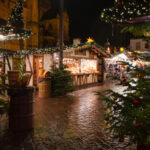
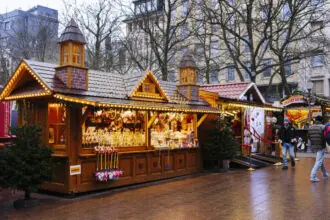
It’s a favourite spot for people-watching, and in December it becomes one of the settings for the city’s Christmas market stalls, adding lights and mulled wine to the same open space. The rest of the year it’s simply the city’s living room.
The square is entirely free to sit in, though a coffee at one of the terrace cafés naturally isn’t, and prices here run a little higher than side-street alternatives given the location. It’s still a reasonable spot to rest mid-walk beside the terrace cafés.
Come evening, the terraces fill quickly on warm weekends, and it’s one of the liveliest spots in the city after dark without ever feeling rowdy. Street musicians often perform around the edges of the square through the warmer months.
Several of the city’s museums and the tourist information office sit just off the square, making it a sensible starting point for a first morning. It’s also where many guided walking tours of the Old Town begin.
Worth Booking Ahead in the Old Town
Most of Luxembourg City’s Old Town sights are walk-up attractions with no need to plan ahead, but a handful genuinely benefit from booking early. The Grand Ducal Palace summer tours are the clearest example, running for only a few weeks each July and August, capped at small group sizes, and regularly selling out before the season even starts, sometimes within days of tickets going on sale through the tourist office.
Guided tours of the Casemates du Bock are a similar case, especially in peak summer when self-guided visitors can queue longer at the entrance than a scheduled tour group moving through on its own timed slot. Securing a place in advance, whether for the palace interior or a guided casemates walk, avoids arriving to find the day’s spaces already taken by earlier visitors who planned further ahead, which remains a common disappointment for travellers arriving without a fixed itinerary or a booked slot in hand.
Best if you can move a day either way. Shows how the fare to Luxembourg changes across the month.
Compare flightsBest if you want maps and messaging working the moment you switch your phone on.
See eSIM plansBest after a long flight or a late landing. Price agreed before you travel, and no taxi queue.
Check transfersThe Grund
Down in the Alzette valley, the Grund feels like a different town entirely: narrow lanes, pastel houses and old mill buildings sit right along the riverbank, well below the fortress walls above. It was historically a working-class district, home to mills and tanneries that used the river directly.
Today it’s one of the city’s most atmospheric places for an evening out, with bars and restaurants occupying converted industrial buildings along Rue Saint-Ulric and the riverside path. By day it’s quieter, better suited to a slow wander and photographs of the fortress walls towering overhead.
Getting down is easy thanks to the free Pfaffenthal lift and several stepped lanes and a funicular-style walkway from the upper town, so there’s no need to double back up the same route. Wear comfortable shoes regardless, since the cobbles are uneven in places.
Neumünster Abbey anchors one end of the district, and the riverside path continues past it toward the Pfaffenthal district and the panoramic lift. Give the Grund at least an hour to feel like more than a photo stop.
There’s no admission charge to explore the district itself, and it’s open and walkable at any hour, though it’s naturally quieter and less lit late at night than the plateau above.
Adolphe Bridge
Nicknamed the New Bridge by locals despite being over a century old, the Adolphe Bridge opened in 1903 and was, at the time, the largest stone arch bridge in the world. It spans the Pétrusse valley and links the historic centre to the newer Gare and boulevard districts.
A major renovation completed in the late 2010s reinforced the structure and added a pedestrian and cycle walkway suspended beneath the original stone arch, alongside the traffic deck above. It’s a genuinely rare way to see a historic bridge from underneath rather than just crossing it.
The lower walkway gives sweeping views down the Pétrusse valley toward the Adolphe monument and the green Pétrusse park below, and it’s free and open to anyone on foot or bike. Crossing takes only a few minutes, but the sweeping views are worth lingering for.
It’s especially striking lit up after dark, when the arches are illuminated and reflected faintly in the valley below. Photographers tend to gather at either end around sunset for exactly that reason.
The bridge sits directly between the main train station and the Old Town, so most visitors cross it at least once without setting out to see it specifically. Give it a few extra minutes near the main train station to actually stop and look rather than just pass through.
The Pétrusse Express Road Train
For anyone finding the Old Town’s hills hard going, Luxembourg City runs a genuine road train option, the Pétrusse Express, that loops through the historic centre and down into the Pétrusse valley with a recorded audio guide included in the ticket. It is a low-effort way to cover ground that would otherwise mean a lot of steps up and down between the plateau and the valley floor below it, particularly useful on a hot afternoon or with tired children in tow.
The route takes in views of the old fortifications, the Adolphe Bridge and the Old Town’s church spires without requiring any walking at all, which makes it a genuine alternative for visitors with mobility concerns, families travelling with young children, or anyone simply short on time in the city. It runs seasonally rather than year-round, so it is worth checking current departure times and the boarding point near Place de la Constitution before building a visit around it.
Pfaffenthal Panoramic Elevator
This glass lift climbs 71 metres between the Pfaffenthal district in the valley and the Kirchberg plateau above, and it is entirely free to use. It runs early, from around 5:45am to 1am daily, which makes it genuinely useful rather than just a novelty.
The ride itself takes under a minute, but the views over the Alzette valley, the old fortifications and the modern Kirchberg skyline in the other direction are worth the stop on their own. It’s fully accessible, with room for pushchairs and bikes alongside pedestrians.
At the top, a footbridge connects directly to the Pont Rouge and onward into Kirchberg, home to MUDAM, the Philharmonie and much of Luxembourg’s EU institutional quarter. At the bottom, it drops visitors right into the Grund and Pfaffenthal, level with the river.
It closes briefly for maintenance on the first Monday of each month, so it’s worth checking before relying on it as the only way up or down on that particular day. Otherwise it runs reliably and often has short queues even at busy times.
Combining the lift with a walk through the Grund below and a look at the Kirchberg towers above makes for one of the best free half-days in the city, tying several other stops in this guide together neatly.
MUDAM Museum of Modern Art
Designed by architect I.M. Pei and built on the grounds of a former fort in Kirchberg, MUDAM is Luxembourg’s leading contemporary art museum, with a collection spanning painting, sculpture, design and video work. The building itself, all glass and pale stone, is arguably as striking as anything inside it.
Exhibitions rotate regularly, mixing major international names with Luxembourgish and regional artists, so no two visits are quite the same. There’s also a sculpture garden and a café that’s a pleasant stop even for visitors who aren’t especially drawn to modern art.
Standard adult admission runs around €10 (£9/$11), with reduced rates for younger adults, seniors and groups, and free entry for anyone under 21 or holding a valid student card. Wednesday evenings from 6pm to 9pm are free for everyone, a good option for budget-conscious visitors.
The museum is closed on Mondays and keeps extended hours on Wednesdays until 9pm, otherwise closing at 6pm. Allow at least ninety minutes to see the main galleries properly, longer during extended hours on a Wednesday evening.
It’s a short walk from the Philharmonie and the top of the Pfaffenthal lift, so it fits naturally into a Kirchberg-focused half-day alongside the concert hall and the panoramic views nearby.
Kirchberg on a Timed Ticket
Kirchberg’s museums and galleries get busy at fairly predictable times, and a timed or skip-the-queue ticket can save a genuine wait at the door. MUDAM‘s free Wednesday evenings are a good example, when reduced admission from 6pm to 9pm draws a much bigger crowd than a regular weekday afternoon and queues can form right at the entrance before opening, sometimes stretching well past the glass foyer and out onto the plaza.
Booking ahead here is less about scarcity and more about convenience, since Kirchberg‘s sights rarely sell out completely but can still mean standing in line rather than walking straight inside. It is worth doing for anyone visiting during a festival weekend, a free evening slot or a major touring exhibition, when the plateau’s usually calm pace fills up faster than the rest of the city, and a pre-booked ticket turns a slow queue into a quick scan at the door.
Best if you would rather spend the money on Luxembourg than on the room. Compare hostels by location and rating.
Search hostelsBest for anyone flying more than once or twice a year. Handles the compensation claim so you are not chasing the airline.
See AirHelp+Best for a day with a bag and nowhere to put it. Find a storage point near where you already are.
View storageNational Museum of Art and History
Known locally as MNAHA, this is Luxembourg’s principal history museum, covering everything from Roman-era archaeology found within the country to fine art and decorative pieces from later centuries. It sits at Marché-aux-Poissons, right at the edge of the Bock promontory.
The collection is genuinely broad, moving from prehistoric finds through Roman mosaics to medieval and Renaissance art, with a strong section on Luxembourg’s more recent industrial and social history. It rewards slow browsing rather than a rushed walk-through.
Standard entry costs around €7 (£6/$8), with a combined ticket covering the nearby Dräi Eechelen fortress museum for about €12 (£10/$13). Visitors under 26, Luxembourg Card holders and anyone visiting in the last hour before closing get in free.
Opening hours run Tuesday to Sunday, with a late night until 8pm on Thursdays and closure on Mondays. Thursday evenings from 5:30pm also carry free admission for everyone, not just concession categories.
Ninety minutes is a realistic minimum for a proper visit, and it pairs naturally with the cathedral and Bock Promenade given how close together they all sit in the Old Town.
A permanent collection covering fine art from the medieval period through to the twentieth century sits alongside the archaeology floors, so it’s worth allowing extra time if paintings and decorative arts interest you as much as ancient finds. Labelling throughout is in French, German and English.
A Hop-On Hop-Off Option for Kirchberg and Beyond
Luxembourg City runs hop-on hop-off style bus tours with recorded audio guides, covering ground that is a genuine stretch on foot from the Old Town, including the EU institutions and the wider Kirchberg plateau beyond the Pfaffenthal lift. A loop like this suits visitors short on time, travelling with limited mobility, or simply keen to see the outlying sights without committing to a long walk each way across the city in a single visit or a single afternoon.
It works best as a supplement to walking rather than a replacement for it, since the compact centre itself, the casemates, the corniche and the Grund, genuinely rewards being covered on foot at a slower pace than a bus allows. Treat the bus as the practical way to reach Kirchberg’s EU quarter and back, then spend the time saved exploring the historic core in more depth on your own, at whatever pace suits.
Lëtzebuerg City Museum
Built into a row of historic houses on Rue du Saint-Esprit, the Lëtzebuerg City Museum traces the story of Luxembourg City itself, from its founding around a tenth-century castle through to the modern capital it became. A large-scale model of the fortified city is one of its best-known exhibits.
The permanent exhibition uses the building’s own architecture well, with the museum spanning several connected historic properties and split across multiple floors, including a section that ties directly into the surrounding ramparts. Temporary exhibitions on specific eras or themes run alongside it.
Adult admission costs around €5 (£4/$5), with visitors under 21 and students under 26 getting in free, and Thursday evenings between 6pm and 8pm free for all visitors. It’s one of the more affordable museum stops on this list.
The museum opens daily except for a handful of public holidays, generally from 10am to 6pm, making it an easy fit around other Old Town sightseeing. An hour is usually enough to see the permanent collection at a comfortable pace.
It’s a useful stop early in a trip, since the city model and timeline make the rest of the sights in this guide easier to place in context once you’ve seen how the fortress grew.
A small museum shop and café near the entrance make it easy to take a break partway through, especially useful when combining it with the cathedral next door. Special temporary exhibitions often focus on regional archaeological finds or loaned international collections.

Philharmonie Luxembourg
Over on the Kirchberg plateau, the Philharmonie is instantly recognisable from its facade of more than eight hundred slender white columns wrapped around an elliptical foyer. Designed by Christian de Portzamparc, it’s home to the Luxembourg Philharmonic Orchestra and draws well over a hundred thousand visitors a year.
Inside, the building holds three separate performance spaces, from the twelve-hundred-plus-seat Grand Auditorium down to a smaller chamber music hall and a flexible studio for experimental programming. The acoustics are consistently praised, and the building itself is a destination for architecture fans alone.
Seeing a concert is naturally the best way to experience the hall properly, and prices vary widely depending on the programme, from budget-friendly matinees to premium classical evenings. Even without a ticket, walking the pillared exterior and foyer areas is free and worth the short detour.
The programme runs across genres, not just classical, with jazz, world music and family concerts appearing regularly through the season. Checking listings ahead of a trip is worth it if live music is part of the appeal.
It sits a short walk from MUDAM and the top of the Pfaffenthal lift, making Kirchberg an easy self-contained loop for an afternoon away from the historic centre.
Neumünster Abbey
Sitting at the foot of the Bock cliffs in the Grund, Neumünster Abbey began as a Benedictine monastery in the seventeenth century before serving as a prison and barracks over the centuries that followed. It now operates as a cultural centre, known locally as neimënster.
The complex hosts concerts, exhibitions and festivals throughout the year, with its inner courtyards and cloister-like spaces giving it a very different atmosphere from a typical modern venue. A weekend craft and design market is a regular fixture in the courtyard.
Access to the grounds and courtyards is generally free, while individual exhibitions, concerts or festival tickets carry their own separate prices depending on the event. Checking the current programme before visiting is worth it, since it changes frequently through the year.
Its riverside setting makes it a natural point to break up a walk through the Grund, with cafés nearby and the fortress walls rising dramatically overhead behind it. Forty-five minutes is enough for a casual look around the courtyards alone, longer if a market or exhibition is running.
It’s a five-minute walk from the Pfaffenthal lift and sits directly on the riverside path, so it slots easily into the same outing as the Grund and the panoramic elevator beyond it.
City Fortifications and the Old Town Walls
Luxembourg City earned the nickname the Gibraltar of the North for a fortress system built up over four centuries by Burgundian, Spanish, French, Austrian and Prussian engineers in turn, each adding their own layer of defences. Most of it was dismantled after an 1867 treaty, but substantial sections survive.
Beyond the Casemates du Bock, walkers can follow surviving stretches of wall and towers including the Three Acorns tower and the Wenzel wall circuit, a signposted route that ties several fortification remnants together. It’s a good way to see the bigger picture behind the individual sights.
This wider fortification network, together with the Old Town it protected, is what earned Luxembourg its UNESCO World Heritage listing in 1994, recognising the site as an exceptional example of European military architecture across several centuries. It’s a rare case of history layered rather than replaced.
Walking a full signposted circuit takes around ninety minutes at a relaxed pace, though shorter sections can be picked up individually between other stops in this guide. Information panels along the way explain each era of construction in reasonable detail.
The whole network is free to explore, unstaffed and open at all hours, which makes it one of the most flexible ways to spend an extra hour if the weather is good and the legs are willing.

How to Spend One Day in Luxembourg City
Start at 9am at the Casemates du Bock, when the tunnels are coolest and quietest, and give the underground galleries a full hour to explore the gun galleries and stone stairways properly before the day’s first tour groups arrive. From there, step straight onto the Bock Promenade above, where the rooftops of the Rham Plateau spread out below and the morning light is still soft enough for good photographs of the valley.
By mid-morning, cross toward the Chemin de la Corniche, the clifftop walkway that locals call the most beautiful balcony in Europe. Walking its cobbled length takes only twenty to thirty minutes, but the views back toward the Bock are worth lingering over, especially from a bench near the Chapel of St Quirin, where the whole lower town lines up almost too neatly for a single photograph.
By early afternoon, head down into The Grund itself, following the stepped lanes that drop from the corniche toward the riverbank below. An hour among the district’s pastel houses and old mill buildings gives a proper sense of its working-class history, and there is time enough for a coffee by the water before the fortress walls overhead start throwing long shadows across it.
As evening falls, walk the riverside path past Neumünster Abbey to the Pfaffenthal Panoramic Elevator and ride the free glass lift up to Kirchberg, a climb that takes under a minute but delivers one of the best free views in the city. Ride back down for dinner among the Grund’s bars along Rue Saint-Ulric, or stay up top a little longer for the Kirchberg skyline lit against the dusk.
Best Viewpoints in Luxembourg City
Luxembourg City has four viewpoints worth comparing directly, and each does something different. The Chemin de la Corniche has the best claim to the best sunset spot, since the pale stone of the Grund catches the last light and the whole lower town lines up as a single photograph, and it gets busiest in the two hours before dusk.
The Bock Promenade offers a tighter, more dramatic angle straight down onto the Rham Plateau rooftops, and because it sits right beside the Casemates entrance it draws steady foot traffic rather than a sunset crowd specifically, making it a reliable option any time of day.
For genuine quiet, the lower pedestrian walkway on the Adolphe Bridge is the pick, since most visitors cross on the upper traffic deck without ever noticing the suspended path beneath it, leaving the Pétrusse valley views largely to locals and photographers.
The top of the Pfaffenthal Panoramic Elevator is the easiest to reach of the four, requiring no walking beyond stepping into a free lift, and it swaps the Old Town for a clean view of the modern Kirchberg skyline instead.
All four cost nothing, which is unusual for viewpoints this good, so the real choice comes down to timing and mood rather than budget: sunset for the corniche, quick access for the elevator, quiet for the bridge, and reliable daytime drama for the Bock.

Rupert’s Handy Travel Tips
A few things I picked up trotting around Luxembourg City that aren’t always obvious until you’re there.
- Ride the lift, not the stairs: the free Pfaffenthal Panoramic Elevator saves a genuinely steep climb between the Grund and Kirchberg, and it’s open until 1am.
- Casemates are open year-round: both the Bock and Pétrusse casemates now run daily from 9:45am to 5pm, with entry in timed 15-minute slots, so there’s no seasonal closure to plan around.
- Thursday evenings are free: both MNAHA and the Lëtzebuerg City Museum open free later on Thursday evenings, useful for stretching a tight budget.
- Book the palace tour early: summer Grand Ducal Palace tours run for a few weeks only each year and sell out well before August.
- Wear proper shoes: cobbles, casemate steps and steep lanes down to the Grund are not kind to thin-soled sandals.
- Use the free trams and buses: Luxembourg’s nationwide free public transport makes hopping between Kirchberg and the Old Town easy without a car.
- Markets add colour: if you’re in town on a Wednesday or Saturday morning, the Place Guillaume II market is worth timing a visit around.
Want to meet the reindeer behind our travel tips? Find out more in our page Who is Rupert?.




Frequently Asked Questions
How many days do you need for Luxembourg City?
Two full days cover the highlights comfortably, including the casemates, the Old Town squares, a museum or two and a walk through the Grund. A single day works if you focus tightly on the historic centre alone.
Is Luxembourg City expensive to visit?
Accommodation and dining run higher than many neighbouring capitals, but sightseeing itself is affordable, with several major sights free and public transport costing nothing nationwide.
Is public transport really free in Luxembourg?
Yes, trains, trams and buses across the whole country have been free to use since 2020, making it simple to combine the Old Town with Kirchberg sights like MUDAM without paying for tickets.
Can you visit the Grand Ducal Palace year-round?
The exterior is visible year-round, but guided interior tours only run for a few weeks each summer, typically mid-July through August, and tickets sell out fast.
Is Luxembourg City walkable?
Yes, the historic centre is compact enough to cross on foot in under half an hour, though the valleys below the plateau involve real elevation changes best handled with the free Pfaffenthal lift.
What is the Casemates du Bock and is it worth visiting?
It’s a network of tunnels carved into the fortress rock, central to Luxembourg’s UNESCO listing, and it’s genuinely worth the entry fee for the history and the views alone.
Further Reading
Luxembourg City rewards slow exploration more than a checklist approach, and the layered geography that makes it confusing on a map is exactly what makes it memorable on foot. For an official overview of current opening times, events and seasonal exhibitions, the Luxembourg City Tourist Office website is worth bookmarking before a trip, since hours change seasonally across several of the sights covered here.
Getting the most from a short trip usually comes down to sequencing rather than cramming in extra sights. Pairing the Casemates du Bock and Bock Promenade with the Lëtzebuerg City Museum early in a visit gives useful context for everything that follows, while saving Kirchberg’s MUDAM and Philharmonie for an easy afternoon loop using the free Pfaffenthal lift keeps the legs fresh for the evening.
Because the whole network of trains, trams and buses is free nationwide, it’s worth reading our full guide to Luxembourg’s free public transport before arriving, particularly if a day trip to somewhere like Vianden or the Moselle valley is on the cards alongside the capital itself. Luxembourg City works equally well as a standalone weekend or as a compact base for exploring further afield.
If you’re flying in, our guide to Luxembourg Airport Transfers covers the free bus and tram options from Findel into the Old Town in detail. Visiting between late November and early January also brings Luxembourg’s Christmas markets to several of the squares covered above, adding chalets and an ice rink to the same walkable route.
Whichever pace suits, the combination of underground fortress tunnels, clifftop walkways and a genuinely excellent modern art museum within a few square kilometres is unusual for a capital this size. Few European cities pack quite so much vertical contrast into such a short walk between sights.