Reviewed by our editorial team Published
Copenhagen’s Harbour and Denmark’s Ferry Network
Copenhagen sits on the water in a way few European capitals do, with the Øresund strait running past its eastern edge and a working port that still shapes daily life in the city. Cargo ships, cruise liners, harbour buses and the occasional overnight ferry all share the same stretch of water, and it is easy to assume that a city this maritime must be bristling with ferry options in every direction.
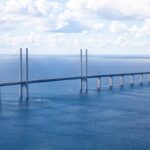
The honest picture is more focused than that. Denmark built the Øresund Bridge specifically to replace the old ferry links to Sweden, and most of the country’s domestic ferry network serves smaller islands that simply are not reachable from central Copenhagen at all. What remains is a shorter but genuinely useful list: one long-standing international mini-cruise route, and a real way to reach the island of Bornholm without flying.
This page covers exactly those routes, verified against current 2026 schedules rather than older guidebook assumptions that no longer hold. The overnight Copenhagen to Oslo crossing remains the headline route and changed hands in late 2024, so even readers who know the old operator’s name will want the update. Bornholm is reachable directly from a port just south of the city, with a second option via Sweden for travellers already crossing that way.
What you will not find here is an invented ferry to Malmö. That crossing closed decades before the bridge opened in 2000, and pretending otherwise would waste a reader’s time at the harbour. Where a genuine alternative exists, such as the rail and road crossing to Sweden, this page points to our dedicated guide rather than repeating it, so what follows focuses squarely on the ferries that actually leave from Copenhagen today.
Ferry Routes from Copenhagen at a Glance
| Route | Operator | Duration | Frequency | Departs From |
|---|---|---|---|---|
| Copenhagen – Oslo | Go Nordic Cruiseline (formerly DFDS) | Approx. 17.5 hours, overnight | Daily | Nordhavn, central Copenhagen |
| Copenhagen area – Bornholm (Rønne) | Bornholmslinjen | Approx. 5.5 hours, overnight | Nightly | Køge, approx. 40km south |
| Bornholm (Rønne) – Ystad, Sweden | Bornholmslinjen | Approx. 1 hour 20 minutes – 2.5 hours | Up to 10 daily in peak season | Ystad, reached via Malmö |
| Copenhagen – Malmö / Sweden | No ferry operates | N/A | N/A | Use the Øresund Bridge train or road crossing instead |
Best if you want daily housekeeping and a front desk. Filter by area first, then by price.
Check availabilityBest for longer stays. Whole apartments and houses, so you are not eating out three times a day.
View rentalsBest if you have already picked a hotel. Checks the big booking sites for the same room and shows who is cheapest.
Check dealsThe Overnight Ferry to Oslo: Copenhagen’s Main International Route
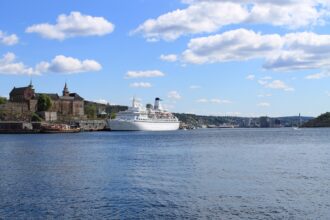
The only genuine international passenger ferry departing Copenhagen today runs overnight to Oslo, and it has a longer pedigree than most travellers realise. The route was operated by DFDS for well over a century before being sold to Swedish shipping company Gotlandsbolaget in late 2024, and it now sails under the rebranded name Go Nordic Cruiseline. The ships, the terminal and the overall experience carried across largely unchanged, so this is a case of new ownership rather than a genuinely new service.
Sailings run daily in both directions, departing Copenhagen at around 16:30 and arriving in Oslo at roughly 10:00 the following morning, a crossing of approximately 17.5 hours. Onboard, the two vessels working the route offer a genuine mix of standard inside cabins and sea-view options, a buffet restaurant alongside an à la carte alternative, a tax-free shop, and nightly entertainment ranging from bingo to live music, much of it included in the fare.
Fares start from around 290 DKK (roughly €39/£34/$42) per person for a basic seat on quieter sailings, with cabins, meal packages and vehicle transport pushing the total higher, especially across summer weekends. This is squarely the same crossing covered from the Norwegian side in our Ferries from Oslo guide, which goes into more depth on the Oslofjord approach and onward rail connections once you land. Current timetables and fares are always worth checking directly on the Go Nordic Cruiseline website before booking.
The Copenhagen terminal sits in the Nordhavn district, a short metro ride from the city centre rather than a remote industrial dock. Many travellers treat the crossing as a genuine mini-cruise in its own right, using the 6.5-hour daytime layover option in Oslo to see the city before sailing back, rather than as pure point-to-point transport.
Reaching Bornholm from Copenhagen: The Køge Night Ferry
The most useful ferry a Copenhagen-based traveller can actually take does not leave from the capital itself, but from Køge, a port town roughly 40km south along the coast. This is the practical way to reach Bornholm, Denmark’s easternmost island, without flying or making a lengthy detour through Sweden, and it is run by Bornholmslinjen, the operator behind every genuine ferry route to the island.
Getting to Køge from central Copenhagen is straightforward: the E-line S-train runs directly from Copenhagen Central roughly every 10–20 minutes, and the journey takes about 30–35 minutes, with the ferry terminal a short walk or shuttle bus ride from Køge station. The ferry itself departs Køge nightly at around 00:30 and arrives in Rønne, Bornholm’s main town, at roughly 06:00, a crossing of about 5.5 hours.
Because this is a genuine overnight sailing, the ship is built around sleeping rather than sightseeing on deck. Berths in shared or private cabins come with beds already made and towels provided, and there is an onboard cafeteria for a late supper or early breakfast, though the emphasis is firmly on arriving rested rather than entertained. Fares start from around 99 DKK (roughly €13/£11/$14) per adult foot passenger for the cheapest tier, with cabin berths adding roughly 350 DKK (€47/£40/$51) upward per person, and vehicles priced separately.
This route runs once nightly rather than several times a day, so it suits travellers building Bornholm into a slower, multi-day Danish itinerary rather than a quick weekend dash. Full timetables and current fares are published on the Bornholmslinjen website, and the route pairs naturally with our Best Day Trips from Copenhagen guide for readers weighing Bornholm against closer options that do not require an overnight sailing.
The Alternative Route to Bornholm via Ystad, Sweden
A second, faster way to reach Bornholm exists, though it involves crossing into Sweden first rather than departing Copenhagen directly. Bornholmslinjen also runs frequent daytime crossings between Ystad, on Sweden’s southern coast, and Rønne, and this route is considerably quicker than the Køge night ferry: around 1 hour 20 minutes on the fast catamaran, or up to 2.5 hours on the conventional car ferry.
Frequency is genuinely strong, with 3–6 sailings a day outside peak season rising to as many as 10 daily in summer, making this the better choice for travellers who want flexibility over an early-morning start. The catch is getting to Ystad in the first place, since it sits roughly an hour beyond Malmö by train or road, meaning the total door-to-door time from Copenhagen often ends up similar to the direct Køge option once the Øresund crossing is added in.
For the Copenhagen-to-Sweden leg of that journey, our Copenhagen to Malmö guide covers the Øresund train and road crossing in full, including current fares and operators, so it is worth reading alongside this section rather than treating the Ystad ferry as a standalone Danish route.
Is There a Ferry from Copenhagen to Malmö or Sweden?
Honestly, no. There is no passenger or vehicle ferry running directly between Copenhagen and Malmö, and there has not been one since the Øresund Bridge opened in 2000 and replaced the old Dragør–Limhamn crossing. Older guidebooks and some travel forums still reference a Copenhagen–Malmö ferry, but that service closed decades ago and has no modern equivalent.
The practical way across today is the Øresundståg train, a genuine through-service that takes 35–40 minutes centre to centre, or driving across the bridge in a similar amount of time plus toll-plaza queuing. Our dedicated Copenhagen to Malmö guide covers both options in depth, including current operators, fares in multiple currencies, and the identity checks Sweden carries out on arrival.
The nearest genuine ferry crossing of the Øresund strait sits around 40km further north, between Helsingør and Helsingborg, and it is a real, frequent service in its own right. It simply is not a practical substitute for reaching Malmö from Copenhagen, since it adds well over an hour to the trip compared with the direct train, so it is worth knowing about rather than relying on.
Copenhagen’s Ferry Terminals and Getting There
Copenhagen’s ferry infrastructure is split across two distinct locations rather than one central terminal, which catches out some first-time visitors expecting a single harbourside departure point. The Oslo ferry uses the Nordhavn terminal on the city’s northern waterfront, reachable via the M4 metro line to Orientkaj or Nordhavn station, both around 15–20 minutes from Copenhagen Central, with a free shuttle bus laid on for foot passengers on sailing days.
The Bornholm ferry departs from an entirely different port at Køge, so travellers heading for the island need to build the S-train journey south into their plans rather than assuming a Copenhagen-based departure. Check-in for both routes typically opens a couple of hours before sailing, and foot passengers without vehicles generally clear boarding faster than those bringing a car.
Booking in advance matters most for the Oslo crossing during summer weekends and the Christmas period, when cabins and vehicle spaces sell out well ahead of the sailing date. The Køge night ferry to Bornholm is somewhat more forgiving outside July and August, though a weekend berth is still worth securing early. Anyone flying into Copenhagen Airport before a ferry departure will find our Copenhagen Airport Transfers guide useful for working out the fastest way into the city first.

Rupert’s Handy Travel Tips
Copenhagen’s ferry options are shorter than you might expect, so knowing exactly which port to head for saves a wasted trip.
- Double-check which terminal you need: the Oslo ferry leaves from Nordhavn, but Bornholm sailings depart from Køge, 40km away.
- Book Oslo cabins early for summer: sea-view rooms and weekend departures sell out well before the sailing date.
- Treat the Køge night ferry as a bed, not a cruise: it’s built for sleeping through the crossing rather than onboard entertainment.
- Don’t go looking for a Malmö ferry: it hasn’t existed since 2000, so the train across the Øresund Bridge is the way to go.
- Compare both Bornholm routes before booking: the Ystad ferry is faster once you’re in Sweden, but the Køge sailing avoids the extra leg entirely.
Want to meet the reindeer behind our travel tips? Find out more in our page Who is Rupert?.



Frequently Asked Questions About Ferries from Copenhagen
What is the main ferry route from Copenhagen?
The main route is the overnight crossing to Oslo, now operated by Go Nordic Cruiseline after DFDS sold the service in 2024. It sails daily and takes around 17.5 hours.
Can you get a ferry from Copenhagen to Bornholm?
Not directly from central Copenhagen, but from the nearby port of Køge, roughly 40km south and reachable by S-train in about 30–35 minutes. Bornholmslinjen runs a nightly overnight ferry from there to Rønne.
Is there a ferry from Copenhagen to Malmö?
No. The old Copenhagen–Malmö ferry closed before the Øresund Bridge opened in 2000 and has not been replaced. The train or road crossing is the only practical option today.
How much does the Copenhagen to Oslo ferry cost?
Basic fares start from around 290 DKK (roughly €39/£34/$42) per person, with cabins, meals and vehicle transport pushing the total considerably higher during summer and holiday periods.
Is the Køge to Bornholm ferry the same as the DFDS Oslo ferry?
No, they are entirely different operators and routes. The Oslo ferry is Go Nordic Cruiseline from Copenhagen’s Nordhavn terminal, while the Bornholm ferry is Bornholmslinjen from Køge.
Do I need to book Copenhagen ferries in advance?
It is not always essential, but cabins and vehicle spaces on the Oslo route sell out during summer weekends and the Christmas period, and Bornholm sailings are also worth booking ahead in July and August.
Best if you can move a day either way. Shows how the fare changes across the month.
Compare flightsBest for anyone whose home plan charges by the megabyte abroad. Pay a fixed price up front.
Check eSIMsBest when public transport has stopped, or when you are travelling with children and bags.
Book a transferFurther Reading & Related Guides
If Copenhagen is one stop on a wider Scandinavian trip, our Ferries from Oslo guide covers the same overnight crossing from the Norwegian side, including onward rail connections once you land, and pairs naturally with our Copenhagen to Malmö guide for the Øresund Bridge crossing this page deliberately avoids duplicating.
Travellers weighing Bornholm against closer options should read our Best Day Trips from Copenhagen guide, while anyone building a longer Scandinavian rail itinerary around these ferry crossings will find our Interrail Denmark Pass Guide useful for working out how the trains connecting to Køge and onward through Denmark fit together.
Before you set off, our Things to Do in Copenhagen guide covers the city itself in full, and our Copenhagen Airport Transfers guide is worth checking if you’re flying into Kastrup ahead of an overnight sailing.