Reviewed by our editorial team Published
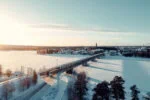
Klaipeda is Lithuania’s third-largest city and its only major seaport, a working harbour town on the Baltic coast where cargo ships and cruise liners share the water with a small passenger ferry that has been crossing the same short strait for generations. It sits at the mouth of the Curonian Lagoon, directly opposite the Curonian Spit, the sliver of pine forest and shifting sand dune that separates the lagoon from the open Baltic Sea and gives Klaipeda a genuinely unusual setting among Lithuanian cities.
The Old Town still shows its roots as the Prussian port of Memel, with timber-framed Fachwerk warehouses standing a short walk from a river promenade lined with sculpture and a historic sailing ship turned restaurant.
This is a smaller, quieter city than Vilnius or Kaunas, and it does not try to compete with either on sheer volume of sights. What it offers instead is a distinctly maritime identity: a genuine working port, a museum built on an actual former fort where dolphins perform in a converted gun battery, and the easiest possible access to a UNESCO-listed landscape of dunes that most visitors to Lithuania never see.
A day or two here comfortably covers the Old Town, the harbour and a crossing to the spit, with Palanga’s beaches and the wider Curonian Spit villages within easy reach for anyone staying longer.
The sections below work through how to actually reach Klaipeda, the short local ferry that is one of the city’s genuine highlights in its own right, and the individual museums, squares and viewpoints that make up a proper visit. Pricing is given in euros with rough sterling and dollar equivalents throughout, and every attraction below has been checked against its own current information rather than assumed from memory, since opening patterns on this stretch of coast are seasonal and change from year to year.
How to Get There
Klaipeda has no major airport of its own, so most visitors arrive overland from Vilnius or fly into the small regional airport just up the coast. The city sits roughly 300km west of the capital, and the practical choice between train, coach and flying into Palanga depends mostly on how much time is available and where the rest of a Lithuania trip is heading next.
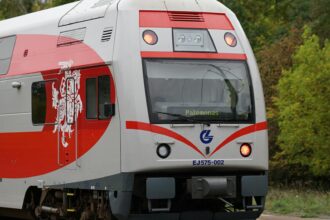
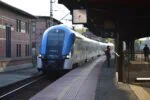
LTG Link, Lithuania’s national rail operator, runs a direct service between Vilnius and Klaipeda several times a day, with up to six departures on the busiest days. The journey covers 376km and takes around 4 hours 10 minutes on the modern air-conditioned trains now used on the route, with second-class fares from roughly €25 (£21/$28) and a pricier first-class option on the faster express services.
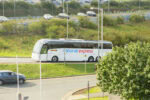
The coach is usually the faster and more frequent option for this particular route. Operators including FlixBus and Toks run services roughly hourly through the day, with a typical journey of around 3 hours 45 minutes and fares that can undercut the train, especially booked ahead. For a traveller without a fixed rail pass to use, checking both modes on the day is worth doing, since coach timings and prices shift with demand.
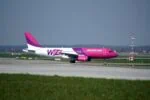
Palanga International Airport lies around 30km north of Klaipeda and is the nearest airport to the city, though it is a small regional field rather than a hub. Scheduled routes currently include airBaltic to Riga and Amsterdam, Ryanair to London Stansted, Scandinavian Airlines to Copenhagen, and seasonal links with Norwegian and Wizz Air to Oslo, alongside charter flights to destinations such as Antalya in summer.
From the airport, regular Kautra buses run into central Klaipeda in around 25 minutes, making it a genuinely practical option for visitors flying in from a handful of European cities rather than routing everything through Vilnius.
Driving is straightforward on Lithuania’s well-maintained A1 motorway from Vilnius, and car hire opens up Palanga and the Curonian Spit villages more easily than public transport does. Whichever route is chosen, it is worth building in Klaipeda’s own compact centre as a base first, since almost everything in this guide sits within walking distance of the Old Town or a short ferry ride across the strait.
Klaipeda Old Town and Its Fachwerk Architecture
Klaipeda’s Old Town is small compared with Vilnius or Riga, a legacy of a city that was heavily rebuilt after the Second World War, but the streets around Didžioji Vandens and the old market square still carry the look of the Prussian port town of Memel. The signature feature is Fachwerk, the exposed timber-frame construction that was especially popular here in the first half of the 19th century and gives this pocket of Lithuania a distinctly German-influenced streetscape found nowhere else in the country.
Many of the surviving Fachwerk buildings were originally merchants’ warehouses, built close to the water so goods could be moved straight from barges into storage. Wandering the cobbled lanes between the old market square and the harbour today turns up cafes and small boutiques tucked into these same timber-framed shells, alongside the restored Friedrich Passageway on Tiltų Street, a covered arcade of restaurants and bars that has operated in its current form since 2006.
The Old Town rewards slow walking rather than a checklist approach, since much of its charm is in the mix of restored facades, quiet courtyards and the occasional gap site where postwar rebuilding never quite matched what stood before. It sits directly between the Dane River promenade and Theatre Square, so it naturally links the other central sights covered below into one easy loop on foot.
Visiting is free and unstructured, with no admission charge for simply walking the streets, and most of the area is fully pedestrianised. Evenings bring a livelier crowd to the passageway and the streets nearest the river, while daytime suits browsing the small shops and taking photographs of the timber facades without the crowds.
Best for two or three nights. The widest choice of rooms, with filters for free cancellation and included breakfast.
View staysBest for groups who want one address and separate bedrooms rather than three hotel rooms.
See holiday homesBest if you have already picked a hotel. Checks the big booking sites for the same room and shows who is cheapest.
Check dealsTheatre Square and the Ännchen von Tharau Fountain
Theatre Square sits at the edge of the Old Town and has served as Klaipeda’s cultural heart since the 19th century, built around the Klaipeda Drama Theatre, whose stage has hosted performances stretching back generations. Richard Wagner himself is recorded as having conducted here in 1837, a detail still repeated proudly by local guides as evidence of the square’s older cultural weight.
The square’s best-known feature is the Ännchen von Tharau fountain and statue, a tribute to the woman celebrated in a well-loved German folk poem by Simon Dach. The poem remains genuinely popular in Germany, Austria and Switzerland today, which makes the statue something of a small pilgrimage stop for German-speaking visitors passing through. The original sculpture was lost during the Second World War and the version standing today is a faithful 1990 reconstruction, put up once Lithuania regained independence.
The square itself is compact and easy to combine with a walk through the surrounding Old Town streets, with benches around the fountain making it a natural pause point rather than a destination that needs a set amount of time. It sits only a few minutes on foot from both the Dane River promenade and the ferry terminal, so it fits naturally into a single loop of the city centre.
There is no charge to visit the square or see the fountain, and it is worth timing a visit for early evening, when the theatre building is lit and the square is at its most atmospheric. Checking the theatre’s own listings ahead of a trip is worth doing for anyone keen to catch an actual performance rather than just seeing the building from outside.
The Dane River Promenade
The Dane River cuts straight through central Klaipeda on its way to the lagoon, and the promenade that follows its banks is where much of the city’s everyday life plays out. Locals jog and cycle along it, cafes spill onto decking above the water, and the walk connects several of the sights in this guide without needing a map, running roughly between the Old Town and the harbour front.
The promenade is also where the city’s small collection of public sculpture is concentrated, mixing whimsical pieces such as a bronze mouse and a chimney sweep perched on a rooftop with more serious tributes to Klaipeda’s fishing heritage. A stroll here at a relaxed pace, stopping to look at each piece, is one of the easiest and most enjoyable free things to do in the entire city.
The Biržos Bridge crossing point is the promenade’s natural centre, since this is where the historic sailing ship Meridianas is permanently moored, covered in its own section below. From here the walk continues in both directions, with benches, small piers and pockets of green space giving plenty of reasons to slow down rather than treat it as a route from A to B.
Access is free and open around the clock, though the promenade is at its liveliest from late afternoon into the evening, when the riverside bars and restaurants fill up. It is a genuinely pleasant walk in most weather and needs no advance planning beyond simply turning up.
Meridianas: Klaipeda’s Historic Sailing Ship
Moored permanently on the Dane River by the Biržos Bridge, the Meridianas is one of the most photographed sights in Klaipeda and has become something of an unofficial symbol of the city. The three-masted barque was built at a shipyard in Turku, Finland, in 1948 and spent its working life as a training vessel for the Klaipeda Maritime School, where a number of the region’s later ship captains learned their trade on board.
The ship stopped training cadets in 1967 and was converted into a riverside restaurant, a role it has held on and off ever since and one that turned it into a well-loved meeting spot for locals over several decades. It fell into disrepair before being bought and restored by private owners in 2012, returning to its familiar mooring in 2013, where it operates today much as it did before.
Visitors can walk right up to the ship along the promenade for a closer look at the rigging and hull even without eating on board, and it makes for one of the better photo spots in the city, particularly with the Old Town skyline behind it. The Meridianas is one of only a handful of surviving vessels from an original fleet of 48 similar ships built in the same era, which adds a genuine rarity to what is otherwise a striking piece of maritime engineering.
Dining on board leans toward Lithuanian and general European fare in a genuinely characterful setting, and a table by the windows on the upper deck is worth requesting for river views. Booking ahead is sensible in summer evenings, when the ship’s novelty and riverside setting draw a steady stream of both visitors and locals.

Klaipeda Castle Museum: A 13th-Century Stronghold and a Renaissance Gold Ring
Long before Klaipeda grew into a modern port city, this site was a fortified stronghold guarding the mouth of the Dane River, and the Klaipeda Castle Museum now occupies the remains of that original 13th-century structure. The museum sits within genuine water moats on the edge of the Old Town, which alone makes it an easy stop to add onto a walk of the historic centre.
Inside, the small collection traces the castle’s construction and the wider development of the town around it, using archaeological finds pulled from digs both at the castle itself and elsewhere in the Old Town. Highlights include historic city seals, reconstructed 17th-century stamps and a Renaissance-era gold ring, alongside architectural models showing how the castle and surrounding cityscape once looked together.
The museum keeps a seasonal schedule, opening Wednesday to Sunday from 10am to 6pm between 15 June and 15 September, with ticket sales closing thirty minutes before that, and shorter hours on the day before a public holiday. Guided tours and themed activities run on the same seasonal footing, Wednesday to Saturday between 10am and 4pm, which makes this squarely a summer-visit attraction rather than a year-round one.
It is a modest, unhurried visit rather than a major museum, best paired with a wider walk of the Old Town and the nearby harbour rather than treated as a half-day destination on its own. Checking the current admission price on the museum’s own listing before travelling is worth doing, since it was not confirmed at the time of writing.
The Blacksmith’s Guild Museum
Tucked away on Šaltkalvių Street, close to the Old Town, the Blacksmith’s Guild Museum is a small and genuinely specialist stop built around the life and work of the local blacksmith G. Kackė. It opened in 1992 and remains one of the more unusual single-craft museums in Lithuania, a niche that makes it worth seeking out for visitors who have already covered the bigger central sights.
The ground floor holds an authentic forge interior restored to something close to its working state, alongside gas lanterns, agricultural tools and a showcase of wooden casting forms Kackė made himself for letters and numbers. Door hinges and other ironwork by Kackė and fellow local smiths round out a collection that leans heavily on hands-on craft rather than grand historical narrative.
Like the Castle Museum nearby, this is a seasonal operation, open Wednesday to Sunday from 10am to 6pm between 15 June and 15 September only, with ticket sales stopping thirty minutes before closing. Themed tours and educational activities run on the same seasonal Wednesday-to-Saturday pattern, and the museum closes entirely on public holidays.
Given the narrow opening window, this is a museum to plan around rather than assume will be open on a spontaneous visit outside summer. It suits visitors with a genuine interest in traditional craft or metalwork more than a casual passer-by, and pairs naturally with the Castle Museum a short walk away as a combined half-hour stop.
Klaipeda’s Old Town Sculpture Trail
Scattered through Klaipeda’s Old Town and along the riverside is a small collection of playful bronze sculptures that has become one of the city’s more distinctive, low-key attractions. Following them on foot doubles as a good excuse to explore streets a visitor might otherwise walk past, since most are tucked into corners rather than displayed on a main square.
The best known is the Black Ghost, a mysterious cloaked figure said to reference old harbour legends about a spectral watchman, and the equally popular Chimney Sweep, perched on a rooftop above one of the Old Town streets for good luck. A bronze mouse hidden low on a wall and a cat curled up on a windowsill add a scavenger-hunt element that works especially well for visitors travelling with children.
A short walk further toward the water leads to the Monument to the Fisherman, a more traditional tribute to the maritime trade that built the city, standing in contrast to the sculpture trail’s lighter pieces. Together the collection gives a genuine sense of local character that a straightforward list of churches and museums does not.
None of the sculptures charge admission, and there is no fixed route, so a rough map or a locally produced walking guide is the easiest way to track down all of them in an hour or two. Early morning or early evening light tends to make for the best photographs, particularly of the Black Ghost and Chimney Sweep.
Best for long or awkward journeys. Builds one itinerary out of separate flights.
View flightsBest for short trips. Install the eSIM at home and arrive in Lithuania with working data, no shop queue.
Browse eSIMsBest when public transport has stopped, or when you are travelling with children and bags.
Book a transferCross the Curonian Strait by Ferry to Smiltynė
Because Klaipeda is a genuine working seaport rather than a city with an incidental waterfront, one of its best things to do is simply the short crossing of the Curonian Strait itself. A small passenger and vehicle ferry runs constantly between the Old Ferry Terminal on Danės Street and Smiltynė on the Curonian Spit opposite, and the ten-minute ride across working shipping lanes is a genuine local experience rather than a tourist add-on.
Two separate crossings operate side by side. The Old Ferry at the northern terminal carries foot passengers, cyclists and pets but no motor vehicles, running every 30 minutes in the summer season and hourly through winter, with direct sailings timed to connect with the Sea Museum and Dolphinarium. A second car ferry from the New Ferry Terminal on Nemuno Street takes vehicles, buses, pedestrians and cyclists together, running every 20 minutes at peak season and every 30 minutes off-season.
Fares are genuinely low: a standard passenger ticket costs around €1.70 (£1.45/$1.90) return, children under seven travel free and bicycles are carried at no extra charge, while a standard car costs roughly €23 (£20/$25). These figures are worth checking against the operator’s own current listing before travelling, since ferry pricing is reviewed periodically, but the crossing has stayed a genuinely cheap and cheerful way to reach the spit for as long as most locals can remember.
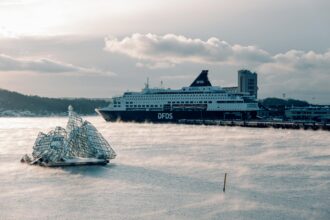
Beyond this short hop to the spit, Klaipeda’s harbour is also a genuine international departure point, with DFDS running longer passenger and vehicle ferries out to Kiel in Germany and Karlshamn in Sweden from a separate terminal further along the port. The port itself, and the Kiel route in particular, are worth a closer look given how much they shape the city, and the Karlshamn crossing gets fuller coverage in our DFDS ferries guide.
The Port of Klaipeda: Lithuania’s Only Major Seaport
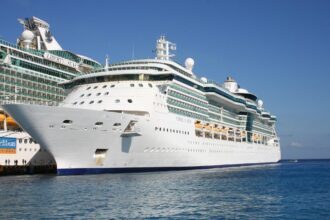
Klaipeda exists because of its port, Lithuania’s only major seaport and the reason a Baltic fishing settlement grew into the country’s third-largest city in the first place. Cargo ships, container vessels, cruise liners and passenger ferries all share the same stretch of water at the mouth of the Curonian Lagoon, and the harbour still drives a large share of the local economy today.
The port itself runs in a long ribbon along the lagoon channel rather than sitting in one place, so it helps to know which stretch a visitor actually needs. The Smiltynė ferry terminals covered above sit closest to the Old Town, while the international passenger terminal used by DFDS lies further south at Baltijos pr. 40, with cargo berths and the container terminal continuing on beyond that toward the open sea.
Reaching the international terminal from the city centre is straightforward without a car: bus number 9 runs directly there for a flat fare of around €1 (£0.85/$1.10) paid to the driver, and a taxi covers the same short trip in about ten minutes for roughly €5 (£4.25/$5.50). Walking is possible in theory but not really practical, since the terminal sits well south of the Old Town inside the working port’s fenced perimeter.
Anyone driving to catch a ferry can park on site at the DFDS terminal from about €10 (£8.50/$11) for the first day, with a cheaper daily rate after that. Passengers arriving off a ship without their own transport can also book a taxi at check-in or from reception on board, which is usually the easiest option with luggage.
None of this makes the port itself a conventional sightseeing stop, but it is worth understanding as the thing that gives Klaipeda its character, from the working cranes visible across the water to the ferries that make the city a genuine gateway rather than a dead end on the map.
The Kiel Ferry
Of Klaipeda’s two international routes, the sailing to Kiel in northern Germany is the one most likely to matter to an actual traveller rather than a freight customer, and it is still very much running, with DFDS operating it year round. The route is currently sailed by the Aura Seaways and Regina Seaways, with around six departures a week in each direction.
This is a proper overnight voyage rather than a quick hop, with the crossing itself taking somewhere in the region of 20 to 21 hours depending on the ship and conditions. A sailing leaving Klaipeda in the evening spends a full night and most of the following day at sea before reaching Kiel, so it is closer to a short cruise than a ferry in the usual sense.
Both foot passengers and vehicles are carried, including cars up to around 2.7 metres in height, motorbikes and bicycles, so a traveller can bring a car aboard or simply walk on with a backpack. A cabin is not strictly compulsory for foot passengers, but given the length of the crossing it is strongly recommended rather than optional in practice.
Fares vary a good deal by season and how far ahead a ticket is booked, but as a rough guide a foot passenger travelling without a cabin starts from around €20 (£17/$22), a bed in a shared cabin from about €53 (£45/$58) and a private cabin from roughly €96 (£82/$106). A car travelling with a four-berth cabin has been advertised from around €77 (£65/$85) per person, though these figures are worth checking against DFDS’s current pricing before booking.
Onboard facilities run to a buffet restaurant, bars, a shop and a children’s play area, which fills the long crossing rather than treating it as dead time. For a traveller heading on into Germany or continental Europe, it is a genuinely useful through route that avoids a long drive around the Baltic states, and a scenic way to leave Lithuania in its own right; full timetables and current fares sit on DFDS’s own Klaipeda to Kiel route page.
For a closer look at the ships, onboard cabins and how this crossing compares with Klaipeda’s other international routes, see our dedicated Kiel Ferry Routes guide, which covers the Aura Seaways and Regina Seaways in full.
Klaipėda to Kiel Ferry Times & Departures
Use Ferryhopper to check live sailings between Klaipėda and Kiel in both directions. Select your travel date to compare scheduled ferry departures, sailing times and available tickets.
Select the date you want to travel. The times shown on the right-hand side are the scheduled departure and arrival times for each ferry.
Availability can change quickly, particularly during weekends and the summer season. Some sailings may stop accepting bookings a few hours before departure. If a timetable is blank, there may be no available sailings for today. Try moving to a later date to check future services.
This is the timetable for the outward direction. Use it to check sailings from Klaipėda to Kiel for the date you plan to travel.
This is a separate timetable for the opposite direction. It does not select a return ticket for the journey above. Use it to check sailings from Kiel to Klaipėda.
Want to compare different routes and other ferry options?
Compare routes, operators, sailing times and prices with Ferryhopper or Direct Ferries.
The Lithuanian Sea Museum and Dolphinarium
Reached via the short ferry crossing above, the Lithuanian Sea Museum and Dolphinarium occupies a striking former 19th-century fort at the tip of the spit in Smiltynė, and is comfortably one of the most popular attractions on this entire coast. The complex mixes a genuine aquarium, a marine mammal rescue centre and a dolphin show inside what was originally built as a coastal defence battery.
Inside, an aquarium built around Baltic Sea marine life sits alongside exhibits on navigation history and a reconstructed ethnographic fisherman’s farmstead, giving the museum a broader story than the dolphin shows alone suggest. The dolphinarium itself runs performances with dolphins and California sea lions on a set daily schedule, and the site also runs a genuine Baltic Sea Animal Rehabilitation Centre for stranded seals and porpoises, which gives the whole visit a slightly more serious conservation edge than a typical aquarium.
A retired research vessel, the ship-museum M52 Sūduvis, is moored alongside as an additional exhibit, complete with an escape-room activity built into its hull for visitors after something more active than walking exhibit halls. The museum sits a short walk from the ferry landing, so it is easy to combine with time spent on the dunes and beach on the same side of the strait.
Current ticket pricing and the daily dolphin show times are best checked on the museum’s own listing before travelling, since both are reviewed seasonally and were not confirmed at the time of writing. Arriving in time for the first show of the day is generally the easiest way to avoid the busiest midday crowds in peak summer.
The Lithuanian Sea Museum’s own official site has full current details on exhibits and visiting information, and is worth checking directly ahead of a visit: muziejus.lt.
The Curonian Spit and Its UNESCO Dunes
The Curonian Spit is the real reason many visitors come to Klaipeda at all: a narrow, 98km strip of forest and drifting sand dune separating the calm Curonian Lagoon from the open Baltic, with its Lithuanian half accessible directly from the city via the ferry covered above. It was jointly inscribed as a UNESCO World Heritage Site in 2000, a status shared between Lithuania and Russia’s Kaliningrad Oblast, since the spit’s southern half sits across a border most visitors never cross.
The Lithuanian stretch is protected as the Curonian Spit National Park and is best known for the Parnidis Dune near Nida, one of the highest drifting sand dunes in Europe, with the wider spit averaging around 35 metres and peaking near 60 metres in places. A granite sundial installed on the dune in 1995 marks the high point most visitors climb up to for sweeping views across both the lagoon and the sea.
Beyond the dunes, the spit is a genuinely important stop on the East Atlantic bird migration flyway, with an estimated 10 to 20 million birds passing over it each spring and autumn, making it a serious destination for birdwatchers as well as casual visitors. A car entering the park pays a local toll at the Alksnynė checkpoint, which recent figures put at around €10 (£8.50/$11) in the off-season and considerably more in peak summer, though electric vehicles are exempt and it is worth confirming the current rate before travelling.
Cycling is a genuinely good way to see more of the spit beyond the immediate dune, with a marked path running much of its length, and several rental points near the Smiltynė ferry landing. A full day allows time for the dunes, a stop in Nida covered below, and a swim on the open-sea side of the peninsula, which stays noticeably quieter than the mainland beaches even in high summer.
For the ferry timing, cycling versus bus logistics and an hour-by-hour plan for actually covering the spit in a single day, see our dedicated Curonian Spit day trip guide.
Nida: The Curonian Spit’s Fishing Village
Around an hour’s drive south of Klaipeda down the spit, Nida is the largest settlement on the Lithuanian side and marks the westernmost point in the Baltic states, sitting close enough to the border that Russia’s Kaliningrad Oblast is visible across the lagoon on a clear day. It has around 1,500 permanent residents, a figure that swells enormously each summer with an estimated 200,000 to 300,000 visitors passing through the season.
The village keeps its traditional character through rows of colourful wooden fishing houses, many still carrying carved Curonian weathervanes and painted family pennants once used to identify a boat’s home village from a distance out on the lagoon. An 1888 Lutheran church in Brick Gothic style anchors the older part of the settlement, a rare survival on a stretch of coast that saw heavy damage through the 20th century.
Nida’s best-known former resident is the novelist Thomas Mann, who built a summer house here in 1929 and used it to write parts of Joseph and His Brothers before the Nazis seized the property in 1939. The house now operates as a small memorial and cultural centre and is one of the more literary stops on the entire Baltic coast.
Nida works well as a full-day add-on to a Klaipeda visit rather than a quick detour, combining easily with the Parnidis Dune above and a stretch of open Baltic beach that stays far quieter than Palanga’s. A hire car or the seasonal bus service down the spit are the most practical ways to reach it, since the drive itself, hugging pine forest and dune on both sides, is part of the appeal.
Best if you would rather spend the money on Lithuania than on the room. Compare hostels by location and rating.
Search hostelsBest for anyone flying more than once or twice a year. Handles the compensation claim so you are not chasing the airline.
See AirHelp+Best for a day with a bag and nowhere to put it. Find a storage point near where you already are.
View storageGiruliai and Melnrage: Klaipeda’s Own Beaches
Klaipeda has its own stretch of Baltic coastline on the mainland side, and Giruliai and Melnragė are the two beaches locals actually use, a few kilometres north of the city centre and easily reached by car or bus. Neither gets anywhere near the crowds of Palanga further up the coast, which makes them a good option for anyone wanting sea and sand without leaving Klaipeda at all.
Both beaches offer proper sand rather than shingle, with large free car parks and clear footpaths leading down to the water, and there is no admission charge at either. Melnragė sits slightly closer to the centre and tends to draw a younger, livelier crowd in summer, while Giruliai, a little further out, has a slightly more residential, family feel to it.
The Baltic here runs cool even in high summer, so this is more a spot for a walk, a paddle and sunbathing than a proper long swim for most visitors, though plenty of locals do swim through the warmer months. Both beaches are open around the clock with no set hours, and access is straightforward year-round even if the appeal is obviously strongest between June and August.
Combining either beach with the Sea Museum or a walk of the Old Town on the same day is easy given how close they sit to the centre, and both are a sensible lower-key alternative to a full day trip out to Palanga for anyone short on time.
Day Trip to Palanga
Palanga is Lithuania’s best-known seaside resort and sits close enough to Klaipeda, around 25 minutes by regular Kautra bus or car, to work comfortably as a half-day or full-day trip rather than needing its own overnight stay. Where Klaipeda feels like a working port city, Palanga is unashamedly a holiday town, built around a long sandy beach and a busy pedestrianised main street.
The town’s landmark is the Palanga Pier, stretching out into the Baltic and popular for an evening walk to watch the sunset, alongside the surrounding Palanga Botanical Park, home to the Amber Museum inside a 19th-century manor house once belonging to the Tiškevičius family. J. Basanavičiaus Street, the main pedestrian strip running up from the beach, fills with amber stalls, ice cream kiosks and bars through the summer season.
The beach itself is considerably broader and busier than anything in Klaipeda, and it is the main draw for most day-trippers, alongside the botanical park’s shaded walking trails as a cooler alternative on a hot afternoon. Since Palanga’s own airport is the region’s main gateway, as covered in the How to Get There section above, plenty of visitors see the town on arrival or departure rather than as a dedicated trip.
A day trip works well paired with an early or late Klaipeda sightseeing day, since the bus runs frequently enough not to need booking ahead, and there is no real need for a car unless combining the visit with the Curonian Spit on the same day. Summer weekends draw the biggest crowds, so a weekday visit or an early start makes for a noticeably calmer trip.

Rupert’s Handy Travel Tips
Klaipeda rewards a bit of planning around its ferries and seasonal museums, so here are a few tips before setting off.
- Take the Old Ferry, not the car ferry, if you’re on foot: it runs more frequently and lands closer to the Sea Museum and Dolphinarium.
- Check the Castle Museum and Blacksmith’s Guild Museum dates before travelling: both only open from 15 June to 15 September.
- Confirm the current Curonian Spit toll before driving in: the local fee for cars changes between off-season and peak summer.
- Compare the coach and train for the Vilnius route: the coach is often quicker on this specific journey, not slower as it can be elsewhere in Lithuania.
- Bring cash or a card for the ferry kiosk: fares are small, so it is not worth pre-booking unless taking a car across.
- Base yourself near the Old Town or the river: nearly everything on the mainland side of this guide sits within a 15-minute walk of Theatre Square.
Want to meet the reindeer behind our travel tips? Find out more in our page Who is Rupert?.




Frequently Asked Questions About Things to Do in Klaipeda
How many days do you need in Klaipeda?
One full day covers the Old Town, Theatre Square and the Dane River promenade comfortably, but two days allows time to add the ferry crossing to Smiltynė, the Sea Museum and a proper look at the Curonian Spit dunes.
Is the train or the bus better from Vilnius to Klaipeda?
The coach is usually faster and more frequent on this specific route, typically around 3 hours 45 minutes against roughly 4 hours 10 minutes on the direct LTG Link train, though the train offers a smoother ride and no need to change vehicles.
Can you fly directly into Klaipeda?
Klaipeda has no airport of its own; the nearest is Palanga International Airport around 30km north, served by airlines including airBaltic, Ryanair, SAS and seasonal Norwegian and Wizz Air routes, with a bus into central Klaipeda taking around 25 minutes.
How do you get to the Curonian Spit from Klaipeda?
A short passenger and vehicle ferry crosses the Curonian Strait from central Klaipeda to Smiltynė in around ten minutes, running every 20 to 30 minutes depending on the season, and is the only way to reach the spit without driving around via Kaliningrad.
Are there international ferries from Klaipeda?
Yes, DFDS runs passenger and vehicle ferries from Klaipeda to Kiel in Germany and to Karlshamn in Sweden, alongside the short local Smiltynė crossing, making the port a genuine departure point for longer Baltic Sea journeys.
Is Klaipeda worth visiting if you are also going to Vilnius?
Yes, the two cities offer genuinely different experiences, with Klaipeda’s port setting, Curonian Spit access and beach day trips to Palanga giving a coastal counterpart to Vilnius’s Old Town and historic architecture.
Further Reading
For the wider journey to Klaipeda, our Interrail Lithuania Pass guide covers how the country’s rail network fits into a broader European rail trip, including the Vilnius to Klaipeda line covered above. Anyone flying into the capital first should also read our Vilnius Airport transfers guide for getting into the city before heading onward to the coast.
Our local transport apps guide is worth a look before travelling, since it covers the ticketing and journey-planning apps that make getting around Lithuania’s buses and trains considerably easier. For anyone planning a longer sea crossing on from Klaipeda’s port, our DFDS ferries guide covers the Kiel and Karlshamn routes mentioned above in full.
Finally, anyone building a longer Baltic itinerary around Klaipeda should also look at our coverage of things to do in Vilnius, since the two cities pair naturally as a rail-and-coast combination on a single Lithuania trip.