Reviewed by our editorial team Published
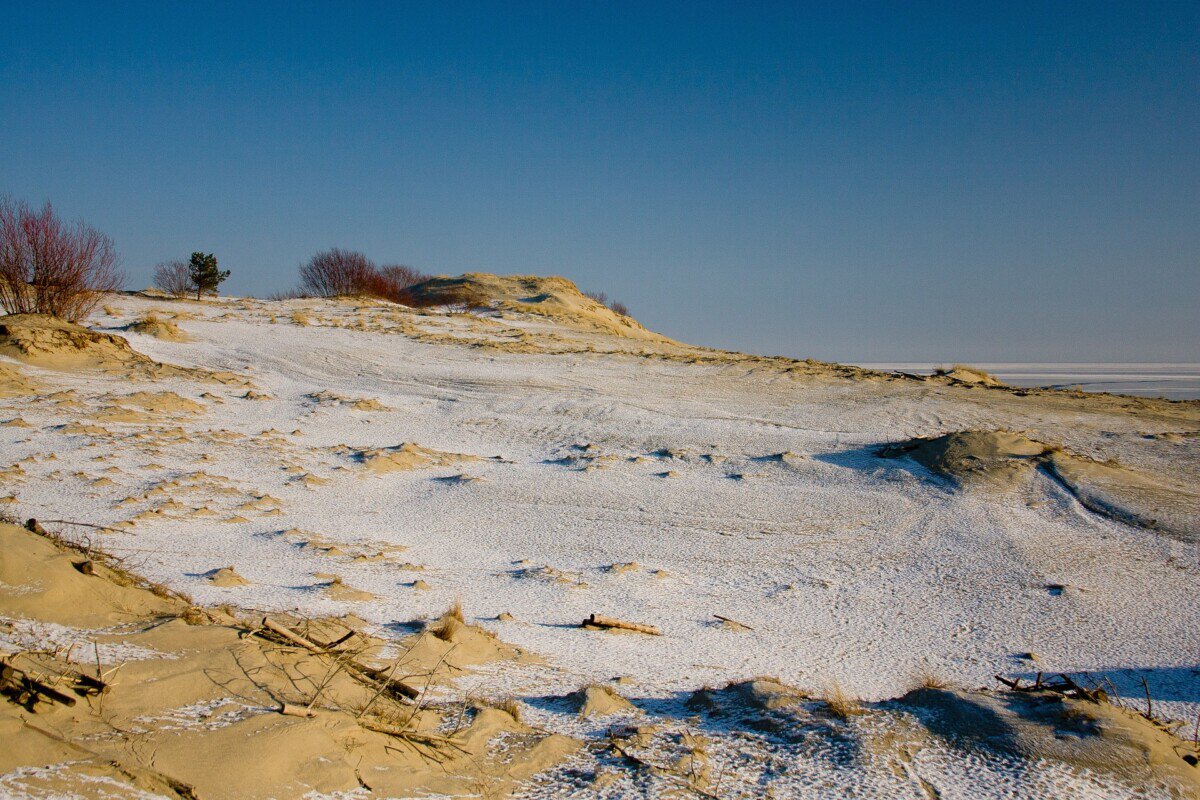
Klaipeda’s single biggest day trip is not a museum or a monument. It is a landscape, the Curonian Spit, the narrow ribbon of forest and drifting dune that separates the calm Curonian Lagoon from the open Baltic Sea.
Our wider guide to things to do in Klaipeda covers the spit as one attraction among many, alongside the Old Town, the harbour ferry and the Sea Museum at Smiltynė. This page goes deeper on the day trip itself, the actual ferry timing, how to get around once you are across the strait, and a realistic hour-by-hour plan for seeing Nida and the dunes without missing the last boat home.
The spit runs for 98km in total, but only its northern half belongs to Lithuania, and the border with Russia’s Kaliningrad exclave sits partway down it. That matters for planning a day trip more than most guides let on, since it shapes how far south a visitor can actually go and what a realistic itinerary looks like once the geography and the border are both taken seriously.
Nida, the spit’s main town and the obvious target for a day out, sits roughly 50km south of the Smiltynė ferry landing down a single road through pine forest and dune. Covering that distance and back within a single day, on top of the ferry crossing itself, is entirely doable but needs a genuine plan rather than a vague intention to “see the dunes at some point.”
What follows is that plan: how the ferries actually run, whether to cycle, bus or drive once you are on the spit, an hour-by-hour itinerary that respects the return sailing, and an honest, verified look at the border rather than a guess. Every fact below on ferries, distances, fees and the border has been checked against current sources rather than assumed, and where something could not be pinned down with confidence, that is said plainly instead of invented.
Getting to the Spit and Back
The passenger crossing itself is straightforward: the Old Ferry runs from Senoji perkėla on the Klaipeda side directly across to the Smiltynė landing opposite, and the crossing takes about ten minutes door to door. It carries foot passengers, cyclists and pets only, which makes it the faster option for anyone not bringing a car, since the vehicle ferry from the New Ferry Terminal needs longer to load.
Stepping off at Smiltynė puts you within 1.8km, about a twenty-minute walk, of the Lithuanian Sea Museum and Dolphinarium, the spit’s best-known attraction near the landing and a natural first stop for anyone not heading straight for Nida. From that same landing, onward journeys split three ways: hire a bike right at the terminal for the roughly 50km ride south to Nida, wait for one of the handful of daily local buses that also call at Juodkrantė, Pervalka and Preila, or simply walk to the museum if that is the only stop planned for the day.
Frequency shifts with the season: roughly every 30 minutes through summer and hourly the rest of the year, with the crossing itself taking about ten minutes. A recent published off-season timetable had the Old Ferry running from 07:00 to 21:00, and the car ferry from the New Ferry Terminal running from as early as 05:00 with services roughly every 20 minutes by day, tailing off to hourly after 20:00 and a bookable overnight crossing on request. Treat these as a realistic example rather than a fixed schedule, since Smiltynė Perkėla revises its timetable periodically, and check the live version on keltas.lt a day or two before travelling.
For a day trip, the working rule is simple: take one of the earliest sailings across, since every hour spent waiting for a later ferry is an hour lost from the roughly 50km round trip down to Nida and back. Build in a buffer on the return leg too, since missing the last sailing back to Klaipeda means either an overnight stay on the spit or a long detour, and neither fits a day-trip plan.
If driving, remember the vehicle ferry and the spit’s own entry toll both add time beyond the crossing itself, covered in the next section. Foot passengers and cyclists clear the ferry quickest, which is one of several reasons a bike is the most practical way to actually cover ground on the spit within a single day.
The foot passenger and cycle ferry sails from Senoji perkėla, the Old Ferry terminal at Šiaurinis ragas (the “North Horn”), address E. Galvanausko bulvaras 1, right where the River Danė meets the Curonian Lagoon at the northern tip of the Old Town. That puts it close enough to the historic centre to be a genuine walking option along the waterfront, a short walk of roughly fifteen to twenty minutes rather than a drive.
Drivers use a different landing altogether, the New Ferry Terminal at Nemuno gatvė 8, south of the centre near the Gandrališkės housing estate and noticeably further from the Old Town than the passenger crossing. This distance is exactly why the crossing choice mentioned below splits the way it does: cyclists and pedestrians head for Senoji perkėla by the Old Town, while drivers make the short drive or taxi ride south to Nemuno gatvė instead.
How to Get Around Once You’re on the Spit
The Curonian Spit has no dense public transport network of its own, and that single fact shapes almost every other decision on a day trip. A local bus does run the length of the Lithuanian side, calling at Juodkrantė, Pervalka and Preila on its way to Nida, but a recently published timetable showed only around seven departures a day on weekdays, roughly every two hours between 07:10 and 21:10, which is useful for point-to-point travel but not a hop-on, hop-off service.
Cycling is genuinely the most popular way to see the spit properly, and for good reason: a marked cycle path runs for most of the roughly 50km between Smiltynė and Nida, mostly through pine forest and largely away from the road. Bike hire is available near the Smiltynė ferry landing itself, so it is entirely possible to cycle straight off the ferry without arranging anything in advance, and the flat, well-shaded route makes the distance manageable for most reasonably fit riders in a few hours each way.
Walking only really works within Nida itself, where the town centre, the harbour and the dune are all within a comfortable stroll of each other. The gap between Smiltynė and Nida is too far to walk within the time a day trip allows, so this is a plan-around rather than an option to seriously weigh.
Taking a car across on the vehicle ferry buys flexibility, cutting the Smiltynė-to-Nida run to well under an hour and making it easy to stop at viewpoints along the way. It comes at the cost of the vehicle ferry fare and the spit’s own entry toll, covered under practical tips below, and it is worth weighing against the bus and bike options if the plan is a single focused day rather than a longer stay exploring every village down the spit.
Best for a short trip. Compare rooms by neighbourhood, price and guest rating before you book.
Compare hotelsBest for families, or any stay past about four nights. A kitchen and a washing machine start paying for themselves.
Browse rentalsBest for double-checking. Runs the same search across several booking sites so you are not leaving money behind.
Compare pricesA Suggested One-Day Itinerary
Assuming an early Old Ferry sailing, a workable day starts with arriving at the terminal by around 07:00, allowing time to buy a ticket and bring a hired or personal bike aboard before the crossing itself takes roughly ten minutes. Landing at Smiltynė by 07:30 leaves the whole morning free before the day’s real distance needs covering.
Cycling the roughly 50km down to Nida at a steady pace takes most riders somewhere in the region of three to four hours with a couple of short stops, so budgeting the late morning for the ride itself is realistic rather than optimistic. Driving or catching one of the morning bus departures instead cuts this stage to well under an hour, which frees up considerably more time in Nida for anyone not committed to cycling the whole route.
Early afternoon is the natural window for Nida itself, its harbour, the fishing houses and lunch, followed by the short climb up to the Parnidis Dune and its sundial while the light is still good. Both sections below go into more depth on what that stretch of the afternoon actually involves.
By mid-to-late afternoon, the return journey needs to start, whether that means cycling back, catching a return bus, or driving, always leaving a genuine buffer before the last ferry sailing back to Klaipeda. Building slack into this leg rather than cutting it fine is the single most useful piece of planning advice for this entire day trip, since a missed final ferry turns a day trip into an unplanned overnight stay.
Anyone who would rather not manage the timing themselves can look at a guided day tour from Klaipeda, which typically handles the ferry, transport down the spit and a fixed schedule of stops, trading some flexibility for one less thing to plan. For a first visit without a car, cycling or a guided tour are both more forgiving of the spit’s limited public transport than trying to rely on the local bus alone.
Nida in Depth
Nida is the largest settlement on the Lithuanian side of the spit and sits close enough to the border that Kaliningrad is visible across the lagoon on a clear day. It carries around 1,500 permanent residents, a figure that summer tourism multiplies many times over, yet the working fishing-village character survives in the rows of colourful wooden houses along the harbour.
Many of those houses still carry carved Curonian weathervanes and painted family pennants, a genuine local tradition once used to identify a boat’s home village from out on the lagoon rather than a decoration added for visitors. The small harbour itself, lined with fishing boats and a handful of cafes, is worth simply walking rather than rushing through on the way to the dune.
Nida’s best-known former resident is the novelist Thomas Mann, who built a summer house on a hillside above the lagoon in 1929 and used it during the summers of 1930 to 1932, including while writing parts of Joseph and His Brothers. Confiscated after Nazi Germany annexed the region in 1939, the house survived the war and now operates as a small museum and cultural centre, open daily from 10am to 6pm between May and mid-October, with an adult ticket priced at roughly €3 (£2.60/$3.30).
The wider Neringa municipality that includes Nida also runs the Thomas Mann Festival each summer, a cultural event built around the writer’s connection to the town, alongside a small but genuine gallery and craft scene that has grown up around the settlement’s artistic reputation. An hour or two here comfortably covers the harbour, the museum and a wander through the older streets before heading up to the dune.
The Great Dune Ridge and Parnidis Dune
The Great Dune Ridge running behind Nida is the most dramatic scenery on the entire spit, a chain of drifting sand that separates the forested lagoon side from the open Baltic. Its best-known point, the Parnidis Dune, currently stands at around 52 metres above sea level, having once reached closer to 60 metres before wind and erosion carried sand steadily eastward into the lagoon.
A wooden boardwalk and a set of steps lead up from Nida to an observation platform at the top, from where both the Curonian Lagoon and the open Baltic Sea are visible at once on a clear day, a rare vantage point in a country with relatively little elevation. The climb itself is short but genuinely steep in places, and the exposed sand can be uncomfortably hot underfoot in summer, so proper footwear is worth more here than almost anywhere else on this itinerary.
At the summit stands a striking granite sundial, built in 1995 around a stone pillar roughly 13.8 metres high that acts as the gnomon, with carved steps below marking the hours, months and solstices. A storm damaged the pillar in 2011 and the repair left a visible fracture in the stone, which locals now treat as part of the monument’s story rather than something to hide.
The dune and its surrounding Parnidis Landscape Reserve fall within the Kuršių Nerija National Park, whose own site has current visitor information for anyone planning beyond a single day. Access to the dune itself is free of charge, and the short detour off the main path to the sundial is worth the extra few minutes for the view alone.

The Lithuania-Russia Border on the Spit
The Curonian Spit is split between Lithuania and Russia’s Kaliningrad Oblast, with the frontier running across the peninsula a short distance south of Nida, near the Russian village of Morskoye. This is a genuine international border, not an internal checkpoint, and it is worth understanding honestly rather than guessing, since the wrong assumption here can genuinely ruin a day trip.
The Nida crossing point was shut during the Covid pandemic and, according to Lithuania’s national broadcaster LRT in an August 2026 report on the country’s remaining Russian border crossings, it has not reopened since Russia’s 2022 invasion of Ukraine. The same report names only two crossings still functioning anywhere on the Lithuania-Russia border, Panemunė for pedestrians and Kybartai for vehicles, and neither is anywhere near the spit.
In practical terms, this means there is currently no way to cross from the Lithuanian side of the spit into Kaliningrad, whether on foot, by bike or by car, and no legitimate tour or transfer should claim otherwise. The area around the frontier itself sits inside a controlled border zone patrolled by Lithuanian and EU border guards, and it is a restricted zone rather than somewhere to wander up to out of curiosity.
None of this affects a normal day trip as far as Nida, which sits comfortably north of the frontier and is the realistic limit of the Lithuanian side’s road and cycle network anyway. Anyone hoping to see Kaliningrad’s own share of the spit, including the town of Zelenogradsk further south, would currently need a separate trip into Russia itself with the appropriate visa, entering from elsewhere entirely rather than through this crossing.
What to Pack and Practical Tips
The spit’s open sand and lack of shade on the dune itself make sun protection genuinely important even on a cool Baltic day, since the light reflecting off pale sand catches people out who would not think twice about it on a normal walk. Sunscreen, a hat and sunglasses are worth packing regardless of the forecast, alongside a refillable water bottle, since options to buy drinks thin out once away from Nida’s harbour.
Footwear matters more here than on a typical city day trip, since the dune climb and the sandier stretches of the cycle path are awkward in anything without a decent grip, and flip-flops in particular struggle on the steeper boardwalk sections. A light layer for the return ferry crossing is worth having too, since the strait can feel noticeably breezier than inland Nida even in summer.
Drivers entering the spit by car pay a local entry toll at the Alksnynė checkpoint, which recent figures put at around €10 (£8.50/$11) in the off-season, rising considerably higher through the peak summer weeks, though electric vehicles are currently exempt. Pedestrians and cyclists are not charged this toll, which is one more reason a bike remains the simplest way to visit without extra cost stacking up.
Cash or a card for the ferry kiosk, a printed or downloaded copy of the current ferry timetable, and a rough idea of the last sailing time back to Klaipeda are the three genuinely essential things to have sorted before setting off. Confirming all three the evening before, rather than on arrival at the terminal, is the difference between a relaxed day and a rushed one.

Rupert’s Handy Travel Tips
A Curonian Spit day trip runs on tight timing, so here are a few things worth sorting before you set off.
- Take the first Old Ferry you can: every hour lost at the terminal is an hour lost from the roughly 50km round trip to Nida and back.
- Check the live keltas.lt timetable the night before: ferry frequency and last-sailing times shift with the season.
- Cycle if you can, don’t rely on the local bus: the Smiltynė to Nida bus runs only a handful of times a day.
- Don’t approach the border zone south of Nida: the Nida crossing into Kaliningrad has been closed since the pandemic and has not reopened.
- Pack proper footwear for the dune: the boardwalk and sandier stretches are awkward in flip-flops.
- Build in a return buffer: missing the last ferry back to Klaipeda turns a day trip into an unplanned overnight stay.
Want to meet the reindeer behind our travel tips? Find out more in our page Who is Rupert?.




Frequently Asked Questions About the Curonian Spit Day Trip
Can you visit the Curonian Spit in one day from Klaipeda?
Yes, a day trip covering the ferry crossing, the roughly 50km run down to Nida and back, the town itself and the Parnidis Dune is entirely achievable with an early start, though cycling the full distance both ways takes real commitment and a car or bus makes the day noticeably more relaxed.
Is it better to cycle or take the bus on the Curonian Spit?
Cycling is the more flexible and popular option thanks to a marked path running most of the way to Nida, while the local bus only runs a handful of times a day and suits a fixed point-to-point trip rather than stopping wherever you like.
Can you cross from the Lithuanian side of the spit into Kaliningrad?
No, the Nida border crossing has been closed since the Covid pandemic and, according to Lithuania’s national broadcaster, has not reopened following Russia’s 2022 invasion of Ukraine, so there is currently no way to cross into Kaliningrad from this part of the spit.
Do you need a car to see the Curonian Spit properly?
No, a car adds flexibility and cuts travel time to Nida considerably, but plenty of visitors see the spit perfectly well by cycling from the Smiltynė ferry landing or joining a guided day tour that handles the transport.
Is there an entry fee for the Curonian Spit National Park?
Drivers pay a local toll for cars entering by the Alksnynė checkpoint, roughly €10 (£8.50/$11) off-season and considerably more in peak summer, while pedestrians and cyclists are not currently charged to enter.
Further Reading
For the fuller picture of Klaipeda itself, our things to do in Klaipeda guide covers the city’s Old Town, its ferry crossing and the Sea Museum and Dolphinarium alongside the spit, and is worth reading first if this is your first visit to the coast. Anyone travelling on from Vilnius should also look at our Interrail Lithuania Pass guide, which covers the rail link between the capital and the coast in full.
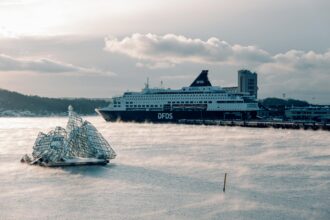
Our local transport apps guide is genuinely useful before this trip specifically, since it covers the ticketing and journey-planning apps that make sense of Lithuania’s regional buses beyond the fixed timetable covered above. For a longer sea crossing on from Klaipeda’s port, our DFDS ferries guide covers the international routes to Germany and Sweden.
Finally, anyone building a wider Baltic itinerary around this coast should look at our coverage of things to do in Vilnius, since the capital and the coast pair naturally as a single Lithuania trip with this day trip as its centrepiece detour.