Reviewed by our editorial team Updated
Kiel is not a place where ferries feel like an afterthought bolted onto a city break. This is one of Germany’s genuinely major international ferry ports, and the traffic moving through the Kieler Förde each evening, container ships, sailing dinghies and enormous ropax vessels sharing the same narrow stretch of water, is a large part of what gives the city its working-port character. Three scheduled passenger routes leave Kiel today, two heading north into Scandinavia on a genuine daily or near-daily basis, and a third running east across the Baltic into Lithuania, and all three are long-established services rather than seasonal experiments that might vanish by next summer.
The first is the overnight crossing to Oslo run by Color Line, a route with a pedigree stretching back decades and a reputation as one of the more comfortable ways to reach Norway without flying. The second is Stena Line’s daily sailing to Gothenburg in Sweden, a slightly shorter but no less established service that has quietly carried freight and passengers across the Baltic and into the Kattegat for years. The third is DFDS’s longer crossing to Klaipeda in Lithuania, a genuine multi-day Baltic link rather than a quick hop, sailing several times a week rather than daily. All three routes were checked against current 2026 schedules before this guide was written, rather than relying on older assumptions about what still runs.
This page works through all three crossings in proper depth: journey times, frequency, what a night, or two, onboard actually involves, where each ferry departs from within Kiel, and how the experience stacks up against simply flying instead. A separate terminal at Ostseekai handles other scheduled and cruise ship traffic passing through the port rather than any of the three routes covered here, and is covered in full in our own Kiel Cruise Port Guide.
Ferry Routes from Kiel at a Glance
The table below summarises all three scheduled routes, with fuller detail on each one further down the page.
| Route | Operator | Duration | Frequency | Departs From |
|---|---|---|---|---|
| Kiel – Oslo | Color Line | Approx. 20 hours, overnight | Daily (reduced in winter) | Norwegenkai, Kiel |
| Kiel – Gothenburg | Stena Line | Approx. 14.5–15.5 hours, overnight | Daily | Schwedenkai, Kiel |
| Kiel – Klaipeda | DFDS | Approx. 20–21 hours, overnight | Up to 6 times a week | Ostuferhafen, Kiel |
The Color Line Overnight Crossing to Oslo: Norway’s Best-Known Ferry Route
The Kiel to Oslo ferry is arguably the most recognisable route out of the city, and it has been running in some form since long before either the ships or the terminal looked the way they do today. Color Line operates the crossing exclusively, and current schedules show a daily departure in both directions through most of the year, dropping to somewhere between three and six sailings a week during the quieter winter months from January to April. It is genuinely worth checking the specific week’s timetable before booking if travelling outside the summer season.
Sailings leave Kiel at around 14:00 and arrive into Oslo at roughly 10:00 the following morning, making for a crossing of approximately 20 hours, genuinely overnight rather than a late evening dash. That length of sailing is deliberate: this is built and marketed as much as a mini-cruise as it is point-to-point transport, and a meaningful share of passengers book it purely for the experience of the crossing rather than as the cheapest way to reach Norway.
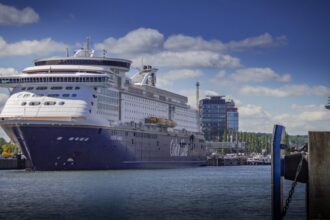
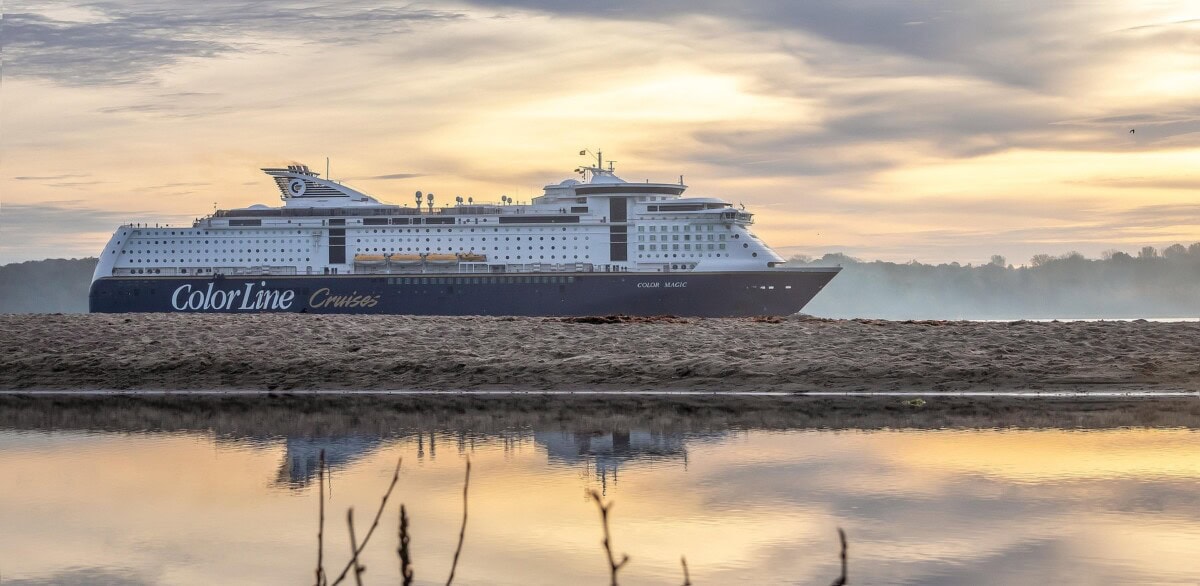
Two large vessels, Color Fantasy and Color Magic, share the route, and both are genuine cruise ferries rather than stripped-back ropax ships, built specifically for this crossing with passenger comfort as a primary design consideration rather than an afterthought to freight capacity. Foot passengers, drivers and coach groups all use the same terminal and boarding process, and the ships carry both cars and larger vehicles alongside passenger cabins.
Cruise fares start from around €250 (£215/$292.50) per person for a basic cabin on a quieter sailing, with Color Club members sometimes seeing a modest discount on that headline rate. Vehicle transport is priced separately, starting from roughly €180 (£154.80/$210.60) for a standard car, and current timetables and fares are best confirmed directly on the official Color Line website before booking, since pricing shifts considerably with season and demand.
Best if you want daily housekeeping and a front desk. Filter by area first, then by price.
Check availabilityBest for longer stays. Whole apartments and houses, so you are not eating out three times a day.
View rentalsBest for double-checking. Runs the same search across several booking sites so you are not leaving money behind.
Compare pricesKiel to Oslo Ferry Times & Departures
Use Ferryhopper to check live sailings between Kiel and Oslo in both directions. Select your travel date to compare scheduled ferry departures, sailing times and available tickets.
Select the date you want to travel. The times shown on the right-hand side are the scheduled departure and arrival times for each ferry.
Availability can change quickly, particularly during weekends and the summer season. Some sailings may stop accepting bookings a few hours before departure. If a timetable is blank, there may be no available sailings for today. Try moving to a later date to check future services.
This is the timetable for the outward direction. Use it to check sailings from Kiel to Oslo for the date you plan to travel.
This is a separate timetable for the opposite direction. It does not select a return ticket for the journey above. Use it to check sailings from Oslo to Kiel.
Want to compare different routes and other ferry options?
Compare routes, operators, sailing times and prices with Ferryhopper or Direct Ferries.
Life Aboard the Color Fantasy and Color Magic: Dining, Shows and Cabins
A 20 hour overnight crossing only works as a genuine travel option if there is enough onboard to fill the time comfortably, and the Color Fantasy and Color Magic are built with exactly that in mind. Each ship carries several distinct dining venues, ranging from a proper gourmet restaurant with table service through to an extensive buffet and a more casual à la carte option, so passengers are not stuck with a single set menu for the entire crossing regardless of budget or appetite.
Entertainment runs through the evening in a way that genuinely earns the ships their reputation as floating mini-cruises. Passengers can typically catch two separate stage shows over the course of a sailing, alongside live music and a night club that keeps going well after most cabins have gone quiet. A duty-free shopping promenade running the length of the ship adds a further way to pass an hour or two, and it tends to get busy in the period right after boarding.
For anyone wanting a quieter evening, both ships carry a fitness centre and spa facilities, and paid Wi-Fi is available throughout for passengers who need to stay connected mid-crossing. Cabins range from simple standard inside rooms through to sea-view options and suites, with most sleeping up to five passengers and including a private bathroom and television as standard rather than as an upgrade.
Both euros and Norwegian kroner are accepted onboard for anything not already included in the fare, which is genuinely useful for passengers travelling in either direction who would otherwise need to change currency before boarding. Families in particular benefit from the fare structure: children receive a year-round 50% discount, and in some school holiday periods travel free entirely, subject to current terms.
The Stena Line Route to Gothenburg: A Daily Overnight Crossing to Sweden
Kiel’s second scheduled international route runs to Gothenburg, Sweden’s second city, and it is operated exclusively by Stena Line with a genuinely reliable daily departure in both directions year round, unlike the Oslo route’s winter reduction. The crossing is shorter than the run to Norway but still comfortably overnight, taking somewhere between 14.5 and 15.5 hours depending on the specific vessel and conditions, covering a distance of roughly 227 nautical miles (420km) across open Baltic and Kattegat waters.
Departures from Kiel generally leave in the early evening, typically at either 17:45 or 18:45 depending on the day, arriving into Gothenburg at around 09:15 the following morning. That timing suits travellers well: boarding after a full day, sleeping through the bulk of the crossing, and stepping off directly into a Swedish weekday morning with the rest of the day still ahead of them.
Three vessels have historically worked this route, with Stena Germanica and Stena Scandinavica the two ships most consistently rotated onto the Kiel to Gothenburg service. The Stena Germanica is a genuinely notable ship in her own right, converted to run on methanol as part of Stena Line’s push toward lower-emission fuel, making this one of the more environmentally progressive long ferry crossings currently operating anywhere in Northern Europe.
Because this is a genuine overnight sailing rather than a short daytime hop, cabin accommodation is effectively mandatory rather than optional, and fares reflect that: tickets start from around €150 (£129/$175.50) per adult foot passenger including a berth, with vehicle transport, upgraded cabins and meal packages adding to the total. Current timetables and live pricing are published directly through Stena Line’s official booking site, which is worth checking before travelling given how much fares move with season and cabin availability.
Kiel to Gothenburg Ferry Schedules & Tickets
Check the current Kiel to Gothenburg ferry schedule with Ferryhopper. Change the date to compare available crossings, departure times and bookable tickets for both directions.
Select the date you want to travel. The times shown on the right-hand side are the scheduled departure and arrival times for each ferry.
Availability can change quickly, particularly during weekends and the summer season. Some sailings may stop accepting bookings a few hours before departure. If a timetable is blank, there may be no available sailings for today. Try moving to a later date to check future services.
This is the timetable for the outward direction. Use it to check sailings from Kiel to Gothenburg for the date you plan to travel.
This is a separate timetable for the opposite direction. It does not select a return ticket for the journey above. Use it to check sailings from Gothenburg to Kiel.
Want to compare alternative ferry routes and more sailing options?
Compare routes, operators, sailing times and prices with Ferryhopper or Direct Ferries.
Onboard the Stena Germanica and Stena Scandinavica: Facilities and Cabins
The ships working the Gothenburg route are built along fairly traditional Baltic ropax lines, carrying a substantial mix of freight and passenger vehicles alongside their cabin accommodation, which keeps the route commercially viable through quieter winter months and helps explain why the daily schedule holds firm all year rather than thinning out like the Oslo service does. That freight role does not come at the expense of the passenger experience, though, and both vessels carry a genuinely solid spread of onboard facilities for a 14 to 15 hour crossing.
Dining runs to a buffet restaurant as the main evening option, generally supplemented by a more relaxed café or bistro-style venue for a lighter breakfast before disembarking in Gothenburg. A small onboard shop covers essentials and duty-free items, and lounges with sea views give passengers somewhere to sit through the evening beyond their cabin, particularly useful for anyone travelling without a private balcony room.
Cabin options range from simple shared-berth rooms through to private outside cabins with their own bathroom, and given that a berth is effectively required for this overnight sailing, most fare structures bundle a basic cabin into the ticket price rather than treating it as a costly add-on the way some daytime ferry routes do. Families and groups booking multiple berths in the same cabin generally find this among the better-value overnight Baltic crossings on a per-person basis.
Because the Stena Germanica runs on methanol rather than conventional marine fuel, passengers with an interest in maritime technology or sustainability sometimes book this specific sailing deliberately, and Stena Line has publicised the conversion as part of its wider environmental programme across its European network.
The DFDS Crossing to Klaipeda: Kiel’s Longer Baltic Link to Lithuania
Kiel’s third scheduled international route runs east rather than north, crossing the Baltic to Klaipeda in Lithuania under DFDS. It is a genuinely different kind of trip from the Oslo and Gothenburg crossings above, sailing up to six times a week rather than daily, and taking somewhere in the region of 20 to 21 hours, a proper multi-day Baltic link rather than a single overnight hop.
This route matters for a different mix of travellers than the two Scandinavian services. A meaningful share are drivers moving a vehicle between Germany and the Baltic states without the long drive round through Poland, while others are using it as a genuinely scenic, if slow, way to reach Lithuania directly rather than flying via Hamburg. Because it sails less often than the daily Gothenburg route, it is worth checking the current week’s specific departure days directly on DFDS’s own website before building a trip around it.
Fares are typically quoted as a bundled package rather than a simple per-person rate, starting from around €64 (£55/$75) per person in a shared four-berth cabin including a car for the one-way crossing, with periodic promotions offering a discount on round-trip cabin-and-vehicle bookings. This bundled structure is worth reading carefully, since it prices differently from the standalone passenger and vehicle fares quoted for the Oslo and Gothenburg routes above, and current pricing is best confirmed directly through DFDS given how much it moves with season and cabin availability.
Two vessels, Aura Seaways and Regina Seaways, rotate onto the Klaipeda service. Aura Seaways is the newer of the pair, launched in 2021 with capacity for around 600 passengers, while Regina Seaways, in service since 2010, carries around 532 passengers across 414 cabin beds and a further 118 reclining seats in its lounge area for anyone not booking a private berth.
Best for finding routes the airlines do not sell as a single ticket. Combines carriers to bring the fare down.
Search flightsBest for short trips. Install the eSIM at home and arrive with working data, no shop queue.
Browse eSIMsBest if you would rather not work out the transport on arrival. Book it now and forget it.
View transfersKiel to Klaipėda Ferry Crossings & Times
Compare ferry crossings between Kiel and Klaipėda with Ferryhopper. The live timetable shows scheduled departure and arrival times so you can choose a suitable sailing in either direction.
Select the date you want to travel. The times shown on the right-hand side are the scheduled departure and arrival times for each ferry.
Availability can change quickly, particularly during weekends and the summer season. Some sailings may stop accepting bookings a few hours before departure. If a timetable is blank, there may be no available sailings for today. Try moving to a later date to check future services.
This is the timetable for the outward direction. Use it to check sailings from Kiel to Klaipėda for the date you plan to travel.
This is a separate timetable for the opposite direction. It does not select a return ticket for the journey above. Use it to check sailings from Klaipėda to Kiel.
Looking for different ferry routes or other ferry options?
Compare routes, operators, sailing times and prices with Ferryhopper or Direct Ferries.
Onboard the Aura Seaways and Regina Seaways: Facilities for a Longer Crossing
A crossing running 20 hours or more, roughly in line with the Oslo route above, needs proper facilities rather than a bare transport deck, and both ships are built with that in mind. Cabins range from simple economy rooms up to spacious Commodore-grade options, while Regina Seaways’ reclining lounge seats give budget travellers a way to make the crossing without booking a cabin at all.
Dining centres on a 7 Seas buffet restaurant on both ships, backed up by bars for drinks and snacks through the crossing. A small onboard shop covers essentials and gifts, and a children’s play area called Pirate’s Island keeps younger passengers occupied over a sailing considerably longer than a typical family car journey.
Both ships offer accessible cabins and facilities for passengers with reduced mobility. Because this route sails less often than the daily Gothenburg service and prices cabins as part of a bundled fare, booking a specific cabin category well ahead matters even more here than on either Scandinavian crossing on this page.
Kiel’s Ferry Terminals: Norwegenkai, Schwedenkai, Ostuferhafen and Getting There
Unlike some ports that funnel every route through a single shared building, Kiel splits its international ferry traffic across separate terminals, and knowing which one applies before travelling saves a genuinely wasted taxi ride. The Oslo ferry uses Norwegenkai (Norway Quay), sitting on the eastern bank of the Kieler Förde a short distance north of the city centre, easily reached by local bus or taxi from the Hauptbahnhof in around ten to fifteen minutes.
The Gothenburg ferry, by contrast, departs from Schwedenkai (Sweden Quay), which sits considerably closer to the centre of Kiel, genuinely within walking distance of the Hauptbahnhof for passengers travelling light. This central position is one of the quieter advantages of the Stena Line route: arriving by train from Hamburg or elsewhere in Schleswig-Holstein and walking straight to check-in is a realistic option that the Oslo route does not offer in quite the same way.
The Klaipeda ferry, by contrast again, departs from Ostuferhafen (East Shore Terminal) at Ostuferhafen 15, further out from the centre than either Scandinavian terminal and run more as a working freight and ferry harbour than a passenger-facing quay. Getting there from the Hauptbahnhof typically means a taxi or local bus rather than a walk, and since this sailing runs less often and considerably longer than the Oslo or Gothenburg routes, it is worth confirming the current check-in window directly with DFDS rather than assuming it matches the Scandinavian terminals.
Another terminal, Ostseekai, sits further along the fjord and handles other scheduled and cruise ship traffic passing through Kiel rather than any of the three routes covered on this page. It is worth double-checking a booking names Norwegenkai, Schwedenkai or Ostuferhafen specifically before arranging a taxi or transfer, since a driver given the wrong terminal name can genuinely end up at the wrong quay along this stretch of shoreline. Norwegenkai, Schwedenkai and Ostseekai sit along the same stretch of eastern shore that the Kiellinie promenade follows, so anyone with time to spare before an Oslo or Gothenburg sailing can walk part of that waterfront route rather than sitting in a terminal building; Ostuferhafen, working further out as a dedicated freight and ferry harbour, is not part of that same walkable cluster.
Check-in for both routes typically opens a couple of hours before departure, and foot passengers without a vehicle generally clear boarding noticeably faster than drivers, who need to queue through the vehicle lanes rather than a pedestrian gate. Anyone arriving into Kiel by air first should note that the city’s own small airport carries very limited scheduled traffic, and most international visitors reach Kiel via Hamburg instead before continuing on by train.
Facilities at the Terminal: What to Expect at Norwegenkai and Schwedenkai
Neither terminal is built as a destination in its own right, and with check-in windows measured in an hour or two rather than a half day, that is by design rather than an oversight. Both buildings cover the essentials: a manned check-in desk, a waiting area, toilets and support for passengers who need mobility assistance, with the bulk of the actual onboard experience, dining, shops and lounges, deliberately left for the ship itself rather than duplicated on land.
Norwegenkai, Color Line’s terminal for the Oslo crossing, is built to handle up to 2,500 passengers through two gangways, with a direct rail link into the port and passenger and cargo traffic kept physically separate. Foot passengers need to check in no later than 60 minutes before departure, while anyone travelling with a vehicle should allow 120 minutes, and a valid ID alongside the booking reference is all that is needed at the desk. Both short and long-term parking sit directly at the terminal, payable on site, with accessible parking bays immediately outside the building and a further long-term car park a short walk away for anyone leaving a vehicle behind for longer.
Schwedenkai, Stena Line’s terminal for the Gothenburg sailing, runs a ticket and reservations desk open through the hours around each evening departure, alongside a dedicated waiting area with toilets, including accessible facilities, baby-changing provision, vending machines for a quick snack or drink, and a viewing platform where passengers can watch the ship come alongside before boarding begins. Disability assistance is available on request, and both short-stay and longer-stay parking sit at the terminal, payable rather than free, worth budgeting for if arriving by car rather than on foot from the Hauptbahnhof.
Card and contactless payment cover most transactions at both terminals, and it is sensible to carry a card rather than relying on cash for parking, vending machines or any last-minute purchase before boarding. Given how short check-in actually is on both routes, most passengers spend only a few minutes in the terminal building itself before moving through to the ship, where the fuller range of dining, shopping and lounge space described earlier in this guide takes over for the rest of the crossing.
Ostuferhafen, DFDS’s terminal for the Klaipeda crossing, is run along more functional, freight-oriented lines than Norwegenkai or Schwedenkai, and detailed passenger facilities were not confirmed at the same level for this guide. Passengers travelling this route should check DFDS’s own terminal information directly before arrival, particularly around parking and check-in timing for a sailing considerably longer than either Scandinavian crossing on this page.
Booking Tips: Cabins, Vehicles and When to Book Ahead
Both routes reward a bit of forward planning, though the pressure points differ slightly between them. On the Oslo crossing, cabins and vehicle spaces sell out fastest during summer weekends and around the Christmas and New Year period, when the route doubles as a popular short break rather than pure transport, and sea-view cabins in particular are worth securing well ahead of a school holiday sailing.
The Gothenburg route is somewhat more forgiving outside peak summer, partly because its daily, year-round schedule spreads demand more evenly than the Oslo service’s winter reductions, but booking at least a few weeks ahead is still sensible for anyone travelling with a vehicle or wanting a specific cabin category rather than whatever is left closer to departure.
Travellers timing a visit around Kieler Woche in late June should book both accommodation in Kiel itself and any ferry crossing well in advance, since the sailing festival fills hotels across the city and pushes demand on all three ferry routes higher than a typical summer week. Outside that specific fortnight, midweek sailings are usually the easiest and often the cheapest to secure.
The Klaipeda route rewards planning even more than the two Scandinavian services, simply because it sails up to six times a week rather than daily, and fares are often quoted as a bundled cabin-plus-vehicle package rather than a simple per-person rate. Anyone travelling with a car should confirm both the cabin category and the vehicle space together when booking, since availability on this lower-frequency sailing can tighten up faster than on the daily Gothenburg crossing.
Booking directly through the operator’s own website rather than a third-party aggregator generally gives the clearest view of current cabin availability and any add-on packages, such as meal plans or vehicle bundles, and both Color Line and Stena Line publish live pricing that updates by sailing date and remaining capacity rather than a single fixed fare.
Ferry or Flight: Weighing Kiel’s Crossings Against Flying
A direct flight covers either the Oslo or Gothenburg route in well under two hours from most German airports, so it is worth being honest about why someone might choose a 15 to 20 hour ferry crossing instead. The most obvious answer is value: an overnight ferry fare typically bundles transport and a night’s accommodation into a single ticket, which can work out competitively against paying separately for a flight and a hotel room, particularly for a family or a group bringing a vehicle.
The ferry also removes several friction points that flying carries with it. There is no airport security queue, no strict cabin baggage limit, and for anyone driving, no need to hire a car once ashore, since the vehicle simply rolls off the ferry ready to continue the journey. That matters considerably more for the Gothenburg route, where a meaningful share of passengers are drivers moving between Germany and Sweden rather than pure city-break tourists.
Where flying clearly wins is speed and, for a solo traveller booking well ahead, sometimes cost. A budget flight to Oslo or Gothenburg booked early can undercut a ferry fare on a pure price basis, and it obviously saves an entire day of travel time compared with an overnight crossing. The honest comparison depends heavily on what a traveller values: arriving quickly and cheaply, or treating the journey itself as part of the trip.
For travellers without a vehicle and with flexible dates, comparing both options directly before booking is genuinely worthwhile, since neither Scandinavian route is reliably cheaper than flying in every season, and the ferry’s real advantage often comes down to the onboard experience rather than the fare alone.
The comparison looks different again for the Klaipeda route, since there is no direct flight from Kiel at all, the nearest realistic airport is Hamburg, and a crossing of 20 hours or more is competing against a flight plus at least one connection rather than a single short hop. For anyone moving a vehicle between Germany and the Baltic states, or simply avoiding the long drive round through Poland, the ferry here is less a luxury alternative and more the most direct option actually available.
Best for solo travellers and anyone watching the budget. Dorm beds and private rooms in the same search.
Browse hostelsBest for anyone flying more than once or twice a year. Handles the compensation claim so you are not chasing the airline.
See AirHelp+Best for the gap between checking out and your train. Drop bags at a shop or hotel nearby and carry on.
Store your bagsCombining Routes: Building a Longer Ferry Itinerary from Kiel
Kiel’s position as a genuine dual-route ferry hub opens up itineraries that would be far more complicated to piece together from a port serving only one destination. A traveller could, in principle, sail out to Oslo, spend a couple of days exploring Norway’s capital, then return to Germany and pick up the Gothenburg sailing later in the same trip, using Kiel as a genuine base between two separate Scandinavian legs rather than a single there-and-back crossing.
Because the two routes use different terminals and run on independent schedules, they cannot realistically be combined on the same sailing day, so anyone planning a back-to-back itinerary needs to build in at least a night or two in Kiel between crossings rather than expecting a same-day connection. That gap is not wasted time, though, given how much this city itself has to offer, covered in full in a separate guide on this site.
Rail connections also make a longer loop practical. Gothenburg sits on Sweden’s main west coast line with regular trains south toward Malmö and onward across the Öresund Bridge into Denmark, while Oslo connects south by rail into the same Scandinavian network, meaning a traveller could feasibly sail out one way and return overland through Denmark before picking up German rail services back to Kiel.
For travellers building that kind of multi-leg trip, checking rail timetables and any required reservations well ahead of departure matters more than it does for a simple return ferry booking, since cross-border Scandinavian trains do not always run as frequently as domestic German services.
The Klaipeda route sits apart from this Scandinavian loop rather than slotting neatly into it, since it heads east into the Baltic states instead of north or west. It suits a different kind of trip built around Lithuania and the wider Baltic coast rather than a Norway-Sweden combination, and it is realistically its own standalone itinerary rather than something to bolt onto an Oslo or Gothenburg sailing on the same visit to Kiel.

Rupert’s Handy Travel Tips
Planning a ferry crossing from Kiel? Rupert has a few tips worth knowing before you go:
- Check which terminal you need: the Oslo ferry leaves from Norwegenkai, while the Gothenburg ferry departs from Schwedenkai, a genuinely different part of the port.
- Book early for Kieler Woche and summer weekends: both cabins and vehicle spaces sell out well ahead of the busiest sailings in late June and July.
- Bring both currencies on the Oslo route: euros and Norwegian kroner are both accepted onboard, useful for anything not already covered by your fare.
- Remember a cabin is effectively required on both routes: these are genuine overnight sailings, so budget for a berth rather than a simple seat.
- Walk part of the Kiellinie before boarding: Norwegenkai, Schwedenkai and Ostseekai all sit along the same waterfront promenade, so an early check-in for the Oslo or Gothenburg ferry leaves time for a proper look at the fjord.
- Compare against flying before booking: neither Scandinavian route is reliably the cheaper option in every season, so it is worth checking both before committing.
- Klaipeda sails less often, so book ahead: DFDS runs up to six times a week rather than daily, and fares often bundle a cabin with a vehicle space.
- Ostuferhafen is a different terminal again: the Klaipeda ferry departs from this working harbour further out from the centre, not from Norwegenkai or Schwedenkai.
Want to meet the reindeer behind our travel tips? Find out more in our page Who is Rupert?.




Frequently Asked Questions About Ferry Routes from Kiel
What ferry routes leave from Kiel?
Kiel currently runs three scheduled international passenger routes: an overnight crossing to Oslo with Color Line, a daily overnight sailing to Gothenburg with Stena Line, and a longer Baltic crossing to Klaipeda in Lithuania with DFDS.
How long is the ferry from Kiel to Oslo?
The crossing takes approximately 20 hours, departing Kiel at around 14:00 and arriving in Oslo at roughly 10:00 the following morning.
How long is the ferry from Kiel to Gothenburg?
The Stena Line crossing takes between 14.5 and 15.5 hours, generally departing Kiel in the early evening and arriving into Gothenburg at around 09:15 the next morning.
How long is the ferry from Kiel to Klaipeda?
The DFDS crossing takes approximately 20 to 21 hours, sailing up to six times a week rather than daily, considerably less frequent than either Scandinavian route.
Does the Oslo ferry run every day?
Mostly. Sailings run daily for the majority of the year, though frequency can drop to between three and six sailings a week during the quieter winter months from January to April.
Which terminal do I need in Kiel?
The Oslo ferry departs from Norwegenkai, the Gothenburg ferry uses Schwedenkai, which sits closer to the city centre and Hauptbahnhof, and the Klaipeda ferry departs from Ostuferhafen, a separate working harbour further out from the centre.
Do I need to book a cabin on these ferries?
Effectively yes. All three routes are genuine overnight sailings of 14 hours or more, and most fare structures include a cabin berth, or a bundled cabin-and-vehicle package on the Klaipeda route, as standard rather than offering a seat-only option.
Can I take a car on the Kiel ferries?
Yes. Color Line and Stena Line both carry vehicles alongside foot passengers with transport priced separately from the passenger fare, while DFDS’s Klaipeda route typically bundles a car into the cabin fare instead of pricing it separately.
Is it cheaper to fly than take the ferry from Kiel?
It depends on the season and how far ahead you book. A budget flight can undercut the ferry fare, but the ferry often works out better value once accommodation and vehicle transport are factored in.
Further Reading & Related Guides
Anyone visiting Kiel itself before or after a crossing should read our Things to Do in Kiel guide, which covers the Kiellinie, the Kiel Canal and the city’s naval history in full. Arriving by cruise ship rather than one of the scheduled routes covered here instead? Our Kiel Cruise Port Guide covers Ostseekai, the city’s separate cruise terminal, in full. For the Norwegian side of the Oslo crossing, our Ferries from Oslo guide covers the same route from the other direction, along with the wider Oslofjord ferry network.
If Hamburg features in a wider northern Germany itinerary, our Best Things to Do in Hamburg guide makes a useful companion. For onward rail travel around the region, our German Rail Tickets Explained guide breaks down the Deutschland-Ticket and regional fares, while our Interrail Germany Pass Guide explains when a country-specific pass beats buying tickets individually for a longer trip.
Travelling the DFDS route all the way to the other end? Our things to do in Klaipeda guide covers the Lithuanian city waiting at the far side of that crossing, including its own Old Town and the Curonian Spit day trip beyond it.