Reviewed by our editorial team Updated
Hamburg is Germany’s second-largest city and one of Europe’s busiest ports, a maritime capital where fortunes were built on trade long before Berlin became the seat of government. The city sits on the Elbe river roughly 100 kilometres from the North Sea, and its identity has always been shaped by water, from the medieval merchants of the Hanseatic League to the container ships that still glide past the old warehouse district today.
That layering of eras is what makes Hamburg such a rewarding city to explore. The UNESCO-listed Speicherstadt, the largest warehouse district in the world, sits a short walk from the Elbphilharmonie, a glass concert hall perched on a converted 1960s cocoa warehouse, and both back onto HafenCity, one of the largest urban redevelopment projects in Europe.
Hamburg’s twentieth century left its own marks, too, and this guide does not skip past them. The bombed ruin of the Nikolaikirche stands as a deliberate war memorial in the city centre, while the Reeperbahn and St. Pauli district carries a very different kind of history, having launched a young Beatles into the world before anyone outside Hamburg had heard of them.
Away from the landmarks, Hamburg is also a city built around genuine everyday pleasures. The Alster lakes and Planten un Blomen park give the centre room to breathe, the Sunday Fischmarkt has been trading since the 18th century, and specialities like the Franzbrötchen cinnamon pastry are proof that the city’s food culture rewards a bit of exploration beyond the obvious restaurants.
This guide works through Hamburg’s essential sights in a sensible order: the harbour and warehouse landmarks first, then the historic centre, museums, harbour tour, and nightlife, before finishing with parks, family attractions, shopping, food, and a rainy day plan. Use the table below to see each sight’s nearest station, typical time needed, entry price, and what you’ll find there.
| Section | Nearest Station | Time Needed | Price | What You’ll Find |
| Speicherstadt | Meßberg (U1) / Baumwall (U3) | 1-1.5 hours | Free to walk, museums from €6 (£5.16/$7.02) | UNESCO warehouse district, canals and museums |
| Hamburg Hop-On Hop-Off Bus Tours | N/A | N/A | N/A | Routes, stops and prices compared |
| Elbphilharmonie Plaza | Baumwall (U3) | 45-60 minutes | Free with booking, €5 (£4.30/$5.85) from Oct 2026 | Glass concert hall with a free public plaza |
| HafenCity | Überseequartier (U4) | 1-2 hours | Free to walk | Europe’s largest urban redevelopment project |
| Miniatur Wunderland | Baumwall (U3) | 2-3 hours | €22 (£18.92/$25.74) adult | The world’s largest model railway |
| Rathaus | Rathaus (U3) | 30-60 minutes | Free exterior, tour €8 (£6.88/$9.36) | Neo-Renaissance town hall and market square |
| St. Michael’s Church (Michel) | Rödingsmarkt (U3) | 45-60 minutes | €8 (£6.88/$9.36) tower | Rooftop panorama from the Michel’s tower |
| Nikolaikirche Memorial | Rödingsmarkt (U3) | 30-45 minutes | Free, tower lift extra | Bombed church turned deliberate WWII memorial |
| Hamburger Kunsthalle | Hauptbahnhof (U/S) | 1.5-2 hours | €18 (£15.48/$21.06) adult | Major art museum, medieval to contemporary |
| Hafenrundfahrt (harbour tour) | Landungsbrücken (U3/S1/S3) | 1 hour | from €12.50 (£10.75/$14.63) | Harbour boat tours from the Landungsbrücken |
| International Maritime Museum | Meßberg (U1) | 1.5-2 hours | €18 (£15.48/$21.06) adult | Seafaring history across ten floors |
| Fischmarkt | Landungsbrücken (S1/S3) / Reeperbahn (S1) | 1-2 hours | Free entry | Sunday-morning market trading since the 18th century |
| Reeperbahn and St. Pauli | Reeperbahn (S1/S3) | 2-4 hours | Free to walk, club cover varies | Nightlife district: bars, clubs and cabaret |
| Beatles-Platz and the Star-Club | Reeperbahn (S1/S3) | 20-30 minutes | Free | Where the Beatles honed their craft |
| Planten un Blomen | Stephansplatz (U1) | 1-3 hours | Free, water light concerts free | Themed gardens and summer water-light shows |
| Alster Lakes | Dammtor (S21/S31) | 1-3 hours | Free to walk, boats from €11 (£9.46/$12.87)/hour | Sailing, walking and cycling the Aussenalster |
| Blankenese | Blankenese (S1/S11) | 2-3 hours | Free | Hillside “staircase quarter” above the Elbe |
| Tierpark Hagenbeck | Tierpark Hagenbeck (U2) | 3-4 hours | €29 (£24.94/$33.93) adult | Zoo with open, moated enclosures |
| Shopping in Hamburg | Hauptbahnhof / Gänsemarkt (U/S) | 1-3 hours | Free to browse | Mönckebergstrasse to Neuer Wall |
| Hamburg’s Food Scene | Various, especially Landungsbrücken | Flexible | €3-6 (£2.58-5.16/$3.51-7.02) each | Fischbrötchen and Franzbrötchen specialities |
| Rainy Day Hamburg | Various | Flexible | Varies by attraction | Indoor options for wet weather |
Speicherstadt: The World’s Largest Warehouse District
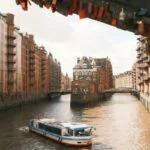
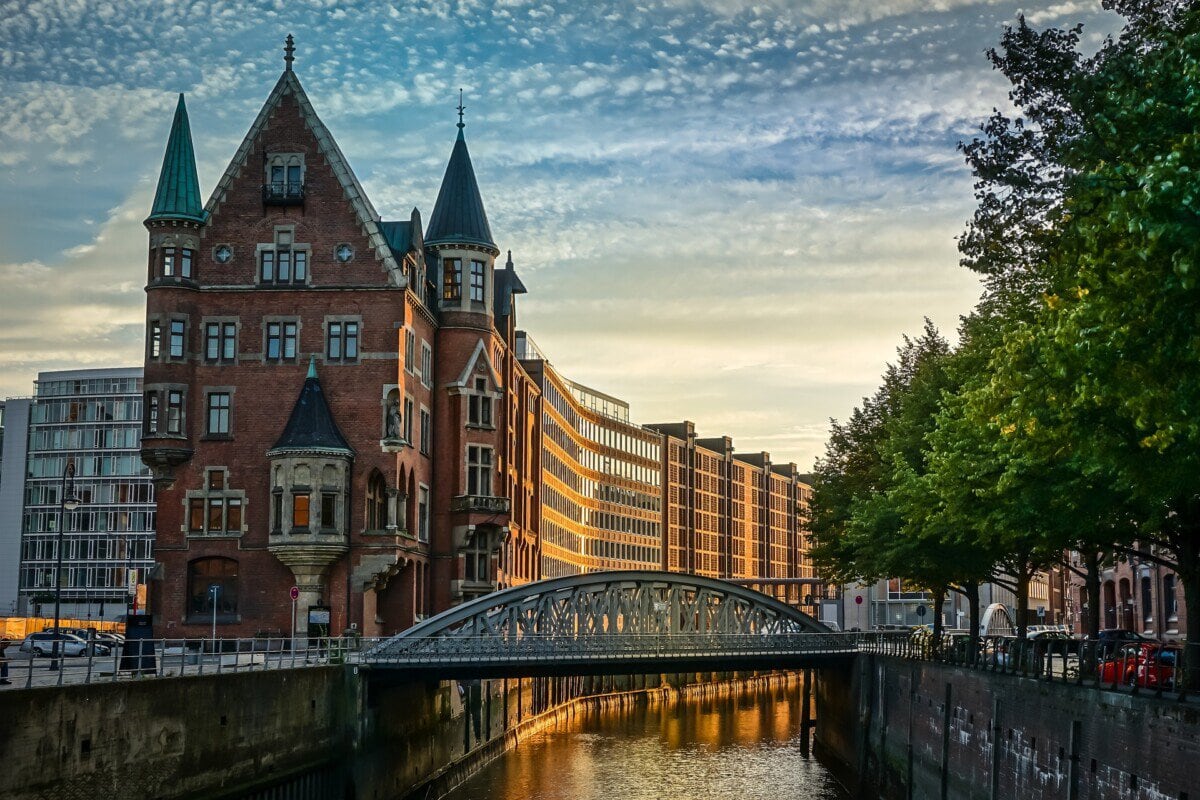
No district defines Hamburg’s trading past quite like the Speicherstadt. Built between 1883 and 1927 on a set of reclaimed islands south of the city centre, it remains the largest warehouse complex in the world, and UNESCO added it to the World Heritage list in 2015 alongside the neighbouring Kontorhaus office district.
The red-brick warehouses, built on oak piles driven into the riverbed, once stored coffee, spices, carpets, and cocoa arriving by ship from across the world. Narrow canals still run between the buildings, crossed by more than a dozen bridges, and the whole area is genuinely photogenic at almost any time of day.
Several of the old warehouses have been converted into museums and attractions, including the Speicherstadtmuseum, which tells the district’s trading history for around €6 (£5.16/$7.02), and the Miniatur Wunderland covered later in this guide. Walking the streets and bridges themselves costs nothing at all, and it is easily one of the best free things to do in the city.
The nearest stops are Meßberg on the U1 line and Baumwall on the U3, both a short walk from the district’s edge, and the walk between the two makes a natural route straight through the warehouses. Evening lighting picks out the gables and canals particularly well, so a return visit after dark is worth the small detour.
Allow around an hour to ninety minutes just to walk the district properly, longer if a museum stop is added. It connects directly into HafenCity to the south and the Elbphilharmonie a short walk further on, making it a natural first stop on any Hamburg itinerary.
Hamburg Hop-On Hop-Off Bus Tours: Routes and Prices
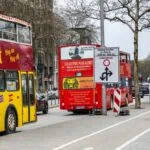
Hop-on hop-off buses are one of the simplest ways to get an overview of Hamburg without planning a route of your own. Several operators run open-top double-decker buses on colour-coded lines that loop past the city’s best-known landmarks, letting riders get off at any stop and rejoin a later bus once they are ready to move on.
The main routes link the Speicherstadt and HafenCity with the Elbphilharmonie, Landungsbrücken, the Reeperbahn and the Rathaus, and most also pass Jungfernstieg on the Binnenalster. Depending on the line, a full loop takes roughly 90 minutes to two hours, with buses running at regular intervals so a gap between stops rarely means a long wait.
Live or recorded commentary is included on board, usually available in several languages through onboard headphones or speakers, and covers the history behind each landmark as the bus passes it. Most tickets run for 24 hours from first use, so a single fare covers a full day of hopping on and off rather than one continuous ride.
A standard adult day ticket typically starts from around €20 (£17.20/$23.40), with combination tickets that add a harbour cruise or extra attractions priced higher. Children usually travel at a reduced rate, and several operators sell multi-day or combined bus-and-boat tickets for visitors planning more than a single day of sightseeing.
Because more than one operator runs hop-on hop-off buses in Hamburg, each with a different route, stop count and price, it is worth comparing them properly before buying rather than assuming they are interchangeable. Our Hamburg Hop-On Hop-Off Bus guide compares the main routes, stops and current prices in full so visitors can pick the one that fits their itinerary.
Compare hotels and other places to stay for your trip.
Check availabilityExplore holiday homes and apartments for your trip.
See holiday homesCompare hotel deals from multiple booking sites in one search.
Compare pricesElbphilharmonie: Hamburg’s Landmark Concert Hall
Few modern buildings define a skyline quite as quickly as the Elbphilharmonie has defined Hamburg’s. A wave-shaped glass structure sits on top of the old Kaispeicher A, a 1960s cocoa warehouse, and the combination of old brick base and shimmering new crown has made it the city’s most photographed building since it opened in 2017.
The building’s centrepiece is the Grosse Saal, a concert hall wrapped around the orchestra in the “vineyard” style, but most visitors come for the Plaza, a public viewing terrace roughly 37 metres up that wraps around the building with views over the harbour and the Elbe. It sits between the old warehouse and the new structure, reached by one of Europe’s longest curved escalators.
Visiting the Plaza currently requires a free timed ticket, bookable online or at the ticket pavilion, with a small booking fee of around €3 (£2.58/$3.51) per ticket. From 5 October 2026, standard admission is set to change to a flat €5 (£4.30/$5.85), so it is worth checking the official Elbphilharmonie website for the current arrangement before travelling.
The Plaza is open daily from 10:00 to midnight, with last admission at 23:30, making it one of the few major viewpoints in Hamburg accessible well into the evening. Concertgoers get complimentary Plaza access from two hours before their performance, which is worth factoring in for anyone also hoping to catch a show.
The nearest stop is Baumwall on the U3 line, a walk of around ten minutes along the waterfront. Allow 45 minutes to an hour for the Plaza alone, and longer if combining the visit with a guided tour of the Grand Hall, which is bookable separately for around €13 (£11.18/$15.21).
Reeperbahn After Dark: The St. Pauli Red-Light District Tour
The Reeperbahn has been Hamburg’s most notorious street since sailors first spent their wages here in the nineteenth century, and it remains the beating heart of the St. Pauli entertainment district today. A themed evening walking tour digs into that history properly, tracing how the strip grew from a rope-makers’ lane into one of Europe’s best-known red-light and nightlife districts.
The route takes in legendary stops such as Zur Ritze, a bar with a working boxing club in its basement that has hosted fighters and characters from the neighbourhood for decades. Along the way, the guide shares stories about the area’s criminal underworld, its music venues, and the figures who made the Reeperbahn famous, including its links to the young Beatles’ years just around the corner.
This is an 18+ tour, running for around two hours and typically including one alcoholic drink as part of the ticket. Tickets run from roughly €25 (£21.50/$29.25) per person, and evening departures make the most sense once the street itself starts to come alive, generally from early evening onward. It pairs naturally with time spent around the nearby Beatles-Platz.
HafenCity: Europe’s Largest Urban Development Project
HafenCity is Hamburg’s newest quarter, built on former dockland immediately south of the Speicherstadt and expanded steadily since construction began in the early 2000s. It is regularly described as the largest inner-city redevelopment project anywhere in Europe, adding an entirely new district to the map without extending the city’s outer edge.
The quarter mixes striking modern architecture with public promenades along the water, and the Elbphilharmonie sits at its western tip as the district’s obvious centrepiece. Warehouses converted into offices sit alongside brand-new apartment blocks, and the whole area is built with flood protection in mind, since much of it sits on raised plinths above the old harbour basins.
A useful stop within HafenCity is the Hamburg Dungeon and the nearby Miniatur Wunderland, both covered elsewhere in this guide, but the area rewards a simple walk along the waterfront just as much as any single attraction. The Überseequartier shopping and dining strip anchors the district’s southern half, with restaurants and cafés spilling onto the promenade in good weather.
Free public spaces make HafenCity an easy add-on to a Speicherstadt visit, and the walk between the two takes only a few minutes. The Elbe river beaches near Baakenhafen, an artificial harbour basin turned into a small urban beach in summer, are a pleasant surprise for anyone expecting only office blocks and shopping.
The nearest station is Überseequartier on the U4 line, which runs directly into the heart of the district. Allow one to two hours for a proper walk through, longer if combining it with the Elbphilharmonie or a meal by the water.
Hamburg City Passes Compared: CARD, Flex Pass and MegaPass
Hamburg sells several overlapping city passes, and it is worth knowing the difference before picking one for a HafenCity trip. Each suits a slightly different style of visit, from transport-heavy sightseeing to a flexible pick of paid attractions.
| Pass | What’s Included | Price | Best For |
|---|---|---|---|
| Hamburg CARD | Free travel on HVV buses, trains, the U-Bahn/S-Bahn and harbour ferries, plus up to 50% off at over 150 museums, tours and musicals | From €12.90 (£11.09/$15.09) for 1 day up to €54.90 (£47.21/$64.23) for 5 days | Visitors who want unlimited public transport and plan to move around the city daily |
| Hamburg Flex Pass | A pick of 2 to 7 attractions from a set list covering harbour cruises, the hop-on hop-off bus, guided tours and museum entries, valid across a flexible 30-day window | From €35 (£30.10/$40.95) for 2 attractions | Visitors who only want a handful of specific paid attractions rather than daily transport |
| Hamburg MegaPass | Port des Lumières, a Speicherstadt harbour cruise, three self-guided audio tours and 1GB of eSIM data, with the Explorer tier adding Hamburg Dungeon entry | Essential €49 (£42.14/$57.33); Explorer €75 (£64.50/$87.75), both valid 365 days | Visitors who prefer a fixed bundle of named attractions over pick-your-own flexibility |
The official Hamburg CARD is built around public transport, bundling free travel across the Greater Hamburg zone AB with discounts of up to 50% on around 150 museums, sights, and musicals. It is sold in 1 to 5 day versions from roughly €13 (£11.09/$15.09), and suits anyone planning to move around the city by train, bus, or harbour ferry each day. Our Hamburg Public Transport guide breaks down those U-Bahn, S-Bahn and ferry fares in full for anyone weighing the CARD against paying for single tickets.
The Hamburg Flex Pass works differently. Rather than transport, it lets visitors pick between 2 and 7 attractions from a set list, covering harbour cruises, hop-on hop-off buses, guided tours, and museum entries, and stays valid across a flexible 30-day window, with everything handled through a fully digital pass.
The Hamburg MegaPass bundles a wider mix again, including the Port des Lumières digital art experience, a harbour cruise through the Speicherstadt, three self-guided audio tours, and 1GB of eSIM data for the trip, plus discounts on selected attractions. Its top Explorer tier also adds entry to the Hamburg Dungeon, so it is worth checking that against the attraction’s standalone ticket price before choosing.
Miniatur Wunderland: The World’s Largest Model Railway
Tucked inside a Speicherstadt warehouse, Miniatur Wunderland holds the record for the largest model railway exhibition on the planet, with more than 16 kilometres of track spread across scenes recreating Germany, Scandinavia, the United States, and beyond. It is consistently ranked among the top attractions in the whole of Germany, not just Hamburg.
The level of detail is what draws people back more than once, since each miniature scene runs its own day-night cycle and includes hundreds of moving vehicles, aircraft, and tiny figures going about their business. A miniature Knuffingen Airport even has planes that appear to take off, one of the exhibition’s genuine engineering highlights.
Admission costs €22 (£18.92/$25.74) for an adult ticket and around €13 (£11.18/$15.21) for a child under 16, and tickets are timed to manage the notoriously long queues that build up on weekends and school holidays. Booking online in advance for a specific entry slot is strongly recommended rather than turning up and hoping for the best.
The attraction is genuinely large, and most visitors end up spending two to three hours inside, considerably longer than they originally planned. Families with young children should budget extra time, since parts of the exhibition can get crowded around peak “flight” and “train departure” moments that draw a small crowd of their own.
The nearest stop is Baumwall on the U3 line, the same stop used for the Elbphilharmonie, making the two an easy pairing on the same day. Given how popular it is with both children and adults, this is one of the few Hamburg attractions worth building a whole afternoon around rather than squeezing into a wider walking tour.
Chocoversum: Hamburg’s Interactive Chocolate Museum
Just a short walk from the Speicherstadt and Miniatur Wunderland, Chocoversum by Hachez turns chocolate-making into a genuinely interactive museum experience rather than a simple factory tour. It is housed in a converted warehouse at Meßberg 1, sitting right inside the UNESCO-listed warehouse district, and the setting’s exposed brick and cast-iron pillars add to the experience before the tour even begins.
The 90-minute guided tour walks visitors through the whole production process, from the raw cocoa pod to the finished bar, stopping at tasting stations along the way so guests can smell, touch, and sample ingredients at each stage. The visit builds towards a hands-on finale, where every participant designs and creates their own personalised chocolate bar to take home, making it a popular stop for families and couples alike.
Adult tickets cost around €29 (£24.94/$33.93) for a standard day ticket, or €23 (£19.78/$26.91) for an early-bird slot booked in advance, with reduced prices for children aged 6 to 17. Allow the full 90 minutes for the tour, and it is worth booking ahead since slots run on fixed departure times and weekends fill up quickly.
Search routes and flight options for your journey.
Search flightsChoose an Airalo eSIM and arrange mobile data before you arrive.
Browse eSIMsBook a private airport transfer in advance and have your ride planned before you arrive.
Check transfersRathaus: Hamburg’s Grand Neo-Renaissance Town Hall
Hamburg’s Rathaus is a striking neo-Renaissance building completed in 1897, replacing an earlier town hall lost in the Great Fire of 1842. It still serves as the seat of both the city’s government and its parliament, the Hamburgische Bürgerschaft, making it a working building rather than a purely historic one.
The façade alone is worth the visit, decorated with 20 statues of Holy Roman Emperors, and the building is deliberately taller than London’s Big Ben, a detail Hamburg’s civic pride has never quite let go of. The Rathausmarkt square in front hosts markets, concerts, and the annual Christmas market, so it is rarely empty even outside opening hours.
Guided interior tours run regularly through the week, costing around €8 (£6.88/$9.36) for an adult and lasting about an hour, taking in the ornate ceremonial rooms used for state receptions. The exterior and courtyard can be viewed at no cost at any time the square itself is open.
Opening hours generally run from 8am to 6pm daily, though tour times vary and it is worth checking the schedule in advance, particularly around parliamentary sessions when access can be restricted. English-language tours run less frequently than German ones, so travellers relying on English should confirm a suitable slot before planning their day around it.
The nearest stop is Rathaus station on the U3 line, which opens directly onto the square. Allow 30 to 60 minutes depending on whether a tour is included, and pair the visit with the nearby Alster arcades for a covered shopping detour if the weather turns.
Bunker St. Pauli: Climbing Hamburg’s WWII Flak Tower
Few buildings in Hamburg carry as much history as Bunker St. Pauli on Feldstraße, a colossal flak tower built in 1942 using forced labour during the Second World War. At its peak the tower could shelter around 25,000 people during Allied bombing raids on the city, and it remains one of the largest surviving examples of Nazi-era anti-aircraft architecture in Germany.
The bunker has since been transformed into one of Hamburg’s most talked-about new landmarks. A rooftop garden planted with roughly 4,700 plants opened in 2024, reached by a spiralling planted walkway that wraps around the building’s exterior, and the site now doubles as a memorial to victims of the Nazi regime and a lively cultural venue with bars and restaurants above St. Pauli’s nightlife strip.
The guided tour version climbs through the bunker’s historical interior rooms on the way up, giving context to the structure before emerging on the rooftop terrace for panoramic views over St. Pauli and the harbour. It runs for around 90 minutes, includes skip-the-line access, and costs from roughly €22 (£18.92/$25.74) per person.
St. Michael’s Church: Climbing the Michel’s Tower
St. Michael’s Church, known to locals simply as the Michel, is Hamburg’s most famous church and one of the best viewpoints in the whole city. The current baroque building dates from 1912, following two earlier churches lost to lightning and fire, and its green copper spire has served as a landmark for ships approaching the harbour for centuries.
The tower rises to 132 metres, and a viewing platform partway up gives sweeping views over the Speicherstadt, the harbour, and on a clear day as far as the North Sea. Visitors can either climb the stairs or take a lift for part of the ascent, which makes the platform accessible to most people without a strenuous full climb.
Admission to the tower costs €8 (£6.88/$9.36) for an adult, with a reduced rate of €6 (£5.16/$7.02), and the same ticket covers the church’s crypt. Opening hours vary by season, so it is worth checking the official St. Michaelis website for the current schedule before travelling, particularly outside the main summer months.
Free organ recitals are held at various points during the week, giving visitors a chance to hear the church’s baroque interior in use rather than simply viewing it as a static space. The church interior itself, aside from the tower and crypt, is generally free to enter during opening hours.
The nearest stop is Rödingsmarkt on the U3 line, a short walk uphill from the station. Allow 45 minutes to an hour for the tower and crypt, and it pairs naturally with a walk down toward the Landungsbrücken and harbour front afterwards.

Nikolaikirche Memorial: A Bombed Church as War Memorial
Where the Michel represents Hamburg’s baroque grandeur, the Nikolaikirche represents something far more sobering. Once one of the tallest buildings in the world when its spire was completed in 1874, the church was gutted by Allied bombing during Operation Gomorrah in 1943, and the ruined shell has been deliberately preserved as a memorial ever since.
The roofless nave and blackened walls are left largely as the bombing left them, a stark contrast to the carefully restored churches elsewhere in the city centre. A small underground exhibition beneath the ruin documents both the bombing campaign and the wider destruction of wartime Hamburg, adding context that the ruin alone does not provide.
Entry to the memorial grounds and exhibition is free, though a paid lift ride to a viewing platform partway up the surviving spire offers another rooftop panorama over the city for a small fee. The site rarely draws the crowds of the Michel a short walk away, which makes for a quieter, more reflective visit.
Most visitors combine the Nikolaikirche with a wider walk through the historic centre, since it sits almost exactly between the Rathaus and the Speicherstadt. Treating it as a five-minute photo stop misses the point of the place, and even a brief pause to read the exhibition panels adds real weight to a Hamburg itinerary.
The nearest stop is Rödingsmarkt on the U3 line, shared with St. Michael’s Church nearby. Allow 30 to 45 minutes, and consider visiting alongside the Michel and the Rathaus as a single, history-focused loop through the old town.
Hamburger Kunsthalle: One of Germany’s Great Art Museums
The Hamburger Kunsthalle is one of the largest art museums in Germany, holding a collection that spans more than 700 years, from medieval altarpieces to contemporary installations. Its holdings of German Romantic painting are particularly strong, including several of Caspar David Friedrich’s most famous works.
The museum is spread across two connected buildings: a historic 19th-century structure and the Galerie der Gegenwart, a modern cube added in the 1990s dedicated to contemporary art. The two feel genuinely distinct to walk through, and most visitors find the split works well for pacing a longer visit.
Standard adult admission costs €18 (£15.48/$21.06), with a reduced rate of €9 (£7.74/$10.53) for eligible groups, and the museum is open until 21:00 on Thursdays for anyone wanting an evening visit. Special exhibitions sometimes carry a small supplement on top of the standard ticket.
The museum sits directly behind Hamburg’s Hauptbahnhof, making it one of the easiest major attractions in the city to reach on arrival or before departure. A dedicated bridge connects the station forecourt straight to the museum entrance, cutting out any need to navigate surrounding traffic.
Allow 90 minutes to two hours for a proper visit, longer for anyone keen to see both wings in detail. It is closed on Mondays, so it is worth checking this against a wider itinerary before building a day plan around it.
Hafenrundfahrt: Touring Europe’s Third-Largest Port by Boat
A harbour boat tour, or Hafenrundfahrt, is one of the best ways to see Hamburg’s skyline, the Speicherstadt warehouses and the working container port up close, and it’s a genuine highlight for most first-time visitors. Hamburg’s harbour is Europe’s third-largest port by container traffic, behind Rotterdam and Antwerp, and it remains a working port rather than a tidied-up tourist basin, so cargo ships, tugs and gantry cranes are all part of the view.
Most basic tours last around an hour and follow a similar route past the Speicherstadt’s red-brick warehouses, under the Elbphilharmonie concert hall and out towards the container terminals, where the cranes at Altenwerder tower over ships being loaded. Longer tours push further into the harbour basins and shipyards for a closer look at the scale of cargo traffic that keeps the port running day and night.
Boats leave from numbered piers at the St. Pauli Landungsbrücken, with Brücke 1 typically used for smaller barges and Brücke 4 for the larger passenger vessels, so it’s worth checking your ticket for the right jetty. A basic one-hour Hafenrundfahrt starts from around €12.50 (£10.75/$14.63), though prices climb for evening lights cruises and speciality trips.
Several operators run boats of different lengths and styles from the Landungsbrücken piers, from short daytime loops to evening lights cruises and even an amphibious vehicle that drives straight into the Elbe. Our Hamburg Sightseeing Cruises guide compares six of the most popular options in full, so you can pick the right one for your trip.
Compare hostels and lower-cost accommodation for your trip.
Search hostelsAccess compensation support, eligible lounge benefits and faster payouts.
See the benefitsArriving before check-in or leaving later? Store your luggage and enjoy the extra time hands-free.
Store your bagsInternational Maritime Museum: Germany’s Seafaring Story
Housed in a converted Speicherstadt warehouse, the International Maritime Museum Hamburg tells the story of seafaring from ancient trade routes through to modern container shipping. Ten floors packed with more than 40,000 exhibits make it one of the largest private maritime collections anywhere in the world.
Highlights include an enormous collection of model ships, historic ship’s logs, uniforms, and detailed displays on the evolution of naval warfare and merchant shipping alike. The sheer density of exhibits means the museum rewards a slow, methodical walk through floor by floor rather than a quick skim.
Standard adult admission costs €18 (£15.48/$21.06), with a reduced rate of €13 (£11.18/$15.21) for ages 16 and 17, and a discounted evening ticket is sometimes available from late afternoon. Family tickets can work out cheaper than buying several individual entries, so it is worth checking at the desk.
The building itself, one of the district’s original 1879 warehouses, is worth pausing over on the way in, since the museum’s fit-out deliberately preserves much of the original industrial structure. This makes it a natural pairing with a wider Speicherstadt walk rather than a standalone detour.
The nearest stop is Meßberg on the U1 line, a short walk into the heart of the warehouse district. Allow 90 minutes to two hours given the scale of the collection, and consider it a strong rainy-day alternative if the weather turns while exploring the Speicherstadt.
Fischmarkt: Sunday Mornings at the Fish Market
Hamburg’s Fischmarkt has been trading on the banks of the Elbe since 1703, and it remains one of the city’s most distinctive experiences precisely because of when it happens. Every Sunday morning, stallholders sell everything from fresh fish to flowers, fruit, and secondhand goods to a mix of locals, night-owls, and early-rising tourists.
The market runs from the early hours until around 9:30am in winter and closer to 10am in summer, and it is genuinely worth setting an alarm for, since the atmosphere thins out quickly once it closes. Live music from the market’s own brass band inside the historic Fischauktionshalle auction hall adds to the slightly surreal early-morning atmosphere.
Many visitors arrive straight from a night out on the nearby Reeperbahn, and the market has become as much a St. Pauli tradition as a shopping trip for locals doing their weekly rounds. Arriving between 6am and 8am gives the best mix of atmosphere and stock before the busiest stalls sell out.
Entry to the market itself is completely free, and the only real cost is whatever gets bought from the stalls, including the Fischbrötchen fish sandwiches covered later in this guide. A coffee or hot chocolate from one of the surrounding stands is a welcome addition on a cold winter morning.
The market sits between the Landungsbrücken and Reeperbahn S-Bahn stations, both on the S1 line and within easy walking distance of the riverside site. Allow one to two hours, and pair it naturally with an early harbour boat tour if visiting on a Sunday.
Reeperbahn and St. Pauli: Hamburg’s Nightlife District
The Reeperbahn is Hamburg’s best-known street, a stretch of bars, clubs, theatres, and red-light venues running through the St. Pauli district that has drawn sailors, musicians, and party-goers for well over a century. The name comes from the ropemakers who once worked here, though almost nothing about the modern street recalls that quieter origin.
The district mixes genuinely seedy stretches with respected live music venues, theatres, and the annual Reeperbahn Festival, a major showcase for new music held every September. It is walkable and generally well policed, though the usual big-city sense checks apply, particularly late at night around the busiest side streets.
Most visitors find an evening walk along the main strip enough to get a feel for the area without needing to commit to any particular venue, and it costs nothing beyond whatever gets spent inside a bar or club. Weekend nights are considerably busier and louder than midweek visits, which suit anyone wanting a calmer first look.
The Millerntor-Stadion, home of FC St. Pauli, sits just north of the main strip and is worth a look even for non-football fans, given the club’s countercultural reputation across German football. The nearby Herbertstrasse, a short walled-off street that is technically part of the red-light district, remains off-limits to under-18s and to anyone simply looking for a photograph.
The nearest stops are Reeperbahn and St. Pauli on the S1 and S3 lines, both a short walk from the main strip. Allow two to four hours for a proper evening out, and combine it naturally with the Beatles-Platz and Star-Club history covered next.

Beatles-Platz and the Star-Club: Where the Beatles Learned Their Craft
Long before Liverpool made them famous, The Beatles spent months playing gruelling residencies in Hamburg’s clubs, and the city treats that history with real pride. Between 1960 and 1962, the band played extended stints at venues including the Indra Club and the Kaiserkeller before their most famous residency at the Star-Club on Grosse Freiheit in 1962.
The Star-Club itself no longer exists, having closed in 1969 and later been destroyed by fire, but a plaque on Grosse Freiheit marks the original site where the band played 48 nights that year alone. Those gruelling Hamburg sets, often several hours a night, are widely credited with shaping the band’s stage stamina and sound well before their commercial breakthrough.
A short walk away, Beatles-Platz sits at the junction of the Reeperbahn and Grosse Freiheit, opened in 2008 as a circular plaza with five steel silhouette statues of the band members, including Stuart Sutcliffe and Pete Best alongside the four better-known names. The plaza’s paving is even designed to look like a vinyl record from above.
Both sites are free to visit and can easily be combined into a single short stop rather than a dedicated detour. Fans wanting more depth can seek out several nearby plaques marking other former club sites, though many of the original buildings themselves have long since been demolished or repurposed.
The nearest stop is Reeperbahn station on the S1 line, putting both the plaza and the plaque within a five-minute walk. Allow 20 to 30 minutes, and it slots naturally into a wider evening exploring the surrounding St. Pauli district.
Spicy’s Gewürzmuseum: A Hands-On Spice Museum in the Speicherstadt
Tucked inside a historic warehouse at Am Sandtorkai in the Speicherstadt, Spicy’s Gewürzmuseum tells the story of Hamburg’s centuries-old spice trade in a building that once stored the real thing. The port’s trading links with the world’s spice-growing regions made this exact kind of warehouse essential to the city’s economy for generations, and the timber beams and cast-iron pillars inside are original features from its working days.
Inside, more than 900 exhibits spanning five centuries trace how spices reached Europe and shaped everyday cooking, arranged across interactive sensory stations covering over 50 varieties. Visitors are encouraged to touch, smell, and taste their way through the collection, with pepper samples handed out to adults and gummy bears offered to children along the way.
A downloadable audio guide is available in German, English, and French, and a visit works comfortably as a shorter stop on a Speicherstadt walking route. Entry costs around €7 (£6.02/$8.19) per person, and allowing 45 minutes to an hour is enough to work through the exhibits properly.
Planten un Blomen: Hamburg’s Green Heart in the City Centre
Planten un Blomen, Low German for “plants and flowers”, is one of the largest inner-city parks in Germany, sitting on the site of Hamburg’s former defensive fortifications. Formal gardens, a Japanese garden, and wide open lawns make it a genuine green lung for the surrounding office and shopping districts.
The park’s most distinctive summer feature is the Wasserlichtkonzerte, or water and light concerts, held on the park’s central lake most evenings from May to September. Coloured lights, fountains, and music combine into a genuinely popular free show that draws sizeable crowds on warm evenings.
Entry to the park is free at all times, and the water and light concerts carry no additional charge either, making Planten un Blomen one of the best-value evenings out in the whole city. A small entry fee applies only to certain specialist gardens within the park during their opening hours.
The park connects directly to the Congress Center Hamburg and sits within easy walking distance of both the Dammtor train station and the main shopping streets. This makes it an easy stop to fold into a day that also includes museums or shopping, rather than a dedicated half-day excursion on its own.
The nearest stop is Stephansplatz on the U1 line, right at the park’s southern edge. Allow one to three hours depending on whether the visit includes an evening water and light concert.

Hamburg Dungeon: 600 Years of the City’s Darker History
Located in HafenCity near Miniatur Wunderland, the Hamburg Dungeon takes a theatrical approach to the city’s past, turning roughly 600 years of history into a live, actor-led experience rather than a traditional museum walk. It sits comfortably alongside the area’s other big attractions, making it easy to combine into the same afternoon.
Live actors guide small groups through scenes covering events including the Black Plague, the Great Fire of 1842, and the Inquisition, along with encounters with pirates and other historical figures from Hamburg’s darker chapters. Sets, lighting, and special effects are used throughout to recreate each period rather than simply describing it.
The visit runs for about an hour and finishes with the Elevator of Doom, an indoor free-fall drop that caps off the experience. Tickets start from around €21 (£18.06/$24.57) per person, the mix of jump scares and dark themes makes it better suited to older children and adults than very young visitors, and booking ahead is worth doing in peak season since popular afternoon slots can sell out.
Alster Lakes: Sailing and Strolling the Aussenalster
The Alster lakes sit right in the middle of Hamburg, and the larger of the two, the Aussenalster, is one of the most popular outdoor spots in the whole city. A walking and cycling path circles the entire lake, roughly 7.4 kilometres around, and it is genuinely busy with joggers, cyclists, and picnicking locals whenever the weather allows.
Sailing has a long tradition here, and on any warm afternoon the lake fills with a mix of dinghies, rowing boats, and the occasional stand-up paddleboard. Several operators along the shore rent rowing and pedal boats by the hour, with prices generally running from around €11 (£9.46/$12.87) up to €20 (£17.20/$23.40) depending on the boat type and operator.
Walking the full loop takes around 90 minutes to two hours at a relaxed pace, though most visitors are happy with a shorter stretch rather than the whole circuit. The smaller Binnenalster, closer to the city centre, is easily seen on foot in a fraction of that time and connects directly into the Jungfernstieg shopping street.
The lakeside path is entirely free to use, and the only real cost involved is a boat rental should the weather and mood align. Cafés and restaurants dotted around the shore, particularly on the Harvestehuder Weg side, make a natural stop for anyone walking the full loop.
The nearest stop is Dammtor on the S21 and S31 lines, a short walk from the lake’s southern tip. Allow one to three hours depending on whether the visit includes a boat rental or a full walk around the shore.
Blankenese: A Staircase Quarter on the Elbe
Blankenese feels like a different city entirely from central Hamburg, a former fishing village turned wealthy suburb built onto a steep hillside above the Elbe. Its most famous feature, the Treppenviertel or staircase quarter, contains more than 5,000 steps winding between villas, cottages, and narrow alleyways that no car could ever reach.
Wandering the staircases without any fixed plan is genuinely part of the appeal, since the layout rewards getting slightly lost among the terraces and unexpected river views. Many of the cottages here began as fishermen’s homes before wealthy Hamburg merchants began buying up the hillside in the 19th century.
At the bottom of the hill, a small sandy beach along the Elbe gives views of passing container ships and, further downstream, the airport’s flight path, making for an unusual mix of nature and heavy industry in one view. Ice cream stands and cafés along the waterfront make it a pleasant spot to rest after the climb back up.
The whole neighbourhood is free to explore, and the main cost of a visit is simply travel time, since it sits further from the centre than most other stops in this guide. It makes a good half-day escape from the busier tourist core rather than a quick add-on to a packed itinerary.
The nearest stop is Blankenese station on the S1 and S11 lines, roughly 25 to 30 minutes from Hamburg Hauptbahnhof. Allow two to three hours for a proper wander through the staircases and down to the river.

Tierpark Hagenbeck: A Family Day at Hamburg’s Zoo
Tierpark Hagenbeck is one of Germany’s best-known zoos, famous for pioneering open enclosures without bars back in 1907, a design approach that influenced zoo architecture worldwide. More than 1,850 animals across roughly 210 species live across landscaped grounds designed to feel closer to natural habitats than a traditional caged zoo.
The zoo’s Tropical Aquarium, a separate ticketed section, adds reptiles, fish, and nocturnal animals to the main park’s collection of big cats, elephants, and primates. Families with young children tend to find the combination of open-air enclosures and the aquarium enough to fill a full day out without repeating themselves.
Standard adult admission costs €29 (£24.94/$33.93), with reduced rates for children and family tickets that work out cheaper than buying individual entries for a group. The separate Tropical Aquarium ticket, or a combined ticket covering both, adds a further cost worth factoring into a family budget.
The zoo sits in the Stellingen district, north-west of the city centre, and is large enough that comfortable shoes make a genuine difference to the day. A dedicated children’s petting area and playgrounds are scattered through the grounds, useful for anyone travelling with younger kids who need a break from walking.
The nearest stop is Tierpark Hagenbeck station on the U2 line, right at the main entrance. Allow three to four hours for a proper visit, and arrive earlier in the day during peak season to avoid the busiest midday crowds.
Shopping in Hamburg: From Mönckebergstrasse to Neuer Wall
Hamburg’s shopping scene splits neatly into two very different characters, and most visitors end up covering both without really planning to. Mönckebergstrasse, running between the Hauptbahnhof and the Rathaus, is the city’s busiest high street, packed with department stores and mainstream fashion chains.
For something more upmarket, Neuer Wall and the surrounding streets near the Binnenalster hold Hamburg’s designer boutiques and luxury names, a noticeably quieter and more polished stretch than Mönckebergstrasse. The historic Alster arcades, a covered shopping passage running alongside the canal, connect the two areas while keeping shoppers out of the rain.
The Europa Passage, a large multi-level shopping centre near the Rathaus, adds more than 100 shops under one roof, useful on a wet day or simply for a one-stop browse. Independent boutiques cluster in the Schanzenviertel district further out, a good alternative for anyone after something less mainstream than the city-centre chains.
Browsing costs nothing, and most shops in the centre open from around 10am to 8pm on weekdays, with shorter hours on Saturdays and almost everything closed on Sundays under Germany’s usual retail rules. Planning a shopping day around a Sunday, when the Fischmarkt and a few cafés are the main options, is generally worth avoiding.
The nearest stops are Hauptbahnhof for Mönckebergstrasse and Gänsemarkt or Jungfernstieg for Neuer Wall, both well served by the U-Bahn and S-Bahn network. Allow one to three hours depending on how thoroughly the two districts get explored.
Hamburg’s Food Scene: Fischbrötchen and Franzbrötchen
Two dishes sum up Hamburg’s food culture more than any other, and both are cheap, portable, and genuinely worth seeking out. The Fischbrötchen, a bread roll packed with fish such as herring, salmon, or shrimp, is the city’s classic quick lunch, sold from stalls all along the harbour and at the Fischmarkt itself.
Stalls near the Landungsbrücken are the obvious place to try one, with prices typically running from around €3 to €6 (£2.58-5.16/$3.51-7.02) depending on the fish and the stall. Locals tend to have strong opinions about which stand does it best, so asking around rarely produces a single agreed answer.
The Franzbrötchen, a cinnamon-swirl pastry unique to Hamburg and northern Germany, is the city’s answer to a French croissant, said to have originated among French soldiers stationed in Hamburg during the Napoleonic era. Bakeries across the city sell them fresh each morning, usually for a couple of euros each.
Beyond these two specialities, Hamburg’s wider food scene runs from traditional Labskaus, a corned beef and potato hash topped with a fried egg and pickled herring, to a genuinely diverse international restaurant scene shaped by its history as a port city. The Schanzenviertel and St. Pauli districts hold some of the best casual dining options away from the tourist core.
Both specialities are widely available near Landungsbrücken and the Fischmarkt, making them an easy addition to a harbour-focused morning. Trying at least one Fischbrötchen and one Franzbrötchen is close to a rite of passage for anyone visiting Hamburg for the first time.

Rainy Day Hamburg: The Best Indoor Options
Hamburg’s weather is famously changeable, and a good rainy day plan is worth having ready rather than improvising on the day. Miniatur Wunderland and the International Maritime Museum, both covered earlier in this guide, are two of the most reliable entirely indoor options, and both sit within the same Speicherstadt district.
The Hamburger Kunsthalle is another obvious choice, given its scale and its sheltered position right behind the Hauptbahnhof, and the Elbphilharmonie’s Plaza, while technically outdoors along its walkway, is largely covered and accessible without much exposure to the elements. The Europa Passage and Alster arcades shopping centres, covered earlier, also work well for a wet afternoon.
For families specifically, the Tropical Aquarium at Tierpark Hagenbeck stays open regardless of weather, and several indoor play centres and escape rooms are dotted around the city centre for anyone travelling with children who need to burn off energy indoors. A rainy morning is also a good time to tackle the Nikolaikirche’s underground exhibition.
Public transport across Hamburg’s U-Bahn and S-Bahn network is entirely underground or covered at most central stations, so a wet day rarely means being stuck waiting outdoors for long. A day ticket for the network is generally worth buying first thing on a rainy day, since a wet day tends to mean more hopping between stations than a dry one.
Between the Speicherstadt museums, the Kunsthalle, and the shopping arcades, all connected by the same network covered throughout this guide, a rainy day in Hamburg rarely means an empty itinerary. Checking the forecast the night before and picking two or three indoor stops in the same district saves a lot of unnecessary doubling back.

Rupert’s Handy Travel Tips
Hamburg mixes maritime landmarks with a genuinely varied history and nightlife scene, so a bit of planning helps you get the most out of both sides of the city.
- Book Miniatur Wunderland online for a timed slot: walk-up queues on weekends and school holidays can run well over an hour without one.
- Check the Elbphilharmonie Plaza’s current ticketing rules before you go: admission is changing from free-with-booking-fee to a flat €5 (£4.30/$5.85) from 5 October 2026.
- Set an early alarm for the Fischmarkt: the atmosphere and the best stock both thin out well before the market closes for the morning.
- Buy a day ticket for the U-Bahn and S-Bahn if you’re covering more than two or three stops: Hamburg’s sights are spread further apart than they first appear on a map.
- Give the Nikolaikirche proper time, not just a photo stop: the underground exhibition adds real context to the ruined church above it.
- Pair the Fischmarkt with an early harbour tour: both start near Landungsbrücken, so a Sunday morning can cover two major sights back to back.
Want to meet the reindeer behind our travel tips? Find out more in our page Who is Rupert?.




Frequently Asked Questions About Things to Do in Hamburg
How many days do I need to see Hamburg’s main sights?
Three days covers the Speicherstadt, Elbphilharmonie, Rathaus, and a harbour tour comfortably, though a full week lets you add Blankenese, the zoo, and a proper night on the Reeperbahn without rushing.
Is the Elbphilharmonie Plaza free to visit?
It currently requires a free timed ticket with a small booking fee, though standard admission is set to change to a flat €5 (£4.30/$5.85) from 5 October 2026, so it is worth checking the official site before travelling.
What is the best way to get around Hamburg?
The U-Bahn and S-Bahn network covers the whole city and is by far the easiest way to reach almost every attraction in this guide.
Do I need to book Miniatur Wunderland in advance?
It is strongly recommended. Timed tickets manage the notoriously long queues, and adult admission costs €22 (£18.92/$25.74).
What time is the Fischmarkt on Sundays?
It runs from the early hours until around 9:30am in winter and closer to 10am in summer, so arriving between 6am and 8am gives the best atmosphere.
Is the Speicherstadt free to visit?
Yes. Walking the district’s streets and canals costs nothing, though individual museums inside the warehouses, including the Speicherstadtmuseum, charge separate admission.
What should I do in Hamburg if it rains?
Miniatur Wunderland, the Hamburger Kunsthalle, and the International Maritime Museum are all entirely indoor and make for reliable rainy-day options.
Is Hamburg genuinely connected to the Beatles?
Yes. The band played extended residencies at clubs including the Star-Club on Grosse Freiheit in 1962, and Beatles-Platz nearby commemorates that history with statues of all five members from that era.
Further Reading
Hamburg joins a growing Germany cluster on AST, and if you are flying in, our Hamburg Airport Transfers guide covers every realistic way of reaching the city centre from HAM, including the S1 S-Bahn line, local buses, and taxis and private transfers.
For another major German city built around a walkable historic centre and its own layered wartime history, our Best Things to Do in Nuremberg guide covers the Kaiserburg, the Christkindlesmarkt, and Nuremberg’s underground bunkers in the same level of detail as this page.
If you are travelling onward by train, our Interrail Germany Pass Guide explains when a country-specific pass beats buying individual tickets, while our German Rail Tickets Explained guide breaks down the Deutschland-Ticket and regional fares for anyone exploring beyond Hamburg itself.
Travellers building a wider Germany trip may also want our Best Things to Do in Berlin guide, the flagship page in this same Germany cluster, which covers the capital’s landmarks and Cold War history in the same level of detail as this page. For up-to-date opening hours and current exhibitions across the city, the official Hamburg Tourism board website is worth bookmarking before you travel.