Reviewed by our editorial team Updated
Berlin is a city that wears its history openly, from an 18th-century gate that once marked the edge of a kingdom to a stretch of concrete wall that split the world in two for almost thirty years. It is Germany’s capital and by far its biggest city, yet it never quite feels like a single place: grand Prussian boulevards give way to graffiti-covered courtyards, and a UNESCO-listed museum complex sits a short walk from Europe’s most talked-about nightclub.
The scale here is genuinely different from most European capitals. Museum Island alone holds five major museums, the old Cold War frontier runs for kilometres through the city centre, and the parks are large enough to lose an afternoon in without ever feeling crowded. Visitors who arrive expecting a single afternoon of sightseeing usually end up staying much longer than planned.
Berlin’s 20th century is impossible to ignore, and this guide does not try to soften it. The Memorial to the Murdered Jews of Europe, the Topography of Terror, and the Berlin Wall Memorial sit alongside the Brandenburg Gate and the Reichstag as essential, sobering stops rather than optional extras, and most visitors find a day or two set aside for this history well spent.
Away from the history, Berlin is also a genuinely good time. The city’s food halls, döner shops, and street food markets punch well above their price point, its department stores and boulevards cover serious shopping, and its club scene, built around Kreuzberg and Friedrichshain’s old industrial buildings, has shaped dance music culture well beyond Germany’s borders.
The table below combines every stop’s practical details, nearest station, time needed, and price, with a short summary of what you’ll find there, so you can plan a route and see the full guide at a glance.
| Section | Nearest Station | Time Needed | Price | What You’ll Find |
| Brandenburg Gate | Brandenburger Tor (U/S) | 20-30 minutes | Free to view | Berlin’s iconic 18th-century triumphal arch |
| Reichstag Dome | Bundestag (U55) | 45-60 minutes | Free, registration required | Free glass dome atop parliament |
| Museum Island (5 museums) | Hackescher Markt (S) | Half day | €24 (£20.64/$28.08) day ticket | Five museums on one UNESCO site |
| Berlin Wall Memorial (Bernauer Strasse) | Bernauer Straße (U8) | 1-1.5 hours | Free | Most complete surviving stretch of Wall |
| Checkpoint Charlie | Kochstraße (U6) | 20-30 minutes | Free, museum from €5 (£4.30/$5.85) | Former Cold War border crossing |
| Berlin Cathedral | Hackescher Markt (S) | 1-1.5 hours | €15 (£12.90/$17.55) adult | Baroque-domed cathedral with dome-gallery climb |
| Berlin WelcomeCard | Available citywide (BVG counters/online) | N/A | From €29 (£24.94/$33.93) AB, €46 (£39.56/$53.82) ABC | Transport pass plus attraction discounts |
| Memorial to the Murdered Jews of Europe | Brandenburger Tor (U/S) | 30-45 minutes | Free | Holocaust memorial’s field of stelae |
| Fernsehturm (TV Tower) | Alexanderplatz (U/S) | 1 hour | from €20 (£17.20/$23.40) | TV tower with 360-degree views |
| Topography of Terror | Potsdamer Platz (U/S) | 1-1.5 hours | Free | Former Gestapo and SS site |
| Charlottenburg Palace | Sophie-Charlotte-Platz (U2) + bus | 1.5-2 hours | from €12 (£10.32/$14.04) | Prussian palace and gardens, West End |
| East Side Gallery | Warschauer Straße (U/S) | 45-60 minutes | Free | Longest surviving Wall, open-air murals |
| Olympiastadion Berlin | Olympiastadion (S)/Olympia-Stadion (U2) | 1 hour | From €17 (£14.62/$19.89) | Guided tour of the 1936 Olympics stadium |
| Tiergarten and the Victory Column | Bellevue (S) | 1-3 hours | Park free, column €4.50 (£3.87/$5.27) | Largest inner-city park and viewing platform |
| Spree River Cruise | Friedrichstraße (U/S) | 1 hour | from €22.50 (£19.35/$26.33) | City landmarks seen from the water |
| Zoo Berlin and Aquarium | Zoologischer Garten (U/S) | 2-4 hours | from €16 (£13.76/$18.72) | Family-friendly zoo near Zoologischer Garten |
| DDR Museum | Hackescher Markt (S) | 1-1.5 hours | €13.90 (£11.95/$16.26) adult | Hands-on exhibits on East German life |
| KaDeWe and Kurfürstendamm | Wittenbergplatz (U) | 1-3 hours | Free to browse | Department-store and boulevard shopping |
| Markthalle Neun | Görlitzer Bahnhof (U1) | 1-2 hours | Free entry, pay per dish | Food hall where Berliners actually eat |
| Currywurst and Döner | N/A | N/A | N/A | Berlin’s signature street foods |
| Kreuzberg and Friedrichshain Nightlife | N/A | N/A | N/A | Bars, clubs and Berghain’s door policy |
| Legoland Discovery Centre | Potsdamer Platz (U/S) | 2-3 hours | from €18 (£15.48/$21.06) | Indoor family attraction with kids |
| Rainy Day Berlin | N/A | N/A | N/A | Best indoor options for wet weather |
Brandenburg Gate: Berlin’s Most Photographed Landmark
No landmark sums up Berlin quite like the Brandenburg Gate. Built between 1788 and 1791 as a triumphal city gate, it has stood on Pariser Platz through a kingdom, an empire, a divided city, and now a reunified capital, which makes it as much a survivor as a monument.
The gate’s twelve Doric columns and the bronze Quadriga statue on top, a chariot driven by the goddess of victory, were modelled on the Acropolis in Athens. During the Cold War the gate sat right on the border between East and West Berlin, and for 28 years it was effectively unreachable from either side.
Today the square in front is open, free, and busy at almost any hour, which is part of the appeal. Early morning or just after sunset are the best times for photos without hundreds of other visitors in the frame, and the gate is beautifully floodlit once it gets dark, which makes an evening visit worth the small detour on its own.
Getting there could not be simpler. The Brandenburger Tor station sits directly beneath the square, served by the U55 U-Bahn line and the S1, S2, and S25 S-Bahn lines, so it works as a natural first or last stop on almost any Berlin itinerary.
Allow around 20 to 30 minutes to see the gate properly, longer if you plan to combine it with the nearby Reichstag or the Memorial to the Murdered Jews of Europe, both of which are a short walk away. It is fully step-free and one of the most accessible major sights in the city, with wide, level pavements right up to the columns.
Reichstag Dome: Touring Germany’s Parliament Building
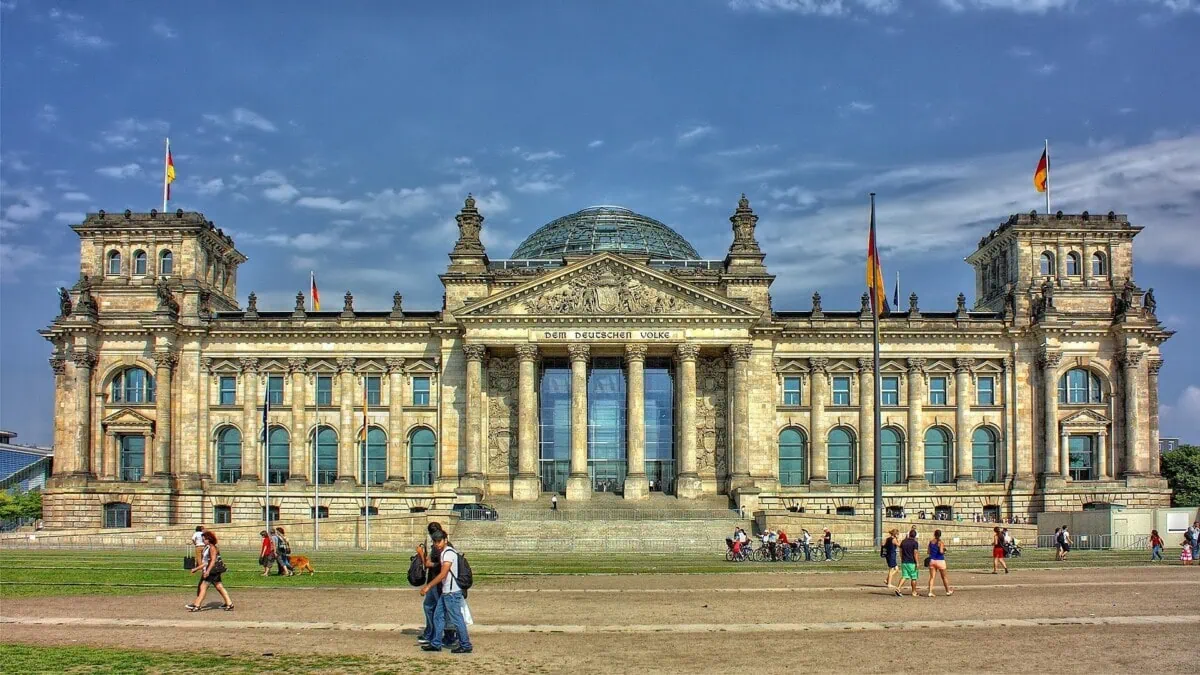
The glass dome sitting on top of the Reichstag, Germany’s parliament building, is one of the best free things to do in Berlin, provided you plan ahead. Visitors climb a spiralling ramp inside the dome for panoramic views over the government quarter and the Tiergarten beyond.
Admission is genuinely free, but advance registration is compulsory through the Bundestag’s official registration page, and slots can fill up days ahead in peak season. Walk-up registration at the visitor centre on Platz der Republik is possible if spaces remain, but it must be done at least two hours before your chosen visit time.
Everyone aged 16 and over needs a valid passport or photo ID to enter, and 14 and 15 year olds need some form of photo identification too; originals are required, and copies are not accepted at security. The included audioguide covers the roughly 230-metre spiralling ascent and descent in about 20 minutes.
Opening hours run long, generally from early morning until late evening, with admission slots released every 15 minutes, though the exact daily schedule shifts by season and around parliamentary sessions, so it is worth double-checking the current times on the day you book. The dome occasionally closes for maintenance or security reasons for short stretches each year, and the booking portal always reflects any closures in advance.
The nearest stop is Bundestag station on the U55 line, one stop from Brandenburger Tor, and the walk from Brandenburg Gate itself takes only a few minutes. Travellers who would rather skip the registration hassle can instead book a guided tour that includes dome access, though the standard route remains free for anyone willing to plan a little ahead.
Compare hotels and other places to stay in Berlin.
Check availabilityExplore holiday homes and apartments around Berlin.
See holiday homesCompare hotel deals in Berlin from multiple booking sites.
Compare pricesMuseum Island: Five World-Class Museums on One UNESCO Site
Museum Island, a UNESCO World Heritage Site sitting in the middle of the River Spree, packs five major museums into a genuinely small area: the Altes Museum, Neues Museum, Alte Nationalgalerie, Bodemuseum, and the Pergamonmuseum’s collections. Few cities anywhere offer this much world-class art and archaeology within a single short walk.
The star exhibit for most visitors is the bust of Nefertiti in the Neues Museum, a strikingly well-preserved 3,300-year-old Egyptian sculpture that draws long queues on its own. The Pergamonmuseum’s main building is currently closed for major renovation until July 2027, but its ancient treasures are shown instead at the nearby Pergamonmuseum. Das Panorama exhibition space.
A Museumsinsel day ticket costs €24 (£20.64/$28.08) and covers entry to all of the open Museum Island institutions for a single day, which works out considerably cheaper than paying for each museum separately if you plan to see more than two. Tickets can be bought online in advance to skip the ticket desk queue.
Realistically, seeing even the highlights of two or three museums takes a half day, and dedicated museum-goers can easily fill a full day here. Trying to rush all five in one visit tends to produce museum fatigue rather than a satisfying trip, so picking two favourites and going deep usually works better than skimming everything.
The island sits a short walk from Hackescher Markt station on the S-Bahn, or Friedrichstraße station a little further west, and the whole complex is step-free with lifts inside each museum. Given the crowds this site draws, booking a timed online ticket rather than turning up on spec is worth the two extra minutes.
Berlin Wall Memorial at Bernauer Strasse: Germany’s Fullest Cold War Site
For anyone who wants to properly understand the Berlin Wall rather than just see a painted fragment of it, the memorial along Bernauer Strasse is the single most complete site in the city. It preserves a genuine section of the border strip, complete with the death strip, watchtower, and a length of the original wall on both sides.
The 1.4-kilometre outdoor memorial runs along the street where some of the most dramatic escape attempts of the Cold War took place, including several tunnels dug beneath the border. Information panels, photographs, and audio stations along the route explain what visitors are looking at in a way that a quick photo of the East Side Gallery simply cannot match.
Admission is completely free for both the outdoor memorial and the indoor documentation and visitor centres, and the outdoor site is open daily from 8am to 10pm, giving plenty of flexibility to fit it around other plans. The indoor centres keep shorter hours, Tuesday to Sunday from 10am to 6pm, with last entry to the viewing tower at 5:45pm.
Because the site is genuinely sobering, it is worth allowing at least an hour, and closer to 90 minutes if you want to watch the short documentary film in the visitor centre and climb the observation tower for a view over the preserved death strip. It is not a quick photo stop in the way some other Wall sites can be, and rushing it tends to shortchange the experience.
The nearest stations are Bernauer Straße on the U8 line and Nordbahnhof on the S-Bahn, both a short walk from the memorial entrance, and the outdoor route is flat and fully accessible. Combining this with the East Side Gallery on the same day gives a genuinely thorough picture of the Wall’s history from two very different angles.
Checkpoint Charlie and the Cold War Frontier
Checkpoint Charlie was once the most famous crossing point between East and West Berlin, the spot where American and Soviet tanks faced off during the 1961 tank standoff. What stands today is a careful reconstruction, a replica guard hut and sign, rather than the original 1961 checkpoint, which was removed after reunification.
That reconstruction still matters as a place to stand and picture the divided city, and it is one of the most photographed spots in Berlin, actors in period uniforms included. Seeing the site itself costs nothing and takes only 20 to 30 minutes, which makes it an easy add-on to a walk between Museum Island and the Berlin Wall Memorial.
For real depth, the site’s Cold War exhibition space now houses Through the Iron Curtain, a free temporary exhibition that replaced the BlackBox Cold War exhibition after its permanent closure in January 2026, with a funded permanent redisplay due to open in 2028. A separate, privately run Checkpoint Charlie Museum sits across the road with a larger, more crowded collection covering the wider Cold War.
The common mistake here is expecting an untouched historical site; going in with the right expectations, a reconstruction and a photo opportunity rather than an original relic, makes the visit far more satisfying. Pairing it with a guided Cold War walking tour that includes the checkpoint tends to add far more context than reading a single information board.
The site sits directly above Kochstraße station on the U6 line, renamed Checkpoint Charlie in recent years to reflect its significance, and Stadtmitte on the U2 and U6 is only a few minutes’ walk further. Both stations are fully step-free.
Berlin Cathedral: Baroque Grandeur on Museum Island
The domed Berlin Cathedral, or Berliner Dom, is the largest Protestant church in Germany and one of the most striking buildings on Museum Island, its green copper dome visible from across much of the city centre. It was completed in 1905 as a grand statement of Prussian imperial ambition, and it still feels that way inside.
A standard adult ticket costs €15 (£12.90/$17.55), with a concession rate of €12 (£10.32/$14.04), and both include a free audioguide covering the main church, the Imperial Staircase, and the Hohenzollern Crypt where dozens of Prussian royals are buried. The dome gallery, roughly 50 metres up, gives one of the best rooftop views over the Spree and Museum Island.
Opening hours run Monday to Saturday from 9am to 6pm, with last admission an hour before closing, and Sunday hours are shorter, from noon to 6pm, to accommodate services. It is genuinely worth checking the schedule before visiting, since services and events occasionally shift the hours on short notice.
Allow around 90 minutes to see the cathedral properly, including the crypt and the climb to the dome gallery, which involves a fair number of steps and is not step-free. The main nave and museum areas at ground level are wheelchair accessible.
It sits a short walk from Hackescher Markt on the S-Bahn, directly beside the DDR Museum and within easy reach of the rest of Museum Island, making it simple to combine into a single Old Berlin morning or afternoon. Visiting early on a weekday, before the museum crowds arrive on the island, tends to give the quietest and most atmospheric experience of the nave.
Berlin WelcomeCard: Discounted Transport and Attractions Citywide
The Berlin WelcomeCard combines unlimited public transport with discounts at museums, tours, and restaurants, and it comes in two zone options depending on where a visit is headed. The AB card covers Berlin’s inner city, including all the major sights from the Brandenburg Gate to Museum Island, and starts from €29 (£24.94/$33.93) for two days.
The ABC card extends coverage into zone C, which includes Potsdam and BER Airport, so it suits anyone flying in through Schönefeld or planning a day trip to Sanssouci Palace. It starts from €46 (£39.56/$53.82) for two days, with longer options running up to six days for both tiers.
Both versions bundle in discounts of up to 50% at more than 170 attractions, restaurants, and theatres across the city, alongside unlimited travel on the U-Bahn, S-Bahn, buses, and trams. Up to three children aged six to fourteen travel free when accompanying an adult cardholder, which makes either tier a straightforward way to cut family costs.
Choosing between them comes down to the itinerary: stick with the AB card for a trip confined to central Berlin. Only upgrade to ABC if BER Airport transfers or a Potsdam excursion are on the plan, since paying for zone C coverage that never gets used is the easiest way to overspend on this pass. Anyone who would rather buy individual tickets instead of a bundled pass can find every fare and zone explained in our full guide to Berlin’s public transport network.
Memorial to the Murdered Jews of Europe: A Quiet Space by the Gate
A short walk from the Brandenburg Gate, the Memorial to the Murdered Jews of Europe covers an entire city block with 2,711 grey concrete slabs, or stelae, of varying heights arranged in a grid. Designed by architect Peter Eisenman and opened in 2005, it deliberately gives no single explanation, letting visitors form their own reaction as they walk through the uneven rows.
The outdoor Field of Stelae is always accessible, day or night, and costs nothing to visit, though the disorienting layout means it is worth a slow, unhurried walk rather than a quick cut-through. Many visitors find the experience genuinely different at different times of day, particularly as the stelae cast long shadows in early morning or late afternoon light.
Beneath the field, the Information Centre gives context to the memorial through personal accounts, documents, and family histories of victims of the Holocaust, and it is free to enter, open Tuesday to Sunday from 10am to 6pm and closed on Mondays. An audioguide is available for €3 (£2.58/$3.51).
Most visitors spend around 30 to 45 minutes outdoors among the stelae, and closer to an hour in total if they also go through the Information Centre, which is a genuinely affecting addition rather than a formality. The site is wheelchair accessible, with designated wider paths through the stelae field.
The nearest station is Brandenburger Tor, served by the U55 and the S1, S2, and S25 lines, making it easy to combine with the gate itself and the Reichstag on the same short walk.
Compare routes and fares for your journey to Berlin.
Compare flightsUse an eSIM to get online without hunting for a local SIM after arrival.
See eSIM optionsCheck private pickup options and plan your onward journey before arrival.
View transfersFernsehturm: Panoramic Views From Berlin’s TV Tower
At 368 metres, the Fernsehturm, or TV Tower, is the tallest structure in Germany and impossible to miss from almost anywhere in central Berlin. Built by the East German government between 1965 and 1969 partly as a statement of socialist technical achievement, it has become one of the city’s most recognisable symbols regardless of politics.
The observation deck sits at 203 metres, reached by a lift that takes under 40 seconds, and offers a genuinely spectacular 360-degree view stretching well beyond the city on a clear day. The Sphere Bar and restaurant one level up let visitors linger over a drink while the room slowly revolves.
Standard tickets start from €20 (£17.20/$23.40), and booking online in advance is strongly recommended, since walk-up queues at the ticket desk can run well over an hour on busy afternoons, particularly in summer. The tower operates daily, generally from 9am until 11pm.
A visit typically takes around an hour once queuing, the lift, and time on the deck are all factored in, though a table at the Sphere Bar can easily stretch that to two. The deck itself is fully wheelchair accessible, with lift access throughout.
The tower sits directly above Alexanderplatz, one of Berlin’s busiest transport hubs, served by the U2, U5, and U8 U-Bahn lines, multiple S-Bahn lines, and several tram routes, making it effortless to reach from almost anywhere in the city. That connectivity also makes Alexanderplatz a sensible base for exploring the surrounding shops, department stores, and the nearby Nikolaiviertel on foot afterwards.
Topography of Terror: Confronting Nazi History Near Potsdamer Platz
The Topography of Terror documentation centre sits on the exact site once occupied by the headquarters of the Gestapo, the SS, and the Reich Security Main Office, the administrative heart of the Nazi terror apparatus. Almost nothing of the original buildings survives above ground, which the site itself uses as part of its message.
The indoor exhibition traces how the Nazi regime built and ran its machinery of persecution, from the earliest laws to the concentration camp system, using original documents, photographs, and first-hand accounts. An outdoor trench exhibition, “Berlin 1933-1945”, runs along the excavated foundations of the former Gestapo headquarters and is included in the same free visit.
Admission is completely free, and the site is open daily, with the indoor exhibition running from 10am to 8pm and the outdoor area accessible until dusk or 8pm at the latest. It closes on 24 and 31 December and on New Year’s Day.
Most visitors spend an hour to 90 minutes here, longer if reading every panel in detail, and it pairs naturally with the Memorial to the Murdered Jews of Europe or the nearby remaining stretch of the Berlin Wall along Niederkirchnerstraße, which runs directly alongside the site.
The nearest station is Potsdamer Platz, served by the U2 U-Bahn line and multiple S-Bahn routes, with Anhalter Bahnhof on the S-Bahn also within easy walking distance. The indoor exhibition and grounds are step-free throughout, and free guided tours in English run at set times on some days, worth checking the site’s own schedule before you arrive.
Charlottenburg Palace: Prussian Splendour in the West End
Charlottenburg Palace is Berlin’s largest surviving royal palace, built from 1695 for Sophie Charlotte, wife of Elector Friedrich III, and expanded over the following century into a sprawling complex of state rooms, a chapel, and a domed central pavilion. Unlike the city-centre landmarks covered so far, this is a genuine trip out to the leafy west of Berlin.
An individual ticket to the Old Palace costs €12 (£10.32/$14.04), while the combined charlottenburg+ ticket at €19 (£16.34/$22.23) also covers the New Wing, and seasonally the New Pavilion and Mausoleum, making it better value for anyone keen to see more than one building. Highlights include the ornate Porcelain Cabinet and the extensive formal gardens behind the palace, which are free to walk through.
The palace keeps seasonal hours, Tuesday to Sunday from 10am to 5:30pm between April and October and 10am to 4:30pm from November to December, with last admission 30 minutes before closing and the palace closed on Mondays year-round.
Allow around 90 minutes to two hours to see the main rooms and gardens properly, longer on a sunny day when the gardens themselves are worth lingering in. The Old Palace’s grand staircase has steps, though the ground-floor state rooms and gardens are largely accessible.
There is no direct U-Bahn stop, so most visitors take the U2 to Sophie-Charlotte-Platz and walk around 15 minutes, or catch bus M45 or 109 from Zoologischer Garten, which drops passengers right outside the palace gates. The bus route is generally the more comfortable option for anyone travelling with a pushchair or heavy bags.

East Side Gallery: The Berlin Wall’s Open-Air Canvas
Running for around 1.3 kilometres along Mühlenstraße in Friedrichshain, the East Side Gallery is the longest surviving stretch of the Berlin Wall and the largest open-air gallery in the world. More than 100 artists from across the globe painted it in 1990, shortly after the Wall fell, turning a former death strip into a canvas for hope and protest.
The most famous single mural is Dmitri Vrubel’s “My God, Help Me to Survive This Deadly Love”, better known as the Fraternal Kiss, showing Soviet leader Leonid Brezhnev and East German leader Erich Honecker mid-embrace. It has been repainted more than once after weather and graffiti damage, and it remains the gallery’s most photographed panel by a wide margin.
Entry is free, the gallery is outdoors, and it never closes, though the murals are naturally easier to appreciate in daylight and considerably less crowded early in the morning. Weekend afternoons draw large numbers of visitors, tour groups, and street performers along the riverside path.
Walking the full length at a relaxed pace, stopping to read the captions beside each panel, takes around 45 minutes to an hour. The path runs flat alongside the Spree the whole way, making it one of the easiest historical sites in Berlin to navigate with a pushchair or wheelchair.
The gallery sits between Ostbahnhof and Warschauer Straße stations, both served by S-Bahn and U-Bahn lines, so it is easy to fold into a wider day exploring Friedrichshain’s bars, markets, and nightlife, all covered later in this guide.
Olympiastadion Berlin: Touring the 1936 Olympic Games Venue
Berlin’s Olympiastadion was built for the 1936 Summer Olympics, the first Games ever broadcast on television and the event where American sprinter Jesse Owens won four gold medals in front of Adolf Hitler. The stadium’s austere limestone architecture, designed by Werner March, was intended as a showcase for the regime, and that history is a central part of any visit today.
The stadium has stayed in continuous use since, hosting the 2006 FIFA World Cup Final and the 2015 UEFA Champions League Final, and it remains the home ground of Hertha BSC. A renovation ahead of the 2006 World Cup added a partial roof and dropped capacity from around 110,000 to just under 75,000 while keeping the original 1930s shell intact.
The guided tour runs for about an hour in English with a live guide, and it reaches areas normally off-limits on a standard matchday visit. Highlights include the players’ tunnel, the underground warm-up hall, and the VIP and broadcast areas, alongside the running track where Owens set his records.
Tickets start from €17 (£14.62/$19.89) per person, and the wheelchair-accessible route runs the full length of the tour. Booking a slot in advance is worth doing on event days, since parts of the stadium close to visitors whenever Hertha BSC or a concert has the ground booked.
Tiergarten and the Victory Column: Berlin’s Green Heart
The Tiergarten is Berlin’s largest and most central park, a former royal hunting ground turned public green space that stretches from the Brandenburg Gate almost all the way to Zoologischer Garten station. At 210 hectares it is large enough to spend hours wandering without seeing the same path twice.
Rising from a roundabout near its centre is the Victory Column, or Siegessäule, a 67-metre monument topped by a gilded statue of Victoria commemorating 19th-century Prussian military campaigns. Climbing the 285 steps inside costs €4.50 (£3.87/$5.27) for adults and rewards the effort with sweeping views over the park and the government quarter.
The park itself is free and open around the clock, with hours for the Victory Column running seasonally, roughly 9:30am to 7pm in summer and 9:30am to 5:30pm in winter, closed on 24 December. Wide gravel paths make most of the park easy going for pushchairs and wheelchairs, though the column’s spiral staircase is not accessible.
How long to spend here depends entirely on appetite: a brisk walk through takes 30 minutes, while a proper wander with a stop at the column and a picnic on the grass can easily fill an afternoon, particularly on a warm weekend when Berliners fill the park themselves.
The park is served by several stations along its edges, with Bellevue on the S-Bahn closest to the northern side and bus routes 100 and 106 running straight through on their way between Alexanderplatz and Zoologischer Garten. The Tiergarten U-Bahn stop on the U9 line also sits right at the park’s southern edge, close to the Zoo entrance.
Compare hostels and lower-cost places to stay in Berlin.
Search hostelsAccess compensation support, eligible lounge benefits and faster payouts when flights go wrong.
See the benefitsUse convenient luggage storage around Berlin between arrival, check-in and departure.
Check storageSpree River Cruise: Seeing Berlin’s Landmarks From the Water
Berlin looks genuinely different from the water, and a Spree river cruise is one of the most relaxing ways to see the government quarter, Museum Island, and Berlin Cathedral without covering the distance on foot. Boats depart regularly from several docks in the city centre, with commentary in German and English.
A standard one-hour cruise from Friedrichstraße costs from €22.50 (£19.35/$26.33) and passes the Reichstag, the Chancellery, Museum Island, and the Berlin Cathedral in a single loop, making it a genuinely efficient way to see several major sights back to back. Longer cruises of two to three and a half hours extend further along the river, some as far as Charlottenburg.
Boats run frequently through the day, generally every 30 minutes to an hour depending on the season and operator, and departures thin out considerably over winter, when some routes stop altogether. Booking online ahead of time secures a seat on the more popular midday and early evening departures.
Most boats are step-free with accessible seating areas, though the boarding gangway can involve a small step depending on the water level, so it is worth checking with the operator in advance if mobility is a concern. An evening cruise after dark, when the landmarks are lit up, is a genuinely different experience from the same route by day.
Departure points cluster around Friedrichstraße station, served by both the S-Bahn and several bus routes, with a handful of smaller docks near the Nikolaiviertel and Museum Island also worth checking depending on which company you book with.
For a longer version of the same trip, a 2.25-hour cruise from the same Friedrichstrasse pier continues further along the Spree, taking in Bellevue Palace and Charlottenburg Palace as well as the sights already covered on the shorter route.
Hop-On Hop-Off Bus Tours
Berlin also has a busy market of hop-on hop-off bus tours, with several operators running open-top double-decker routes past the city’s main landmarks, from a one-day ticket bundling a Spree boat cruise to a two-day pass and a separate evening-only tour. Our full Berlin Hop-On Hop-Off Bus guide compares all six products by price, rating and validity, so the right pick depends on how much time is available and whether live commentary or a boat add-on matters more.
Zoo Berlin and Aquarium: A Family Favourite Near Zoologischer Garten
Zoo Berlin is Germany’s oldest and most-visited zoo, home to more than 20,000 animals across roughly 1,100 species, and it holds a genuine claim to fame as the only zoo in the country with giant pandas. Founded in 1844, it sits right in the middle of the city rather than out on the outskirts.
Zoo-only tickets start from €16 (£13.76/$18.72) online, while a combined ticket covering the neighbouring Aquarium starts from €24 (£20.64/$28.08), and buying online in advance is consistently cheaper than paying at the gate. The Aquarium next door houses crocodiles, sharks, and an impressive multi-storey tank without needing a separate trip.
Opening hours run from 9am to around 6:30pm, with last admission an hour before closing, though exact times shift by season, so checking the current schedule before setting off is worth the minute it takes. The zoo stays open year-round, including over winter when many outdoor attractions in Berlin close.
Families should budget at least half a day to see both the zoo and aquarium properly, and the site is generally pushchair and wheelchair friendly, with paved paths throughout and accessible toilets at several points around the grounds.
The entrance sits right beside Zoologischer Garten station, one of Berlin’s busiest transport hubs, served by the U2 and U9 U-Bahn lines and multiple S-Bahn routes, making it one of the easiest major attractions in the city to reach. That same hub also puts Charlottenburg Palace and the Ku’damm shopping strip within easy onward reach on the same trip out west.

DDR Museum: A Hands-On Look at Life Behind the Wall
Where the Berlin Wall Memorial and Topography of Terror explain the machinery of a divided Germany, the DDR Museum shows what ordinary daily life actually looked like in the East. It is a deliberately hands-on museum, built around touching, opening, and trying things rather than reading behind glass.
Visitors can sit inside a genuine Trabant car, rifle through a fully furnished East German apartment’s cupboards and drawers, and browse consumer goods that would have lined GDR shelves. A short film and several interactive stations cover the surveillance state run by the Stasi alongside the more everyday material.
Adult admission costs €13.90 (£11.95/$16.26), and the museum is open daily from 9am to 9pm, with shorter hours on 24 and 31 December. Because it is compact and consistently busy, booking a timed ticket online in advance is genuinely worth doing rather than queuing at the door.
Most visits last around 60 to 90 minutes, and the interactive format tends to work particularly well for children and teenagers who might otherwise find a more conventional museum less engaging. The museum is fully accessible, with lifts and wide walkways throughout.
It sits directly on the Spree opposite Berlin Cathedral, a short walk from Hackescher Markt station on the S-Bahn, making it easy to slot into the same day as the rest of Museum Island. Its gift shop, stocked with genuine GDR-era design objects and reproductions, is worth a browse even for visitors who skip every other souvenir shop in the city.
KaDeWe and Kurfürstendamm: Shopping in the West End
KaDeWe, short for Kaufhaus des Westens, is continental Europe’s largest department store and a Berlin institution in its own right, opened in 1907 and rebuilt after wartime bomb damage. Even visitors with no intention of buying anything tend to find the building itself worth a look.
The standout floor is the top-level food hall, a vast spread of counters selling everything from fresh oysters to German cakes, with several small bars where shoppers can eat standing up between browsing. It draws a genuinely mixed crowd of tourists, locals on a lunch break, and serious food shoppers stocking up for dinner parties.
Outside, Kurfürstendamm, universally shortened to Ku’damm, is Berlin’s grandest shopping boulevard, running for several kilometres past flagship stores, cinemas, and cafes. Browsing either KaDeWe or Ku’damm costs nothing beyond whatever you choose to buy, and both stay open on standard German retail hours, generally 10am to 8pm Monday to Saturday, closed Sundays.
Budget an hour or two for a proper browse of KaDeWe’s food hall alone, and considerably longer if a walk along Ku’damm is on the agenda too. Both the store and the boulevard are fully step-free, with lifts throughout KaDeWe’s eight floors.
The nearest station is Wittenbergplatz, a beautifully preserved 1913 U-Bahn station served by the U1, U2, and U3 lines, sitting directly outside KaDeWe’s main entrance. Its original tiled signage and vintage advertising displays are a small attraction of their own for anyone with a few spare minutes between shops, and a genuinely charming contrast to KaDeWe’s glossy modern floors.
Markthalle Neun: Where Berliners Actually Go for Food
Tucked inside a beautifully restored 1891 market hall in Kreuzberg, Markthalle Neun is where a lot of Berliners themselves go to eat rather than a tourist-built food court. It runs a regular produce and grocery market alongside a rotating calendar of food-focused events that draw crowds from across the city.
The best-known event is Street Food Thursday, held every Thursday from 5pm to 10pm, when dozens of vendors set up stalls selling everything from Vietnamese banh mi to Berlin-style fish sandwiches under the hall’s original iron roof. Entry to the hall itself is free, and you simply pay per dish as you go.
A separate Breakfast Market runs most Saturday mornings, and the hall’s permanent traders sell fresh produce, meat, cheese, and bread throughout the week for anyone who wants to shop rather than eat on the spot. Checking the current events calendar before visiting is worth doing, since the hall’s programme changes fairly often.
Plan on an hour or two on Street Food Thursday itself, since queues at the more popular stalls can run long, and arriving right at opening or later in the evening tends to mean shorter waits than the peak dinner rush. The hall is step-free and wheelchair accessible throughout.
The nearest stations are Görlitzer Bahnhof on the U1 line and Schlesisches Tor a little further east, both putting you right in the heart of Kreuzberg’s café and bar scene as well. Combining a visit with an evening walk along the nearby Landwehrkanal makes for an easy, low-key way to round off a Street Food Thursday visit.

Currywurst and Döner: Berlin’s Street Food Icons
Currywurst, a sliced pork sausage doused in curried ketchup sauce, was invented in Berlin in 1949 by Herta Heuwer, who reportedly traded goods with British soldiers for the curry powder and ketchup she needed to create the sauce. It has been a fixture of Berlin street food ever since.
Longstanding stands still do brisk trade across the city, and Konnopke’s Imbiss, operating under the U-Bahn tracks at Eberswalder Straße since 1930, is one of the most famous, having served currywurst there since the dish’s earliest days. A portion typically costs somewhere in the region of €3 to €5 (£2.58-4.30/$3.51-5.85) depending on the stand.
Berlin is also widely credited as the city where the döner kebab sandwich, meat and salad stuffed into flatbread rather than served on a plate, took the form now common worldwide, popularised by Turkish immigrants in Kreuzberg during the early 1970s. Mustafa’s Gemüse Kebap, a small stand near Mehringdamm station, is famous enough today to draw genuinely long queues at almost any hour.
Neither dish needs a reservation or much planning, just an appetite and a willingness to eat standing up, and both are widely available at stands, kiosks, and food halls across the city, not only at the most famous addresses. Budget €20 to €30 (£17.20-25.80/$23.40-35.10) for a casual street food lunch for two, drinks included.
Kreuzberg and Neukölln have the densest concentration of both currywurst stands and döner shops, and the areas around Kottbusser Tor and Hermannplatz on the U-Bahn are a good starting point for anyone wanting to graze rather than plan a single sit-down meal.
Kreuzberg and Friedrichshain Nightlife: Bars, Clubs and Berghain’s Reputation
Berlin’s reputation as a nightlife capital rests heavily on Kreuzberg and Friedrichshain, two districts full of former industrial buildings, warehouses, and power stations repurposed into bars and clubs. This is where the city’s post-reunification techno scene largely took shape through the 1990s and where it still plays out today.
The most famous single name is Berghain, a techno club housed in a former power station near Ostbahnhof, whose notoriously unpredictable door policy has become a genuine cultural phenomenon in its own right. It is worth being realistic about this one: entry is never guaranteed for anyone, queues can run for hours, and there is no way to book ahead or improve your odds.
Beyond Berghain, the RAW-Gelände complex near Warschauer Straße packs several bars, a climbing wall, and outdoor clubs into a former railway repair yard, while venues like Watergate and Tresor cover techno and electronic music at a slightly less intimidating door than Berghain’s. Plenty of more relaxed bars along Simon-Dach-Straße and Wrangelstraße need no queue at all.
Most bars have no cover charge, while club entry generally runs somewhere between €10 and €20 (£8.60-17.20/$11.70-23.40) once you are through the door, cash only at most venues. Berlin’s clubs famously do not rush anyone out, and some parties genuinely run from Friday night into Sunday afternoon.
Warschauer Straße, served by the U1 and S-Bahn lines, sits at the heart of the action for both districts, putting RAW-Gelände, Berghain, and a dense strip of bars all within a short walk of the same station.
Legoland Discovery Centre: Berlin With Kids
Tucked into the basement of the Sony Center at Potsdamer Platz, the Legoland Discovery Centre is one of Berlin’s most reliable rainy-day options for families with younger children. It packs millions of Lego bricks, several themed rides, and a 4D cinema into a compact, entirely indoor space.
Highlights include a detailed Miniland model of Berlin’s own landmarks built entirely from Lego bricks, a gentle rollercoaster themed around Lego characters, and a Master Builder workshop where staff run short building activities aimed at children. It leans younger, roughly ages 3 to 10, though plenty of adult Lego fans visit too.
Tickets start from €18 (£15.48/$21.06) when booked online, and booking a specific time slot in advance is worth doing since the centre limits numbers inside at any one time. Opening hours vary by day of the week, generally from late morning into the evening.
Families should budget two to three hours to make the most of a visit, and the centre is fully step-free and wheelchair accessible throughout, with a café on site for a break between attractions.
The Sony Center sits directly above Potsdamer Platz station, served by the U2 U-Bahn line and multiple S-Bahn routes, making it one of the easiest family attractions in the city to reach without a car. The same complex also houses several family-friendly restaurants, making it simple to turn a Lego morning into a full day out without moving on to another part of the city.

Rainy Day Berlin: The Best Indoor Things to Do
Berlin’s weather is changeable for a lot of the year, and thankfully the city has enough indoor attractions that a wet afternoon is never really a problem. Several of the sights already covered in this guide, Museum Island, the DDR Museum, and the Legoland Discovery Centre among them, are entirely indoor by design.
The Fernsehturm’s observation deck and Sphere Bar stay open regardless of weather, and cloudy days can still deliver a striking view over a moody, low-lit skyline even without full sunshine. Berlin Cathedral’s dome gallery and crypt make a similarly good wet-weather alternative to an outdoor walking tour.
For something different, Vabali Spa, a large Balinese-themed day spa near Hauptbahnhof, offers saunas, steam rooms, and pools that make a genuinely relaxing way to spend a grey afternoon, particularly after a couple of days on your feet sightseeing. Several escape room venues around Alexanderplatz and Kreuzberg also fill a couple of hours without ever stepping outside.
For families specifically, the Zoo’s Aquarium and the DDR Museum’s interactive stations both work well when rain rules out the outdoor enclosures, and Markthalle Neun’s covered hall means Street Food Thursday goes ahead regardless of the forecast.
Most of these indoor options cluster around Alexanderplatz, Potsdamer Platz, and Museum Island, all connected by the same U-Bahn and S-Bahn network covered throughout this guide, so a rainy day rarely means being stuck in one part of the city. A day pass for public transport is generally worth buying first thing, since a wet day tends to mean more hopping between stations than a dry one.

Rupert’s Handy Travel Tips
Berlin mixes grand landmarks with some genuinely heavy history, so a bit of planning helps you get the most out of both sides of the city.
- Register for the Reichstag Dome days ahead: it is free, but slots on the Bundestag’s booking portal fill up quickly in peak season, and you need photo ID on the day.
- Buy a Museumsinsel day ticket rather than single entries: if you plan to see more than two museums on Museum Island, the €24 day ticket works out cheaper.
- Book Fernsehturm tickets online in advance: walk-up queues at the ticket desk can run well over an hour on busy afternoons.
- Set real expectations for Berghain: entry is never guaranteed for anyone, so treat it as a fun story to tell rather than the centrepiece of a night out.
- Give the WWII and Cold War sites proper time: the Wall Memorial, Topography of Terror, and the Holocaust Memorial reward a slow, unhurried visit rather than a quick photo stop.
- Base yourself near a U-Bahn or S-Bahn line, not just a district: Berlin is spread out, and a central station on the network saves far more time than a slightly trendier postcode.
Want to meet the reindeer behind our travel tips? Find out more in our page Who is Rupert?.


Frequently Asked Questions About Things to Do in Berlin
How many days do I need to see Berlin’s main sights?
Three to four days covers the major landmarks, one or two museums, and a Cold War history site, though a full week lets you add the palace, family attractions, and a proper night out without rushing.
Is the Reichstag Dome really free?
Yes. Admission is free, but you must register in advance through the Bundestag’s official booking portal and bring valid photo ID on the day.
What is the best way to get around Berlin?
The U-Bahn and S-Bahn network covers the whole city and is by far the easiest way to reach almost every attraction in this guide.
Is Museum Island worth the money?
Yes, particularly with the €24 (£20.64/$28.08) day ticket, which covers all five institutions and includes world-famous pieces like the Nefertiti bust in the Neues Museum.
Can I actually get into Berghain?
There is no guaranteed way in for anyone. Entry depends entirely on the door staff’s judgement on the night, so it is best treated as a possibility rather than a plan.
Are the Berlin Wall sites free to visit?
Yes. The Berlin Wall Memorial at Bernauer Strasse and the East Side Gallery are both free, and the current Checkpoint Charlie exhibition, Through the Iron Curtain, is also free after the previous ticketed BlackBox Cold War exhibition permanently closed in January 2026.
What should I do in Berlin if it rains?
Museum Island, the DDR Museum, the Fernsehturm, and the Legoland Discovery Centre are all entirely indoor and make for reliable rainy-day options.
Is Berlin expensive compared to other European capitals?
Generally not. Many of its best sights, including the Brandenburg Gate, the Wall Memorial, and the Topography of Terror, are completely free, and paid attractions tend to be cheaper than equivalents in London or Paris.
Further Reading
Berlin is the flagship stop in a wider new Germany cluster on AST, and if you are flying in, our Berlin Airport Transfers guide covers every realistic way of reaching the city centre from BER, including the FEX Airport Express, the S9 and S85 S-Bahn lines, and taxis and private transfers.
The Wall and the Cold War get only a brief mention in the sections above, but the subject deserves far more room than one page allows. Our dedicated Berlin Wall and Cold War History guide covers the Berlin Wall Memorial, Checkpoint Charlie, the East Side Gallery, the Stasi Museum and a practical route for tying the sites together into one day.
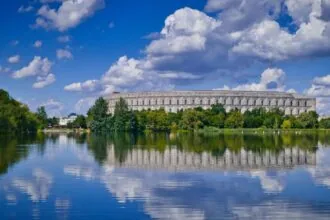
For another major German city built around a similarly walkable Old Town and its own layered WWII history, our Best Things to Do in Nuremberg guide covers the Kaiserburg, the Christkindlesmarkt, and Nuremberg’s underground bunkers in the same level of detail as this page.
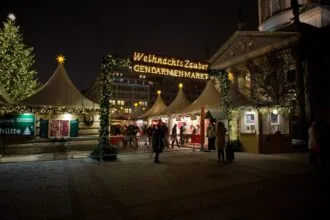
Visiting in winter? Our Berlin Christmas Markets guide rounds up Gendarmenmarkt, Charlottenburg Palace and the rest of the city’s festive season, worth folding into a sightseeing itinerary between late November and New Year.
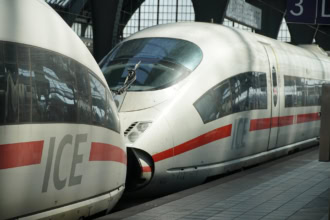
If you are travelling onward by train, our Interrail Germany Pass Guide explains when a country-specific pass beats buying individual tickets, while our German Rail Tickets Explained guide breaks down the Deutschland-Ticket and regional fares for anyone exploring beyond Berlin itself.
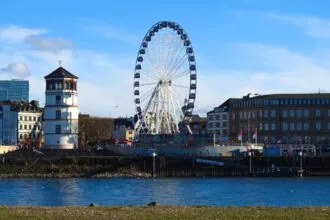
Travellers building a wider Rhineland or western Germany trip may also want our Best Things to Do in Düsseldorf guide, which covers a similarly walkable Old Town, major art museums, and a riverside promenade as a natural add-on to a Berlin visit. For up-to-date opening hours and current exhibitions across the city, the official visitBerlin tourism board website is worth bookmarking before you travel.