Reviewed by our editorial team Published
Moulin Rouge in Paris: An Icon of Montmartre
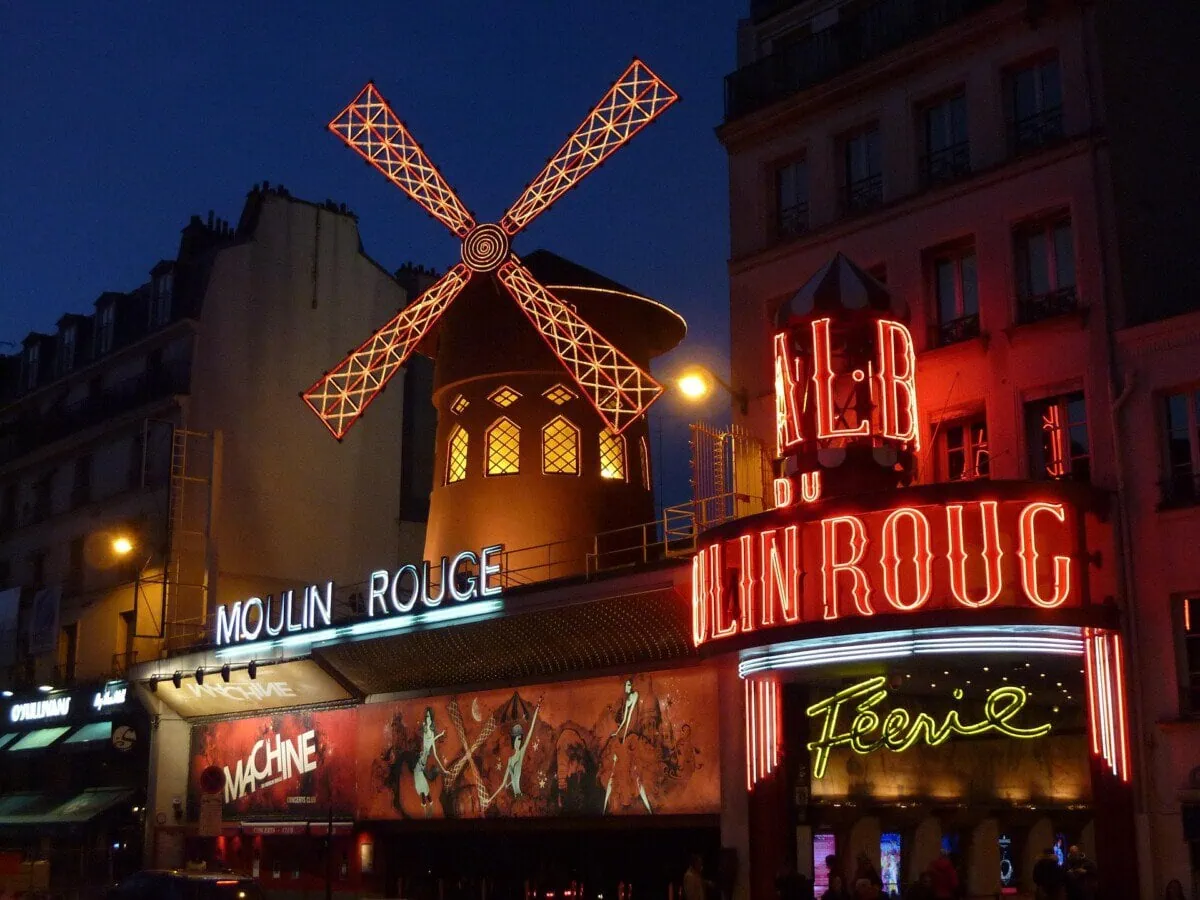
At the foot of Montmartre, a red windmill has turned above the entrance to Paris’s most famous cabaret since 1889, and it has barely stopped since. The Moulin Rouge did not simply open in the French capital; it helped invent the modern cabaret format, and it still fills the majority of its seats most nights of the year.
This guide sets out what an evening here actually involves, from the feathers, the can-can and the scale of the production inside, to the dress code you are expected to follow at the door. It also lays out the genuine history behind the venue, verified rather than repeated from tourist folklore, so you know what you are actually walking into.
Because the Moulin Rouge sits in Pigalle, directly at the base of the Montmartre hill, it slots naturally into an evening that also takes in Sacré-Cœur and the surrounding streets. We have covered where it fits into a wider Paris visit, along with honest, side by side booking advice, further down this page.
There are two genuine ticket formats on offer, a shorter show with champagne and a longer evening built around a full dinner service, and this guide compares them plainly rather than pushing one as automatically better. Every price quoted here uses the same tri-currency figures, converted at a consistent rate, so you can compare both options like for like before you book.
None of what follows is guesswork: the historical dates, the dress code and the age policy have all been checked against the venue’s own published information. What you will find below is a straightforward walkthrough of the show, the tickets and the practical detail that actually changes your evening.
A Brief History: From 1889 to Today
The Moulin Rouge opened on 6 October 1889 at the foot of Montmartre, in what is now the 18th arrondissement, built by the entrepreneurs Joseph Oller and Charles Zidler. It was designed from the outset as spectacle, with its now iconic red windmill fixed to the roof as theatrical branding rather than a working mill.
The venue is closely tied to the rise of the can-can, an energetic dance derived from the quadrille that became the club’s signature act and both shocked and delighted Parisian society. Dancers such as La Goulue became genuine celebrities of the era, known across the city for their performances on this one stage.
The painter Henri de Toulouse-Lautrec was a regular at the Moulin Rouge through the 1890s, and his 1891 poster of La Goulue helped turn the venue into an internationally recognised name almost overnight. His paintings and posters of the club’s dancers remain some of the most reproduced images of belle époque Paris.
The original building did not survive intact: a fire during renovation work destroyed it on 27 February 1915, and the venue stayed closed for nine years before reopening in 1925. The Moulin Rouge you visit today is that rebuilt venue, still on the same spot, still performing a version of the show that made it famous.
Best for a short trip. Compare rooms by neighbourhood, price and guest rating before you book.
Compare hotelsBest for groups who want one address and separate bedrooms rather than three hotel rooms.
See holiday homesBest as a last check before booking. Compares Paris hotel rates across several sites in one search.
Compare ratesWhat Happens During a Show
The current production, known as Féerie, runs for roughly an hour and forty minutes and features around 60–80 performers on a given night. Expect elaborate feathered costumes, live orchestral music, acrobatics and specialty acts woven between full-company dance numbers, including the can-can finale the venue is still best known for.
Shows run twice most evenings, with performances typically starting at 9pm and 11pm, and dinner service beginning earlier for anyone booked onto the dinner package. Seating is arranged by venue staff on the day rather than pre-assigned by seat number, so arriving at the time stated on your ticket matters more here than at a standard theatre.
Champagne is served at your table as part of every ticket type, poured through the performance rather than during a single interval break. The show itself has no interval, so it plays out as one continuous production rather than the two-act structure familiar from West End or Broadway theatre.
One rule is enforced strictly throughout: photography and filming are banned inside the auditorium once the show begins, for copyright and security reasons stated explicitly by the venue. Phones are expected to stay away during the performance itself, which is worth knowing before you plan on capturing any of it yourself.
Dress Code and Show Etiquette
The Moulin Rouge asks for elegant attire rather than a strict formal dress code, and the venue’s own rules explicitly rule out shorts, flip-flops, trainers and sportswear for anyone attending. Jackets and ties are optional for men, but smart shoes and smart-casual clothing at minimum are expected from every guest at the door.
Hats and caps must be removed once you are inside, and in practice most guests dress in the same register as a nice dinner out in central Paris rather than black tie. Smart-casual is the safest read: think blazers, dresses or tailored trousers rather than anything you would wear sightseeing that day.
On age, children from six years old may attend with an adult, though the Féerie revue includes topless performances typical of French cabaret, which is worth weighing before booking for a family. There is no separate content warning issued at the door beyond this, so it is on parents to judge suitability in advance.
Seating is not assigned to a specific table number when you book, and staff allocate places on the night based on how the room fills, which occasionally means a side or rear view rather than dead centre. Arriving promptly and following staff instructions at the door tends to produce the smoothest experience, since latecomers are seated only between numbers.
Champagne Show or Dinner Show: Which Ticket to Choose
The Moulin Rouge Cabaret Show Ticket with Champagne is the top pick for a reason: at €126.74 (£109/$148.29) for a two-hour evening, it holds a 4.8-star rating across an enormous 18,638 reviews, by far the highest review volume of any ticket option here. It includes a reserved seat for the full Féerie show plus champagne served at your table, and for most first-time visitors it is the more sensible default booking.
The Dinner Show at the Moulin Rouge costs €254.65 (£219/$297.94) for a four-hour evening and carries the same 4.8-star rating from 3,840 reviews, roughly a fifth of the champagne ticket’s review count. Choosing it means arriving earlier, typically around 7pm, for a full multi-course dinner service in the dining room with live orchestral music before the same Féerie show begins.
The honest trade-off is straightforward: you are paying roughly double the price for roughly double the time, and what that extra money and extra two hours actually buys is a proper sit-down dinner rather than champagne on its own. If a full dinner service beforehand matters to your evening, plans or occasion, the dinner ticket earns its premium; if you mainly want the show and the atmosphere, the champagne-only ticket delivers the same rating for roughly half the outlay.
Both tickets carry an identical 4.8-star rating, so neither option is the “better” show; they are simply different evenings built around the same production. Given the champagne ticket’s far larger review base and lower cost for an equally well-rated experience, it is the more defensible default for most travellers, with the dinner show reserved for anniversaries, proposals or anyone who wants the full Parisian evening built in.
What’s Nearby: Montmartre, Sacré-Cœur and Pigalle
The Moulin Rouge sits in Pigalle, a lively nightlife district at the southern foot of the Montmartre hill, which makes it easy to build an evening around rather than treating it as an isolated stop. Restaurants, bars and late-opening cafes line the surrounding streets, many open well past the second show’s finish.
Montmartre itself climbs steeply north of the venue, and the walk up through its cobbled lanes, artists’ squares and the Place du Tertre works well earlier in the day, before a Moulin Rouge show in the evening. It is one of the few Paris neighbourhoods that still feels distinctly village-like despite sitting inside the city.
At the top of the hill, the basilica of Sacré-Cœur offers one of the best free viewpoints over the whole city, and it is worth timing a visit for late afternoon light before heading back down towards Pigalle for dinner and the show. Be aware this area is a known spot for pickpockets and street scams, so keep valuables secure, as covered in our guide to tourist traps to avoid.
If you are combining the Moulin Rouge with a wider Paris visit rather than a dedicated trip, our guide to visiting Paris from London by Eurostar covers how to structure a longer stay, including an evening built around a cabaret show like this one.
Booking Tips for the Moulin Rouge
Book directly through the official Moulin Rouge website or a reputable ticket platform, and do so as far in advance as your travel dates allow, since the venue regularly sells out both nightly shows, particularly at weekends. Peak periods around Christmas, New Year and July to August book out fastest of all.
If you are travelling from London or elsewhere in the UK, our Eurostar guide covers getting into central Paris quickly enough to make an evening show without rushing your day. Building in enough time between arrival and the venue’s stated seating time removes most of the stress around Pigalle traffic and Metro connections.
Choose the 9pm show over the 11pm slot if you would rather not be out until well past midnight, since the later performance runs an equivalent length but finishes considerably closer to 1am. Whichever slot you book, arrive at the address on your ticket with time to spare, since seating is managed by staff rather than pre-assigned.
Confirm which of the two ticket types, champagne only or the full dinner show, actually suits your evening before paying, since upgrading on the night is rarely straightforward. Reading the inclusions carefully at checkout, rather than assuming both tiers cover the same experience, avoids any surprise about what is and is not included.
How to Get to the Moulin Rouge
The Moulin Rouge sits directly on Boulevard de Clichy in Pigalle, at the southern foot of the Montmartre hill. Its address puts it right on top of a Métro station, so most visitors reach the door without needing a taxi or a long walk beforehand.
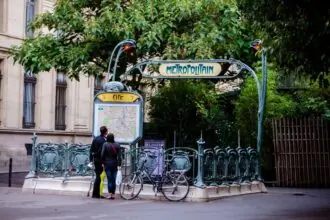
Blanche station, on Métro Line 2, sits literally outside the venue’s entrance and is by far the simplest way in for anyone staying elsewhere in central Paris. Pigalle station, served by Lines 2 and 12, is one stop away and works as a reliable backup whenever Blanche is closed for engineering works.
Several bus routes also call at the Blanche stop, including the 30, 54, 68 and 74, which is handy if your hotel already sits on one of them. None of these save real time over the Métro for most visitors, but they are worth knowing as an alternative if you would rather avoid an interchange.
The Métro stops running at around 1:15am, or 2:15am on Friday and Saturday nights, so this genuinely matters if you have booked the later 11pm show. Once the last train has gone, the Noctilien night bus network takes over, and our Paris Public Transport guide covers the routes that keep running from central hubs until around 5:30am.
Whichever Métro or bus you take, aim to arrive at the venue around 30 minutes before the time stated on your ticket, since check-in and seating are handled by staff rather than pre-assigned. Pigalle is also a genuine red-light district in the streets immediately around the venue, and it is worth knowing that in advance, though the boulevard itself is well lit and busy with theatre-goers most evenings, and simply walking directly to and from the show causes no particular problem.

Rupert’s Handy Travel Tips
A night at the Moulin Rouge is one of those Paris evenings that is easy to get wrong through timing rather than taste, so here is what I would actually do differently on a first visit.
- Book the 9pm show over the 11pm slot unless you genuinely want a very late night, since both run the same length.
- Skip the dinner show unless a full sit-down meal matters to you; the champagne ticket gets the same 4.8-star rating for roughly half the price.
- Wear smart-casual rather than anything sporty; a blazer or a dress will always clear the door without questions.
- Walk up to Sacré-Cœur in daylight beforehand, then head down into Pigalle for dinner ahead of the show, rather than trying to do it all in reverse.
- Leave your phone in your pocket once the show starts; photography and filming are banned inside the auditorium.
- Book directly with the venue or a trusted platform well ahead of summer and Christmas dates, since both nightly shows regularly sell out.
Want to meet the reindeer behind our travel tips? Find out more in our page Who is Rupert?.




Frequently Asked Questions
What is the dress code for the Moulin Rouge?
The venue asks for elegant, smart-casual attire and explicitly bans shorts, flip-flops, trainers and sportswear. Hats and caps must be removed once you are inside, though jackets and ties are not compulsory for men.
How long does a Moulin Rouge show last?
The Féerie revue itself runs for roughly an hour and forty minutes with no interval. The champagne ticket covers a two-hour evening in total, while the dinner ticket runs to around four hours once dinner service is included.
Can children attend the Moulin Rouge?
Children from six years old may attend with an adult. The show includes topless performances typical of French cabaret, so it is worth deciding in advance whether that suits your family.
Is photography allowed during the show?
No. Photography and filming are strictly prohibited inside the auditorium once the performance begins, for copyright and security reasons stated by the venue itself.
What is the real difference between the champagne show and the dinner show?
The champagne ticket, at €126.74 (£109/$148.29), covers a reserved seat and champagne through a two-hour evening. The dinner ticket, at €254.65 (£219/$297.94), adds a full multi-course dinner service beforehand and runs to four hours, at roughly double the price.
Should I book the 9pm or the 11pm show?
Both performances run the same length, so the choice comes down to how late you want to be out. The 9pm show finishes considerably earlier than the 11pm slot, which can run past 1am.
How far in advance should I book?
Book as early as your travel dates allow, since both nightly shows sell out regularly, especially at weekends and through summer and the Christmas period. Booking directly with the venue or a trusted platform well ahead of time avoids being restricted to a single leftover slot.
Further Reading
If a Moulin Rouge evening is part of a longer stay rather than a single night out, our London to Paris Day Trip guide covers building a full day around the Eurostar crossing. It is a useful read for anyone weighing up whether a same-day trip leaves enough time for dinner and a 9pm show.
Travelling in from London specifically? Our Eurostar Trains Guide covers routes, tickets and the app you will need for the Channel crossing into Gare du Nord. Arriving with plenty of spare time makes it far easier to dress, eat and reach Pigalle without rushing the seating time on your ticket.
Getting back across the city late at night after the 11pm show is its own small challenge once the Métro has stopped running. Our Paris Public Transport guide covers the Noctilien night bus network that takes over once the last trains leave Pigalle.
Montmartre and Pigalle are also known for pickpockets and the odd staged street scam, particularly around Sacré-Cœur earlier in the day. Our Tourist Traps to Avoid guide covers the friendship-bracelet trick reported in this exact neighbourhood, alongside other common scams worth knowing before you visit.