Reviewed by our editorial team Published
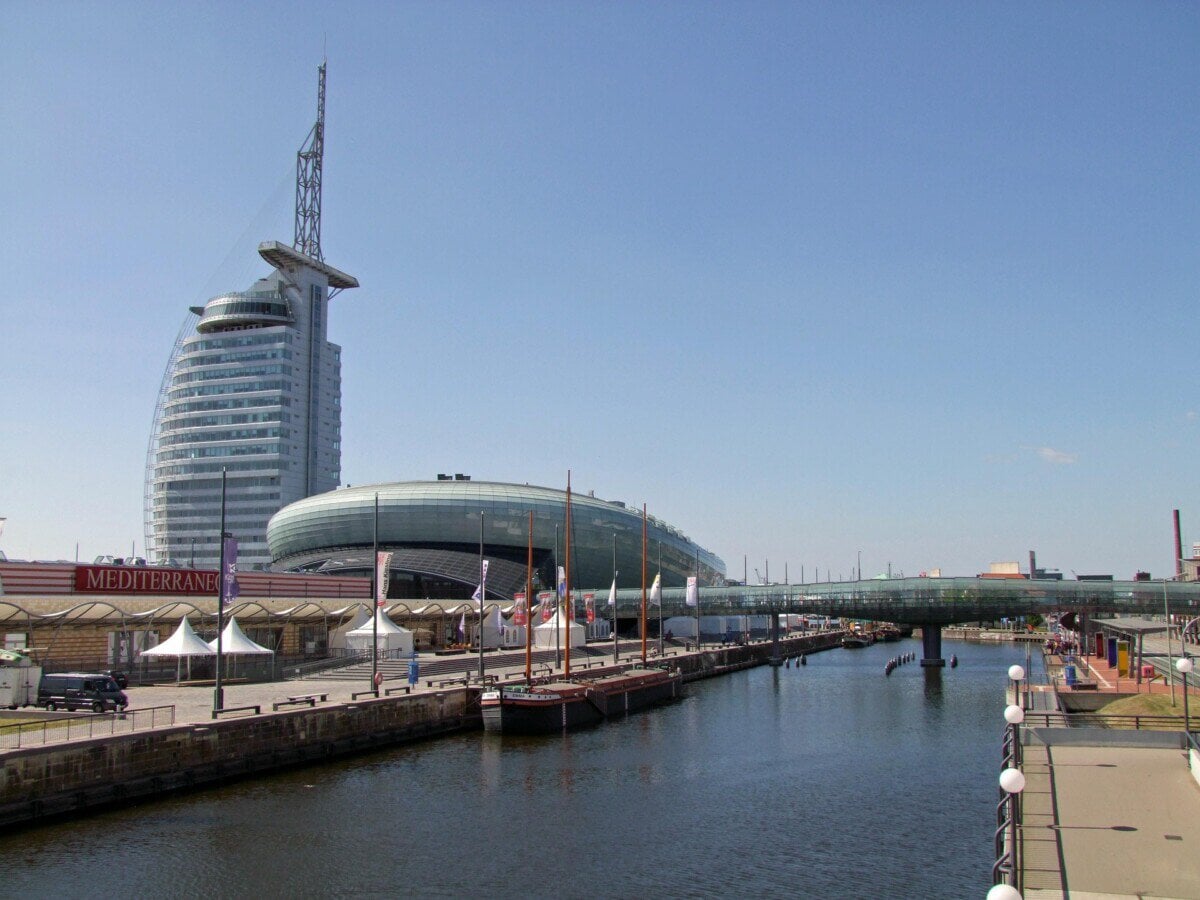
Bremerhaven sits where the River Weser widens into the North Sea, and while Hamburg tends to get the attention as Germany’s big-name cruise city, Bremerhaven has quietly become one of the country’s genuinely established turnaround ports in its own right. The Columbus Cruise Center, built on the historic Columbuskaje quay, now handles a steady programme of embarkations and disembarkations for passengers arriving from across Germany and beyond.
The scale is real without being overwhelming. Bremerhaven recorded 100 cruise ship calls in its 2025 season, carrying an estimated 292,000 passengers through the terminal, according to figures published by Global Ports Holding, the operator that runs the facility. General manager Timo Schoen described the season as demonstrating the port’s strength as a turnaround hub, particularly in handling complex operations and peak embarkation days.
The terminal itself has an unusual backstory. The Columbuskaje passenger quay was originally built in 1927, positioned deliberately on the open river rather than behind a lock gate so that large liners could dock without the delay of a lock passage, a genuinely forward-thinking piece of infrastructure for its era that still shapes how the modern terminal operates today.
Bremerhaven’s maritime story runs deeper than cruising, though, and it is worth knowing before arrival. For much of the 19th and early 20th centuries, this was one of Europe’s principal emigration ports, the departure point for well over seven million people leaving for North America. The German Emigration Center, a genuinely moving museum built around that history, now sits in the city’s Havenwelten harbour quarter, giving modern cruise passengers a rare chance to connect a leisure sailing with a much older, harder chapter of the same waterfront.
This guide covers the Columbus Cruise Center in full: which cruise lines call here, how to reach Bremerhaven from Bremen and further afield, parking and transfer options at the terminal, and what is worth seeing in the city before or after a sailing, including the emigration heritage and the wider Havenwelten museum quarter.
Bremerhaven’s Cruise Port at a Glance
The table below summarises the essentials of Bremerhaven’s cruise operation before the detailed sections that follow cover each part in full. The Columbus Cruise Center is a single, purpose-run terminal rather than the multi-site setup found in some larger German ports, which keeps planning relatively straightforward.
| Category | Detail |
|---|---|
| Terminal | Columbus Cruise Center, Columbuskaje |
| Operator | Global Ports Holding |
| 2025 season | 100 ship calls, around 292,000 passengers |
| Cruise lines | TUI Cruises, Phoenix Reisen, AIDA Cruises and periodic others |
| From Bremen | Direct regional train, around 35 minutes |
| Havenwelten museums | German Emigration Center, German Maritime Museum, Klimahaus |
Columbus Cruise Center: Bremerhaven’s Modern Cruise Terminal
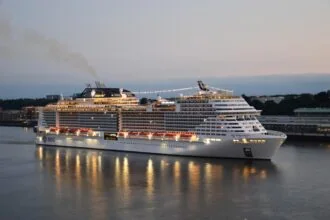
The Columbus Cruise Center operates from a single cruise pier on the Columbuskaje, but that single pier is built to handle serious traffic: it can accommodate up to three large cruise vessels simultaneously, which is a genuinely useful piece of infrastructure on a busy embarkation day when more than one ship needs to turn around at once.
Passenger handling is built around adjustable passenger boarding bridges, which connect directly to the ship regardless of deck height, removing the need for a gangway stair in most conditions. The terminal building itself runs six dedicated embarkation points, spreading passenger flow across check-in rather than funnelling everyone through a single desk, which keeps queueing manageable even on a full turnaround day.
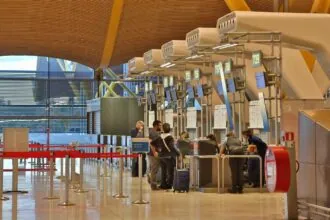
Inside, ground-floor check-in facilities handle the bulk of embarkation processing, with a dedicated luggage drop-off area meaning passengers rarely need to carry bags far from the drop-off point to the check-in desk itself. Customs, immigration and security screening are built into the same flow, standard for any international turnaround port but worth knowing about when planning arrival timing.
The terminal sits a short distance north of Bremerhaven’s main visitor district, Havenwelten, rather than directly inside it, so passengers hoping to combine embarkation with a museum visit on the same day should budget a short taxi or shuttle journey between the two rather than expecting to walk between them. That distance is covered in more detail in the transfer section below.
For anyone wanting a first-hand look at scheduled arrivals before travelling, the port’s own Bremerhaven Cruise Port website publishes terminal information and contact details directly, and it is worth checking against a specific booking confirmation before finalising any transport plan.
Best for two or three nights. The widest choice of rooms, with filters for free cancellation and included breakfast.
View staysBest for groups who want one address and separate bedrooms rather than three hotel rooms.
See holiday homesBest for double-checking. Runs the same search across several booking sites so you are not leaving money behind.
Compare pricesFacilities at the Terminal
The first-floor waiting area beyond check-in is built with genuine capacity in mind, reported to hold in the region of 4,000 passengers at once, useful headroom for a day when more than one ship is working through the terminal at the same time. Passengers move from the ground-floor check-in desks up to this area once bags are dropped and screening is complete, ahead of boarding through the terminal’s adjustable passenger bridges.
A café inside the terminal building gives passengers somewhere to sit with a drink before boarding or after disembarking, with seating on the upper floor looking directly out over the River Weser, a genuinely pleasant spot to wait rather than the windowless departure lounge some ports offer instead.
A staffed information desk on the ground floor stocks brochures covering Bremerhaven’s museums, the zoo and the city’s shopping district, useful for anyone with a few hours to fill either side of a sailing and not yet sure what to prioritise. Restrooms and general seating are distributed across the building’s public floors, standard for a terminal of this scale.
Public Wi-Fi covers the terminal throughout, handy for completing an online check-in or confirming a booking before boarding, and wheelchair assistance and accessible facilities are available on request. It is worth confirming any specific accessibility requirement directly with the cruise line or the port ahead of travel rather than assuming on the day.
Anyone extending a stay in Bremerhaven before boarding, or with hours to fill after disembarking, should note that the terminal itself has no dedicated left-luggage desk of its own. The most reliable option is Bremerhaven Hauptbahnhof, which offers standard station lockers, or a hotel in the Havenwelten district willing to hold bags for the day, arranged in advance where possible.
For a different view of the same operation, a public viewers’ gallery near the terminal, entered separately from Steubenstraße rather than through the passenger building itself, lets visitors watch ship handling up close. It generally opens on ship days between 8am and 9pm from March to October, run by the city’s Erlebnis Bremerhaven tourism office, though the platform currently has no step-free access.
Which Cruise Lines Call at Bremerhaven
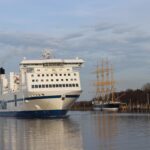
TUI Cruises is among the most frequent operators at the Columbus Cruise Center, with ships from the Mein Schiff fleet, including Mein Schiff 2 and Mein Schiff 3, using Bremerhaven as a turnaround point for North Sea and Norwegian fjord itineraries aimed largely at the German market.
Phoenix Reisen, a German operator specialising in longer and more classic-style voyages, also calls regularly, with ships including the Amadea, Artania and Amera among the vessels using the terminal across a typical season. These sailings tend to skew toward a more traditional cruise clientele than the family-oriented Mein Schiff programme.
AIDA Cruises, Germany’s largest cruise brand and based further along the coast in Rostock, also includes Bremerhaven within its network of German ports, with the line maintaining its own dedicated destination information for the city. As with any German turnaround port, the exact ships and dates shift season to season, so a specific sailing should always be checked against the operator’s own current schedule.
Beyond the regular German-market operators, Bremerhaven also sees occasional calls from other international lines as part of wider European repositioning or round-Britain itineraries, since the port’s single-pier capacity and turnaround infrastructure make it a workable stop for a ship passing through the southern North Sea rather than only a dedicated home port.
The genuinely useful takeaway for any traveller is that which line and ship apply changes by season, and the safest way to confirm a specific sailing’s terminal and timing is the booking confirmation from the cruise line itself, cross-checked against the Columbus Cruise Center’s own site rather than a general guide like this one.
Getting to Bremerhaven from Bremen by Train
For the large majority of passengers flying into the region, Bremen is the natural gateway before continuing on to Bremerhaven, and the rail link between the two cities is genuinely straightforward. Direct regional trains run from Bremen Hauptbahnhof to Bremerhaven Hauptbahnhof roughly every hour, with NordWestBahn services supplementing the standard Deutsche Bahn timetable on the same route.
The journey itself takes around 35 to 40 minutes end to end, covering a stretch of Lower Saxony that runs alongside the Weser for much of the route. That is a short enough hop that it barely needs planning around, though anyone travelling with heavy luggage on embarkation day should still allow a comfortable buffer before a booked departure.
Fares are genuinely reasonable when booked ahead. An advance Sparpreis ticket through Deutsche Bahn’s app can bring the one-way fare down to around €9 (£7.74/$10.53), while a Niedersachsen-Ticket, covering unlimited regional trains and buses across Lower Saxony and Bremen for a full day, costs €29 (£24.94/$33.93) for one traveller and €61 (£52.46/$71.37) for up to five people sharing, a genuinely useful option for a family or group heading to the ship together.
From Bremerhaven Hauptbahnhof, the Havenwelten museum quarter is an easy walk, but the Columbus Cruise Center terminal itself sits a little further out on the Columbuskaje, so a connecting bus or taxi is generally the better plan on embarkation day, covered in the transfer section further down this guide.

Getting to Bremerhaven from Hamburg, Hanover and Beyond
Passengers flying into a larger hub rather than Bremen itself have several workable routes into Bremerhaven, the most common being a change at Bremen Hauptbahnhof. From Hamburg Hauptbahnhof, the combined journey via Bremen typically runs to somewhere between one hour thirty minutes and one hour forty-five minutes depending on the connection, with ICE services covering the Hamburg to Bremen leg in around 55 minutes before the regional connection onward.
From Hanover, the same pattern applies: a fast ICE or IC connection to Bremen Hauptbahnhof, taking around an hour, followed by the roughly 35 to 40 minute regional hop on to Bremerhaven. Both routes are straightforward enough to book as a single through ticket on Deutsche Bahn’s own booking system rather than needing two separate purchases.
Travellers flying in specifically for a cruise have two realistic airport options. Bremen Airport (BRE) sits closest, connected to Bremen Hauptbahnhof by tram line 6 in around 16 minutes, before the regional train onward to Bremerhaven. Hamburg Airport (HAM) is a workable alternative for anyone with a flight schedule that suits it better, adding the Hamburg to Bremen leg described above to the overall journey.
Driving is also an option for anyone hiring a car or arriving by road, with the A27 motorway running directly between Bremen and Bremerhaven and continuing on to the terminal area. For most cruise passengers without their own vehicle, though, the train remains simpler, cheaper and free of any concern about parking near the terminal on a busy embarkation morning.
Parking at Columbus Cruise Center
Drivers heading directly to the ship have two main options at the Columbus Cruise Center. The first is a car park sitting immediately at the terminal itself, offering barrier-controlled entry and the shortest possible walk between the vehicle and check-in, which suits anyone with a lot of luggage or limited mobility.
A second, larger long-stay area sits a short distance away, roughly 500 metres from the terminal building, and is fenced and staffed specifically on ship arrival and departure days rather than around the clock. It suits travellers happy to walk a few minutes further in exchange for a typically lower daily rate than the terminal’s own car park.
A short period of free drop-off parking, generally around 20 minutes, is available close to the main entrance for anyone simply dropping a passenger and luggage before continuing on, rather than leaving a car for the full length of the cruise. Genuine long-stay parking beyond that window requires one of the two dedicated car parks described above.
Because both car parks can fill on the busiest turnaround days, particularly when more than one ship is in port at once, booking a space in advance through the port’s own parking portal is genuinely worth doing rather than arriving and hoping. Some parking packages also include a luggage collection service direct from the vehicle, which removes the need to carry bags from the car park to check-in at all.
For anyone without a car, or arriving via Bremen and preferring not to drive the final leg, the shuttle and taxi options covered in the next section generally work out simpler than a long-stay parking booking, especially for a solo traveller or couple without a great deal of luggage.
Shuttles, Taxis and Transfers at the Terminal
For anyone arriving by train rather than car, the Bremerhaven Bus service is the most direct link between the Hauptbahnhof and the Columbus Cruise Center. On confirmed ship days, coaches marked “Kreuzfahrt-Terminal” depart from the main railway station and run straight to the terminal, timed around scheduled embarkation and disembarkation windows rather than a fixed all-day timetable.
A taxi rank operates at the terminal’s main entrance, and the ride between Bremerhaven’s city centre and the Columbus Cruise Center is short, generally only a few minutes given how compact the city is compared with somewhere like Hamburg. This is a sensible fallback for anyone whose train arrives outside the shuttle’s operating window, or for a group happier with a direct door-to-door journey.
A separate sightseeing option worth knowing about, though not strictly a transfer service, is the Der HafenBus harbour tour, which takes passengers past working shipyard operations along Bremerhaven’s docks. It is more of a pre- or post-cruise activity than a practical way to reach the terminal, but it gives a genuinely close-up look at the working port that surrounds the passenger side of Bremerhaven’s waterfront.
Pre-booked private transfers are also available through several regional operators, useful for families or anyone wanting a guaranteed pickup rather than relying on the shuttle’s ship-day schedule, particularly for a very early morning embarkation. As with parking, confirming a transfer booking a few days ahead rather than on arrival avoids any risk of a longer wait on a busy turnaround morning.
Best for finding routes the airlines do not sell as a single ticket. Combines carriers to bring the fare down.
Search flightsBest for anyone whose home plan charges by the megabyte abroad. Pay a fixed price up front.
Check eSIMsBest when public transport has stopped, or when you are travelling with children and bags.
Book a transferFrom Emigration Port to Cruise Hub: Bremerhaven’s Maritime Heritage
Long before it became a modern cruise turnaround port, Bremerhaven was one of Europe’s single most important gateways to the New World. Between the 1830s and the outbreak of the First World War, and again in later waves through the 20th century, well over seven million emigrants passed through the city’s docks bound for North America, making it one of the continent’s busiest points of departure alongside Hamburg and Bremen itself.
That history is told in genuine depth at the German Emigration Center, or Deutsches Auswandererhaus, which opened on 8 August 2005 in the Havenwelten harbour district. The museum reconstructs the physical experience of departure, from waiting halls to steerage cabins, using the real, documented stories of individual emigrants rather than a purely abstract historical narrative.
For modern cruise passengers, the connection is a genuinely striking one to sit with. The same stretch of Weser waterfront that once sent families off on a one-way, often desperate journey now sends holidaymakers off on a very different kind of voyage, and a visit to the museum before or after a sailing adds a layer of context that a purely leisure-focused port rarely offers.
The museum sits within Bremerhaven’s Havenwelten district, a short taxi or bus ride from the Columbus Cruise Center rather than directly beside the pier itself, so it is worth factoring a short transfer into any plan to combine the two. Given the depth of the exhibition, allowing at least ninety minutes to two hours makes for a considerably more rewarding visit than a rushed half hour squeezed in before embarkation.
The Havenwelten Quarter: German Maritime Museum and Klimahaus
The German Emigration Center is only one part of Bremerhaven’s wider Havenwelten harbour quarter, and the neighbouring German Maritime Museum, or Deutsches Schifffahrtsmuseum, is arguably just as worthwhile for anyone with an extra hour or two before or after a sailing. Designed by the noted architect Hans Scharoun and opened in 1975, the museum’s centrepiece is the Bremen Cog, a genuine medieval Hanseatic trading vessel dating to around 1380, recovered from the riverbed in 1962 and now displayed inside a dedicated hall.
Beyond the Cog Hall, the museum’s outdoor harbour basin holds a collection of preserved historic vessels, including a Type XXI U-boat, giving visitors a genuinely tangible sense of maritime history rather than a purely indoor exhibition. Adult admission costs €10.00 (£8.60/$11.70), covering the Cog Hall, the main exhibition and any current temporary display.
A short walk further along brings visitors to the Klimahaus Bremerhaven, opened in 2009, which takes a genuinely different approach: an immersive, walk-through journey along the eighth line of longitude through eight distinct climate zones, from Alpine cold through Sahara heat to Antarctic ice. A full-day adult ticket costs €25.50 (£21.93/$29.84), dropping to €22.50 (£19.35/$26.33) for afternoon entry from 3pm, a useful discount for passengers disembarking later in the day.
Between the emigration museum, the maritime collection and the Klimahaus, Havenwelten genuinely rewards a full day rather than a token hour, so cruise passengers with a pre- or post-cruise night in Bremerhaven, rather than a same-day embarkation, tend to get the most out of this part of the city.
Practical Tips: Money, Passports and Weather
Germany uses the euro (EUR), and card and contactless payments are near-universal across Bremerhaven, including at the cruise terminal, ticket machines and the city’s museums, so carrying large amounts of cash before embarkation is rarely necessary.
Passengers arriving from outside the Schengen area, including the UK and the US, should expect a passport check on embarkation and disembarkation even on a sailing that otherwise stays entirely within Europe. Building extra time into a first morning at the terminal for this reality, rather than assuming a purely walk-on process, avoids any unwelcome surprise on a busy turnaround day.
Bremerhaven’s position right on the North Sea coast means the weather can turn quickly regardless of season, and a light rain layer is a sensible addition to any daypack whatever the month, particularly for anyone planning the outdoor harbour basin at the German Maritime Museum. Wind off the estuary can also make embarkation morning feel considerably cooler than the forecast suggests.
Finally, the single most important practical reality of any cruise call is the ship’s all-aboard time, and Bremerhaven is no exception to the rule that missing it is a genuinely serious problem. Building in a buffer of at least 45 to 60 minutes before that deadline, especially for anyone travelling back from a Havenwelten museum visit by shuttle or taxi, is worth the lost sightseeing time it costs.

Rupert’s Handy Travel Tips
Sailing from the Columbus Cruise Center? Rupert has a few tips worth knowing before you go:
- Take the direct train from Bremen Hauptbahnhof: it reaches Bremerhaven Hauptbahnhof in around 35 to 40 minutes, roughly hourly throughout the day.
- Book parking ahead through the port’s own portal: both car parks at the terminal can fill on the busiest turnaround days.
- Use the “Kreuzfahrt-Terminal” shuttle on ship days: it runs straight from the Hauptbahnhof to the Columbus Cruise Center, timed to embarkation windows.
- Allow proper time for Havenwelten: the German Emigration Center, Maritime Museum and Klimahaus all sit a short transfer from the terminal, not right beside it.
- Pack a passport for embarkation day: non-Schengen travellers go through a border check even on an all-European sailing.
- Set a return alarm for your all-aboard time: build in 45 to 60 minutes of buffer if you are coming back from a museum visit by shuttle or taxi.
Want to meet the reindeer behind our travel tips? Find out more in our page Who is Rupert?.





Frequently Asked Questions About Bremerhaven’s Cruise Port
Which terminal does my Bremerhaven cruise use?
All cruise calls at Bremerhaven use the Columbus Cruise Center on the Columbuskaje, operated by Global Ports Holding. Your booking confirmation should confirm the exact terminal and check-in time for your sailing.
How do I get from Bremen to Bremerhaven for a cruise?
Direct regional trains run from Bremen Hauptbahnhof to Bremerhaven Hauptbahnhof roughly hourly, taking around 35 to 40 minutes, with NordWestBahn services supplementing the Deutsche Bahn timetable.
Which cruise lines call at Bremerhaven?
TUI Cruises and Phoenix Reisen are the most frequent operators, with AIDA Cruises also including Bremerhaven within its network of German ports. The exact ships and dates change by season.
Is there parking at the Columbus Cruise Center?
Yes. A car park sits directly at the terminal, and a second, larger long-stay area sits around 500 metres away. Both are bookable in advance through the port’s own parking portal.
How many cruise passengers does Bremerhaven handle each year?
Bremerhaven recorded 100 cruise ship calls and around 292,000 passengers during its 2025 season, according to figures published by port operator Global Ports Holding.
Is the German Emigration Center at the cruise terminal?
Not directly. It sits in Bremerhaven’s Havenwelten harbour district, a short taxi or shuttle bus ride from the Columbus Cruise Center rather than immediately beside the pier.
What else is there to see near the cruise terminal?
The Havenwelten quarter holds the German Emigration Center, the German Maritime Museum with its recovered medieval Bremen Cog, and the Klimahaus climate exhibition, all within a short walk of each other.
Do I need a passport for a Bremerhaven cruise call?
Yes, especially for travellers from outside the Schengen area, who should expect a passport check on embarkation and disembarkation even on an all-European itinerary.
Further Reading
If you are travelling via Bremen before or after your cruise, our Bremen Airport Transfers guide covers every realistic way of reaching the city centre from BRE.
For a spare day either side of your sailing, our Things to Do in Bremen guide rounds up the Rathaus, Böttcherstraße and the rest of the city’s UNESCO-listed old town.
Our Best Day Trips from Bremen guide also covers Bremerhaven itself in more depth for anyone visiting purely for the German Maritime Museum and Klimahaus rather than a cruise.
If your trip includes a Werder Bremen matchday either side of the cruise, our How to Get to the Stadium in Bremen guide covers getting to the Weserstadion, including the club’s unusual boat transfer option.
Comparing Germany’s other cruise ports? Our Hamburg Cruise Port Guide covers the country’s largest cruise hub in similar detail.
If your trip involves onward rail travel within Germany, our German Rail Tickets Explained guide breaks down the Deutschland-Ticket and regional alternatives to a standard fare.