Reviewed by our editorial team Updated
Hamburg is Germany’s largest port city and, less obviously to many travellers, one of Europe’s genuinely established cruise hubs rather than a stop tacked onto a Baltic or North Sea itinerary. Sitting on the River Elbe roughly 100 kilometres from the open North Sea, the city has spent the past decade building cruise infrastructure to match its centuries-old identity as a working harbour.
The scale here is real rather than aspirational. Hamburg recorded 1,416,715 cruise passengers in 2025 across 295 ocean cruise ship calls, and the port has 331 calls planned for the 2026 season, a steady rise on the year before.
What makes Hamburg genuinely unusual among Northern European cruise ports is that it homeports some of the very lines that call here. TUI Cruises and Hapag-Lloyd Cruises are both headquartered in the city, and AIDA Cruises, based a little further along the German coast in Rostock, built its AIDAprima specifically with this port in mind.
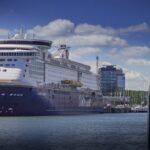
Passengers arriving here use one of three working terminals rather than a single facility, and which one applies to a given sailing changes almost everything about the shore day. Cruise Center HafenCity, opened in September 2025, drops ships directly into the city centre’s Überseequartier district, while Cruise Center Steinwerder and Cruise Center Altona sit a little further out in Hamburg’s historic port district, both reached easily by ferry, bus or a walk through a genuinely unusual pedestrian tunnel under the river.
This guide covers each terminal in turn, from exactly where it sits to how to get into the city and back. It also covers what is walkable nearby before or after a sailing, where to leave luggage for a few hours, and the practical realities of arrival timing and embarkation ashore.
Hamburg’s Cruise Port at a Glance
The table below summarises Hamburg’s three passenger cruise terminals and the wider 2026 season, before the detailed sections that follow cover each part in full. Cruise Center HafenCity is the newest and most central of the three, while Steinwerder and Altona sit in the working port district a little further from the historic core.
| Terminal | District | Opened | Getting In | Nearby Highlights |
|---|---|---|---|---|
| Cruise Center HafenCity | HafenCity / Überseequartier | September 2025 | U4 subway, 2 stops to Hauptbahnhof | Speicherstadt, Elbphilharmonie |
| Cruise Center Steinwerder | Steinwerder (port district) | June 2015 | Bus 256 or HVV ferry 73 to Landungsbrücken | Alter Elbtunnel, Landungsbrücken |
| Cruise Center Altona | Altona | Established terminal | Bus 111 to Altona station or HVV ferry 62 | Fischmarkt, Reeperbahn, Övelgönne |
| Hamburg’s 2026 season | Port-wide | – | 331 ship calls planned | 94 calls confirmed at HafenCity alone |
Cruise Center HafenCity: Hamburg’s New Urban Terminal
Cruise Center HafenCity opened on 12 September 2025 as Hamburg’s newest and most centrally located cruise terminal, built directly into the Überseequartier district at Überseeboulevard 7. It sits inside the same complex as the Westfield Hamburg-Überseequartier shopping centre, putting cruise passengers within a lift ride of shops, restaurants and a subway station before they have even left the terminal building.
The facility spans 10,300 square metres across four levels, with two underground floors handling vehicle access and two above-ground levels dedicated to passenger operations. Two berths accommodate vessels up to 345 metres and 230 metres in length, large enough for the biggest ships now sailing Northern European itineraries.
Part of the terminal’s appeal is the arrival itself, since ships dock here only after passing directly beneath some of Hamburg’s most recognisable landmarks. Vessels sail past the Landungsbrücken landing stages and the striking Elbphilharmonie concert hall before berthing, a deliberately scenic final approach that few other European cruise terminals can match.
Cruise Gate Hamburg, the company that operates all of the city’s cruise terminals, confirmed 94 calls at HafenCity alone for the 2026 season, already close to double the 48 calls the terminal handled in its partial opening season of 2025. Shore power infrastructure is also being installed here, due to launch in 2026, four years ahead of an EU-wide requirement for cruise ports to offer it.
For passengers, the practical upshot is straightforward: this is the terminal to expect if a booked itinerary lists a genuinely central Hamburg call rather than a port-district one. Anyone unsure which terminal their specific sailing uses should check directly with their cruise line or travel agent, since Cruise Gate Hamburg’s own terminal pages list scheduled arrivals by date.
See hotel options and places to stay for your trip.
Browse hotelsExplore holiday homes and apartments for your trip.
See holiday homesCompare hotel deals from multiple booking sites in one search.
Compare pricesGetting To and From Cruise Center HafenCity
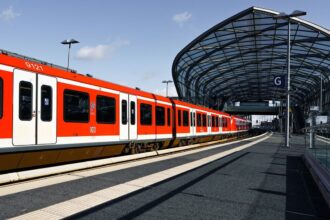
Public transport is the standout option here, since HafenCity is the only one of Hamburg’s cruise terminals with a direct subway connection. The U4 line stops at Überseequartier station immediately outside the terminal, reaching Hamburg Hauptbahnhof in just two stops.
Several bus routes also serve the wider Überseequartier area, including lines 2, 4, 6, 111 and 602, useful for anyone whose accommodation sits closer to a bus stop than a U-Bahn platform. Standard HVV fares apply across both networks, and the same ticket works on either.
Drivers or anyone being dropped off can use the Überseequartier car park, which offers around 1,500 spaces with two entrances: Osakaallee, open 24 hours, and San Francisco Straße, which keeps more limited hours. Pricing is dynamic, running from roughly €3.00 to €3.50 (£2.60-3/$3.50-4.10) per hour, with a daily maximum of around €39 (£33/$46).
A dedicated taxi terminal sits on Level -2 of the complex, and a MOIA ride-pooling pick-up point is also available for anyone who prefers a shared shuttle over a standard taxi. Cyclists are unusually well catered for too, with over 3,500 bicycle parking spaces across the district, including a dedicated garage for around 1,200 bikes.
Because the terminal sits inside a working shopping centre, the walk from the gangway to the street, a taxi rank or the subway platform is short and entirely under cover. That matters more than it might sound on a wet Hamburg morning, and it is one of the genuine practical advantages of this terminal over the two in the port district.
Cruise Center Steinwerder and Cruise Center Altona: The Port District Terminals
On the opposite side of the harbour from HafenCity, Cruise Center Steinwerder and Cruise Center Altona handle a large share of Hamburg’s cruise calls from within the city’s historic working port. Steinwerder opened in June 2015 and was, until HafenCity arrived, Hamburg’s most modern cruise facility.
The Steinwerder terminal comprises two separate terminal buildings at Buchheisterstraße 16, with a combined capacity for more than 8,000 passengers per ship visit. It is built to handle genuinely large vessels, with berths suited to ships over 340 metres in length and drafts exceeding 10 metres.
Cruise Center Altona, a short distance further along the Elbe at Van-der-Smissen-Straße 5, is the more compact of the two, built for ships of up to around 300 metres carrying roughly 3,000 passengers. Its glass-fronted terminal building is a genuine feature in its own right, with a rooftop terrace open to visitors during operating hours and views straight across the working harbour.
Both terminals sit within Hamburg’s Steinwerder and Altona port districts, areas defined by cranes, container stacks and shipyards rather than the shopping and dining of Überseequartier. That working-port character is part of Hamburg’s appeal for cruise passengers who want a genuine sense of the city’s maritime industry rather than a purely tourist-facing arrival.
Both terminals fall under Cruise Gate Hamburg, the same operator running HafenCity, and both appear on major itineraries from lines including AIDA Cruises, Costa Cruises, MSC Cruises and TUI Cruises’ Mein Schiff fleet. Which specific terminal a sailing uses depends on the ship and the season, so checking the booking confirmation rather than assuming is worth doing before planning transport.
Getting To and From Steinwerder and Altona
At Cruise Center Steinwerder, bus line 256 runs a direct service to the terminal, connecting onward to the S-Bahn stations at Elbbrücken and Veddel. An HVV ferry, line 73, also calls from Argentinienbrücke, roughly 450 metres from the terminal, running across to the Landungsbrücken landing stages.
Drivers reach Steinwerder via the A7 motorway at the Waltershof exit, or via the A1, A255 or A252 through Elbbrücken, following signs for route B62. Adventurous passengers with light luggage can also walk part of the route through the historic Alter Elbtunnel, a pedestrian and cyclist tunnel running directly beneath the river.
At Cruise Center Altona, the simplest connection is bus 111 from Altona railway station, alighting at the “Große Elbstraße” stop close to the terminal. An HVV ferry, line 62, runs from Landungsbrücken towards Finkenwerder and stops at “Dockland,” directly beside the terminal’s own pier.
Taxis are readily available at both terminals, and both sit close enough to the wider road network that a pre-booked private transfer or ride-hailing pickup works just as easily as at HafenCity. Neither terminal has its own subway station, which is the main practical trade-off against the newer city-centre facility.
Facilities at Hamburg’s Cruise Terminals
What passengers actually find inside the building varies meaningfully between Hamburg’s three terminals, and it is worth knowing before arrival rather than discovering on the day. Cruise Center HafenCity dedicates two of its four levels, around 4,000 square metres, to passenger processing, with boarding and disembarkation halls built into a deliberately compact vertical design rather than a traditional low, sprawling terminal shed. Because the terminal opens directly into the Westfield Hamburg-Überseequartier shopping centre, anyone waiting before boarding or filling time after disembarking has direct access to the mall’s shops, restaurants and cafés without leaving the building, a genuinely different experience from a standalone port facility.
Check-in at Cruise Center Steinwerder has moved a step further than most European terminals. Since July 2026, AIDA Cruises has run a self-service check-in system here using twenty digital kiosks, where passengers scan their travel documents, complete a facial-recognition photo match and have an RFID bordcard printed automatically, with an express lane reserved for suite guests, families with small children and anyone needing extra assistance. Traditional staffed check-in counters remain available for anyone who prefers them or is sailing with a different line, and every passenger passes through airport-style security screening, including a bag scan and a walk-through check, before reaching the boarding gates. On-site, a SIXT car rental desk and a small bistro called Ahoi cover the practical basics, though Ahoi only opens during actual ship calls rather than keeping standard daily hours.
Cruise Center Altona is the most compact of the three by design, built around a glass-fronted terminal building whose rooftop terrace is open to visitors during operating hours for a panoramic view straight across the working harbour. Its facilities lean toward that view rather than retail or dining, so anyone wanting food, shopping or dedicated luggage help before or after a sailing here is better off building in time for the nearby Fischmarkt or Landungsbrücken area instead.
As with any international departure point, all three terminals run the same basic sequence before boarding: a document and security check, a boarding pass or bordcard, and a wait in a dedicated hall until the gangway opens. What changes is the surroundings while doing it, from a shopping centre at HafenCity to a genuine working harbour view from the rooftop at Altona.
Before or After Your Cruise: What’s Nearby Each Terminal
Passengers using Cruise Center HafenCity are, by design, only a short walk from one of Hamburg’s most photographed sights. The Speicherstadt, a UNESCO World Heritage-listed warehouse district of red-brick buildings and narrow canals, sits directly adjacent to the terminal.
The striking Elbphilharmonie concert hall, with its free public viewing platform overlooking the harbour, is an equally short walk in the other direction. Both make a genuinely worthwhile way to fill a pre-boarding morning or a post-disembarkation afternoon without needing any transport at all.
For passengers using Steinwerder or Altona, the port district itself is less immediately walkable to major sights, but a short ferry or bus ride changes that quickly. The Landungsbrücken landing stages, Hamburg’s grand harbourside promenade, are the natural first stop from either terminal.
From Landungsbrücken, the St. Pauli Fischmarkt, a historic fish market that runs its liveliest trading on Sunday mornings, sits a short walk along the waterfront. The famous Reeperbahn entertainment district and the quieter Elbe beach at Övelgönne are both within easy reach from the same stretch of harbour for anyone with more time to spare.
Whichever terminal applies, the honest advice is the same: check how much time is actually available before committing to a longer detour. A short Speicherstadt walk from HafenCity fits comfortably into an hour, while a proper look at the Fischmarkt or Reeperbahn from Steinwerder or Altona benefits from planning at least two to three hours around the ferry or bus journey each way.
Luggage Storage at Hamburg’s Cruise Terminals
Anyone extending a Hamburg visit before boarding, or with hours to fill after disembarking, will usually want somewhere to leave bags rather than carrying them around the city. Cruise Center Steinwerder has the most direct answer, with an on-site luggage service (TEfra Gepäckservice) built into the terminal itself.
Cruise Center HafenCity has no dedicated luggage desk of its own, but its location inside the Westfield Hamburg-Überseequartier shopping centre means lockers and left-luggage services within the wider mall complex are worth checking directly before travel. Cruise Center Altona similarly has no confirmed dedicated luggage facility, so passengers there should plan around the options below instead.
The most reliable city-wide option for any terminal is Hamburg Hauptbahnhof, the main railway station, which has staffed and automated luggage lockers available to anyone regardless of terminal. It sits a short S-Bahn or U-Bahn ride from all three cruise terminals, making it a sensible default when a terminal’s own facilities are limited or unclear.
Independent luggage storage apps and services, which partner with local shops, cafes and hotels across the city, offer another flexible option for cruise passengers without their own hotel to fall back on. Booking through one of these in advance, rather than turning up and hoping for space, avoids any disappointment on a tight embarkation morning.
Whichever option is chosen, the safest approach is to confirm current facilities directly with the specific terminal or a chosen storage provider before the day of travel. Terminal facilities can change between seasons faster than general travel guides can always keep pace with, and confirming in advance removes one more variable from an already busy embarkation day.
Compare routes and fares for your next trip.
Compare flightsBrowse Airalo eSIM options for convenient travel data.
Check eSIMsArrange a private pickup before travel instead of sorting transport after landing.
Book a transferPractical Tips: Arrival Timing and Embarkation Reality
Germany uses the euro (EUR), and card payments are near-universal across Hamburg, including at all three cruise terminals, so carrying large amounts of cash before a shore day is rarely necessary. A contactless card or phone payment covers taxis, ferries and most shops without any real friction.
Passengers arriving from outside the Schengen area, including the UK and the US, should expect a passport check on embarkation and disembarkation even though Germany itself has no internal border controls for EU travellers. Building extra time into a first morning ashore for this reality, rather than assuming a purely walk-off arrival, avoids any unwelcome surprise.
An HVV day ticket, covering the U-Bahn, S-Bahn, buses and ferries across the standard city zones, is worth buying immediately on arrival for anyone planning to move around independently rather than sticking to a single walk. It typically costs around €8.40 (£7.22/$9.83) for zones A and B, and pays for itself quickly compared with several single fares across a full shore day. Our Hamburg Public Transport guide covers every ticket type and the harbour ferries in full for anyone with more than a single shore day to plan around.
Hamburg’s weather can turn quickly regardless of season, given its exposure to the North Sea, so a light rain layer is a sensible addition to any daypack whatever the month. Cruise passengers checking a forecast the morning of arrival, rather than relying on a general seasonal assumption, tend to have a more comfortable day ashore.
The single most important practical reality of any cruise call is the ship’s all-aboard time, and Hamburg’s terminals are no exception to the rule that missing it is a genuinely serious problem. Building in a buffer of at least 45 to 60 minutes before that deadline, particularly for anyone using a ferry connection between Steinwerder or Altona and the city centre, is worth the lost sightseeing time it costs.

Rupert’s Handy Travel Tips
Hamburg’s three cruise terminals each work a little differently, so knowing which one applies to your sailing saves any confusion on the day.
- Check your terminal before you plan transport: HafenCity has a direct subway stop, while Steinwerder and Altona rely on buses and ferries instead.
- Use the U4 from HafenCity: it reaches Hamburg Hauptbahnhof in just two stops, faster than most taxis in daytime traffic.
- Take the ferry from Steinwerder or Altona: HVV lines 73 and 62 both connect to Landungsbrücken and are covered by a standard transport ticket.
- Pack a passport for embarkation day: non-Schengen travellers go through a border check even on an all-European sailing.
- Buy an HVV day ticket on arrival: it covers the U-Bahn, S-Bahn, buses and ferries used throughout this guide.
- Set a return alarm for your all-aboard time: build in 45-60 minutes of buffer, especially if a ferry connection is involved.
Want to meet the reindeer behind our travel tips? Find out more in our page Who is Rupert?.




Frequently Asked Questions About Hamburg’s Cruise Port
Which terminal will my Hamburg cruise use?
It depends on the ship and the cruise line. Cruise Gate Hamburg, which operates all three terminals, publishes scheduled arrivals by date, and your booking confirmation should also state the exact terminal.
How do I get from Cruise Center HafenCity to central Hamburg?
The U4 subway line stops directly outside the terminal at Überseequartier station and reaches Hamburg Hauptbahnhof in just two stops.
Is there a ferry to the cruise terminals?
Yes. HVV ferry line 73 connects Cruise Center Steinwerder to Landungsbrücken, and line 62 connects Cruise Center Altona to the same landing stages, both using standard public transport tickets.
Which cruise lines call at Hamburg?
AIDA Cruises, TUI Cruises, Hapag-Lloyd Cruises, MSC Cruises and Costa Cruises are among the regular operators, with TUI Cruises and Hapag-Lloyd Cruises both headquartered in Hamburg itself.
How many cruise passengers does Hamburg handle each year?
Hamburg recorded 1,416,715 cruise passengers across 295 ocean ship calls in 2025, with 331 calls planned for the 2026 season.
Can I walk to Speicherstadt from the cruise terminal?
Yes, if sailing from Cruise Center HafenCity, since the UNESCO-listed warehouse district sits directly adjacent to the terminal. From Steinwerder or Altona, a ferry or bus to Landungsbrücken is needed first.
Where can I store luggage before or after a Hamburg cruise?
Cruise Center Steinwerder has an on-site luggage service, while Hamburg Hauptbahnhof’s lockers and independent luggage storage apps cover passengers using any of the three terminals.
Do I need a passport for a Hamburg cruise call?
Yes, especially for travellers from outside the Schengen area, who should expect a passport check on embarkation and disembarkation even on an all-European itinerary.
Further Reading
If you’re extending your stay before or after your cruise, our Best Things to Do in Hamburg guide covers the city’s sights well beyond Speicherstadt and the harbourfront covered in this guide.
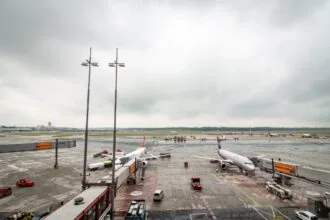
Travellers flying in or out around their cruise dates should also read our Hamburg Airport Transfers guide, which covers every realistic way of reaching the city centre from HAM.
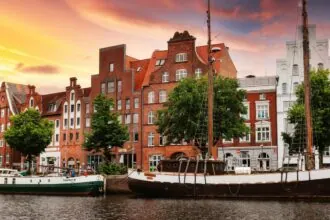
For anyone with a spare day either side of their sailing, our Best Day Trips from Hamburg guide covers Lübeck, Bremen and other towns reachable by direct regional train.
If a Hamburg sailing lines up with a home fixture, our How to Get to the Stadium in Hamburg guide covers getting to both HSV and FC St. Pauli matches from the city centre.
If your trip involves onward rail travel within Germany, our German Rail Tickets Explained guide breaks down the Deutschland-Ticket and regional alternatives to a standard fare.