Reviewed by our editorial team Updated
Hamburg is a two-club city in a way only a handful of German cities can claim, and the contrast between its two football institutions could hardly be sharper. Hamburger SV, known to everyone simply as HSV, spent 55 unbroken seasons in the Bundesliga before a shock relegation in 2018, a run longer than any other club in the division’s history, and their return to the top flight has put a genuine giant back where German football felt its absence most.
A few kilometres away, FC St. Pauli has built an entire identity around being the anti-establishment alternative to clubs exactly like HSV. Born out of Hamburg’s punk and squatter scene in the 1980s, St. Pauli wears a skull-and-crossbones badge instead of a conventional crest and has spent decades as one of world football’s most explicitly left-wing, anti-fascist clubs, a reputation that draws visiting fans from far beyond Germany regardless of which division the team happens to be playing in.
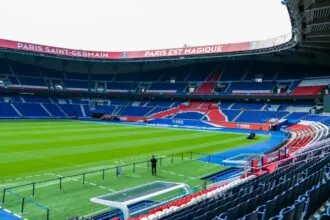
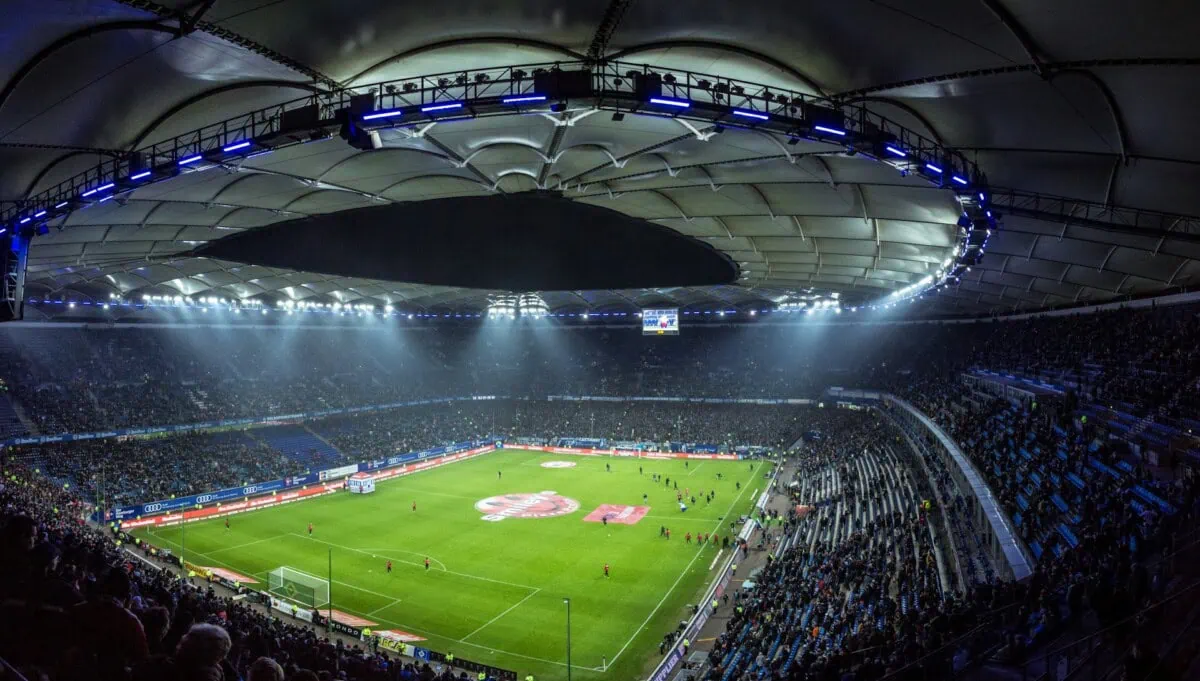
HSV plays out of the vast Volksparkstadion, a roughly 57,000-capacity Bundesliga arena in the western Stellingen district, built for scale and now hosting some of the biggest clubs in the country every other weekend. St. Pauli’s Millerntor-Stadion sits in the exact opposite kind of location, wedged into the St. Pauli district next to the Reeperbahn with a capacity of just 29,546, a ground that feels more like a community institution than a modern arena.
This guide covers how to actually get to both grounds, not just which line happens to run nearby: realistic journeys from central Hamburg, what genuinely happens once matchday crowds show up, an honest take on driving and parking, and how ticket buying actually works for both clubs. It also covers what makes each stadium worth the trip beyond ninety minutes of football.
Neither ground is difficult to reach, but the two experiences waiting at the other end are different enough to know what you are choosing before you buy a ticket. HSV offers the pedigree and scale of a Bundesliga institution rebuilding its top-flight identity, while St. Pauli offers a genuinely political, alternative matchday unlike almost anything else in European football.
| Club | Stadium | Capacity | Nearest Station | League (2026/27) |
|---|---|---|---|---|
| Hamburger SV | Volksparkstadion | 57,000 | S3/S5 Stellingen or Eidelstedt | Bundesliga |
| FC St. Pauli | Millerntor-Stadion | 29,546 | U3 St. Pauli or Feldstraße | 2. Bundesliga |
Transport at a Glance: Nearest Stops for Both Stadiums
Before the full breakdown below, here is every nearest stop for both grounds in one place, since HSV and St. Pauli play in opposite corners of the city and are reached in completely different ways.
| Stadium | Mode | Stop / Station | Line(s) | Walk Time to Stadium |
|---|---|---|---|---|
| Volksparkstadion (HSV) | S-Bahn | Stellingen | S3, S5 | ~15 min |
| Volksparkstadion (HSV) | S-Bahn | Eidelstedt | S3, S5 | ~15 min |
| Volksparkstadion (HSV) | S-Bahn | Othmarschen | S1 | ~15 min (south approach) |
| Volksparkstadion (HSV) | Bus | Schnackenburgallee | 22 | Short walk, eastern approach |
| Millerntor-Stadion (St. Pauli) | U-Bahn | St. Pauli | U3 | ~3 min, home end |
| Millerntor-Stadion (St. Pauli) | U-Bahn | Feldstraße | U3 | ~3 min, away/north curve |
| Millerntor-Stadion (St. Pauli) | Bus | St. Pauli (station) | 16, 17, 112 | ~3 min |
| Millerntor-Stadion (St. Pauli) | Bus | Feldstraße (U-Bahn) | 3, X3, 17 | ~3 min |
Reaching the Volksparkstadion: S-Bahn, Shuttle Buses and a 15-Minute Walk
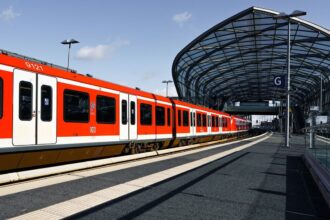
The Volksparkstadion sits out in Hamburg’s western Stellingen district, well away from the compact city centre, but the S-Bahn network reaches it from three separate directions. Stellingen and Eidelstedt stations, both served by the S3 and S5 lines, sit around a 15-minute walk from the ground, while Othmarschen station on the S1 line offers a third approach from the south.
A fourth option worth knowing about is bus line 22, which runs between S-Blankenese and U-Kellinghusenstraße and stops at Schnackenburgallee, close to the stadium’s eastern approach. Cyclists are also well catered for, with a StadtRAD bike-share station at the corner of Uwe-Seeler-Allee and Schnackenburgallee and free bicycle parking right next to the ground.
A genuinely useful practical detail is that every HSV matchday ticket doubles as a transport pass, covering free travel across HVV zones A to F on the day of the match. That single line is worth remembering before buying a separate transport ticket, since it removes one small cost and one small decision from the day. Our Hamburg Public Transport guide covers those same HVV zones and fares in full for any other day of the trip.
For a realistic door-to-seat estimate from Hamburg Hauptbahnhof, budget on roughly 20 minutes by S-Bahn to Stellingen, plus the 15-minute walk, plus time queuing at the turnstiles of a 57,000-capacity ground. That works out at somewhere between 45 and 55 minutes gate to gate on a normal matchday, longer if you cut it fine on kickoff.
Stellingen is the better choice over Eidelstedt or Othmarschen for most first-time visitors, simply because it sees the heaviest shuttle bus provision and the clearest signage on matchdays. It is easy to assume the walk from any of the three stations is short, but all three genuinely take close to 15 minutes on foot, so factor that into your timing rather than treating the station as the finish line.
Compare hotels and other places to stay for your trip.
Check availabilityBrowse apartments, holiday homes and self-catering stays.
View rentalsCompare prices from multiple hotel booking sites.
Check dealsHow HSV Manages a 57,000-Strong Crowd on Matchday
A 57,000-seat stadium generates a serious crowd surge, and HSV addresses this with a genuinely well-organised shuttle bus network. Dedicated buses run from Stellingen, Eidelstedt and Othmarschen stations starting around two to two and a half hours before kickoff, giving fans a direct, walk-free option straight to the stadium gates.
That shuttle provision matters because the alternative, the 15-minute walk from any of the three stations, becomes genuinely crowded on popular fixtures. Anyone travelling with children or reduced mobility should treat the shuttle buses as the more comfortable option rather than a fallback, especially in poor weather.
The post-match picture is the usual story at a stadium of this size: S-Bahn platforms and shuttle bus stops both get genuinely packed for twenty to thirty minutes after full time. Building in extra slack after the final whistle, rather than assuming an immediate train home, avoids the worst of the standing-room-only wait.
Arriving early, ideally an hour before kickoff, is the simplest way to avoid both the inbound crush and any last-minute security queue at the turnstiles. It also leaves time to explore the wider Volkspark area around the stadium, which includes other sporting venues and green space worth a slower look.
First-time visitors often head straight for the nearest S-Bahn platform after the match without checking whether the shuttle bus queue is actually shorter. On a genuinely full house, the shuttle buses often clear faster than a packed S-Bahn platform, simply because more vehicles can be added to the rotation than trains can be added to the timetable.
Parking at the Volksparkstadion: Five Colour-Coded Car Parks and What They Cost
Driving to the Volksparkstadion is more realistic than at many big German grounds, largely because the stadium sits on the edge of the city with proper car park infrastructure built around it. Several named lots, colour-coded Green, Red, Grey, White and Yellow, ring the stadium at walking distances of two to fifteen minutes from the gates.
Matchday parking costs €10 (£8.60/$11.70) for cars and €27 (£23/$32) for buses and motorhomes, with lots typically opening around three hours before kickoff. The White and Yellow lots sit closest to the ground but are reserved for VIP and disabled parking, so most fans will end up in the Green or Red/Grey lots a short walk further out.
Driving works reasonably well here compared with many Bundesliga grounds, precisely because the club has built genuine parking capacity rather than just discouraging cars outright. That said, arriving early is still the difference between a straightforward walk-in and circling for a space as kickoff approaches.
Anyone driving should still expect meaningful traffic on the approach roads in the hour before kickoff and again immediately after the final whistle, when thousands of cars try to leave the same limited road network at once. Building extra time into both ends of the journey remains sensible even with parking capacity in place.
Assuming a suburban stadium automatically means an easy exit after the match is a natural but flawed assumption. The car parks empty in stages rather than all at once, and patience at the exit barrier is usually faster than trying to force an early getaway through the crowd of departing vehicles.
How HSV Tickets Actually Get Sold, and What They Cost
HSV sell tickets to home matches through their official online ticket shop, linked directly from the club’s own website, with separate presale phases for members before general sale opens to everyone else. This is the safe, straightforward route for almost every visiting fan, and it is worth using without hesitation.
Prices vary considerably by seating category and opponent, running from around €18 (£15/$21) at the cheaper end up to €75.90 (£65/$89) for the best categories against the biggest visiting clubs. Online orders are capped at six tickets per person, which is worth knowing if you are organising a larger group.
Assuming that HSV’s return to the Bundesliga means every fixture behaves like a lower-division match on ticket availability is not a safe bet. Games against Germany’s biggest clubs, and any local rivalry fixtures, can sell through the general sale phase well before matchday, so buying a week or two in advance is the sensible approach for anything beyond a routine midweek fixture.
The plain advice on ticket buying reality is to stick to the club’s own official shop rather than third-party resale sites, both for price and for the risk of invalid tickets at the turnstile. The official shop also clearly separates seating categories and away-fan blocks, which resale listings do not always represent accurately.
Membership is not required to buy a standard matchday ticket, though HSV does offer membership schemes with their own pricing benefits for regular attendees. For a one-off visit as a travelling fan, a straightforward single-match ticket through the official shop is all that is needed.
Stadium Tours: Why the Volksparkstadion Is Worth Seeing Beyond Matchday
The Volksparkstadion runs a regular public stadium tour programme combined with a club museum, giving visitors a way to experience the ground without needing a fixture on the calendar. Tours run two or three times a day depending on the season, and the combined tour-and-museum ticket costs €14 (£12/$16) for adults, with a family ticket priced at €35 (£30/$41).
The standard tour lasts roughly 75 to 90 minutes and takes in the press area, the dressing rooms and the players’ tunnel, the same route the squad walks out through on a matchday. That access to genuinely functional parts of a working Bundesliga stadium, rather than just a static viewing platform, is what makes the tour worth the ticket price.
What makes the ground itself genuinely special is less about architecture and more about scale and history combined. HSV’s 55 unbroken seasons in the Bundesliga before their 2018 relegation remain a record no other club has matched, and the Volksparkstadion has hosted top-flight football for essentially the entire post-war history of the German league.
Since returning to the Bundesliga, HSV have brought a genuine sense of occasion back to a ground built to hold 57,000 people, a capacity that puts it among the largest stadiums in the country. For visitors interested in the scale of top-flight German football rather than a niche or alternative experience, this is the more conventional but no less impressive of Hamburg’s two grounds.
Booking a tour slot a few days ahead is sensible, particularly around school holidays or the weeks either side of a big fixture, since tours are not usually available on matchdays themselves. The museum element rewards genuine HSV history buffs more than casual visitors, tracing the club’s Bundesliga record in detail.
Reaching the Millerntor: the U3 from St. Pauli or Feldstraße
The Millerntor-Stadion sits right in the heart of the St. Pauli district, wedged between the Reeperbahn, the Heiligengeistfeld fairground site and the old Feldstraße flak bunker. The main approach is the U3 U-Bahn line to St. Pauli station, around a ten-minute walk from the Reeperbahn straight up Detlev-Bremer-Straße towards the ground.
Away supporters are generally directed one stop further along the same line to Feldstraße station, where a pathway alongside the training pitches leads to the north curve entrance used for the visiting fans’ section. That slightly longer route exists specifically to keep home and away fan flows separate on the approach to the ground.
For a realistic door-to-seat estimate from Hamburg Hauptbahnhof, budget on roughly 10 to 15 minutes by U-Bahn to St. Pauli or Feldstraße, plus the walk to the ground, plus a few minutes queuing at a much more compact set of turnstiles than the Volksparkstadion. That adds up to somewhere around 25 to 35 minutes gate to gate, noticeably quicker than the trip out to HSV’s ground.
Checking which entrance your ticket actually corresponds to before choosing St. Pauli or Feldstraße station is worth doing, since the two lead to genuinely different sides of the ground. Assuming any nearby U-Bahn exit works for any part of the stadium is a mistake worth avoiding, since home and away entrances are deliberately kept apart.
One extra planning point worth knowing is that the Hamburg Dom funfair regularly runs on the neighbouring Heiligengeistfeld site at the same time as home matches. When that happens, the surrounding streets and station exits get considerably busier than a normal matchday, so allowing extra time is sensible if your visit coincides with the Dom.
Inside a Millerntor Matchday: Terracing, Sell-Outs and a Tight Footprint
A 29,546-capacity ground squeezed into a dense inner-city district produces a genuinely tight matchday footprint, and the streets around St. Pauli and Feldstraße stations narrow considerably compared with the open plazas around bigger suburban grounds. On popular fixtures, which are common given the club’s cult following, expect the surrounding bars and pavements to be genuinely full well before kickoff.
There is no dedicated shuttle bus network at the Millerntor, largely because the U-Bahn connection is short and frequent enough that additional bus provision is not really necessary. The U3 typically runs a normal timetable even on matchdays, though platforms at both stations do get busy in the thirty minutes either side of kickoff.
Because a large share of the ground is standing terracing rather than seating, latecomers face a genuine practical problem beyond simple politeness: finding a decent view once a standing section has filled in is much harder than shuffling along a row of seats. Arriving with real time to spare matters more here than at most stadiums of comparable size.
The pre-match atmosphere spills well beyond the stadium itself, with bars along Simon-von-Utrecht-Straße and Detlev-Bremer-Straße filling with supporters, some carrying scarves from clubs as far afield as Celtic and FC United of Manchester who have adopted St. Pauli as a kindred spirit. That wider street atmosphere is arguably as much a part of the day as the match itself.
Treating this as a low-key fixture simply because St. Pauli currently sit in the second tier is a real misjudgement. The club’s cult popularity, driven by its politics and identity rather than results, means home attendances routinely rival or exceed clubs several divisions higher, so turning up expecting an easy, half-empty ground is a mistake worth avoiding.
Search routes and flight options for your journey.
Search flightsBrowse Airalo eSIM options for convenient travel data.
Check eSIMsArrange a private pickup before travel instead of sorting transport after landing.
Book a transferWhy Nobody Drives to a Millerntor Matchday
Driving to St. Pauli’s ground is, in blunt terms, not a realistic matchday option. The stadium’s own administrative offices on the south curve forecourt have around 100 parking spaces in total, but these are explicitly unavailable during matches.
There is effectively no meaningful public car park built around the ground, a deliberate consequence of the stadium sitting inside one of Hamburg’s densest inner-city districts rather than on an out-of-town site with room to spare. The surrounding residential streets have their own resident parking restrictions, which are strictly enforced on matchdays.
The reality here is unambiguous: the U-Bahn is not just the easier option, it is genuinely the only sensible one. Anyone travelling by car should park well away from the immediate St. Pauli district and finish the journey by U-Bahn rather than attempting to find street parking near the ground itself.
This is compounded further on weekends when the Hamburg Dom funfair is running on the adjacent Heiligengeistfeld, since that event brings its own large crowds and its own parking pressure to the same streets. Checking the Dom’s calendar alongside the fixture list is a small step that avoids a genuinely frustrating evening.
First-time visitors often assume a smaller, second-tier stadium will have correspondingly easy parking, when the opposite is true precisely because of the district it sits in. Treat the car as a non-option here rather than a fallback plan.
St. Pauli Tickets: Member Presales, the Nordkurve and Why Matches Sell Out
St. Pauli’s ticketing follows a fairly common German club structure but with unusually high demand attached to it. Tickets go on sale to club members first through a dedicated presale window, with general sale opening to everyone else once that period closes, through the club’s official online ticket shop.
Away fans are directed to the same official shop for their allocation, which is normally placed in the Nordkurve standing section behind the Feldstraße end. Standing tickets in that section have historically been priced around €11 (£9/$13), making it one of the more affordable ways to see a fixture in German football regardless of division.
It is tempting to assume a 2. Bundesliga club will have plentiful ticket availability compared with Bundesliga grounds, but that assumption does not hold up here. Many St. Pauli home matches sell out well in advance precisely because of the club’s cult following, so checking the fixture list and buying early is more important here than the division alone would suggest.
If a match does sell out, the club runs its own official ticket exchange, allowing members to resell tickets they cannot use, usually available right up until the day before the game and occasionally on matchday itself. The plain advice is to use that official exchange rather than any general resale marketplace, both for price and for the certainty of a valid ticket at the gate.
Membership is not required to buy a general sale ticket once the presale window closes, though it clearly helps for the most in-demand fixtures. For a one-off visit, checking the official shop as soon as a fixture is confirmed remains the sensible approach given how quickly popular matches move.
The Skull, the Politics and Why the Millerntor Feels Different
What makes the Millerntor genuinely different from almost any other football ground in Germany is not the stadium itself but the politics built into the club that plays there. St. Pauli’s left-wing, anti-establishment identity traces back to Hamburg’s Hafenstraße squatters’ movement in the 1980s, when activists resisting the demolition of occupied housing brought their politics directly into the terraces of a struggling lower-division club.
The club’s skull-and-crossbones emblem, worn instead of a conventional crest, references Hamburg’s own pirate and maritime history and was adopted by those same squatters as a symbol of rebellion. It has since become one of the most recognisable identities in world football, sold on merchandise across continents that have never seen the team play live.
St. Pauli was among the first clubs anywhere to formally ban racist and neo-Nazi chanting inside its ground, doing so in the early 1990s well before such stances were common in football, and the stadium still carries a mural reading “Kein Fussball den Faschisten”, no football for fascists. Wearing clothing from the Thor Steinar brand, associated with the far right, is banned inside the stadium to this day.
That activist identity runs through matchday in practical ways too: the club funds subsidised away trips and free youth training, partners with FC Lampedusa, a team made up of refugees and migrants, and has been recognised for offering one of the largest vegetarian and vegan food selections at any stadium in Europe. Choreography supporting LGBTQ+ communities and messages reading “Refugees Welcome” are a normal part of matchday rather than a one-off gesture.
For visiting fans, that is really the pitch for choosing St. Pauli over a bigger, more conventional ground elsewhere in Germany: this is a club whose politics are genuinely lived rather than marketed, and a matchday here feels closer to a community gathering with a football match attached than the reverse. Few clubs anywhere combine cult status with that level of documented, decades-long activism.

In and Around the Ground: Shops, Food and Hospitality
HSV runs two official club shops. The HSV Arena Store sits right at the stadium on Uwe-Seeler-Allee, a couple of minutes from the Stellingen S-Bahn approach, and stays open on non-matchdays as well as before and after games. A second branch, the HSV City Store on Schmiedestraße near Jungfernstieg, covers anyone who wants to pick up a shirt in the city centre rather than making the trip out to Stellingen.
For food and drink at the ground itself, the club’s own Fanrestaurant “Die Raute”, also on Uwe-Seeler-Allee, runs a proper kitchen rather than just concession stands, including a weekday lunch buffet on non-matchdays. Fans after a more upmarket matchday also have hospitality packages to choose from: HSV sells access to a genuine spread of lounges, from the pitchside Panorama Lounge to the brewery-themed König Pilsener Lounge, bookable through the club’s hospitality partner rather than the standard ticket shop.
St. Pauli also runs two official shops, and the split says something about the club. The Fanshop Millerntor-Stadion sits inside the ground’s Südtribüne at Harald-Stender-Platz, a few steps from the St. Pauli U-Bahn exit, while a second branch, the Fanshop Reeperbahn on the Reeperbahn itself, keeps the skull-and-crossbones badge visible on Hamburg’s most famous street every day of the week, not just on matchdays.
On the ground itself, the club-run Clubheim, right at Harald-Stender-Platz, functions as an actual pub and meeting point rather than a corporate function room, screening St. Pauli away games and other fixtures for anyone who cannot get a ticket. Beyond the stadium walls, the wider matchday bar scene along Simon-von-Utrecht-Straße and Detlev-Bremer-Straße, a few minutes from the Reeperbahn, is genuinely part of the experience rather than a side note, and it is worth building in time to drink among supporters before kickoff rather than heading straight for the turnstiles. St. Pauli also sells its own hospitality, from season and single-match business seats to private séparées, though availability for the more exclusive options is limited and best checked directly with the club’s own sales team.
The contrast is honest rather than accidental. The Volksparkstadion is built around the stadium itself, with its shop, restaurant and lounges all sitting on the same access road as the ground. The Millerntor spills straight out into a working inner-city neighbourhood, so the shopping and drinking before kickoff happens as much on the surrounding streets as it does inside the stadium footprint.
Which Hamburg Match Should You See?
If you can only fit in one Hamburg match, the honest answer depends on what you want from the afternoon. Anyone drawn to scale, Bundesliga pedigree and a proper big-club occasion should head for the Volksparkstadion, where HSV’s return to the top flight and record-breaking Bundesliga history give the day a genuine sense of occasion.
Anyone drawn to alternative culture, politics and a compact, terrace-driven atmosphere should aim for the Millerntor instead. The skull-and-crossbones identity, the anti-fascist history and the sheer intensity of a sold-out 29,546-capacity ground squeezed into the St. Pauli district produce an experience that a bigger, more conventional stadium rarely matches.
Ticket availability is arguably the deciding factor for most visitors. HSV’s Bundesliga fixtures against smaller opponents are often available through the official shop with a week or two of notice, while St. Pauli’s cult popularity means many home matches sell out well in advance regardless of the opponent or the division.
Practically speaking, the Millerntor is the far easier trip from central Hamburg, roughly 25 to 35 minutes door to seat against 45 to 55 minutes out to the Volksparkstadion, so travel time alone might tip a tight schedule towards St. Pauli. First-time visitors and history-focused travellers generally get more out of the Volksparkstadion’s scale, while fans already curious about football’s political fringes tend to find the Millerntor the more memorable of the two.
If your schedule allows it, and both clubs have home fixtures during your stay, seeing one of each is genuinely the best answer. Few cities let you experience two such different versions of German football culture within the same afternoon’s travel time of each other.
What You Can’t Bring: Stadium Rules and Prohibited Items at Both Grounds
Both Hamburg stadiums enforce their own strict entry rules, and the two grounds differ enough that it pays to check which one applies before you travel. HSV introduced a formal bag policy in 2017 limiting bags, backpacks and similar containers to A4 size, roughly 29 x 21cm, with anything larger refused at the gate.
At the Millerntor, St. Pauli bans all food and drink brought from outside, along with any bottle, cup or can made from glass, splintering plastic or particularly hard material. Weapons of any kind, gas spray cans, laser pointers and anything that could double as a projectile are also refused at both grounds.
Pyrotechnics are banned outright at both stadiums, covering fireworks, flares and smoke devices, and St. Pauli specifically bans confetti cannons and any confetti that isn’t biodegradable. Bulky items such as ladders, stools, folding chairs and large suitcases are refused at both grounds, and unauthorised video cameras need prior permission to bring in.
Both clubs also ban discriminatory material outright. St. Pauli’s rules explicitly prohibit flags, patches or clothing that promotes discrimination on the basis of race, religion, gender or sexual orientation, and clothing linked to right-wing extremism, including the Thor Steinar brand, is refused entry regardless of the fixture.
Checking the current rules before travelling is worth doing since both clubs update their regulations from time to time. HSV publishes its full Stadionordnung on its own website, and St. Pauli does the same via its official stadium regulations page, both worth a quick read alongside your ticket confirmation.

Rupert’s Handy Travel Tips
Heading to a Hamburg matchday? Rupert has a few tips that can save both time and a lot of standing around:
- Use the HSV shuttle buses, not just the walk: they run from Stellingen, Eidelstedt and Othmarschen from around two hours before kickoff and are often faster than the platform crush after the match.
- Check whether your Millerntor ticket says St. Pauli or Feldstraße station: home and away entrances sit on opposite sides of the ground, and the two U-Bahn stops lead to different ones.
- Your HSV matchday ticket is also a transport ticket: it covers free HVV travel across zones A to F on the day, so do not buy a separate fare.
- Book St. Pauli tickets the moment a fixture is announced: cult popularity means plenty of home matches sell out regardless of the opponent or the division.
- Skip driving to the Millerntor altogether: there is effectively no matchday parking, and the U-Bahn is genuinely the only sensible option.
Want to meet the reindeer behind our travel tips? Find out more in our page Who is Rupert?.




Compare hostels and lower-cost accommodation for your trip.
Search hostelsAccess compensation support, eligible lounge benefits and faster payouts.
See the benefitsArriving before check-in or leaving later? Store your luggage and enjoy the extra time hands-free.
Store your bagsFrequently Asked Questions About Getting to Hamburg’s Football Stadiums
How do I get to the Volksparkstadion from central Hamburg?
Take the S3 or S5 to Stellingen or Eidelstedt, both around a 15-minute walk from the ground, or use the matchday shuttle buses that run from those stations and from Othmarschen from roughly two hours before kickoff.
How do I get to FC St. Pauli’s stadium?
Take the U3 U-Bahn to St. Pauli station, around a ten-minute walk from the Reeperbahn, or to Feldstraße one stop further if your ticket is for the away section or north curve.
Is it worth driving to either stadium on a matchday?
At the Volksparkstadion, yes, with proper paid car parks from €10 (£8.60/$11.70). At the Millerntor, no; there is effectively no matchday parking and the U-Bahn is the only realistic option.
Why does FC St. Pauli have such a cult following relative to its size?
The club’s left-wing, anti-fascist identity grew out of Hamburg’s 1980s squatters’ movement, and its skull-and-crossbones badge and activist reputation have made it a global symbol for alternative football culture well beyond its current league position.
Are HSV tickets easier to buy than St. Pauli tickets?
Generally yes for routine fixtures. HSV sell most tickets through general sale with a week or two of notice, while St. Pauli’s cult popularity means many home matches sell out in advance regardless of the opponent.
Can I tour the Volksparkstadion when there is no match on?
Yes. The stadium runs regular public tours combined with a club museum, priced at €14 (£12/$16) for adults, covering the press area, dressing rooms and players’ tunnel.
What league is FC St. Pauli playing in for the 2026/27 season?
2. Bundesliga. St. Pauli were relegated at the end of the 2025/26 Bundesliga season after two years in the top flight.
Which stadium should a first-time visitor to Hamburg choose?
The Volksparkstadion generally suits visitors after scale, Bundesliga pedigree and a big-club occasion, while the Millerntor tends to be rated more highly by fans drawn to alternative culture and a compact, terrace-driven atmosphere.
Further Reading & Related Guides
Landing in the city before a match? Our Hamburg Airport Transfers guide covers every realistic way of reaching the centre, while our Best Things to Do in Hamburg guide rounds up the sights worth prioritising around a matchday visit.
If a match falls on a free day, our Best Day Trips from Hamburg guide covers the wider region for the rest of your stay, and our Hamburg Cruise Port Guide is useful if you are arriving by sea. For the wider picture on getting around by rail, our German Rail Tickets Explained guide breaks down the Deutschland-Ticket and regional fares that also cover the HVV network used to reach both stadiums.