Reviewed by our editorial team Published
Bremen sits on a bend of the River Weser roughly 60 kilometres inland from the North Sea, and that position gives the city an unusually varied spread of day trips for its size. Within an hour or so of Bremen Hauptbahnhof, travellers can reach a world-class maritime museum and climate exhibition on the coast, Germany’s most famous artists’ colony tucked among thatched cottages and peat moorland, a cathedral town built almost entirely around horses, and a genuine ducal palace at the heart of a cyclist-friendly old town.
This is a more compact, regional set of excursions than the sprawling day-trip country around Berlin or Munich, and that is really the appeal of it. Bremen’s neighbours pack a Klimahaus climate journey through eight time zones, a hamlet of expressionist painters and thatched-roof studios, the Deutsches Pferdemuseum in a Romanesque cathedral town, and a Baroque palace with a genuinely walkable old town into a corridor that rarely takes much more than an hour to reach by direct train or bus.
The standout for a first visit is Bremerhaven, home to the German Maritime Museum and the Klimahaus, both reachable on a direct hourly regional train in around 35 minutes. Worpswede, the thatched artists’ village that shaped German Expressionism, sits a direct bus ride away, while Verden an der Aller and Oldenburg both offer easy half-day trips built around a cathedral and a ducal palace respectively. For a longer full-day outing, Cuxhaven trades city sights for a UNESCO World Heritage stretch of Wadden Sea coastline. Further afield, Hamburg, Hanover and Lüneburg extend the list into genuine city day trips and a Hanseatic old town, each still reachable there and back within a single day.
The table below compares journey times and transport for all eight destinations at a glance, followed by a dedicated section on each place and a final verdict on which trip suits which kind of traveller.
| Destination | How to Get There | Journey Time | Suggested Time Needed |
|---|---|---|---|
| Bremerhaven | Direct regional train (RE) from Bremen Hauptbahnhof | About 35 minutes | Full day |
| Worpswede | Direct regional bus (Line 670) from Bremen Hauptbahnhof | About 45-50 minutes | Half day to full day |
| Verden (Aller) | Direct regional train (RE/RB) from Bremen Hauptbahnhof | About 20-25 minutes | Half day |
| Oldenburg | Direct regional or InterCity train from Bremen Hauptbahnhof | About 25-30 minutes | Half day to full day |
| Cuxhaven | Regional train to Bremerhaven, then connecting regional train | About 1 hour 30 minutes to 2 hours total | Full day |
| Hamburg | Direct ICE, IC or regional train from Bremen Hauptbahnhof | About 55 minutes to 1 hour 10 minutes | Full day |
| Hanover | Direct ICE or regional train from Bremen Hauptbahnhof | About 1 hour | Half day to full day |
| Lüneburg | Regional train with one change at Hamburg-Harburg | About 1 hour 10 minutes to 1 hour 40 minutes total | Half day to full day |
Bremerhaven: World-Class Museums on the Weser Estuary
Bremerhaven sits where the Weser widens into the North Sea, and while the city is best known internationally as a port, its real draw for a day trip is a genuinely outstanding pair of museums standing barely five minutes apart. The German Maritime Museum, or Deutsches Schifffahrtsmuseum, houses the salvaged remains of the Bremen Cog, a medieval Hanseatic trading vessel recovered from the Weser in 1962 and now displayed inside a dedicated hall alongside historic ships moored in the surrounding harbour basin.
This guide focuses on Bremerhaven as a museum day trip out from Bremen, so it keeps things brief. Arriving instead on a cruise ship? Our dedicated Bremerhaven Cruise Port Guide covers terminal transfers, luggage storage and getting into town in full.
Direct regional trains run from Bremen Hauptbahnhof to Bremerhaven Hauptbahnhof roughly hourly, with the journey taking around 35 minutes, and NordWestBahn services supplementing the Deutsche Bahn timetable on the same route. Booking a little ahead through Deutsche Bahn’s app can bring the fare down to around €9 (£7.74/$10.53) on an advance Sparpreis ticket, though a Niedersachsen-Ticket, covering unlimited regional travel across Lower Saxony and Bremen for up to five people in a day, costs €29 (£24.94/$33.93) for one person and €61 (£52.46/$71.37) for a group of five.
Adult admission to the German Maritime Museum costs €10.00 (£8.60/$11.70), covering the Cog Hall, the main exhibition and any current special exhibition, and the museum opens daily from 10am to 6pm between mid-March and early November, switching to a Wednesday to Sunday schedule over winter. A short walk away, the striking Klimahaus Bremerhaven takes visitors on a simulated journey along the eighth meridian through eight different climate zones, from Alpine cold to Sahara heat, and a full-day adult ticket costs €25.50 (£21.93/$29.84), dropping to €22.50 (£19.35/$26.33) for afternoon entry from 3pm.
Given the scale of both museums, this is realistically a full day trip rather than a half day, especially for anyone wanting to see the Cog Hall properly and work through the Klimahaus without rushing. Bremerhaven rewards visitors who come specifically for its museums rather than expecting a classic old town, and both sights sit an easy walk from the Hauptbahnhof.
Worpswede: Thatched Cottages and Germany’s Most Famous Artists’ Colony
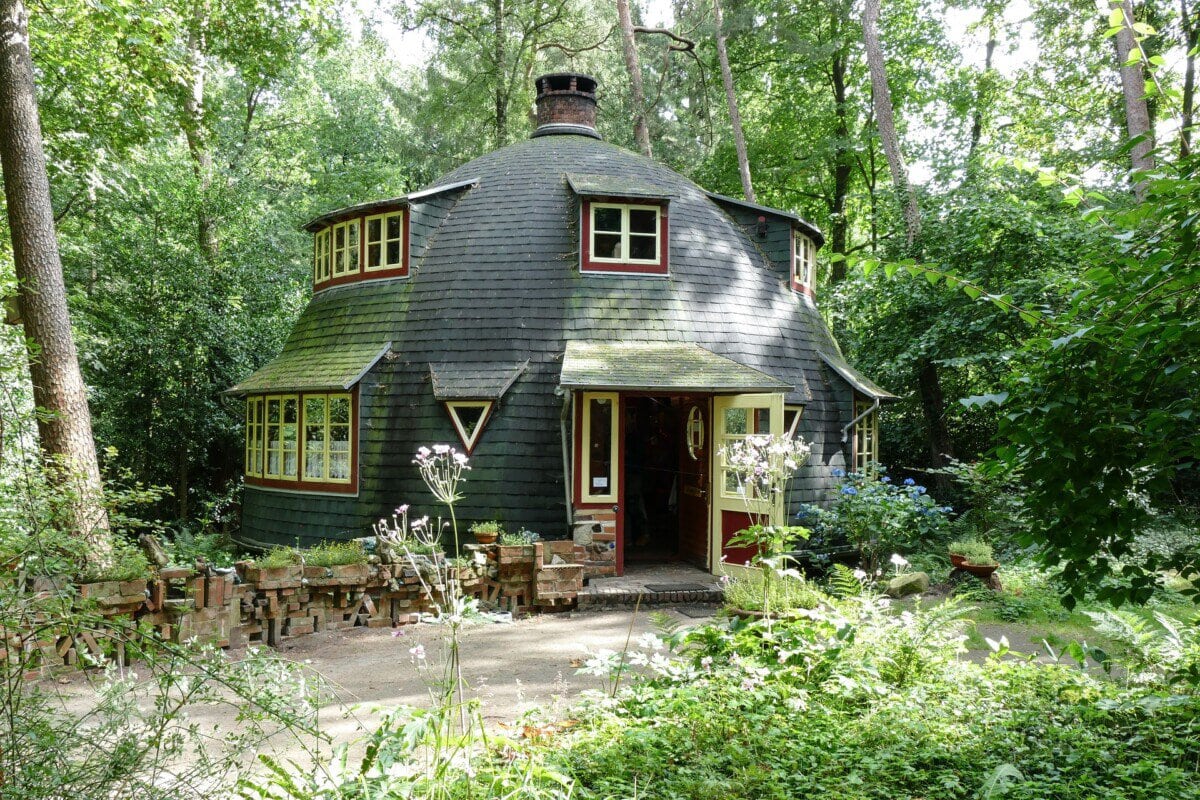
Worpswede is a genuine artists’ colony rather than a manufactured one, founded in 1889 when painter Fritz Mackensen and a small circle of fellow students settled among the thatched farmhouses and peat moorland of the Teufelsmoor to paint the flat, moody landscape first-hand. The village went on to shape a distinct strand of German Expressionism, and its best-known resident, the painter Paula Modersohn-Becker, is now honoured with a dedicated museum back in Bremen’s Böttcherstraße, itself designed by another Worpswede figure, Bernhard Hoetger.
Regional bus Line 670 runs directly from Bremen Hauptbahnhof to Worpswede, taking around 45 to 50 minutes with departures roughly every hour throughout the day, so no train change or private transfer is needed. The route is covered by the VBN regional transport network, and a Niedersachsen-Ticket is valid on the bus as well as the rail network, making it worth comparing against a standard single for a family or small group heading out together.
The village’s thatched-roof studios and brick artists’ houses are largely free to admire from the outside, but the four dedicated Worpsweder Museen, including the Große Kunstschau gallery and the Barkenhoff, painter Heinrich Vogeler’s former home and studio, charge individual entry. The Große Kunstschau costs €9.00 (£7.74/$10.53) full price or €6.00 (£5.16/$7.02) reduced, while a combined Worpsweder Museums-Karte covering all four houses costs €25.00 (£21.50/$29.25), a sensible option for anyone planning to see more than two of them in a day.
A half day covers a wander through the village and one or two museums comfortably, while a full day allows time to work through all four houses and take a slower walk out towards the moorland that first drew painters here. Worpswede is the pick on this list for anyone with a genuine interest in art history rather than a passing curiosity.
Best if you want daily housekeeping and a front desk. Filter by area first, then by price.
Check availabilityBest for families, or any stay past about four nights. A kitchen and a washing machine start paying for themselves.
Browse rentalsBest for double-checking. Runs the same search across several booking sites so you are not leaving money behind.
Compare pricesVerden an der Aller: A Cathedral Town Built Around Horses
Verden an der Aller is best known across Germany as the capital of the German horse, a reputation built on centuries of horse breeding and trading in the surrounding Aller valley and still visible today in the town’s museums, stud farms and annual horse market. At its centre, the Verden Cathedral, or Dom, blends Romanesque origins with a soaring Gothic nave, and its free-to-enter interior makes an easy pairing with the town’s more unusual equestrian attraction.
Direct regional trains run from Bremen Hauptbahnhof to Verden in around 20 to 25 minutes, with the fastest services covering the short hop in as little as 19 minutes, and departures running frequently enough throughout the day that a return trip needs little advance planning. As with the other short regional hops on this list, a Niedersachsen-Ticket is valid on the route and works out cheaper the moment a second traveller joins the trip.
The town’s genuine highlight is the Deutsches Pferdemuseum, or German Horse Museum, at Holzmarkt 9, a purpose-built museum covering the history, breeding and culture of the horse in Germany through hands-on exhibits and a genuinely engaging collection for visitors of any age. Adult admission costs €5.00 (£4.30/$5.85), and the museum opens Tuesday to Sunday from 10am to 5pm, closing on Mondays, so it is worth checking the day of the week before travelling specifically for it.
Away from the museum, Verden’s compact old town holds a scattering of half-timbered merchant houses and a quiet riverside stretch along the Aller worth a slow walk. A half day covers the cathedral, the Pferdemuseum and a wander through the old town comfortably, making Verden one of the easiest, lowest-effort trips on this whole list given how short and frequent the train connection is.
Oldenburg: A Ducal Palace and a Cyclist’s Old Town
Oldenburg spent centuries as the seat of its own grand duchy, and that history is still visible at the centre of town in the Oldenburger Schloss, a palace with origins reaching back to the 13th century and rebuilt in its current Baroque and Neoclassical form largely under the dukes of the 18th and 19th centuries. Today the palace houses the Landesmuseum für Kunst und Kulturgeschichte, spanning fine art, decorative arts and regional history across the Schloss itself and two neighbouring buildings, the Augusteum and the Prinzenpalais.
Direct trains run from Bremen Hauptbahnhof to Oldenburg in around 25 to 30 minutes, with both ICE and IC services covering the route alongside regional trains, and roughly 58 services a day making this one of the most frequent connections on this list. Advance Sparpreis fares booked through Deutsche Bahn’s app can start from around €8 (£6.88/$9.36), though a Niedersachsen-Ticket remains the better-value choice for anyone travelling without a fixed departure time in mind.
A ticket covering the Schloss, Augusteum and Prinzenpalais together with any current special exhibition costs €9.00 (£7.74/$10.53) for adults, dropping to €6.00 (£5.16/$7.02) for the permanent collections alone without a special exhibition, and the museum opens Tuesday to Sunday from 10am to 6pm, closing Mondays. Outside the palace, St Lamberti Church and the distinctive Lappan Tower both sit within a few minutes’ walk of the Schlossplatz, and Oldenburg’s flat, famously bike-friendly streets make the whole old town easy to cover on foot in an afternoon.
A half day comfortably covers the palace museum and a walk through the old town, while a full day allows time for a slower pace through the Schlossgarten and the pedestrianised shopping streets nearby. Oldenburg suits anyone who wants a genuine ducal palace experience without a long journey either way.
Cuxhaven: UNESCO Wadden Sea Mudflat Hiking on the North Sea Coast
Cuxhaven sits right at the mouth of the Elbe on the North Sea coast, and it is the trip on this list that swaps city streets and museum galleries for a genuine change of landscape. The surrounding Wadden Sea, or Wattenmeer, was inscribed as a UNESCO World Heritage Site in 2009, recognised as the largest unbroken system of intertidal sand and mud flats anywhere in the world, and Cuxhaven is one of the easiest places on the German coast to walk directly out onto it.
Reaching Cuxhaven takes a little more planning than the other trips here, since there is no single direct train from Bremen. The journey starts with a regional train to Bremerhaven Hauptbahnhof, running roughly hourly, followed by a connecting regional service on to Cuxhaven, also roughly hourly, for a total journey of around 1 hour 30 minutes to 2 hours depending on the connection. A Niedersachsen-Ticket covers the whole route on both legs and is worth comparing against individual fares for this longer trip in particular.
The signature activity here is a guided Wattwanderung, or mudflat hike, led by local guides who know the tides and safe routes across the flats, since walking out unguided is genuinely dangerous once the tide turns. Operators including Cuxwatt run tours from a roughly two-hour introductory walk at €10.00 (£8.60/$11.70) per person up to a longer four-hour Seal Bank tour at €27.00 (£23.22/$31.59), with rubber boots available to rent for €5.00 (£4.30/$5.85) a pair.
Beyond the mudflats, the Kugelbake landmark and the Alte Liebe viewing platform both give a good look at the shipping traffic entering the Elbe estuary. Given the length of the round trip, this is realistically a full day trip, and booking a Wattwanderung slot ahead is worth doing, since tours run to the tide table rather than a fixed daily schedule.

Compare Trains and Buses with Omio
Choosing between trains and buses is not always obvious. Some routes are faster by train, while others are cheaper or easier by bus. Omio helps you compare routes, journey times, prices, and tickets in one place.
It is useful for city-to-city travel, cross-border journeys, and trips where flexibility matters. You can quickly see which option works best for your route, budget, and schedule before booking.
Hamburg: A Genuine Second City Less Than an Hour Away
Of every stop on this list, Hamburg needs the least introduction. Germany’s second-largest city and one of Europe’s busiest ports sits close enough to Bremen that locals genuinely treat it as a normal day out rather than a special trip, and the pull is obvious the moment you step out of the station into the Speicherstadt, the largest warehouse district in the world and a UNESCO World Heritage Site since 2015.
Direct trains run from Bremen Hauptbahnhof to Hamburg Hauptbahnhof roughly every 20 to 30 minutes throughout the day, on a mix of ICE, IC and regional services, with the fastest ICE covering the route in as little as 55 minutes and slower regional trains taking closer to an hour and ten minutes. A Niedersachsen-Ticket covers the whole journey too, since its validity extends into Hamburg as well as Lower Saxony and Bremen, pricing out at €29 (£24.94/$33.93) for one person or €61 (£52.46/$71.37) for up to five travelling together.
From the station, it’s a straightforward walk or short U-Bahn hop down into the Speicherstadt and neighbouring HafenCity, where the Elbphilharmonie concert hall’s Plaza observation deck now charges €5.00 (£4.30/$5.85) for a timed entry slot, following the removal of free walk-up access in late 2026. Model railway fans should set aside time and budget for Miniatur Wunderland, the world’s largest model railway, where adult admission runs to €22.00 (£18.92/$25.74), and anyone wanting to see the docks from the water can join a classic one-hour harbour round trip from around €12.50 (£10.75/$14.63) per person.
Given how much genuinely sits within walking distance of the Hauptbahnhof, Hamburg is realistically a full day trip, and honestly one that rewards picking two or three sights rather than trying to see the whole city in a single visit. It is the pick on this list for anyone who wants a proper big-city day out without an overnight stay.
Hanover: Baroque Gardens and a Town Hall with a Curved Lift
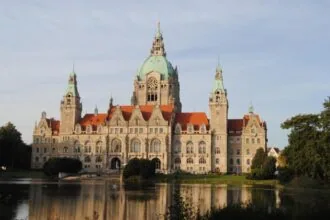
Lower Saxony’s state capital sits almost directly south of Bremen, and while Hanover is a genuinely large city in its own right, its centre revolves around two sights compact enough to fit into a single half day: the Herrenhausen Gardens, a set of Baroque royal gardens dating to the 17th century, and the New Town Hall, a domed Neo-Renaissance building known for a curved lift that rides diagonally up through the dome to an observation gallery.
Direct trains from Bremen Hauptbahnhof reach Hannover Hauptbahnhof in around one hour, with the fastest ICE services covering it in as little as 59 minutes and around 40 direct trains a day running throughout the daytime and evening. As with the shorter hops on this list, a Niedersachsen-Ticket covers the route too, at €29 (£24.94/$33.93) for one person or €61 (£52.46/$71.37) for a group of up to five.
The Großer Garten at Herrenhausen charges €10.00 (£8.60/$11.70) for adults between April and October, covering the formal garden, the Berggarten botanical garden and the palace museum, dropping to €8.00 (£6.88/$9.36) reduced. Over at the New Town Hall, the dome lift runs seasonally from mid-March to early November for €5.00 (£4.30/$5.85) a ride, while the town hall’s own lobby and model room, showing scale models of the city through history including its wartime destruction, are free to walk through.
A half day covers the town hall and a walk around the neighbouring Maschsee lake comfortably, while a full day allows time to properly explore Herrenhausen’s gardens and fountains at an unhurried pace. Hanover suits travellers who want formal gardens and a grander city feel than the smaller towns elsewhere on this list.
Lüneburg: A Hanseatic Salt Town Whose Buildings Lean
Walk along Am Sande, Lüneburg’s showcase square of 15th to 17th-century brick merchants’ houses, and it quickly becomes obvious that several of the gabled facades lean at genuinely noticeable angles. The cause is written into the town’s own history: centuries of salt extraction beneath the old town caused underground cavities to collapse and the ground itself to shift, tilting buildings that still stand, and still lean, today. That same salt trade once made Lüneburg one of the wealthiest members of the Hanseatic League.
Getting there takes a little more effort than the shorter hops on this list, since there is no direct train from Bremen. The usual route runs via a change at Hamburg-Harburg, and the whole journey takes anywhere from 1 hour 10 minutes on a well-timed connection up to around 1 hour 40 minutes depending on the wait between trains, with roughly 37 services a day covering the route in total. A Niedersachsen-Ticket covers both legs of the journey in full.
The Deutsches Salzmuseum, built into the former saltworks and holding original wooden pumps and brick boiling pans among its exhibits, charges €10.00 (£8.60/$11.70) for adults, or €6.00 (£5.16/$7.02) reduced, and a visit takes around 90 minutes to two hours. Beyond the museum, the old town’s Rathaus and the historic Alter Kran crane on the Ilmenau river are both free to admire from outside, while the brick Wasserturm water tower charges €6.00 (£5.16/$7.02) for its viewing platform, giving one of the better rooftop views over the leaning gables below.
Given the change involved, Lüneburg suits a half day built around Am Sande and the Salzmuseum, stretching to a full day for anyone adding the Wasserturm climb and a slower wander along the Ilmenau. It is the pick on this list for travellers who want a Hanseatic old town with a genuinely unusual physical quirk rather than another cathedral or palace.
Best if you can move a day either way. Shows how the fare changes across the month.
Compare flightsBest if you want maps and messaging working the moment you switch your phone on.
See eSIM plansBest when public transport has stopped, or when you are travelling with children and bags.
Book a transferWhich Day Trip Should You Choose?
If you only have time for one day trip from Bremen, make it Bremerhaven. Nothing else on this list packs a genuinely world-class maritime collection and an immersive climate exhibition into such a short, frequent journey, and both museums sit an easy walk from the station.
Travellers with a specific interest in art and history should head to Worpswede instead, ideally allowing a full day to work through more than one of its four museums. Verden and Oldenburg sit in a similar bracket to each other, both genuinely easy half days built around a single standout sight, a horse museum in Verden’s case and a ducal palace in Oldenburg’s, that suit anyone chasing a lower-effort trip without a long round journey.
Anyone wanting a full change of scenery should commit to Cuxhaven, ideally on a day set aside for it rather than squeezed in around another stop, given the length of the round trip and how much a guided Wattwanderung rewards unhurried time and good tide timing. As a general rule, pair a short trip like Verden or Oldenburg with a longer excursion like Bremerhaven or Cuxhaven on a different day of the same stay, rather than trying to fit two very different days into one.
For a bigger stage entirely, Hamburg is the trip to pick when a proper big-city day out is what you’re after, while Hanover suits travellers who want Baroque gardens and a grand town hall without leaving Lower Saxony at all. Lüneburg rewards anyone drawn to its leaning, salt-tilted old town, though the change at Hamburg-Harburg makes it the least convenient connection on this whole list, so it is worth building around a full day rather than squeezing it into a shorter stay.
Whichever trip you choose, compare a Niedersachsen-Ticket against individual fares whenever two or more people are travelling together, since the group day ticket often works out cheaper the moment a second traveller joins the trip, and it is valid on the regional buses covered here as well as every train route.

Rupert’s Handy Travel Tips
Day trips from Bremen are refreshingly quick on the whole, but a few destinations have quirks worth knowing before you set off.
- Compare a Niedersachsen-Ticket for groups: it covers unlimited regional trains and buses across Lower Saxony and Bremen for up to five people in a day, and it is worth it the moment two or more people travel together.
- Book Klimahaus tickets for the afternoon if you’re arriving later: the discounted entry from 3pm knocks a few euros off the full-day adult price.
- Buy a combined Worpsweder Museums-Karte if visiting more than two houses: it covers all four Worpswede museums for €25 rather than paying for each individually.
- Check the Deutsches Pferdemuseum’s Monday closure in Verden: the museum closes on Mondays along with several other regional museums on this list.
- Check the Landesmuseum’s Monday closure in Oldenburg too: the Schloss, Augusteum and Prinzenpalais all follow the same Tuesday to Sunday schedule.
- Book a Wattwanderung slot ahead in Cuxhaven: guided mudflat walks run to the tide table rather than a fixed timetable, so a spontaneous walk-up is not always possible.
Want to meet the reindeer behind our travel tips? Find out more in our page Who is Rupert?.




Frequently Asked Questions About Day Trips from Bremen
What is the best day trip from Bremen?
Bremerhaven is generally considered the best single day trip from Bremen, combining the German Maritime Museum and the Klimahaus climate exhibition with a journey of around 35 minutes.
How do I get from Bremen to Bremerhaven?
Direct regional trains run from Bremen Hauptbahnhof to Bremerhaven Hauptbahnhof roughly hourly, taking around 35 minutes, with NordWestBahn services supplementing the Deutsche Bahn timetable.
Is Worpswede worth visiting as a day trip?
Yes, especially for anyone interested in art history. The village founded Germany’s best-known artists’ colony in 1889 and still holds four dedicated museums among its thatched-roof studios.
How long does it take to get from Bremen to Verden?
Direct regional trains take around 20 to 25 minutes, with the fastest services covering the route in as little as 19 minutes, making it one of the shortest trips on this list.
What is the Deutsches Pferdemuseum?
It is the German Horse Museum in Verden an der Aller, covering the history and culture of the horse in Germany, with adult admission costing €5.00 (£4.30/$5.85) and the museum closing on Mondays.
Is Oldenburg worth the journey from Bremen?
Yes, its Baroque ducal palace and walkable, cyclist-friendly old town make it a genuinely rewarding half-day trip, reachable by direct train in around 25 to 30 minutes.
Do I need to book a Wattwanderung in Cuxhaven in advance?
Yes, guided mudflat walks run according to the tide table rather than a fixed daily schedule, so booking ahead with an operator such as Cuxwatt is strongly recommended.
How long does it take to get from Bremen to Hamburg?
Direct ICE, IC and regional trains run every 20 to 30 minutes, with the fastest services covering the route in as little as 55 minutes.
Is Hanover worth visiting on a day trip from Bremen?
Yes, its Baroque Herrenhausen Gardens and the New Town Hall’s curved dome lift make it a rewarding half to full day, reachable by direct train in around an hour.
Why do some buildings in Lüneburg lean?
Centuries of salt extraction beneath the old town caused underground cavities to collapse, shifting the ground and tilting buildings that still stand at noticeable angles today.
Do I need a car for any of these day trips?
No, every destination in this guide is reachable by direct or connecting regional train or bus from Bremen Hauptbahnhof, with a Niedersachsen-Ticket covering every route.
Further Reading
Landing in Bremen before any of these trips? Our Bremen Airport Transfers guide covers every realistic way of reaching the city centre from BRE, while our Things to Do in Bremen guide rounds up the sights worth prioritising in the city itself before you head out on any of the trips above.
Spending longer in Hamburg or Hanover once you’re there? Our Things to Do in Hamburg guide and Things to Do in Hanover guide go well beyond what fits into a single day, useful if either stop ends up stretching into an overnight stay.
Planning onward rail travel around the region? Our German Rail Tickets Explained guide breaks down the Niedersachsen-Ticket and the Deutschland-Ticket in full, while our Interrail Germany Pass guide explains when a country-specific pass beats buying tickets individually for a longer trip.
Continuing further into Germany’s rail network from here? Our Best Day Trips from Hanover guide and Best Day Trips from Dortmund guide cover two other well-connected regional bases, useful for anyone extending a Lower Saxony stay further into the country on the same trip.