Reviewed by our editorial team Published
Hanover rarely turns up on a first-time visitor’s shortlist of German cities, and that says something about the country’s sheer depth rather than anything lacking in Hanover itself. As the capital of Lower Saxony, this city of around 540,000 people sits on the River Leine in the North German Plain, a genuinely mid-sized destination that punches well above its low profile abroad whenever the world’s engineers, gardeners and trade fair delegates are paying attention.
That underappreciated status owes a lot to timing rather than substance. Hanover hosted Expo 2000, the first World’s Fair ever held in Germany, and every spring the city fills with visitors for Hannover Messe, widely regarded as the world’s largest industrial trade fair. Between trade shows, though, Hanover quietly holds onto a genuinely excellent spread of things to do, from the sprawling Baroque Herrenhausen Gardens to a man-made lake built as a 1930s unemployment relief scheme and a town hall with an elevator unlike anything else on the planet.
Hanover paid a brutal price in the Second World War. A single raid on 8 October 1943 killed more than 1,200 people, and by the end of the war around 90 percent of the city centre had been destroyed. What survives, and what has been carefully rebuilt since, from the reconstructed Herrenhausen Palace to the half-timbered streets of the Altstadt, makes for a more layered visit than Hanover’s modest international reputation would suggest.
This guide works through Hanover’s sights roughly in order of how essential they are for a first visit, along with shopping, food, family options and rainy day backups that round out a trip. For step by step help getting from Hannover Airport into the centre, a separate guide on this site covers every transfer option in detail, including the S5 line that reaches the Hauptbahnhof in under twenty minutes.
| Section | What you’ll find |
| Herrenhausen Gardens | Baroque garden with Europe’s tallest fountain, the rebuilt palace museum and a guided tour option |
| The Neues Rathaus | Town hall with the world’s only curved, tilting dome lift and scale models of the wartime city |
| Maschsee | Artificial 1930s lake with a promenade, boat hire and the summer Maschseefest festival |
| The Altstadt | Rebuilt half-timbered old town with the Markthalle food market and a Saturday flea market |
| Marktkirche | Brick Gothic parish church with an unfinished spire and free entry |
| Hop-On Hop-Off Bus | Seven-stop double-decker loop linking Herrenhausen, the zoo and the town halls |
| Sprengel Museum | Modern art collection on the Maschsee shore, strong on Expressionism and Kurt Schwitters |
| Eilenriede | 640-hectare urban forest with walking, cycling and a bob run |
| Erlebnis-Zoo Hannover | Themed-world zoo with immersive habitats and a farm area for children |
| Georgengarten & Wilhelm Busch Museum | Free landscape park paired with the world’s largest Wilhelm Busch collection |
| Landesmuseum Hannover | Lower Saxony’s state museum, combining art, archaeology and natural history |
| Food and Drink | Local specialities including Grünkohl mit Bregenwurst, Lüttje Lage and the Leibniz biscuit |
| Shopping | Georgstraße, Kröpcke and the Ernst-August-Galerie mall by the station |
| Christmas Markets | Multi-zone winter market including a Finnish Christmas village |
| Deister Hills Day Trip | Wooded ridge outside the city with hiking trails and a summit tower restaurant |
| Family-Friendly Things to Do | Round-up of the zoo, forest, lake and town hall lift for visitors with children |
| Rainy Day Options | Indoor backups including the museums, town hall interior and Markthalle |
Herrenhausen Gardens: Baroque Splendour and Europe’s Tallest Fountain
The Herrenhausen Gardens are Hanover’s single most celebrated sight, and the Great Garden at their centre is widely considered one of the most important Baroque gardens anywhere in Europe. Electress Sophia of Hanover commissioned the French gardener Martin Charbonnier in 1683 to enlarge an existing plot into the geometric masterpiece of clipped hedges, statuary and parterres that still defines the 50 hectare garden today, and Sophia is said to have spent much of her final years walking its avenues.
The garden’s centrepiece is the Great Fountain, which under ideal wind conditions can reach a genuinely startling height of around 80 metres. The original fountain, inaugurated in 1719, already reached roughly 35 metres within a couple of years, making it the tallest garden fountain in Europe at the time, a title the site has more or less held in one form or another ever since.
Herrenhausen Palace itself has a harder story behind it. The original manor, built from 1640 and enlarged from 1676, was gutted by Allied bombing in 1943 and its ruins were later demolished, leaving only fragments including the outdoor staircase. Following a 2009 decision to rebuild, construction ran from 2010 to 2013, and the reconstructed Museum Schloss Herrenhausen reopened on 18 January 2013, now telling the story of the Guelph dynasty that once ruled from here and went on to become the British royal family through George I.
A combined summer ticket covering the Great Garden, Berggarten and the palace museum costs €10.00 (£8.60/$11.70), dropping to €8.00 (£6.88/$9.36) at the reduced rate, with under-18s free and an evening ticket from 5:30pm available for €4.00 (£3.44/$4.68). Gates open at 9am year round with closing times shifting by season, so it is worth checking the official visitor information page before planning a trip around the fountain’s water displays.
For visitors who would rather have a guide connect the garden’s history and layout on the spot, a guided walking tour of the Herrenhausen Gardens covers the Great Fountain, the Niki de Saint Phalle grotto and the wider Baroque layout in around ninety minutes, with fast-track entry included.
The Neues Rathaus and Its World-Famous Curved Lift
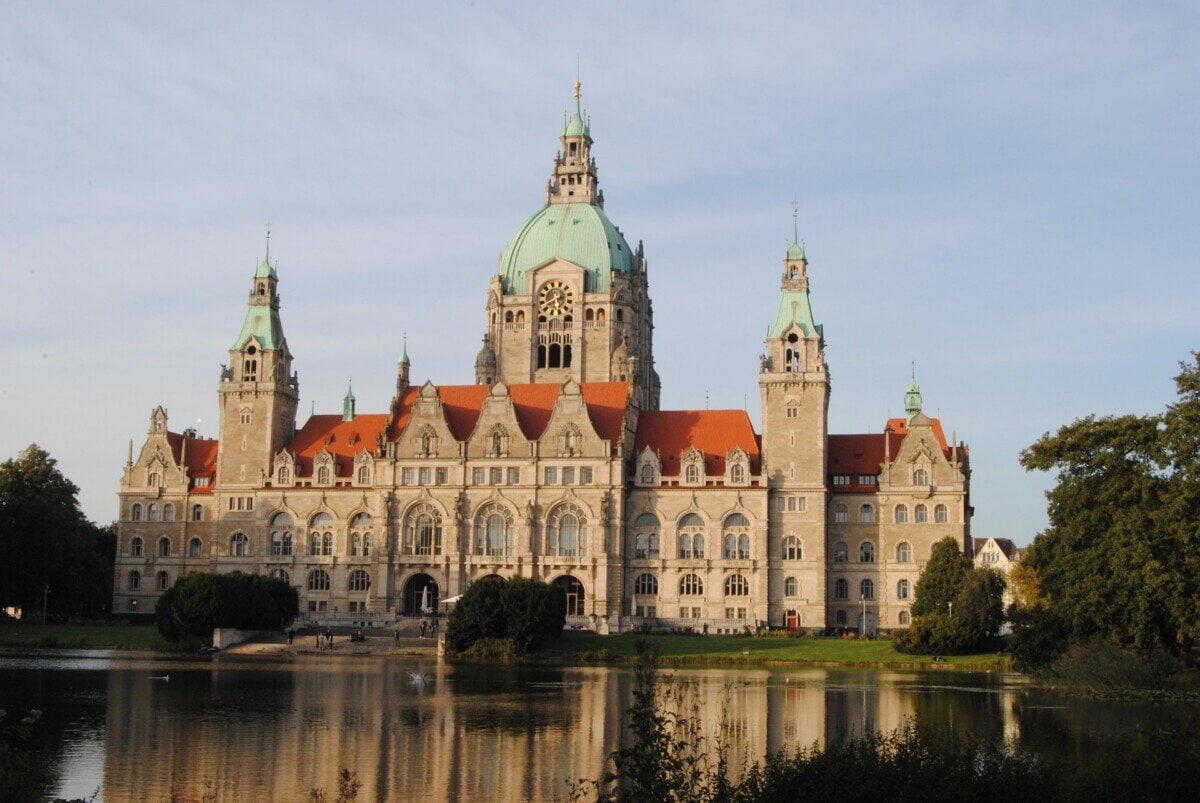
Hanover’s Neues Rathaus, or New Town Hall, is the kind of building that photographs undersell. Built between 1901 and 1913 to a design by architect Hermann Eggert, it mixes neo-Renaissance and historicist detailing into a genuinely eclectic Wilhelmine landmark, and because the ground beneath it was swampy, the entire structure sits on around 6,026 beech wood pilings driven into the earth before a single stone was laid.
The building’s real party trick is its lift. A curved dome elevator, in operation since the building opened in 1913, carries visitors up through the roofline on a track that bends outward by around eight metres partway through the ride, tilting the cabin to an angle of up to 17 degrees. It is generally described as the only lift of its kind anywhere in the world, and the one-minute ride ends at an observation deck roughly 97.7 metres up, with panoramic views back across the Maschsee, the Eilenriede and the wider city.
Inside the town hall at ground level, four large scale models of Hanover sit in a row, showing the city in 1689, 1939, 1945 and the present day. Seen together, they turn an abstract statistic, that roughly 90 percent of the city centre was destroyed by 1945, into something visitors can actually see, with the 1945 model in particular showing block after block reduced to rubble around a handful of surviving landmarks.
The dome lift runs seasonally, generally from mid March to the end of October, with hours around 10am to 5:30pm and last ascent shortly before closing. Adult tickets cost €5.00 (£4.30/$5.85), with children aged five to fourteen, students and seniors paying €4.00 (£3.44/$4.68), and it is worth confirming the current season’s dates before building a visit specifically around the climb.
Best if you want daily housekeeping and a front desk. Filter by area first, then by price.
Check availabilityBest for groups who want one address and separate bedrooms rather than three hotel rooms.
See holiday homesBest for double-checking. Runs the same search across several booking sites so you are not leaving money behind.
Compare pricesMaschsee: Hanover’s Man-Made Lake
The Maschsee looks like a natural feature of the city, but it is entirely artificial, and its origin story is more interesting than most lakes get to have. Ground was broken in the Leine floodplain in March 1934, with the project completed and the lake officially opened in May 1936, engineered by Otto Franzius partly for flood control and recreation, and partly as a deliberate unemployment relief scheme at a time when Hanover had around 58,000 people out of work.
The finished lake covers 78 hectares, stretching around 2.4 kilometres end to end and holding roughly 1.6 million cubic metres of water, with a wide promenade running the full loop that is popular with joggers, cyclists and anyone just after a lakeside walk. Rowing boats, pedal boats and seasonal electric boat tours are all available for anyone wanting to get out onto the water itself rather than just around it.
In summer the lake hosts dragon boat races and sailing regattas, and in winter it occasionally freezes solid enough for informal ice skating, weather depending. The single biggest annual draw, though, is the Maschseefest, a multi-week lakeside festival established in 1986 to mark the lake’s fiftieth anniversary, now drawing around two million visitors each summer for live music, cabaret, food stalls and a closing fireworks display over the water.
Beyond the festival dates, the Maschsee is simply a pleasant, low-key place to spend an hour or two, especially combined with the Sprengel Museum on its northern shore or the Stadtpark on the opposite bank. Access is free and unrestricted at any time, making it one of the easiest additions to a first day in Hanover without any advance planning required.
The Altstadt: Hanover’s Half-Timbered Old Town
Given how thoroughly Hanover’s centre was flattened in 1943 and 1945, the Altstadt that survives today is a genuinely careful piece of postwar reconstruction rather than an untouched medieval quarter, and it rewards a slow walk more than most visitors expect. Narrow lanes lined with rebuilt half-timbered houses lead between the district’s handful of major landmarks, with cafes and small boutiques tucked into the ground floors along the way.
The Altes Rathaus, Hanover’s old town hall, is one of the district’s genuine survivors, a brick Gothic building that now works as a registry office and event venue rather than a museum piece. Nearby, the Ballhof claims the title of the city’s oldest surviving event hall, while the Beginenturm is the only completely intact tower left from Hanover’s medieval fortifications, a squat reminder of how much of the old defensive wall simply no longer exists.
Food plays a genuine role in the Altstadt too. The Markthalle, a covered market hall, holds around fifty stands selling everything from regional produce to international street food, and it works as a reliable lunch stop regardless of the weather outside. Every Saturday, a long-running flea market spreads along the Hohes Ufer riverside promenade, drawing locals as much as visitors browsing for bargains.
The Altstadt sits within easy walking distance of the Neues Rathaus, the Marktkirche and the Leibnizufer, which makes it a sensible base for a half day loop that covers churches, a market lunch and a riverside stroll without much backtracking. Most first-time visitors find an hour or two enough to see the district properly, longer on a Saturday with the flea market running.
Marktkirche: The Old Town’s Unfinished Gothic Tower
Rising over the Altstadt, the Marktkirche, formally St. Georgii et Jacobi, is Hanover’s principal church and one of the finest examples of North German brick Gothic architecture anywhere in the region. Construction began in the 14th century, and the building’s rough, dark red brickwork and tall pointed windows give it a much starker, more severe presence than the ornate sandstone churches common further south in Germany.
The tower has a quietly interesting history of its own. Original plans called for a considerably taller spire, but the city’s coffers ran dry once construction had reached only around half the intended height, and a shorter, simpler spire went up instead. That improvised solution turned out to be so visually successful that it went on to influence church towers across the wider region, a rare case of a budget cut becoming an architectural trend.
Like most of the Altstadt, the Marktkirche was heavily damaged during the Second World War and rebuilt in the historic style by 1952. Its west portal carries a set of bronze reliefs by sculptor Gerhard Marcks addressing that history directly, and inside the church holds the tomb of Johann Michael von Obentraut, a knight known locally as “the German Michel,” mortally wounded during the Thirty Years’ War in 1625.
Entry to the church is free, and it functions as a working Lutheran parish rather than existing purely as a tourist attraction, so visitors should expect services and quiet contemplation to take priority over sightseeing at certain times. Even a brief stop is worth it for the interior’s clean Gothic proportions, which feel noticeably different from the more decorated churches found elsewhere in Germany.
Seeing Hanover by Hop-On Hop-Off Bus
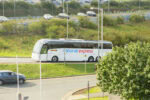
Hanover’s own hop-on hop-off service is a straightforward way to link several of the sights in this guide without walking between all of them. A double-decker bus operated by Willms Touristik on behalf of the city’s tourism board runs a loop of seven stops, and a single ticket covers unlimited boarding and alighting for a full day.
The route calls at the Adventure Zoo, the Apostle Church area on Lister Meile, Herrenhausen Gardens, the Neues Rathaus, the Altes Rathaus and the northern shore of the Maschsee before looping back to the Tourist Information stop where it starts. A complete circuit takes around 100 minutes, with onboard headphone commentary available for anyone who wants context at each stop rather than just a ride between them.
Buses run daily between April and early November, dropping to a Thursday to Saturday schedule over winter, with departures roughly every two hours from mid morning. A 24-hour adult ticket costs €24.00 (£20.64/$28.08), children aged four to fourteen pay €5.00 (£4.30/$5.85), and school groups booking ahead pay €12.00 (£10.32/$14.04) per head.
For a first visit built around Herrenhausen, the zoo and the Neues Rathaus, buying a ticket in advance saves queuing at the kiosk on Ernst-August-Platz and strings together several of Hanover’s more spread-out sights in a single afternoon. Anyone planning a tighter walking itinerary can safely skip it, since none of the stops sit far from a tram or bus stop on the regular city network.
Sprengel Museum: Modernist Art on the Maschsee Shore
Sitting directly on the northern shore of the Maschsee, the Sprengel Museum is one of Germany’s stronger collections of 20th century art, built around a core donation from chocolate manufacturer Bernhard Sprengel and steadily expanded since the museum opened in the 1970s. The collection leans heavily on German Expressionism, alongside French Cubism, photography and a significant body of work connected to the city’s own artistic history.
A particular strength is the museum’s holdings of Kurt Schwitters, the Hanover-born Dada and Merz artist whose fragmentary collages and assemblages sit somewhat uneasily but fascinatingly alongside the more conventional modernist paintings elsewhere in the building. The square outside, Kurt-Schwitters-Platz, is named for him, underlining how closely the museum and the city’s own art history are tied together here.
The museum opens Tuesday from 10am to 8pm and Wednesday to Sunday from 10am to 6pm, closing Mondays entirely. Adult admission costs €7.00 (£6.02/$8.19), reduced to €4.00 (£3.44/$4.68) for students and other concessions, with under-18s and school groups admitted free, and an annual pass available for €35.00 (£30.10/$40.95) for anyone likely to return more than once or twice.
The single best money-saving tip here is timing: admission is free for everyone on Fridays, making it one of the better value cultural stops in the city if a visit can be scheduled around it. Renovation work has closed parts of the upper collection in recent years, so it is worth checking current gallery access before planning a visit purely around a specific piece.
Eilenriede: Europe’s Largest City Forest
Few German cities can claim anything quite like the Eilenriede, a genuine forest of around 640 hectares that wraps around the southern and eastern edges of central Hanover in a shape locals sometimes describe as a mirror-image letter C. It is regularly billed as the largest urban forest anywhere in Europe, nearly double the size of New York’s Central Park, and it has existed in some recognisable form since at least 1371.
Unlike a manicured municipal park, the Eilenriede feels genuinely like woodland once you are a few minutes in, with mixed deciduous trees, dense undergrowth and a network of paths that can make it easy to lose your bearings without a map. Around 80 kilometres of walking trails, 38 kilometres of cycling routes and 11 kilometres of horse riding paths criss-cross the forest, alongside a dendrology trail aimed at identifying different tree species.
The forest also does double duty as genuine infrastructure for the city’s leisure scene. A bob run, minigolf course, high rope adventure course and inline skating area all sit within the trees, alongside playgrounds, sunbathing lawns and a scattering of forest cafes, and Hanover Zoo itself occupies a corner of the wider Eilenriede rather than sitting apart from it.
Access to the Eilenriede is free and unrestricted at any time, and several tram and bus stops touch its edges, making it one of the easiest genuinely green escapes in any major German city centre. Autumn is a particularly rewarding time to visit, when the forest’s mix of oak, beech and lime trees turns the whole area into a genuinely dramatic wall of colour.
Best if you can move a day either way. Shows how the fare changes across the month.
Compare flightsBest for anyone whose home plan charges by the megabyte abroad. Pay a fixed price up front.
Check eSIMsBest after a long flight or a late landing. Price agreed before you travel, and no taxi queue.
Check transfersErlebnis-Zoo Hannover: Themed Worlds and Wildlife
Tucked into the Eilenriede’s western edge, Erlebnis-Zoo Hannover has been operating since 1865, making it one of Germany’s older zoos, though its modern reputation rests on a very different approach. Rather than the traditional rows of enclosures, the zoo is organised into immersive themed worlds, including Yukon Bay’s recreated Canadian gold rush town, the African savannah of Zambezi, the Indian jungle setting of Dschungel-Palast, and Australia-themed Outback.
That themed approach has earned the zoo genuine international recognition, including a “Best Zoo” award from the international zoo directors’ association, and it has set a world record for breeding, with five Asian elephant calves born in a single calendar year. The zoo covers roughly 22 hectares and is home to more than 3,400 animals across around 230 species, with over 400 seasonal staff keeping the themed worlds running through the busy summer months.
Families with young children tend to gravitate towards Meyers Farm, a section built around historic domestic breeds and hands-on animal contact, and the children’s play area sometimes branded Mullewapp. The zoo has invested heavily in its facilities since the mid 1990s, with over €110 million spent on redevelopment, and it consistently ranks among the more visited attractions in the whole of Lower Saxony.
Ticket pricing runs on a dynamic, date-based model through the zoo’s online shop rather than a single fixed adult rate, so booking ahead online is usually cheaper than paying at the gate. For regular visitors, an annual ZooCard costs around €94.00 (£80.84/$109.98) for an adult and roughly €66.00 (£56.76/$77.22) for a child aged three to sixteen, and it is worth checking the zoo’s own admission page for the current day rate before travelling.
Georgengarten and the Wilhelm Busch Museum
Where the Great Garden is tightly geometric, the neighbouring Georgengarten takes the opposite approach entirely. Laid out in the looser, more naturalistic style of an English landscape park, it links Herrenhausen to the city centre along a long avenue, and unlike the ticketed Great Garden and Berggarten, it is open at all times with no admission charge, making it a genuinely easy add-on for a morning walk or a run.
Within the Georgengarten sits the Georgenpalais, a palace dating from around 1780 that now houses the Wilhelm Busch Museum, formally the German Museum for Caricature and Drawing Art. It holds the world’s largest collection of works by Wilhelm Busch, the Lower Saxon artist and poet best remembered internationally as an early forerunner of the modern comic strip through his illustrated tales of mischief.
Beyond Busch’s own work, the museum’s collection stretches across four centuries of satirical art, with pieces by Goya, Hogarth and Daumier alongside a notable set of around 700 Napoleon-era caricatures. Founded by the Wilhelm Busch Society in 1937, the museum was itself destroyed in the war and reopened in 1950, giving it a rebuilding story that echoes much of the rest of central Hanover.
The combination of a free landscape garden and a genuinely unusual specialist museum makes the Georgengarten worth pairing directly with a Herrenhausen visit rather than treating as a separate trip. Allow around 45 minutes for a proper look at the museum’s rotating exhibitions, and longer for the garden itself if the weather cooperates.
Landesmuseum Hannover: Old Masters and a Million Artefacts
A short walk from the Neues Rathaus, the Landesmuseum Hannover is Lower Saxony’s state museum and one of the more genuinely surprising stops in the city for anyone expecting a purely regional collection. It combines an art gallery, an archaeology collection, a natural history department, an ethnology collection and a vivarium under one roof, a breadth that few single museums attempt anywhere in Germany.
The art gallery holds genuine Old Masters, including work by Rembrandt, Rubens and Albrecht Dürer, alongside a strong run of German and French Impressionist paintings. Its standout piece is Caspar David Friedrich’s Tageszeitenzyklus, a four-part cycle depicting different times of day, notable as the only complete set of this particular series held together in a single museum anywhere.
The archaeology collection runs to more than a million artefacts spanning roughly 500,000 years of human settlement, from Stone Age tools through to the Middle Ages, while the ethnology wing holds around 20,000 objects gathered from cultures across the world. The current Neo-Renaissance building dates from 1902, designed by Hubert Stier, though the museum’s origins as the Museum of Art and Science go back to 1856.
Badly damaged during the war, the building reopened gradually after 1945 and underwent a major renovation between 1995 and 2000, timed to coincide with Hanover’s role hosting Expo 2000. Given its location right beside the Maschpark and a short walk from both the Neues Rathaus and the Maschsee, it slots easily into the same day as several of the city’s other central sights.
Food and Drink: Grünkohl, Lüttje Lage and the Leibniz Biscuit
Hanover’s food culture leans heavily on Lower Saxon comfort cooking rather than any single defining dish, and Grünkohl mit Bregenwurst, a slow-cooked kale dish served with a smoked sausage, is the closest thing the region has to a signature meal. It appears on menus mainly through autumn and winter, often tied to organised Kohlfahrt outings, group walks that traditionally end with exactly this dish and plenty of drink.
Beer has an unusually long history here. In 1526, local brewer Cord Broyhan developed a light, top-fermented beer style that became genuinely iconic to the city, and twenty years later, in 1546, Hanover’s brewers formed a guild that eventually grew into Gilde Brauerei, now recognised as the oldest company still operating in Hanover. The city’s own signature drink, Lüttje Lage, pairs a small glass of top-fermented beer with a shot of grain schnapps, traditionally drunk together in one motion rather than as separate rounds.
Hanover’s best-known export, though, is arguably not a meal at all but a biscuit. Bahlsen, the food company founded in the city, began producing the Leibniz-Keks butter biscuit in 1891 as a rival to the French Petit-Beurre, naming it after the philosopher Gottfried Wilhelm Leibniz, who lived and worked in Hanover as court librarian until his death in 1716. The biscuit’s popularity has been so total that “Keks” is now simply the everyday German word for biscuit.
Between traditional Gaststätten serving Grünkohl in winter, the Ernst-August Brewery pub on the edge of the Altstadt, and smaller newer operations like the Maschsee microbrewery near the lake, Hanover’s drinking and dining scene rewards a little wandering rather than sticking to the obvious tourist strip around the station.
Shopping Around Georgstraße and the Ernst-August-Galerie
Hanover’s main shopping streets, Georgstraße and the pedestrianised Bahnhofstraße, run through the heart of the city centre and meet at Kröpcke, the large central square that has functioned as Hanover’s informal meeting point for well over a century. The mix here is fairly standard high street fashion and homeware, but the density of shops packed into a genuinely walkable area makes it easy to cover in a single afternoon.
Directly beside the Hauptbahnhof, the Ernst-August-Galerie shopping centre takes its name from the equestrian statue of King Ernest Augustus that stands outside the station, itself a long-standing meeting point known locally simply as “Under the Tail.” Inside the mall, several floors of fashion, electronics and food court options give travellers an easy, covered option for last-minute shopping right before catching a train.
For something with more character, the streets around the Marktkirche and the wider Altstadt hold smaller independent shops and galleries that get overshadowed by the chain stores nearer Kröpcke. The Markthalle covered market, covered earlier in this guide, doubles as a useful stop for regional food products and gifts that feel a little more distinctive than a standard souvenir shop.
Hanover’s shopping district stays busy on weekday lunchtimes thanks to the city’s large office and trade fair workforce, so a Saturday morning, before the crowds properly build, or a weekday afternoon tend to be the most comfortable times to browse without fighting through foot traffic. Visitors juggling a tight itinerary will find the whole stretch, from Kröpcke to the Ernst-August-Galerie, walkable in well under an hour even with a couple of stops along the way.
Hanover’s Christmas Markets
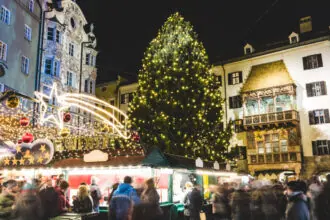
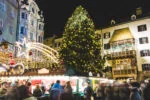
Each winter, Hanover’s Altstadt transforms into one of the more distinctive Christmas markets in the country, spreading across the Marktkirche, Platz der Weltausstellung, Grupenstraße, Ballhofplatz and the Holzmarkt with around 190 stalls in total. Rather than one uniform market, Hanover’s version splits into several genuinely different zones, which rewards a proper walk through the whole footprint rather than stopping at the first stall encountered.
The largest concentration of traditional stalls clusters around the Marktkirche itself, selling mulled wine, roasted almonds and handmade crafts beneath the church’s brick Gothic tower. At Ballhofplatz, a long-running Finnish Christmas Village brings a genuinely different flavour, with an authentic Lappish tent serving flame-grilled salmon and glögi, a Nordic take on mulled wine that stands out from the usual German stalls nearby.
Elsewhere, the Wunschbrunnenwald at Holzmarkt arranges around fifty small fir trees into a genuinely atmospheric mini forest built around a wishing well, while a riverside medieval village along the Leine adds artisan demonstrations and nightly fire shows. In the evenings, a light projection plays across the Hauptbahnhof’s facade, drawing crowds even after the market stalls themselves have closed for the night.
The market typically runs from late November through 22 December, with stalls generally open from 11am to 9pm and admission free throughout. Exact dates shift slightly year to year, so it is worth confirming the current season’s opening before building a trip specifically around it, particularly for anyone hoping to catch the Finnish village’s food stalls before they sell out for the evening.
Best for solo travellers and anyone watching the budget. Dorm beds and private rooms in the same search.
Browse hostelsBest if you have ever given up on a claim. AirHelp checks whether the flight qualifies and pursues it for you.
See the benefitsBest for the gap between checking out and your train. Drop bags at a shop or hotel nearby and carry on.
Store your bagsDay Trip to the Deister Hills
For anyone with a spare day and a taste for the outdoors, the Deister hills sit around 20 kilometres southwest of central Hanover and offer a genuinely different pace from the city. The wooded ridge stretches roughly 21 kilometres in length with an average width of around four kilometres, rising to its highest point at the Bröhn, which reaches 405 metres above sea level.
Dense beech forest covers most of the ridge, criss-crossed by a genuinely extensive network of hiking trails, including a section of the long-distance Europäischer Fernwanderweg E1 that runs between Bad Nenndorf and Bad Münder through the heart of the hills. Shorter, more manageable routes like the Calenberger Weg and Kansteinweg suit visitors after a half day walk rather than a full multi-day trek.
At the summit of the Bröhn stands the Annaturm, a 29 metre observation tower with an attached forest restaurant, the Waldgaststätte Annaturm, making it a sensible turnaround point for a day hike with the promise of a proper meal at the top rather than just a viewpoint. On a clear day, the tower gives genuinely sweeping views back across the flat plain towards Hanover’s skyline.
The small town of Wennigsen, on the Deister’s northeastern edge, is the most straightforward starting point for a day trip, reachable by regional train and bus from Hanover in well under an hour. Anyone without a car should plan connections carefully, since services into the hills themselves run considerably less frequently than Hanover’s own city network.
Family-Friendly Things to Do in Hanover
Hanover handles a family visit better than its trade fair reputation might suggest, largely because several of its biggest attractions already double as genuine family days out. Erlebnis-Zoo Hannover is the obvious anchor, with its themed worlds giving children an actively immersive experience rather than a simple walk past enclosures, and Meyers Farm’s hands-on animal contact tends to be a particular hit with younger visitors.
The Eilenriede forest suits an active family afternoon well, with its bob run, minigolf course and playgrounds all within a short walk of each other, and flat, buggy-friendly paths through much of the forest for families with younger children not quite up to a proper hike. The Maschsee’s promenade offers a similarly easy, flat walk with plenty of ice cream stops along the way for anyone who tires quickly.
The Neues Rathaus‘s curved dome lift works surprisingly well for children too, since the tilting ride itself is genuinely novel enough to hold their attention before they even reach the viewing deck, and the four scale models inside give a hands-on way to explain the city’s wartime history without needing a lengthy lecture.
For a rainy or simply low-key option, the Wilhelm Busch Museum‘s comic and caricature focus tends to land well with children who might otherwise find a traditional art gallery hard going. Combined with the free Georgengarten right outside, it gives families a genuinely easy pairing of an indoor and outdoor stop without much travel between the two.
Rainy Day Options in Hanover
Northern Germany is not known for reliably dry weather, so it helps that several of Hanover’s best sights sit entirely indoors to begin with. The Sprengel Museum and the Landesmuseum Hannover both work as full, unhurried visits regardless of what is happening outside, and both sit close enough to the Maschsee and Neues Rathaus to combine easily on a single wet afternoon.
The Neues Rathaus itself offers a covered option too, since the scale models and the building’s grand interior halls are worth seeing even without climbing the dome lift, and the lift cabin’s glass roof means the ride itself is sheltered even in a downpour. The Wilhelm Busch Museum inside the Georgenpalais provides another reliably dry stop, with rotating exhibitions that keep repeat visits worthwhile.
Herrenhausen’s Museum Schloss Herrenhausen stays dry throughout even if the surrounding gardens are less appealing in the rain, and the palace’s history exhibitions cover roughly an hour of unhurried browsing. Failing that, the Markthalle in the Altstadt gives a straightforward covered backup for lunch, since the whole hall sits under one roof regardless of what the weather is doing outside.
For a longer wet day, the Ernst-August-Galerie beside the Hauptbahnhof and the wider Georgstraße shopping district give an easy covered fallback, since much of the retail here sits under cover or close enough together to hop between shops without getting properly soaked. Between the museums, the town hall and the mall, a rainy day in Hanover rarely needs to be a wasted one.

Rupert’s Handy Travel Tips
Planning a visit to Hanover? Rupert has a few tips worth knowing before you go:
- Time Herrenhausen around the fountain shows: the Great Fountain only reaches its full 80 metre height under the right wind conditions, so check the display schedule before planning your visit around it.
- Book the dome lift on a clear day: the Neues Rathaus viewing deck is worth far more with good visibility, and the seasonal lift only runs from mid March to the end of October.
- Save the Sprengel Museum for a Friday: admission is free for everyone that day, unlike the rest of the week.
- Book zoo tickets online in advance: Erlebnis-Zoo Hannover uses dynamic, date-based pricing, so walk-up gate prices are usually higher than an online booking.
- Head to Ballhofplatz for the Finnish market stalls at Christmas: the flame-grilled salmon and glögi sell out earlier in the evening than the main Marktkirche stalls.
- Pair Herrenhausen with the Georgengarten: the Georgengarten and Wilhelm Busch Museum sit right next door and cost nothing extra to visit.
Want to meet the reindeer behind our travel tips? Find out more in our page Who is Rupert?.





Frequently Asked Questions About Things to Do in Hanover
What is Hanover’s biggest attraction?
The Herrenhausen Gardens are generally considered the city’s top sight, closely followed by the Neues Rathaus and its curved dome lift.
How many days do you need in Hanover?
Two full days cover the essentials comfortably, including Herrenhausen Gardens, the Neues Rathaus, the Altstadt and a walk around the Maschsee, with a third day useful for the Deister hills or a slower museum pace.
Is Hanover worth visiting outside a trade fair trip?
Yes. Herrenhausen Gardens, the Maschsee, the Eilenriede forest and the Neues Rathaus’s curved lift all stand on their own regardless of any business reason for being in the city.
What is unique about the Neues Rathaus lift?
Its curved dome elevator tilts the cabin to an angle of up to 17 degrees mid-ride, and it is widely described as the only lift of its kind anywhere in the world.
Is the Sprengel Museum free to visit?
Standard adult admission is €7.00 (£6.02/$8.19), but entry is free for everyone on Fridays, and under-18s are always admitted free.
What food is Hanover known for?
Grünkohl mit Bregenwurst is the genuinely local winter dish, alongside the city’s own Lüttje Lage beer and schnapps combination and the internationally exported Leibniz-Keks biscuit.
Where is the best place for a walk in nature near the centre?
The Eilenriede forest, Europe’s largest urban forest at around 640 hectares, sits within walking distance of much of central Hanover.
Is Hanover good for a family trip?
Yes. Erlebnis-Zoo Hannover’s themed worlds, the Eilenriede’s bob run and playgrounds, and the flat lakeside paths at the Maschsee all work well for children.
Further Reading & Related Guides
For getting into the city in the first place, our Hanover Airport Transfers guide covers the S5 line, taxis and every other option from HAJ. Anyone building a wider Germany itinerary will find our Things to Do in Dortmund and Things to Do in Dresden guides useful companions elsewhere in the country’s growing content on this site.
For another northern German city with a similarly compact centre, our Best Things to Do in Hamburg guide is worth a look, and if onward rail travel around Lower Saxony is part of the plan, our German Rail Tickets Explained guide breaks down the Deutschland-Ticket and regional fares, while our Interrail Germany Pass Guide explains when a country-specific pass beats buying tickets individually for a longer trip.