Reviewed by our editorial team Published
Dortmund rarely tops a first time visitor’s list of German cities, and that is exactly why it rewards the traveller who does show up. This is the Ruhr region’s largest city, a place that spent a century as one of Europe’s biggest coal, steel and beer producers before reinventing itself as one of the greenest big cities in the country. The transformation is not subtle. Former steelworks now sit beneath a landscaped lake, a decommissioned coal mine has become a protected heritage museum, and a former brewery tower is one of the country’s more surprising contemporary art venues.
Football is the obvious hook, and it earns that status honestly. Borussia Dortmund plays in front of Europe’s largest free standing terrace at Signal Iduna Park, and the German Football Museum sits a short walk from the main station, telling the story of the national game in a building built specifically for the job. Beyond the stadium and the museum, though, Dortmund has a genuinely varied spread of things to do that rarely gets the credit it deserves outside Germany.
Green space is a bigger part of the city than most visitors expect. Westfalenpark covers 70 hectares in the middle of the city, the botanical garden at Rombergpark is one of the largest of its kind in the world, and Phoenix See turns a former steelworks site into a waterfront neighbourhood with sailboats on the water. Add a genuinely lively bar district in the Kreuzviertel, a shopping street that has been ranked among Germany’s busiest, and one of the tallest Christmas trees anywhere on the planet each December, and a pattern emerges: Dortmund is not trying to be Cologne or Munich, and it does not need to be.
This guide works through the sights that make up a proper visit to Dortmund, roughly in order of how essential they are, along with the food, shopping, family options and rainy day backups that round out a trip. For step by step help getting from Dortmund Airport into the centre, a separate guide on this site covers every transfer option in detail.
| Section | What you’ll find |
| The German Football Museum | Germany’s national football museum, its star objects and Hall of Fame. |
| Signal Iduna Park and the Yellow Wall | Borussia Dortmund’s stadium, its famous terrace and stadium tours. |
| The Dortmund U-Tower and Museum Ostwall | A converted brewery tower holding the city’s free contemporary art museum. |
| PHOENIX West Skywalk | A guided walkway across a former blast furnace pipeline with city views. |
| Westfalenpark and the Florianturm Tower | 70 hectares of parkland, a rose garden and a 1959 television tower. |
| The Dortmund Sightseeing Bus | A 13-stop hop-on hop-off loop linking the city’s spread-out sights. |
| Reinoldikirche | The old town’s medieval patron church and its rebuilt bell tower. |
| Hansaplatz and the Old Town | The pedestrianised old town’s main square and orientation point. |
| Phoenix See | A former steelworks site turned lakeside promenade of bars and restaurants. |
| Zoo Dortmund | A city zoo known for breeding giant anteaters, tamanduas and giant otters. |
| Zeche Zollern | A former coal mine preserved as an Art Nouveau industrial heritage museum. |
| Christmas Market and Tree | A record-sized 45-metre built Christmas tree and the old town’s winter market. |
| Kreuzviertel | The city’s liveliest bar and cafe district south of the centre. |
| Food and Drink | Currywurst, Pfefferpotthast stew and the city’s brewing heritage. |
| Shopping Along Westenhellweg | Germany’s busiest pedestrianised shopping street and its side streets. |
| Rombergpark | A free botanical garden with around 4,500 plant species. |
| Things to Do with Families | Where the zoo, football museum and parks work best for children. |
| Rainy Day Options | Indoor backups for wet days, from museums to the Thier-Galerie mall. |
The German Football Museum: Dortmund’s Biggest Draw
The Deutsches Fußballmuseum is the single most visited attraction in Dortmund, and its location is not an accident. After the 2006 World Cup, the German Football Association ran a formal bidding process among cities including Cologne, Oberhausen and Gelsenkirchen before choosing Dortmund in 2009, largely because of a site directly south of the Hauptbahnhof that sits on what the city now markets as an “art and culture mile” alongside the Dortmund U and the Theater Dortmund.
The museum opened to the public on 25 October 2015 after a formal gala two days earlier, and it has drawn around 200,000 visitors a year since. That is respectable rather than spectacular by national museum standards, and reduced ticket prices for families are worth checking online in advance since admission is not cheap for a full day out.
Inside, the collection leans heavily on genuinely famous objects rather than generic memorabilia. Mario Götze’s boot from the winning goal of the 2014 World Cup final sits alongside his Goal of the Decade award, and the German Football Hall of Fame, added in April 2019, inducts players and coaches in a dedicated hall built for the purpose.
A Walk of Fame outside the building carries footprints and signatures from well known German internationals, which makes for an easy, free stop even for visitors who decide the full ticket price is not worth it for a flying visit. Interactive zones inside, including reaction games and a recreated commentary booth, keep the museum feeling like more than a static trophy cabinet.
Adult admission runs to roughly €19.00 (£16.30/$22.20), with reduced rates for students and children, and the museum is open Tuesday to Sunday from 10am to 6pm with last admission an hour before closing. Monday closures catch out a fair number of visitors planning a short city break, so it is worth building the museum into a day that is not a Monday if at all possible.
For anyone building a two day itinerary, the football museum works best paired with the Dortmund U a few minutes’ walk away, since both sit on the same short stretch between the station and the old town. Allow roughly two to three hours inside to see the permanent collection properly without rushing the Hall of Fame.
Booking a timed entry ticket online before arriving is worth doing, particularly around weekends and school holidays, when queues at the door can eat into the two to three hours the collection deserves.
Signal Iduna Park and the Legendary Yellow Wall
No list of things to do in Dortmund is complete without Signal Iduna Park, home to Borussia Dortmund and, at a capacity of 81,365, the largest football stadium in Germany. The stadium’s south stand, universally known as the Yellow Wall, holds around 24,454 standing supporters on matchdays and is widely regarded as the largest free standing terrace in European football.
The stand’s reputation is not marketing exaggeration. Opposing players and even Bayern Munich’s own Bastian Schweinsteiger have described it as the most intimidating away atmosphere in the Bundesliga, a status that dates back to the terrace’s capacity being doubled after Dortmund’s 1997 Champions League win.
Stadium tours run on non matchday afternoons and take in the changing rooms, the pitch side tunnel and the press facilities, and a small on site museum covers the club’s history in more depth than the tour alone. Because so much detail on ticket prices, tour times and matchday logistics deserves proper space of its own, this site covers Signal Iduna Park in full in a dedicated stadium guide rather than trying to compress it into a single section here.
What is worth knowing for a general visit is that the stadium sits a short tram ride south of the city centre, and even a walk around the exterior on a non matchday gives a real sense of the scale involved. The merchandise store at the stadium is open daily regardless of fixtures, which makes it an easy add on even outside match weekends.
Fans who want more than a walk around the outside can book straight into the Borusseum, the club’s own museum housed inside the stadium, which covers Borussia Dortmund’s history through shirts, trophies and matchday memorabilia.
On non matchdays, a self-guided walking route covers much of the same ground as an official tour at your own pace, taking in the South Stand, the players’ tunnel and the pitchside dugouts using on-site QR codes for commentary.
Best if you want daily housekeeping and a front desk. Filter by area first, then by price.
Check availabilityBest for longer stays. Whole apartments and houses, so you are not eating out three times a day.
View rentalsBest if you have already picked a hotel. Checks the big booking sites for the same room and shows who is cheapest.
Check dealsThe Dortmund U-Tower and Museum Ostwall
The building known simply as the U, or the Dortmunder U, is one of the more unlikely conversions in German cultural life. The Union brewery built it between 1926 and 1927 as Dortmund’s first genuine high rise, using the upper floors for fermenting and storing beer until the brewery closed in 1994.
Rather than demolishing a landmark listed structure, the city approved a full redevelopment in January 2008 as the flagship project for Ruhr 2010, European Capital of Culture, and the building reopened as a centre for art and creativity that May. The giant illuminated “U” on the roofline is now one of the most recognisable pieces of skyline anywhere in the Ruhr, visible from Westfalenpark and much of the surrounding city.
Inside, Museum Ostwall holds the building’s main permanent art collection, spanning expressionism through to contemporary work, and since 2019 the permanent exhibition has been free to enter. Temporary shows on the upper floors do carry a separate charge, so it is worth checking what is currently showing before assuming a free afternoon.
Beyond the museum, the U-Tower functions as a working creative hub, with studios, a cinema and event spaces used by Dortmund’s design and media scene rather than existing purely as a tourist attraction. That gives it a genuinely different atmosphere from most converted industrial buildings, since it is as likely to be full of students and local creatives as visitors.
Given its location directly between the Hauptbahnhof and the football museum, the U-Tower is easy to combine into the same day without adding much walking. An hour is enough for the permanent collection, though anyone drawn to contemporary art should budget closer to two.
PHOENIX West Skywalk: Walking the Old Blast Furnace Pipeline
On the PHOENIX West site south of the centre, a guided walkway runs for around 300 metres along the old gas pipeline that once fed the plant’s blast furnace, roughly 26 metres above the ground. Visitors climb close to 99 steps to reach the platform, and every visit runs as a guided group tour rather than free access, since a hard hat and safety vest are required kit on what remains an active industrial site.
The pipeline is a genuine relic of the Hoesch steelworks that dominated this part of Dortmund for more than a century, with the blast furnace itself running until 1998 before the wider site was redeveloped for offices, housing and heritage tourism. The Skywalk reopened to visitors from April 2025 after a period of closure, and a guide talks through the plant’s history at several points along the route rather than leaving the industrial hardware to speak for itself.
From the top, the views stretch across a large share of Dortmund’s southern green belt, taking in Westfalenpark and Phoenix See below, with Signal Iduna Park visible in the distance on a clear day. Tours run on a limited weekly schedule rather than daily, and prices vary by length, from around €17.00 (£14.62/$19.89) for a shorter walk up to roughly €37.00 (£31.82/$43.29) for longer sunset or combined tours, so reserving a specific slot ahead of arrival is essential.
Westfalenpark and the Florianturm Tower
Built for the 1959 Bundesgartenschau, Germany’s national horticultural show, Westfalenpark now covers around 70 hectares just south of the city centre, making it one of the largest inner city green spaces anywhere in Europe. The park’s centrepiece, the German Rosarium, holds more than 3,000 different rose varieties and is worth timing a visit around if roses are in bloom.
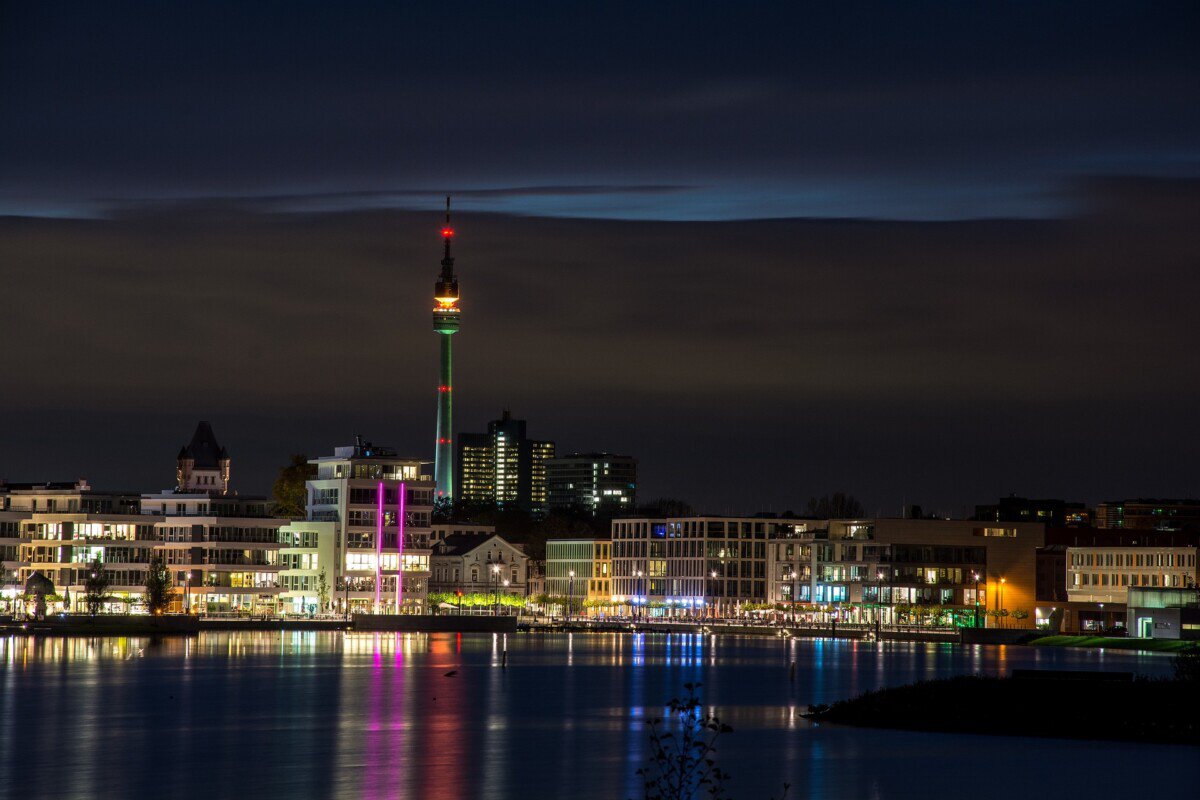
The park’s other headline feature is the Florianturm, a 219.6 metre telecommunications tower that was Germany’s tallest structure when it opened in 1959. It holds a genuinely distinctive claim to fame as the first television tower in the world to be built with a revolving restaurant, positioned at 137.5 metres up the shaft.
Two observation platforms sit slightly higher again, at 141.9 and 144.7 metres, giving genuinely panoramic views across the Ruhr valley on a clear day. The tower and restaurant currently run on a limited, seasonal schedule rather than daily hours, so it is worth confirming opening times before making a special trip purely for the view.
Beyond the rose garden and the tower, the park’s Seebühne lake stage hosts open air concerts through the summer, and its 1969 tensile roof structure by architect Günter Behnisch was influential enough to inform the design of the Munich Olympic Stadium a few years later. A miniature railway and several playgrounds make the wider park an easy family stop as well.
Entry to the park itself is generally free outside major festival dates such as Juicy Beats or the winter Festival of Lights, when a ticketed event takes over parts of the grounds. For a straightforward stroll, allow at least an hour and a half to see the rose garden and reach the tower without rushing.
The Dortmund Sightseeing Bus: A 13-Stop Loop Past the City’s Highlights
An open-top hop-on hop-off bus runs a loop of 13 stops around Dortmund, linking sights that would otherwise mean several separate tram journeys, including Westfalenpark, Signal Iduna Park, the former PHOENIX steelworks and Phoenix See, Rombergpark and the German Football Museum. Recorded commentary plays in eleven languages, including English and German, so the loop works as an orientation tour for a first morning in the city as much as a way of covering ground.
Buses depart from outside the Hauptbahnhof three times a day, at 10:20am, 12:20pm and 2:20pm, on a seasonal Friday and Saturday schedule running from April to October, and the full loop without stopping takes around one hour and forty minutes. A ticket is valid for 24 hours from first use, so a single purchase can cover a late afternoon ride on one day and a full loop the next morning.
Adult tickets cost around €24.00 (£20.64/$28.08), with a reduced children’s fare of roughly €5.00 (£4.30/$5.85), and the lower deck is wheelchair accessible with space for dogs. It suits visitors without a car more than anyone based centrally near the old town, since several of the stops it links, particularly Phoenix See and Rombergpark, sit too far apart to cover comfortably on foot in a single day.
Reinoldikirche, Dortmund’s Guardian Church
Dortmund’s patron saint gives his name to Reinoldikirche, a late Romanesque church with a Gothic choir built between around 1250 and 1270 in the heart of the old town. The saint himself, Reinold, is also known in French tradition as Renaud de Montauban, and the church remains the city’s spiritual anchor point despite centuries of rebuilding.
The original tower, completed in 1454, reached an extraordinary 112 metres and was known at the time as the “Miracle of Westphalia.” It collapsed in an earthquake in 1661, and the current baroque topped tower, rebuilt by 1701, now stands at a still impressive 104 metres.
Inside, the church holds a set of six steel bells cast in 1954 by the Bochumer Verein foundry, with a combined weight of around 20 tons. The largest single bell weighs 6,500 kilograms and measures 2.5 metres across, making it the largest cast steel bell anywhere in Westphalia.
The church has real historical weight beyond its architecture too, since it was here in 1562 that Dortmund’s pastors and congregations formally adopted Lutheranism. It now functions as a working Lutheran Protestant church within the Evangelical Church of Westphalia, rather than existing purely as a museum piece.
Visitors can climb the tower on published open days for a rooftop view over the old town’s rebuilt streets, though the schedule is limited compared with a full time attraction, so checking current access is worth doing before planning a visit around it. Even without climbing, the exterior and the surrounding Alter Markt square are worth the short detour from Westenhellweg.
Hansaplatz and the Old Town
Most walking tours of central Dortmund end up passing through Hansaplatz at some point, a large open square that sits close to the boundary of the pedestrianised old town and the wider Wallring ring road. It is a working transport hub as much as a sight, with tram and bus connections that make it a natural orientation point for a first visit.
For most of the year the square is a fairly ordinary civic space lined with cafes and the occasional market stall, but it takes on a completely different role each winter as the centrepiece of the city’s Christmas market, covered in more depth further down this guide. Outside the festive season, it is still a useful landmark for finding your bearings between Westenhellweg and the Reinoldikirche.
The old town around Hansaplatz was almost entirely rebuilt after heavy wartime bombing, so this is not a preserved medieval streetscape in the way Lübeck or Regensburg offer. What survives, including Reinoldikirche and the neighbouring Petrikirche and Marienkirche, has been carefully reconstructed and remains worth a short walking loop even for visitors mainly here for football or industrial heritage.
A short walk from Hansaplatz leads directly onto Westenhellweg, the pedestrianised shopping street covered later in this guide, which makes the square a sensible starting point for a half day loop that covers churches, shopping and a coffee stop without much backtracking. Trams from here also connect efficiently towards Signal Iduna Park and the football museum.
Best for finding routes the airlines do not sell as a single ticket. Combines carriers to bring the fare down.
Search flightsBest for anyone whose home plan charges by the megabyte abroad. Pay a fixed price up front.
Check eSIMsBest after a long flight or a late landing. Price agreed before you travel, and no taxi queue.
Check transfersPhoenix See: From Steelworks to Waterfront
Few places in the Ruhr region illustrate the region’s industrial turnaround better than Phoenix See, an artificial lake roughly 1.2 kilometres long and 320 metres wide built directly on the footprint of the former Phoenix-Ost steelworks in the Hörde district. Where blast furnaces once stood, the site was flooded in the early 2010s and has since grown into one of the city’s most popular waterfront neighbourhoods.
A promenade runs the full length of the lake, lined with a steadily growing mix of restaurants, cafes and bars that fill up quickly on warm weekends. Unlike a purely tourist strip, most of the trade here is genuinely local, since the surrounding apartments were built as part of the same redevelopment and house a real residential community.
On the water itself, small sailboats and stand up paddleboards are a common sight through the summer months, and the artificial hill known as the Kaiserberg gives a genuinely decent elevated view back across the lake and the wider city skyline. Access to the lakeside is free and unrestricted at any time, which makes it an easy add on rather than a planned excursion.
Phoenix See sits a short tram ride south of the city centre, close enough to combine with a visit to Signal Iduna Park on the same afternoon. Coming at sunset tends to be the most rewarding time to walk the promenade, when the water reflects the lights along both banks.
Zoo Dortmund’s South American Specialists
Founded in May 1953, Zoo Dortmund covers 28 hectares within Westfalenpark’s wider green belt and is home to around 1,500 animals across roughly 230 species. It has carved out a genuine international reputation for its work with South American wildlife, and is recognised as a leading breeder of the giant anteater, the tamandua and the giant otter.
That South American focus runs through much of the zoo’s layout, with enclosures built around jaguars, capybaras, sloths and a range of primates alongside the more familiar big cat and primate houses found at most European zoos. It gives the collection a slightly different feel from the standard city zoo formula, which is worth knowing if wildlife specifically drew you here.
Adult admission currently runs to around €10.50 (£9.05/$12.30), with a reduced rate of roughly €6.50 (£5.60/$7.60) for children from age four, students and those aged 18 to 27 with valid ID, and free entry for toddlers under four. An annual pass is also available for anyone likely to return, priced at around €59.00.
The zoo sits within easy walking distance of the Florianturm and rose garden, which makes it straightforward to combine a morning at the zoo with an afternoon in the wider park. Budget at least two to three hours to see the collection properly, longer with young children who will want time at the playgrounds dotted through the grounds.
Industrial Heritage at Zeche Zollern
Of all the sites on the Route of Industrial Culture across the Ruhr, few are as visually striking as Zeche Zollern, a former coal mine on the northern edge of Dortmund now preserved as the LWL Industrial Museum. Its Art Nouveau machine hall, built between 1899 and 1904, is genuinely nicknamed the “Palace of Labour” for the ornate ironwork and stained glass entrance that a working colliery had no functional need for.
Rather than demolishing the site when mining ended, Westphalia’s regional heritage authority preserved the winding tower, machine hall and administrative buildings largely intact, and the museum now anchors both the regional Route of Industrial Culture and the wider European Route of Industrial Heritage. Exhibitions inside cover mining technology, the daily lives of the workforce and the wider social history of the Ruhr’s coal industry.
Admission costs €8.00 (£6.90/$9.35) for adults, dropping to €4.00 (£3.45/$4.70) at the reduced rate, and entry is free for anyone aged 17 or under, including school groups. The museum opens Tuesday to Sunday and on public holidays from 10am to 6pm, with last entry at 5:30pm and Mondays closed outside the holiday calendar.
Outdoor grounds include a playground and picnic areas, and the on site Pferdestall restaurant serves food even to visitors not paying to enter the main exhibitions. Zeche Zollern sits a little further out than the city centre sights, so it works best as a half day trip combined with a car or a direct bus link rather than tacked onto a walking tour of the centre.
Dortmund’s Christmas Market and Record-Breaking Tree
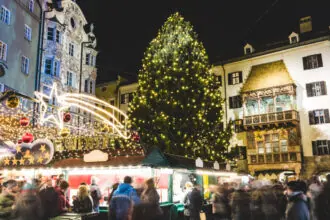
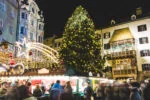
Dortmund’s winter market, branded Weihnachtsstadt Dortmund or Christmas City, spreads across the old town each year, but its single defining feature stands at Hansaplatz: a Christmas tree billed as the largest in the world. Standing at 45 metres tall and occupying around 400 square metres of floor space, it is built rather than grown, assembled each year from roughly 1,200 Norway spruce trees sourced from the Sauerland region.
The trees themselves are grown specifically for the purpose by a forestry company based in Oberhundem, and assembling the finished structure, which weighs around 40 tons once complete, takes roughly four weeks of dedicated work each autumn. The tradition dates back to 1996, making this one of the longer running signature attractions anywhere in Dortmund’s calendar.
Once lit, the tree carries an estimated 138,000 LED lights, and a dedicated light show runs on the hour every evening starting at 5pm, drawing crowds to Hansaplatz well after dark. It is worth timing a visit around one of these shows rather than passing through during the day, when the scale is harder to appreciate without the lighting.
Beyond the tree itself, the wider market spreads stalls for mulled wine, roasted chestnuts and local crafts through the surrounding old town streets, running from late November into late December in a typical year. Exact dates and stall layouts shift slightly year to year, so checking the current season’s opening dates before travelling specifically for the market is worth the extra few minutes.
Kreuzviertel: Bars, Cafes and Student Energy
For an evening away from the football crowds, most locals point visitors towards the Kreuzviertel, a residential district just south of the city centre with around 15,900 residents and a reputation as one of the most fashionable neighbourhoods in the entire Ruhr valley. Its charm comes largely from its buildings, since more than 80 percent of the housing predates 1948, giving the streets a Wilhelmine and Art Nouveau character rare elsewhere in a heavily rebuilt city.
The district became popular with students through the 1970s and 1980s, and while rising rents have since pushed many students towards cheaper areas, the bar and cafe culture that grew up around that era has stuck around. Bars, clubs and cafes cluster densely around Kreuzstraße and Vinkeplatz, creating a genuinely different atmosphere from the more corporate feel of the city centre after dark.
Dortmund’s University of Applied Sciences and Arts, with around 12,300 students, sits within the district, which keeps a steady flow of younger visitors through the neighbourhood’s cafes by day and its bars by night. The nearby Westpark green space acts as an informal gathering point in warmer months, particularly between May and October when outdoor seating spills onto the grass.
It is a short tram or taxi ride from Hansaplatz and the old town, which makes the Kreuzviertel an easy add on for an evening rather than a full separate excursion. Visitors looking for a livelier, less tourist facing side of Dortmund than the football museum or the Christmas market will generally find it here.
Food and Drink: Currywurst, Pfefferpotthast and Beer
Dortmund’s food scene reflects its working class industrial roots more than any pretension towards fine dining, and that is a large part of its charm. Currywurst stands are everywhere across the city centre, and while the dish is claimed by several German cities, few take it as seriously as the Ruhr region does as an everyday lunch option.
The genuinely local specialty worth seeking out, though, is Pfefferpotthast, a slow cooked beef stew heavily seasoned with pepper and bay leaves that dates back centuries as a Dortmund dish and still appears on traditional restaurant menus around the old town. It pairs naturally with the city’s other great historic export: beer.
Dortmund was once one of Europe’s biggest brewing cities, home to a cluster of major breweries including DAB, Dortmunder Union, Kronen and Thier, and the city’s name is still attached internationally to the pale, malty Dortmunder Export style. DAB remains the last of the historic breweries still operating in the city today, and its beers are still the most commonly found on tap across local bars.
A dedicated brewery museum in the city documents that brewing heritage in more depth for anyone curious about how central beer once was to Dortmund’s economy, alongside coal and steel. Between the currywurst stands, traditional Pfefferpotthast kitchens and the ongoing beer culture, food here tends to be hearty, affordable and rooted firmly in the city’s industrial history rather than chasing trends.
Best if you would rather spend the money on the trip than on the room. Compare hostels by location and rating.
Search hostelsBest for anyone flying more than once or twice a year. Handles the compensation claim so you are not chasing the airline.
See AirHelp+Best for the gap between checking out and your train. Drop bags at a shop or hotel nearby and carry on.
Store your bagsShopping Along Westenhellweg
Dortmund’s main shopping street, Westenhellweg, follows the route of the historic Hellweg trade road that once ran across Westphalia, and it has grown into one of the busiest retail streets anywhere in the country. In 2013 it was ranked as Germany’s most frequented shopping street, recording close to 13,000 pedestrians an hour at its busiest points, a statistic that still gets quoted by the city today.
The street is fully pedestrianised and lined with a fairly standard mix of high street chains, though the density and footfall make it genuinely lively even by the standards of a major German city centre. Anyone comparing it to Düsseldorf’s Königsallee or Cologne’s Schildergasse will find it less upmarket, but noticeably busier for its size.
The Thier-Galerie shopping centre sits directly on Westenhellweg and takes its name from the historic Thier brewery that once stood on the site, adding another quiet link between the modern city and its industrial past. Inside, it holds a fairly standard mix of fashion, homeware and food court options across several floors.
For something a little more independent, the side streets running off Westenhellweg towards the old town hold smaller boutiques and local shops that get overshadowed by the main drag’s chain stores. A short detour off the main street is generally worth it for anyone hoping to avoid the crowds during peak shopping hours on a Saturday afternoon.
Rombergpark and Dortmund’s Green Spaces
Beyond Westfalenpark, Dortmund’s other major green space is the Botanischer Garten Rombergpark, a botanical garden covering 68 hectares that ranks among the largest of its kind anywhere in the world. The site began in 1822 as an English landscape park for the Romberg family’s castle, laid out by court gardener Maximilian Friedrich Weyhe, before the city took it over in 1926 and relocated its botanical collection here.
The garden’s history has a genuinely sombre chapter too, since the original castle was destroyed during World War II and the grounds were the site of a Gestapo massacre in 1945 that killed nearly 300 people, a history now marked with memorial plantings. Reconstruction of the garden itself began in 1950 under director Gerd Krüssmann, who rebuilt it primarily as an arboretum.
Today the collection runs to around 4,500 plant species, concentrated heavily on trees and woody plants, alongside four greenhouses covering roughly 1,000 square metres between them, housing cacti, succulents, ferns and tropical species. An ancient lime tree avenue planted in 1888 and a lake fed by iron rich “red” creeks, home to fish, turtles and waterfowl, round out the grounds.
Admission is free year round, which makes Rombergpark an easy, low cost half day out for anyone who has already covered Westfalenpark and wants a quieter, more horticultural alternative. Rhododendron season in late spring is generally the most rewarding time to visit if the timing lines up with a trip.
Things to Do with Families
Dortmund handles a family visit better than its industrial reputation might suggest, largely because so many of its biggest attractions already double as family days out. Zoo Dortmund is the obvious anchor, with its South American focus giving children a different set of animals to the usual zoo lineup, and the surrounding Westfalenpark adds playgrounds and a miniature railway within easy walking distance.
The German Football Museum works well for football mad children too, since the interactive reaction games and commentary booth give younger visitors something to actively do rather than simply look at cabinets. Even non football fans in the family tend to find the Walk of Fame and Hall of Fame sections easy enough to enjoy without deep footballing knowledge.
Phoenix See suits an active afternoon well, with flat, buggy friendly promenade paths running the length of the lake and plenty of ice cream and snack stops along the way for younger children who tire quickly of walking. The Kaiserberg viewpoint gives kids a small hill to climb without any real difficulty involved.
For a more low key option, Fredenbaum Park north of the centre offers a large area of woodland and open lawns with playgrounds and a boating lake, popular with local families on weekends rather than being aimed specifically at tourists. Combined with the zoo and Westfalenpark, it means a family itinerary in Dortmund rarely runs short of genuinely child friendly options.

Rainy Day Options in Dortmund
The Ruhr region is not known for reliably dry weather, so it helps that most of Dortmund’s headline sights are indoors to begin with. The German Football Museum and Museum Ostwall inside the Dortmunder U both work as full, unhurried visits regardless of what the weather is doing outside, and both sit close enough to the Hauptbahnhof to combine easily on a wet afternoon.
The city’s local history museum, the Museum für Kunst und Kulturgeschichte, housed partly in a former Wilhelminian era mansion, offers another indoor option covering Dortmund’s civic and cultural history in more depth than most visitors expect to find. It rarely draws large crowds, which makes it a genuinely relaxing option when the weather has driven everyone else indoors as well.
Zeche Zollern’s exhibition halls stay dry throughout even if the outdoor grounds are less appealing in the rain, and the Pferdestall restaurant on site makes it easy to turn a wet afternoon into a full half day rather than a quick dash between buildings. Zoo Dortmund’s indoor houses, including tropical enclosures, also keep a rainy visit worthwhile rather than a washout.
Failing all of that, the Thier-Galerie on Westenhellweg and the wider shopping street give a straightforward covered backup, since much of the retail here sits under cover or close enough together to hop between shops without getting properly soaked. Between the museums, the mall and the mine, a wet day in Dortmund rarely needs to be a wasted one.

Rupert’s Handy Travel Tips
Planning a visit to Dortmund? Rupert has a few tips worth knowing before you go:
- Skip Monday for museums: the German Football Museum, Museum Ostwall and Zeche Zollern all close on Mondays, so build them into a Tuesday to Sunday day instead.
- Time the Christmas tree for after dark: the hourly light show at Hansaplatz starting at 5pm shows off the 45 metre tree far better than a daytime walk-past.
- Check the Florianturm’s schedule first: the tower and revolving restaurant run limited seasonal hours rather than opening daily, so confirm before making a special trip.
- Combine the football museum with the U-Tower: both sit a short walk from the Hauptbahnhof, making an easy half day pairing without much backtracking.
- Book Zeche Zollern as a half day, not a quick stop: it sits further from the centre than the other main sights, so pair it with the on-site restaurant rather than rushing through.
- Head to the Kreuzviertel for evenings: it gives a livelier, more local feel after dark than the city centre around Westenhellweg.
Want to meet the reindeer behind our travel tips? Find out more in our page Who is Rupert?.


Frequently Asked Questions About Things to Do in Dortmund
What is Dortmund’s biggest attraction?
The German Football Museum is the most visited single attraction, followed closely by Signal Iduna Park, home of Borussia Dortmund and Germany’s largest stadium.
How many days do you need in Dortmund?
Two full days cover the essentials comfortably, including the football museum, U-Tower, Westfalenpark and a walk around Phoenix See, with a third day useful for Zeche Zollern or Rombergpark.
Is Dortmund worth visiting if you don’t like football?
Yes. Westfalenpark, Phoenix See, the Dortmunder U’s art museum and Zeche Zollern’s industrial heritage all stand on their own regardless of any interest in the game.
What is the tallest Christmas tree in Dortmund’s market?
The tree at Hansaplatz stands 45 metres tall, assembled each year from around 1,200 Norway spruce trees and lit with an estimated 138,000 LEDs.
Is Museum Ostwall in the Dortmunder U free to visit?
The permanent collection has been free to enter since 2019, though temporary exhibitions on the upper floors usually carry a separate ticket price.
What food is Dortmund known for?
Pfefferpotthast, a peppery beef stew, is the genuinely local specialty, alongside currywurst and the city’s historic Dortmunder Export beer style.
Where is the best area for nightlife in Dortmund?
The Kreuzviertel, just south of the city centre around Kreuzstraße and Vinkeplatz, holds the densest cluster of bars, cafes and clubs in the city.
Is Dortmund good for a family trip?
Yes. Zoo Dortmund, the football museum’s interactive exhibits, Fredenbaum Park and the flat lakeside paths at Phoenix See all work well for children.
Further Reading & Related Guides
For getting into the city in the first place, our Dortmund Airport Transfers guide covers the AirportExpress coach, rail links via Holzwickede and every other option from DTM. Anyone comparing Dortmund with its Rhine-Ruhr neighbour will find our Best Things to Do in Düsseldorf guide a useful companion, and our Best Day Trips from Düsseldorf guide already covers Dortmund and Signal Iduna Park as a satellite excursion.
Our Cologne Airport Transfers guide is worth a look for anyone flying into a larger regional hub instead, and our Best Things to Do in Nuremberg guide covers another major museum city elsewhere in Germany’s growing content on this site.
If onward rail travel around North Rhine-Westphalia is part of the plan, our German Rail Tickets Explained guide breaks down the Deutschland-Ticket and regional fares that cover journeys between Dortmund, Düsseldorf and Cologne.