Reviewed by our editorial team Updated
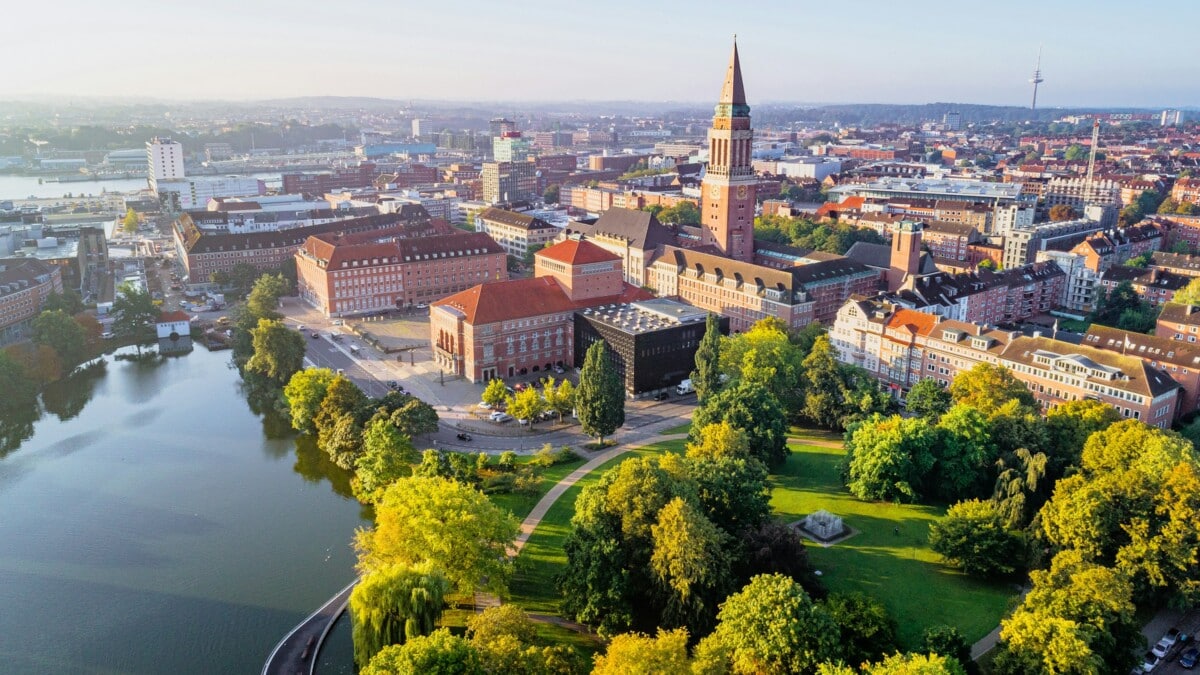
Kiel rarely gets mentioned in the same breath as Hamburg or Lübeck, and that is largely a matter of scale rather than substance. This is Germany’s northernmost major city and the capital of Schleswig-Holstein, built almost entirely around a long, sheltered inlet of the Baltic Sea, the Kieler Förde, and everything about the place still reads as a working port rather than a museum piece. Naval history runs deep here: Kiel became Germany’s principal naval base after 1871, and the shipyards along the fjord built and repaired warships through two world wars, which is also why the city was largely destroyed by Allied bombing and had to be rebuilt almost from scratch after 1945.
What survived that rebuilding, and what has been added since, makes Kiel a genuinely worthwhile stop rather than a place to pass through on the way to a ferry. The Kiel Canal, one of the busiest artificial waterways anywhere in the world, cuts straight through the city’s northern edge, and every June the Kieler Woche turns the entire fjord into the largest sailing event on the planet. A short trip out to Laboe adds a genuinely striking naval memorial and a real Second World War submarine open for visitors, while the city centre itself holds a maritime museum, a memorial park, and a waterfront promenade that locals treat as an extension of their living room on a warm evening.
This guide works through the sights that make up a proper visit to Kiel, along with the food, shopping, family options and rainy day backups that round out a trip. Kiel is also one of the major ferry hubs for onward travel into Scandinavia and the Baltic states, and a separate guide on this site covers those routes in detail, so this page only touches on ferries briefly where they matter to a visit ashore.
| Section | What you’ll find |
| Kiel Fjord and the Kiellinie | The city’s main waterfront promenade, free to walk and the best free vantage point during Kieler Woche. |
| Sailing to Laboe by Boat | A guided round trip harbour cruise combining fjord views with entry to the Naval Memorial and U-995. |
| Kieler Woche | The world’s largest sailing event, held every late June with free racing and a citywide festival. |
| The Kiel Canal | Where to watch ships transit the world’s busiest artificial waterway at the Holtenau locks. |
| Laboe Naval Memorial and the U-995 Submarine | A 72 metre memorial tower plus a real Second World War U-boat open to visitors. |
| Kiel Maritime Museum | A free harbourside museum in a former fish hall, with boardable historic vessels. |
| Hiroshimapark | A small central memorial garden with an unusual wartime and postwar history. |
| Kiel’s Ferry Connections | An overview of Kiel’s international ferry routes into Scandinavia and the Baltic. |
| The Altstadt | What survived Kiel’s wartime destruction, and why the old town looks the way it does. |
| Food and Drink | Fischbrötchen and Baltic seafood, and where locals actually go to eat well. |
| Shopping in Kiel | Holstenstraße’s main shopping street plus the smaller independent shops near the Alter Markt. |
| Family-Friendly Kiel and Rainy Day Options | Which sights work best with children, and where to go on a wet day. |
Kiel Fjord and the Kiellinie: The City’s Waterfront Promenade
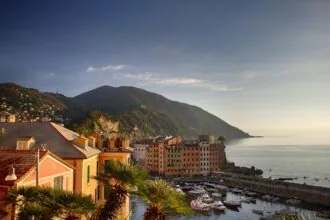
The Kieler Förde, or Kiel Fjord, is not a fjord in the Norwegian sense carved by glaciers, but a long, narrow inlet of the Baltic Sea stretching roughly 17 kilometres inland, and it is the single reason Kiel exists where it does. Naval yards, ferry terminals, sailing clubs and container berths all share the same stretch of water, and rather than fencing the waterfront off as an industrial zone, the city built the Kiellinie along its eastern shore, a broad pedestrian and cycling promenade that runs for around three and a half kilometres between the city centre and the northern suburb of Düsternbrook.
Walking the Kiellinie is the easiest way to understand Kiel’s whole identity in one go. Container ships and ferries bound for Scandinavia glide past sailing dinghies and rowing eights, the Marine-Ehrenmal tower at Laboe is visible on a clear day across the water, and a string of beer gardens, ice cream kiosks and the occasional lighthouse-style landmark line the landward side. The Seebrücke pier and the nearby Aquarium GEOMAR, a small marine research aquarium with seals visible from an outdoor pool, both sit directly on the route, making it easy to fold either into a longer walk without much planning.
The promenade is genuinely at its best during Kieler Woche in June, when the fjord fills with thousands of sailing boats and the Kiellinie becomes the best free vantage point in the city, but it works perfectly well on an ordinary afternoon too. Benches, wide open lawns and a mostly flat, buggy-friendly surface make it an easy add-on to almost any other stop in this guide, and walking the full length end to end takes a little under an hour at an unhurried pace, longer with a stop for a Fischbrötchen along the way.
Access to the Kiellinie is free and unrestricted at any time, and it connects easily on foot to both the Hauptbahnhof and the city centre, making it a natural first orientation walk on arrival in Kiel.
Sailing to Laboe by Boat: The Adler-Schiffe Harbour Cruise
Visitors who would rather see the fjord from the water than watch it from the shore have a dedicated option for reaching Laboe. Adler-Schiffe runs a round trip cruise aboard the Förde-Adler between central Kiel and Laboe, departing directly from the Bahnhofsbrücke a short walk from the Hauptbahnhof.
The full outing runs to around three and a half hours door to door, with roughly two hours of free time built in once the boat reaches Laboe. That window is enough to ride the elevator up the Marine-Ehrenmal’s viewing platform and then walk through the cramped compartments of the U-995 submarine before the boat heads back.
Entry to both the memorial tower and the submarine is bundled into the ticket price rather than bought separately at the gate, and a guide narrates the crossing itself, pointing out passing ships and landmarks along the fjord. It suits visitors who would rather have the sights at Laboe covered in one booking than juggle separate bus timetables or ferry schedules on the way there and back.
Tickets typically start from around €26.50 (£22.79/$31.01) per adult, and the operator allows free cancellation up to 24 hours before departure, worth using given how much a sailing like this depends on weather and tides. Reviews of the trip are generally positive about the onboard commentary, though a few visitors note it carries better on deck than inside the cabin.
Best if you want daily housekeeping and a front desk. Filter by area first, then by price.
Check availabilityBest for longer stays. Whole apartments and houses, so you are not eating out three times a day.
View rentalsBest as a last check before booking. Compares Germany hotel rates across several sites in one search.
Compare ratesKieler Woche: The World’s Largest Sailing Event
Every year in the final week of June, Kiel becomes the centre of the international sailing world for eight days running. Kieler Woche, literally “Kiel Week,” began in 1882 with just twenty yachts racing on the fjord, and it has grown into what is widely recognised as the largest sailing event on earth, drawing around 2,000 boats and roughly 5,000 sailors from dozens of countries to compete across Olympic and traditional classes alike, alongside an estimated three million visitors who come for the wider festival rather than the racing itself.
The regatta itself opens with a ceremony the Saturday before race week proper begins, and racing then runs daily out on the fjord, visible for free from the Kiellinie, the Falckensteiner Strand and dozens of other points along the shore without needing a ticket of any kind. Alongside the sailing, Kieler Woche has grown into Northern Europe’s largest summer festival, with live music stages scattered across the city, an international food market, street performers, a dedicated children’s programme, and a closing fireworks display over the fjord that draws enormous crowds to the waterfront.
Because the event is spread across the whole city rather than confined to a single fenced site, most of it costs nothing to attend, though hotel prices in Kiel rise sharply during the week and rooms are worth booking well in advance if a visit is timed around it deliberately. The full programme, including the daily racing schedule and the festival’s stage line-up, is published each year by the organisers at Kiel Sailing City, the official tourism and sailing information site for the city.
Anyone visiting Kiel outside late June misses the festival itself, but the sailing culture it celebrates is visible on the fjord in some form for most of the year, from casual dinghy hire to the yacht clubs that line the Kiellinie.
The Kiel Canal: Understanding One of the World’s Busiest Waterways
Most visitors notice the ships before they realise why they are there. The Kiel Canal, known in German as the Nord-Ostsee-Kanal, cuts across the base of the Jutland peninsula to link the Baltic Sea directly to the North Sea, and its eastern end sits right at Kiel’s northern edge, at the Holtenau locks. Opened in 1895 after Prussia’s navy and the region’s merchants pushed for a route that avoided the long, often rough passage around Denmark, the canal runs for roughly 98 kilometres (61 miles) and cuts out a detour of around 460 kilometres for anything sailing between the two seas.
The scale of use is what genuinely surprises most visitors. Around 32,000 ships transit the canal each year, roughly 90 a day, carrying something like 100 million tonnes of cargo, which makes it, by ship count, the busiest artificial waterway in the world, ahead of both the Panama Canal and the Suez Canal. Locks at each end, at Brunsbüttel on the North Sea side and Kiel-Holtenau here in the city, manage the modest difference in water level and control traffic, and vessels up to 235 metres long and 32.5 metres wide can still make the transit.
For a visitor, the easiest way to actually see the canal at work is from the Holtenau lock viewing platform on the northern side of the city, a genuinely free spot where cargo ships, yachts and the occasional cruise ship queue to pass through the gates at close range. It is a short bus or taxi ride from the centre rather than a walkable stop from the Kiellinie, but for anyone with a passing interest in shipping or engineering, watching a lock cycle takes only twenty or thirty minutes and costs nothing at all.
Laboe Naval Memorial and the U-995 Submarine
A short trip along the fjord from central Kiel, the small resort town of Laboe holds two of the region’s most genuinely striking sights, sitting side by side at the water’s edge. The Marine-Ehrenmal, or Naval Memorial, is a 72 metre tower built between 1927 and 1936, originally to honour German sailors lost in the First World War. It was rededicated in 1954 as a memorial to sailors of all nations lost at sea, a deliberate and fairly unusual reframing for a monument of its era, and an elevator and stairs still carry visitors up to an observation deck roughly 85 metres above sea level, with genuinely sweeping views back across the fjord towards Kiel on a clear day.
At the foot of the tower sits U-995, a preserved German Type VII U-boat, the same class that formed the backbone of the Second World War Atlantic wolf packs, and the only surviving example of its type anywhere in the world. Visitors can walk through the entire hull, from the cramped torpedo room to the control station and engine spaces, giving a genuinely visceral sense of how little space a crew of around forty men actually had to work with on a months-long patrol.
Admission to the tower and the submarine can be bought separately or as a combined ticket, with prices in the region of €6.00 (£5.16/$7.02) for the tower and €7.00 (£6.02/$8.19) for U-995 individually, or around €9.50 (£8.17/$11.12) combined, with reduced rates for children and a family ticket typically available. Hours run longer in the June to September peak season, often from around 9am to 7pm, and considerably shorter over winter, so it is worth checking the current schedule before travelling out specifically for a visit.
Getting to Laboe from Kiel takes around 20 minutes by car, or a seasonal passenger ferry across the fjord makes for a genuinely pleasant alternative to the bus in summer, arriving close to the memorial itself rather than requiring a longer walk from a road-side stop.
Kiel Maritime Museum: A City’s Shipping History in a Former Fish Hall
Kiel’s relationship with the sea gets a proper, dedicated home at the Schifffahrtsmuseum, the Kiel Maritime Museum, which occupies the Fischhalle, a handsome former fish auction hall on the Sartorikai overlooking the harbour. Established in 1978, the museum is part of the wider Museen am Meer network linking maritime collections across northern Germany, and its focus stays firmly local, tracing Kiel’s development as a fishing port, naval base and passenger harbour rather than attempting a broader national maritime story.
The building itself is worth a look regardless of the exhibits inside, a light, high-ceilinged industrial hall that still reads clearly as the working fish market it once was. Alongside model ships, harbour photographs and displays on the city’s shipbuilding history, the museum’s real draw sits outside on the water: several genuine historic vessels moored beside the hall and open for visitors to board, including the lightship Alexander von Humboldt’s preserved lantern, the rescue boat Hindenburg, the fireboat Kiel, the former passenger ship Stadt Kiel, and the buoy tender Bussard.
Being able to physically walk the decks of working harbour vessels rather than only viewing them from a quayside gives the museum a genuinely hands-on feel that a purely indoor collection would lack, and it tends to land particularly well with children who might otherwise find a conventional glass-case museum hard going.
The museum is generally open Tuesday to Sunday from 10am to 6pm, closed on Mondays, and admission is free. Its position directly on the Sartorikai puts it within easy walking distance of the Kiellinie and the Hauptbahnhof, making it a natural stop to fold into a wider waterfront walk rather than a separate excursion requiring its own dedicated trip.
Hiroshimapark: A Quiet Memorial Garden in the City Centre
Tucked between Kiel’s town hall and the small inland lake known as the Kleiner Kiel, right in the heart of the city centre, Hiroshimapark is a small green space with a genuinely unusual history behind its name. The park was originally laid out in 1934 as the Bismarckanlagen, honouring the former German chancellor, but in May 1987 the city council voted to rename it in memory of the atomic bombing of Hiroshima on 6 August 1945, a decision that reflected Kiel’s own postwar reckoning with the devastation the city itself had suffered from aerial bombing.
Since 1986, a memorial ceremony has been held here every year on 6 August to mark the anniversary, and the park also holds a separate memorial stone, added in 1997, commemorating Sinti and Roma from Schleswig-Holstein murdered under Nazi rule. Despite that weight of history, Hiroshimapark does not read as a solemn or heavy space day to day: at around 16,000 square metres, it is a genuinely pleasant pocket of green in the middle of the city, dotted with sculptures old and new, including a Bismarck monument from 1897 and a striking modern water and light installation called Changing Invisibility, added in 2004.
Its central location makes it an easy, unplanned stop rather than a destination in its own right, sitting close enough to the Rathaus and the main shopping streets that most visitors pass through or beside it without going out of their way. Entry is free and unrestricted at any time, and a slow lap of the paths takes well under twenty minutes, though the shaded benches make it worth lingering on a warm afternoon between other stops in the city centre.
Kiel’s Ferry Connections: A Gateway to Scandinavia and the Baltic
Beyond the sailing dinghies and naval history, Kiel is also one of Germany’s genuinely major international ferry ports, and it is worth understanding this side of the city even for visitors not planning to board a ferry themselves, since it explains much of the shipping traffic visible from the Kiellinie. Overnight services run from the Kiel Ostseekai terminal to Oslo with Color Line, a genuinely popular route for both foot passengers and drivers heading into Norway, while Stena Line operates daily sailings to Gothenburg in Sweden, another long-established route with a large, well-equipped ferry.
Further routes connect Kiel to the eastern Baltic as well, reflecting the city’s long-standing role as a bridge between Germany and Scandinavia going back well over a century. For anyone arriving in Kiel purely as a starting point for one of these crossings, the terminals sit a short taxi or bus ride from the Hauptbahnhof, and watching a large ferry manoeuvre out of the fjord past the Kiellinie is, in its own right, one of the better free spectacles the city has to offer.
This guide is focused squarely on things to do in the city itself, so it deliberately keeps this section brief. A separate, dedicated Kiel Ferry Routes guide on this site covers Kiel’s ferry routes in proper depth, including which terminal serves which destination, how to get between them, and what a crossing actually involves, and it is the better starting point for anyone planning to travel onward by sea rather than simply visiting Kiel on land.
Best for long or awkward journeys. Builds one itinerary out of separate flights.
View flightsBest if you want maps and messaging working the moment you switch your phone on.
See eSIM plansBest after a long flight or a late landing. Price agreed before you travel, and no taxi queue.
Check transfersThe Altstadt: A City Rebuilt Almost From Scratch
Kiel’s old town is honest about its own history in a way that many rebuilt German cities are not. Because Kiel was a major naval base and shipbuilding centre, it was a deliberate and repeated target for Allied bombing raids throughout the Second World War, and by 1945 the historic centre had been largely destroyed, with only a scattering of individual buildings surviving intact. Unlike Münster or Nuremberg, where postwar planners rebuilt the medieval street pattern and gabled facades in close detail, Kiel took a more pragmatic, modern approach to reconstruction, and the result today is a functional, largely mid-century city centre rather than a picture postcard old town.
A handful of genuine historic landmarks did survive or were carefully restored, and they carry disproportionate weight as a result. St. Nikolai Church, dating back to around 1240, remains the oldest building in the city centre despite serious wartime damage, and the former Holstein-Gottorp ducal palace, with origins stretching back to the 13th century, was likewise rebuilt and now houses parts of Kiel’s university and cultural institutions rather than sitting as a purely decorative relic.
Rather than apologising for what was lost, Kiel leaned into green space and open planning during reconstruction, which is a large part of why the Kiellinie, Hiroshimapark and other pockets of parkland feel so integrated into the city rather than bolted on afterwards. It is worth setting expectations honestly before a visit: Kiel does not offer the dense, photogenic medieval streetscape of some other German cities, and its real appeal lies in the fjord, the maritime history and the sailing culture covered elsewhere in this guide, rather than in the Altstadt itself.
Food and Drink: Fischbrötchen and Baltic Seafood
Kiel’s food culture is shaped, unsurprisingly, by the fjord it sits on, and the single dish worth actively seeking out is the Fischbrötchen, a bread roll stuffed with fried or pickled fish, usually herring, and topped with onions, remoulade or a squeeze of lemon. It is genuinely northern German street food rather than a tourist invention, sold from harbourside kiosks and small stands along the Kiellinie and near the Fischhalle for a few euros, and it is best eaten standing at a rail overlooking the water rather than carried elsewhere.
Beyond the classic roll, Baltic seafood more broadly runs through menus across the city, with herring prepared several different ways, alongside plaice, cod and the occasional catch of Baltic sprat appearing on traditional restaurant menus close to the harbour. Kiel’s dining scene as a whole leans practical rather than showy, reflecting its identity as a working port and university city rather than a place built around culinary tourism, and it is generally easy to find a solid, honest seafood meal without needing to book far ahead.
The streets around the Alter Markt and the harbourside near the Fischhalle hold the highest concentration of traditional restaurants and casual fish kiosks, while the university district brings a younger, more international mix of cafes and bars into the picture as well, a reminder that Kiel is home to a large student population alongside its naval and shipping history.
During Kieler Woche in June, an international food market adds a genuinely wide spread of cuisines to the mix along the Kiellinie and the city centre for the week, but outside the festival, a fresh Fischbrötchen by the water remains the single most representative thing to eat in Kiel.
Shopping in Kiel
Kiel’s main shopping district runs along the pedestrianised Holstenstraße, one of the oldest and longest shopping streets in Germany, connecting the Hauptbahnhof area towards the Alter Markt and the harbour. High street fashion chains, department stores and a couple of enclosed shopping centres dominate the street itself, and its rebuilt, mid-century character means it functions more like a practical retail spine than a historic promenade, though it remains entirely walkable and easy to navigate in a single pass.
For something with a bit more character, the streets branching off around the Alter Markt and closer to the Fischhalle hold smaller independent shops, including a handful of stores selling maritime and sailing gear that reflect Kiel’s identity as a genuine sailing city rather than a marketing slogan. These are a good source of gifts with a stronger sense of place than a standard souvenir shop, from nautical charts to locally branded sailing kit.
Given the size of the local university, Kiel’s retail mix also carries a younger, more casual edge than its shopping streets might first suggest, with secondhand and vintage shops tucked in among the bigger chains, particularly around the streets closer to the harbour rather than directly on Holstenstraße itself.
As in most German cities, Saturday is the busiest shopping day, and the large majority of shops close entirely on Sundays, so a dedicated shopping stop is best built into a weekday or Saturday itinerary. During Kieler Woche, extended Sunday trading sometimes applies as a special exception, though this varies year to year and is worth confirming locally rather than assumed in advance.
Family-Friendly Kiel and Rainy Day Options
Kiel handles a family visit reasonably well, largely because its biggest draws already lend themselves to children rather than requiring a separate, dedicated attraction to keep them entertained. The Kiellinie itself is the easiest starting point, with its flat, buggy-friendly surface, ice cream kiosks and constant stream of ships to watch giving younger children plenty to hold their attention without needing an entrance fee or fixed opening hours of any kind.
The U-995 submarine at Laboe is a genuine highlight for children old enough to appreciate it, since walking through a real submarine’s cramped corridors tends to land far better with kids than a conventional museum display, and the Naval Memorial’s viewing platform gives them a proper reward at the top for the climb. The Kiel Maritime Museum’s boardable harbour vessels work the same way, offering something physical to explore rather than glass cases to peer into, and free admission makes it an easy stop to add without weighing down a day’s budget.
For a wet day, the maritime museum and its covered exhibition hall provide a genuinely reliable indoor option, and the small GEOMAR aquarium near the Kiellinie, with its outdoor seal pool visible even in poor weather, adds a further stop that still works when the forecast turns. Hiroshimapark‘s shaded paths and central location make it a useful pause between indoor stops rather than a destination purely for children, but its proximity to the shopping streets means it slots naturally into the same afternoon.
Between the harbour, the submarine at Laboe and the covered stretches of Holstenstraße nearby, a family trip or a rainy afternoon in Kiel rarely needs to be a wasted one, particularly for children with any interest in ships, water or the sea in general.

Rupert’s Handy Travel Tips
Planning a visit to Kiel? Rupert has a few tips worth knowing before you go:
- Book accommodation early for Kieler Woche: hotel prices spike hard during the last week of June, and rooms near the fjord sell out well in advance of the festival itself.
- Take the seasonal ferry to Laboe instead of the bus: the crossing gives genuinely better views of the fjord and the Naval Memorial than arriving by road, and it runs right through summer.
- Buy the combined ticket at Laboe: seeing both the Naval Memorial tower and the U-995 submarine costs less together than paying for each one separately at the gate.
- Don’t expect a medieval old town: Kiel’s Altstadt was largely rebuilt after wartime bombing, so the city’s real appeal lies in the fjord and its maritime history rather than in gabled streetscapes.
- Grab a Fischbrötchen by the water: the harbourside kiosks near the Fischhalle and along the Kiellinie are the most authentic and least expensive way to eat well in Kiel.
- Keep the Maritime Museum in your back pocket for rain: it’s free, indoors, and its boardable harbour vessels work well for children even on a genuinely wet afternoon.
Want to meet the reindeer behind our travel tips? Find out more in our page Who is Rupert?.


Frequently Asked Questions About Things to Do in Kiel
What is Kiel best known for?
Kiel is best known as a major Baltic Sea naval and ferry port and as host of Kieler Woche, the world’s largest sailing event, held every June on the Kiel Fjord.
When does Kieler Woche take place?
Kieler Woche runs annually during the final week of June, with an opening ceremony the preceding Saturday and events, races and concerts continuing for eight days.
Is the Kiel Canal the busiest waterway in the world?
By number of ships, yes. Around 32,000 vessels transit the Kiel Canal each year, more than pass through the Panama or Suez canals, making it the busiest artificial waterway anywhere by traffic count.
How much does it cost to visit the U-995 submarine at Laboe?
Admission to U-995 alone runs to around €7.00 (£6.02/$8.19), with a combined ticket including the Naval Memorial tower costing roughly €9.50 (£8.17/$11.12) for adults, subject to change.
Is the Kiel Maritime Museum free?
Yes. The Schifffahrtsmuseum in the historic Fischhalle is free to enter and generally open Tuesday to Sunday from 10am to 6pm, closed on Mondays.
Does Kiel have a historic old town?
Only partially. Kiel’s Altstadt was largely destroyed by Allied bombing in the Second World War and rebuilt in a mostly modern style, though landmarks including St. Nikolai Church and the former ducal palace survived and were restored.
What food should I try in Kiel?
A Fischbrötchen, a bread roll filled with fried or pickled fish, is the genuinely local dish, best eaten from a harbourside kiosk along the Kiellinie or near the Fischhalle.
Can you get to Laboe from Kiel without a car?
Yes. A seasonal passenger ferry crosses the fjord to Laboe in summer, and regular buses run the same route year round, taking around 20 minutes each way.
Further Reading & Related Guides
Anyone building a wider northern Germany itinerary will find our Best Things to Do in Hamburg and Things to Do in Bremen guides useful companions elsewhere on the Baltic and North Sea coasts, while our Things to Do in Münster guide covers a very different, inland side of the country further south.
If onward rail travel is part of the plan, our German Rail Tickets Explained guide breaks down the Deutschland-Ticket and regional fares that cover journeys between Kiel, Hamburg and the rest of Schleswig-Holstein, while our Interrail Germany Pass Guide explains when a country-specific pass beats buying tickets individually for a longer trip around the country.