Reviewed by our editorial team Updated
Dortmund sits at the heart of the Ruhr, Germany’s old industrial engine room, and that position makes it one of the country’s better-connected cities for a day trip that needs no car at all. The Rhine-Ruhr region packs a dozen sizeable cities into a corridor barely 80 kilometres long, all linked by frequent regional trains, so the best day trips from Dortmund tend to be measured in minutes rather than hours.
This is a genuinely more compact, regional set of excursions than the sprawling day-trip country around Berlin or Munich, and that is really the point of it. Dortmund’s neighbours pack a UNESCO World Heritage industrial site, a properly hands-on mining museum, and two of western Germany’s biggest cities into a single rail corridor, so nobody here needs to build a whole day just around getting there.
The standout is Essen’s Zollverein Coal Mine, a former colliery turned World Heritage Site that is widely considered the single best piece of industrial heritage anywhere in the Ruhr. Bochum’s German Mining Museum takes the same coal-and-steel story underground, quite literally, with a genuine demonstration mine beneath the city centre.
For a proper change of pace, Cologne and its twin-spired cathedral sit a little further down the line, while Düsseldorf’s Rhine-side old town and elegant Königsallee make it the more polished of the two bigger cities, and both are genuine, popular day trips rather than a stretch on a map.
The wider corridor has plenty more worth the trip. Duisburg’s Landschaftspark turns a decommissioned steelworks into one of Europe’s stranger public parks, Wuppertal’s century-old Schwebebahn is a suspension railway found nowhere else in the world, and Münster swaps industrial heritage for a bicycle-friendly old town and a lively student pulse. Furthest out, Xanten’s Archaeological Park rebuilds a genuine Roman frontier town on the ground where it once stood.
Every destination in this guide, Cologne and Düsseldorf included, sits inside a single German state, so it is worth knowing about the 24hTicket NRW before working out fares leg by leg. It covers unlimited travel on regional trains, S-Bahn, U-Bahn, trams and buses right across North Rhine-Westphalia for a full day, priced at €39.80 (£34/$47) for a single traveller or €59.80 (£51/$70) for up to five people together, and it beats buying individual VRR tickets the moment two or more stops, or two or more people, are involved. It does not cover the faster ICE or IC services into Cologne, only the slower regional RE1 alternative covered in that section below. One thing to plan around: it isn’t valid before 9am on weekdays, only opening up from midnight on Saturdays, Sundays and public holidays, so an early weekday departure needs a standard fare for that first leg instead. The table below compares journey times and transport for all eight destinations at a glance, followed by a dedicated section on each place and a final verdict on which trip suits which kind of traveller.
| Destination | How to Get There | Journey Time | Suggested Time Needed |
|---|---|---|---|
| Essen (Zollverein Coal Mine) | Direct regional train from Dortmund Hauptbahnhof | About 20-25 minutes | Half day to full day |
| Bochum (German Mining Museum) | Direct regional train from Dortmund Hauptbahnhof | About 10-17 minutes | Half day |
| Duisburg (Landschaftspark) | Direct regional train from Dortmund Hauptbahnhof | About 30-37 minutes | Half day |
| Wuppertal (Schwebebahn) | Direct regional train from Dortmund Hauptbahnhof | About 37-59 minutes | Half day |
| Cologne | Direct ICE, IC or RE1 regional train from Dortmund Hauptbahnhof | About 1 hour to 1 hour 20 minutes | Full day |
| Düsseldorf | Direct RE1 or RE6 regional train from Dortmund Hauptbahnhof | About 45-55 minutes | Half day to full day |
| Münster | Direct or one-change regional train from Dortmund Hauptbahnhof | About 29-49 minutes | Half day |
| Xanten (Archaeological Park) | Regional train from Dortmund Hauptbahnhof, one change at Duisburg | About 1 hour 30 minutes to 2 hours | Full day |
Essen and the Zollverein Coal Mine: The Ruhr’s UNESCO Icon
Essen’s Zollverein Coal Mine is the closest thing the Ruhr region has to a must-see, a former colliery so architecturally significant that UNESCO inscribed the whole complex as a World Heritage Site in 2001. Once the largest hard-coal mine in the world, Zollverein closed in 1986 and has spent the decades since being carefully repurposed rather than demolished, and it now anchors the entire region’s industrial heritage story.
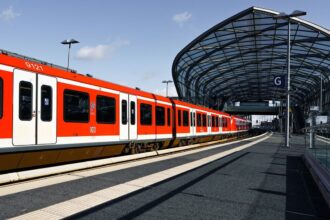
Direct regional trains run from Dortmund Hauptbahnhof to Essen in around 20 to 25 minutes, with services departing several times an hour throughout the day. A standard VRR single ticket covering the route costs around €7.80 (£6.71/$9.13), and the same ticket also covers onward buses and trams once in Essen itself.
The 100-hectare site itself is free to walk around at any time, with the famous Doppelbock winding tower and the red-brick coking plant both open to explore without a ticket. The Ruhr Museum, housed in the former coal-washing plant, is the paid highlight, charging €10 (£8.60/$11.70) full price or €7 (£6.02/$8.19) reduced for a permanent exhibition covering the region’s natural and industrial history.
Guided tours through the coking plant and pithead baths run from €12.50 (£10.75/$14.63), or €9.50 (£8.17/$11.12) reduced, and are worth booking ahead in summer since the more popular slots do sell out. The 3.5-kilometre circular walkway around the grounds is flat and paved, making this one of the more accessible industrial sites anywhere in the country.
Winter brings an unexpected extra, since the coking plant’s old coal-washing basin is flooded and turned into an outdoor ice rink, one of Europe’s more unusual skating venues. Summer swaps that for open-air cinema screenings and food markets, so checking what is on before travelling is worth doing regardless of the season.
A half day comfortably covers the free grounds and the Ruhr Museum, while a full day allows time for a guided coking-plant tour and a proper look at the surrounding park’s public art trail. Given how central this site is to the wider Ruhr’s identity, it is the trip on this list that rewards spending the most time.
Bochum’s German Mining Museum: A Real Mine Beneath the City
Bochum’s Deutsches Bergbau-Museum, or German Mining Museum, is one of the few places in Germany where visitors descend into an actual reconstructed mine rather than just reading about one behind glass. It sits directly in the city centre, built around the preserved headframe of the former Germania colliery, and is generally reckoned the largest mining museum anywhere in the world by exhibition space.
Direct regional trains from Dortmund Hauptbahnhof reach Bochum in as little as 10 to 17 minutes, among the shortest journeys in this whole guide, with dozens of services running throughout the day. A VRR single ticket for the short hop costs around €3.80 (£3.27/$4.45), and the museum sits only a few minutes’ walk from Bochum Hauptbahnhof.
The museum’s centrepiece is its 1.2-kilometre underground tunnel network, reached by a genuine mine lift and recreating real mining conditions and equipment from different eras of the industry. Visitors aged 12 and over can explore unaccompanied, while younger children need an adult from age four, and the last underground tour departs at 4pm.
Above ground, the headframe of the old Germania colliery doubles as an observation tower, with a lift ride up offering panoramic views across the Ruhr valley on a clear day. Adult admission covers both the underground tour and the tower, priced at €15 (£12.90/$17.55), with a reduced rate of €8 (£6.88/$9.36) for children, students and disabled visitors.
A family ticket covering two adults and up to four children costs €40 (£34.40/$46.80), making this one of the better value family days out anywhere in this cluster. The museum runs Tuesday to Sunday from 9:30am to 5:30pm, closing on Mondays, so it is worth checking the calendar before building a day trip around a single visit.
Because both the underground tour and the tower run limited, timed slots, arriving earlier in the day gives the best chance of fitting in everything without a long wait. A half day is enough to see the whole museum properly, which makes Bochum easy to pair with a second, shorter stop elsewhere in the Ruhr on the same trip if time allows.
Best if you want daily housekeeping and a front desk. Filter by area first, then by price.
Check availabilityBest for longer stays. Whole apartments and houses, so you are not eating out three times a day.
View rentalsBest if you have already picked a hotel. Checks the big booking sites for the same room and shows who is cheapest.
Check dealsDuisburg’s Landschaftspark: A Steelworks Reclaimed by Nature
Just down the line from Bochum, Duisburg takes a different approach to industrial heritage than Zollverein or the German Mining Museum. Instead of curating the old Meiderich ironworks behind glass, the city simply let nature move back in among the disused blast furnaces, gas tanks and ore bunkers, then opened the whole 180-hectare site as a free public park under the name Landschaftspark Duisburg-Nord.
Direct regional trains run from Dortmund Hauptbahnhof to Duisburg Hauptbahnhof in around 30 to 37 minutes, on the same busy Rhine-Ruhr corridor that also serves Essen and Düsseldorf, with departures several times an hour. From Duisburg Hauptbahnhof, a short bus ride or taxi covers the last few kilometres out to the park in the Meiderich district.
The park grounds are free and open 24 hours a day, with rusted walkways threading between the old blast furnaces and a garden planted directly into the former ore bunkers. For a modest separate charge, visitors can climb Blast Furnace No. 5 for a panoramic view across the Ruhr, dive into the flooded former gasometer’s artificial underwater world, or tackle the climbing routes built into the bunker walls.
After dark, the entire site is lit in coloured floodlights, a design originally created by British lighting artist Jonathan Park, and an evening visit genuinely rivals a daytime one for atmosphere. Checking the park’s event calendar before travelling is worth doing, since open-air markets and screenings run through the warmer months.
A half day is enough to walk the main structures and climb the furnace tower, and Duisburg pairs naturally with an earlier stop in Essen or Bochum on the same day, given how close all three sit on the same rail line.
Compare Trains and Buses with Omio
Choosing between trains and buses is not always obvious. Some routes are faster by train, while others are cheaper or easier by bus. Omio helps you compare routes, journey times, prices, and tickets in one place.
It is useful for city-to-city travel, cross-border journeys, and trips where flexibility matters. You can quickly see which option works best for your route, budget, and schedule before booking.
Wuppertal: Riding the World’s Only Century-Old Suspension Railway
Wuppertal is built around a single unmistakable landmark: the Schwebebahn, a suspended monorail that has carried passengers hanging above the River Wupper since 1901 and remains the only system of its kind anywhere in the world still running as everyday public transport rather than a museum piece.
Direct regional trains connect Dortmund Hauptbahnhof to Wuppertal Hauptbahnhof in around 37 to 59 minutes depending on the service, with frequent departures throughout the day and no change required.
The line covers around 13 kilometres end to end, gliding roughly eight metres above the water through the city centre before climbing higher over the rooftops further out, and simply riding it start to finish is really the main event of a Wuppertal day trip. A standard VRR ticket covers a single ride, while a 24-hour ticket covering the entire bus and Schwebebahn network costs €7.60 (£6.54/$8.89) for the first traveller and €5.10 (£4.39/$5.97) for each additional guest travelling together.
Beyond the railway itself, the Von der Heydt Museum holds a respected collection of German Impressionist and Expressionist painting, and Wuppertal Zoo ranks among the country’s better city zoos for anyone travelling with children.
A half day covers a full end-to-end ride plus one further stop, making Wuppertal an easy, low-effort add-on to a Ruhr-focused itinerary despite sitting slightly outside the region proper.
Cologne: A Cathedral City Worth the Longer Trip
Cologne is the furthest destination in this guide, and also the most obvious one, a city whose twin-spired cathedral has been drawing travellers to the Rhine for well over a century. Unlike the other three trips here, this is a genuine full city rather than a single heritage site, so it is worth treating as a full day out from the start rather than an add-on.
Direct trains from Dortmund Hauptbahnhof reach Cologne in around 1 hour to 1 hour 20 minutes, running on a mix of ICE, IC and regional RE1 services roughly every 15 to 20 minutes throughout the day. A walk-up single fare typically runs to around €24 (£20.64/$28.08), though booking an advance ticket on Deutsche Bahn’s website can bring that down to around €8 to €15 (£6.88-12.90/$9.36-17.55) depending on how far ahead it is booked.
Cologne Cathedral itself introduced a tourist entry fee from July 2026, now charging €12 (£10.32/$14.04) full price or €6 (£5.16/$7.02) reduced, with entry remaining free for worshippers and under-14s. Climbing the 533-step south tower costs a further €8 (£6.88/$9.36), or €4 (£3.44/$4.68) reduced, and it remains the only way to get a proper view over the city and the Rhine.
Beyond the cathedral, the old town’s narrow lanes run down to the Rhine promenade, and the Chocolate Museum and the Roman-Germanic Museum’s collection of Roman mosaics both make for a solid second stop if time allows. The cathedral’s own ticket office closes earlier than the building itself, with last entry at 5:30pm on weekdays and Saturdays and 4:15pm on Sundays and holidays.
Given the longer round trip, this is best treated as a full day rather than squeezed in around another destination on the same itinerary. Arriving earlier helps avoid both the cathedral queues and the crowds that build steadily around the Hohenzollern Bridge and its love-locks through the afternoon.
Cologne rewards travellers who want a genuine change of pace from the Ruhr’s industrial heritage sites, trading coal and steel for Gothic architecture and a proper big-city atmosphere. It is the trip to pick on a longer Dortmund stay rather than on a first, shorter visit.
Düsseldorf: Rhine Views and a Polished Old Town
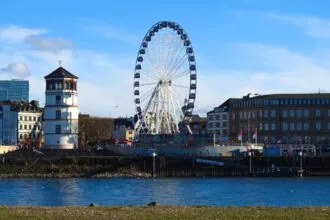
Düsseldorf sits almost exactly between Dortmund and Cologne on the map, and it offers a noticeably more polished day out than either, built around a compact riverside old town and one of Germany’s most fashionable shopping streets. As North Rhine-Westphalia’s state capital, it has a genuinely different feel from Dortmund’s industrial identity despite sitting barely an hour up the line.
Direct regional trains, mainly the RE1 and RE6, run from Dortmund Hauptbahnhof to Düsseldorf Hauptbahnhof in around 45 to 55 minutes, departing multiple times an hour throughout the day. A VRR single ticket covering the whole route costs around €19.80 (£17.03/$23.16), or the same journey is included in a Deutschland-Ticket, priced at €63 a month, for anyone spending more than a couple of days moving around the region.
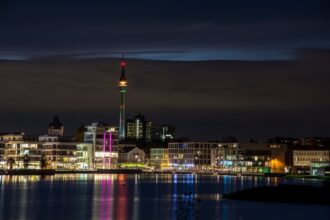
The Altstadt, or old town, is billed locally as the “longest bar in the world” thanks to its sheer density of pubs, and it fills the lanes between the Rhine and the Marktplatz with a genuinely lively daytime and evening crowd. The riverside promenade running alongside it gives an easy, flat walk with views across to the Rheinturm, the distinctive telecommunications tower on the opposite bank.
That tower’s observation deck, at 168 metres, costs €12.50 (£10.75/$14.63) for standard admission, dropping to €8 (£6.88/$9.36) for an early-bird ticket before midday or a late-night one after 8pm. The nearby Königsallee, universally shortened to “the Kö,” is Düsseldorf’s grand boulevard of designer boutiques, worth a stroll even for visitors with no intention of buying anything.
For a change of scene, the Kunstsammlung Nordrhein-Westfalen and its sister site K21 hold one of the region’s strongest modern art collections, an easy add-on for anyone with an afternoon to spare beyond the old town. Rhine boat cruises also depart from the promenade for anyone wanting to see the skyline from the water rather than the bank.
A half day covers the Altstadt, the Rhine promenade and a look at the Rheinturm comfortably, while a full day allows time for the Kö and one of the art museums as well. Düsseldorf works well either as a standalone day trip or as a natural stopping point on the way to or from Cologne, given how directly it sits on the same rail corridor.
Münster: A Quick Taste of Westphalia’s Bicycle City
Münster sits a little further north than the rest of this list and has a genuinely different character: a compact, moated old town built around cycling rather than cars, with more bicycles than residents on its streets. Because Münster already has its own dedicated guide on this site, this section keeps things deliberately brief.
Direct and one-change regional trains run from Dortmund Hauptbahnhof to Münster Hauptbahnhof in around 29 to 49 minutes, with the fastest journeys on ICE services and frequent regional departures throughout the day covering the rest.
The Prinzipalmarkt’s gabled merchant houses, the twin-towered St. Paulus Cathedral, and a stroll or rental-bike loop around the Aasee lake cover the essentials in a single half day. For the full list of sights, restaurants and practical tips, see our complete Things to Do in Münster guide.
Xanten’s Archaeological Park: A Roman City Rebuilt on Its Own Ruins
The furthest destination in this guide, Xanten sits right on the Dutch border and was once Colonia Ulpia Traiana, a full Roman city of around 10,000 people. Today’s Archaeological Park rebuilds sections of it, an amphitheatre, city walls and bathhouse among them, on the exact footprint where the originals stood.
Getting there takes one change of train. Regional services run from Dortmund Hauptbahnhof to Duisburg Hauptbahnhof in around 30 to 37 minutes, connecting there onto the Niederrheinbahn regional line to Xanten, for a total journey of roughly 1 hour 30 minutes to 2 hours door to door.
The LVR Roman Museum, built directly over an excavated Roman bathhouse, sits about 500 metres, a 10-minute walk, from Xanten’s railway station and doubles as the main park entrance. Adult admission covering both the museum and the open-air park costs €11 (£9.46/$12.87), with visitors under 18 admitted free and a reduced rate of €7 (£6.02/$8.19) for students and visitors with disabilities.
Entry is free for everyone on the first Monday of every month, worth building a trip around for anyone with a flexible schedule. The reconstructed amphitheatre still hosts open-air events in summer, and the site’s flat, paved paths make it an easy walk even with the whole family in tow.
Given the longer journey, this is best treated as a full day trip rather than paired with anywhere else on this list, and one worth saving for a longer Dortmund stay when there is time to properly enjoy it.
Best if you can move a day either way. Shows how the fare changes across the month.
Compare flightsBest if you want maps and messaging working the moment you switch your phone on.
See eSIM plansBest after a long flight or a late landing. Price agreed before you travel, and no taxi queue.
Check transfersWhich Day Trip Should You Choose?
If you only have time for one day trip from Dortmund, make it Essen’s Zollverein Coal Mine. Nothing else on this list combines a genuine UNESCO World Heritage Site with such an easy, sub-25-minute journey, and it captures the Ruhr’s industrial story better than anywhere else in the region.
Travellers who want a more hands-on, physical experience should head to Bochum instead, where the underground mine tour turns the region’s coal history into something you walk through rather than just look at. It is also the shortest trip on this list, which makes it easy to fit around other plans in Dortmund itself.
Anyone wanting a full change of scene, away from industrial heritage entirely, should commit to the longer trip out to Cologne, ideally on a day set aside for it rather than squeezed in around something else. Düsseldorf sits in between, a shorter, more polished alternative for travellers who want a big-city day out without the full round trip to Cologne.
As a general rule, pair one of the Ruhr’s own heritage sites with the wider city trip further down the line, rather than trying to fit several very different days into a short stay. Essen plus Düsseldorf makes a genuinely varied pairing, covering both the region’s industrial roots and its more cosmopolitan side without repeating the same kind of day twice.
If it’s the quirky and photogenic you’re after, Wuppertal’s Schwebebahn and Duisburg’s floodlit Landschaftspark are both worth the detour, and they pair well together or with an earlier stop in Essen or Bochum. Anyone with a spare full day should push further out to Xanten for its rebuilt Roman city, while Münster makes a pleasant half-day change of pace on a longer stay.
Whichever trip you choose, book any advance train fares on Deutsche Bahn’s website when travelling to Cologne, since the saving over a walk-up fare is often substantial. For Essen, Bochum and Düsseldorf, a standard VRR ticket bought on the day works perfectly well and rarely needs any advance planning at all.

Rupert’s Handy Travel Tips
Day trips from Dortmund are refreshingly quick on the whole, but a few destinations have quirks worth knowing before you set off.
- Book Cologne train tickets ahead where possible: advance fares are considerably cheaper than a walk-up single on the Dortmund to Cologne route.
- Check the German Mining Museum’s Monday closure: it closes on Mondays, unlike Zollverein’s outdoor grounds in Essen, which stay open every day.
- Have cash or a card ready for VRR tickets: machines at Dortmund Hauptbahnhof take both, but it’s worth carrying a backup just in case.
- Book Zollverein’s guided coking-plant tour ahead in summer: the most popular slots do sell out on busy weekends.
- Time the Rheinturm around its early-bird or late-night pricing: visiting before midday or after 8pm saves a genuine few euros on the standard ticket.
- Check Cologne Cathedral’s tower hours before travelling: the ticket office closes well before the building itself, especially on Sundays.
- Compare the 24hTicket NRW before buying single fares: every destination in this guide sits inside North Rhine-Westphalia, so a day ticket covering the whole state at €39.80 (£34/$47) solo, or €59.80 (£51/$70) for up to five people, often beats paying leg by leg.
Want to meet the reindeer behind our travel tips? Find out more in our page Who is Rupert?.


Frequently Asked Questions About Day Trips from Dortmund
What is the best day trip from Dortmund?
Essen’s Zollverein Coal Mine is generally considered the best single day trip from Dortmund, combining a UNESCO World Heritage industrial site with a journey of around 20 to 25 minutes.
How do I get from Dortmund to Essen?
Direct regional trains run from Dortmund Hauptbahnhof to Essen Hauptbahnhof in around 20 to 25 minutes, with a standard VRR single ticket costing around €7.80.
Is the German Mining Museum in Bochum worth visiting?
Yes, its 1.2-kilometre underground tunnel network gives visitors a genuine mine experience rather than a static exhibition, and it is reachable from Dortmund in as little as 10 to 17 minutes.
How long does it take to get from Dortmund to Cologne?
Direct ICE, IC and regional trains take around 1 hour to 1 hour 20 minutes, making Cologne the longest single trip in this guide and one best suited to a full day.
Does Cologne Cathedral charge an entry fee?
Yes, since July 2026 tourist entry costs €12 full price or €6 reduced, though worshippers and under-14s still enter free, and the tower climb is a separate ticket.
Is Düsseldorf or Cologne the better day trip from Dortmund?
Düsseldorf is shorter, at around 45 to 55 minutes, and suits a half day out, while Cologne needs a full day but offers a bigger cathedral city experience.
Do I need to book the German Mining Museum in advance?
Not usually, though arriving earlier in the day gives the best chance of getting a slot on the underground tour, since the last one departs at 4pm.
Is Wuppertal worth a day trip from Dortmund?
Yes, its century-old Schwebebahn suspension railway is unique in the world, and the city is reachable from Dortmund in around 37 to 59 minutes by direct regional train.
How do I get from Dortmund to Xanten?
There is no direct train, so travellers change at Duisburg, with the full journey taking around 1 hour 30 minutes to 2 hours depending on connections.
Do I need a car for any of these day trips?
No, every destination in this guide is reachable by direct or one-change regional or InterCity train from Dortmund Hauptbahnhof, and a car would add little beyond flexibility.
Is there a single ticket that covers every destination in this guide?
Yes, the 24hTicket NRW covers unlimited regional trains, trams, buses and S-Bahn or U-Bahn services across the whole of North Rhine-Westphalia for a day, priced at €39.80 (£34/$47) for one person or €59.80 (£51/$70) for up to five, and it applies to every destination above except the faster ICE and IC services to Cologne.
Further Reading
Landing in Dortmund before any of these trips? Our Dortmund Airport Transfers guide covers every realistic way of reaching the city centre from DTM, while our Things to Do in Dortmund guide rounds up the sights worth prioritising in the city itself before you head out on any of the trips above.
Continuing on to either destination further down the line? Our Best Things to Do in Cologne guide and Best Things to Do in Düsseldorf guide cover both cities in full depth, useful if either ends up extending into an overnight stay rather than a single day trip.
Coming at this cluster from the other direction? Our Best Day Trips from Düsseldorf guide already covers Dortmund and Signal Iduna Park as a satellite excursion, a useful comparison for anyone splitting time between the two cities.
For the wider picture on German regional tickets, our German Rail Tickets Explained guide breaks down the Deutschland-Ticket, the NRW-Tarif and how they compare with buying single fares for trips like these.