Reviewed by our editorial team Published
Riga is compact enough to cross on foot in an afternoon, yet its public transport network is genuinely impressive once you start relying on it. Rīgas satiksme, the city-owned operator, runs one of the most complete tram, trolleybus and bus systems left standing in Europe, and understanding it opens up far more of the city than the Old Town alone ever shows you.
Most first-time visitors arrive expecting buses and perhaps a tram, and are surprised to find Riga still running a genuinely large trolleybus network, a form of transport most European capitals abandoned decades ago. That network, running alongside trams that have been part of the city since 1901, means almost every district is reachable without ever needing a car.
This guide covers everything needed to actually use that network as a visitor, from how the trams, trolleybuses and buses fit together, to what tickets cost, how the e-talons smart card system works, and the fines inspectors genuinely issue for travelling without a valid ticket. It focuses purely on moving around once you are already in Riga, rather than the separate question of arriving.
If you are still working out how to reach the city, our dedicated Riga Airport Transfers and Riga Cruise Port Guide cover those journeys in full, since neither the airport nor the cruise terminal currently connects directly into the network described on this page.
Riga’s Old Town is a different matter almost entirely, being largely pedestrianised and best explored on foot, so this guide also explains exactly where public transport genuinely earns its place and where it simply gets in the way of a short cobbled walk.
| Ticket Type | Price | Validity |
|---|---|---|
| 90-minute ticket | €1.50 (£1.29/$1.76) | 90 minutes, unlimited transfers across tram, trolleybus and bus |
| 24-hour ticket | €5 (£4.31/$5.86) | 24 hours from first validation |
| 3-day ticket | €8 (£6.90/$9.37) | 72 hours from first validation |
| 5-day ticket | €10 (£8.62/$11.71) | 120 hours from first validation |
| One-month ticket | €30 (£25.86/$35.13) | Calendar month from first validation, unlimited rides |
The Network at a Glance: Trams, Trolleybuses and Buses
Riga’s public transport runs as a single, joined-up system rather than several competing companies, all operated by Rīgas satiksme, the municipal company responsible for every tram, trolleybus and bus in the city. That single-operator structure is one reason the network feels coherent once you have ridden it a few times, since the same ticket, the same stops and the same apps cover every mode.
The city sits on the Daugava River, with the UNESCO-listed Old Town occupying the right bank, and the transport network is laid out to work around that historic core rather than through it. Most tram and trolleybus routes skirt the edges of the Old Town near Riga Central Station and the Central Market, then fan out across bridges such as Vanšu tilts into the residential districts beyond.
Between the three modes, Riga currently runs six tram lines, twenty-two trolleybus routes and fifty-two bus routes, according to Rīgas satiksme’s own published network figures. That is a genuinely large combined network for a capital of Riga’s size, and it means most addresses in the city are within a short walk of some form of public transport.
Every mode uses the same fare products, so a single 90-minute ticket or a day pass works identically whether you board a tram, a trolleybus or a bus. That removes one of the more common sources of confusion in cities with separate metro and surface-transport tickets, since Riga simply does not have that split to worry about.
The sections that follow cover each mode, the ticketing system, and the practical questions that matter most for a first visit: what things cost, how to actually pay, and what happens if an inspector checks your ticket along the way.
Tickets, e-talons and Fares Explained
Riga’s fare system is built around a rechargeable smart card called an e-talons, which can be personalised, tied to your name and photo, or bought as a generic yellow card that anyone can use. Either version can be loaded with single trips, time-based passes or a monthly ticket, and the same card is then tapped on every tram, trolleybus and bus you board.
For a short visit, the 90-minute ticket at €1.50 (£1.29/$1.76) covers unlimited transfers between trams, trolleybuses and buses within that window, which is genuinely useful for a sightseeing route that involves more than one change. Anyone making four or more journeys in a day is usually better off with the 24-hour ticket at €5 (£4.31/$5.86) instead of buying singles repeatedly.
For a longer stay, the 3-day and 5-day tickets, priced at €8 (£6.90/$9.37) and €10 (£8.62/$11.71), scale the same logic further, while the one-month ticket at €30 (£25.86/$35.13) is aimed squarely at residents and long-stay visitors rather than a typical city break. Discounted monthly rates of €12 (£10.34/$14.05) for students and €15 (£12.93/$17.57) for groups including teachers and social workers exist too, though these require proof of eligibility that most tourists will not hold.
Fares do shift from time to time, so it is worth checking current prices directly on Rīgas satiksme’s own tickets page before a trip rather than relying purely on figures gathered in advance. That same page lists every discount category in full, including the specific documents each one requires.
Whichever ticket you choose, the underlying rule stays the same across the whole network: a ticket only counts once it has been validated, and holding one without registering it is treated almost as seriously as having no ticket at all, which the fines section further down this guide covers in full.
Best if you want daily housekeeping and a front desk. Filter by area first, then by price.
Check availabilityBest for groups who want one address and separate bedrooms rather than three hotel rooms.
See holiday homesBest for double-checking. Runs the same search across several booking sites so you are not leaving money behind.
Compare pricesBuying and Using Tickets: Apps, Kiosks and E-talons
A blank e-talons card can be bought and loaded at Rīgas satiksme customer service centres, at ticket vending machines around the city, and at Narvesen kiosks and Latvijas Pasts outlets, which is a genuinely convenient spread for a visitor who has not planned every stop in advance. Once loaded, the card is simply tapped on the reader at the start of each journey, whichever mode you happen to be boarding.
For anyone who would rather skip a physical card entirely, Rīgas satiksme also supports code tickets bought through a smartphone app, and three separate apps currently offer this: the official Rīgas satiksme app, along with third-party options called Mobilly and Timey. Boarding with a code ticket means scanning a QR code or entering the vehicle’s identification number, which is displayed clearly near the doors.
Code tickets cover the same range of products as the physical card, including time and day tickets as well as the monthly pass, though they do not carry the discounted student and concession rates available on a personalised e-talons. This makes an app a genuinely practical choice for a short trip, since it avoids hunting down a kiosk on your first morning in the city.
An unused ticket bought through the app can still be refunded at 90% of its value within three months of purchase through a Rīgas satiksme customer service centre, which is a reasonable safety net if your plans change partway through a stay. Downloading whichever app you plan to use before you land, rather than trying to do it on unfamiliar airport WiFi, is a small step that makes the first journey considerably smoother.
Whichever method you choose, remember that registration happens at the start of the journey, not afterwards, and a ticket that is bought but never tapped or scanned counts as unregistered if a controller happens to check.
Trams: Riga’s Historic Backbone
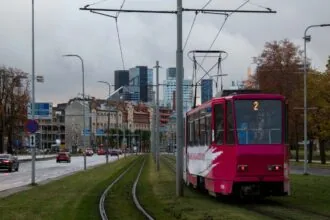
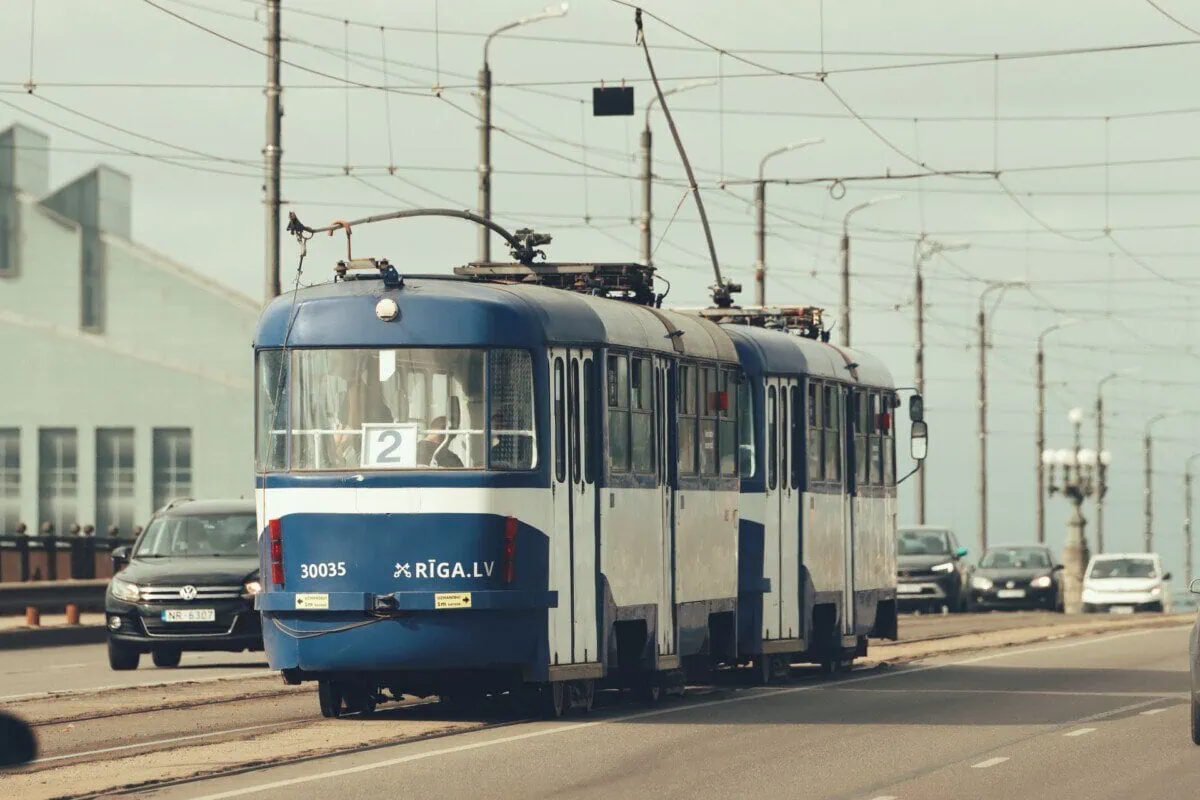
Riga’s trams have been running since 1901, making the network well over a century old and one of the longest continuously operating tram systems in the Baltic region. Today the system runs on six lines, mixing older Tatra-derived carriages with modern, low-floor Škoda 15T trams that have been delivered to the fleet since 2010.
The network is not standing still either. In 2025, construction began on the first genuinely new stretch of tram track laid in Riga in roughly forty years, extending route 7 by 2.2 kilometres into the Ķengarags district, and the new section opened to passengers alongside a purpose-built transfer hub on 1 June 2026.
For visitors, trams are especially useful for reaching neighbourhoods just beyond the Old Town’s pedestrianised core, since most lines pass close to Riga Central Station before spreading out toward residential districts. Tram 11, running between Ausekļa iela and Mežaparks, is a genuinely handy route for anyone heading to Riga Zoo or the leafy Mežaparks district, both of which sit well outside comfortable walking distance from the centre.
Riga has also, in recent years, run a genuine heritage tram dating from the same 1901 era on part of that same corridor during the warmer months, a nice reminder of just how long the network has been carrying passengers. Operating dates for any given season are worth checking directly with Rīgas satiksme before planning a trip around it, since seasonal heritage services can shift year to year.
Whichever line you end up riding, trams validate tickets exactly the same way as trolleybuses and buses, so there is no separate fare logic to learn once you already understand the system covered earlier in this guide.
Trolleybuses: A Genuinely Distinctive Network
Trolleybuses are the single most distinctive part of Riga’s transport network, and they are worth understanding as more than just an electric bus. Riga’s first trolleybus route opened on 6 November 1947, and the network has run continuously ever since, drawing power from overhead wires the way a tram does but rolling on ordinary rubber tyres rather than rails.
The scale of what remains today is the genuinely surprising part. Riga currently runs twenty-two trolleybus routes, which puts it comfortably ahead of most other European Union capitals still operating this form of transport, including Budapest’s fourteen routes, Bratislava’s fifteen, Vilnius’s sixteen and Prague’s five. Among EU member states specifically, that makes Riga’s network one of the most extensive still running anywhere in the bloc.
Most Western European capitals abandoned trolleybuses decades ago in favour of diesel or electric buses without overhead wires, so encountering a genuinely large, working trolleybus network in an EU capital is a rarer experience than many visitors expect. Riga has instead kept investing in the system, treating it as a practical, low-emission part of daily transport rather than a curiosity to be phased out.
Trolleybus routes cover many of the same corridors as buses, and in some cases have replaced diesel bus routes outright as the network has modernised. They tend to run along busier arterial roads with the overhead infrastructure already in place, so they are a genuinely reliable option for longer cross-city hops rather than short local hops.
Tickets, validation and fares all work exactly the same as on trams and buses, so once you have used any one mode in Riga, using a trolleybus for the first time requires no extra thought at all.
Buses: Reaching Where the Rails Don’t
With fifty-two routes, Riga’s bus network is the largest single mode in the city by route count, and it exists mainly to reach streets and outer districts that the tram and trolleybus wires simply do not cover. Buses are especially useful for connecting from a tram or trolleybus stop to an address that is a genuine walk further out, rather than being most visitors’ first choice for central sightseeing.
One route deserves a specific mention: Route 22, the dedicated link between Riga Airport and the city centre, which our own Riga Airport Transfers guide covers in full, including its unusual card-only fare policy. That guide is the right place to look for full airport-transfer detail rather than repeating it here.
Away from that specific route, standard city buses accept exactly the same e-talons and code tickets as every other mode covered on this page, with no separate fare logic to remember. Most vehicles are modern, low-floor buses with clear route numbers displayed on the front and side, making them straightforward to identify even without reading Latvian.
Surface traffic means buses are more exposed to unpredictable delays than trams or trolleybuses running on dedicated infrastructure, so building a little slack into any bus-based journey is sensible, particularly during weekday rush hours. Real-time arrival information through the Rīgas satiksme app or a code-ticket app is worth checking before a longer bus journey for exactly this reason.
For most visitors staying centrally, buses will fill in the gaps around a mostly tram-and-trolleybus itinerary rather than doing the bulk of the work, which is precisely the role they are designed to play in a network this dense.
Night Transport: Weekend and Airport Services
Riga’s regular tram, trolleybus and bus network does not run around the clock, so it is worth planning ahead for anything that stretches into the early hours. In recent warm seasons, Rīgas satiksme has run a dedicated weekend night bus network, with numbered routes such as N1, N4 and N6 connecting the centre to outer districts including Jugla, Imanta and Pļavnieki.
That seasonal service has typically operated from mid-May through late September, running Friday to Saturday, Saturday to Sunday, and on public holidays, with departures from the centre roughly every hour between midnight and around 4am. It has been introduced as a warm-season pilot in recent years specifically to cover evenings when concerts and outdoor events keep people out later than the daytime timetable allows.
Because this is a seasonal, pilot-style service rather than a permanent fixture, exact routes, dates and hours have shifted slightly year to year, so checking current details directly with Rīgas satiksme before relying on it for a specific night out is the sensible approach. Outside that summer window, the regular daytime network’s last departures and taxis or Bolt fill the gap instead.
This weekend network is entirely separate from the dedicated N22 night bus between the airport and the centre, which our Riga Airport Transfers guide covers in detail and which runs year-round rather than only in summer. The two should not be confused when planning a late arrival or a long night out.
For most visitors, the honest takeaway is that Riga’s night transport is a genuine but limited safety net rather than something to build an entire evening’s plans around, particularly outside the summer pilot’s operating window.
Old Town on Foot: When to Walk and When to Ride
Riga’s Old Town is largely pedestrianised at its core, and it is genuinely compact enough to cross end to end on foot in around fifteen to twenty minutes. Cars are restricted across much of the historic centre, so trams, trolleybuses and buses run around its edges rather than through the middle, which is exactly how most visitors experience the city on their first day.
That layout means public transport is rarely the fastest way to move between two points inside the Old Town itself, since walking a few cobbled streets is usually quicker than waiting for a tram that will only get you to the perimeter anyway. Where the network genuinely earns its keep is connecting the Old Town to places a short walk simply will not reach.
The celebrated Art Nouveau district around Alberta iela, for example, sits a short tram or trolleybus ride from the centre rather than within comfortable walking distance, and the same applies to Mežaparks, Riga Zoo and most of the residential districts across the river. Treating the network as a way to reach the edges of a day out, then walking the last stretch, tends to work better than trying to ride between every single stop.
Cobbled streets throughout the historic core are worth bearing in mind if you are travelling with a wheeled suitcase or a pushchair, since the same surface that makes the Old Town so photogenic also makes it genuinely uneven underfoot in places. A short taxi or Bolt hop for the final stretch to a hotel door is a reasonable compromise many visitors end up making regardless of how much they otherwise enjoy walking.
Once you step beyond the pedestrianised centre, though, the tram and trolleybus network covered earlier in this guide takes over as the genuinely practical way to see the rest of the city.
Best for finding routes the airlines do not sell as a single ticket. Combines carriers to bring the fare down.
Search flightsBest if you want maps and messaging working the moment you switch your phone on.
See eSIM plansBest after a long flight or a late landing. Price agreed before you travel, and no taxi queue.
Check transfersMajor Lines and Interchanges Tourists Actually Use
With six tram lines, twenty-two trolleybus routes and fifty-two bus routes in total, only a handful actually matter for a typical visit, and it helps to know which ones before working out a day’s itinerary. Tram 11, already covered earlier in this guide, remains the single most useful route for a first-time visitor, since it runs directly between the centre and both Riga Zoo and Mežaparks.
Tram 11 and Tram 7, which was extended into the Ķengarags district in 2025, share a terminus at Ausekļa iela, making that stop a genuine interchange for anyone travelling between Mežaparks and the districts on the river’s far side. It is one of the few named interchange points on the network specific enough to be worth remembering rather than working everything out stop by stop with the route planner.
Tram 10 is the other route genuinely worth knowing, since it terminates directly at Centrāltirgus, Riga’s Central Market, putting one of the city’s most visited food halls a single tram ride from the outer districts rather than a walk or a transfer. Combined with the routes already covered for the zoo and Mežaparks, that gives most sightseeing days a workable core of two or three named lines rather than a network learned entirely from scratch.
The busiest interchange zone in the whole network sits around Riga Central Station and Central Market, where, as covered earlier in this guide, most tram and trolleybus routes converge on their way out from the Old Town’s edge toward the residential districts beyond. For routes reaching the Art Nouveau district around Alberta iela specifically, the exact line numbering has shifted with past reconstruction projects, so checking Rīgas satiksme’s own route planner for the current service is more reliable than relying on a fixed number here.
Riga Central Station and the Rail Network
Riga Central Station, on Stacijas laukums, sits right at the edge of the Old Town and directly beside Centrāltirgus, the Central Market, which makes it easy to find even without any local transport knowledge. It has nothing to do with the tram, trolleybus and bus network covered throughout this guide, since it is instead the hub for Latvia’s own regional and national train services, run under a completely separate ticketing system.
From here, regional electric trains run to Jūrmala and along the coast, while diesel services head out toward Sigulda, Valmiera and destinations further into Latvia, none of which an e-talons card or a city code ticket will cover. Anyone planning a day trip along one of those lines needs a separate train ticket bought at the station itself or through the national rail operator, rather than anything described elsewhere on this page.
The station is also due a substantial upgrade as part of Rail Baltica, the high-speed line eventually linking Riga to Tallinn and Vilnius, though construction is still under way and no current itinerary should be planned around it. Our Rail Baltica Explained guide covers that wider project, including the station’s own redevelopment, in far more detail than belongs on this page.
For the purposes of this guide, the practical point is simpler: arriving at Riga Central Station by regional train drops you straight onto the tram and trolleybus network described throughout this page, since several routes run along the streets immediately outside. Stepping off a train and tapping an e-talons a few minutes later is a genuinely smooth handover between the two separate systems.
Riga International Bus Station
The Riga International Bus Station, at Prāgas iela 1, sits close enough to Central Station and Centrāltirgus that all three effectively share the same corner of the city, right where the Old Town’s edge meets the river. It is easy to confuse with the city’s own bus network covered earlier in this guide, but the two exist for entirely different journeys.
This terminal handles long-distance and international coaches rather than anything Rīgas satiksme runs, with operators such as Lux Express and Ecolines running services onward to Tallinn, Vilnius and destinations across Eastern and Western Europe. None of the tickets, apps or e-talons cards covered elsewhere in this guide have any bearing here, since intercity coach travel is booked and paid for entirely separately.
For anyone arriving in Riga by coach, the useful detail is what sits immediately around the terminal rather than inside it. Stepping outside puts you within a short walk of Centrāltirgus and the tram and trolleybus stops clustered near Central Station, so continuing into the city on the network covered throughout this page takes only a few minutes on foot.
The same applies in reverse for anyone heading onward from Riga by coach to another Baltic capital or further afield, since the same short walk from the Old Town’s edge covers the distance either way. Checking the specific coach operator’s own timetable directly is sensible before relying on this guide for anything beyond the final stretch into the city.
Validating Your Ticket on Every Journey
Buying a ticket and validating it are two separate steps on Riga’s network, and it is worth understanding the second one clearly before boarding anything for the first time. Whichever ticket type you are carrying, a personalised e-talons, a generic yellow card, or a code ticket bought through an app, it only becomes valid once it has been tapped or scanned at the reader by the doors as you board.
This applies on every mode covered in this guide, tram, trolleybus and bus alike, and it applies every single time you board, not just once per day or once per ticket. A 90-minute ticket, a multi-day pass and even the one-month ticket all still need that same tap at the start of each individual journey to count as registered.
The reader itself is a small yellow unit mounted immediately beside the doors on every tram, trolleybus and bus, impossible to miss once you know to look for it. An e-talons card is simply held against it until it beeps, while a code ticket bought through an app is validated by scanning the QR code it displays or by entering the vehicle’s identification number, shown clearly near the same doors.
Even a free or discounted pass has to go through this same step to count as valid, a detail that catches out more riders than the fines below might suggest. What actually happens if that tap gets skipped, deliberately or otherwise, is covered in full in the next section, since the mechanics of validating a ticket and the penalties for failing to are worth keeping separate.
Ticket Inspections and Fines: What Visitors Should Know
Rīgas satiksme runs genuine, regular ticket inspections across its network, sometimes working alongside Riga Municipal Police, and visitors should not assume a foreign face or a language barrier will mean a controller simply waves them through. Inspections are frequent enough that they are a real, practical consideration for a first-time visitor rather than a rare formality.
Since a system-wide simplification took effect in October 2022, the fine for travelling with no valid ticket at all is €15 (£12.93/$17.57) if paid on the spot, rising to €30 (£25.86/$35.13) if it is settled later by invoice instead. That is a meaningfully higher penalty than the price of almost any ticket covered earlier in this guide, so it is genuinely cheaper to buy one in advance than to gamble on not being checked.
A separate, lower fine applies to a specific quirk worth knowing about: holding a valid but unregistered ticket, meaning a ticket that has been bought or loaded but never actually tapped or scanned at the start of the journey. That carries a fine of €3 (£2.59/$3.51) on the spot or €5 (£4.31/$5.86) by invoice, smaller than the no-ticket penalty but still a genuine cost for something that takes two seconds to avoid.
Even a free or discounted pass must be registered at the start of every journey to count as valid, a rule that occasionally catches out students and other eligible riders who assume their entitlement alone is enough. Inspectors also routinely check that a personalised e-talons matches valid photo identification, so it is worth carrying some form of ID alongside the card itself.
The straightforward takeaway for any visitor is simple: buy a ticket appropriate to your day, and always tap or scan it the moment you board, since that single habit avoids every fine covered in this section entirely.
Accessibility on Riga’s Public Transport
Accessibility across Riga’s network is genuinely mixed, and it is worth being honest about that rather than assuming every vehicle matches the newest ones. The modern Škoda 15T trams and newer low-floor buses offer step-free boarding and dedicated wheelchair spaces, while some of the older Tatra-derived trams and older trolleybus stock still in daily service were not built to the same standard.
Newer vehicles across the network generally include audible and visual stop announcements, which genuinely help travellers with visual or hearing impairments follow a journey without needing to read Latvian signage. That said, coverage is not yet universal across every single vehicle still running, particularly on routes that have not yet been fully modernised.
We were not able to verify a comprehensive, stop-by-stop accessibility audit for every station and shelter across the network, and rather than guess at that detail, it is worth saying plainly that this is a question best put directly to Rīgas satiksme for a specific route before travelling with particular needs. Its official app and website carry more current, route-level detail than any general guide can responsibly summarise.
Away from the vehicles themselves, Riga’s Old Town cobbles, covered earlier in this guide, are a genuine additional consideration for anyone using a wheelchair or a mobility aid, since even a fully accessible tram or bus still ends its journey on an uneven historic street in many cases.
For travellers needing guaranteed door-to-door accessibility, a licensed taxi or a pre-booked accessible vehicle remains the most reliable fallback across the whole city, exactly as it does in most European capitals still modernising an older transport network.
Best for short city stops where being central matters more than the room. Dorms and private rooms both listed.
See hostelsBest if you have ever given up on a claim. AirHelp checks whether the flight qualifies and pursues it for you.
See the benefitsBest if your room is not ready yet. Left luggage booked in advance, so you are not hunting for a locker.
Check storageConnecting Onward: Airport and Cruise Port
It is worth being clear about what this guide covers and what it does not, since Riga’s airport and cruise terminal each need their own dedicated planning beyond the network described here. Riga Airport currently has no rail link at all, and Bus 22 is the dedicated public transport connection into the city, where it joins the tram and trolleybus network this guide covers in full.
A dedicated Rail Baltica station is planned at the airport as part of the wider high-speed line connecting Riga to Tallinn and Vilnius, but as our own Rail Baltica Explained guide covers, that station does not exist yet and no current itinerary should be built around it. Our Riga Airport Transfers guide covers every current option in full.
Cruise passengers are in a considerably simpler position, since the passenger terminal sits close enough to the Old Town that most visitors walk the short route across Vanšu tilts rather than using public transport at all. Our Riga Cruise Port Guide covers that walk, along with taxi and Bolt alternatives, in full detail.
Once either journey ends, generally somewhere near the Old Town’s edge or Riga Central Station, everything from that point onward is exactly what this guide describes, so the different guides are designed to be read together rather than as one long page trying to cover every stage of a trip at once.
Whichever way you arrive, the same e-talons card or code ticket app covered earlier in this guide is all you will need once you step off the plane or the ship and onto Riga’s own network.

Rupert’s Handy Travel Tips
Rupert says Riga’s trolleybuses are the city’s best-kept transport secret, and once you’ve tapped an e-talons a couple of times the whole network clicks into place.
- Always tap in, even with a pass: an unregistered ticket still gets you fined, so make validating a genuine habit from your very first ride.
- Buy a day pass if you’re moving around a lot: the 24-hour ticket pays for itself after about four journeys.
- Ride tram 11 for the zoo and Mežaparks: both sit well beyond comfortable walking distance from the Old Town.
- Save the trolleybus for a longer hop: it’s a genuinely rare sight in a European capital, so don’t just treat it as an ordinary bus.
- Don’t rely on night transport out of season: the weekend night buses are a summer pilot, not a year-round service.
- Keep a card and ID together on a personalised e-talons: inspectors do check that the two match.
Want to meet the reindeer behind our travel tips? Find out more in our page Who is Rupert?.




Frequently Asked Questions About Riga Public Transport
How much is a single ticket on Riga’s public transport?
A standard 90-minute ticket costs €1.50 (£1.29/$1.76) and covers unlimited transfers between trams, trolleybuses and buses within that window.
What is an e-talons card?
It is Riga’s reloadable smart card, available as a personalised card tied to your identity or as a generic non-personalised yellow card, onto which you load single trips, time-based tickets or a monthly pass.
Do I need a different ticket for the tram, trolleybus or bus?
No. The same e-talons card or code ticket app covers all three modes across the whole network, with no separate fares to work out.
What happens if I’m caught without a valid ticket in Riga?
Since October 2022, travelling with no ticket at all carries a fine of €15 (£12.93/$17.57) if paid on the spot or €30 (£25.86/$35.13) by invoice, while holding a valid but unregistered ticket carries a smaller €3 (£2.59/$3.51) or €5 (£4.31/$5.86) fine.
Does Riga still run trolleybuses?
Yes, and genuinely extensively. Riga currently operates twenty-two trolleybus routes, more than most other European Union capitals still running this form of transport, making it one of the most distinctive parts of the city’s network.
Is there a night bus in Riga?
A seasonal weekend night bus network has run in recent warm seasons from mid-May to late September, separate from the year-round N22 night route between the airport and the centre covered in our Riga Airport Transfers guide.
Can I walk everywhere in Riga’s Old Town instead of using public transport?
Largely yes. The Old Town is compact and mostly pedestrianised, walkable end to end in around fifteen to twenty minutes, with trams and trolleybuses running around its edges rather than through the centre.
Is there a train from Riga Airport into the city on this network?
No. Riga Airport has no rail link yet, and a planned Rail Baltica station there is still under construction, so Bus 22 remains the main public transport connection into the tram and trolleybus network covered on this page.
Further Reading
If you are still working out how to reach Riga before using any of the network covered above, our Riga Airport Transfers guide covers the bus, taxi and ride-hailing options from RIX in full, including the dedicated Route 22 and N22 services this page has referenced throughout. Cruise passengers arriving by sea should read our Riga Cruise Port Guide instead, which covers the short walk from the terminal into the Old Town.
Once you are moving around the city, our Things to Do in Riga guide pulls together the Old Town, the Art Nouveau district and Central Market that this page’s tram and trolleybus routes can take you to. For sights further afield, our Day Trips from Riga guide covers Jūrmala, Sigulda and the castles beyond the city, most of which need a train or coach rather than the urban network described here.
Anyone planning wider rail travel around the Baltics should also see our Rail Baltica Explained guide, which covers the new high-speed line’s eventual airport station in full, and our Interrail Latvia Pass guide, which explains how current rail options within the country work while that larger project remains under construction.
Riga is part of a natural Baltic trio with its two capital-city neighbours: see our Tallinn Public Transport guide and Vilnius Public Transport guide for the same practical, ticket-by-ticket breakdown covering the trams, buses and trolleybuses in each of the other two cities.