Reviewed by our editorial team Updated
Riga sits where the Daugava River meets the Gulf of Riga, and pairs its UNESCO-listed Art Nouveau old town with the Baltic Sea and dense inland forests only a short journey away. Unlike some capitals where the “day trip” label stretches the truth, Latvia genuinely rewards leaving the city, and its castles, coastline and countryside are all within easy reach.
This guide covers 10 of the best day trips from Riga, chosen for genuine variety, real public transport access and an honest mix of coast, castle and countryside. Most are reachable by Vivi train or intercity bus without needing a hire car, and several can be combined into a longer day out.
Riga’s own old town, markets and museums are easily worth several days on their own, but this page focuses entirely on where the trains and buses heading out of the capital can take you next, from a Baroque palace built by the architect of St Petersburg’s Winter Palace to a sobering wartime memorial.
Prices below are quoted in Euro (€), Latvia’s currency, with approximate GBP and USD conversions alongside. Vivi, Latvia’s state passenger rail operator, runs most of the train routes covered here from Riga Central Station, while regional coach operators cover the handful of destinations with no direct line.
A genuine effort has gone into checking the practical details below rather than assuming they still hold, since operator names, station stops and departure times all change more often than guidebooks tend to admit. Where public transport genuinely struggles, such as reaching the Līgatne bunker, that’s flagged honestly rather than glossed over.
Best Day Trips from Riga at a Glance
Every destination below gets its own section further down the page, but this table is a fast way to compare journey times before reading on.
| Destination | Journey Time | How to Get There | Best For |
|---|---|---|---|
| Jūrmala | Around 30 minutes | Vivi train (Tukums line) | Beach resort & Art Nouveau villas |
| Ķemeri National Park | Around 40 minutes + walk | Vivi train (Tukums line) | Bog boardwalk & nature |
| Sigulda & Turaida Castle | Around 1 hour | Vivi train (Valga line) | Gauja Valley castles & cable car |
| Cēsis | Around 2 hours | Vivi train (Valga line) | Medieval castle & old town |
| Rundāle Palace | Around 1 hour 20 minutes | Direct seasonal bus, or bus via Bauska | The “Latvian Versailles” |
| Bauska Castle | Around 1 hour 15 minutes | Intercity bus | River-confluence castle ruins |
| Salaspils Memorial | Around 20 minutes + walk | Vivi train (Ogre line) to Dārziņi | WWII memorial & dark tourism |
| Līgatne | Around 1.5-2 hours | Bus + local connection, or tour | Nature trails & Soviet bunker |
| Valmiera | Around 1 hour 45 minutes | Vivi train (Valga line) | Riverside adventure park |
| Kuldīga | Around 2.5-3 hours | Intercity bus (no train) | Europe’s widest waterfall |
Getting Around: Trains, Buses and Tickets
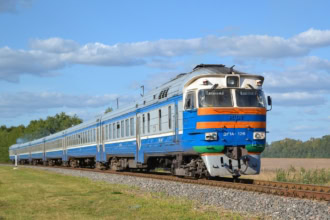
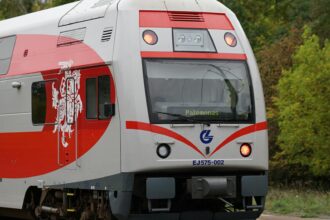
Almost every train route in this guide starts from Rīgas Centrālā stacija (Riga Central Station), a short walk from the old town and directly connected to the Central Market. All of them are operated by Vivi, Latvia’s state-owned passenger rail company, which rebranded from its former name, Pasažieru vilciens, in late 2023 as new Škoda electric trains entered service.
Tickets can be bought at yellow self-service machines on the station concourse, most offering an English-language option, or from a staffed ticket window. Fares are calculated by zone, so a short hop to Jūrmala costs only a couple of euros while a trip out to Cēsis or Valmiera costs more.
Destinations without a rail line, including Rundāle Palace, Bauska and Kuldīga, are reached from the Riga International Bus Station (Rīgas Starptautiskā autoosta), right beside the Central Market. Latvia’s main intercity coach network is a patchwork of regional operators rather than a single national brand.
The 1188.lv journey planner covers both trains and buses in a single search and is the most reliable way to check a specific day’s timetable, since frequencies on quieter routes shift between weekday and weekend schedules. It’s worth checking the day before travelling rather than relying on a remembered timetable.
On board Vivi’s electric trains, expect simple, functional carriages with fold-down seating, luggage racks and, on the newer Škoda units, level boarding at platform height. There’s no assigned seating on any of these short-haul regional services, so it’s first come, first served once the doors open.
For full, up-to-date timetables and fares, Vivi’s own passenger information page is the most accurate source, and it’s worth a quick check before travelling on any of the rail routes covered in this guide, particularly outside the busy summer season.
Best for a short trip. Compare rooms by neighbourhood, price and guest rating before you book.
Compare hotelsBest for groups who want one address and separate bedrooms rather than three hotel rooms.
See holiday homesBest if you have already picked a hotel. Checks the big booking sites for the same room and shows who is cheapest.
Check dealsJūrmala: Latvia’s Baltic Beach Resort
Jūrmala is a 30-kilometre string of resort towns along a single stretch of white sand, and has been the Baltic’s favourite seaside escape since the 19th century, when wealthy families from across the Russian Empire built summer villas here. Hundreds of those wooden Art Nouveau houses still line the streets behind the beach, many now restored rather than left to decay.
The pedestrianised Jomas Street is the resort’s social spine, lined with restaurants, ice cream stands and street performers through the summer months, and it feeds directly onto the beach itself. The sand stays wide and shallow-sloping along nearly the whole stretch, which is part of why Jūrmala remains genuinely popular with Latvian and Baltic families rather than existing purely for tourists.
Majori, the resort’s central train stop, sits closest to Jomas Street and the busiest section of beach, while Dubulti station, one stop further along, is worth a look purely for its striking Soviet-modernist building, with a swooping concrete roof designed in 1977.
The Vivi train from Riga Central Station runs on the Tukums line, taking around 30 minutes and stopping at Majori, Dubulti, Bulduri, Dzintari and Lielupe along the way. A one-way ticket costs from around €2 (£1.70/$2.35), and services run roughly every 15 minutes in summer, dropping to every 30-60 minutes outside peak hours and in winter.
Beyond the beach, the Dzintari Concert Hall hosts open-air concerts through the summer, and a wooden promenade path runs the full length of the resort. Outside summer, Jūrmala trades its crowds for quiet dune walks and a noticeably cheaper lunch bill at the same seafront restaurants.
Jūrmala also works well as a half-day add-on to a trip further along the same line to Ķemeri National Park, since both sit on the same Tukums route and a single ticket can be extended without doubling back through Riga first.
Ķemeri National Park and the Great Bog Boardwalk
Ķemeri National Park protects one of Latvia’s largest raised peat bogs, and its Great Ķemeri Bog boardwalk is the reason most visitors make the trip, a roughly 3.4-kilometre wooden trail looping through open bog dotted with stunted pines, small dark pools and, in season, wild cranberries underfoot.
A wooden observation tower partway round the loop gives a genuinely striking view across the flat, reddish-brown bog landscape, especially early in the morning or at sunset when mist tends to settle over the pools. The whole walk takes most visitors around 1.5 to 2 hours at an easy pace, with no real elevation to worry about.
Before it became a national park, Ķemeri was better known for its sulphur springs, and the once-grand Kemeri Hotel, now closed and slowly being restored, is a striking reminder of the area’s interwar spa era, visible from the road on the way to the bog trailhead.
The park shares its train access with Jūrmala: the same Vivi Tukums-line service from Riga Central Station continues on to Ķemeri station, taking around 40 minutes in total, with departures roughly every 30 minutes through the day and a one-way fare of about €2-3 (£1.70-2.60/$2.35-3.50).
From Ķemeri station, the bog boardwalk trailhead sits around 3 kilometres away on the far side of the main road, reachable either on foot through pleasant forest along a marked path in about 40 minutes, or by a short Bolt taxi for roughly €4-5 (£3.45-4.30/$4.70-5.85) if time is tight.
Sturdy, waterproof footwear is worth packing even though the boardwalk itself stays dry, since the connecting forest path can turn muddy after rain, and there’s little shade or shelter once out on the open bog section itself.
Sigulda and Turaida Castle: Gauja National Park’s Castle Country
Sigulda sits at the heart of Gauja National Park, Latvia’s oldest and largest protected area, and is known locally as “Latvian Switzerland” for the steep, forested valley the Gauja River has carved beneath the town. A red cable car, the Sigulda Aerial Cableway, has crossed the valley since 1969 and gives a genuinely dramatic view over the treetops and ruined castles below.
The town’s own bobsleigh and luge track, built in 1986 and still used for international competition, offers summer rides on wheeled sleds, alongside the ruined Sigulda Medieval Castle right in the town centre.
Across the valley, the red-brick Turaida Museum Reserve centres on Turaida Castle, rebuilt from the 13th century and one of the best-restored medieval castles in the Baltics, its tower open for sweeping valley views. The grounds also hold Turaida Church and the legendary grave of the “Rose of Turaida,” a local folk tragedy still retold by guides today.
The Vivi train from Riga Central Station to Sigulda runs on the same line that continues to Cēsis and Valmiera, taking around 1 hour each way with departures roughly hourly from around 6:30am. A one-way ticket costs about €3 (£2.60/$3.50), bought from the yellow machines on the concourse.
From Sigulda station, Turaida Castle sits around 3 kilometres away across the valley, reachable by local bus, the cable car followed by a short walk, or on foot along a marked trail through the forest, which takes most visitors 40-50 minutes one way.
Combining the cable car, castle ruins and Turaida in one visit comfortably fills a full day, and Sigulda’s dense cluster of sights makes it one of the most consistently popular day trips from Riga year-round, not just in summer.
Cēsis: Medieval Castle and Old Town
Further along the same rail line, Cēsis holds one of the best-preserved medieval castles in the Baltic states, its 34-metre western tower explored entirely by candle lantern rather than electric light, since much of the interior has no fixed power at all. The surrounding ruins and connecting wall sections are open for self-guided exploration via marked information panels.
Beside the medieval ruins stands the more recent New Castle, built in 1777, which now houses the Cēsis History and Art Museum, covering the town’s archaeology and medieval records alongside a strong collection of 19th and 20th-century Latvian landscape painting.
Cēsis’s Old Town retains a genuine medieval street pattern rather than a reconstructed one, centred on Vienības laukums (Unity Square) and its ring of 18th and 19th-century buildings, with the 14th-century Lutheran Church of St John anchoring the skyline above the rooftops.
The Vivi train from Riga Central Station continues past Sigulda to Cēsis, taking around 2 hours in total with a stop en route, and running roughly every 2 hours through the day. A one-way ticket costs around €5 (£4.30/$5.85), and the castle itself is a flat, 10-minute walk from the station.
Castle admission, including the candle-lantern tower tour, runs to about €8 (£6.90/$9.35) for adults, and most visitors need 2 to 3 hours to cover the ruins, tower and New Castle museum properly before wandering the Old Town.
Because the journey out is longer than Sigulda’s, Cēsis suits an early start more than a half-day plan, though the town’s genuinely lived-in, unhurried feel rewards travellers willing to give it a full day rather than rushing to catch a return train.
Rundāle Palace: The Latvian Versailles
Rundāle Palace is Latvia’s grandest single building, designed in the 1730s by Bartolomeo Rastrelli, the same Italian architect responsible for the Winter Palace in St Petersburg, for Ernst Johann von Biron, Duke of Courland. Its 138 rooms and formal French gardens have earned it the enduring nickname the “Latvian Versailles,” and the comparison holds up surprisingly well in person.
Inside, the Gold Hall and White Hall are the standout state rooms, both restored to something close to their 18th-century appearance after decades of Soviet-era use as a school and grain store left much of the original interior damaged or destroyed.
The palace’s French Garden, laid out in symmetrical parterres behind the main building, is at its best from May to September when the roses are in full bloom, and a walk around the grounds is included in the standard admission ticket rather than charged separately.
There’s no direct train to Rundāle, so the practical route is by bus from the Riga International Bus Station. A seasonal direct service runs from May to September, departing Riga at 09:20 and 12:20 and taking around 1 hour 20 minutes, with return departures from Rundāle at 14:05 and 17:00.
Outside that window, the route is a regular Riga-Bauska bus, taking around 1 hour 15-20 minutes with roughly five departures a day, followed by a short local bus or taxi for the final 12 kilometres on to Rundāle itself.
Given the connection outside summer, many visitors find it simpler to book an organised day tour from Riga that handles the transport directly, particularly if pairing the palace with nearby Bauska Castle in a single day.
Bauska Castle: Where Two Rivers Meet
Bauska Castle stands on a narrow spit of land where the Mūsa and Mēmele rivers join to form the Lielupe, a defensive position chosen by the Livonian Order in the 15th century for exactly that reason. The medieval fortress ruins sit directly alongside a later, more comfortable residential castle built for the Dukes of Courland in the 16th and 17th centuries.
That second building, sometimes called the New Castle, now operates as a museum covering both the site’s military history and the domestic life of the Courland dukes, with reconstructed period rooms alongside excavated fragments from the older Livonian stronghold next door.
Because Bauska sits only 12 kilometres from Rundāle Palace, most visitors treat the two as a natural pair rather than separate trips, and the same bus route serving Rundāle also stops in Bauska town itself, a short walk from the castle grounds.
Regular buses from the Riga International Bus Station run to Bauska throughout the day, roughly five times daily, with a journey time of around 1 hour 15 minutes. There’s no rail line to this part of southern Latvia, so the bus is the only realistic public transport option.
Castle admission is modest, and most visitors find 1 to 1.5 hours enough to see both the ruins and the museum properly, leaving time to walk the short riverside path where the two rivers visibly meet just below the castle walls.
Bauska’s small town centre also has a handful of solid lunch spots, making it a sensible midway stop for anyone travelling on to or back from Rundāle Palace on the same day, rather than a rushed add-on either end.
Best for long or awkward journeys. Builds one itinerary out of separate flights.
View flightsBest for anyone whose home plan charges by the megabyte abroad. Pay a fixed price up front.
Check eSIMsBest when public transport has stopped, or when you are travelling with children and bags.
Book a transferSalaspils Memorial: A Sobering Wartime History Lesson
The Salaspils Memorial marks the site of a Nazi-run camp that operated in occupied Latvia during the Second World War, and today the grounds hold a series of massive Soviet-era concrete sculptures, unveiled in 1967, standing in an open field where the camp buildings themselves once stood.
A metronome-like sound installation plays continuously across the site, a deliberately unsettling touch that’s stayed with visitors since the memorial first opened, and simple stone markers trace the outline of where the camp’s barracks and fences originally stood.
There’s little in the way of a conventional museum here, and that’s largely the point: the scale of the empty field and the looming concrete figures are left to speak for themselves, without gift shops or cafes nearby to soften the experience.
The correct approach is by Vivi train from Riga Central Station on the Ogre line, getting off at Dārziņi station rather than the more obviously named Salaspils station, which is considerably further from the memorial. The ride itself takes only around 20 minutes.
From Dārziņi, a marked forest path crosses the tracks and runs roughly parallel to the line through pine woods, taking about 15-20 minutes on foot to reach the memorial grounds, a genuinely peaceful walk that makes the sudden scale of the sculptures more striking on arrival.
Given the subject matter, this trip pairs naturally with wider reading on the Baltic states’ wartime and Soviet-era history rather than with a more lighthearted stop on the same day, and most visitors find an hour or so on site is enough to take it in properly.
Līgatne: Nature Trails and the Secret Soviet Bunker
Līgatne combines two very different attractions in one small Gauja National Park town. The Līgatne Nature Trails (Līgatnes dabas takas) wind through forest enclosures large enough that elk, wild boar, lynx and even brown bears roam something close to natural conditions rather than standard zoo pens.
Beneath a former Soviet-era sanatorium nearby lies the town’s other draw, the Secret Soviet Bunker, a fully equipped underground civil defence facility built for regional Communist Party leadership in the event of nuclear war, and kept genuinely secret from the surrounding town until its declassification in 2003.
Guided tours through the bunker’s control rooms, dormitories and air filtration system run mainly on weekends, and advance booking is essential, either by phone or through the site’s own website, since walk-up visits aren’t reliably possible.
This is the one destination on this list where public transport genuinely struggles. There’s no direct bus from Riga, and the realistic route, a regional bus toward Cēsis followed by a local connection, rarely lines up conveniently with the bunker’s fixed tour times.
Given that, most visitors either drive, join a Riga-based day tour that includes transport, or treat Līgatne’s nature trails as a separate half-day trip using the Cēsis line and a taxi, rather than trying to reach the bunker itself without a car or a booked tour.
Being upfront about that difficulty is more useful than pretending otherwise: for the bunker specifically, an organised tour genuinely is the simplest and most time-efficient way for most visitors to see it in a single day from Riga.
Valmiera: Vidzeme’s Riverside Capital
Valmiera, the regional capital of Vidzeme, sits on a broad bend of the Gauja River and offers a genuinely different pace from Riga’s more compact day trips, trading dense sightseeing for a relaxed riverside town with a strong outdoor-adventure streak.
The Ziemeļblāzma adventure park, built into the forest above the river, runs zipline and via ferrata routes across the valley, a popular add-on for visitors who’ve already done the more sedate castle circuit at Sigulda and Cēsis.
In town, St Simon’s Church and a compact historic centre sit alongside a genuinely sandy river beach in summer, and Valmiera’s role as a university and theatre town gives it a livelier, more lived-in feel than some smaller stops on this list.
The Vivi train continues past Cēsis on the same Valga-bound line, reaching Valmiera in around 1 hour 45 minutes, with departures roughly every 2 hours through the day and a one-way fare in the region of €6-7 (£5.15-6/$7-8.20).
At around 122 kilometres from Riga, Valmiera is comfortably the furthest destination on this list still served directly by train, and the frequent, predictable service is what keeps it realistic as a genuine day trip rather than something better suited to an overnight stay.
Because it draws far fewer international visitors than Sigulda or Cēsis, Valmiera suits travellers who’ve already covered the more famous castle towns and want a quieter, more local angle on the Gauja Valley without the same crowds.
The town also makes a sensible stopping point for anyone continuing north toward the Estonian border by train, since Valmiera sits on the same line that eventually reaches the crossing, rather than being a dead-end branch that requires doubling back the way you came.
Kuldīga and the Venta Rapid: Is It Worth the Distance?
Kuldīga is one of Latvia’s prettiest towns, its old town of 17th and 18th-century brick buildings so well preserved that it sits on Latvia’s UNESCO tentative list, and it’s home to the Venta Rapid (Ventas rumba), widely billed as the widest waterfall in Europe at around 249 metres across, even though it drops barely 2 metres in height.
In spring, migrating fish can occasionally be seen leaping the rapid as they head upstream, a genuine spectacle that draws crowds to the riverbanks, while the adjoining brick bridge, built in 1874, gives one of the best vantage points over the full width of the falls.
The honest catch is distance: Kuldīga sits around 130 kilometres west of Riga, and there’s no train on this route at all, so the journey is by bus alone, taking roughly 2.5 to 3 hours each way.
Around 10 direct coaches a day run the route with operators including Infobus and Lux Express, from around €9 (£7.75/$10.50) one way, departing from the Riga International Bus Station with no need to change en route.
With roughly 5-6 hours spent travelling there and back on public transport alone, Kuldīga is a realistic day trip only for an early start and a late return, and it works far more comfortably as an overnight stop or a stop on a longer road trip than as a rushed single day from Riga.
Anyone determined to see it in a single day should budget for barely 3-4 hours on the ground once the bus journey is accounted for, still enough for the waterfall, bridge and a walk through the old town, but with little room for a leisurely lunch stop.
Booking Your Day Trip
Most of the train routes on this list run frequently enough that advance booking isn’t necessary, and turning up at Riga Central Station and buying a ticket from the machine shortly before departure works fine for Jūrmala, Ķemeri, Sigulda, Cēsis, Valmiera and Salaspils.
The main exception is the seasonal direct bus to Rundāle Palace, which only runs a handful of departures a day between May and September, so checking the current timetable on 1188.lv before setting out is worth doing, particularly on a summer weekend.
For Rundāle, Bauska and Līgatne, an organised day tour from Riga is a genuinely practical alternative to piecing together buses and taxis, particularly outside the summer season when connections thin out or the Līgatne bunker’s tour times don’t line up with public transport at all.
Castle and museum tickets at Sigulda, Turaida, Cēsis, Rundāle and Bauska can generally be bought on arrival without a long wait outside peak summer weekends, though booking online in advance removes any risk of queuing during the busiest July and August dates.
For Kuldīga, booking a bus seat a day or two ahead is sensible in summer, since the most convenient early departures can sell out, and building in a little flexibility elsewhere on the itinerary makes it easier to swap a rainy day at Ķemeri’s bog boardwalk for an indoor option like Cēsis Castle instead.
Anyone visiting between November and March should expect shorter daylight hours to shape the day more than any booking system does, since several sites, including Ķemeri’s boardwalk and Turaida Castle, are genuinely more atmospheric but noticeably darker by mid-afternoon outside the summer months.

Rupert’s Handy Travel Tips
Latvia’s day trips split neatly into “just hop on a Vivi train” and “plan ahead a little,” and knowing which is which before you leave the hotel saves a wasted morning.
- Get off at Darziņi, not Salaspils: the memorial is a forest walk from Darziņi station, while Salaspils town station leaves you much further away.
- Check 1188.lv the day before: weekday and weekend timetables differ on the quieter routes, especially to Bauska and Rundāle.
- Book the Līgatne bunker tour ahead: it’s guided-only, mostly weekends, and public transport rarely lines up with the tour times.
- Ride the Tukums line in one go: Jūrmala and Ķemeri National Park sit on the same train line, so a single day can cover both.
- Pack proper shoes for the bog trail: the Ķemeri boardwalk stays dry, but the forest path connecting it to the station can turn muddy.
- Weigh up Kuldīga carefully: it’s genuinely beautiful, but 5-6 hours of travel each day trip is a lot to ask for a few hours on the ground.
Want to meet the reindeer behind our travel tips? Find out more in our page Who is Rupert?.




Frequently Asked Questions About Day Trips from Riga
What is the best day trip from Riga for a first visit?
Sigulda is hard to beat: it’s around an hour away by train, runs year-round, and combines a cable car, castle ruins and Turaida Castle in a single, well-connected day.
Do I need a car for any of these day trips?
No, though a car makes Līgatne’s Soviet bunker and pairing Bauska with Rundāle Palace considerably easier. Every other destination in this guide is reachable by Vivi train or intercity bus.
What operator runs the trains out of Riga?
Vivi, Latvia’s state-owned passenger rail company, runs every train route in this guide from Riga Central Station. It rebranded from its former name, Pasažieru vilciens, in late 2023.
Is Rundāle Palace worth the awkward bus connection?
Yes, for anyone with an interest in Baroque architecture. It’s Latvia’s grandest single building, designed by the architect behind St Petersburg’s Winter Palace, though the seasonal bus schedule or a day tour makes the trip considerably easier than working it out from scratch.
Which day trips can be combined in a single day?
Jūrmala and Ķemeri National Park sit on the same train line and pair naturally, as do Rundāle Palace and Bauska Castle, which are only 12 kilometres apart on the same bus route.
Is Kuldīga realistically a day trip from Riga?
It’s possible with an early start, but 5-6 hours of bus travel each way and back leaves only a few hours on the ground. It suits a dedicated full day or an overnight stay better than a rushed visit.
How do I get to the Salaspils Memorial?
Take the Vivi train from Riga Central Station on the Ogre line to Dārziņi station, a 20-minute ride, then follow the marked forest path for around 15-20 minutes to reach the memorial grounds.
Do I need to book the Līgatne Soviet bunker in advance?
Yes. Tours run mainly on weekends and are guided-only, so booking ahead by phone or through the bunker’s website is essential, and a Riga-based day tour is often the simplest way to fit it into a single day.
Further Reading
Anyone planning to explore beyond these day trips and travel more widely across the Baltics by rail should read our Interrail Latvia Pass guide, which covers how the pass works alongside Vivi’s own regional network and where it genuinely saves money over single tickets.
Several of the destinations above, particularly Sigulda, Cēsis and Valmiera, sit on a single rail corridor that continues north toward the Estonian border, making it easy to extend a Latvia-based trip further afield with a little extra planning.
Travellers building a wider Baltic itinerary around Riga should also look at our Interrail Estonia Pass guide and our Interrail Lithuania Pass guide, both useful for anyone continuing on to Tallinn or Vilnius after finishing up in Latvia.
Between the coast at Jūrmala, the castles around Sigulda and Cēsis, and the more sobering history at Salaspils, Riga’s day-trip options genuinely reward a few days spent outside the capital rather than treating it as a single quick add-on to a city break.
Before heading out of the city, our Things to Do in Riga guide covers the Old Town, Art Nouveau district and Central Market, and our Riga Airport Transfers guide covers getting in from RIX before any of these trips begin.
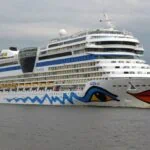
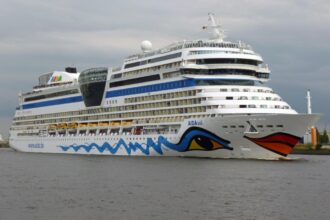
Cruise passengers with a longer stay, or anyone researching ferry travel to Riga, should also read our Riga Cruise Port and Ferry Guide, which covers the city’s growing cruise season and explains why the Stockholm ferry route remains suspended.