Reviewed by our editorial team Updated
Why Choose the Estonia Pass
The Interrail Estonia Pass is one of the most affordable and straightforward rail passes in Europe, making it an excellent choice for travellers who want to explore a compact country with minimal hassle. Estonia’s rail network is simple, efficient, and centred around a handful of key routes, which means you can cover a large part of the country without complex planning.
One of the strongest reasons to choose this pass is value. Even though Estonia is cheaper than Western Europe, rail fares still add up when you start moving between cities. A return trip between Tallinn and Tartu alone can reach €30–35 (£26–30 / $32–38), and just a couple of these journeys quickly brings you close to the cost of a multi-day pass. With the pass, those costs are fixed upfront, giving you clarity and control over your travel budget.
Another key advantage is flexibility. Estonia’s small size means journeys are short, typically between two and three hours, allowing you to combine multiple destinations in a single day. You could start in Tallinn, travel to Tartu, and continue further south or east without worrying about additional ticket costs. This makes the pass ideal for travellers who want to move freely and make decisions as they go.
The pass also encourages deeper exploration. While many visitors stay in Tallinn, the rail network opens up access to places like Narva, Viljandi, and regional towns, each offering a different perspective on Estonian culture. With unlimited travel on selected days, you are far more likely to explore beyond the capital.
Finally, the simplicity of the system is a major benefit. With only one main rail operator and no reservations required, the Estonia Pass delivers a stress-free travel experience that is rare in Europe. For travellers who want an easy, low-cost, and flexible way to see the country, it is a highly effective option.
Quick Facts / Pass Overview
The Interrail Estonia Pass is a One Country Pass designed specifically for travel within Estonia. It allows unlimited journeys on selected travel days, making it a flexible and budget-friendly option.
The pass is available to European residents, while non-European travellers can access the same product through Eurail. You can choose between 3, 4, 5, 6, or 8 travel days within a one-month period, with the freedom to spread those days out rather than using them consecutively.
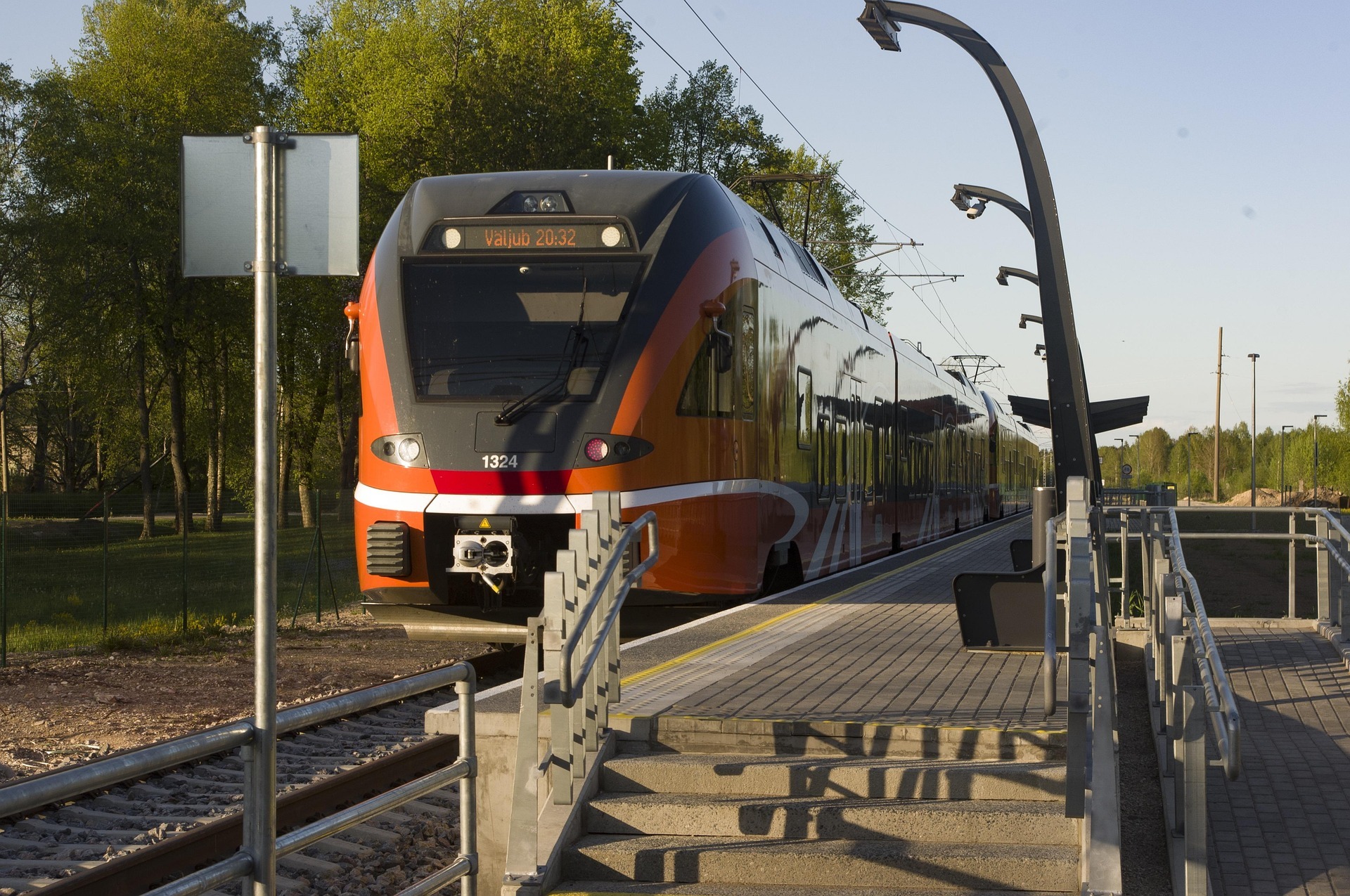
It is valid on all trains operated by Elron, Estonia’s national railway company. This includes both intercity routes and regional services, meaning the pass covers essentially the entire passenger rail network.
Most travellers use the mobile version, which is stored in the Rail Planner app. Paper passes exist but are becoming less common. The mobile option allows you to activate travel days instantly and manage your journeys digitally.
The pass includes discounted pricing for youth and seniors, and children under 12 can travel free with an adult pass holder, making it particularly attractive for families.
While the pass is limited to Estonia, it integrates well with regional connections, including ferries from Tallinn to Helsinki and direct rail and bus links to Latvia. This makes it easy to extend your journey beyond the country.
Overall, the Estonia Pass is designed for simplicity, flexibility, and affordability, making it one of the easiest Interrail products to use.
Compare hotels and other places to stay in Estonia.
Check availabilityBrowse apartments, holiday homes and self-catering stays in Estonia.
View rentalsCompare prices for Estonia hotels across multiple booking sites.
Check dealsEstonia Pass Prices at a Glance
Here’s a quick-reference table for every Flexi Pass duration, with youth, adult, and senior pricing shown in euros alongside pounds and dollars. Full details on how each tier compares to individual ticket costs follow later in this guide.
| Travel Days (within 1 month) | Youth (12–27) | Adult | Senior (60+) |
|---|---|---|---|
| 3 days | €79 (£69 / $85) | €105 (£91 / $113) | €94 (£82 / $102) |
| 4 days | €97 (£84 / $105) | €129 (£112 / $139) | €117 (£102 / $126) |
| 5 days | €114 (£99 / $123) | €152 (£132 / $164) | €137 (£119 / $148) |
| 6 days | €131 (£114 / $141) | €175 (£152 / $189) | €158 (£137 / $171) |
| 8 days | €162 (£141 / $175) | €216 (£188 / $233) | €194 (£169 / $210) |
Key Operators and Rail Network Size
Rail travel in Estonia is unusually simple because it is operated by a single company, Elron (Eesti Liinirongid). This means the Interrail Estonia Pass covers the entire passenger rail network without exceptions, removing the confusion that can arise in countries with multiple operators.
The network itself is relatively small, with just over 1,200 kilometres of track, but it is well structured around key routes that connect the country’s main population centres. The primary lines link Tallinn with Tartu, Narva, and Viljandi, forming the backbone of domestic rail travel.
Elron trains are modern, reliable, and well-equipped, offering Wi-Fi, power sockets, air conditioning, and comfortable seating. These features make rail travel in Estonia surprisingly high quality despite the network’s smaller scale.
Journey times are short and manageable. The trip from Tallinn to Tartu takes just over two hours, while Tallinn to Narva is around two and a half hours, allowing for easy day trips or multi-stop itineraries within a single travel day.
While the network is efficient, it does not reach every destination. Some areas, particularly islands and rural regions, require bus connections. However, for most travellers focusing on major cities and cultural highlights, the rail network provides excellent coverage.
In practical terms, the simplicity of having one operator and a clearly structured network makes Estonia one of the easiest countries in Europe to navigate by train.
Transport Hubs and Major Routes
The centre of Estonia’s rail system is Tallinn Balti Jaam, the main station in the capital. Located close to the Old Town, it acts as the primary hub for all rail travel in the country, with connections extending in multiple directions.
From Tallinn, the network branches into several key routes. The most important is the line to Tartu and onwards to Valga, which forms the main north-to-south corridor. This route connects the capital with Estonia’s second-largest city and continues to the Latvian border.
Another major route runs east from Tallinn to Narva, passing through towns such as Rakvere and Jõhvi before reaching the Russian border. This line is both historically and geographically significant.
The route to Viljandi serves the south of the country and is particularly popular for cultural travel, including festivals and historic sites. The Tallinn to Pärnu line remains suspended for Rail Baltica works.
Rail Baltica, the new high-speed line meant to eventually link Tallinn with Riga, Kaunas, and Warsaw, is still under construction and not operational anywhere as of mid-2026. Roughly 40% of the mainline is built, track-laying has only just begun on isolated sections, and the official 2030 target for Phase 1 is contested, with Poland’s own infrastructure ministry calling it unrealistic and pointing instead to the 2030s. Treat any Pärnu reopening as several years off rather than imminent.
Tartu acts as a secondary hub, particularly for southern Estonia. It provides a base for exploring smaller towns and regional destinations, making it a useful alternative to Tallinn for travellers who want a different perspective.
Overall, the network is simple but effective, with clear routes and short travel times that make moving between destinations easy and predictable.

Example Ticket Prices vs Pass Value
Although Estonia is relatively inexpensive compared to Western Europe, rail travel can still add up quickly when visiting multiple destinations. This is where the Interrail Estonia Pass demonstrates its value.
A one-way ticket from Tallinn to Tartu typically costs between €15 and €20 (£13–17 / $16–22), while a return journey can reach €30–35 (£26–30 / $32–38). Similar pricing applies to routes such as Tallinn to Narva, which also falls in the €15–20 (£13–17 / $16–22) range each way.
Shorter routes, such as Tallinn to Viljandi, generally cost around €10–15 (£9–13 / $11–16), but even these can add up when combined into a multi-city itinerary.
When you compare this with pass pricing, the value becomes clearer. A few intercity journeys, particularly returns, can quickly approach the cost of a 3-day pass, especially for youth or senior travellers who benefit from discounted rates.
The real advantage of the pass lies in flexibility. Instead of committing to fixed tickets, you can travel freely and combine multiple journeys in a single day. For example, travelling from Tallinn to Tartu and continuing further south would normally require multiple tickets, but with the pass it is covered within one travel day.
The pass also removes the need to book in advance, allowing you to change plans at short notice without financial penalty.
In summary, while individual tickets can be cheaper for one or two journeys, the Estonia Pass offers better value for travellers planning multiple trips, day excursions, or flexible itineraries.
Interrail Estonia Pass Prices (Flexi Passes)
The Interrail Estonia Pass is one of the most affordable passes in the entire Interrail range, making it particularly attractive for travellers looking to explore without high transport costs.
The entry-level option is the 3-day pass within one month, priced at approximately €79 (£69 / $85) for youth, €105 (£91 / $113) for adults, and €94 (£82 / $102) for seniors. This is ideal for short trips focused on key routes such as Tallinn to Tartu or Narva.
The 4-day pass increases to around €97 (£84 / $105) for youth, €129 (£112 / $139) for adults, and €117 (£102 / $126) for seniors, giving additional flexibility for travellers wanting to include more destinations. The 5-day pass, priced at approximately €114 (£99 / $123) for youth, €152 (£132 / $164) for adults, and €137 (£119 / $148) for seniors, works well for those planning to explore multiple regions at a relaxed pace.
For deeper exploration, the 6-day pass, often considered the best balance between cost and flexibility, costs around €131 (£114 / $141) for youth, €175 (£152 / $189) for adults, and €158 (£137 / $171) for seniors. The 8-day pass, designed for longer stays or more extensive travel, is priced at approximately €162 (£141 / $175) for youth, €216 (£188 / $233) for adults, and €194 (£169 / $210) for seniors.
Children under 12 travel free with an accompanying adult, which significantly improves value for families. Youth and senior discounts further strengthen the affordability of the pass compared to other European countries.
Because Estonia’s ticket prices are moderate rather than extremely low, the pass becomes worthwhile once you start making multiple intercity journeys, especially if you want the freedom to travel without booking in advance.
How the Estonia Pass Works
The Interrail Estonia Pass operates on a Flexi Pass system, allowing you to choose a set number of travel days within a one-month period. On each travel day, you can take unlimited train journeys across the Estonian rail network, giving you complete freedom to move between destinations.
Most travellers use the mobile version, which is stored in the Rail Planner app. Before boarding your first train of the day, you activate a travel day and log your journey in the app. Once activated, the pass can be shown to ticket inspectors as a QR code and works offline for the rest of the day.
One of the standout features of rail travel in Estonia is that seat reservations are not required. You can simply arrive at the station, board the train, and choose any available seat. This makes the system extremely flexible compared to countries where reservations are mandatory.
The pass is valid on all Elron-operated trains, covering both intercity and regional services. It does not include local city transport such as buses or trams, but these are inexpensive and easy to use alongside the rail network.
Because journeys are relatively short, it is possible to combine multiple destinations in a single travel day, maximising the value of each pass day.
Overall, the Estonia Pass is designed to be simple, flexible, and easy to use, making it ideal for travellers who want a low-stress experience.
Search flights and useful route combinations for your trip.
View flightsBrowse Airalo eSIM options for convenient travel data.
Check eSIMsHave a private airport pickup arranged before you travel.
Book a transferWhere You Can Travel with the Estonia Pass
The Interrail Estonia Pass provides access to the entire national rail network, allowing you to travel between all major cities and many regional destinations.
From Tallinn, the main hub, you can travel south to Tartu and Valga, east to Narva, and southwest to Viljandi. These routes cover the majority of Estonia’s cultural and historical highlights.
The line to Narva offers access to Estonia’s eastern border and its fortress town, while the route to Tartu connects you with the country’s academic and cultural centre. The line to Viljandi provides access to one of Estonia’s most traditional and culturally rich regions.
Services to Pärnu remain suspended while Rail Baltica construction continues, so the route is best treated as closed for the foreseeable future, with a realistic reopening somewhere in the 2030s.
Smaller towns and regional destinations are also accessible, allowing you to explore beyond the main cities. Places such as Rakvere, Jõhvi, and Tapa provide additional stops along major routes, offering insight into everyday life in Estonia.
While the pass is limited to domestic rail, it connects easily with ferries to Helsinki, the direct Riga train, and buses to Latvia, making it a useful foundation for wider Baltic travel.
How to Buy the Interrail Estonia Pass
The Interrail Estonia Pass can be purchased online or through selected travel agencies, with the online option being the most convenient.
Buying through the official Interrail website ensures that you receive a mobile pass instantly, which can then be stored in the Rail Planner app. During purchase, you select your age category and number of travel days, depending on your itinerary.
Payment is straightforward, with options including credit card, debit card, and PayPal, depending on the provider. Occasionally, seasonal promotions may offer discounts, so it is worth checking for deals before buying.
Once purchased, the pass must be activated before your first journey, which is done through the app. After activation, you can choose when to use each travel day within the one-month validity period.
Paper passes are still available in some cases, but they require manual entry of travel dates and are less flexible. For most travellers, the mobile version is significantly easier to manage.
Buying in advance ensures that you can begin travelling immediately upon arrival, avoiding queues and ticketing complications at stations.

Explore Europe by Train with Rail Passes
Travelling by train in Europe can quickly become expensive if you book individual tickets. Rail passes offer a flexible way to travel across one or multiple countries with a single ticket, making it easier to plan your journey.
Rail Europe allows you to compare and buy a wide range of rail passes, including Interrail-style options, helping you choose the best pass for your route and travel style.
Top Routes and Itineraries with the Estonia Pass
The Interrail Estonia Pass is particularly effective for building short, flexible itineraries thanks to the country’s compact size.
A classic route begins in Tallinn, then heads south to Tartu, Estonia’s cultural and academic centre. From there, you can continue to Valga near the Latvian border, creating a simple but rewarding north-to-south journey.
Another popular option is travelling east from Tallinn to Narva, a historic border city with a dramatic riverside setting. This route provides a completely different perspective on Estonia compared to the capital.
For a more cultural experience, the route to Viljandi offers access to traditional Estonian heritage, including music festivals and historic sites. This is a quieter, less tourist-focused part of the country.
Because journeys are short, many travellers choose to base themselves in Tallinn and take day trips to Tartu, Narva, or Viljandi. This approach works particularly well with the Flexi Pass system, allowing you to use travel days only when needed.
You can also combine multiple destinations in a single day. For example, travelling from Tallinn to Tartu and continuing further south can be done comfortably within one pass day.
Overall, the Estonia Pass allows you to create flexible, multi-stop itineraries that balance cultural highlights with regional exploration, all without the need to plan every journey in advance.
Seat Reservations and Supplements
One of the biggest advantages of the Interrail Estonia Pass is the complete absence of seat reservation requirements. Unlike many Western European rail networks, where reservations are often mandatory or strongly recommended, Estonia operates a fully open system, allowing you to board any train and take any available seat.
This means you can arrive at the station shortly before departure, board the train, and travel without any additional planning or cost. There are no reservation fees, no supplements, and no hidden charges on domestic routes, making Estonia one of the simplest countries in Europe to use an Interrail Pass.
Even on the busiest routes, such as Tallinn to Tartu or Tallinn to Narva, capacity is usually sufficient. During peak periods, such as Friday evenings or major events, trains may become busier, but seats are generally still available. Arriving a little earlier is usually enough to secure a comfortable place.
There are also no night trains in Estonia, so there are no sleeper or couchette supplements to consider. All journeys are completed during the day, reflecting the country’s compact size.
The only additional costs arise when travelling beyond Estonia. While the pass covers all domestic rail travel, any onward journey to Finland, Latvia, or other neighbouring countries requires a separate ticket, whether you take the direct Tallinn to Riga train, a bus, or a ferry.
Overall, the lack of reservations and supplements makes the Estonia Pass one of the most stress-free and transparent rail passes in Europe.
Benefits of the Estonia Pass
The Interrail Estonia Pass offers a range of benefits that make it particularly appealing for travellers looking for simplicity, flexibility, and affordability.
The most obvious advantage is price. It is one of the cheapest Interrail passes available, meaning you can explore an entire country for a relatively low cost compared to Western Europe. This makes it especially attractive for budget travellers.
Another key benefit is complete network coverage. With only one rail operator, the pass is valid on every passenger train in the country, removing the confusion that can arise in countries with multiple providers.
Flexibility is also a major strength. With unlimited travel on selected days, you can change your plans at any time, take additional journeys, or explore unexpected destinations without worrying about ticket costs.
The system is also extremely easy to use. A single mobile pass replaces multiple tickets, and with no reservations required, you can travel spontaneously without needing to plan ahead.
The quality of trains is another positive. Elron services are modern, comfortable, and well-equipped, offering Wi-Fi and power sockets, which enhances the overall travel experience.
Finally, the pass encourages deeper exploration. Instead of limiting yourself to Tallinn, you can easily visit Tartu, Narva, Viljandi, and other regional destinations, gaining a more complete understanding of the country.
Drawbacks and Limitations
Despite its strengths, the Interrail Estonia Pass does have some limitations that travellers should be aware of.
The most significant drawback is the size of the rail network. Estonia’s network is relatively small, covering just over 1,200 kilometres. While it connects major cities effectively, many rural areas and smaller destinations are not accessible by train and require bus connections.
Another limitation is the absence of high-speed rail services. While trains are modern and comfortable, they are not particularly fast by European standards. Journeys such as Tallinn to Narva can take over two hours, even though the distance is relatively short.
Thin international rail links are another consideration. Elron and Latvia’s Vivi have run a direct Tallinn to Tartu to Riga train since January 2026, with an onward connection to Vilnius, but it is a once-daily service rather than a frequent one, and travel to Finland is still handled by ferry. In every case the Estonia Pass is limited strictly to domestic use, so any leg beyond the border needs a separate ticket.
There are also no overnight trains, which removes the option of saving on accommodation by travelling at night. However, this is largely due to the country’s compact size.
Finally, while the pass is inexpensive, it may not always offer the best value for travellers making only one or two journeys. Individual tickets in Estonia are already reasonably priced, so the pass is most beneficial for those planning multiple trips or seeking flexibility.
Browse hostels and budget-friendly stays around Estonia.
See hostelsGet help with compensation, eligible lounge access and disruption support.
Explore AirHelp+Use convenient luggage storage around Estonia between arrival, check-in and departure.
Check storageWho the Pass is Best For
The Interrail Estonia Pass is best suited to travellers who want to explore multiple destinations with ease and minimal planning.
It is particularly well suited to budget travellers and backpackers, as the low price of the pass allows for extensive travel without significant cost. Youth discounts (aged 12–27) make it even more accessible for younger travellers.
The pass is also a strong option for senior travellers, who benefit from discounted pricing and a simple, reservation-free system that reduces stress.
Families can also gain significant value, as children under 12 travel free with an adult, making it easier to explore the country together without additional ticket costs.
The pass is ideal for cultural explorers who want to visit more than just Tallinn. It allows easy access to destinations such as Tartu, Narva, and Viljandi, each offering a different aspect of Estonian life and history.
It is also well suited to spontaneous travellers, as the lack of reservations allows for complete flexibility. You can decide where to go on the day, without worrying about availability or pricing changes.
Overall, the pass is best for travellers who want to see multiple regions and move frequently, rather than those staying in a single location.
Tips for Using the Estonia Pass
To get the most value from the Interrail Estonia Pass, it is important to use it strategically.
The pass works best when used for longer intercity journeys, such as Tallinn to Tartu or Tallinn to Narva. Short local trips are inexpensive and may be better paid separately to maximise the value of your pass days.
Planning ahead is still useful, even though the system is flexible. Checking timetables ensures you can make the most of each travel day, especially if you plan to visit multiple destinations.
Because reservations are not required, it is a good idea to arrive slightly earlier for busy services, particularly at the end of the week or during events.
Combining rail with other transport is often necessary. Estonia’s rail network does not reach every destination, so using buses alongside trains allows you to explore more remote areas and complete your itinerary more efficiently.
Using Tallinn as a base can also be effective. Many destinations are within two to three hours, making day trips easy and allowing you to return to the capital each evening.
Finally, one of the biggest advantages of the pass is flexibility. Taking advantage of this by adjusting plans as you travel will give you the best experience, allowing you to explore more freely and make the most of your time in Estonia.
Apps for Train Travel
Using the right apps alongside the Interrail Estonia Pass makes travelling across the country even smoother, particularly when it comes to checking timetables, managing your pass, and navigating between destinations.
The most important app is the Rail Planner app, which is the official Interrail tool. It allows you to store your mobile pass, activate travel days, and log your journeys, all in one place. It also provides access to train timetables across Estonia and Europe, and it works offline once your travel day is activated.
For local rail travel, the Elron app is essential. As Estonia’s national rail operator, Elron provides the most accurate and up-to-date information on departure times, platform details, and service updates. It is particularly useful for checking real-time changes and ensuring you are boarding the correct train.
Another valuable tool is the IDOS journey planner, which covers all forms of transport in Estonia, including buses and regional connections. This is especially helpful when travelling to destinations not directly served by rail, allowing you to combine train and bus journeys seamlessly.
For general navigation, Google Maps is reliable across Estonia, providing walking directions, local transport integration, and station guidance, which is particularly useful in smaller towns where signage may be limited.
If you are extending your journey beyond Estonia, Omio can help compare bus, ferry, and train options to neighbouring countries, while other regional apps can assist with cross-border planning.
Together, these apps allow you to plan efficiently, adapt quickly, and travel with confidence, ensuring that you get the most out of your Estonia Pass.

Rupert’s Handy Travel Tips
I’ve hopped across Estonia’s rail network more than once, and it’s one of the easiest countries in Europe to get right first time, so here’s what I wish someone had told me before I started.
- Download the Elron app before you land: it shows live platform numbers and delay alerts that the Rail Planner app doesn’t always catch.
- Base yourself in Tallinn: nearly every route radiates out from Balti Jaam, so you can day-trip to Tartu or Narva and be back for dinner without changing hotels.
- Check regional timetables the night before: lines like Viljandi run less frequently than the main Tallinn-Tartu corridor, so don’t just turn up and hope for a convenient departure.
- Don’t over-buy travel days: Estonia is compact enough that a 3 or 4-day pass covers most itineraries comfortably, leaving more budget for the rest of the Baltics.
- Use the Tallinn-Helsinki ferry to extend your trip: it’s a quick, affordable hop across the Gulf of Finland that pairs naturally with the rail pass once you’ve explored Estonia itself.
Want to meet the reindeer behind our travel tips? Find out more in our page Who is Rupert?.


Frequently Asked Questions about the Interrail Estonia Pass
Is the pass valid on all trains in Estonia?
Yes, the pass covers all Elron-operated services, both intercity and regional.
Do I need seat reservations?
No. Seat reservations are not required on Estonian trains, making travel very straightforward.
Can I use the pass for international travel?
No, the Estonia Pass only covers domestic routes. For onward travel to Latvia or Finland, including the direct Tallinn to Riga train, you’ll need to buy additional tickets.
Does the pass include Tallinn’s trams or buses?
No, local city transport in Tallinn and elsewhere is not included. Separate city tickets are required, though they are inexpensive.
Are night trains available in Estonia?
No, Estonia does not currently operate night trains. All journeys are completed during the day.
Further Reading & Related App Guides
Exploring Estonia and the wider Baltic region by rail? These related guides will help you plan efficiently, stay connected, and make every journey smoother. Our Interrail Europe (Global) Pass Guide explains how the Estonia Pass fits alongside travel across the rest of the continent, and the Train Booking Apps Guide covers finding the best fares and routes for onward journeys.
Once you land in Tallinn, our Local Transport Apps Guide covers getting around the capital and other Estonian cities, and staying connected throughout your trip is easier with our eSIM Apps Guide. Before you set off, it is also worth checking our Travel Insurance Apps Guide to make sure your trip is protected.