Reviewed by our editorial team Updated
Riga International Airport (RIX) is the busiest airport in the Baltic states and the main air gateway into Latvia, handling more scheduled routes and passengers each year than Tallinn or Vilnius. For most visitors arriving from outside the region, RIX is the first and only realistic way in, since Latvia has no other airport with meaningful international connections and land border crossings from neighbouring countries take considerably longer than flying.
The airport sits close enough to central Riga that a transfer rarely takes longer than half an hour by any method, yet far enough out that turning up without a plan can mean a confusing first half hour in an unfamiliar country. Unlike Stockholm or Copenhagen, Riga has no dedicated airport express train, so working out the right combination of bus, taxi or ride-hailing app in advance genuinely matters here.
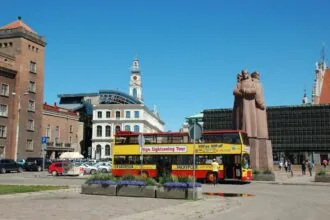
Riga itself is a UNESCO-listed old town packed with Art Nouveau architecture, and it also functions as the natural hub for exploring the rest of the Baltics, from the seaside resort of Jūrmala to onward rail and bus links toward Tallinn and Vilnius. That dual role, as both a destination in its own right and a springboard for wider Baltic travel, is exactly why getting the airport transfer right matters so much.
This guide covers every practical way to get from RIX into central Riga and beyond, verified against the airport’s own published information and Rīgas satiksme, the city’s public transport operator. Prices throughout are quoted in euros (EUR), Latvia’s currency, alongside approximate GBP and USD conversions to help travellers budget before they land.
Quick Transfer Options at a Glance
| Method | Journey Time | Price |
|---|---|---|
| Bus 22 (Rīgas satiksme) | Around 30-40 minutes | From €1.81 |
| Night Bus N22 | Around 30-40 minutes | From €1.81 |
| Taxi (licensed rank) | Around 15-25 minutes | €15-25 |
| Bolt / Forus (ride-hailing) | Around 15-20 minutes | €10-15 |
| Private Transfer | Around 20-30 minutes | From roughly €28 |
| Car Hire | Around 15-25 minutes | Varies by provider |
For most travellers without heavy luggage, Bus 22 is the cheapest and most reliable option into central Riga, while Bolt is usually the fastest door-to-door choice for anyone happy to spend a little more.
Where Is Riga Airport?
Riga International Airport sits around 10 kilometres southwest of the city centre, near the small town of Mārupe, close enough that most transfers take under 30 minutes in normal traffic. That proximity puts RIX firmly in the same bracket as Copenhagen or Oslo’s Gardermoen for ease of access, rather than the more distant airports found at some other European capitals.
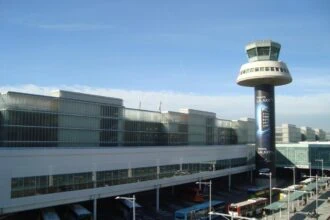
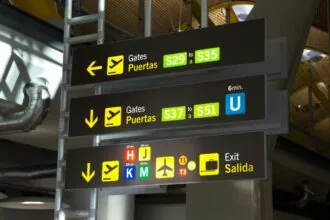
The airport itself has a single main terminal building, recently expanded, which keeps the walk between arrivals, the bus stop, the taxi rank and the car hire desks short and easy to follow even without any Latvian. Signage throughout the arrivals area is in both Latvian and English, and airport staff at the information desk are generally used to fielding transfer questions from first-time visitors.
Public transport stops, including the stand for Bus 22, are located in the P1 car park roughly 300 metres from the arrivals exits, reached by following clearly marked directional signs rather than crossing any live traffic lanes. Taxis and ride-hailing pickups use a separate, more immediate stand right outside arrivals, so the two options are not in the same physical spot.
Because Riga is a relatively compact capital, the airport’s short distance from the centre means almost every practical transfer method, bus, taxi, ride-hailing or hire car, covers the same ground in roughly the same time bracket. The real choice for most travellers comes down to budget and luggage rather than any dramatic difference in journey length.
The surrounding area, near Mārupe municipality, is mostly flat farmland rather than dense suburbs, which is part of why journey times stay consistent regardless of the transfer method chosen, since there are few urban bottlenecks until the final approach into the centre.
Best if you want daily housekeeping and a front desk. Filter by area first, then by price.
Check availabilityBest for groups who want one address and separate bedrooms rather than three hotel rooms.
See holiday homesBest as a last check before booking. Compares hotel rates across several sites in one search.
Compare ratesIs There a Train from Riga Airport?
Unlike Stockholm’s Arlanda or Oslo’s Gardermoen, Riga Airport has no operating rail link into the city centre, and this is worth stating clearly since several other Baltic and Nordic capitals do have one. Anyone expecting to simply step off a plane and onto a train, the way they might in Sweden or Norway, needs to plan around road transport instead for now.
That is set to change eventually thanks to Rail Baltica, the new standard-gauge high-speed line under construction to connect Tallinn, Riga and Vilnius with Warsaw and the wider European rail network. A dedicated station at Riga Airport forms part of that project, and construction work at the airport site has been progressing steadily since 2025.
As of late 2026, however, Rail Baltica is not yet operational anywhere along its route, and Riga’s planned new central station building, though largely complete structurally, is not expected to open for passenger services imminently. Travellers should not build any current itinerary around a Rail Baltica connection at the airport, however promising the eventual project looks.
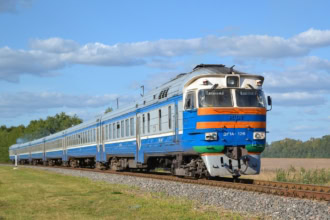
In the meantime, the closest thing to a rail option is the regular electric train (elektrovilciens) network running from Riga Central Station in the city itself, which serves destinations including Jūrmala, but reaching that station from the airport still means a bus, taxi or transfer first. It is a genuinely common point of confusion for first-time visitors, so it is worth remembering that every current transfer from RIX runs by road, not rail, whatever the eventual Rail Baltica timeline turns out to be.
Public Bus 22: The Main Transfer Option
Bus 22 is the dedicated public transport link between Riga Airport and the city centre, operated by Rīgas satiksme, the municipal transport company that runs all of Riga’s buses, trams and trolleybuses. It is the option most locals and budget-conscious visitors default to, and it is the only public transport route running directly between the terminal and the Old Town without a change.
Coaches depart roughly every 30 minutes through the day, running from around 6am until close to midnight, with the journey into the centre typically taking between 30 and 40 minutes depending on traffic and the time of day. The route runs along Kleistu iela and into the centre via a mix of arterial roads, so timing can stretch out somewhat during rush hour on weekday mornings and early evenings.
Fares on Route 22 work slightly differently from the rest of the network: a ticket bought directly from the driver by bank card only costs around €1.81 (£1.56/$2.12), since Route 22 does not accept cash onboard, unusually for Rīgas satiksme services. Tickets bought in advance, or standard fare products such as day passes, are generally better value and are covered in more detail further down this guide.
The buses themselves are modern, low-floor vehicles with space for luggage near the doors, and onboard screens announce upcoming stops in both Latvian and English. For anyone travelling with a single suitcase or backpack and no urgent deadline, Bus 22 is a genuinely comfortable and low-stress way into the city.
Night Bus N22 and Off-Peak Frequency
For travellers landing outside daytime hours, Rīgas satiksme runs a dedicated night bus, route N22, covering the same Centre to Airport corridor as the daytime Route 22. It was introduced specifically to give arriving and departing passengers a public transport option once the regular daytime service stops running.
The N22 runs roughly once an hour through the small hours, broadly covering the gap left once the last standard Route 22 bus of the night has gone and before the first one of the following morning starts. That hourly gap is worth building into any plan for a genuinely late arrival, since missing a departure by a few minutes can mean a much longer wait than on the daytime service.
Fares and ticket purchase on the N22 work the same way as the daytime Route 22, with card-only payment direct to the driver at the same fare, so nothing extra needs to be worked out for a night arrival beyond checking the current timetable. The same P1 car park stop serves both the daytime and night services, so there is no separate stand to hunt for after dark.
Even so, an hourly frequency is a real constraint compared with the 30-minute daytime gap, and travellers arriving with young children, heavy luggage, or simply after a long flight may still find a taxi or Bolt a more comfortable choice at 2am, even at a higher price. The N22 exists as a genuine safety net rather than a service most visitors will plan an entire itinerary around.
Buying Tickets and Using the Apps
Rīgas satiksme runs several parallel ways to pay for a journey, and knowing them in advance saves fumbling at the bus stop with a suitcase in hand. The simplest for a single airport transfer is paying the driver directly by contactless bank card, though as covered above this costs more on Route 22 than a pre-purchased ticket would.
Standard single tickets bought in advance from a Narvesen kiosk, a ticket machine, or Latvijas Pasts outlets cost noticeably less than paying onboard, and these same outlets sell the network’s other fare products too. Anyone planning to use public transport more than once or twice in a day is usually better off skipping single tickets altogether.
Rīgas satiksme also offers e-talons, its reloadable smart ticket system, along with a mobile code ticket app that generates a valid ticket directly on a smartphone without needing a physical card at all. Day passes, covering 24 hours or multiple days of unlimited travel across the whole network, are genuinely good value for anyone spending more than a single day exploring Riga by bus, tram or trolleybus.
Whichever method is chosen, a valid ticket must be activated or tapped at the start of the journey, since Rīgas satiksme does run ticket inspections and an unvalidated ticket can still result in a fine. Downloading the relevant app before arrival, rather than trying to do it on unfamiliar airport WiFi, is a small step that makes the whole process considerably smoother.
Ticket machines at the airport stop generally accept bank cards and coins rather than notes, so keeping some small change handy is worth doing. Fares do change occasionally, so double-checking current prices directly on Rīgas satiksme’s official tickets page shortly before travel is sensible rather than relying purely on figures gathered in advance.
Key Bus Stops and Where to Get Off
Route 22 runs through several useful stops before reaching its final destination, and getting off at the right one saves a longer walk with luggage. For anyone staying in or near the Old Town, the stop close to Grēcinieku iela is generally the most convenient, putting visitors within a short walk of the main historic core and its UNESCO-listed streets.
Travellers connecting onward by long-distance coach should instead stay on toward Autoosta, Riga’s International Bus Terminal, which sits beside Riga Central Station and is the departure point for onward buses toward Tallinn, Vilnius and other regional destinations. That stop is also useful for anyone whose accommodation sits closer to the central market or the riverside than the Old Town proper.
Onboard announcements and digital stop displays make it straightforward to follow progress in real time, and drivers are generally used to tourists double-checking stop names before getting off. Keeping a note of the accommodation address and nearest cross street in Latvian script, even just as a photo on a phone, helps considerably if a stop name gets misheard.
From either main stop, the rest of central Riga is easily reached on foot or by connecting onto the city’s wider tram and trolleybus network, which the same ticket products cover. Working out the right stop in advance, rather than guessing on the day, is one of the simplest ways to make the whole Route 22 journey feel effortless.
A handful of hotels near Central Market or the riverside promenade sit closer to intermediate stops than to either Grēcinieku iela or Autoosta, so it is worth checking a hotel’s address against the Route 22 stop list first. Rīgas satiksme’s own journey planner, available through its website and app, can confirm the single closest stop for any address in seconds.
Taxis at Riga Airport
A staffed taxi rank operates directly outside the arrivals hall, and Riga Airport now runs a licensing system limiting which companies can operate from the rank, specifically to cut down on the overcharging that used to be a common complaint from arriving passengers. Only vehicles from approved operators, currently including XTaxi, TaxiLV and Red Cab, are permitted to pick up from the official stand.
The airport also runs a pre-paid voucher scheme for these same licensed operators, letting travellers buy a fixed-price journey to a defined city-centre zone before getting in the car, which removes any uncertainty around the final bill entirely. Vouchers stay valid for up to three months, so a return voucher bought on arrival can still be used for the trip back to the airport later in the trip.
Without a voucher, a standard metered fare to the city centre typically runs to around €15-25 (£13-22/$18-29), depending on traffic, time of day and exact destination, with the journey itself taking roughly 15 to 25 minutes. Every licensed taxi is required to display its per-kilometre rate, starting fee and waiting charge on the rear passenger door, which is worth glancing at before setting off.
Unlicensed drivers occasionally approach arriving passengers inside the terminal touting for business, and it is worth firmly declining these and heading straight for the official rank instead, since these unofficial operators are exactly the ones responsible for the overcharging the licensing system was introduced to fix. Sticking to XTaxi, TaxiLV or Red Cab, either at the rank or booked through their own apps, is the safest route to a fair price.
Best if you can move a day either way. Shows how the fare changes across the month.
Compare flightsBest for short trips. Install the eSIM at home and arrive with working data, no shop queue.
Browse eSIMsBest after a long flight or a late landing. Price agreed before you travel, and no taxi queue.
Check transfersBolt, Forus and Ride-Hailing Apps
Bolt is by far the dominant ride-hailing app across Latvia, and it operates fully at Riga Airport with its own designated pickup zone in the short-term P1 car park. It is worth noting clearly that Uber does not operate in Latvia at all, since it is absent from the country’s official register of licensed ride-booking platforms, so travellers expecting to open the Uber app on landing will find no cars available.
Booking through Bolt shows the exact fare before confirming a ride, which removes the guesswork that comes with a metered taxi, and a typical journey into the centre costs around €10-15 (£9-13/$12-18), taking roughly 15 to 20 minutes. The app also runs a self-service TapBox screen at the airport for travellers who want to book a ride without opening the app themselves, useful for anyone whose phone has limited data on arrival.
Forus is a smaller, locally registered alternative offering broadly similar app-based booking, and it is worth having installed as a backup in case Bolt’s driver availability is thin during a particularly busy arrivals period. Both apps require a working internet connection to book, so downloading them and creating an account before departure, rather than relying on airport WiFi, avoids any delay after landing.
Ride-hailing fares can rise during periods of high demand, much like anywhere else in Europe, so checking the quoted price before confirming is sensible even though it is already shown upfront. For most independent travellers without a tight budget, Bolt strikes a genuinely good balance between speed, price and convenience compared with the other transfer options covered in this guide.
Private Transfers and Hotel Pickups
A pre-booked private transfer puts a driver in the arrivals hall holding a name board, removing any need to queue at a taxi rank or work out a ride-hailing app after a long flight. Most operators confirm the booking by email well in advance, and flight tracking is generally included as standard, so a delayed arrival does not mean an abandoned pickup.
Prices for a standard private car into central Riga typically start from around €28-32 (£24-28/$33-37), rising for larger vehicles, minivans or groups needing extra luggage space. That is noticeably more than Bolt or a metered taxi, but the certainty of a guaranteed, named driver waiting at the gate is exactly what some travellers are paying for.
This option particularly suits families travelling with young children, anyone arriving with awkward luggage such as sports equipment, or groups who would rather split one fixed fare than juggle two separate taxis. Most operators also allow free cancellation up to a set number of hours before arrival, which is worth checking at the time of booking in case flight times shift.
Booking a day or two ahead is sensible year-round, and especially so around summer weekends or major events in the city, when demand for pre-arranged transfers rises and last-minute availability can thin out. As with anywhere else, comparing a couple of operators before booking is worth the extra few minutes it takes.
Confirmation details typically arrive by email with the driver’s name, vehicle description and a direct contact number, so keeping that message accessible on a phone rather than printed out is generally sufficient. A pre-booked transfer also sidesteps any language uncertainty entirely, since most operators confirm bookings in English regardless of which driver ultimately shows up at the gate.

Compare Airport Transfer Companies
Pre-booking your airport transfer can save time and reduce stress when you arrive. Whether you need a private taxi, shared shuttle or executive transfer, comparing providers can help you find the best price and service for your journey.
We’ve selected three trusted airport transfer companies so you can compare prices, vehicle options, cancellation policies and customer reviews before you travel.
Car Hire at Riga Airport
All the major car hire providers operate desks at Riga Airport, including AVIS, Budget, Enterprise, Europcar, Hertz and SIXT, alongside smaller regional firms such as EasyCars and TopRent. The rental desks are located together in Arrivals Hall E on the terminal’s ground floor, with the actual vehicles collected from the nearby P4 long-term car park.
Desk opening hours vary by provider, with some running a full 24-hour or near-24-hour service and others closing overnight, so anyone landing very late or very early should confirm the specific desk’s hours before booking rather than assuming every counter is staffed around the clock. Sixt, for example, typically runs until midnight, while some smaller firms operate strictly on request outside standard daytime hours.
A hire car makes far more sense for exploring beyond Riga itself, such as reaching the beaches and pine forests around Jūrmala independently, or heading further into the Latvian countryside, than for getting around the compact and highly walkable city centre. Central Riga’s Old Town is largely pedestrianised in its core, so a car becomes a liability rather than a convenience once actually in town.
Winter driving in Latvia requires a degree of caution, with winter tyres legally required during the colder months, and reputable hire firms fit these automatically for bookings made through that period. As with any hire car in an unfamiliar country, checking the vehicle carefully and photographing any existing damage before driving off the airport forecourt is a sensible habit.
Most desks accept a standard UK, EU or international driving licence without additional paperwork, though a credit card in the lead driver’s name is generally required for the deposit hold. Booking online in advance rather than walking up to a desk on arrival almost always secures a better rate and a wider choice of vehicle.

Choose Car Hire for Riga
A rental car may be the most practical option if you want to explore areas beyond central Riga without being tied to bus or train schedules.
Comparing both Discover Cars and EconomyBookings can help you see a broader range of prices and vehicle options before booking.
Driving and Parking into the City Centre
Driving from Riga Airport into the centre is straightforward, following the A10 motorway and then local arterial roads into town, with the whole trip normally taking around 15 to 25 minutes outside rush hour. Roads are generally well maintained and clearly signed in both Latvian and standard international road symbols, making self-driving genuinely manageable for a first-time visitor.
The airport itself offers several parking zones, with P1 serving as the short-term car park directly opposite the arrivals exits for quick pickups and drop-offs, and P2, P3 and P4 covering longer stays at lower daily rates the further out they sit. Rates are clearly posted at each barrier and pay station, so it is worth checking current pricing on the airport’s own website before a longer stay rather than relying on remembered figures.
Once inside central Riga, parking becomes considerably trickier and more expensive, with metered on-street parking in the Old Town and a genuinely limited number of spaces during busy periods. Most visitors staying centrally are better off leaving a hire car in a dedicated car park just outside the historic core and walking or using public transport for the rest of their stay.
Latvia drives on the right-hand side of the road, and speed limits are generally 50 km/h in built-up areas and up to 90-110 km/h on open roads outside them, dropping considerably in winter conditions when ice and snow are common. Headlights must be kept on at all times when driving, a rule that catches out some visitors unfamiliar with Baltic road regulations.
Late-Night and Early-Morning Arrivals
Flights landing well outside normal daytime hours are common at RIX, particularly on budget carriers running early morning or late evening schedules to keep aircraft utilisation high. Fortunately, Riga’s transfer options hold up reasonably well outside the usual 6am to midnight window, unlike some smaller regional airports where options simply stop overnight.
The night bus N22, covered earlier in this guide, runs roughly once an hour through the small hours, giving budget travellers a genuine public transport option even for a 2am or 3am landing. That hourly gap is worth weighing against the extra cost of a taxi or Bolt, particularly for anyone landing with young children or after an exhausting long-haul connection.
Taxis operate around the clock from the licensed rank outside arrivals regardless of the hour, making them the most reliable fallback for a genuinely awkward arrival time, and the same voucher system for fixed prices applies overnight just as it does during the day. Bolt also runs 24/7, though driver availability can thin out somewhat in the very early hours compared with daytime demand.
For total peace of mind on an odd-hours arrival, a pre-booked private transfer removes any uncertainty entirely, since the driver is contractually guaranteed to be waiting regardless of how the flight lands relative to any public transport timetable. It is a small extra cost that many travellers consider worthwhile purely for the reassurance after a long overnight flight.
Airport shops and cafes keep limited overnight hours, so anyone facing a long wait between a late landing and the first useful morning connection should not expect much beyond vending machines to still be open at 3am. Bringing water and a snack for a genuinely late arrival is a small precaution worth taking.
Connecting Onward: Jūrmala and the Baltic Capitals
The seaside resort town of Jūrmala is a popular day trip or onward stop for visitors landing at RIX, and it can be reached directly from the airport by road in around 15 minutes via the A10 motorway, without needing to detour through central Riga first. Drivers heading into Jūrmala by car should note a vehicle entrance fee of around €5 (£4/$6) applies when entering the town, though public parking within Jūrmala itself is free year-round.
Travellers without a car generally transfer via central Riga instead, taking Bus 22 or a taxi into the city first, then continuing on the regular electric train (elektrovilciens) network from Riga Central Station, with services to Jūrmala’s Majori stop taking around 30 minutes and costing roughly €2.30 (£2/$2.70). Minibuses from Riga’s International Bus Terminal cover similar ground on the Riga to Jaunķemeri or Riga to Sloka routes for those who prefer road over rail.
For onward travel to the other Baltic capitals, Riga Airport itself is served directly by international coach operators, including Ecolines, Lux Express and FlixBus, running from a dedicated stop in the P1 car park toward Tallinn, and a similar spread of operators including Lux Express, Ollex and Kautra running toward Vilnius. This means travellers connecting onward by bus do not always need to detour into central Riga first, since some services depart directly from the airport itself.
Those preferring rail for the onward Baltic leg currently need to travel via central Riga, since Rail Baltica’s high-speed line linking Tallinn, Riga and Vilnius remains under construction and is not yet carrying passengers. Checking current timetables directly with the relevant coach operator before travelling is sensible, since frequency on these longer regional routes can vary seasonally.
Best for solo travellers and anyone watching the budget. Dorm beds and private rooms in the same search.
Browse hostelsBest for anyone flying more than once or twice a year. Handles the compensation claim so you are not chasing the airline.
See AirHelp+Best if your room is not ready yet. Left luggage booked in advance, so you are not hunting for a locker.
Check storageAccessibility and Reduced-Mobility Travel
Riga Airport’s terminal is largely modern and single-level at its core, which generally makes moving between arrivals, the bus stop, the taxi rank and car hire desks manageable for travellers with reduced mobility, though the roughly 300-metre walk to the Route 22 bus stop is worth factoring in. Wheelchair assistance can be arranged in advance directly with the airport or through the relevant airline, and staff are generally well used to helping passengers through to the correct transport stand.
Rīgas satiksme’s low-floor buses, including those running Route 22, are built with wheelchair access and designated wheelchair spaces onboard, along with audible and visual stop announcements that help travellers with visual or hearing impairments follow the journey. That said, the walk from the terminal to the stop and any waiting time at a busy period are worth planning around for anyone who tires easily.
Taxis and private transfers remain the most straightforward door-to-door option for travellers needing genuine assistance, since a driver can be briefed in advance about specific requirements and can help directly with luggage from the terminal kerb to the vehicle. Both the official taxi rank and pre-booked private transfer operators are generally able to accommodate a wheelchair-accessible vehicle with sufficient advance notice.
Central Riga’s Old Town itself involves a fair amount of cobbled street, which is worth knowing about ahead of arrival regardless of transfer method chosen, since it affects the final stretch of almost any journey once in the historic core. Contacting the airport or a chosen hotel in advance about specific accessibility needs is generally the most reliable way to ensure a smooth arrival.
First-Time Arrival Tips
The single most common mistake among first-time visitors is expecting a train station at the airport the way Stockholm or Oslo has one; Riga simply does not have one yet, and travellers who assume otherwise can end up scrambling to work out an alternative after landing. Reading up on the bus, taxi and ride-hailing options before departure removes that surprise entirely.
Another frequent error is opening the Uber app on landing and finding no cars available, since Uber does not operate anywhere in Latvia; downloading Bolt instead, ideally before departure, avoids that dead end entirely. Similarly, travellers sometimes try to pay for Route 22 in cash, only to discover the driver accepts card payments only.
Accepting a ride from an unlicensed driver touting inside the terminal, rather than heading to the official taxi rank or the Bolt pickup zone, remains one of the most reliable ways to overpay for a simple airport transfer. Sticking to the licensed operators and apps named throughout this guide is by far the safest approach for a first visit.
Finally, it is worth having a small amount of euros in cash on arrival even though most transfer options accept card, since some kiosks, ticket machines and smaller establishments in Riga still prefer or require it. A short list of the accommodation’s address written in Latvian, ready to show a taxi driver or bus stop passer-by, also makes the whole first hour in the country considerably smoother.
Latvia’s official currency is the euro, so travellers with leftover currency from a previous stop should change a small amount before leaving the terminal for the initial transfer. Airport exchange rates are rarely the best available, so using a card or an ATM in town for everything else is generally the more sensible approach.

Rupert’s Handy Travel Tips
Rupert says Riga Airport is easy to get to grips with once you know there’s no train yet, just a good bus, a fair-price taxi rank and a solid Bolt network.
- Forget the train: Rail Baltica isn’t running yet, so every transfer from RIX currently goes by road.
- Card only on Bus 22: the driver won’t take cash, so have a contactless card ready or buy a ticket in advance.
- Download Bolt before you fly: Uber doesn’t work in Latvia at all, and Bolt shows the fare upfront.
- Ask for the licensed taxi rank: stick to XTaxi, TaxiLV or Red Cab and ignore anyone touting inside the terminal.
- Night owls, check the N22: it only runs once an hour, so a taxi may suit a very late landing better.
- Heading to Jūrmala by car? Budget around €5 for the vehicle entrance fee, though parking there is free.
Want to meet the reindeer behind our travel tips? Find out more in our page Who is Rupert?.




Frequently Asked Questions About Riga Airport Transfers
Is there a train from Riga Airport to the city centre?
No. Riga Airport currently has no operating rail link, so every transfer runs by road via Bus 22, taxi, ride-hailing, private transfer or car hire. A Rail Baltica station is under construction at the airport but is not yet operational.
How much is the airport bus from Riga Airport to the city centre?
Bus 22, operated by Rīgas satiksme, costs around €1.81 (£1.56/$2.12) when bought by card directly from the driver, with pre-purchased and day tickets generally working out cheaper for multiple journeys.
Does Uber work in Riga?
No. Uber does not operate in Latvia at all. Bolt is the main ride-hailing app across the country, with Forus as a smaller backup option.
How long does the transfer from Riga Airport to the centre take?
Around 15 to 40 minutes depending on the method, since the airport sits roughly 10 kilometres from the city centre. Bolt and taxis are generally fastest, while Bus 22 takes longer but costs considerably less.
What’s a fair taxi price from Riga Airport to the centre?
Around €15-25 (£13-22/$18-29) using a licensed operator such as XTaxi, TaxiLV or Red Cab, or a fixed price through the airport’s pre-paid voucher scheme, which removes any uncertainty over the final fare.
Is there a night bus from Riga Airport?
Yes. The N22 night bus runs roughly once an hour through the small hours on the same Centre to Airport route as the daytime Route 22, with the same card-only fare.
Can I get from Riga Airport straight to Jūrmala without going into Riga first?
Yes, by car or taxi it’s around a 15-minute drive via the A10 motorway. Without a car, most travellers transfer via central Riga and continue by electric train or minibus.
Is it worth hiring a car at Riga Airport?
Mainly for exploring beyond the city, such as Jūrmala or the wider Latvian countryside, since central Riga’s Old Town is compact, largely pedestrianised and easily covered on foot or by public transport.
Further Reading
Travellers planning to combine Riga with wider Baltic rail travel should read our Interrail Latvia Pass guide, which covers routes, prices and how the pass works alongside Rail Baltica’s ongoing construction. It pairs naturally with the transfer details in this guide, since anyone using a rail pass around Latvia will still need to cover the airport-to-centre leg by bus, taxi or ride-hailing for now.
Anyone continuing on to Estonia’s capital should also see our Tallinn Airport Transfers guide, covering the tram, bus and taxi options at RIX’s nearest major Baltic counterpart, useful for comparing the two cities’ very different transfer setups.
For a broader look at rail travel across the wider region, the Interrail Pass Guide explains how the wider pass system works across Europe, including the Baltic states, for travellers weighing up a multi-country itinerary beyond Latvia alone.
Once through the airport, our Things to Do in Riga guide covers the Old Town, Art Nouveau district and Central Market in full, and our Day Trips from Riga guide covers Jūrmala, Sigulda and the castles further afield for anyone staying more than a couple of days.
For getting around the city itself once you are through the terminal, our Riga Public Transport guide covers the trams, trolleybuses and e-talons ticketing system in full.
Travellers arriving by cruise ship, or flying in as an alternative to the suspended Stockholm ferry, should also see our Riga Cruise Port and Ferry Guide, which covers the passenger terminal, 2026’s record cruise season and the honest state of ferry travel from Riga.