Reviewed by our editorial team Updated
Why the California Zephyr Is America’s Most Famous Train
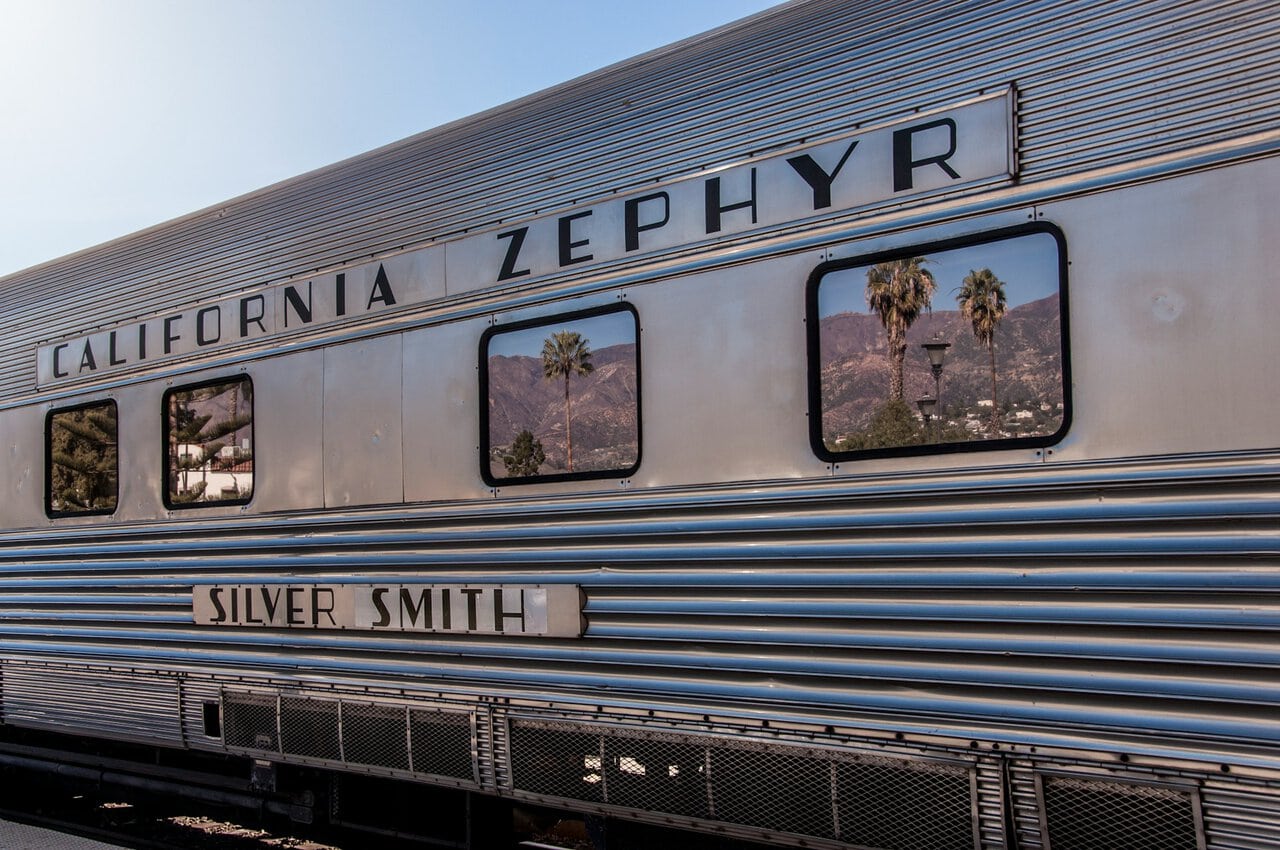
The California Zephyr is widely regarded as Amtrak’s flagship long-distance train and is often described as one of the greatest railway journeys in the world. Travelling almost 2,440 miles (3,924 km) between Chicago, Illinois, and Emeryville, California, the train crosses the very heart of the United States, passing through bustling cities, endless prairies, towering mountain ranges, dramatic canyons and vast desert landscapes before reaching the San Francisco Bay Area.
Unlike many rail journeys where the train is simply a way of getting from A to B, the California Zephyr is very much an experience in its own right. The complete journey takes approximately 52 hours, giving passengers two nights onboard as they travel through Illinois, Iowa, Nebraska, Colorado, Utah, Nevada and California. Along the way you’ll witness some of North America’s most spectacular scenery, including the Rocky Mountains, Colorado River, Ruby Canyon, Great Basin Desert and the legendary Sierra Nevada, with many travellers choosing the route specifically for its incredible views rather than simply its destination.
The train is particularly popular with overseas visitors because it combines comfortable overnight accommodation, traditional dining, panoramic sightseeing lounges and some of the most famous landscapes in the American West. Whether you’re travelling in a private sleeper cabin or a standard coach seat, the emphasis is on enjoying the journey at a relaxed pace rather than rushing between cities. It’s a chance to watch America unfold outside your window in a way that’s simply impossible from an aircraft.
Although the western terminus is Emeryville, just across the bay from San Francisco, Amtrak provides a dedicated connecting coach service into downtown San Francisco, making it straightforward to continue your journey into one of California’s most iconic cities. Heading east, the train finishes at Chicago Union Station, one of America’s grandest railway terminals and a gateway to countless other Amtrak routes across the country.
For many rail enthusiasts, riding the California Zephyr is a genuine bucket-list experience. The combination of spectacular scenery, classic American rail travel, comfortable onboard facilities and the sheer scale of the journey makes it the benchmark against which other Amtrak routes are often judged.
California Zephyr Route at a Glance
| Feature | Details |
|---|---|
| Route | Chicago, Illinois to Emeryville, California (San Francisco connection) |
| Distance | Approximately 2,438 miles (3,924 km) |
| Journey Time | Around 52 hours |
| States Crossed | Illinois, Iowa, Nebraska, Colorado, Utah, Nevada and California |
| Major Cities | Chicago, Omaha, Denver, Salt Lake City, Reno, Sacramento, Emeryville |
| Western Terminus | Emeryville (connecting buses to San Francisco) |
| Eastern Terminus | Chicago Union Station |
| Sleeper Accommodation | Yes – Roomettes, Bedrooms, Family Bedrooms and Accessible Bedrooms |
| Dining Car | Yes |
| Sightseer Lounge | Yes |
| Coach Seating | Yes |
| Frequency | Daily |
| Most Scenic Sections | Rocky Mountains, Moffat Tunnel, Glenwood Canyon, Ruby Canyon and Sierra Nevada |
| Best Time to Travel | Spring, summer and autumn for clear views, or winter for spectacular snowy mountain scenery |
Best if you want daily housekeeping and a front desk. Filter by area first, then by price.
Check availabilityBest for families, or any stay past about four nights. A kitchen and a washing machine start paying for themselves.
Browse rentalsBest for double-checking. Runs the same search across several booking sites so you are not leaving money behind.
Compare pricesRoute and Major Stops
The California Zephyr links the Midwest with the American West, connecting some of the country’s largest cities with small mountain towns that are otherwise difficult to reach without a car. Although the train makes dozens of intermediate stops, several stations stand out as key points along the journey.
The adventure begins at the magnificent Chicago Union Station, where passengers board one of Amtrak’s longest and most famous services. After leaving Chicago, the train heads west across Illinois and Iowa before reaching Omaha, Nebraska’s largest city and an important overnight stop for many travellers.
From Omaha the scenery gradually begins to change as the endless plains give way to the foothills of the Rocky Mountains. The arrival into Denver marks one of the highlights of the journey, with many passengers choosing to break their trip here and explore Colorado before continuing west.
Beyond Denver the California Zephyr climbs high into the Rockies, stopping at destinations including Fraser-Winter Park, Granby, Glenwood Springs and Grand Junction before entering Utah and reaching Salt Lake City.
The journey then continues across Nevada with stops including Elko, Winnemucca and Reno, before crossing the spectacular Sierra Nevada into California. Major Californian stops include Truckee, Sacramento and Davis, before the train finally reaches Emeryville, where connecting Amtrak coaches continue across the Bay Bridge into San Francisco.
For passengers travelling the entire route, the California Zephyr offers a remarkable cross-section of America, from major metropolitan centres to remote mountain communities, making every stage of the journey feel different from the last.
| Section | Approximate Journey Time | Highlights |
|---|---|---|
| Chicago → Omaha | 9–10 hours | Illinois farmland, Mississippi River crossing, Iowa countryside |
| Omaha → Denver | 8–9 hours | Nebraska plains, wide-open prairie landscapes |
| Denver → Glenwood Springs | 7–8 hours | Rocky Mountains, Big Ten Curve, Moffat Tunnel, Colorado River |
| Glenwood Springs → Salt Lake City | 6–7 hours | Glenwood Canyon, Ruby Canyon, Utah desert scenery |
| Salt Lake City → Reno | 9–10 hours | Great Basin Desert, mountain ranges, Nevada landscapes |
| Reno → Sacramento | 5–6 hours | Donner Pass, Sierra Nevada, alpine forests |
| Sacramento → Emeryville | Around 3 hours | Sacramento Valley, San Francisco Bay approach |
Through the Great Plains
The California Zephyr begins its journey by crossing the vast agricultural heartland of the United States, a landscape that is often overlooked by visitors flying between America’s major cities. Although many passengers eagerly anticipate the mountains further west, the opening section offers a fascinating introduction to rural America, with endless fields, traditional farming communities and wide-open horizons that stretch for miles in every direction.
After departing Chicago Union Station, the train threads its way through the suburbs before crossing northern Illinois towards the mighty Mississippi River, one of North America’s greatest waterways. The crossing into Iowa marks a significant milestone as the scenery gradually changes from urban development to rolling farmland dotted with grain silos, red barns and small towns that have grown alongside the railway for more than a century.
As the Zephyr continues west, you’ll travel through communities that remain closely connected to the railroad. Freight trains carrying agricultural produce frequently share the line, providing an authentic glimpse into one of the world’s busiest rail networks. Depending on the season, passengers can expect to see cornfields, soybean crops, grazing cattle and enormous agricultural operations, with colours changing dramatically throughout the year. Spring brings vibrant green fields, summer sees crops stretching to the horizon, while autumn transforms the landscape into shades of gold and amber before winter blankets everything in snow.
The train reaches Omaha, Nebraska, during the evening on westbound services, one of the largest cities between Chicago and Denver. From here the landscape becomes even more expansive as the Zephyr crosses the Great Plains, following historic transportation corridors that once carried pioneers westwards during America’s great period of expansion.
While this section lacks the dramatic mountains that lie ahead, it offers something equally memorable: a sense of scale. Looking out across the endless prairie gives passengers a real appreciation of just how vast the United States is, making the dramatic arrival in the Rocky Mountains all the more spectacular.
Crossing the Rocky Mountains
For many travellers, this is the defining section of the entire California Zephyr journey. Shortly after departing Denver, the train leaves the city behind and begins one of the most spectacular railway climbs anywhere in North America as it enters the heart of the Rocky Mountains.
The ascent begins gradually before the railway starts climbing through forests and steep valleys towards the famous Big Ten Curve, where the train loops dramatically around itself to gain height. This engineering masterpiece provides one of the journey’s most photographed moments, with passengers often able to see both the front and rear of the train at the same time as it snakes around the mountainside.
The line then enters the Moffat Tunnel, a remarkable engineering achievement stretching over 6 miles (10 km) beneath the Continental Divide. Emerging from the tunnel, the scenery changes once again as the train descends through alpine forests, mountain streams and spectacular valleys towards Winter Park, Fraser and Granby.
From here the California Zephyr closely follows the Colorado River for many miles, passing through the breathtaking Byers Canyon, Gore Canyon and eventually the world-famous Glenwood Canyon. Towering cliffs rise hundreds of feet above the railway while the river twists alongside the train, creating one of the most beautiful stretches of railway anywhere in the United States.
One of the highlights is the stop at Glenwood Springs, a picturesque mountain town famous for its natural hot springs and surrounded by dramatic scenery. Many passengers choose to break their journey here for a night or two before continuing west.
If you’re hoping to capture incredible photographs, this is the section where you’ll want to spend as much time as possible in the Sightseer Lounge. Floor-to-ceiling windows provide panoramic views throughout the climb, and it’s no exaggeration to say that many passengers book the California Zephyr almost entirely for this unforgettable stretch through the Rockies.

Utah’s Desert Landscapes
After leaving Colorado behind, the California Zephyr enters an entirely different world. The lush forests and snow-capped peaks of the Rocky Mountains gradually give way to the red rock deserts, vast open plains and dramatic sandstone cliffs of eastern Utah, creating one of the most striking changes in scenery anywhere along the route.
One of the first highlights is Ruby Canyon, a spectacular gorge carved by the Colorado River and accessible only by rail or boat. Its towering red cliffs, colourful rock formations and complete lack of roads make it feel wonderfully remote, offering passengers views that very few visitors to the American West ever experience.
As the train continues west, the landscape becomes increasingly arid. Huge mesas, isolated rock formations and distant mountain ranges dominate the horizon, while long stretches of desert emphasise just how sparsely populated this part of the country remains. The railway passes through small communities including Green River, where many travellers catch glimpses of the rugged landscapes that have featured in countless Western films.
Eventually the train arrives in Salt Lake City, Utah’s capital and one of the California Zephyr’s major overnight stops. Situated between the Wasatch Mountains and the Great Salt Lake, the city marks the halfway point for many passengers travelling across America.
Although Utah often receives less attention than Colorado or California, many experienced rail travellers consider this one of the journey’s hidden gems. The contrast between towering mountains, colourful deserts and seemingly endless open spaces creates an unforgettable landscape that perfectly captures the scale and beauty of the American West.
Across the Sierra Nevada
The final great natural wonder of the California Zephyr is the spectacular crossing of the Sierra Nevada, a mountain range that has challenged travellers for centuries. After leaving Reno, the train begins its steady climb into the mountains, following one of the most historically significant railway routes in the United States. This section forms part of the original First Transcontinental Railroad, completed in 1869, and many of the engineering achievements that made the railway possible can still be seen today.
One of the highlights is the climb towards Donner Pass, named after the ill-fated Donner Party who became trapped here during the winter of 1846. Today, the California Zephyr follows a far safer route, but passengers are still treated to dramatic mountain scenery as the train winds through dense pine forests, granite peaks and deep valleys. During the winter months, heavy snowfall transforms the landscape into a breathtaking alpine wonderland, while spring and summer reveal crystal-clear mountain lakes, rushing rivers and colourful wildflowers.
The train passes through the charming mountain town of Truckee, a popular destination for skiing in winter and hiking during the warmer months. Many passengers choose to break their journey here to explore nearby Lake Tahoe, one of North America’s most beautiful alpine lakes. From Truckee, the railway begins its descent through forests and rugged mountain scenery towards California’s fertile Central Valley.
Throughout this section you’ll also pass through a series of historic snow sheds. These timber and concrete structures were originally built to protect the railway from the enormous snowdrifts that regularly buried the line during the nineteenth century. Although modern engineering has reduced many of the challenges, the sheds remain an iconic feature of the route and a reminder of the determination required to build a railway through these mountains.
For many passengers, the Sierra Nevada rivals the Rockies as the highlight of the journey. Whether you’re travelling through brilliant autumn colours, snow-covered winter landscapes or clear summer skies, it’s a fitting finale before the California Zephyr leaves the mountains behind and heads towards the Pacific Coast.
Should You Ride the California Zephyr Straight Through or Make Stopovers?
Travelling all the way from Chicago to California without leaving the train is an experience in itself, but the California Zephyr is also one of the best Amtrak routes for building a multi-stop railway holiday.
Denver is the easiest major break. You can spend several days exploring the city before returning to Union Station and beginning what many passengers consider the greatest section of the entire journey: the daytime crossing of the Rocky Mountains.
However, we’d be particularly tempted by Glenwood Springs. The railway station sits in the heart of this Colorado mountain town, making it unusually practical for passengers arriving without a car. You can break the journey, visit the hot springs and spend a night surrounded by the Rockies before continuing west.
Further along, Salt Lake City provides another potential stop, although the Zephyr’s scheduled arrival and departure times need to be considered when planning how much time you’ll actually have there.
Reno can work well towards the western end of the journey, while Truckee provides access to the Sierra Nevada and the wider Lake Tahoe region. Again, onward transport needs planning if your ultimate destination is away from the railway.
One particularly attractive itinerary would be Chicago → Denver → Glenwood Springs → California, turning the journey into several manageable stages while still experiencing the Zephyr’s greatest scenic sections aboard the train.
A longer trip could incorporate Salt Lake City, Reno or Truckee as well, but don’t add stops simply for the sake of saying you’ve visited them. Every time you leave the train, you’re using another reservation or Rail Pass segment and adding accommodation costs.
Because the California Zephyr runs every day, stopovers are much easier here than on routes such as the Sunset Limited. You can spend one, two or several nights somewhere and then continue on a later train without automatically facing a three-day wait.
For a first California Zephyr journey, we’d probably choose one or two meaningful stopovers rather than trying to visit every major station. That preserves the feeling of an epic cross-country railway journey while giving you the chance to experience part of the landscape beyond the Sightseer Lounge windows.
Best if you can move a day either way. Shows how the fare changes across the month.
Compare flightsBest for anyone whose home plan charges by the megabyte abroad. Pay a fixed price up front.
Check eSIMsBest if you would rather not work out the transport on arrival. Book it now and forget it.
View transfersArriving in the San Francisco Bay Area
After descending from the Sierra Nevada, the California Zephyr enters a completely different landscape. The rugged mountains gradually give way to the fertile Sacramento Valley, where vineyards, orchards and farmland replace the towering peaks that have dominated the previous day’s journey. This final section offers a gentler pace as the train makes its way through Northern California towards the shores of San Francisco Bay.
One of the last major stops is Sacramento, California’s state capital and a worthwhile destination in its own right. The beautifully restored Sacramento Valley Station is one of Amtrak’s busiest hubs in the western United States, and many passengers choose to begin or end their journey here before exploring California’s historic Gold Rush region.
From Sacramento, the California Zephyr continues through Davis, Martinez and Richmond, offering occasional glimpses of the bay as the train approaches its western terminus at Emeryville. Although many people assume the train arrives directly in San Francisco, this isn’t actually the case. Emeryville sits on the eastern side of San Francisco Bay, just across the water from the city.
Fortunately, continuing your journey couldn’t be easier. Amtrak operates dedicated connecting coaches that are timed to meet arriving California Zephyr services and take passengers directly into downtown San Francisco, stopping at locations including the Salesforce Transit Center. These through-ticket connections are included when booking San Francisco as your destination, making the transfer straightforward even for first-time visitors.
Arriving after more than two days onboard is a memorable experience. By the time you step off the train, you’ll have crossed seven states, travelled almost 2,440 miles, experienced everything from endless prairies to soaring mountain ranges and crossed some of America’s most famous landscapes. For many travellers, reaching the San Francisco Bay Area isn’t simply the end of a train journey; it’s the conclusion of one of the world’s greatest rail adventures.
How to Get from the California Zephyr to San Francisco
One of the most important things for first-time California Zephyr passengers to understand is that the train doesn’t actually go to San Francisco. Its western terminus is Emeryville, on the opposite side of San Francisco Bay.
That doesn’t mean you need to arrange an expensive taxi from the station. Amtrak provides connecting bus services between Emeryville and San Francisco, and these can be incorporated into your itinerary when you book the journey.
If San Francisco is your actual destination, search for the appropriate San Francisco destination rather than automatically ending your booking at Emeryville. This can allow the rail and connecting bus portions to appear together as part of the journey.
When the Zephyr reaches Emeryville, passengers continuing across the bay leave the train and transfer to the designated connecting service. Your luggage arrangements depend on how your journey has been ticketed and whether you’ve checked baggage, so follow the instructions given by Amtrak staff rather than simply collecting everything automatically.
This connection matters because there is no conventional Amtrak intercity railway station in downtown San Francisco served by the California Zephyr. Emeryville acts as the practical railhead for passengers arriving from Chicago, Denver, Salt Lake City and Reno.
Alternatively, you may decide to finish the Amtrak portion of your journey in the East Bay and make your own onward arrangements, particularly if you’re staying somewhere outside central San Francisco.
Whichever option you choose, factor the transfer into your arrival plans. Don’t look at the California Zephyr’s scheduled arrival at Emeryville and assume that’s the time you’ll be standing outside your hotel in San Francisco.
For most first-time visitors heading directly into the city, booking the Amtrak connection through to San Francisco as part of the journey is the simplest arrangement.
Booking California Zephyr Tickets with Omio
You can search for California Zephyr tickets through Omio, which can be useful if the train forms part of a wider US trip and you want to compare rail journeys alongside other transport options.
For the complete journey, search Chicago to Emeryville, or use San Francisco as your destination if you’re booking an itinerary that includes the onward connection across the bay. You can also search individual sections such as Chicago to Denver, Denver to Glenwood Springs, Denver to Salt Lake City or Reno to California.
The California Zephyr runs daily, which gives you considerably more flexibility than Amtrak’s three-times-weekly long-distance routes. This is especially useful if you’re planning stopovers, because you can leave the train for several days and continue west or east on another departure.
For the complete journey of more than 50 hours, check the accommodation type carefully. Coach is considerably cheaper, while a Roomette or Bedroom gives you a proper bed and private accommodation for the two nights aboard.
If you’re planning to stop in places such as Denver or Glenwood Springs, book the journey in the appropriate segments rather than assuming you can get off one California Zephyr and continue days later using the same reservation.
Travellers combining the Zephyr with other Amtrak routes should also compare individual fares with the Amtrak USA Rail Pass, particularly if you’re planning to continue from Chicago or California on another long-distance train.
Book Amtrak Tickets and Sleeper Trains
Travelling by train in the United States can be a memorable way to cover long distances, especially on scenic routes and overnight journeys. Amtrak lets you book rail tickets, long-distance services, and sleeper train journeys across the country.
It is ideal for city-to-city travel, cross-country rail trips, and travellers who want a slower, more comfortable alternative to flying. Sleeper trains can also make long journeys easier by combining transport and overnight accommodation.
Sleeper Cabins Explained
One of the biggest decisions when booking the California Zephyr is whether to travel in Coach or upgrade to one of Amtrak’s Sleeper accommodations. Because the complete journey lasts around 52 hours, many passengers find that a private room significantly improves both comfort and the overall experience.
The most popular option is the Roomette, designed for one or two passengers. During the day it features two comfortable seats facing each other, while at night these convert into a bed with a second bunk folding down from above. Although compact, Roomettes provide privacy, complimentary meals in the dining car, fresh towels, bottled water and access to shared shower facilities, making them excellent value for couples or solo travellers.
For those wanting more space, Bedrooms offer a noticeably larger cabin with a private toilet and shower, wider seating and additional room to move around. Families can also choose the Family Bedroom, located on the lower level of the Superliner sleeper cars, while Accessible Bedrooms provide extra space and facilities for passengers with reduced mobility.
One of the biggest advantages of booking sleeper accommodation is that all freshly prepared dining car meals are included in the ticket price. Sleeper passengers also receive priority boarding at many stations and have access to station lounges at selected locations, adding to the premium experience.
Whether the upgrade is worthwhile depends on your budget and how much of the route you plan to travel. For shorter daytime sections, Coach seating is perfectly comfortable, but if you’re travelling the entire route from Chicago to Emeryville, many experienced passengers consider a Roomette one of the best investments you can make. It transforms the California Zephyr from simply a long train journey into a memorable rail holiday where comfort becomes part of the adventure.
| Feature | Coach Class | Roomette | Bedroom |
|---|---|---|---|
| Private accommodation | ❌ | ✅ | ✅ |
| Bed for sleeping | ❌ (reclining seat only) | ✅ Upper & lower bunks | ✅ Full-sized beds |
| Meals included | ❌ | ✅ | ✅ |
| Private toilet | ❌ | ❌ (shared facilities) | ✅ |
| Private shower | ❌ | ❌ (shared facilities) | ✅ |
| Access to showers | ❌ | ✅ | ✅ |
| Sightseer Lounge access | ✅ | ✅ | ✅ |
| Dining Car access | Café Car only | Included | Included |
| Best for | Budget travellers | Couples & solo travellers | Maximum comfort |
Dining on the California Zephyr
Dining is one of the highlights of travelling on the California Zephyr and helps reinforce the feeling that this is far more than simply a train journey. Rather than grabbing food from a station platform, passengers can sit down and enjoy freshly prepared meals while watching some of North America’s most spectacular scenery roll past the window.
Passengers travelling in Sleeper accommodation have all of their meals included in the price of their ticket. Breakfast, lunch and dinner are served in the traditional Dining Car, where guests are seated at shared tables, creating a sociable atmosphere and offering the chance to meet fellow travellers from around the world. The menu changes periodically but typically includes American favourites such as steak, roast chicken, pasta dishes, burgers, salads and vegetarian options, together with desserts and hot or cold drinks.
Coach passengers are welcome to use the Café Car, which offers a range of lighter meals, sandwiches, burgers, pizzas, snacks, soft drinks, beer, wine and coffee throughout the journey. While the selection is naturally smaller than the Dining Car, it’s a convenient option for passengers who prefer to eat more casually or at different times of the day.
One of the pleasures of dining onboard is the constantly changing scenery. You could be enjoying breakfast while crossing the Nebraska plains, lunch beside the Colorado River, or dinner as the train climbs through the Sierra Nevada. It’s this combination of good food and ever-changing landscapes that makes dining on the California Zephyr such a memorable part of the experience.
If you have dietary requirements, Amtrak can usually cater for vegetarian, vegan and gluten-free diets, although it’s always advisable to notify them when booking wherever possible.
The Sightseer Lounge Experience
Ask anyone who has travelled on the California Zephyr what they remember most, and many will mention the Sightseer Lounge. This distinctive carriage is one of the defining features of Amtrak’s long-distance trains and is widely regarded as the best place onboard to enjoy the spectacular scenery.
The upper level features large panoramic windows that curve into the roof, allowing passengers to enjoy uninterrupted views in almost every direction. Comfortable lounge seating replaces traditional rows of seats, encouraging travellers to relax, read, chat or simply spend hours watching America’s landscapes unfold. It’s particularly popular during the crossings of the Rocky Mountains, Glenwood Canyon, Ruby Canyon and the Sierra Nevada, where passengers often gather with cameras well before the most scenic sections begin.
The lower level of the carriage houses the Café Car, making it easy to grab a coffee, snack or drink without leaving the lounge for long. Many passengers spend a significant portion of the journey here rather than remaining in their assigned seats or sleeper cabins, especially during daylight hours when the scenery is at its best.
Because the Sightseer Lounge is open to all passengers, it can become busy during the most famous scenic stretches. If you’re hoping to secure one of the prime window seats, it’s worth arriving early, particularly before the train begins climbing out of Denver or approaches Donner Pass in California. Early mornings and evenings are often much quieter, providing a more peaceful environment to enjoy the views.
For photographers, the lounge is also the best location onboard. The expansive windows make it easier to capture sweeping landscapes, while the elevated seating position provides excellent visibility over rivers, forests, mountains and valleys. Even if you’re travelling in a private sleeper, you’ll almost certainly find yourself returning to the Sightseer Lounge again and again throughout the journey.
Best for short city stops where being central matters more than the room. Dorms and private rooms both listed.
See hostelsBest if you have ever given up on a claim. AirHelp checks whether the flight qualifies and pursues it for you.
See the benefitsBest for a day with a suitcase and nowhere to put it. Find a storage point near where you already are.
View storageWhich Direction Is Better?
One of the most common questions asked by first-time passengers is whether it’s better to travel eastbound from California to Chicago or westbound from Chicago to California. The good news is that both directions offer exactly the same spectacular scenery, but the timing of when you pass certain highlights can differ depending on the season and the timetable.
Travelling westbound from Chicago is the classic choice and the direction most people imagine when they think of crossing America. The scenery gradually builds in drama as the train leaves the Great Plains behind before climbing into the Rocky Mountains on the second day. Many passengers enjoy this sense of anticipation, with each stage of the journey becoming progressively more spectacular until reaching the Sierra Nevada before arriving in California.
The eastbound journey offers the same landscapes in reverse, but some travellers feel the changing scenery creates a different atmosphere. Leaving the Pacific Coast behind before crossing the Sierra Nevada and Rocky Mountains can feel like an epic farewell to the American West before the journey concludes on the plains and finally in bustling Chicago.
The exact time you pass through the mountains depends on operational schedules, delays and the time of year, so it’s impossible to guarantee perfect daylight for every scenic section. During the longer days of late spring and summer, passengers are generally more likely to experience both the Rocky Mountains and Sierra Nevada in daylight, while shorter winter days may mean part of one mountain crossing takes place after dark.
Our recommendation is simple: book the direction that best suits your wider travel itinerary rather than worrying too much about the scenery. Whichever way you travel, you’ll experience one of the world’s greatest railway journeys, and the highlights are memorable in either direction.
Best Time of Year to Ride the California Zephyr
The California Zephyr operates every day throughout the year, and every season offers a completely different experience. There is no single “best” time to travel, as much depends on whether you’re hoping to see snow-covered mountains, colourful autumn forests, wildflowers or clear blue skies. One thing that never changes is the scenery, which is spectacular whenever you travel.
Spring is one of the most underrated seasons. As the train leaves Chicago, the Great Plains begin turning green after winter, while melting snow creates fast-flowing rivers throughout the Rockies. Waterfalls are often at their most impressive during this period, and the mountains still retain snow on their highest peaks, creating beautiful contrasts against fresh spring vegetation.
Summer is the busiest time to travel and is often considered the ideal season for first-time visitors. Longer daylight hours mean you’ll experience more of the route in daylight, particularly through the Rocky Mountains and Sierra Nevada. The weather is generally warm, mountain passes are clear of snow, and passengers can enjoy uninterrupted panoramic views from the Sightseer Lounge. Because demand is highest, however, sleeper accommodation often sells out months in advance.
Autumn brings another spectacular transformation as forests throughout Colorado and the Sierra Nevada begin changing colour. Aspen trees turn brilliant shades of gold, while cooler temperatures and generally stable weather make this a favourite season among experienced rail travellers. Crowds also begin to reduce after the summer holidays, making it easier to find quieter trains and better value fares.
Winter offers perhaps the most dramatic scenery of all. Heavy snowfall blankets the Rockies and Sierra Nevada, transforming the route into a true winter wonderland. Watching the train weave through deep snow, frozen rivers and towering white-covered forests is an unforgettable experience. Weather-related delays are more common during this period, but many passengers believe the magical winter landscapes more than compensate for any additional journey time.
| Season | What to Expect | Best For |
|---|---|---|
| Spring | Green landscapes, melting snow, waterfalls | Fewer crowds and fresh mountain scenery |
| Summer | Long daylight hours and reliable weather | First-time visitors and photography |
| Autumn | Colourful forests and crisp mountain air | Scenic landscapes and quieter trains |
| Winter | Snow-covered Rockies and Sierra Nevada | Spectacular winter scenery |
Is the California Zephyr Worth It?
For many travellers, the California Zephyr isn’t simply the best Amtrak route; it’s one of the greatest rail journeys anywhere in the world. If your aim is to experience America’s changing landscapes rather than simply travel between two cities, it’s difficult to think of another train that offers such extraordinary variety over a single journey.
The biggest strength of the California Zephyr is the scenery. During just over two days, you’ll travel from the skyscrapers of Chicago through the endless Great Plains, climb into the Rocky Mountains, follow the spectacular Colorado River, cross the deserts of Utah and Nevada, and finally traverse the Sierra Nevada before reaching the San Francisco Bay Area. Very few journeys anywhere offer this diversity of landscapes without leaving your seat.
It’s also one of the most comfortable ways to cross the United States. Instead of dealing with airports, security queues and multiple flights, you can unpack once, settle into your accommodation and simply watch the country unfold outside your window. The relaxed pace, sociable atmosphere and opportunity to meet fellow travellers are all part of what makes the California Zephyr such a memorable experience.
That said, it isn’t the right choice for everyone. If your priority is reaching California as quickly as possible, flying is considerably faster. Similarly, passengers with very limited holiday time may find it difficult to justify spending more than two full days onboard. The California Zephyr rewards those who enjoy slow travel, where the journey is just as important as the destination.
For anyone with the time, however, we think the California Zephyr fully deserves its reputation. Whether you’re a rail enthusiast, a first-time visitor to the United States or simply someone who enjoys spectacular scenery, it’s a journey you’ll almost certainly remember for the rest of your life.

Could the Amtrak USA Rail Pass Save You Money?
If the California Zephyr is just one part of a much larger American adventure, it’s well worth looking at the Amtrak USA Rail Pass before you book your tickets.
Rather than purchasing each journey separately, the Rail Pass allows you to travel on multiple Amtrak routes over a set period. Depending on your itinerary, it can offer excellent value, particularly if you’re planning to explore several regions of the United States by train.
Many travellers combine the California Zephyr with other iconic routes such as the Coast Starlight, Empire Builder, Southwest Chief or Lake Shore Limited, creating an unforgettable coast-to-coast rail journey. If you’re planning two or more long-distance trips, the Rail Pass may work out cheaper than buying individual tickets, while also giving you the flexibility to build your own itinerary.
It’s important to remember that while the Rail Pass covers eligible Coach travel, private sleeper accommodation isn’t included. If you’d like a Roomette or Bedroom, you’ll normally pay an additional accommodation charge, although many travellers feel the extra comfort is well worth the upgrade on overnight routes.
Before booking, it’s worth comparing the cost of individual tickets with the Rail Pass to see which offers the best value for your itinerary. Our comprehensive Amtrak USA Rail Pass Guide explains exactly how the pass works, what’s included, the current rules and who is most likely to benefit from buying one.
Tips for Getting the Most from Your Journey
A little planning can make a huge difference to your California Zephyr experience. Although the train is designed for comfort, it’s still a journey lasting more than 50 hours, so arriving prepared will help you enjoy every mile.
Book as early as possible, particularly if you’re planning to travel in a sleeper cabin during spring, summer or autumn. Roomettes and Bedrooms are limited in number and often sell out well in advance, especially on the most popular departures.
Pack a small overnight bag containing everything you’ll need during the journey. While larger suitcases can be stored on board, having easy access to essentials such as medication, toiletries, chargers, a change of clothes and entertainment makes life much easier.
Dress in layers. Temperatures outside range from the humid Midwest to snowy mountain passes and hot desert landscapes, while onboard air conditioning keeps the train comfortable throughout the journey.
Spend plenty of time in the Sightseer Lounge. It’s tempting to remain in your cabin or assigned seat, but some of the best memories come from sharing the panoramic lounge with fellow travellers as the train passes through the Rockies and Sierra Nevada.
Allow flexibility if making onward connections. Long-distance Amtrak trains can occasionally run behind schedule due to freight traffic or weather conditions. If you’re connecting to another train or a flight, it’s sensible to leave plenty of time rather than booking the tightest possible connection.
Finally, don’t spend the entire journey looking through a camera lens. While the scenery is spectacular, some of the most memorable moments come simply from sitting back, relaxing and appreciating one of the world’s great railway adventures.

Rupert’s Handy Travel Tips
If you’re planning to ride the California Zephyr, here are a few tips that can make your journey even more enjoyable:
- Book sleeper cabins early: Roomettes and Bedrooms often sell out several months in advance, particularly during spring, summer and autumn.
- Spend time in the Sightseer Lounge: Don’t stay in your seat all day. The panoramic windows provide some of the best views of the Rockies, Colorado River and Sierra Nevada.
- Bring layers: Outside temperatures can range from hot desert sunshine to snowy mountain passes, while onboard air conditioning keeps the train comfortable.
- Allow flexibility after arrival: Long-distance Amtrak services occasionally arrive late, so avoid booking tight onward train or flight connections.
- Pack binoculars if you have them: Wildlife such as deer, elk, bighorn sheep and birds of prey are regularly spotted, particularly in Colorado and California.
Want to meet the reindeer behind our travel tips? Find out more in our page Who is Rupert?.




Frequently Asked Questions
How long does the California Zephyr take?
The complete journey between Chicago and Emeryville in the San Francisco Bay Area takes approximately 52 hours, covering almost 2,440 miles (3,924 km) across seven states.
Is the California Zephyr the most scenic Amtrak route?
Many rail travellers consider the California Zephyr Amtrak’s most scenic long-distance route thanks to its journey through the Rocky Mountains, Glenwood Canyon, Ruby Canyon and the Sierra Nevada.
Are meals included on the California Zephyr?
Meals are included for passengers travelling in sleeper accommodation. Coach passengers can purchase meals, snacks and drinks from the Café Car during the journey.
Does the California Zephyr go directly to San Francisco?
No. The train terminates at Emeryville, on the eastern side of San Francisco Bay. Amtrak offers connecting bus services into San Francisco, and you can include this connection when booking your journey.
Is Wi-Fi available on the California Zephyr?
You should not rely on having Wi-Fi throughout the journey. Mobile coverage can also disappear for long periods while travelling through the Rocky Mountains, Utah, Nevada and the Sierra Nevada, so download entertainment and anything else you need before boarding.
Which side of the California Zephyr has the best views?
There isn’t one side that’s best for the entire route because major scenic highlights appear on both sides of the train. Spending time in the Sightseer Lounge is therefore one of the easiest ways to enjoy the scenery without worrying about which side your seat or sleeper cabin is on.
Can you get off the California Zephyr during the journey?
At some longer stops, passengers may be allowed onto the platform briefly for fresh air. Always follow announcements from the train crew and never leave the station area, as the train will not wait for passengers who fail to reboard.
Can you break your journey and continue later?
Yes, but you’ll normally need to book the journey as separate train segments. This can be an excellent way to explore places such as Denver, Glenwood Springs, Salt Lake City, Reno or Truckee rather than travelling the entire Chicago-to-California route continuously.
Is a Roomette worth the extra cost?
For the full two-night journey, a Roomette can be well worth the upgrade. You get private sleeping accommodation, meals included in your fare and access to shower facilities, making a journey of more than 50 hours considerably more comfortable.
Can you travel on the California Zephyr with the Amtrak USA Rail Pass?
The California Zephyr can be incorporated into an Amtrak USA Rail Pass itinerary in Coach, subject to the pass rules and seat availability. Sleeper accommodation isn’t included with the standard Rail Pass, so travellers wanting a Roomette or Bedroom should check the available booking options separately.
Can you smoke on the California Zephyr?
No, the train is smoke-free throughout the roughly 52-hour Chicago to Emeryville journey, e-cigarettes included. This connects to the point above about getting off during longer stops: Amtrak’s rule allows platform smoking specifically at those longer, crew-announced pauses, and Denver, already highlighted as one of the journey’s key stops, is typically the most workable example on this route. Stay right beside the train and reboard the second the horn sounds, since the stop can be shortened or dropped entirely if the Zephyr is running late.
Further Reading
If you’re planning a rail holiday across the United States, these guides can help you make the most of your journey.
If you’re still deciding which long-distance train to take, our Amtrak Routes Guide compares every major route across the country, while our Amtrak Sleeper Train Guide explains the different cabin types, what’s included and whether upgrading from Coach is worthwhile. If you’re planning multiple rail journeys, our Amtrak USA Rail Pass Guide shows how the pass works, who it’s best for and whether it could save you money.
The California Zephyr links two of America’s greatest cities, so it’s also worth reading our destination guides for Chicago and San Francisco, where you’ll find airport transfer advice, public transport guides, sightseeing ideas and practical information to help you continue your trip after leaving the train.
If you’re inspired to experience more of America’s famous railways, don’t miss our growing collection of individual Amtrak route guides, including the Coast Starlight, Empire Builder, Southwest Chief, Lake Shore Limited and Crescent. Each guide explores the route in detail, highlighting the scenery, major stops, onboard facilities and practical tips to help you choose your next railway adventure.