Reviewed by our editorial team Updated
Why the Empire Builder Is One of Amtrak’s Great Journeys to Glacier National Park
The Empire Builder is Amtrak’s flagship northern transcontinental route, linking Chicago, Illinois with Seattle and Portland in the Pacific Northwest. Named after railroad pioneer James J. Hill, who built the original Great Northern Railway along much of this corridor, the train has carried passengers across the northern United States since 1929, making it one of the oldest named routes still running today.
Unlike the California Zephyr or Southwest Chief, which cross the middle of the country, the Empire Builder takes a genuinely northern path, running close to the Canadian border for long stretches through North Dakota and Montana. This route places it directly alongside one of America’s most spectacular national parks, and that access is arguably the single biggest reason travellers choose this train over any other.
Unlike some western routes that only skirt the edge of major attractions, the Empire Builder runs directly through Glacier National Park, with three stations sitting inside or immediately beside the park boundary. No other Amtrak train offers this kind of direct rail access to one of the crown jewels of the American national park system.
Beyond Glacier, the Empire Builder crosses an enormous cross-section of the northern United States, from the Mississippi River and the farmland of Minnesota to the vast, empty grasslands of North Dakota, the Rocky Mountains of Montana, and finally the forests and river gorges of the Pacific Northwest.
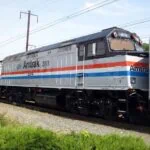
Amtrak operates the Empire Builder daily using Superliner equipment, the same double-decker cars used on the California Zephyr, Coast Starlight and Southwest Chief. The train splits at Spokane, Washington, with one section continuing to Seattle and the other to Portland, giving passengers a choice of two very different final approaches.
For anyone hoping to combine classic American rail travel with genuine wilderness scenery, the Empire Builder is difficult to beat. This guide covers the full route, the Glacier National Park stops, onboard facilities and everything else you need to plan your own journey.
It’s also one of four great western long-distance trains, alongside the California Zephyr, Coast Starlight and Southwest Chief, all of which can be combined on a single Amtrak USA Rail Pass itinerary for travellers planning a longer trip across the country.
The name itself is a nod to the “Empire Builder” nickname given to James J. Hill during his lifetime, in recognition of the vast rail network he assembled across the northern plains and Rocky Mountains long before Amtrak took over passenger operations in 1971.
The Empire Builder Route: Chicago to the Pacific Northwest
The Empire Builder covers around 2,206 miles (3,550 km) between Chicago and Seattle, or approximately 2,257 miles (3,632 km) to Portland, making it one of Amtrak’s longest single routes. The full journey takes roughly 45 to 46 hours, meaning passengers spend two full nights onboard regardless of which branch they take at the end.
Along the way, the train crosses eight states: Illinois, Wisconsin, Minnesota, North Dakota, Montana, Idaho, Washington and Oregon. Few Amtrak routes cover this much ground or this many distinct landscapes, from Midwestern farmland to high plains, mountains and coastal rainforest, all in a single continuous trip.
Amtrak runs the Empire Builder daily in both directions, departing Chicago Union Station and terminating at either Seattle’s King Street Station or Portland’s Union Station, depending on which section of the train you’re booked on. Both sections share the same equipment and onboard facilities for the majority of the trip.
The train carries Coach seating and private Sleeper cabins, along with a traditional dining car, cafe and the glass-walled Sightseer Lounge found across Amtrak’s Superliner fleet. Every passenger, regardless of ticket type, has access to the lounge car throughout the journey.
The defining feature of the route is undoubtedly its access to Glacier National Park, reached roughly a day and a half into the journey from Chicago. Most eastbound and westbound schedules are timed so this stretch falls in daylight, weather and delays permitting.
At Spokane, Washington, the train physically splits into two sections. Passengers bound for Seattle continue over the Cascade Range, while those heading to Portland follow the Columbia River Gorge, and the change is handled automatically by Amtrak staff overnight without passengers needing to do anything.
Because so much ground is covered in under two days, the Empire Builder rewards passengers who treat the journey itself as the destination rather than simply a way of reaching Seattle or Portland. The route genuinely earns its reputation as one of America’s great train journeys.
Compared with the California Zephyr’s mountain-heavy middle section, the Empire Builder’s highlights are more spread out across the whole route, with the plains, badlands, Glacier crossing and Pacific Northwest forests each offering a distinctly different character rather than one single dramatic centrepiece.
Best if you want daily housekeeping and a front desk. Filter by area first, then by price.
Check availabilityBest for groups who want one address and separate bedrooms rather than three hotel rooms.
See holiday homesBest as a last check before booking. Compares hotel rates across several sites in one search.
Compare ratesChicago to the Twin Cities: Wisconsin, the Mississippi River and Minnesota
The Empire Builder departs from the magnificent Chicago Union Station, shared with the California Zephyr and Southwest Chief, before heading north through Chicago’s suburbs and into southern Wisconsin. Early stops include Glenview and Milwaukee, Wisconsin’s largest city, known for its brewing heritage and lakefront setting.
From Milwaukee, the train continues west through Columbus, Portage and Wisconsin Dells, a region famous for its dramatic sandstone rock formations carved by the Wisconsin River, before reaching Tomah and La Crosse on the eastern bank of the Mississippi.
The route then follows the Mississippi River closely for a scenic stretch through Winona and Red Wing, with high limestone bluffs rising on one side and the wide river on the other, a section many first-time passengers don’t expect from a route better known for its mountain scenery further west.
The train arrives into St. Paul-Minneapolis, jointly known as the Twin Cities, one of the largest metropolitan areas on the entire route. Many passengers joining or leaving partway through their journey use this stop as a starting or ending point, given its excellent onward transport connections.
This opening stretch, usually completed overnight or in the early morning depending on direction, offers a gentle introduction to the journey before the landscape opens out dramatically across the northern plains the following day.
Passengers travelling westbound overnight from Chicago will typically wake up somewhere around St. Cloud or further into Minnesota, having slept through the Wisconsin countryside and the Mississippi River crossing entirely, so an evening spent in the Sightseer Lounge before bed is worthwhile if you don’t want to miss it.
Eastbound passengers heading towards Chicago see this same stretch in reverse on their final morning, making the Mississippi River bluffs around Winona and Red Wing one of the last major scenic highlights before the journey concludes back at Union Station.
Across the Northern Plains: North Dakota’s Badlands and Eastern Montana
West of the Twin Cities, the Empire Builder passes through St. Cloud, Staples and Detroit Lakes as Minnesota’s farmland gradually gives way to the flat, open plains that define much of North Dakota. The scenery here is subtle but genuinely vast, with horizons stretching for miles in every direction.
The train reaches Fargo, North Dakota’s largest city, before continuing through Grand Forks, Devils Lake, Rugby and Minot, passing through some of the emptiest and least-visited parts of the country, where small farming towns are spaced far apart along the line.
Further west, the route brushes the edge of the North Dakota Badlands near Williston, a dramatic landscape of eroded buttes and canyons that also borders Theodore Roosevelt National Park, although the train doesn’t stop directly at the park itself.
Crossing into Montana, the Empire Builder calls at Wolf Point, Glasgow, Malta and Havre, running close to the Canadian border through vast cattle ranching country. This is genuinely one of the least populated stretches of railway anywhere in the United States, and it can feel like travelling through an entirely different era.
Although less dramatic than the mountains that follow, this section gives a real sense of the sheer scale of the American interior, and many passengers find the emptiness of eastern Montana just as memorable as the more obviously scenic stretches further west.
Wildlife sightings become more common through this stretch, with pronghorn antelope and occasionally deer visible grazing near the tracks, particularly around dawn and dusk when the train’s timetable often coincides with peak animal activity across the plains.
Glacier National Park by Train: East Glacier, Essex and West Glacier
This is the section that defines the Empire Builder for most passengers. After passing Shelby and Cut Bank, the train climbs towards Browning, gateway to the Blackfeet Nation, before reaching East Glacier Park, the eastern gateway to Glacier National Park and home to the historic Glacier Park Lodge.
From East Glacier, the train crosses the Continental Divide at Marias Pass, one of the lowest crossings of the Rocky Mountains anywhere on the continent, before descending alongside the Middle Fork of the Flathead River with the park’s mountains rising dramatically on the northern side of the train.
The train calls at Essex, home to the historic Izaak Walton Inn, a former railway lodge popular with hikers and cross-country skiers, before continuing to West Glacier, the main year-round gateway into the park and the closest station to Glacier’s famous Going-to-the-Sun Road.
Unlike many national park approaches that require a lengthy drive from the nearest station, Glacier is genuinely walkable from West Glacier, and many hikers use the Empire Builder as their only transport to and from the park, avoiding the need for a rental car entirely.
Because these stations sit at higher elevation and further north than most of the route, services can occasionally be affected by winter weather, so it’s worth checking conditions before travelling between late autumn and early spring if Glacier is your main reason for booking.
Scheduling is generally arranged so this section falls in daylight for passengers travelling in both directions, though delays elsewhere on the route can occasionally push the crossing into darkness, particularly during the shorter days of winter.
Hikers heading into the park for multi-day trips often plan to disembark at West Glacier or East Glacier Park and rejoin the train several days later on a return working, using the Empire Builder as both the outbound and return leg of a car-free Glacier itinerary.
Glacier’s free in-park shuttle system connects West Glacier with trailheads and viewpoints along the Going-to-the-Sun Road during the summer season, which is another reason so many visitors manage a Glacier trip entirely without renting a car once they step off the train.

How to Visit Glacier National Park on the Empire Builder
The Empire Builder provides one of the most unusual ways to reach an American national park because you can step off a long-distance train almost directly into Glacier National Park country. However, choosing the right station is important because the different Glacier stops suit different types of trip.
West Glacier is one of the most useful choices for first-time visitors. The station provides access to the western side of the park and places you close to the communities and visitor facilities around the West Glacier entrance. If your plans revolve around exploring the western side of Going-to-the-Sun Road, this is likely to be the station you’ll investigate first.
East Glacier Park provides a completely different starting point on the eastern side of the Continental Divide. It’s particularly attractive for travellers staying around the historic Glacier Park Lodge or exploring the eastern side of the park during the main summer season.
The Empire Builder also stops at Essex, between the two main gateways. This is a much smaller and more isolated location and is better suited to travellers who have deliberately chosen accommodation or outdoor activities in the area rather than visitors simply looking for the easiest general entrance to Glacier.
Don’t assume that arriving by train means every part of Glacier is immediately accessible without further planning. The park is enormous, seasonal roads and transport services affect what you can reach, and some trailheads and attractions are considerable distances from the railway stations.
If Glacier is the main reason for your journey, we’d plan it as a proper stopover of several days. Book the Empire Builder to your chosen Glacier station, stay in or around the park, and then reserve a later Empire Builder departure when you’re ready to continue towards Seattle, Portland or Chicago.
This is where the train becomes much more than sightseeing transportation. Rather than watching Glacier’s mountains through the Sightseer Lounge and continuing straight through, you can use the Empire Builder as the beginning and end of a genuine national park holiday.
Whitefish to Spokane: The Continental Divide and Kootenai Country
Beyond West Glacier, the train reaches Whitefish, a popular ski resort town and one of the more substantial stops in this part of Montana, with a small but attractive downtown that’s easily explored during a longer station stop.
From Whitefish, the Empire Builder continues through increasingly forested terrain towards Libby, close to the Kootenai National Forest, before crossing into the Idaho panhandle, a narrow strip of mountainous, heavily forested land wedged between Montana and Washington.
The train calls at Sandpoint, Idaho, set beside the shores of Lake Pend Oreille, one of the deepest lakes in the United States, before continuing west into eastern Washington and the agricultural landscape surrounding Spokane.
This stretch tends to be quieter and less crowded than the Glacier section, but the dense forest, mountain lakes and river crossings make it one of the more underrated parts of the entire journey, especially for passengers who enjoy the Sightseer Lounge without a crowd.
Spokane itself is a significant stop, not just scenically but operationally, since this is where the Empire Builder divides into its two separate sections for the remainder of the journey towards the coast.
Passengers with a longer layover here can explore Spokane’s compact downtown and riverfront park, both within easy walking distance of the station, before reboarding for the final overnight stretch towards Seattle or Portland.
The stretch between Sandpoint and Spokane also crosses several smaller rivers and forested ridgelines that don’t get the same attention as Glacier further east, but are well worth watching for from the Sightseer Lounge on a clear afternoon.
The Spokane Split: Seattle via the Cascades or Portland via the Columbia River Gorge
At Spokane, the Empire Builder separates into two distinct trains overnight, with Amtrak staff handling the changeover while passengers sleep. Depending on your ticket, you’ll continue towards either Seattle or Portland, and the two branches offer genuinely different final scenery.
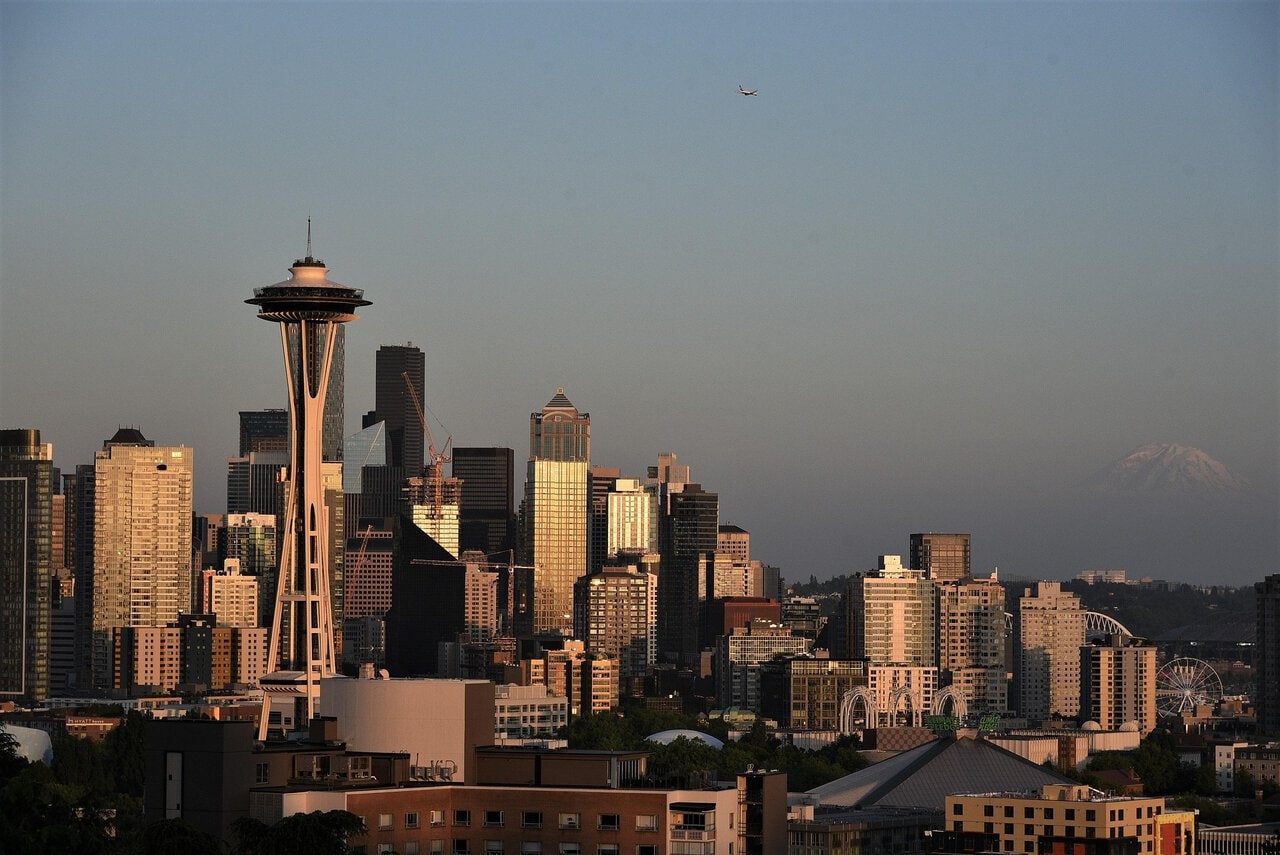
The Seattle section continues through Ephrata, Wenatchee and Leavenworth, a Bavarian-themed mountain town, before crossing the Cascade Range via Stevens Pass and the Cascade Tunnel, one of the longest railway tunnels in North America, then descending towards Puget Sound and arriving at Seattle’s King Street Station.
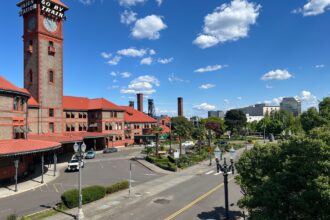
The Portland section instead follows the Columbia River for a long, dramatic stretch through the Columbia River Gorge, passing towns including Pasco, Wishram and Bingen-White Salmon, with towering cliffs and waterfalls visible on both sides of the river before arriving into Portland’s Union Station.
Both branches are genuinely scenic in their own right, and there’s no clear “better” choice between them; the decision usually comes down to which city better suits the rest of your itinerary rather than the onboard scenery.
Passengers connecting onward to the Coast Starlight can do so from either terminus, since that route also calls at both Seattle and Portland on its way south towards California and Los Angeles.
If you’re undecided, Seattle offers easier onward connections for Alaska cruises and Pacific Northwest exploring, while Portland tends to suit travellers heading further south into Oregon’s wine country or along the coast, so let your wider itinerary make the choice for you.
Best for long or awkward journeys. Builds one itinerary out of separate flights.
View flightsBest if you want maps and messaging working the moment you switch your phone on.
See eSIM plansBest when public transport has stopped, or when you are travelling with children and bags.
Book a transferSeattle or Portland: Which Empire Builder Branch Should You Choose?
Every Empire Builder passenger heading west eventually faces an unusual choice: Seattle or Portland? The train divides at Spokane, and the two sections follow completely different routes across Washington and Oregon before reaching the Pacific Northwest.
Choose Seattle and your section heads across Washington towards Wenatchee and Leavenworth before tackling the Cascade Range. The railway crosses Stevens Pass and passes through the Cascade Tunnel before descending towards Puget Sound and eventually arriving at Seattle’s King Street Station.
Choose Portland and you’ll experience a very different final journey. This section turns south before following the Columbia River Gorge, with the railway running alongside the river beneath huge cliffs as it approaches Portland.
For scenery alone, there isn’t an obvious wrong answer. The Seattle branch provides the mountain crossing, while the Portland branch provides the river gorge, so the better choice depends partly on which type of landscape appeals to you.
Your onward plans are probably the better deciding factor. Seattle makes sense if you’re continuing around Puget Sound, heading towards Vancouver or incorporating an Alaska cruise. Portland is the natural choice if Oregon is next on your itinerary.
Both cities are also served by the Coast Starlight, so either branch can be used to continue south towards California. This opens up an excellent circular Amtrak itinerary in which you take the Empire Builder west from Chicago and then turn south down the Pacific Coast.
If you genuinely want to experience both Empire Builder branches, the easiest solution is to make them part of separate journeys rather than worrying about which one you’re missing. Take one branch westbound and consider the other on a future eastbound journey.
Which Side of the Empire Builder Should You Sit On?
There isn’t one side of the Empire Builder that provides the best views for the entire 2,200-mile journey. The railway changes direction repeatedly and the major scenery appears on different sides as the train crosses the northern United States.
The section where your position matters most is Glacier National Park. As the train crosses Marias Pass and travels between East Glacier, Essex and West Glacier, mountains, river valleys and forest appear on both sides at different points, making it difficult to choose one Coach seat that guarantees every major view.
Fortunately, the Empire Builder has a much better solution: the Sightseer Lounge. Its large windows on both sides make it the best place to watch the Glacier crossing, and you can move your attention from one side of the train to the other as the landscape changes.
Your choice becomes more important again after Spokane. On the Portland branch, passengers should watch for views across the Columbia River Gorge, while the Seattle branch offers changing mountain views as the railway crosses the Cascades towards Puget Sound.
If you’re travelling in a Roomette, remember that your cabin may be positioned on either side of the train and you generally shouldn’t choose your accommodation purely around a promised scenic side. The train’s orientation and consist can vary.
Our preference would therefore be simple: choose your accommodation for comfort and use the Sightseer Lounge for the major scenic sections. Head there before Glacier rather than waiting until the mountains appear, because seats can become extremely popular once the train reaches the Rockies.
Booking Empire Builder Tickets with Omio
You can search for Empire Builder tickets through Omio, which can be particularly useful if you’re planning a wider American journey and want to keep different rail and transport bookings together in one place.
For the complete journey, search from Chicago to Seattle or Chicago to Portland, depending on which branch of the Empire Builder you want to take after Spokane. You can also search shorter journeys such as Chicago to Glacier National Park, Minneapolis–St Paul to Whitefish or Whitefish to Seattle if you’re only travelling over part of the route.
The destination you choose matters more on the Empire Builder than on most Amtrak trains because the service splits at Spokane. Make sure your booking shows the correct final destination rather than assuming you can decide between Seattle and Portland once you’re onboard.
If you’re travelling all the way from Chicago to the Pacific Northwest, check the accommodation type carefully. The journey involves two nights aboard the train, making a private Roomette or Bedroom considerably more comfortable than spending the entire journey in a Coach seat.
Travellers planning to leave the train at Glacier National Park should also book the journey in appropriate segments if they intend to stay for several days before continuing west. Your original ticket doesn’t allow you simply to leave the train and resume the same journey whenever you choose.
If the Empire Builder is only one part of a larger American rail adventure, compare the cost of individual tickets with the Amtrak USA Rail Pass before booking. Chicago and the Pacific Northwest provide excellent connections with other long-distance Amtrak routes.
Book Amtrak Tickets and Sleeper Trains
Travelling by train in the United States can be a memorable way to cover long distances, especially on scenic routes and overnight journeys. Amtrak lets you book rail tickets, long-distance services, and sleeper train journeys across the country.
It is ideal for city-to-city travel, cross-country rail trips, and travellers who want a slower, more comfortable alternative to flying. Sleeper trains can also make long journeys easier by combining transport and overnight accommodation.

Choosing a Sleeper Cabin for Glacier Country
Given that the Empire Builder involves two full nights onboard, the choice between Coach and Sleeper accommodation matters more here than on many shorter Amtrak routes. Most passengers travelling the complete route find a private cabin makes a substantial difference to comfort over such a long journey.
The Roomette is the most popular choice, suited to one or two people, with two seats that convert into a bed at night and a second berth folding down from above. Roomette fares include all dining car meals, bedding and access to shared shower facilities.
Passengers wanting extra space can book a Bedroom, which includes a private toilet and shower alongside more room to move around. Family Bedrooms suit parents travelling with children, while Accessible Bedrooms offer additional space for passengers with reduced mobility.
All sleeper passengers receive full dining car meals as part of their fare, a genuine saving over two nights and roughly two and a half days onboard, where buying every meal individually from the cafe car would otherwise add up quickly.
For a journey involving two overnight stretches, many travellers consider a Roomette close to essential rather than a luxury, since Coach seats, while reclining, don’t offer anywhere near the same quality of sleep across such a long, continuous trip.
The table below summarises the key differences between Coach, Roomette and Bedroom accommodation, to help you decide which suits your budget and comfort expectations for a journey of this length.
| Feature | Coach Class | Roomette | Bedroom |
|---|---|---|---|
| Private accommodation | ❌ | ✅ | ✅ |
| Bed for sleeping | ❌ (reclining seat only) | ✅ Upper & lower bunks | ✅ Full-sized beds |
| Meals included | ❌ | ✅ | ✅ |
| Private toilet and shower | ❌ | ❌ (shared facilities) | ✅ |
| Sightseer Lounge access | ✅ | ✅ | ✅ |
| Dining Car access | Cafe car only | Included | Included |
| Best for | Budget travellers, shorter segments | Couples and solo travellers | Maximum comfort |
Dining on the Empire Builder
Dining plays a big part in the Empire Builder experience, especially given the length of the journey. Sleeper passengers have all meals included and are seated in the traditional Dining Car, often at shared tables, which is a great opportunity to meet other travellers over the course of two full days onboard.
The dining car menu features American staples such as steak, chicken, pasta, burgers and salads, alongside regional touches on some departures, with breakfast, lunch and dinner service announced over the intercom at set times throughout the day.
Coach passengers can use the Cafe Car, offering sandwiches, snacks, pizza, beer, wine and coffee without needing a reservation, making it a flexible option for anyone who prefers to eat casually or at irregular times during the journey.
Because the Empire Builder runs through some genuinely remote parts of Montana and North Dakota, the dining and cafe cars are the only reliable source of food for long stretches of the journey, so it’s worth planning around scheduled mealtimes if you’re travelling in Coach.
If you have dietary requirements, Amtrak can usually accommodate vegetarian, vegan and gluten-free diets, though notifying staff at the time of booking is recommended so the kitchen can prepare accordingly.
Mealtimes double as a natural opportunity to meet fellow passengers, since dining car seating is shared rather than private, and conversations over breakfast somewhere in North Dakota or dinner near Glacier are often remembered as highlights of the whole trip.
Given the two overnight stretches involved, sleeper passengers should expect to eat all six main meals of the round trip in the dining car if travelling the full route, which is a significant part of the value built into the higher sleeper fare.
Because the Empire Builder passes through several time zones between Chicago and the Pacific coast, it’s worth double-checking mealtimes against local time as the journey progresses, since the onboard schedule generally follows whichever zone the train is currently passing through.
The Sightseer Lounge and Observation Car
The Sightseer Lounge is the best place onboard to watch the Empire Builder’s scenery unfold, with floor-to-ceiling windows curving into the roof of the carriage for uninterrupted views on both sides of the train.
This car is particularly popular during the Glacier National Park crossing, when passengers gather well in advance of East Glacier to secure good seats for the Marias Pass crossing and the Flathead River canyon that follows it.
Comfortable lounge seating replaces the usual rows found in Coach, and the lower level houses the Cafe Car, so passengers can pick up a drink or snack without leaving the scenic views behind for long.
Because the Glacier section is the single most popular stretch of the entire route, the lounge can fill up quickly around East Glacier and Essex, head to the Sightseer Lounge well before the train reaches Glacier, as window seats can fill quickly.
Even outside the Glacier crossing, the lounge remains a good place to spend time, particularly through the Columbia River Gorge on the Portland branch or the Cascade crossing on the Seattle branch, both of which offer their own dramatic scenery.
For photographers, the lounge’s elevated seating and wide windows make it noticeably easier to capture the Flathead River, the Rocky Mountain front near East Glacier and the forested lakes of the Idaho panhandle than trying to shoot through a standard Coach window.
Onboard staff, including the train’s conductors and dining car crew, will often make announcements ahead of major landmarks such as Marias Pass or the Columbia River Gorge, giving passengers advance notice to head to the lounge before the best views arrive.
Best for solo travellers and anyone watching the budget. Dorm beds and private rooms in the same search.
Browse hostelsBest if you have ever given up on a claim. AirHelp checks whether the flight qualifies and pursues it for you.
See the benefitsBest if your room is not ready yet. Left luggage booked in advance, so you are not hunting for a locker.
Check storageEmpire Builder vs Flying to Glacier National Park
Most visitors reaching Glacier National Park fly into Kalispell or Missoula and drive the rest of the way, so it’s worth weighing up how the Empire Builder compares to that more conventional approach before booking either option.
The biggest advantage of the train is that it drops you directly at East Glacier Park, Essex or West Glacier, right on the park boundary, without needing a rental car at all. Many hikers use the free in-park shuttle system once they arrive, making a car genuinely unnecessary for a Glacier-only trip.
Flying is undeniably faster if Glacier is your only destination, since the drive from Kalispell airport to West Glacier takes under an hour, compared with well over a day on the train from Chicago or Seattle. For a quick long weekend, flying and driving usually makes more sense.
The train wins out, however, if Glacier is one stop on a bigger American trip rather than the only destination. Arriving by rail from Chicago or Seattle turns the journey itself into part of the holiday, rather than a logistics problem to solve before the real trip begins.
There’s also a cost angle worth considering. A Roomette for the Glacier stretch, combined with the included dining car meals, can work out competitively against a flight, rental car and several nights of lodging near the park, particularly if you’re travelling with a partner and splitting the cabin cost.
Our overall view is that the Empire Builder is genuinely worth choosing over flying for travellers who have the time and want the journey itself to be part of the experience, while those short on time or purely focused on maximising days inside the park may still prefer to fly.
A useful middle-ground option is to take the Empire Builder in one direction and fly the other, riding the scenic Glacier crossing once while saving time on the return leg, particularly if your onward plans start from a different city than where you began.
It’s also worth factoring in that flying to Glacier typically means arriving tired after a connecting flight and an immediate drive, whereas arriving by train means you’ve already had two nights to rest, eat properly and settle in before reaching the park itself.
Travellers coming from outside the United States often find the train option particularly appealing, since it avoids an additional domestic flight connection and instead turns the transfer from Chicago into a scenic two-day introduction to the American landscape.
Best Time of Year to Ride the Empire Builder
The Empire Builder runs year-round, but the time of year genuinely changes what you’ll see and experience, particularly around the Glacier National Park section, which has its own distinct seasonal rhythm separate from the rest of the route.
Summer is by far the most popular season, since Glacier’s Going-to-the-Sun Road is only fully open from around June or July through September, and long daylight hours mean the Glacier crossing and Columbia River Gorge are both more likely to be seen in good light.
Spring and autumn bring fewer crowds and lower fares, though some park facilities and shuttle services around Glacier may have reduced hours or remain closed until the road fully opens, so it’s worth checking conditions if visiting the park itself is your main goal.
Winter transforms the entire route into a snow-covered landscape, particularly across North Dakota and Montana, and while Glacier’s high-country road access is limited, the snow-covered mountains around Essex and West Glacier are spectacular from the train itself.
Winter travel does come with a higher chance of weather-related delays, given the exposed, high-elevation sections of track through Montana, so building some flexibility into your onward plans is a sensible precaution if you’re travelling between November and March.
Autumn is an underrated choice for the plains sections, with golden wheat fields across North Dakota and eastern Montana giving the otherwise subtle scenery a burst of colour before the first snows typically arrive in late October or November.
Whichever season you choose, it’s worth checking Glacier National Park’s own seasonal opening dates separately from Amtrak’s timetable, since the park’s high-country facilities operate on their own schedule that can shift slightly from year to year depending on snowfall.
The table below summarises what to expect in each season, particularly with Glacier National Park’s own opening dates in mind, since these can shift slightly from year to year depending on snow clearance.
| Season | What to Expect | Best For |
|---|---|---|
| Spring | Fewer crowds, partial Glacier road access | Lower fares and quieter trains |
| Summer | Going-to-the-Sun Road fully open, long daylight | First-time visitors and Glacier hiking |
| Autumn | Cooler weather, fewer crowds | Scenic colour and quieter trains |
| Winter | Snow-covered plains and mountains | Dramatic scenery, lower fares |
Does the Amtrak USA Rail Pass Cover the Empire Builder?
If the Empire Builder is one leg of a bigger American rail trip, it’s worth looking at the Amtrak USA Rail Pass before booking tickets individually, particularly if you’re planning to see more than one region of the country by train.
The Rail Pass allows travel on multiple Amtrak routes within a set validity period. Many travellers combine the Empire Builder with the California Zephyr, Coast Starlight or Southwest Chief to build a longer western loop starting and ending in Chicago or Seattle.
Since the Empire Builder shares Chicago Union Station with the California Zephyr and Southwest Chief, it’s straightforward to plan a wider itinerary that departs from the same station for a different western route, without needing to backtrack across the country.
Remember that the Rail Pass covers eligible Coach travel only. Private sleeper accommodation isn’t included and is booked as a separate charge, which matters more on the Empire Builder than on shorter routes given the two overnight stretches involved.
Our full Amtrak USA Rail Pass Guide explains exactly how the pass works, what’s included and who is most likely to benefit from buying one before you start planning your itinerary in detail.
Before committing to a pass, it’s worth pricing up your planned individual tickets as a comparison. If Glacier National Park is your only stop and you’re not combining several long routes, buying a single ticket may work out simpler and cheaper than the pass.

Practical Tips for Riding the Empire Builder
A journey of over 45 hours rewards a bit of planning. Small choices before you board can make a real difference to comfort over two full nights onboard, especially through the more remote sections of the route.
Book sleeper cabins well ahead for summer. Roomettes and Bedrooms on Glacier-bound departures sell out especially quickly between June and September, sometimes months in advance of peak dates.
Check which section you’re booked on at Spokane. Make sure your ticket clearly shows Seattle or Portland as your final destination, since the train genuinely splits into two separate services overnight.
Pack warm layers even in summer. Temperatures around Glacier National Park and the higher sections of Montana can be significantly cooler than Chicago or Seattle, especially in the early morning.
Download entertainment before boarding. Mobile signal and Wi-Fi are unreliable across large stretches of North Dakota and Montana, so don’t rely on streaming anything during the journey.
Finally, allow flexibility for onward connections. Winter weather and freight congestion can occasionally delay the Empire Builder, so avoid booking especially tight connections at Seattle, Portland or Chicago if you can help it.
Bring a portable charger. Power outlets are available at most seats, but with two nights onboard, a spare battery pack for your phone or camera is worth having as a backup, especially through the Glacier crossing.
Bring binoculars if you have them. Wildlife including deer, pronghorn and occasionally bald eagles are regularly spotted along the northern plains and around Glacier National Park, particularly in the early morning.

Rupert’s Handy Travel Tips
If you’re planning to ride the Empire Builder, here are a few tips to help you make the most of the journey:
- Book Glacier-season sleepers early: Roomettes and Bedrooms on summer departures sell out fast, especially around East Glacier and West Glacier.
- Sit in the Sightseer Lounge for Marias Pass: The crossing near East Glacier and Essex is the scenic highlight of the entire route.
- Double-check your Spokane branch: Confirm whether your ticket continues to Seattle or Portland, since the train splits overnight.
- Pack layers regardless of season: Montana’s mountain sections can be far colder than Chicago or the coast.
Want to meet the reindeer behind our travel tips? Find out more in our page Who is Rupert?.




Frequently Asked Questions
How long does the Empire Builder take?
The full journey between Chicago and Seattle or Portland takes roughly 45 to 46 hours, covering around 2,200 to 2,260 miles depending on which branch you travel.
Does the Empire Builder actually stop at Glacier National Park?
Yes. The train calls at East Glacier Park, Essex and West Glacier, all located on or immediately beside the park boundary, making it one of the only direct rail routes to a major American national park.
Do I need to change trains at Spokane?
No. The train physically splits at Spokane into a Seattle section and a Portland section, but this happens overnight and is handled by Amtrak staff, so passengers don’t need to do anything themselves.
Are meals included on the Empire Builder?
Meals are included for passengers travelling in Sleeper accommodation. Coach passengers can buy food and drink from the Cafe Car throughout the journey.
What’s the best time of year to see Glacier National Park from the train?
Summer offers the longest daylight and full access to Glacier’s Going-to-the-Sun Road, but spring and autumn bring fewer crowds and lower fares if you don’t need the road fully open.
Can you break your journey at Glacier National Park?
Yes, many passengers stop at East Glacier Park or West Glacier for several days before continuing on a later train, though this needs to be booked as separate ticket segments.
Is Wi-Fi available on the Empire Builder?
Wi-Fi is offered onboard but is unreliable across much of North Dakota and Montana, so it’s sensible to download entertainment and anything else you need before boarding.
Can you use the Amtrak USA Rail Pass on the Empire Builder?
Yes, the Empire Builder can be included in a Rail Pass itinerary in Coach, subject to availability. Sleeper cabins are booked separately and are not covered by the standard pass.
What equipment does the Empire Builder use?
The train runs with Superliner bilevel cars, the same equipment family used on the California Zephyr, Coast Starlight and Southwest Chief, giving all four western long-distance trains broadly similar cabin types and onboard facilities.
Is the Empire Builder the only Amtrak train that serves Glacier National Park?
Yes. It’s the only Amtrak route with stations directly on the boundary of a major national park in this part of the country, making it a genuinely unique option for reaching Glacier without a car.
Can you smoke on the Empire Builder?
Smoking isn’t permitted anywhere on board, e-cigarettes included, for the entire Chicago to Seattle or Portland run. Amtrak only allows platform smoking at longer stops the crew specifically announce, and Whitefish, already noted above as one of the more substantial station stops in this part of Montana, is a reasonable candidate for that kind of pause. Even there, stay right beside the train and reboard the instant the horn sounds, because a delayed train can see the stop cut short or cancelled.
Further Reading
If you’re planning a rail trip through the northern United States or beyond, these guides can help you plan the rest of your journey and decide which other routes fit your itinerary.
Our Amtrak Routes Guide compares every major long-distance route across the country, while our Amtrak Sleeper Train Guide explains the different cabin types in more detail. If you’re combining several journeys, our Amtrak USA Rail Pass Guide shows how the pass works and who benefits most from buying one.
The Empire Builder is one of four great western long-distance trains bookable together on a Rail Pass itinerary. Read our guides to the California Zephyr, Coast Starlight and Southwest Chief to see how they could combine into a longer American rail adventure.
Each of our Amtrak guides covers the scenery, onboard facilities and practical tips you need to plan your own journey, whether you’re travelling for a single overnight trip, a Glacier National Park getaway or crossing the entire country by train over several weeks.
Together, these guides should give you everything you need to plan a wider northern or western rail itinerary, whether Glacier National Park is your main destination or simply one stop among several on a longer American adventure.