Reviewed by our editorial team Updated
Why the Texas Eagle Is Amtrak’s Longest Rail Journey
Three times a week, the Texas Eagle becomes part of something remarkable: combined with the Sunset Limited at San Antonio, it forms a continuous 2,728-mile journey between Chicago and Los Angeles, widely recognised as Amtrak’s longest single-ticket rail route. Even on its own, the daily Chicago-to-San Antonio service covers a substantial 1,306 miles.
The Texas Eagle runs daily between Chicago Union Station and San Antonio, taking around 32 hours and crossing Illinois, Missouri, Arkansas and Texas. It’s one of the great Midwest-to-South journeys on the Amtrak network, linking the prairies of Illinois with the Ozark foothills of Missouri and Arkansas before arriving in the heart of Texas.
What sets the Texas Eagle apart from other long-distance trains is this dual identity. Most days, it’s simply a reliable daily service between Chicago and San Antonio. But three days a week, its sleeping cars and coaches are physically combined with the Sunset Limited, continuing on through El Paso and Tucson all the way to Los Angeles, taking around 65 hours in total.
Along the way, the Texas Eagle calls at major cities including St. Louis, Little Rock, Dallas, Fort Worth and Austin, giving passengers a genuine cross-section of Middle America and the South in a single trip. It’s a favourite among rail travellers who want to see the country change dramatically from window to window.
Whether you’re riding the daily Chicago-to-San Antonio service or chasing the full three-times-weekly run to Los Angeles, the Texas Eagle offers one of the most varied and rewarding long-distance journeys Amtrak operates.
Few Amtrak routes pack in as much geographic variety: prairie farmland, the Mississippi River, the wooded Ozark hills, East Texas pine forest, the Texas Hill Country, and, on the days it extends further, the Chihuahuan and Sonoran deserts of the Southwest.
The train takes its name from the historic Missouri Pacific Railroad “Eagle” fleet, a nod to a network of named passenger trains that once linked Chicago, St. Louis and the American South decades before Amtrak took over intercity rail service in 1971.
This guide covers the full route, the sleeper cabins and dining service, how the connection to the Sunset Limited works, and the practical details you need to plan a trip on either the daily or the extended service.
Texas Eagle Route at a Glance
The table below summarises the core details of the Texas Eagle, both as a standalone daily service and as part of the combined route to Los Angeles.
Understanding the dual nature of this route is essential before booking. The daily Chicago-to-San Antonio service is a straightforward, dependable long-distance train. The extension beyond San Antonio, running just three days a week, is what transforms it into Amtrak’s longest continuous journey.
Even without the extension, the standalone Chicago-to-San Antonio run is one of the longer daily services Amtrak operates, comparable in length to some of the network’s dedicated western long-distance trains despite running through the Midwest and South.
Passengers planning their trip should also be aware that the departure time from Chicago and the day of the week both affect which stretches of the route pass in daylight versus overnight darkness, which matters if scenery is your priority.
| Feature | Details |
|---|---|
| Route | Chicago, Illinois to San Antonio, Texas (daily); continues to Los Angeles 3x weekly |
| Distance (Chicago–San Antonio) | Approximately 1,306 miles (2,102 km) |
| Distance (Chicago–Los Angeles combined) | Approximately 2,728 miles (4,390 km) |
| Journey Time (Chicago–San Antonio) | Around 32 hours |
| Journey Time (Chicago–Los Angeles) | Around 65 hours |
| States Crossed | Illinois, Missouri, Arkansas, Texas (plus New Mexico, Arizona, California when extended) |
| Major Cities | Chicago, St. Louis, Little Rock, Dallas, Fort Worth, Austin, San Antonio |
| Sleeper Accommodation | Yes – Roomettes, Bedrooms, Family and Accessible Bedrooms |
| Dining | Flexible Dining/Café (Chicago–San Antonio); traditional Dining Car (San Antonio–Los Angeles) |
| Sightseer Lounge | Yes |
| Frequency | Daily to San Antonio; three times weekly through to Los Angeles |
Best for a short trip. Compare rooms by neighbourhood, price and guest rating before you book.
Compare hotelsBest for groups who want one address and separate bedrooms rather than three hotel rooms.
See holiday homesBest if you have already picked a hotel. Checks the big booking sites for the same room and shows who is cheapest.
Check dealsChicago to St. Louis: Illinois and the Mississippi River
The Texas Eagle departs Chicago Union Station in the early afternoon, heading south through the Illinois suburbs before settling into open farmland. Early stops include Joliet and Pontiac, both firmly within the state’s agricultural heartland, often called the Land of Lincoln.
The train continues through Bloomington-Normal and the state capital Springfield, home to several sites connected to Abraham Lincoln, before passing smaller communities like Carlinville and Alton on the approach to the Mississippi River.
Crossing the Mississippi River into Missouri is one of the genuine highlights of this opening stretch, with wide views over one of America’s most iconic waterways just before the train pulls into St. Louis.
The bridge crossing itself takes only a couple of minutes, but it’s a genuine landmark moment on the journey, marking the transition from the Midwest proper into the gateway region connecting the Great Plains with the South.
St. Louis is a significant stop on the route, both operationally and scenically, with the city’s famous Gateway Arch National Park visible from parts of the approach. Many passengers use St. Louis as a natural overnight break if travelling in stages rather than straight through.
This section runs mostly during daylight on the southbound departure, giving passengers a proper look at the Illinois farmland and the river crossing rather than sleeping through it, which is one advantage of choosing the early afternoon departure from Chicago.
The route roughly parallels the historic Illinois and Michigan Canal for part of this stretch, a reminder of the transportation corridors that shaped this part of the Midwest long before the modern rail network existed.
Keep an eye out for grain elevators and small-town water towers along this stretch, classic markers of rural Illinois that give a strong sense of place before the scenery shifts further south into Missouri.
St. Louis to Little Rock: Missouri, the Ozarks and Arkansas
South of St. Louis, the Texas Eagle passes through the wooded hills of the Missouri Ozarks, with stops at Poplar Bluff and other small communities in the region. This is a noticeably hillier and more forested stretch than the flat farmland further north.
Crossing into Arkansas, the train calls at Walnut Ridge before continuing to Little Rock, the state capital and one of the more significant stops on the entire route. Little Rock offers a natural window into Southern culture that contrasts sharply with the Midwest scenery covered earlier in the day.
The station in Little Rock sits close to the historic downtown area, and the stop is long enough for a quick breath of fresh air if you’ve been aboard since the previous afternoon in Chicago.
This section typically runs overnight on the southbound journey, so many passengers experience the Ozarks and northern Arkansas in darkness, waking up further south as the train approaches the Texas border.
Beyond Little Rock, stops at Malvern, Arkadelphia and Hope (the birthplace of President Bill Clinton) keep the train moving through smaller Arkansas communities before it reaches the Texas state line at Texarkana.
Texarkana straddles the Texas-Arkansas border and marks a genuine milestone in the journey, since it’s the first proper Texas stop and signals that the second half of the route to San Antonio is now underway.
This overnight stretch is one of the best times to take advantage of a Roomette or Bedroom, since the scenery outside is largely dark and a proper bed makes a real difference on an overnight run of this length.
Passengers who prefer to stay awake through this section are rewarded with a genuinely dark, star-filled sky over rural Arkansas, a marked contrast to the light pollution common near Chicago and St. Louis earlier in the trip.
Little Rock to Dallas-Fort Worth: Crossing into Texas
From Texarkana, the Texas Eagle continues through Marshall and Longview, both in the pine forests of East Texas, a landscape that surprises many first-time visitors who expect Texas to be flat and dry from the outset.
The train calls at Mineola before reaching the Dallas-Fort Worth metroplex, one of the largest urban areas on the entire route. Arrival into Dallas typically comes in the early morning on the southbound service, giving passengers their first proper look at a major Texas city.
From Dallas, the train continues to Fort Worth, historically a major cattle-driving hub and still known for its Stockyards district. The two cities, though adjoining, retain distinct identities, and the short hop between them is a good introduction to North Texas.
The Dallas-Fort Worth stop is also one of the busier boarding points on the route, with plenty of passengers joining or leaving here for connections onward across Texas or into the wider Amtrak Thruway bus network.
Arriving into Dallas after an overnight journey from Little Rock, many passengers appreciate the chance to stretch their legs on the platform before the relatively short continuation to Fort Worth and the stretch further south towards Austin.

Dallas-Fort Worth to Austin: The Texas Heartland
South of Fort Worth, the Texas Eagle passes through Cleburne and McGregor, smaller communities set among the rolling ranchland of Central Texas, before reaching Temple, an important rail junction historically tied to the Santa Fe Railway.
The train continues through Taylor before arriving in Austin, the Texas state capital and one of the most popular stops on the entire route thanks to its live music scene, food culture and the striking Texas State Capitol building visible near the station.
Many passengers choose to break their journey in Austin, either heading south towards San Antonio afterwards or exploring the city for a few days before continuing their Amtrak trip.
The scenery through this stretch shifts gradually from flatter farmland into the beginnings of the Texas Hill Country, with limestone outcrops and cedar-covered hills becoming more noticeable the further south the train travels.
Austin’s station sits close to downtown, making it one of the more convenient stops on the route for passengers wanting to step off and explore, even for just a few hours, before rejoining the train for the final stretch to San Antonio.
From Austin, the final leg to San Antonio takes only around two hours, making it one of the shortest segments on the entire route and a gentle way to wind down before the operational changeover that happens at journey’s end.
Breaking the Texas Eagle Journey in Austin or San Antonio
The Texas Eagle is particularly well suited to a Texas city break by rail because two of its most interesting destinations appear towards the southern end of the daily route: Austin and San Antonio.
Austin is the obvious choice for travellers interested in live music, nightlife and food. Rather than simply passing through on your way south, you can leave the train here, spend several days in the Texas capital and then continue to San Antonio on a later Texas Eagle.
The railway station is relatively close to Downtown Austin, making the city much easier to incorporate into a rail itinerary than destinations where the Amtrak station sits far outside the centre.
Continue south and San Antonio provides an even stronger stopping point. The city is home to the Alamo, River Walk and one of the most distinctive historic centres in Texas, making it worth considerably more than the long operational stop experienced by passengers continuing towards Los Angeles.
Combining the two creates a straightforward itinerary: Chicago → Austin → San Antonio, with the possibility of continuing west towards Los Angeles afterwards if your dates coincide with the Sunset Limited.
You could also begin your journey elsewhere in Texas. Dallas and Fort Worth are both served by the Texas Eagle, allowing you to create a multi-city Texas rail trip without necessarily travelling all the way from Chicago.
The important thing is to book each part of the journey appropriately. If you’re spending one or more nights in Austin or San Antonio, you’ll need a reservation for the later train on which you intend to continue, rather than simply leaving a through service and attempting to reuse the same reservation.
For travellers with enough time, breaking the journey transforms the Texas Eagle from a 32-hour endurance trip into a practical way of exploring several of Texas’s major cities without driving between them.
Texas Eagle Journey Times, Segment by Segment
For travellers planning to break their journey into stages, it’s helpful to see roughly how long each major segment of the Chicago-to-San-Antonio route takes.
These times are approximate and can shift slightly depending on freight traffic, since the Texas Eagle, like most Amtrak long-distance trains, runs on tracks shared with freight railroads for much of its route.
| Section | Approximate Journey Time | Highlights |
|---|---|---|
| Chicago → St. Louis | 5–6 hours | Illinois farmland, Springfield, Mississippi River crossing |
| St. Louis → Little Rock | 7–8 hours | Missouri Ozarks, forested hills |
| Little Rock → Texarkana | 4–5 hours | Southern Arkansas, Hope |
| Texarkana → Dallas-Fort Worth | 5–6 hours | East Texas pine forests |
| Dallas-Fort Worth → Austin | 5–6 hours | Central Texas ranchland |
| Austin → San Antonio | Around 2 hours | Texas Hill Country approach |
Best for finding routes the airlines do not sell as a single ticket. Combines carriers to bring the fare down.
Search flightsBest for short trips. Install the eSIM at home and arrive with working data, no shop queue.
Browse eSIMsBest after a long flight or a late landing. Price agreed before you travel, and no taxi queue.
Check transfersTexas Eagle to Sunset Limited: The Full Chicago–LA Journey
Three days a week, the Texas Eagle’s sleeping cars and coaches are combined at San Antonio with the Sunset Limited, creating a single through service all the way to Los Angeles. This is what makes the combined 2,728-mile journey possible, and it’s why the Texas Eagle is often described as part of Amtrak’s longest route.
Passengers booked through to Los Angeles keep the same Roomette or Bedroom for the entire trip; there’s no need to change cabins or disembark at San Antonio, since the through cars are simply attached to the Sunset Limited consist for the remainder of the journey.
The full Chicago-to-Los-Angeles journey takes around 65 hours, roughly three nights onboard, crossing Illinois, Missouri, Arkansas, Texas, New Mexico, Arizona and California. It’s one of the most complete cross-sections of the United States available on a single Amtrak ticket.
Because the Sunset Limited extension only runs on specific days, it’s essential to confirm the current three-weekly schedule before booking a Chicago-to-Los-Angeles trip, and to book it as a single through-reservation rather than two separate tickets.
One important change happens at San Antonio regardless of whether you continue to Los Angeles: dining service switches from Flexible Dining to a traditional Dining Car, since the Sunset Limited carries its own full dining car for the desert crossing ahead.
The operational work of joining the two consists at San Antonio can take a while, so don’t be alarmed by a longer than usual station stop; it’s simply the crew combining sleeper and coach cars before the train continues west.
For a detailed look at the second half of this epic journey, from San Antonio through the Texas Hill Country, the Big Bend frontier and the Arizona desert, see our full Sunset Limited Guide.
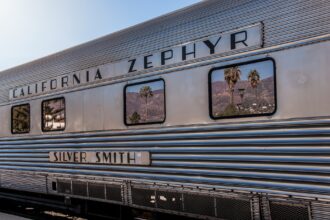
At 2,728 miles, this combined journey comfortably exceeds the California Zephyr’s 2,438 miles, making it the longest continuous rail journey Amtrak offers on a single ticket, even though the extension itself only runs three days a week rather than daily.
Travellers chasing this specific milestone should build their entire trip around the Sunset Limited’s schedule first, then work backwards to confirm a matching Texas Eagle departure from Chicago, since the connection only works on the correct days.
What Happens to the Texas Eagle at San Antonio?
San Antonio is where the Texas Eagle becomes operationally unusual. On the days when through cars continue towards Los Angeles, part of the train is joined to the Sunset Limited for the journey west across Texas, New Mexico, Arizona and California.
If you’ve booked a through journey, you don’t normally need to collect your luggage, find another platform and move into a different sleeper simply because the train number or operating arrangement changes. The relevant through cars are handled by Amtrak while passengers remain booked onwards.
The process can involve a lengthy stop in San Antonio, because railway crews need time to separate, position and combine the relevant sections of the trains. That makes this very different from an ordinary five-minute station call.
If you’re asleep when the work happens, you may notice movements as the cars are shunted and coupled. That’s normal and doesn’t mean you’ve arrived at your final destination.
Passengers terminating in San Antonio simply leave the train there. Those continuing towards Los Angeles should follow instructions from onboard staff rather than treating the extended stop as an opportunity to wander far from the station.
The biggest thing to understand is that the continuation doesn’t happen every day. The Texas Eagle reaches San Antonio daily, while the through service west is tied to the Sunset Limited’s reduced schedule.
That makes your original booking crucial. If your ticket is for a through Chicago-to-Los-Angeles journey on an appropriate operating day, the San Antonio operation is essentially something Amtrak handles for you. If you’ve booked only as far as San Antonio, don’t assume you’ll automatically be able to remain aboard and continue west.
It’s one of the most unusual operations on the Amtrak network and, for railway enthusiasts, watching or simply experiencing the joining process is part of what makes the complete Chicago-to-Los-Angeles Texas Eagle journey so interesting.
Booking Texas Eagle Tickets with Omio
You can search for Texas Eagle tickets through Omio, which is particularly useful if you’re comparing different ways of travelling between the Midwest and Texas or building several transport bookings into a longer American itinerary.
Enter the actual journey you want to make, rather than relying only on the Texas Eagle name. You could search Chicago to St. Louis, Chicago to Dallas, Dallas to Austin or Chicago to San Antonio, as well as the much longer journey towards Los Angeles on dates when through service is available.
The day you travel becomes particularly important if you’re planning to continue beyond San Antonio. The Texas Eagle operates daily between Chicago and San Antonio, but the through journey towards Los Angeles depends on the three-times-weekly Sunset Limited schedule. Check that your chosen journey actually continues west before booking.
For longer journeys, pay close attention to the accommodation type. Coach can be perfectly practical for shorter daytime sections, while a Roomette or Bedroom becomes much more attractive if you’re spending one or more nights aboard the train.
If you’re planning the complete journey towards Los Angeles, check that you’re booking the through itinerary you actually want rather than accidentally creating an unnecessary change or separate connection at San Antonio.
Travellers using the Texas Eagle as one part of a larger American rail trip should also compare individual fares with the Amtrak USA Rail Pass, particularly if you’re combining this journey with another long-distance train from Chicago or Los Angeles.

Book Amtrak Tickets and Sleeper Trains
Travelling by train in the United States can be a memorable way to cover long distances, especially on scenic routes and overnight journeys. Amtrak lets you book rail tickets, long-distance services, and sleeper train journeys across the country.
It is ideal for city-to-city travel, cross-country rail trips, and travellers who want a slower, more comfortable alternative to flying. Sleeper trains can also make long journeys easier by combining transport and overnight accommodation.
Sleeper Cabins on the Texas Eagle
The Texas Eagle uses Amtrak’s Superliner bi-level equipment, the same family of cars used on the California Zephyr and Sunset Limited. For the 32-hour Chicago-to-San Antonio run, or the full 65-hour trip to Los Angeles, many passengers choose to upgrade from Coach.
The Roomette remains the most popular sleeper option, suited to one or two passengers, with two facing seats converting into a lower bed and a fold-down upper bunk. Roomette guests receive meals, bedding and access to shared shower facilities.
For extra space, the Bedroom includes a private toilet and shower along with a proper double bed configuration, while Family Bedrooms and Accessible Bedrooms cater to families and passengers with additional mobility needs.
Booking a sleeper on the Texas Eagle includes meals throughout the journey. On the Chicago-to-San-Antonio segment this means Flexible Dining meals, while sleeper passengers continuing to Los Angeles switch to the traditional Dining Car once combined with the Sunset Limited.
Coach remains a comfortable and considerably cheaper option for shorter hops, such as Chicago to St. Louis, but for the full overnight run to Texas or beyond, most travellers find a Roomette meaningfully improves the experience.
Given the daily frequency of the Chicago-to-San-Antonio segment, sleeper availability tends to be a little easier to secure than on the tri-weekly Sunset Limited, though popular travel dates around holidays can still sell out weeks in advance.
Families travelling together often find the Family Bedroom particularly useful on this route, given the overnight length of even the shorter Chicago-to-San-Antonio segment, and the flexibility of connecting rooms for larger groups.
| Feature | Coach Class | Roomette | Bedroom |
|---|---|---|---|
| Private accommodation | ❌ | ✅ | ✅ |
| Bed for sleeping | ❌ (reclining seat only) | ✅ Upper & lower bunks | ✅ Full-sized beds |
| Meals included | ❌ | ✅ | ✅ |
| Private toilet & shower | ❌ | ❌ (shared facilities) | ✅ |
| Sightseer Lounge access | ✅ | ✅ | ✅ |
| Best for | Budget travellers | Couples & solo travellers | Maximum comfort |
Dining and Café Service Aboard the Texas Eagle
Dining on the Texas Eagle differs depending on which section of the route you’re travelling. Between Chicago and San Antonio, the train uses Amtrak’s Flexible Dining service, where sleeper passengers choose from a rotating pre-set menu delivered to their cabin or served in a designated dining area.
Coach passengers on this segment can use the Café Car, which offers sandwiches, snacks, hot and cold drinks, beer and wine throughout the journey, available to purchase at any time regardless of ticket type.
Once the train joins the Sunset Limited at San Antonio for the three-times-weekly extension to Los Angeles, dining switches to the traditional Dining Car format, with sit-down meals served at shared tables, included in the fare for sleeper passengers.
This shift in dining style is a genuinely distinctive feature of the Texas Eagle compared with routes that use a single dining format throughout, and it’s worth knowing about in advance so you’re not surprised by the change at San Antonio.
Whichever dining format applies to your segment, vegetarian, vegan and gluten-free requirements can usually be accommodated with advance notice given when booking.
Coach passengers travelling the entire route, including the Sunset Limited extension, will also notice the shift, since Café Car access continues throughout while Dining Car meals become a paid option only once the traditional format takes over at San Antonio.
The Flexible Dining menu on the Chicago-to-San-Antonio segment typically rotates between a small number of hot entrée choices alongside salads and sandwiches, giving sleeper passengers a reasonable variety without the full sit-down format used further west.
The Sightseer Lounge
Every Texas Eagle train includes a Sightseer Lounge car, fitted with large windows and a raised upper-deck ceiling that offers sweeping views of the passing landscape. It’s open to all passengers, regardless of whether they’re travelling in Coach or a sleeper cabin.
Given the sheer variety of scenery on this route, from Illinois farmland to the Ozark hills, East Texas pine forests and the Texas Hill Country, the lounge car is one of the best places to appreciate how much the landscape changes over the course of the journey.
The lounge also typically sells snacks and drinks, making it a natural social hub during daylight hours, especially for Coach passengers without a private cabin to retreat to.
Passengers continuing on to Los Angeles via the Sunset Limited connection will find the lounge experience continues seamlessly, since the same style of Superliner Sightseer Lounge car is used for the entire combined journey.
The lounge is also a good vantage point for watching the Mississippi River crossing near St. Louis and the gradual transition from Midwest farmland to Southern landscapes somewhere around the Arkansas-Texas border.
Some Texas Eagle consists feature a slightly different lounge configuration compared with purely western routes, since the car sometimes doubles as additional café seating during busier periods of the journey, particularly around meal times.
Best for solo travellers and anyone watching the budget. Dorm beds and private rooms in the same search.
Browse hostelsBest for anyone flying more than once or twice a year. Handles the compensation claim so you are not chasing the airline.
See AirHelp+Best for the gap between checking out and your train. Drop bags at a shop or hotel nearby and carry on.
Store your bagsDaily Service or the Three-Weekly Los Angeles Extension: Which Should You Book?
If your destination is Texas, whether St. Louis, Little Rock, Dallas, Austin or San Antonio, the standard daily Texas Eagle service is all you need, and it offers far more flexibility than trying to plan around the reduced Los Angeles extension.
If your goal is the full Chicago-to-Los-Angeles experience, or you specifically want to ride what’s considered Amtrak’s longest single-ticket route, you’ll need to book on one of the three days a week the Texas Eagle continues as the Sunset Limited from San Antonio.
There’s no meaningful downside to riding the daily service if Los Angeles isn’t your destination. The onboard experience, sleeper cabins and dining are essentially identical up to San Antonio regardless of which day you travel.
It’s also worth noting that even on days without the Los Angeles extension, passengers can still connect onward from San Antonio to destinations like Houston, Shreveport or Galveston via Amtrak’s Thruway bus network.
Booking well ahead is sensible either way, but it’s particularly important for the Los Angeles extension, since only three departures a week means fewer chances to secure your preferred sleeper category on the exact date you want.
For travellers who are flexible about dates and simply want the most memorable version of the trip, planning around the three-weekly extension to ride the entire route in one sitting is well worth the extra scheduling effort.
Consider also whether you’d rather break the full journey into two separate trips, riding the Texas Eagle to Texas on one visit and the Sunset Limited onward another time, versus tackling the entire 65-hour trip in one continuous sitting.
Some travellers deliberately choose to ride only the standalone daily service first, to see whether the Superliner sleeper experience suits them, before committing to the considerably longer combined journey on a future trip.
Best Time of Year to Ride the Texas Eagle
The Texas Eagle’s route through the Midwest and South means seasonal conditions vary considerably along its length. Winter can bring snow and occasional delays through Illinois and Missouri, while summer in Texas often means intense heat, particularly around Dallas and San Antonio.
Many travellers find spring and autumn offer the most comfortable overall balance, with milder temperatures across most of the route and a lower chance of the severe thunderstorms that can affect the Midwest and Southern Plains in early summer.
If you’re planning the extended trip to Los Angeles via the Sunset Limited, the desert sections in Arizona are best avoided during the height of summer, when temperatures regularly exceed 100°F (38°C).
Autumn in particular offers a pleasant combination: cooler temperatures through the Midwest and South, comfortable desert conditions if continuing to Los Angeles, and generally fewer weather-related disruptions than the depths of winter.
Spring brings its own appeal, with wildflowers across the Texas Hill Country around Austin and San Antonio, though it also coincides with the start of severe storm season across the Southern Plains, which occasionally causes delays.
Winter travel through Illinois and Missouri can be genuinely scenic when snow covers the farmland, though it’s worth building in a little extra flexibility around your connections in case of weather-related delays further north.
Whichever season you choose, checking the forecast for both ends of your journey, Chicago and either San Antonio or Los Angeles, is worthwhile given how much the climate shifts across the length of this particular route.
Holiday periods around Thanksgiving, Christmas and Spring Break tend to see higher demand across the entire route, so booking early for travel during these windows is especially worthwhile if you have a specific date in mind.
Amtrak USA Rail Pass and the Texas Eagle
If the Texas Eagle is one leg of a wider American rail adventure, it’s worth checking whether the Amtrak USA Rail Pass makes financial sense before booking individual tickets. The Texas Eagle can be included as a Coach segment, subject to seat availability.
Because the daily Chicago-to-San Antonio service runs every day, it’s one of the easier long-distance routes to fit into a flexible Rail Pass itinerary compared with the reduced-frequency Sunset Limited extension.
If your Rail Pass itinerary includes the full Chicago-to-Los-Angeles extension, you’ll still need to plan around the three-times-weekly schedule for that specific segment, even though the Texas Eagle portion itself is flexible.
Sleeper accommodation isn’t included with the standard Rail Pass, so budget separately if you’d like a Roomette or Bedroom for either the daily or extended service. Our full Amtrak USA Rail Pass Guide explains current pricing and rules in detail.
A well-planned Rail Pass itinerary might combine the Texas Eagle with the California Zephyr for the return leg from Chicago, giving you two very different cross-country experiences on a single pass.
Rail Pass holders should also factor in the segment limits of their chosen pass tier, since the Chicago-to-San-Antonio leg and any onward Sunset Limited extension typically count as separate segments against your total allowance.

Is the Texas Eagle Worth It?
For travellers heading to Texas from Chicago or anywhere along the route, the Texas Eagle is a genuinely practical option, not just a scenic novelty. It links cities that lack convenient direct flights and lets passengers see the country change from Midwest prairie to Southern hills to Texas ranchland along the way.
For rail enthusiasts specifically chasing the Chicago-to-Los-Angeles extension, it’s close to essential riding: there’s no other way to cover this specific 2,728-mile combination on a single continuous Amtrak journey.
The relatively low cost of Coach travel on this route, compared with the Southwest Chief or California Zephyr’s equivalent mileage, also makes it an appealing option for budget-conscious travellers looking to cover serious distance affordably.
It suits families visiting relatives across the Midwest and South, retirees with flexible schedules, and rail enthusiasts building a bigger cross-country itinerary. It’s a weaker fit for anyone needing to reach Texas at short notice with no flexibility, given it’s an overnight journey rather than a same-day option.
Budget travellers can ride the entire daily service in Coach at a fraction of the sleeper cost, while those craving comfort over a 32-hour or 65-hour journey will likely find a Roomette transforms the experience considerably.
Compared with flying between Chicago and Texas, the Texas Eagle obviously takes far longer, but it removes airport transfers entirely and replaces them with a continuous journey through landscapes that are otherwise invisible from 30,000 feet.
Practical Tips for Riding the Texas Eagle
If you’re aiming for the full Chicago-to-Los-Angeles journey, book well in advance and confirm the current three-times-weekly schedule before making any other travel arrangements, since the extension isn’t available every day.
Remember that dining service changes at San Antonio, from Flexible Dining to a traditional Dining Car, if you’re continuing onward. Don’t be surprised by the shift in format partway through your trip.
Consider packing a light meal or snacks for the first leg out of Chicago, in case Flexible Dining options are limited during the initial afternoon departure before the kitchen is fully stocked for the overnight service.
Download entertainment and offline maps before boarding. Wi-Fi is inconsistent across the route, and mobile signal can disappear for stretches through rural Arkansas, East Texas and, if continuing onward, the deserts of West Texas and Arizona.
Pack layers regardless of the season, since onboard air conditioning can be strong even during a hot Texas summer, and overnight temperatures in Superliner sleeper cabins are kept cool.
If you’re breaking your journey at a stop like St. Louis, Little Rock or Austin, check Amtrak’s stopover rules carefully, since re-booking the onward segment may need to happen separately depending on your ticket type.
Finally, keep your booking confirmation accessible throughout the trip, particularly if you’re transferring between the Texas Eagle and Sunset Limited consists at San Antonio, since staff may ask to confirm your through-ticket at that point.
Bring a refillable water bottle and any snacks you enjoy, especially if you’re continuing beyond San Antonio into the more remote sections of West Texas and Arizona, where stops become less frequent.
If you’re travelling with young children, note that the overnight sections through Missouri and Arkansas fall during typical bedtime hours, which can make the journey easier to manage than an all-day trip in a confined coach seat.

Rupert’s Handy Travel Tips
The Texas Eagle has two personalities, here’s how to make the most of either one.
- Know which train you’re booking: Confirm whether you’re on the daily Chicago-San Antonio service or the three-weekly Los Angeles extension before making other plans.
- Expect a dining switch: Flexible Dining runs Chicago to San Antonio; a traditional Dining Car takes over if you continue to Los Angeles.
- Chase the longest route: If bragging rights matter to you, book the full Chicago-to-Los-Angeles run for Amtrak’s longest single-ticket journey.
- Break your journey in Austin: It’s one of the most rewarding stopover points on the entire route.
Want to meet the reindeer behind our travel tips? Find out more in our page Who is Rupert?.




Frequently Asked Questions
How long does the Texas Eagle take from Chicago to San Antonio?
The daily service takes approximately 32 hours, covering 1,306 miles across Illinois, Missouri, Arkansas and Texas.
Is the Texas Eagle really Amtrak’s longest route?
Combined with the Sunset Limited three times a week, the Texas Eagle forms a 2,728-mile journey to Los Angeles, widely considered Amtrak’s longest single-ticket route, taking around 65 hours.
Does the Texas Eagle run every day?
Yes, the Chicago-to-San Antonio segment runs daily. The extension to Los Angeles via the Sunset Limited operates only three days a week.
What kind of dining is offered onboard?
Between Chicago and San Antonio, the Texas Eagle uses Flexible Dining. Once combined with the Sunset Limited towards Los Angeles, service switches to a traditional Dining Car with included meals for sleeper passengers.
Which cities does the Texas Eagle stop at?
Major stops include St. Louis, Little Rock, Dallas, Fort Worth, Austin and San Antonio, with dozens of smaller stations along the way through Illinois, Missouri, Arkansas and Texas.
What equipment does the Texas Eagle use?
The Texas Eagle uses Amtrak’s Superliner bi-level cars, offering Coach seating, Roomettes, Bedrooms, Family Bedrooms and Accessible Bedrooms.
Do I need to change trains at San Antonio to reach Los Angeles?
No. On the three days a week the extension runs, your Roomette or Bedroom carries through automatically as the cars are combined with the Sunset Limited consist.
Is Wi-Fi available on the Texas Eagle?
Onboard Wi-Fi exists but is unreliable, and mobile signal can disappear for stretches through rural Arkansas, East Texas and, on the extended route, the Arizona desert.
Can I book the Texas Eagle with the Amtrak USA Rail Pass?
Yes, the daily Chicago-San Antonio segment can be booked in Coach with the Rail Pass, subject to availability. The three-weekly Los Angeles extension needs the same advance planning as booking it separately.
Is a Roomette worth it on the Texas Eagle?
For the 32-hour Chicago-to-San Antonio run, or especially the 65-hour extension to Los Angeles, most travellers find a Roomette a worthwhile upgrade thanks to included meals and proper sleeping arrangements.
What’s the best time of year to ride the Texas Eagle?
Most travellers prefer spring or autumn, when temperatures across the Midwest, South and (if continuing) the desert Southwest are all comfortable, avoiding both winter storms and summer heat extremes.
Does the Texas Eagle have an observation or lounge car?
Yes, every train includes a Sightseer Lounge with large windows, open to all passengers, offering wide views across the changing Midwest, Southern and Texan landscapes.
Which states does the Texas Eagle cross?
The daily service crosses Illinois, Missouri, Arkansas and Texas. When extended via the Sunset Limited, it continues through New Mexico, Arizona and California on the way to Los Angeles.
Should I book the daily service or wait for the Los Angeles extension?
If Texas is your destination, book the daily service for maximum flexibility. Only wait for the three-weekly extension if Los Angeles, or riding Amtrak’s longest route, is specifically your goal.
How far in advance should I book the Texas Eagle?
Booking several months ahead is recommended for sleeper accommodation, particularly for the three-weekly Los Angeles extension, though the daily Chicago-to-San-Antonio segment generally has more flexibility closer to your travel date.
Can you smoke on the Texas Eagle?
The train is non-smoking from Chicago all the way to San Antonio, or Los Angeles on the days it combines with the Sunset Limited, e-cigarettes included. Amtrak’s policy allows platform smoking only at longer, announced stops, and San Antonio is a strong candidate given how much longer that stop runs while cars are joined to or split from the Sunset Limited, well beyond an ordinary five-minute call. Stay adjacent to the train and reboard as soon as you hear the horn, since the stop can be shortened if the schedule slips.
Further Reading
If you’re planning a longer Amtrak adventure around the Texas Eagle, these guides will help you get the most out of your trip.
For the second half of the combined journey, read our full Sunset Limited Guide, covering San Antonio through the Big Bend frontier and Arizona desert all the way to Los Angeles.
If you’re deciding between different long-distance trains, our Amtrak Routes Guide compares every major route across the network, while our Amtrak Sleeper Train Guide explains cabin types, the difference between Flexible Dining and a traditional Dining Car, and whether upgrading from Coach is worth it.
Building a bigger cross-country itinerary? Our Amtrak USA Rail Pass Guide explains how the pass works, and our California Zephyr Guide covers another great long-distance route departing from the same Chicago hub.
Starting your trip from New Orleans instead? Our City of New Orleans Guide covers the overnight route from Chicago down to New Orleans via Memphis, a useful alternative if Texas isn’t your final destination.
Once you reach Los Angeles, whether via the full combined journey or a separate trip, our Coast Starlight Guide covers the scenic route continuing north to Seattle along the Pacific coast.
Curious about other trains departing from the same Chicago hub? Our Southwest Chief Guide and Empire Builder Guide cover two more of Amtrak’s great western long-distance routes, both bookable alongside the Texas Eagle on a single Amtrak USA Rail Pass itinerary.