Reviewed by our editorial team Updated
Why the Lake Shore Limited Is Amtrak’s Classic Chicago to Northeast Overnight Train
The Lake Shore Limited is Amtrak’s principal overnight link between the Midwest and the Northeast, running daily between Chicago Union Station and the East Coast. Unlike most long-distance trains, it doesn’t have a single eastern terminus: at Albany-Rensselaer the train splits into two sections, one continuing to New York City and the other to Boston, effectively giving travellers two destinations from one booking.
The full journey covers around 959 miles (1,543 km) to New York or 1,018 miles (1,638 km) to Boston, taking roughly 19.5 to 20.25 hours and 21.5 to 22 hours respectively. Departing Chicago in the late afternoon, the train travels overnight, arriving into the Northeast the following morning, which makes it a genuinely useful way to cover a lot of ground while you sleep rather than losing a full daytime to travel.
Named after the historic New York Central train that once linked Chicago and New York along the Great Lakes in the early twentieth century, the modern Lake Shore Limited was one of Amtrak’s original routes when the national network launched in 1975. It has run daily ever since, surviving budget cuts that ended other, less well-used services during the same decades.
That reliability makes it a dependable fixture for travellers moving between the Great Lakes region and the East Coast without flying. Business travellers, students heading to and from college, and leisure travellers exploring both coasts of the same trip all rely on it for a predictable overnight connection that a short-haul flight can rarely match on comfort.
The route passes through Illinois, Indiana, Ohio, Pennsylvania, New York and, on the Boston branch, Massachusetts. Highlights include a long stretch beside Lake Erie, the historic Mohawk Valley corridor once followed by the Erie Canal, and, depending on your branch, either the Hudson Valley or the rolling hills of the Berkshires.
This guide covers the full route in both directions, the Viewliner sleeper cabins and dining onboard, exactly how the Albany-Rensselaer split works in practice, and how the Lake Shore Limited compares with the Cardinal as an alternative way to connect Chicago with the Northeast.
Whether you’re a first-time Amtrak rider curious about long-distance sleeper travel or a seasoned rail traveller weighing this route against flying, the sections below aim to give you everything you need: real station names, realistic journey times and an honest sense of who this particular train suits best.
Lake Shore Limited Route at a Glance
Because the Lake Shore Limited effectively serves three cities from a single westbound service, it helps to see the key facts side by side before working through the segment-by-segment detail below. The table also highlights the split at Albany-Rensselaer, the single most distinctive feature of this route.
| Feature | Details |
|---|---|
| Western Terminus | Chicago Union Station, Illinois |
| Eastern Termini | New York Penn Station and Boston (Back Bay / South Station) |
| Split Point | Albany-Rensselaer, New York, where the train divides into two sections |
| Distance (Chicago to New York) | Approximately 959 miles (1,543 km) |
| Distance (Chicago to Boston) | Approximately 1,018 miles (1,638 km) |
| Journey Time (to New York) | Around 19.5 to 20.25 hours |
| Journey Time (to Boston) | Around 21.5 to 22 hours |
| States Crossed | Illinois, Indiana, Ohio, Pennsylvania, New York, Massachusetts |
| Frequency | Daily in both directions |
| Equipment | Amfleet II coaches with Viewliner sleepers and dining car (single-level) |
| Sleeper Accommodation | Yes, Roomettes, Bedrooms and an Accessible Bedroom |
| Dining Car | Yes, traditional hot meals for sleeper passengers |
| Sightseer Lounge | No, café car only |
| Most Scenic Sections | Lake Erie shoreline, Hudson Valley, the Berkshires |
Notice how many of the “at a glance” figures change depending on which branch you’re riding. It’s worth double-checking your ticket carefully, since the difference between the New York and Boston legs affects both your arrival time and the scenery you’ll see on the final stretch.
Best if you want daily housekeeping and a front desk. Filter by area first, then by price.
Check availabilityBest for longer stays. Whole apartments and houses, so you are not eating out three times a day.
View rentalsBest if you have already picked a hotel. Checks the big booking sites for the same room and shows who is cheapest.
Check dealsChicago to Cleveland: Indiana and Ohio
The Lake Shore Limited leaves Chicago Union Station in the late afternoon, giving passengers a last look at the city skyline before heading east into Indiana. Early stops at South Bend and Elkhart pass in daylight for much of the year, offering views of small Midwestern towns, grain elevators and flat farmland stretching to the horizon.
Continuing into Ohio, the train calls at Waterloo, Bryan and Toledo, a historic Great Lakes shipping city near the western end of Lake Erie. Toledo is also where the route joins the corridor it will follow, on and off, for the next several hours as it works its way toward New York State.
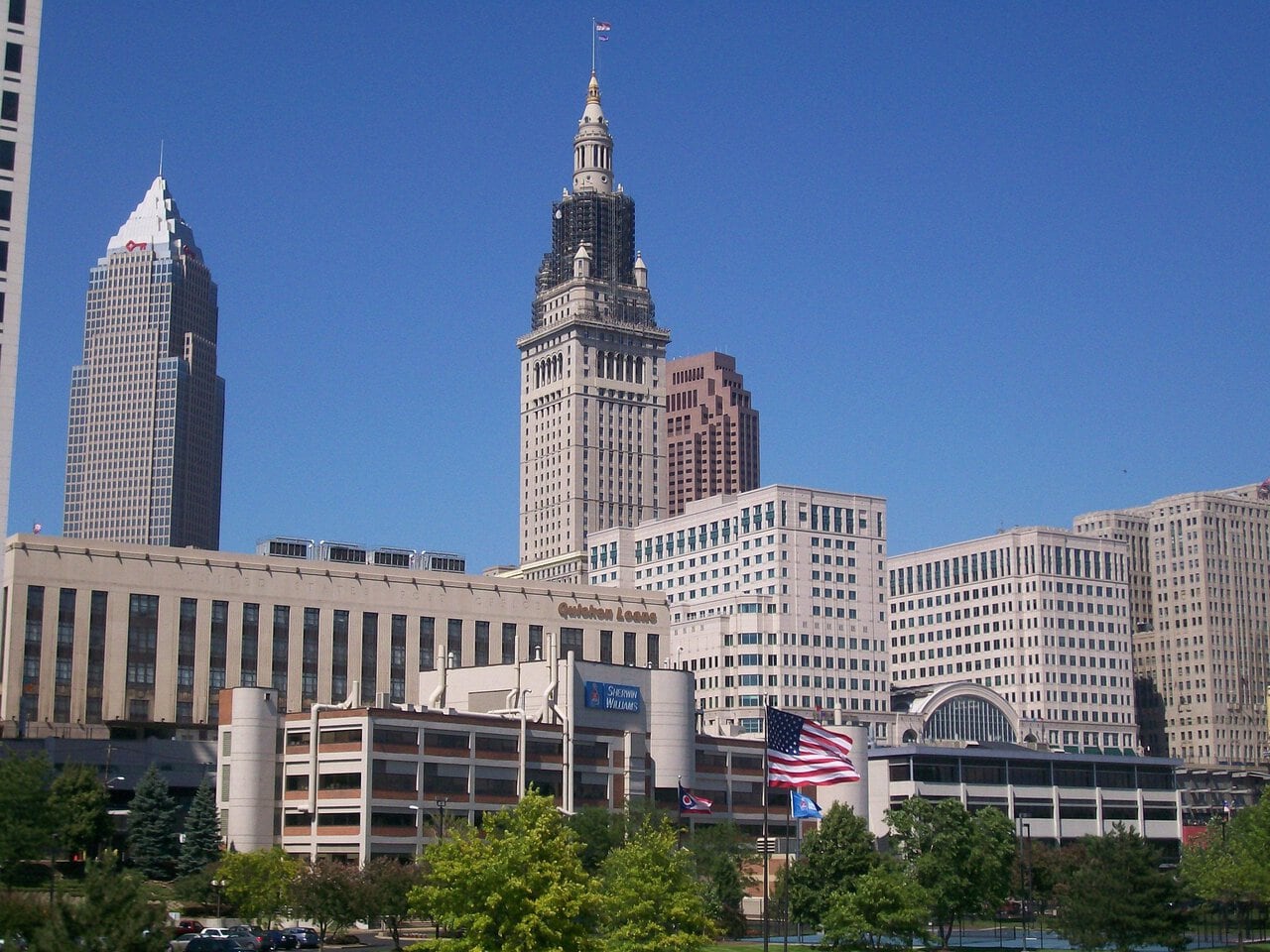
Further stops at Sandusky and Elyria bring the train within sight of the lake itself before arrival into Cleveland, one of the route’s larger stations and a common boarding or alighting point for passengers connecting to nearby Ohio cities such as Akron or Columbus by road.
Cleveland is a useful reference point on the timetable because it marks roughly the point where the train has completed its first quarter of the journey. From here the character of the route begins to shift as Lake Erie comes properly into view for the first extended stretch of the trip.
Many overnight eastbound travellers doze through this stretch, since the Chicago departure time means Cleveland is typically reached late in the evening. Westbound travellers doing this section in the opposite direction, however, typically pass through Cleveland and Toledo in the early morning.
That timing makes westbound the more reliable direction if you specifically want to see Ohio’s Lake Erie towns in daylight, since it’s one of the few sections of the route you can count on catching while awake regardless of the season.
This opening leg also gives you a good sense of the equipment you’ll be riding for the rest of the trip. Attendants typically make their rounds through Coach and the sleeping cars not long after departure, checking tickets and introducing sleeper passengers to their rooms.
Cell coverage through rural Indiana and Ohio can be inconsistent, so this is a good stretch to settle in, plug in a laptop or tablet using the available power outlets, and get comfortable before the train presses on toward Cleveland after dark.
The stretch between South Bend and Toledo also crosses several smaller freight junctions, so gentle slowdowns are normal here and don’t necessarily indicate a serious delay to your overall Chicago to Northeast schedule.
Cleveland to Buffalo: Along the Shore of Lake Erie
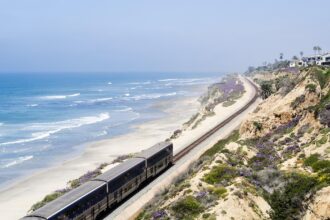
The stretch between Cleveland and Buffalo-Depew is one of the two headline scenic sections of the Lake Shore Limited, and it’s the one that gives the train its name. For long periods the tracks run close enough to Lake Erie that open water is clearly visible from the windows on the northern side of the train.
The train calls at Erie, Pennsylvania, briefly clipping the state’s short Great Lakes shoreline before crossing back into New York. This is the only part of the route that touches Pennsylvania, a small but distinctive segment for anyone tracking the states they’ve crossed along the way.
In summer, the lakeside light on this stretch can be spectacular, especially close to sunset on eastbound departures, when the low sun reflects off the water for miles. In winter, lake-effect snow squalls rolling off Erie’s open water are common and give the region its reputation for sudden, heavy snowfall.
Arrival into Buffalo-Depew marks the gateway to Upstate New York. Although Niagara Falls isn’t served directly by the Lake Shore Limited, Buffalo is the closest station on this route to the falls, and some travellers use it as a deliberate stopover point before continuing east.
Because this segment often falls during the evening hours eastbound, exact visibility depends heavily on the season and your direction of travel; midsummer eastbound trips offer the best chance of seeing the lake in good light rather than darkness.
If catching the Lake Erie shoreline in daylight matters to you, it’s worth checking the current timetable closely before booking, since even small schedule adjustments can shift this section from a daylight highlight into an after-dark formality.
Freight traffic sharing these tracks can occasionally add short delays through this section, since much of the route between Cleveland and Buffalo runs on lines also used by CSX freight services, one of the practical realities of Amtrak operating on shared, privately owned track.
Erie itself is a small, historic port city, and its brief appearance on the timetable is easy to miss if you’re not watching the station announcements; blink and you may only catch a glimpse of the platform before the train continues east.
Visiting Niagara Falls from the Lake Shore Limited
The Lake Shore Limited passes through the Buffalo area, which makes Niagara Falls an obvious potential addition to the journey. However, the train itself does not travel to Niagara Falls, so you’ll need to plan a separate connection.
The Lake Shore Limited serves Buffalo-Depew, located east of central Buffalo. This is different from both Buffalo’s downtown Exchange Street station and the Amtrak station at Niagara Falls, so don’t assume you can simply remain aboard until reaching the falls.
If Niagara Falls State Park is an important part of your itinerary, treat Buffalo as a proper stopover rather than attempting to squeeze the visit into the time between station stops. Leave the Lake Shore Limited, spend one or more nights in the area and continue east or west on a later reservation.
There are separate Amtrak services within New York State that serve Niagara Falls, alongside other local transport options from the Buffalo area. Check the current schedules carefully when planning the connection, particularly if you’re arriving from Chicago after an overnight journey.
Staying overnight also gives you considerably more freedom at Niagara Falls. You can explore the viewpoints, walk around the state park and potentially see the falls illuminated after dark without worrying about returning immediately for another long-distance train.
For international visitors, remember that Niagara Falls, New York and Niagara Falls, Ontario are different destinations on opposite sides of the US–Canada border. If you intend to cross into Canada, make sure you have the appropriate travel documents for your nationality.
This can turn the Lake Shore Limited into a much more interesting itinerary: Chicago → Buffalo/Niagara Falls → Hudson Valley → New York, rather than simply spending one continuous night travelling between Chicago and Manhattan.

Approaching Albany-Rensselaer: Where One Train Becomes Two
From Buffalo-Depew the Lake Shore Limited runs overnight through Rochester, Syracuse, Utica and Schenectady, following the historic Mohawk Valley corridor once used by the Erie Canal to move goods between the Great Lakes and the Hudson River. Most passengers sleep through this section, though the rhythmic stop pattern is familiar to regular riders.
The most important station on the entire route is Albany-Rensselaer, reached in the early hours of the morning. This is where the single Chicago train physically divides into two separate sections, each with its own locomotive, crew and set of cars for the remainder of the journey.
One section detaches and continues east and north towards Boston, while the other carries on south along the Hudson River towards New York City. This split, and the equivalent joining process on westbound trains heading toward Chicago, is what makes the Lake Shore Limited genuinely unusual among Amtrak’s long-distance services.
Because the two halves of the train separate at Albany-Rensselaer, your booking automatically routes you to the correct section based on your ticketed destination. You don’t need to do anything at the station itself; car attendants handle the switch while most sleeping car passengers remain undisturbed in their rooms throughout.
The split does mean the two halves can occasionally run to slightly different schedules if one section is delayed elsewhere on the network, so it’s worth checking real-time status if you have a tight onward connection waiting at either New York or Boston.
Rail enthusiasts often make a point of watching the split, or joining, process from the platform at Albany-Rensselaer if their schedule allows a short break here, since it’s one of only a handful of places in the entire Amtrak network where you can see this happen.
Albany-Rensselaer itself is a modern, well-equipped station with a waiting area, ticket office and food options, making it a reasonably comfortable place to be if you do experience a longer-than-expected wait during the early morning changeover between sections.
The city of Albany, New York’s state capital, sits just across the Hudson River from the station, though few Lake Shore Limited passengers stop here given the early hour the train typically passes through on both branches.
The Boston Branch: Through the Berkshires to Back Bay
Passengers continuing to Boston head east from Albany-Rensselaer into the Berkshires, western Massachusetts’s hilly, forested region that’s especially popular with leaf-peepers in autumn. The train calls at Pittsfield, the region’s main hub, before descending gradually towards the Connecticut River valley.
At Springfield, the train joins tracks shared with regional Massachusetts services before continuing east through Worcester, one of the state’s larger cities, and Framingham on the final approach into greater Boston’s dense suburban rail network.
The Boston section terminates at Back Bay and South Station, both central Boston stations with easy connections to the subway network and onward New England rail services. Morning arrival times generally fall between mid and late morning, depending on how the schedule has run overnight.
This branch is the quieter of the two in terms of overall ridership but is popular with travellers connecting onward to Cape Cod, Maine or other parts of New England who want to avoid the hassle of flying into Boston Logan and renting a car.
The scenery here shifts noticeably from the flat farmland of the Midwest to the greener, more compact landscape of New England, with small towns, stone walls and forested hillsides replacing the wide-open plains seen earlier in the journey.
Because this branch runs largely in daylight during the final hours, it’s a good choice for travellers who want a proper look at New England scenery on arrival morning rather than pulling into the terminal having slept through the entire final approach.
Onward connections from Boston South Station include regional trains further into New England, while Back Bay is convenient for travellers heading directly into the Back Bay and Fenway neighbourhoods without needing to change stations.
The New York Branch: Down the Hudson Valley
The New York-bound section leaves Albany-Rensselaer and turns south to follow the Hudson River, arguably the most scenic stretch on this branch of the route. The line hugs the eastern bank of the river for long sections, with views across to the Catskill Mountains on the opposite shore.
Stops include Rhinecliff-Kingston, gateway to the historic town of Kingston, and Poughkeepsie, home to Vassar College and the striking Walkway Over the Hudson pedestrian bridge, visible from the train on clear mornings as it crosses the river valley.
The train then calls at Croton-Harmon, the final stop before New York City, where the route joins Metro-North commuter tracks for the last approach into Manhattan through increasingly dense suburban development.
The Hudson Valley is at its most photogenic in autumn, when the hillsides turn shades of red and gold, but it’s a genuinely beautiful ride at any time of year, arriving into New York Penn Station generally in the mid-morning after crossing under the Hudson River.
Because this branch runs mostly in daylight on the final stretch, it tends to be the more popular choice for travellers who specifically want scenery on their arrival morning rather than simply the most direct route into a major city.
New York Penn Station is a busy, sometimes disorienting terminus for first-time visitors, so allow a little extra time after arrival to find your onward transport, whether that’s a taxi rank, the subway or a connecting Amtrak service further south.
Travellers connecting onward to Washington DC or further south along the Northeast Corridor will find frequent same-day Amtrak departures from Penn Station, making New York a genuinely practical interchange rather than just an end point.
Best for long or awkward journeys. Builds one itinerary out of separate flights.
View flightsBest if you want maps and messaging working the moment you switch your phone on.
See eSIM plansBest if you would rather not work out the transport on arrival. Book it now and forget it.
View transfersNew York or Boston: Which Lake Shore Limited Branch Should You Choose?
One of the Lake Shore Limited’s most unusual features is that passengers leaving Chicago can reach either New York City or Boston aboard the same overnight service. The train divides at Albany-Rensselaer, after which the two sections follow completely different routes.
Choose New York and the final part of your journey follows the Hudson River south towards Manhattan. This is arguably the more dramatic of the two approaches, with river views, the Catskill Mountains and Hudson Valley communities appearing during the final hours of the journey.
The New York branch also provides excellent onward rail connections. From New York Penn Station, frequent Amtrak services continue towards Philadelphia, Baltimore and Washington DC, making this the obvious branch if your wider itinerary takes you south along the Northeast Corridor.
Choose Boston and the train instead heads east across western Massachusetts through the Berkshires, calling at Pittsfield, Springfield and Worcester before reaching Back Bay and South Station. The landscape is particularly attractive during the autumn foliage season.
Boston makes more sense if you’re continuing around New England, although some onward journeys require using other trains or transport rather than simply remaining within the Amtrak long-distance network.
If scenery is your deciding factor, there isn’t a bad choice. The Hudson Valley provides a long river journey towards New York, while the Berkshires offer forests, hills and classic New England landscapes.
For most travellers, however, we’d choose the branch according to where you actually want to go next rather than scenery alone. Both provide an interesting final morning after the shared overnight journey from Chicago.
Booking Lake Shore Limited Tickets with Omio
You can search for Lake Shore Limited tickets through Omio, which is particularly useful if you’re planning an overnight journey between Chicago and the Northeast and want to compare your rail options in one place.
For the complete journey, search Chicago to New York or Chicago to Boston, depending on which branch you want to take after Albany-Rensselaer. You can also search shorter journeys such as Chicago to Cleveland, Chicago to Buffalo or Chicago to Albany if you’re only using part of the route.
Your destination matters particularly on the Lake Shore Limited because the train divides at Albany-Rensselaer. Passengers for New York and Boston travel together for most of the journey before their respective sections separate, so make sure you’re booking the correct final destination from the outset.
For the complete overnight journey, check the accommodation type carefully. Coach is the cheapest option, while a Roomette or Bedroom gives you private sleeping accommodation and included meals for the night.
If you’re building a larger American rail itinerary, it’s also worth comparing individual ticket prices with the Amtrak USA Rail Pass before booking. Chicago provides connections with several of Amtrak’s major western trains, making the Lake Shore Limited a particularly useful link between a cross-country journey and the Northeast.
Book Amtrak Tickets and Sleeper Trains
Travelling by train in the United States can be a memorable way to cover long distances, especially on scenic routes and overnight journeys. Amtrak lets you book rail tickets, long-distance services, and sleeper train journeys across the country.
It is ideal for city-to-city travel, cross-country rail trips, and travellers who want a slower, more comfortable alternative to flying. Sleeper trains can also make long journeys easier by combining transport and overnight accommodation.
Could the Amtrak USA Rail Pass Save You Money on the Lake Shore Limited?
If the Lake Shore Limited forms part of a larger American rail journey, compare the cost of individual Coach tickets with the Amtrak USA Rail Pass before booking everything separately.
Chicago makes this particularly relevant. The city is one of the most important hubs on the Amtrak network, allowing you to combine the Lake Shore Limited with long-distance trains heading towards California, the Pacific Northwest, Texas and the Southwest.
That creates some excellent coast-to-coast possibilities. You could, for example, travel west across the country before reaching Chicago and then use the Lake Shore Limited to continue overnight towards New York or Boston.
The important limitation is accommodation. The USA Rail Pass is designed around Coach travel, so don’t assume that buying the pass gives you a Roomette or Bedroom for your overnight journey. If sleeping in a private cabin is important to you, compare the available sleeper fare separately.
The Lake Shore Limited’s daily frequency makes it particularly useful in a Rail Pass itinerary. Unlike Amtrak routes that only operate three times each week, you have considerably more flexibility when deciding how long to spend in Chicago or at an intermediate destination.
Remember that the pass has its own segment and validity rules, so a journey involving several stopovers needs more planning than simply buying the pass and boarding whichever train you want.
Our Amtrak USA Rail Pass Guide explains how the pass works, its current restrictions and when it can offer better value than purchasing individual Amtrak journeys.

Sleeper Cabins on the Lake Shore Limited
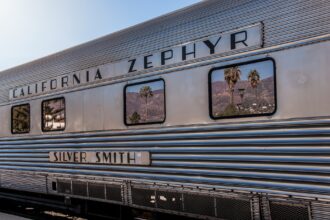
Unlike the California Zephyr and other western trains, which use bi-level Superliner equipment, the Lake Shore Limited runs single-level Viewliner cars, built specifically to fit the tighter tunnel clearances of the Northeast Corridor and the older tunnels feeding into New York’s Penn Station.
The core sleeper options are the Roomette, a compact private space with two fold-down bunks for solo travellers or couples, and the Bedroom, a larger room with more floor space, its own small sofa-style seating and an en-suite toilet and shower for added privacy.
There is also an Accessible Bedroom, designed for passengers with mobility needs, offering extra space and equipment for wheelchair users. All sleeper fares include meals in the dining car, access to the shared shower in the sleeping car, and a dedicated car attendant throughout the journey.
Coach seating remains the most affordable option, with reclining seats, leg rests and power outlets at every row, though without the privacy, included meals or dedicated attendant service that comes as standard with a sleeper cabin.
Because Viewliner rooms are somewhat smaller than their Superliner equivalents on western trains, it’s worth setting expectations accordingly. The compromise is that this equipment fits routes the larger, bi-level Superliner cars simply cannot run on, including the tunnels into Penn Station.
Booking a Roomette well in advance is generally worthwhile on this route, since sleeper capacity is limited compared with the longer consists used on some western trains, and popular autumn foliage dates can sell out weeks ahead of departure.
Each sleeping car has a single shared shower for Roomette passengers, similar to the arrangement on other Viewliner and Superliner routes, while Bedroom occupants enjoy their own private facilities as part of the higher fare.
A dedicated car attendant is assigned to each sleeping car for the whole trip, converting seats into beds each evening, handling any requests and generally making the overnight experience considerably smoother than travelling in Coach.
Luggage space inside a Roomette is limited compared with a full Bedroom, so pack a smaller overnight bag if possible and store larger suitcases on the racks provided near the sleeping car entrance rather than inside your room.
| Feature | Coach | Roomette | Bedroom |
|---|---|---|---|
| Private accommodation | ❌ | ✅ | ✅ |
| Beds for sleeping | ❌ (reclining seat) | ✅ Upper & lower bunks | ✅ Larger bunks |
| Meals included | ❌ | ✅ | ✅ |
| Private toilet & shower | ❌ | ❌ (shared facilities) | ✅ |
| Dining car access | Café car only | Included | Included |
| Best for | Budget travellers | Couples & solo travellers | Maximum comfort |
Dining, Café Car and Onboard Life
Amtrak restored traditional dining car service on the Lake Shore Limited in 2021, meaning sleeper passengers can once again enjoy hot, cooked-to-order meals served at proper tables, rather than the boxed “flex dining” style used on some other eastern trains during earlier years.
Breakfast, lunch and dinner are included for anyone booked into a Roomette or Bedroom, with menus typically featuring items such as steak, pasta, salads and a vegetarian option, alongside desserts and both hot and cold drinks throughout the day.
Coach passengers can buy food from the café car, which stocks sandwiches, snacks, hot and cold drinks, beer and wine. It’s a smaller menu than the dining car but perfectly adequate for an overnight trip of this length, especially with some pre-planning.
One point worth noting: the Lake Shore Limited does not have a Sightseer Lounge car like the western Superliner trains. There’s no dedicated glass-walled observation space; the café car and, for sleeper guests, the dining car double up as the main social spaces onboard.
Given that a large part of this route runs overnight anyway, the absence of a full observation car is less of a loss here than it would be on a daytime-heavy western route where scenery is the main draw for most of the day.
Meal times in the dining car are typically staggered across two or three seatings, so sleeper passengers should expect to be assigned a slot by their car attendant shortly after boarding rather than simply turning up whenever they choose.
Special dietary requirements, including vegetarian and some allergen-friendly options, can generally be accommodated with advance notice, so it’s worth mentioning any requirements when booking rather than raising them for the first time once onboard.
Alcohol, including a small selection of beer and wine, is available for purchase in the café car throughout the daytime hours, though service typically pauses late at night as the train settles in for the overnight stretch.
Payment onboard is generally card-only across both the dining car and café car, so it’s worth having a debit or credit card ready rather than relying on cash for any onboard purchases during the journey.
Sleeper passengers can also expect a small welcome amenity, such as bottled water and a pillow, left in their room by the car attendant shortly after boarding, a small but appreciated touch on a journey of this length.
Lake Shore Limited or Cardinal: Two Ways Between Chicago and the Northeast
The Lake Shore Limited isn’t the only Amtrak train linking Chicago with the Northeast. The Cardinal also connects Chicago and New York, but via a completely different, more southerly routing through Virginia and West Virginia instead of the Great Lakes.
The most obvious difference is frequency: the Lake Shore Limited runs daily in both directions, while the Cardinal operates only three days a week, making it far less flexible for travellers who need to fix a specific travel date without much advance notice.
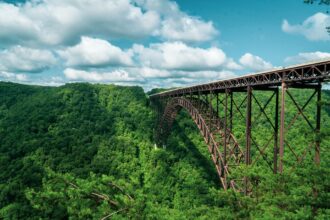
Scenically, the two routes are very different. The Lake Shore Limited runs through Great Lakes cities and either the Hudson Valley or the Berkshires, while the Cardinal’s headline attraction is the dramatic New River Gorge in West Virginia, a landscape the Lake Shore Limited never touches at all.
Equipment differs too: both routes use Viewliner sleepers, but the Cardinal’s shorter consist typically carries fewer sleeping cars and uses flexible, pre-prepared dining rather than the Lake Shore Limited’s fully restored traditional dining car service.
If your priority is a train that runs every day and connects efficiently with onward services, the Lake Shore Limited is generally the easier choice. If you’re chasing dramatic mountain scenery and can work around a three-times-weekly timetable, the Cardinal deserves serious consideration instead.
Some rail enthusiasts deliberately choose to ride one route in each direction between Chicago and the Northeast, effectively turning a single round trip into two very different journeys through two very different parts of the country.
Pricing between the two routes tends to be broadly similar for equivalent cabin types, so the decision usually comes down to scenery, schedule flexibility and which branch, New York or Boston, actually matches your onward travel plans.
Both trains also connect at Chicago Union Station with the western long-distance network, so travellers arriving from the Southwest Chief or Empire Builder can pick whichever eastern route best suits their onward itinerary and travel dates.
Best for short city stops where being central matters more than the room. Dorms and private rooms both listed.
See hostelsBest for anyone flying more than once or twice a year. Handles the compensation claim so you are not chasing the airline.
See AirHelp+Best for a day with a suitcase and nowhere to put it. Find a storage point near where you already are.
View storageBest Time of Year to Ride the Lake Shore Limited
Autumn is widely considered the best season for this route, particularly on the New York branch, where the Hudson Valley’s hillsides turn brilliant shades of red and gold from early October through early November, drawing photographers to stations like Rhinecliff and Poughkeepsie.
The Boston branch is equally rewarding in autumn, as the Berkshires are one of New England’s classic leaf-peeping destinations, drawing visitors from across the country specifically for the foliage rather than for any particular city along the route.
Summer offers the longest daylight hours, which is useful given how much of the route runs overnight, increasing your chances of seeing Lake Erie and the Mohawk Valley in good light rather than complete darkness on an eastbound departure.
Winter brings the risk of lake-effect snow around Cleveland, Erie and Buffalo, which can occasionally cause delays; travellers with tight connections should build in extra buffer time if riding this stretch between December and March.
Spring is the quietest and often the best-value season, with milder weather returning to the Northeast and fewer crowds competing for sleeper cabins compared with the busy autumn foliage period.
Whichever season you travel, keep in mind that the exact stretch of the route you’ll see in daylight depends heavily on the time of year, since the shorter days of deep winter push more of both branches into darkness than midsummer does.
Holiday periods around Thanksgiving and Christmas are consistently the busiest and priciest times to travel, so booking well ahead or considering the quieter days either side of the holidays can make a noticeable difference to the fare.
Is the Lake Shore Limited Worth It?
The Lake Shore Limited isn’t chasing the same jaw-dropping mountain scenery as the California Zephyr or Coast Starlight, but it earns its place as one of Amtrak’s most useful long-distance trains simply by running daily and connecting three major cities efficiently and reliably.
For travellers who want to avoid a short-haul domestic flight between Chicago and the Northeast, sleep through most of the journey and wake up in a different city, it’s an appealing overnight alternative that beats driving the same distance without a proper rest.
The Lake Erie shoreline and Hudson Valley sections genuinely reward a daylight ride if your schedule allows it, and the ability to choose between a New York or Boston arrival from the same westbound train adds real practical flexibility.
It’s best suited to travellers who value convenience and daily availability over dramatic scenery, or who specifically want to experience the unusual train-splitting operation at Albany-Rensselaer for themselves.
Students commuting between Chicago and East Coast colleges are among the route’s most loyal regular riders, valuing the daily frequency and affordable Coach fares over the speed of a direct flight.
If dramatic mountain gorges and canyons are what you’re after, routes like the Cardinal or the western long-distance trains will likely satisfy that urge more directly, but for a dependable overnight link the Lake Shore Limited is hard to beat.
Families travelling with children also tend to appreciate the relative simplicity of this route compared with connecting flights through a major hub airport, since there’s only one train to catch and no risk of a missed connection stranding you overnight.
For travellers with more time than budget, Coach class still delivers the same route and the same split at Albany-Rensselaer at a noticeably lower price, making the Lake Shore Limited accessible even without booking a sleeper cabin.
Practical Tips for Your Journey
Double check which branch your ticket covers before boarding in Chicago; both sections leave as a single train, so it’s easy to assume you’re on the wrong one when in fact your car will simply detach later at Albany-Rensselaer.
If travelling in Coach overnight, bring a neck pillow, eye mask and light blanket; the cars are heated but the temperature can vary noticeably between cars, and coach seats, while reclining, aren’t a substitute for a proper bed.
The Lake Shore Limited can be booked as part of an Amtrak USA Rail Pass itinerary in Coach, which is worth considering if you’re combining this route with other long-distance trains during a longer USA rail trip.
Download entertainment before boarding, since Wi-Fi and mobile signal can be patchy for long stretches, particularly overnight through rural Ohio, Pennsylvania and Upstate New York where coverage thins out considerably.
Arrive at Chicago Union Station at least 45 minutes before departure if you’re checking baggage or need help finding your sleeper car, since boarding can be busy with several long-distance trains departing around similar times each afternoon.
If you’re chasing autumn foliage, book several weeks ahead: sleeper cabins on both the Hudson Valley and Berkshires legs sell out quickly during the peak color weeks in early to mid October.
Finally, keep your phone charger and any essential medication in your carry-on rather than a checked bag; overnight trains occasionally run behind schedule, and having what you need close at hand makes any delay far easier to manage.
If you’re travelling with a car seat, bicycle or other bulky item, check Amtrak’s current baggage policy before you travel, since checked baggage service is only available at certain stations along this particular route.
Sign up for text alerts through the Amtrak app before departure day; real-time status updates are the easiest way to track exactly where your train is if you’re timing an onward connection at either New York or Boston.

Rupert’s Handy Travel Tips
A few things I’ve picked up from riding the Lake Shore Limited between Chicago and the Northeast.
- Confirm your branch: Check your ticket says New York or Boston clearly, since both halves leave Chicago coupled together as one train.
- Book the Lake Erie side: If you can, choose a window seat on the lake side between Cleveland and Buffalo for the best shoreline views.
- Pack a base layer: The overnight temperature onboard can fluctuate, especially near Lake Erie in winter.
- Watch your connection buffer: The split at Albany-Rensselaer means either half of the train can run late independently, so build slack into tight onward plans.
Want to meet the reindeer behind our travel tips? Find out more in our page Who is Rupert?.


Frequently Asked Questions
How long is the Lake Shore Limited?
The journey takes around 19.5 to 20.25 hours between Chicago and New York, or roughly 21.5 to 22 hours between Chicago and Boston, depending on which branch you’re travelling and how the schedule runs on the day.
How does the train split at Albany-Rensselaer actually work?
The single westbound train from Chicago physically divides into two sections at Albany-Rensselaer, one continuing to New York and the other to Boston. Your booking automatically places you in the correct section, and car attendants manage the process.
Does the Lake Shore Limited run every day?
Yes, it operates daily in both directions, unlike some other eastern long-distance trains such as the Cardinal, which runs only three days a week between Chicago and New York.
Is there a Sightseer Lounge on the Lake Shore Limited?
No. This route uses single-level Viewliner equipment and does not carry a Sightseer Lounge car; there’s a café car for coach passengers and a dining car for sleeper passengers instead.
Are meals included on the Lake Shore Limited?
Meals are included for passengers in a Roomette or Bedroom, served in the traditional dining car. Coach passengers can buy food and drinks separately from the café car throughout the journey.
Which branch has better scenery, New York or Boston?
Both are attractive in different ways. The New York branch follows the scenic Hudson Valley, while the Boston branch crosses the hilly Berkshires, especially beautiful during autumn foliage season in October.
Can I use the Amtrak USA Rail Pass on the Lake Shore Limited?
Yes, this route can be included in a Coach-class USA Rail Pass itinerary, making it a useful link if you’re combining it with other long-distance trains on a wider rail trip around the country.
Does the Lake Shore Limited stop in Pennsylvania?
Briefly, yes. The train calls at Erie, Pennsylvania, along the Lake Erie shoreline, which is the only Pennsylvania stop on the entire route between Chicago and the Northeast.
Is the Lake Shore Limited a good option for Niagara Falls?
It’s not a direct connection, but Buffalo-Depew is the closest station to Niagara Falls on this route, and some travellers use it as a stopover point before continuing their journey east or west.
What equipment does the Lake Shore Limited use?
The train runs single-level Viewliner sleeping cars and a Viewliner dining car, paired with Amfleet II coaches, rather than the bi-level Superliner equipment used on western routes like the California Zephyr.
How far in advance should I book a sleeper cabin?
For popular dates, especially autumn foliage weekends on either branch, booking six to eight weeks ahead gives the best chance of securing a Roomette or Bedroom at a reasonable price.
Can I break my journey along the Lake Shore Limited route?
Yes, stopovers are generally possible at major stations such as Cleveland, Buffalo or Albany-Rensselaer, though this typically means booking the journey as separate ticketed segments rather than a single continuous fare.
Does the Lake Shore Limited have power outlets?
Yes, power outlets are available at coach seats and throughout the sleeping cars, making it easy to keep phones, laptops and tablets charged for the duration of the overnight journey.
What happens if my connecting flight or train is delayed?
Because the Lake Shore Limited runs overnight and covers a long distance, minor delays are relatively common. Build in buffer time for tight onward connections at New York or Boston where possible.
Can you smoke on the Lake Shore Limited?
No smoking is allowed anywhere on board for the whole Chicago to New York or Boston run, e-cigarettes included. Amtrak’s platform-smoking allowance only applies at longer, crew-announced stops, and Albany-Rensselaer, where the train is physically split into its New York and Boston sections, is the most plausible point on this route for that kind of pause. Stay right next to the train and get back on the moment the horn sounds, because the stop can be cut short if the train is running behind.
Further Reading
If you’re planning a wider Amtrak trip, our Amtrak Routes Guide compares every major long-distance service, and our Amtrak Sleeper Train Guide explains cabin types and whether upgrading from Coach is worth it for a trip of this length.
For a scenic alternative between Chicago and the Northeast, read our Cardinal Guide, which covers the route’s three-times-weekly schedule and its dramatic New River Gorge scenery in far more detail.
If you’re departing from or connecting through Chicago, our California Zephyr Guide covers the classic westbound route to the San Francisco Bay Area, useful if you’re planning a coast-to-coast rail itinerary from the same city.
If you plan to combine several long-distance trains into one trip, our Amtrak USA Rail Pass Guide explains how the pass works, what it costs and whether it could genuinely save you money on a multi-train itinerary.
Travellers arriving in Chicago from the west may also want to look ahead to what comes next: our growing library of Amtrak route guides covers everything from the Great Lakes to the Gulf Coast, each written with the same focus on real stations, honest journey times and practical booking advice.