Reviewed by our editorial team Updated
Why the Auto Train Is Amtrak’s Most Unique Long-Distance Service
The Auto Train is unlike anything else on the Amtrak network. Running nonstop between Lorton, Virginia, just outside Washington DC, and Sanford, Florida, near Orlando, it’s the only Amtrak service that lets you bring your own car, SUV or motorcycle along for the ride.
Instead of driving the roughly 855 miles (1,376 km) down Interstate 95 yourself, you load your vehicle onto the train in Virginia, settle into a seat or sleeper cabin, and wake up the next morning in central Florida with your car waiting for you.
Both directions depart at 4:00pm and arrive at around 9:00am the following morning, a journey of just under 17 hours covering the distance at an average of just over 50 mph, including one overnight service stop in South Carolina.
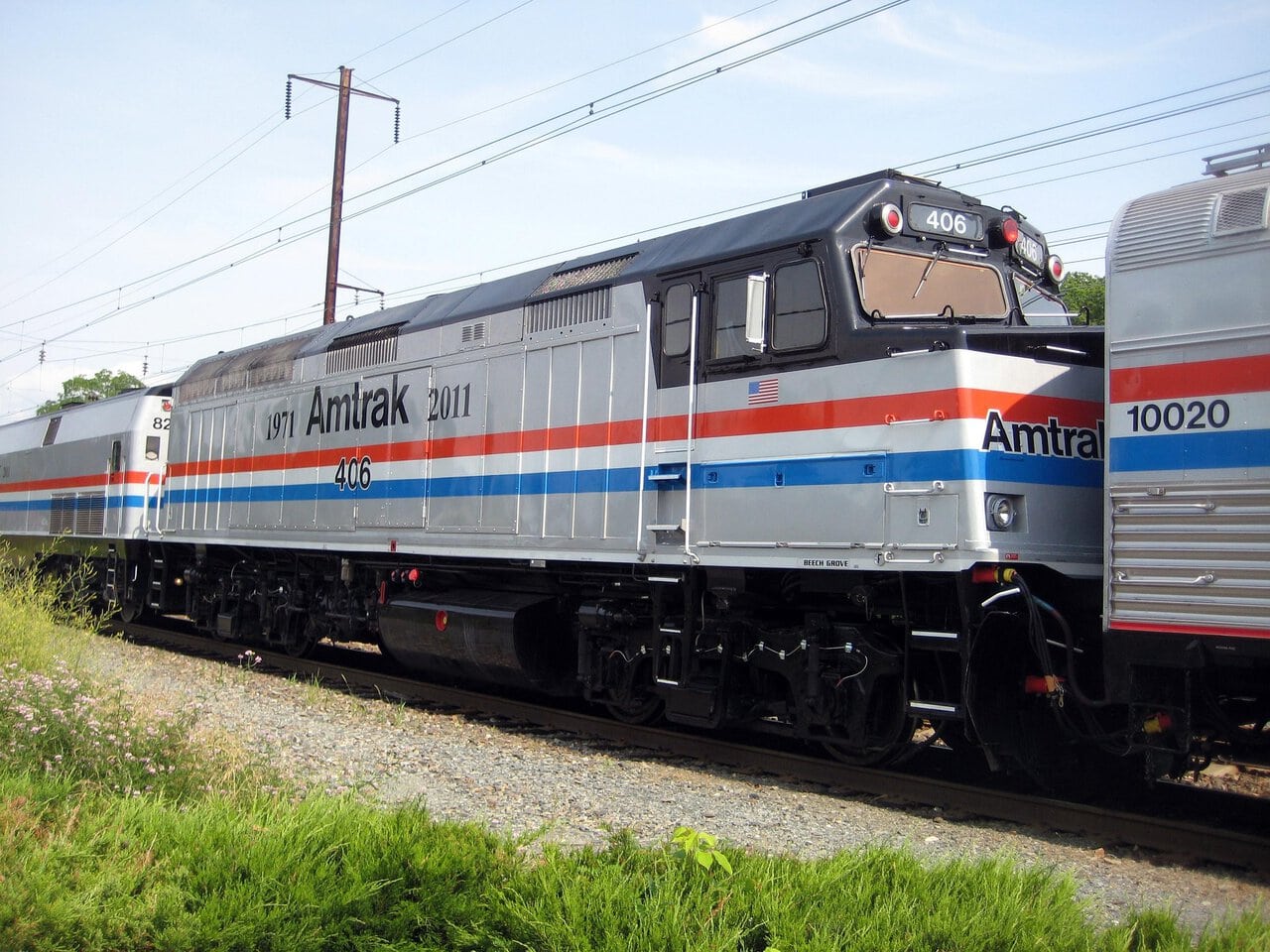
The service dates back to 1971 under private ownership, collapsed financially in 1981, and was revived by Amtrak in 1983. Today it’s often cited as the single highest-revenue train in Amtrak’s entire long-distance network, and it’s easy to see why: for many travellers, it removes the single worst part of a Florida road trip.
Because there are no intermediate stations where passengers can board or alight, the Auto Train doesn’t work like the rest of this site’s route guides. There’s no “walking the route” section here; instead, this guide focuses on exactly how the vehicle-carrying process works, what it costs, and how it stacks up against driving or flying.
We’ll cover the vehicle size and fee requirements, what’s included in Coach and First Class fares, the Superliner sleeper and dining experience, and how the Auto Train compares with the Silver Meteor and Silver Star as alternative ways to reach Florida from the Washington DC area.
Whether you’re a snowbird moving south for the winter, a family planning a theme park road trip without the road trip, or simply curious how a train that carries hundreds of cars actually works, this guide covers the practical detail you need before booking.
Auto Train at a Glance
Because the Auto Train has no intermediate stops, its “at a glance” facts are refreshingly simple compared with most long-distance Amtrak routes. Here’s the essential information before we get into the vehicle loading process and what’s included; for the latest schedules and fares, Amtrak’s own Auto Train page is the definitive source.
| Feature | Details |
|---|---|
| Northern Terminus | Lorton, Virginia (near Washington DC) |
| Southern Terminus | Sanford, Florida (near Orlando) |
| Distance | Approximately 855 miles (1,376 km) |
| Journey Time | Approximately 17 hours |
| Intermediate Stops | None for passengers; one overnight service stop in Florence, South Carolina |
| Departure Time | 4:00pm both directions |
| Arrival Time | Approximately 9:00 to 10:00am the next morning |
| Frequency | Daily in both directions |
| Equipment | Bi-level Superliner sleepers, coaches, dining car, lounge car, plus over 23 autorack cars |
| Vehicles Carried | Up to around 340 vehicles per train |
| Sleeper Accommodation | Yes, Roomettes, Bedrooms and Family Bedrooms |
Notice that unlike other Amtrak long-distance trains, both passenger and vehicle fares are charged separately here; the figures above cover the journey itself, but budgeting for the Auto Train means pricing your car and your seat or cabin independently.
The complete absence of intermediate stops is really the defining fact of this route. Every other long-distance Amtrak train serves at least a handful of cities along the way; the Auto Train serves exactly two, and nothing in between.
Compare hotels and other places to stay for your trip.
Check availabilityExplore holiday homes and apartments for your trip.
See holiday homesCompare hotel deals from multiple booking sites in one search.
Compare pricesWhere Are the Auto Train Stations?
The Auto Train doesn’t depart from Washington DC or Orlando, despite those cities frequently being used to describe the route. The actual stations are at Lorton in Virginia and Sanford in Florida, and understanding their locations is important when planning the beginning and end of your journey.
Lorton Auto Train Station is in Northern Virginia, roughly 20 miles south of central Washington DC. Its location close to Interstate 95 is deliberate: the station is designed primarily for motorists arriving with vehicles rather than passengers reaching it by city-centre public transport.
If you’re driving from the Northeast, you’ll need to reach Lorton with enough time to complete the vehicle check-in process before the afternoon cutoff. Don’t plan your journey around reaching Washington DC at the check-in time; you still need to negotiate the roads south of the city and arrive at the dedicated Auto Train terminal.
At the other end, Sanford Auto Train Station is north of Orlando. Sanford is a separate city rather than an Orlando suburb immediately beside the theme parks, so you’ll still have some driving to do after your vehicle has been unloaded.
For visitors heading to Walt Disney World or the wider Orlando resort area, that’s actually part of the attraction. Once your car comes off the train, you can drive directly to your accommodation without visiting an airport rental desk or arranging another long-distance transfer.
The same applies in reverse. If you’re finishing a Florida road trip, Sanford allows you to load the car and complete the long journey north overnight rather than spending another day driving Interstate 95.
Treat Lorton and Sanford as road-trip terminals rather than conventional city-centre railway stations and the Auto Train makes much more sense. They’re positioned to get vehicles onto and off the railway efficiently, not to provide direct access to downtown Washington or Orlando.
How Auto Train Works: The Vehicle Loading Process
Unlike boarding a normal Amtrak train, the Auto Train experience starts with your car, not your seat. Passengers are advised to arrive well ahead of departure, since vehicle check-in for standard and extended vehicles closes at 2:30pm, a full two and a half hours before the 4:00pm departure.
Motorcycles, oversized vehicles, trailers and anyone using priority offloading must check in earlier, by 2:00pm, since these categories require additional handling time on the loading ramp. Missing your check-in window is one of the few genuinely unforgiving deadlines in Amtrak’s entire network.
At check-in, staff confirm your reservation and vehicle details, then direct you to line up in the queue for the loading ramp. Before your vehicle is loaded, you’ll need to remove everything you’ll want access to during the journey, since the car is completely inaccessible for the full 17-hour journey.
Amtrak staff then drive or guide each vehicle onto one of the train’s autorack cars, parking it in an assigned position designed to make unloading efficient at the other end. You do not ride in your vehicle during loading; this part is handled entirely by trained staff.
Once your vehicle is loaded, you’re issued a boarding pass and a vehicle claim tag, and you head to the passenger terminal to board the train itself. Passenger boarding typically begins around 30 minutes before departure, with groups called separately for Coach and sleeper passengers.
At the destination, the process reverses: vehicles are unloaded from the autorack cars in a sequence designed to get passengers reunited with their cars as quickly as possible, though this can still take some time given the number of vehicles on a full train.
Amtrak explicitly states that personal belongings left in your vehicle during transit are your own responsibility, so valuables should travel with you in your carry-on rather than staying locked in the car for the overnight journey.
If your vehicle is damaged during transit, report it to an authorized Amtrak representative before leaving the terminal at your destination. Amtrak generally only accepts responsibility for damage that occurred while your vehicle was in its custody.
Because there’s no checked baggage service on the Auto Train, pack a proper overnight bag with everything you’ll need, from toiletries to chargers, since you genuinely cannot access your vehicle again until you arrive.
The whole loading operation runs like a well-drilled logistics exercise rather than a typical train boarding, with dozens of staff coordinating vehicle movement onto the autorack cars in the roughly two-and-a-half hour window before departure.
First-time Auto Train travellers are often surprised by how industrial the loading yard feels compared with a normal passenger station, closer in spirit to a car ferry terminal than anything else in Amtrak’s network.
How Long Does It Take to Get Your Car Back?
Arriving at Lorton or Sanford doesn’t mean you’ll immediately drive away. One of the easily overlooked parts of an Auto Train journey is the time required to unload hundreds of vehicles from the autorack cars after the passenger train reaches its destination.
Once passengers leave the train, vehicle unloading begins and cars are returned in sequence. On a busy service carrying hundreds of vehicles, you may therefore have to wait before your vehicle is called.
This is worth remembering when planning the rest of your day. Don’t arrange an important appointment, theme park reservation or tightly timed onward journey based purely on the train’s scheduled arrival time, because you still need to collect your vehicle afterwards.
Amtrak also offers a limited Priority Vehicle Offloading option for an additional charge. This is designed to put participating vehicles among the first group unloaded at the destination and can be worthwhile if getting away from the terminal quickly matters to you.
For many passengers, however, the standard unloading process is simply part of the Auto Train experience. Once you’ve travelled hundreds of miles without having to drive, waiting a little longer for your car may be a reasonable trade-off.
Keep your vehicle claim information handy after leaving the passenger cars and listen for the unloading announcements rather than heading straight for the exit.
Most importantly, build some flexibility into your arrival plans. The useful comparison isn’t simply train arrival versus driving arrival; it’s the time from checking your vehicle in at one end until you’re actually back behind the wheel at the other.

Vehicle Size, Types and Fees
Not every vehicle qualifies for standard handling, so it’s worth checking your car against Amtrak’s size categories before booking. Standard vehicles can be up to 192 inches (16 feet) long, including racks, 85 inches high and 84 inches wide including mirrors.
Extended vehicles, covering larger SUVs, trucks and vans, can run up to 216 inches (18 feet) long under the same height and width limits. Anything longer than 18 feet is classed as oversized and requires a special reservation made by phone rather than online.
Motorcycles have their own category, capped at 102 inches long, 72 inches high and 51 inches wide, with a minimum ground clearance requirement. Certain vehicle types, including Can-Am motorcycles, Rewaco trikes and Polaris Slingshots, are not accepted at all.
Vehicle fees are charged entirely separately from passenger fares and vary significantly by season and demand. Expect somewhere in the region of $255 to $570 (£189-£422 / €219-€490) one-way for a standard vehicle, with oversized vehicles sometimes reaching over $600 (£444/€516) during peak periods.
Motorcycles are considerably cheaper to transport, typically in the region of $146 to $292 (£108-£216 / €126-€251) one-way, reflecting their smaller footprint on the autorack cars compared with a full-sized car or SUV.
The busiest and most expensive period to book is the snowbird season, roughly October through April, when large numbers of Northeastern residents transport their vehicles south for the winter, pushing both vehicle and passenger fares noticeably higher.
Fuel tanks should not be completely full when your vehicle is loaded, in line with standard rail safety rules, and any hazardous materials, including propane canisters and firearms, must be removed before check-in.
| Vehicle Type | Maximum Size | Typical Fee (One-Way) |
|---|---|---|
| Motorcycle | 102″ long, 72″ high, 51″ wide | Approximately $146 to $292 (£108-£216 / €126-€251) |
| Standard Vehicle | 192″ (16ft) long, 85″ high, 84″ wide | Approximately $255 to $570 (£189-£422 / €219-€490) |
| Extended Vehicle | 216″ (18ft) long, 85″ high, 84″ wide | Approximately $239 to $620 (£177-£459 / €206-€533) |
| Oversized Vehicle | Over 18ft, special arrangement required | Varies, phone booking only |
If in doubt about whether your vehicle qualifies as standard or extended, measure it yourself rather than relying on the manufacturer’s general category, since roof racks, bike racks or towbars can push a car over the standard limit.
Certain vehicles may be accepted with additional fees even outside the standard categories, including limousines, trikes, choppers and jet-skis on trailers, though these always require advance confirmation directly with Amtrak rather than a standard online booking.
Because vehicle pricing is dynamic and tied closely to demand, booking your vehicle slot as early as possible, ideally alongside your passenger fare, generally secures a noticeably better rate than waiting until closer to your travel date.
Booking the Auto Train with Omio
If you’re comparing ways to travel between Virginia and Florida, Omio can be useful for checking available Amtrak journeys alongside other transport options for the same trip.
The Auto Train works differently from an ordinary Amtrak booking because you’re purchasing passenger accommodation and vehicle transportation. Your total cost therefore depends not only on how many people are travelling and whether you choose Coach or a sleeper, but also on the type and size of vehicle you’re bringing.
When comparing prices, make sure you’re looking at the complete cost of the journey. A headline passenger fare doesn’t represent what you’ll actually pay once your vehicle has been added, and larger vehicles can cost considerably more to transport than a standard car.
It’s also worth comparing the Auto Train against the real cost of driving. For a fair comparison, include fuel, tolls, meals and potentially an overnight hotel, rather than comparing the train fare with petrol alone. If you’re considering flying, factor in the cost of hiring a car in Florida as well.
Because the Auto Train has only two passenger terminals, there’s no need to work through a complicated list of stations. The journey is simply Lorton, Virginia to Sanford, Florida, or the reverse.
Vehicle space and sleeper accommodation can become particularly sought after during the snowbird migration periods, so once you’ve found a fare that works for your trip, booking earlier can give you substantially more choice than waiting until the departure date approaches.

Book Amtrak Tickets and Sleeper Trains
Travelling by train in the United States can be a memorable way to cover long distances, especially on scenic routes and overnight journeys. Amtrak lets you book rail tickets, long-distance services, and sleeper train journeys across the country.
It is ideal for city-to-city travel, cross-country rail trips, and travellers who want a slower, more comfortable alternative to flying. Sleeper trains can also make long journeys easier by combining transport and overnight accommodation.
Cabins, Coach Seating and What’s Included
The Auto Train runs the same bi-level Superliner equipment used on western routes like the California Zephyr, meaning the sleeper cabin types will be familiar to anyone who’s ridden one of Amtrak’s other long-distance trains.
First Class accommodation includes the Roomette, a private compartment with two fold-down bunks, and the Bedroom, offering more space, its own seating and an en-suite toilet and shower. A Family Bedroom is also available, sleeping up to four across a larger shared space.
First Class fares include a complimentary dinner and hot breakfast, access to a dedicated First Class lounge onboard, and a dedicated car attendant, making the higher fare a genuinely all-inclusive overnight package rather than just a bigger seat.
Coach seating remains the most affordable way to travel, with reclining seats, leg rests and power outlets. Coach passengers receive a complimentary continental breakfast before arrival and can purchase other meals from the café car.
Coach fares typically start around $89 to $180 (£66-£133 / €77-€155) per person one-way, occasionally dropping as low as $39 (£29/€34) during promotional sales, while Roomettes generally start from around $235 to $301 (£174-£223 / €202-€259), with Bedrooms and Family Bedrooms often exceeding $600 (£444/€516) depending on season and demand.
Remember that these passenger fares are entirely separate from your vehicle fee; when budgeting for the Auto Train, add the two together rather than assuming one price covers both you and your car.
A dedicated car attendant is assigned to each sleeping car for the entire trip, converting seats into beds each evening and handling requests, similar to the service found on the Auto Train’s western Superliner counterparts.
Luggage space inside a Roomette is limited, much like on other Superliner routes, so pack a smaller overnight bag if possible rather than trying to bring everything you’d normally take on a longer trip.
Search flights and useful route combinations in one place.
View flightsBrowse Airalo eSIM options for convenient travel data.
Check eSIMsArrange a private pickup before travel instead of sorting transport after landing.
Book a transferDining and the Onboard Experience
First Class passengers enjoy full, table-service dining in a traditional Superliner dining car, with dinner and breakfast included in the fare. The menu typically features similar options to Amtrak’s other Superliner routes, including steak, pasta, salads and vegetarian choices.
Coach passengers use the café car for meals and snacks, receiving a complimentary continental breakfast shortly before arrival, with other food and drinks available to purchase throughout the journey.
The Auto Train does carry a Sightseer Lounge car with the same wraparound upper-level windows found on other Superliner trains, but here it functions exclusively as a First Class lounge, rather than a shared space open to every passenger onboard.
This is a genuine point of difference from routes like the California Zephyr: because the journey is entirely overnight and nonstop, the lounge here serves more of a social and dining function than a scenic viewing one, since there’s little to see out of the windows for most of the trip.
Coach passengers don’t have access to the Sightseer Lounge on this particular route, an unusual restriction compared with other long-distance Superliner trains, where the lounge is typically open to everyone regardless of accommodation type.
Payment onboard is generally card-only across both the dining car and café car, and alcohol including beer and wine is available for purchase throughout the daytime hours, similar to the arrangement found on other Superliner routes.
Special dietary requirements can generally be accommodated with advance notice in First Class, so it’s worth flagging anything important at the time of booking rather than raising it for the first time once onboard.
The Overnight Nonstop Schedule
Both the northbound and southbound Auto Train depart at 4:00pm, giving passengers a chance to settle in, have dinner and get comfortable before the train settles into its overnight rhythm through Virginia and the Carolinas.
The only scheduled stop of the entire journey comes around 1:00am, in Florence, South Carolina, where the train pauses briefly for a crew change and refuelling. Passengers cannot board or alight here; it’s purely an operational stop.
This Florence stop is sometimes used informally as a chance to step onto the platform for fresh air, though passengers should always follow crew announcements closely, since the train will not wait for anyone who fails to reboard promptly.
Arrival falls at around 9:00am the following morning, meaning the entire journey, door to door, from Lorton to Sanford or vice versa, takes just under 17 hours covering an average speed of just over 50 mph.
Because the schedule is fixed at 4:00pm departures with no alternative daytime option, the Auto Train genuinely only works for travellers happy to spend a full night onboard, unlike routes offering both day and overnight departures.
There’s very little scenery to speak of on this route even during the daylight portions of the journey, since the schedule is built entirely around an efficient overnight transit rather than showcasing any particular landscape along the way.
This is one of the clearest ways the Auto Train differs from every other guide on this site: it’s a transport solution first and a travel experience second, which is exactly what appeals to its most loyal repeat riders.
A Brief History of the Auto Train
The Auto Train concept began under a private company in 1971, launching the same Virginia-to-Florida route it still operates today, built specifically around the idea of letting drivers skip the long haul down Interstate 95.
The original operator later expanded to a second route connecting Louisville, Kentucky, with Florida, a venture that proved financially unsustainable and contributed to the company’s collapse in 1981, ending the original Auto Train entirely.
Amtrak revived the service in 1983, initially running three times a week before switching to daily service within a year, a schedule that has remained unchanged for decades since.
Today, the Auto Train is frequently cited as the highest-revenue train in Amtrak’s entire long-distance network, reflecting just how much demand exists for a genuinely unique service that no airline or bus company can replicate.
That commercial success is really a testament to how well the Auto Train solves a real, specific problem, rather than trying to compete on scenery or speed with Amtrak’s other long-distance trains.
The route’s endpoints have also stayed remarkably consistent since the 1983 relaunch: Lorton, Virginia, and Sanford, Florida, remain the only two stations the Auto Train has ever served in its modern Amtrak form.

Auto Train vs Silver Meteor and Silver Star: Other Ways to Reach Florida
The Auto Train isn’t the only Amtrak option for travelling between the Washington DC area and Florida. The Silver Meteor and Silver Star both run between New York and Miami, calling at Washington DC along the way, with dozens of intermediate stations.
The single biggest difference is obvious: neither Silver Service train carries vehicles. If you need your car in Florida, the Auto Train is the only option; the Silver Meteor and Silver Star are conventional passenger trains with regular station stops throughout the Carolinas and Georgia.
The Silver Meteor and Silver Star also offer more flexibility for travellers wanting to stop partway, whether that’s Charleston, Savannah or Jacksonville, something the Auto Train’s nonstop routing simply can’t match.
On the other hand, the Auto Train’s nonstop overnight schedule is faster door to door for the DC-to-Orlando corridor specifically, and it removes the need to rent a car once you arrive, a real cost and hassle saving for longer Florida stays.
If your trip starts north of Washington, in New York or Philadelphia, the Silver Meteor or Silver Star may be the more practical choice, since reaching the Auto Train’s Lorton terminal from further north adds an extra leg to your journey.
Ultimately, the choice comes down to one simple question: do you need your own vehicle waiting for you in Florida? If yes, the Auto Train is unmatched; if not, the Silver Meteor or Silver Star may suit your itinerary better.
Equipment also differs: the Silver Meteor and Silver Star use a mix of Amfleet and Viewliner cars typical of eastern corridor trains, while the Auto Train runs full bi-level Superliner equipment more commonly associated with Amtrak’s western long-distance routes.
Some travellers combine the two: driving to Lorton to take the Auto Train south with their car, then using the Silver Meteor or Silver Star for a separate later trip when they don’t need to bring a vehicle.
Fare structures differ too: the Silver Meteor and Silver Star charge a single passenger fare per cabin type with no separate vehicle component, making their pricing simpler to compare directly against a flight, since there’s no car fee to add on top.
Should You Drive or Fly Instead? Comparing Cost and Time
Driving the roughly 855 miles from the Washington DC area to Orlando yourself typically takes around 13 to 15 hours of pure driving time, before accounting for fuel stops, meal breaks and traffic through cities like Richmond, Savannah and Jacksonville.
Most people can’t safely drive that distance in one sitting, so a realistic road trip usually means an overnight motel stop, plus fuel, tolls and food for two days of driving, costs that add up quickly and still leave you tired at the wheel.
The Auto Train, by comparison, lets you sleep through the entire distance while a professional crew handles the driving, arriving refreshed rather than fatigued, at a total cost that’s often comparable to two days of fuel, tolls and a hotel room.
Flying is the fastest option in pure travel time, typically two to three hours from the DC area to Orlando, but it means renting a car at your destination, adding daily rental fees, insurance and the hassle of returning it before your flight home.
For longer Florida stays, particularly a full winter season for snowbird travellers, the Auto Train’s ability to bring your own familiar vehicle, already stocked with everything you need, often works out cheaper and more convenient than renting for weeks or months.
For a short weekend trip, flying and renting a car is usually still the fastest and most practical option; the Auto Train comes into its own for longer stays or when you specifically need your own vehicle at the other end.
There’s also a comfort and safety argument worth weighing: highway driving through unfamiliar cities, in unpredictable weather, for over 13 hours carries real fatigue risk that a scheduled overnight train journey simply removes from the equation entirely.
Families with young children or pets often find the Auto Train particularly appealing for this reason, since it avoids the cumulative stress of a two-day highway drive while still delivering the whole family and their vehicle to the same destination.
Cost comparisons ultimately depend heavily on group size and vehicle type: a family of four in one car often finds the Auto Train’s combined fare very competitive against four flights plus a week-long car rental, while a solo traveller may find flying cheaper overall.
Best Time of Year to Travel
The Auto Train’s busiest and most expensive period is the snowbird season, running roughly from October through April, when large numbers of Northeastern and Canadian travellers move their vehicles south for the winter months.
December in particular sees some of the highest fares of the year, for both vehicles and passengers, so travellers with flexible dates should consider shifting a few weeks either side of the main holiday period to save money.
Late spring and summer months tend to be quieter and cheaper, since the seasonal snowbird migration has largely finished, making this a good window for travellers without fixed dates who simply want the best value.
Because the Auto Train’s schedule and stops never change with the seasons, unlike scenic routes where foliage or daylight hours matter, timing your trip here is really about price and availability rather than scenery.
Hurricane season, running roughly June through November, can occasionally affect the route given its Florida terminus, so travellers booking during these months should keep an eye on weather forecasts and Amtrak’s service alerts closer to departure.
Compare hostels and budget-friendly places to stay.
Browse hostelsGet fast compensation payouts, eligible lounge benefits and expert help when flights go wrong.
See AirHelp+ benefitsUse convenient luggage storage between arrival, check-in and departure.
Check storageIs the Auto Train Worth It?
For travellers who genuinely need their own vehicle in Florida, whether for a long winter stay, a family road trip, or simply personal preference, the Auto Train solves a real problem that no other Amtrak service, or any flight, can match.
The value proposition is strongest for longer stays, where avoiding weeks or months of car rental fees more than offsets the vehicle transport fee, and for anyone who simply dislikes the idea of a long, tiring highway drive.
Travellers moving for work, relocating permanently to Florida, or bringing home a car purchased in one region for use in the other also find the Auto Train solves a genuinely awkward logistical problem few other services address at all.
It’s less compelling for short trips or travellers without a car to bring, since flying is faster and a rental car for just a few days is often cheaper than the Auto Train’s combined vehicle and passenger fares.
Snowbirds, in particular, are among the Auto Train’s most loyal repeat customers, often booking the same route twice a year to move a vehicle south in autumn and back north again in spring.
Families driving to Florida for a theme park holiday also benefit, since the Auto Train removes a full day or two of tiring highway driving in each direction, freeing up more actual vacation time at the destination.
If your priority is scenery or the classic long-distance rail experience, the Auto Train probably isn’t the right choice; that’s not really what it’s designed for, and routes like the California Zephyr will suit that goal far better.
Repeat riders often describe the Auto Train less as a scenic adventure and more as a genuinely useful piece of travel infrastructure, the kind of service you appreciate most the second or third time you use it.
Practical Tips for Your Journey
Arrive well ahead of the 2:30pm vehicle check-in deadline for standard vehicles, or 2:00pm for motorcycles and oversized vehicles; these cutoffs are strictly enforced and no exceptions are made for late arrivals.
Pack an overnight bag with everything you’ll need for the journey, since your vehicle and everything inside it becomes completely inaccessible from the moment it’s loaded until you’re reunited with it at your destination.
Double-check your vehicle’s exact dimensions, including any roof racks, bike racks or towbars, against Amtrak’s standard and extended size limits before booking, since an underestimated vehicle can cause problems at check-in.
The Auto Train is not typically included in the standard Amtrak USA Rail Pass, since it’s a premium, surcharge-based service; check current terms directly with Amtrak if you’re hoping to combine it with a wider rail pass itinerary.
Book several weeks ahead if travelling during the snowbird season between October and April, since both vehicle space and sleeper cabins can sell out well before the busiest autumn and spring travel weeks.
Photograph your vehicle’s condition before check-in on your phone, a simple habit that gives you clear evidence in the unlikely event of a dispute over damage at the other end of the journey.
Check that your vehicle’s alarm system is disabled or that you leave the key with staff as directed, since an alarm triggering inside a loaded autorack car mid-journey can be difficult for the crew to resolve quickly.
If you’re travelling with pets, check Amtrak’s current pet policy carefully, since rules for the Auto Train can differ from Amtrak’s other long-distance trains given the unique vehicle-loading logistics involved.
Sign up for real-time status alerts through the Amtrak app before departure day, particularly useful given the Florence service stop and the general unpredictability of a journey covering multiple states overnight.
Finally, keep essential medication, chargers and anything else you’ll need overnight in your carry-on rather than your vehicle, since there is genuinely no way to retrieve anything from your car until you reach your destination.
Consider booking a First Class Roomette or Bedroom for at least one direction if you’ve never travelled overnight by train before; the included meals and dedicated attendant make for a noticeably smoother introduction than a Coach seat.

Rupert’s Handy Travel Tips
A few things I’ve picked up from riding the Auto Train between Virginia and Florida.
- Don’t cut check-in close: The 2:30pm vehicle check-in deadline is strictly enforced with no exceptions.
- Pack a proper overnight bag: Your car is completely inaccessible for the full 17 to 18 hour journey.
- Measure your vehicle first: Roof racks and towbars can push you into a different, more expensive size category.
- Book early for snowbird season: October through April is by far the busiest and priciest time to travel.
Want to meet the reindeer behind our travel tips? Find out more in our page Who is Rupert?.




Frequently Asked Questions
How long does the Auto Train take?
The journey between Lorton, Virginia and Sanford, Florida takes approximately 17 hours, departing at 4:00pm and arriving at around 9:00am the next morning.
Does the Auto Train make any stops?
No passenger stops. There is one operational stop around 1:00am in Florence, South Carolina, for a crew change and refuelling, but passengers cannot board or alight there.
How much does it cost to bring a car on the Auto Train?
Standard vehicle fees typically run from around $255 to $570 (£189-£422 / €219-€490) one-way, charged separately from your passenger fare, with prices rising significantly during the busy snowbird season.
What size vehicle can I bring?
Standard vehicles can be up to 192 inches (16 feet) long; extended vehicles up to 216 inches (18 feet). Anything longer requires a special oversized vehicle reservation by phone.
Can I stay in my car during the journey?
No. Vehicles are completely inaccessible once loaded, and passengers travel separately in Coach seats or sleeper cabins for the entire 17 to 18 hour trip.
Is there a Sightseer Lounge on the Auto Train?
Yes, but unlike other Superliner routes, it functions exclusively as a First Class lounge. Coach passengers do not have access to it on this particular service.
What happens if I arrive after the vehicle check-in deadline?
Check-in deadlines of 2:00pm or 2:30pm depending on vehicle type are strictly enforced with no exceptions, so a late arrival can mean missing your booked departure entirely.
Are meals included on the Auto Train?
First Class fares include a complimentary dinner and hot breakfast. Coach passengers receive a complimentary continental breakfast and can purchase other meals from the café car.
Can motorcycles travel on the Auto Train?
Yes, most motorcycles are accepted within specific size limits, though certain types, including Can-Am motorcycles, Rewaco trikes and Polaris Slingshots, are not permitted.
Is the Auto Train included in the Amtrak USA Rail Pass?
Generally no. The Auto Train is a premium, surcharge-based service and is typically excluded from standard USA Rail Pass itineraries; confirm current terms directly with Amtrak.
How many vehicles can the Auto Train carry?
A full train can carry up to around 340 vehicles across more than 23 dedicated autorack cars, making it one of the largest vehicle-transport operations in North American rail.
Can I access my vehicle at all during the journey?
No. Once loaded, your vehicle is completely inaccessible until you arrive at your destination station, so pack a proper overnight bag with everything you’ll need in advance.
Is the Auto Train faster than driving?
Door to door it’s often comparable once you factor in rest breaks, but the main advantage is comfort: you sleep through the overnight journey instead of driving 13 to 15 hours yourself.
Can you smoke on the Auto Train?
No, smoking is banned throughout the Auto Train, and this route barely gives you the option Amtrak allows elsewhere. Because there are no passenger stops between Lorton and Sanford, the closest thing to a break is the operational crew-change pause in Florence, South Carolina around 1:00am, which exists for the crew rather than for passengers. Anyone who does step onto the platform there is doing so informally rather than under Amtrak’s usual longer-stop smoking allowance, so don’t count on it, and always follow crew instructions if you do get off.
Further Reading
If your trip doesn’t require bringing a vehicle, our Silver Meteor Guide and Silver Star Guide cover conventional passenger trains between the Northeast and Florida with regular intermediate stops.
Our Amtrak Routes Guide compares every major long-distance service across the country, while our Amtrak Sleeper Train Guide explains Roomette and Bedroom cabin types in more detail.
If you’re planning a wider USA rail trip alongside your Florida journey, our Amtrak USA Rail Pass Guide explains how the pass works and which routes it can be used on.
Our growing collection of Amtrak route guides covers everything from classic western scenic trains to practical East Coast options, each written with the same emphasis on real schedules, real costs and honest practical advice.
If the idea of overnight rail travel between the Northeast and Florida appeals but you don’t need to bring a vehicle, comparing the Auto Train against the Silver Meteor and Silver Star side by side is the best way to decide which suits your specific trip.