Reviewed by our editorial team Updated
Why Dublin Port Is One of Ireland’s Most Important Transport Hubs
Dublin Port transfers are an essential part of many journeys to and from Ireland. Located on the eastern side of Dublin Bay, just a short distance from the heart of the Irish capital, Dublin Port serves millions of passengers every year and acts as the country’s principal gateway for ferry traffic between Ireland, Great Britain, and mainland Europe.
For many visitors, Dublin Port provides their first impression of Ireland. Whether arriving aboard an overnight ferry from Holyhead, a long-distance sailing from continental Europe, or a cruise ship visiting the Irish capital, passengers arrive within easy reach of some of the country’s most important attractions, transport hubs, and historic landmarks. The port’s location gives travellers quick access to Dublin city centre, Dublin Airport, Ireland’s national rail network, and major roads serving destinations across the island.
The port itself is vast and continues to expand. Passenger facilities are spread across multiple terminals used by operators including Irish Ferries and Stena Line. Depending on your arrival terminal, walking distances can vary considerably, making it worthwhile to understand your onward transport options before travelling.
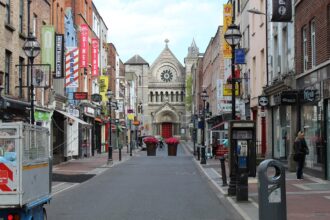
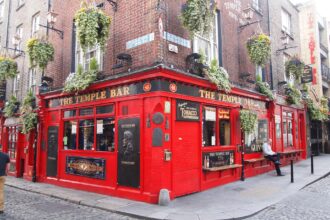
One of the greatest advantages of Dublin Port is its proximity to the city. Unlike many ferry terminals that are located far from the urban centres they serve, Dublin Port sits only a few kilometres from major attractions such as Temple Bar, Trinity College Dublin, O’Connell Street, Dublin Castle, and the city’s principal railway stations. Many visitors can begin exploring the city within minutes of disembarking.
Whether your journey is taking you into Dublin, onwards to Belfast, Galway, Cork, or Limerick, or connecting to Dublin Airport for an international flight, Dublin Port serves as one of the most convenient transport hubs anywhere in Ireland.
Transfer Options at a Glance
| Destination | Best Option | Typical Journey Time |
|---|---|---|
| Dublin City Centre | Bus or Taxi | 15–25 minutes |
| Temple Bar | Bus or Taxi | 20–30 minutes |
| Trinity College Dublin | Bus or Taxi | 15–25 minutes |
| Connolly Station | Bus or Taxi | 10–15 minutes |
| Heuston Station | Taxi or LUAS Connection | 20–35 minutes |
| Dublin Airport | Bus or Taxi | 20–35 minutes |
| Belfast | Train via Connolly Station | 2–3 hours |
| Galway | Train via Heuston Station | 3–4 hours |
| Cork | Train via Heuston Station | 3–4 hours |
For most travellers, buses and taxis provide the easiest way to leave the port. Visitors continuing their journey across Ireland will normally connect to either Connolly Station or Heuston Station, depending on their final destination. The port’s location makes it easy to continue your journey by train, coach, bus, taxi, or private transfer, with most major transport hubs located within a relatively short distance.
Best for two or three nights. The widest choice of rooms, with filters for free cancellation and included breakfast.
View staysBest for groups who want one address and separate bedrooms rather than three hotel rooms.
See holiday homesBest if you have already picked a hotel. Checks the big booking sites for the same room and shows who is cheapest.
Check dealsGetting to Dublin City Centre
For most passengers arriving at Dublin Port, the first priority is reaching Dublin city centre. Fortunately, this is one of the simplest and most convenient port transfers in Ireland, thanks to the port’s location close to the heart of the city.
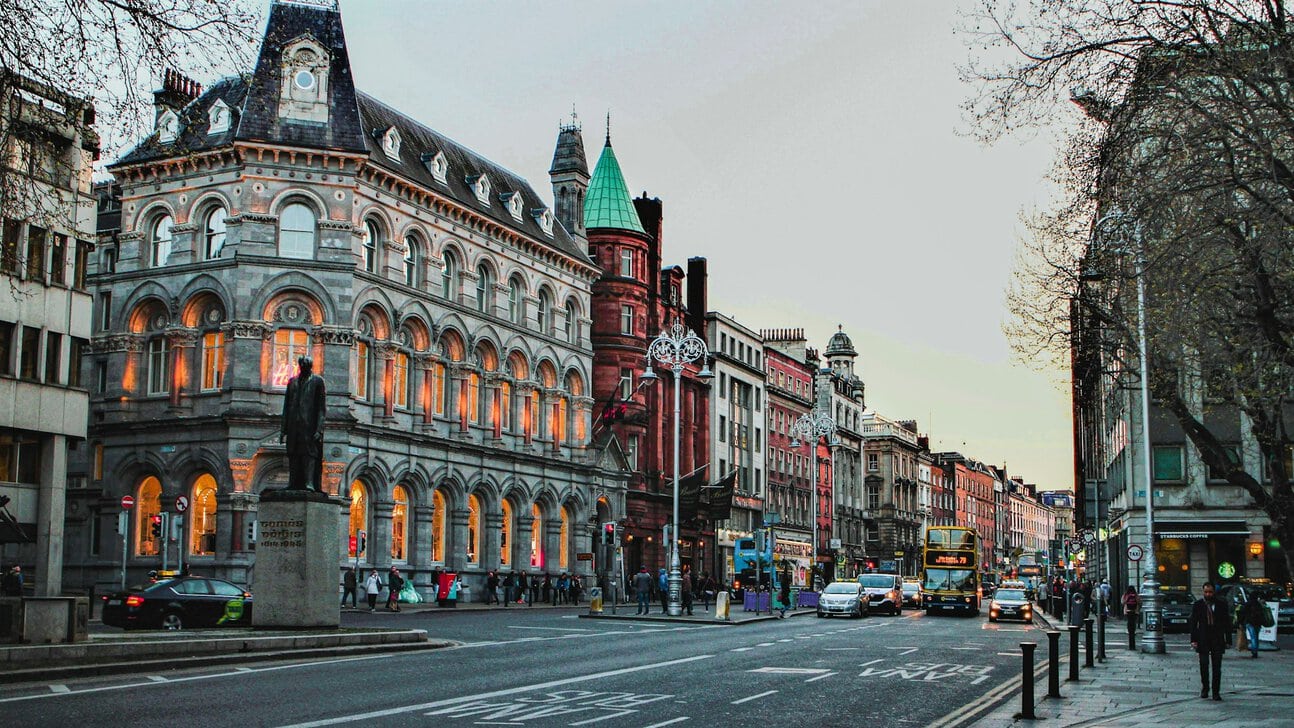
The port lies approximately three to five kilometres east of central Dublin, depending on your arrival terminal and final destination. Popular areas such as Temple Bar, Trinity College Dublin, O’Connell Street, Grafton Street, and St Stephen’s Green can typically be reached within 15 to 25 minutes under normal traffic conditions.
Public transport is available directly outside the passenger terminals. The most useful service for many visitors is Dublin Bus Route 53, which links the port with the city centre and several surrounding districts. Journey times usually range between 20 and 30 minutes, although traffic can occasionally extend this. Tickets can be purchased from the driver, while visitors planning multiple journeys may benefit from purchasing a Leap Card, which provides convenient access to Dublin’s wider public transport network.
Many travellers arriving with luggage choose to use a taxi instead. Official taxis are available outside the ferry terminals and provide direct transport to hotels, attractions, railway stations, and accommodation throughout Dublin. Typical journey times into the city centre are around 15 to 20 minutes, making taxis one of the quickest and most convenient options.
While some experienced travellers choose to walk, it is important to remember that Dublin Port is a working commercial harbour. The surrounding area includes industrial facilities, freight traffic, and major roads, meaning the journey is not always pleasant for visitors carrying luggage. For most passengers, buses and taxis provide a far more practical solution.
Once you reach the city centre, many of Dublin’s most famous attractions are within easy walking distance. Visitors can quickly access Trinity College Dublin, the Book of Kells, Temple Bar, Dublin Castle, St Stephen’s Green, the Guinness Storehouse, and numerous museums, galleries, shops, and restaurants.
Reaching Dublin Airport
Many passengers use Dublin Port as part of a longer journey involving Dublin Airport, particularly those arriving from Great Britain by ferry or continuing onwards on international flights.
The airport is located approximately 12 kilometres north of Dublin Port, and the journey usually takes between 20 and 35 minutes, depending on traffic conditions. Because there is no direct rail connection between the port and the airport, most travellers choose either a taxi or a combination of city centre bus services and dedicated airport coaches.
For most visitors, taxis offer the simplest option. Official taxis are readily available outside the passenger terminals and provide direct transport to all airport terminals. This is particularly useful for travellers carrying luggage, families travelling with children, or passengers working to a tight schedule. Under normal traffic conditions, the journey is straightforward and relatively quick.
Public transport is also available, although it generally involves travelling into central Dublin before connecting with one of the city’s airport coach services. Operators such as Dublin Express and Aircoach operate frequent services between the city centre and the airport throughout the day and night.
Travellers should allow additional time during weekday rush hours, particularly in the morning and late afternoon when traffic around Dublin city centre, Dublin Port, and the airport can become particularly congested. Ferry arrivals, commuter traffic, and airport demand can all impact journey times.
For most visitors, particularly those carrying luggage or travelling on a schedule, a direct taxi remains the most convenient transfer option between Dublin Port and Dublin Airport. However, budget-conscious travellers will find that the city’s extensive bus network provides a reliable alternative.
Connections to Dublin’s Railway Stations
For travellers continuing their journey across Ireland, one of the most important aspects of Dublin Port transfers is reaching the city’s main railway stations. Ireland’s rail network is centred on two major stations, Connolly Station and Heuston Station, and the one you need depends entirely on where you are travelling.
The closest station to Dublin Port is Connolly Station, located on the northern side of the city centre. This is the principal station for services towards Belfast, Drogheda, Dundalk, Sligo, Rosslare Europort, and much of Ireland’s east coast. From Dublin Port, Connolly Station can usually be reached in around 10 to 15 minutes by taxi depending on traffic conditions. Bus services also provide connections, although many ferry passengers find a taxi easier when travelling with luggage.
Connolly Station is particularly important for visitors travelling to Belfast. Frequent services operated by Enterprise connect the two capitals, providing one of the most comfortable and scenic ways to travel between Ireland and Northern Ireland. If Belfast is your destination, reaching Connolly Station should usually be your first priority after leaving the port.
Travellers heading towards Cork, Galway, Limerick, Waterford, Kilkenny, or other destinations in southern and western Ireland will normally need Heuston Station instead. Located west of the city centre, Heuston serves many of Ireland’s busiest long-distance rail routes and acts as the main gateway to much of the country beyond Dublin.
The journey from Dublin Port to Heuston Station typically takes around 20 to 35 minutes. Taxis provide the simplest option, while budget-conscious travellers can use a combination of city buses and the LUAS Red Line tram service. While public transport is perfectly feasible, passengers carrying luggage often find taxis significantly more convenient.
One of the advantages of Dublin’s rail network is that services generally offer comfortable seating, onboard facilities, and city-centre to city-centre travel. For visitors planning to explore Ireland beyond Dublin, the railway often provides a more relaxing alternative to driving.
Whether you are heading north towards Belfast, west towards Galway, south towards Cork, or exploring destinations across the island, Dublin Port provides straightforward connections to Ireland’s most important railway stations.
Ferries from Dublin Port
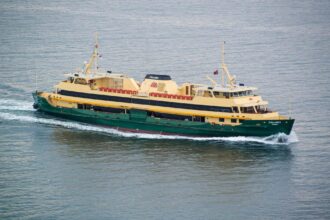
As Ireland’s busiest passenger port, Dublin Port serves as a major gateway between Ireland, Great Britain, and mainland Europe. Millions of passengers pass through the port every year, making it one of the most important transport hubs on the island.
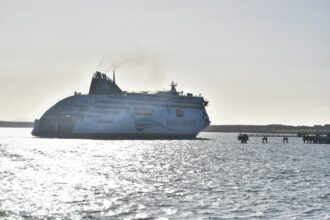
The busiest route is the crossing between Dublin and Holyhead in Wales. This strategically important route provides one of the fastest and most popular links between Ireland and Great Britain and is operated by both Irish Ferries and Stena Line. Sailings operate throughout the day and carry a mixture of foot passengers, cars, freight vehicles, and coaches.
The route is particularly popular with travellers continuing onwards to destinations such as Manchester, Liverpool, Birmingham, London, and Scotland. Many rail passengers combine the ferry crossing with train travel, creating an efficient public transport route between Ireland and Great Britain.
Dublin Port also offers services to mainland Europe. Routes to destinations in France, including Cherbourg, provide an alternative to flying and are especially popular with motorists undertaking longer European road trips. These sailings are considerably longer than the Holyhead route but offer the opportunity to travel directly between Ireland and continental Europe without passing through Great Britain.
Passenger facilities at the port include waiting areas, check-in facilities, transport connections, taxi ranks, and onward bus services. However, as a working commercial port, passengers should always allow sufficient time for check-in and security procedures before departure.
For many travellers, Dublin Port represents far more than simply a ferry terminal. It serves as the principal maritime gateway to Ireland and provides vital connections between Ireland, Britain, and Europe.
Getting Around Dublin After Arrival
Once you have completed your Dublin Port transfer, navigating the Irish capital is relatively straightforward thanks to the city’s extensive public transport network and compact city centre.
Many of Dublin’s most popular attractions are concentrated within a relatively small area. Locations such as Temple Bar, Trinity College Dublin, Dublin Castle, Grafton Street, O’Connell Street, and St Stephen’s Green can often be explored comfortably on foot. For visitors staying centrally, walking is frequently the best way to experience the city’s atmosphere and discover hidden streets, pubs, and historic buildings.
For longer journeys, Dublin Bus provides comprehensive coverage across the city and surrounding suburbs. Services operate throughout the day and connect most major attractions, transport hubs, shopping districts, and residential areas. Visitors planning multiple journeys should consider purchasing a Leap Card, which offers discounted fares and can be used across several transport modes.
The city’s modern LUAS tram network provides another convenient option. The Green Line and Red Line connect many key destinations and offer a quick way to avoid city-centre traffic. Visitors travelling to or from Heuston Station will often find the LUAS particularly useful.
Suburban rail services also play an important role. The DART network follows much of Dublin Bay’s coastline and provides access to attractive seaside destinations such as Howth, Dún Laoghaire, and Malahide. For visitors with extra time, these coastal communities make excellent day trips from the city centre.
The combination of walking, buses, trams, and rail services makes Dublin one of the easiest cities in Ireland to explore without a car. Most visitors find that public transport and walking provide everything needed for a successful visit.
Taxis & Private Transfers
For many ferry passengers, taxis and private transfers provide the simplest and most convenient way to complete a Dublin Port transfer. This is particularly true for travellers arriving with heavy luggage, families with children, cruise passengers, or those unfamiliar with the city.
Official taxis are available directly outside the passenger terminals and provide immediate access to destinations throughout Dublin and beyond. Journeys to the city centre typically take 15 to 25 minutes, while connections to Dublin Airport, Connolly Station, Heuston Station, and suburban hotels are also straightforward.
Private transfers offer an even more convenient option for travellers seeking a pre-arranged arrival experience. Drivers normally meet passengers at the terminal, assist with luggage, and provide direct transport to hotels, airports, railway stations, or destinations elsewhere in Ireland. This can remove much of the uncertainty associated with arriving in a busy port for the first time.
Private transfers are particularly popular with cruise passengers, business travellers, and visitors working to tight schedules. Fixed pricing agreed before travel can also help avoid concerns about traffic delays or unexpected costs.
Although buses and public transport remain excellent choices for many visitors, taxis and private transfers continue to offer the highest level of convenience. For travellers prioritising comfort, speed, and simplicity, they remain among the best transport options available from Dublin Port.

Rupert’s Handy Travel Tips
Arriving through Dublin Port? Here are a few useful tips to make your onward journey smoother:
- Know which railway station you need: Use Connolly Station for Belfast and east coast services, and Heuston Station for Cork, Galway, Limerick, and much of western Ireland.
- Allow extra time during peak periods: Traffic around Dublin city centre, Dublin Port, and Dublin Airport can become congested during weekday rush hours.
- Consider a Leap Card: If you’re spending several days in Dublin, a Leap Card can reduce transport costs and works across buses, trams, and local rail services.
- Explore beyond the city centre: Coastal destinations such as Howth, Malahide, and Dún Laoghaire are easily reached using Dublin’s public transport network.
Want to meet the reindeer behind our travel tips? Find out more in our page Who is Rupert?.




Best for finding routes the airlines do not sell as a single ticket. Combines carriers to bring the fare down.
Search flightsBest if you want maps and messaging working the moment you switch your phone on.
See eSIM plansBest if you would rather not work out the transport on arrival. Book it now and forget it.
View transfersFrequently Asked Questions About Dublin Port Transfers
How far is Dublin Port from Dublin city centre?
Dublin Port is located approximately 3 to 5 kilometres east of the city centre. Most journeys to areas such as Temple Bar, O’Connell Street, and Trinity College Dublin take between 15 and 25 minutes depending on traffic conditions.
What is the fastest way to reach Dublin city centre from Dublin Port?
For most travellers, a taxi is the fastest option and usually takes around 15 to 20 minutes. Budget-conscious visitors can use Dublin Bus Route 53, which provides direct links between the port and central Dublin.
Can I get from Dublin Port to Dublin Airport directly?
Yes. Taxis provide direct transfers between Dublin Port and Dublin Airport, with journey times typically ranging from 20 to 35 minutes. Public transport is also available, although it generally requires travelling into the city centre before connecting to airport bus services.
Which railway station is closest to Dublin Port?
Connolly Station is the nearest major railway station and can usually be reached in 10 to 15 minutes by taxi. It serves routes towards Belfast, Drogheda, Dundalk, Sligo, and Rosslare Europort.
How do I get from Dublin Port to Belfast?
The easiest option is to travel from the port to Connolly Station and board an Enterprise train to Belfast. The rail journey between the two capitals typically takes just over 2 hours.
How do I get from Dublin Port to Galway or Cork?
Passengers travelling to Galway, Cork, Limerick, and much of western and southern Ireland should travel to Heuston Station, which serves Ireland’s main intercity routes.
Can you walk from Dublin Port to the city centre?
It is possible, but most visitors do not. Dublin Port is a busy commercial harbour with freight traffic, industrial areas, and major roads. Travellers carrying luggage will generally find buses or taxis significantly more convenient.
What ferry companies operate from Dublin Port?
The main operators are Irish Ferries and Stena Line, both of which operate services between Dublin and Holyhead in Wales.
Can I reach Dublin’s attractions easily from the port?
Yes. Major attractions including Trinity College Dublin, Temple Bar, Dublin Castle, St Stephen’s Green, and the Guinness Storehouse are all within easy reach using taxis, buses, or public transport.
Is Dublin Port a cruise port as well as a ferry port?
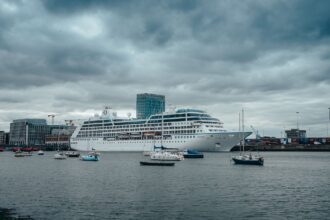
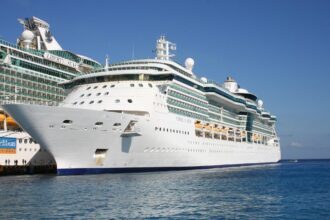
Yes. In addition to ferry services, Dublin Port regularly welcomes cruise ships, allowing passengers to visit Dublin and explore the wider region.
Further Reading & Related Guides
If you are travelling through Dublin Port, our Dublin Port Guide explains the terminal, ferry operators and passenger facilities in more detail. Travellers arriving from Wales should also read our Holyhead to Dublin Ferry Guide, which covers one of the most important ferry routes between Britain and Ireland.
For air arrivals and departures, our Dublin Airport Transfers Guide explains how to reach the airport from the city and port areas. If you are continuing across Ireland by train, our Ireland Rail Network Guide and Interrail Ireland Guide will help with routes, operators and pass planning.
If Dublin is part of your itinerary, our Things to Do in Dublin Guide covers the city’s major attractions, neighbourhoods and cultural highlights. For flights, our Aer Lingus Guide is also relevant, while the eSIM Apps Guide will help you stay connected for maps, tickets and ferry updates.