Reviewed by our editorial team Updated
Best Ways to Travel from Barcelona to Andorra
Travelling from Barcelona to Andorra is much simpler than most first-time visitors expect. Even though Andorra has no airport and no train station, the journey is well established and easy to plan once you understand your options.
In reality, there are three main ways to make the trip: bus, car, or private transfer, with the bus and car being the most common choices. This lack of rail access actually works in your favour, because it removes unnecessary complexity and keeps the decision-making straightforward.
For most travellers, the bus is the easiest and most reliable option. Services run regularly from both Barcelona city centre and the airport, and take you directly into Andorra la Vella without any changes. It is a simple, low-effort journey that requires very little planning.
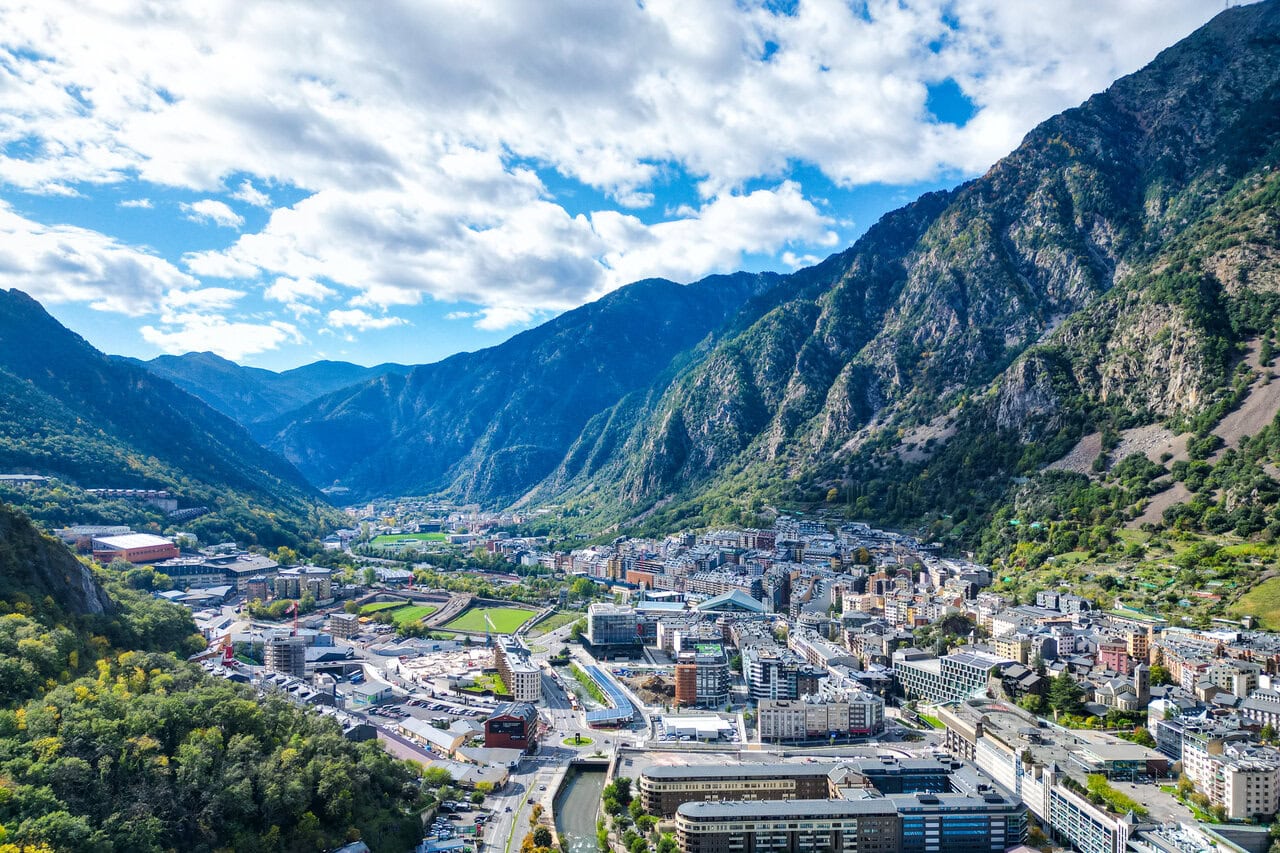
If you prefer more control over your schedule, driving offers flexibility and a more scenic experience. The route gradually climbs into the Pyrenees, transitioning from urban roads to winding mountain scenery, which turns the journey into part of the trip itself rather than just a transfer.
Journey times are typically around 3 hours, although this can vary slightly depending on traffic, weather, and time of year. The key takeaway is clear: there is no train option to complicate things, so you simply choose between convenience (bus) and flexibility (car).
Barcelona to Andorra: Quick Comparison
If you are deciding how to travel, the differences between each option come down to time, cost, and convenience.
The bus usually takes around 3 to 3.5 hours and typically costs between €30–€50 (£26–£43 / $35–$58), making it the most balanced option overall. It is direct, reliable, and removes the need to think about navigation or mountain driving.
Driving takes roughly 2.5 to 3 hours, depending on conditions, but comes with additional costs such as fuel and tolls, particularly for the Cadí Tunnel. The benefit is flexibility, allowing you to stop along the route and explore.
A private transfer also takes around 3 hours, but at a significantly higher price point. This option is best suited to groups, families, or travellers with heavy luggage, as it provides a direct door-to-door experience.
For most travellers, the bus is the default choice because it combines simplicity, comfort, and predictable travel times. Driving becomes more attractive if you are planning a longer Pyrenees itinerary or want to turn the journey into part of the experience.
Best for two or three nights. The widest choice of rooms, with filters for free cancellation and included breakfast.
View staysBest for groups who want one address and separate bedrooms rather than three hotel rooms.
See holiday homesBest if you have already picked a hotel. Checks the big booking sites for the same room and shows who is cheapest.
Check dealsBarcelona to Andorra by Bus
For most travellers, the bus is the simplest and most reliable way to travel from Barcelona to Andorra. Services are designed specifically for this route, meaning the journey is direct, well organised, and easy to manage, even for first-time visitors.
Most buses depart from Barcelona Nord Bus Station, which is the city’s main coach hub. If you are arriving by air, there are also direct services from Barcelona El Prat Airport, operating from both terminals. Some operators, including Andbus and DirectBus, offer additional stops along Avinguda Diagonal, which can be more convenient depending on where you are staying.
In Andorra, buses typically arrive in Andorra la Vella and Escaldes-Engordany, which are the main areas for hotels, shopping, and restaurants. During winter, some services continue to Pas de la Casa, making them particularly useful for ski travellers heading toward the French border.
Ticket prices usually fall between €30–€50 one way (£26–£43 / $35–$58), depending on demand, time of year, and how early you book. Prices tend to increase during ski season and weekends, while midweek services are often more affordable.
Tickets can be booked online in advance through operators such as ALSA, Andbus, and DirectBus, and booking ahead is strongly recommended. Popular departure times can sell out, particularly during peak travel periods.
The journey itself takes around 3 to 3.5 hours, with modern coaches offering comfortable seating, luggage storage, and a relaxed travel experience. As the route climbs into the Pyrenees, the scenery gradually becomes more dramatic, making the journey enjoyable as well as practical.
If your priority is ease, reliability, and minimal effort, the bus is the clear choice. It removes the need to think about driving conditions, toll roads, or navigation, and delivers you directly into the centre of Andorra.

Plan Your Andorra Bus Journey with Busbud
Planning a bus or coach journey involving Andorra? Busbud lets you compare routes, departure times and ticket options from different operators in one place.
It can make planning easier when several companies serve the same route or when local booking systems are unfamiliar.
Barcelona to Andorra by Car (Driving Guide)
Driving from Barcelona to Andorra is one of the most flexible and scenic ways to make the journey, particularly if you want to explore beyond the main route or travel at your own pace.
The most common route follows the C-16 north via Manresa, continuing through the Cadí Tunnel before climbing into the Pyrenees. This is the fastest and most straightforward option, with a typical journey time of 2.5 to 3 hours.
One of the key considerations when driving is the Cadí Tunnel toll, which is one of the main costs on the route. While it adds to the overall expense, it significantly reduces travel time and avoids slower mountain roads, making it worthwhile for most travellers.
Fuel stations are easy to find around Barcelona and the early part of the journey, particularly near Manresa, but become less frequent as you approach the mountains. It is a good idea to fill up before reaching the Pyrenees, where options are more limited.
The drive itself becomes more scenic as you head north, with opportunities to stop in places like Manresa or Berga, both of which offer cafés, restaurants, and a chance to break up the journey. As you move beyond the Cadí Tunnel, the landscape shifts into mountain terrain, with winding roads and increasingly dramatic views.
Road conditions are generally good and well maintained, but they do become more demanding as you climb. In winter, conditions can change quickly, and snow chains may be required, so checking the weather before departure is essential.
Driving is particularly worthwhile if you want complete flexibility, are travelling as part of a longer trip, or plan to explore different parts of Andorra once you arrive. However, if your goal is simply to get there quickly and easily, the bus remains the lower-effort option.
Is There a Train from Barcelona to Andorra?
This is one of the most common questions travellers ask, and the answer is straightforward: there is no direct train from Barcelona to Andorra.
Andorra has no railway network, which means you cannot travel into the country by train in the way you can with many other European destinations. That often surprises first-time visitors, especially those used to relying on rail for cross-border journeys, but in practical terms it simply means you should focus on the bus or car instead.
There are stations relatively close to Andorra in a wider geographical sense, but they do not provide a practical or efficient alternative. On the French side, the nearest notable station is L’Hospitalet-près-l’Andorre, but from there you would still need to organise a further bus or taxi transfer into Andorra, adding extra complexity, extra time, and usually extra cost. That makes it a poor option for most travellers starting in Barcelona.
From the Spanish side, the rail network also does not extend close enough to make a train-plus-transfer journey worthwhile. You may be able to piece together a more complicated route, but it offers no real convenience advantage over simply taking a direct bus from Barcelona or driving yourself.
In other words, while the idea of a rail option sounds appealing, it is not a realistic way to travel from Barcelona to Andorra. If you want the easiest route, take the direct bus. If you want more independence, drive. Trying to force a rail journey into the plan usually just makes the trip more awkward than it needs to be.
Barcelona Airport to Andorra
If you are arriving at Barcelona El Prat Airport, getting to Andorra is much easier than many travellers expect. You do not need to go into the city centre first, as direct transport options run straight from the airport into the mountains.
Several bus operators run direct services from both Terminal 1 and Terminal 2, with clearly marked departure points just outside arrivals. This means you can land, collect your luggage, and head directly to Andorra without needing to navigate Barcelona or arrange additional transfers.
These services typically arrive in Andorra la Vella and Escaldes-Engordany, which are the main tourist and hotel areas. During winter, some routes also extend to Pas de la Casa, making them especially useful for ski trips.
Journey times are usually between 3 and 4 hours, depending on traffic and the number of stops along the route. While slightly longer than departures from the city centre, the convenience of avoiding an extra transfer often outweighs the time difference.
Ticket prices generally range from €35–€55 (£30–£47 / $41–$64), reflecting the added convenience of airport pickup. Booking in advance is strongly recommended, particularly during ski season and peak travel periods, when demand can be high.
For travellers arriving late at night or with heavy luggage, private transfers from the airport are also available. These offer a direct, door-to-door journey and remove the need to match your arrival time with scheduled bus departures.
For most people, the direct airport bus is the easiest and most efficient option, allowing you to move from runway to mountain with minimal effort.
Private Transfers from Barcelona to Andorra
Private transfers offer the most comfortable and flexible way to travel from Barcelona to Andorra, particularly for families, groups, or travellers carrying bulky luggage such as ski equipment.
These services can be arranged from Barcelona city centre or directly from the airport, with drop-off at your accommodation anywhere in Andorra. This door-to-door approach removes the need for taxis, walking, or navigating unfamiliar streets once you arrive.
Journey times are typically around 3 hours, similar to driving, but without the stress of handling mountain roads yourself. This makes private transfers especially appealing during winter, when conditions can be more challenging.
Prices usually start from around €250–€400 per vehicle (£215–£343 / $291–$465), depending on group size, vehicle type, and time of year. While this is significantly more expensive than the bus, the cost becomes more reasonable when shared between several travellers.
Booking in advance is essential, particularly during ski season, when demand increases sharply. Many services allow you to select vehicle size, add child seats, or request additional luggage space.
This option is best suited to travellers who prioritise comfort, convenience, and flexibility over cost. If you want a smooth, direct journey without waiting or transfers, a private transfer is the most straightforward solution.
Best Route Overview & Journey Experience
The journey from Barcelona to Andorra is not just a transfer; it is a gradual transition from city to mountains, and one of the more scenic routes in the region.
Leaving Barcelona, the landscape quickly shifts from urban roads to open Catalonian countryside, before beginning the steady climb toward the Pyrenees. The change is noticeable, with flatter terrain giving way to rolling hills and eventually to steeper, more dramatic mountain scenery.
One of the key points along the route is the Cadí Tunnel, which cuts directly through the mountains and significantly reduces travel time. Passing through the tunnel marks a clear shift, as you emerge into higher altitude terrain and begin the final approach toward Andorra.
The final stretch of the journey is where the scenery becomes most impressive. Roads wind through valleys, forested slopes, and mountain passes, offering wide views across the Pyrenees. Whether you are travelling by bus or car, this part of the route gives a strong sense of arrival as you move into a completely different landscape.
Roads are generally well maintained and easy to follow, but they do become more winding and elevated as you approach the border. In good weather, the journey is smooth and enjoyable. In winter, conditions can be more demanding, although routes are typically kept clear.
Overall, this is a journey that combines practicality with scenery, making it one of the more rewarding routes in the region.
Best for finding routes the airlines do not sell as a single ticket. Combines carriers to bring the fare down.
Search flightsBest if you want maps and messaging working the moment you switch your phone on.
See eSIM plansBest after a long flight or a late landing. Price agreed before you travel, and no taxi queue.
Check transfersWhen Is the Best Time to Travel to Andorra
The best time to travel from Barcelona to Andorra depends largely on what you plan to do once you arrive, as the experience changes significantly between seasons.
In winter, Andorra becomes a major ski destination, which brings higher traffic levels, particularly on weekends and during peak holiday periods. Roads can become congested, and journey times may increase, especially on Fridays and Sundays when travellers are arriving or leaving.
In summer, the experience is very different. Roads are quieter, driving conditions are easier, and the mountains open up for hiking, cycling, and outdoor activities. For a smoother and more relaxed journey, this is often the best time to travel.
The shoulder seasons, particularly late spring and early autumn, offer a balance between the two. You avoid peak crowds while still benefiting from relatively good weather and easier travel conditions.
If your priority is convenience and minimal delays, travelling midweek outside peak ski season makes a noticeable difference. Traffic is lighter, transport options are less crowded, and the overall journey tends to be more predictable.
Understanding the seasonal impact helps you plan not just your trip to Andorra, but the quality of the journey itself, which can vary significantly depending on when you travel.

Rupert’s Handy Travel Tips
Rupert loves this journey because it feels like a proper escape. One minute you are in busy Barcelona, and a few hours later you are heading into the Pyrenees with mountain views opening up around every bend. Give him fresh air, dramatic scenery, and the feeling of climbing higher into Andorra, and he is happy. After a few trips on this route, he has learned that the small details make the biggest difference.
- Book early in winter: ski season demand can push prices up quickly, especially on popular morning departures.
- Carry valid ID: border checks are usually light, but you are still travelling into a separate country.
- Allow extra time at weekends: Fridays and Sundays can be much busier on the road into Andorra.
- Check mountain conditions before driving: winter weather can change quickly, and snow chains may be required.
- Fuel up before the climb: petrol stations become less frequent as you get closer to the Pyrenees.
Want to meet the reindeer behind our travel tips? Find out more in our page Who is Rupert?.




Barcelona to Andorra Frequently Asked Questions
How long does it take to travel from Barcelona to Andorra?
The journey usually takes around 2.5 to 3.5 hours, depending on your mode of transport, traffic levels, and weather conditions. Driving can be slightly quicker in good conditions, while buses are usually a little slower but more predictable.
Is there a direct bus from Barcelona to Andorra?
Yes, there are several direct bus services between Barcelona and Andorra, and for most travellers this is the easiest option. Services run from both Barcelona city centre and Barcelona Airport, with no changes required.
Can you visit Andorra as a day trip from Barcelona?
Yes, it is possible to visit Andorra as a day trip from Barcelona, but it makes for a long day once return travel is included. Most travellers will enjoy the destination more by staying at least one night, especially if they want time for shopping, mountain scenery, or outdoor activities.
Is driving from Barcelona to Andorra difficult?
In normal conditions, no. Roads are generally well maintained and easy to follow, and the main route is straightforward. The only real complication comes in winter, when snow, ice, and mountain conditions can make the drive more demanding.
Is there a train from Barcelona to Andorra?
No, there is no train from Barcelona to Andorra because Andorra has no railway network. The practical choices are the bus, car, or private transfer.
Further Reading & Related Guides
Planning more of your trip to Andorra or travelling onward through the Pyrenees? These guides will help you organise transport, activities, and essential travel tools for the rest of your journey. If you want the full picture before you go, our Andorra Travel Guide pulls everything together, from where to stay to what to do once you arrive.
If you have chosen to drive rather than take the bus, it is worth reading our Driving in Andorra Guide before you set off, as it covers local road rules, tunnel tolls, and what to expect once you cross the border. Coming from France instead, or curious how the two approaches compare, our Toulouse to Andorra Travel Guide lays out that route in the same level of detail.
Travelling in winter changes the trip considerably, so if skiing is part of your plans, our Skiing in Andorra: Prices, Passes & Resorts guide breaks down pricing and resort options to help you choose where to base yourself. And whichever route you take, our eSIM Apps Guide is worth a look so you can stay connected for navigation and bookings along the way.