Reviewed by our editorial team Updated
Budapest Metro Guide: Maps, Tickets & How to Use the Underground
Budapest’s metro system is one of the fastest and easiest ways to move around the Hungarian capital. With four lines connecting major train stations, historic districts, and many of the city’s best attractions, it forms the backbone of Budapest’s public transport network.
Visitors often discover that the metro is far quicker than buses when crossing the city, especially during busy hours. Lines run frequently throughout the day and stations are clearly marked with colour-coded signage, making navigation straightforward even for first-time visitors.
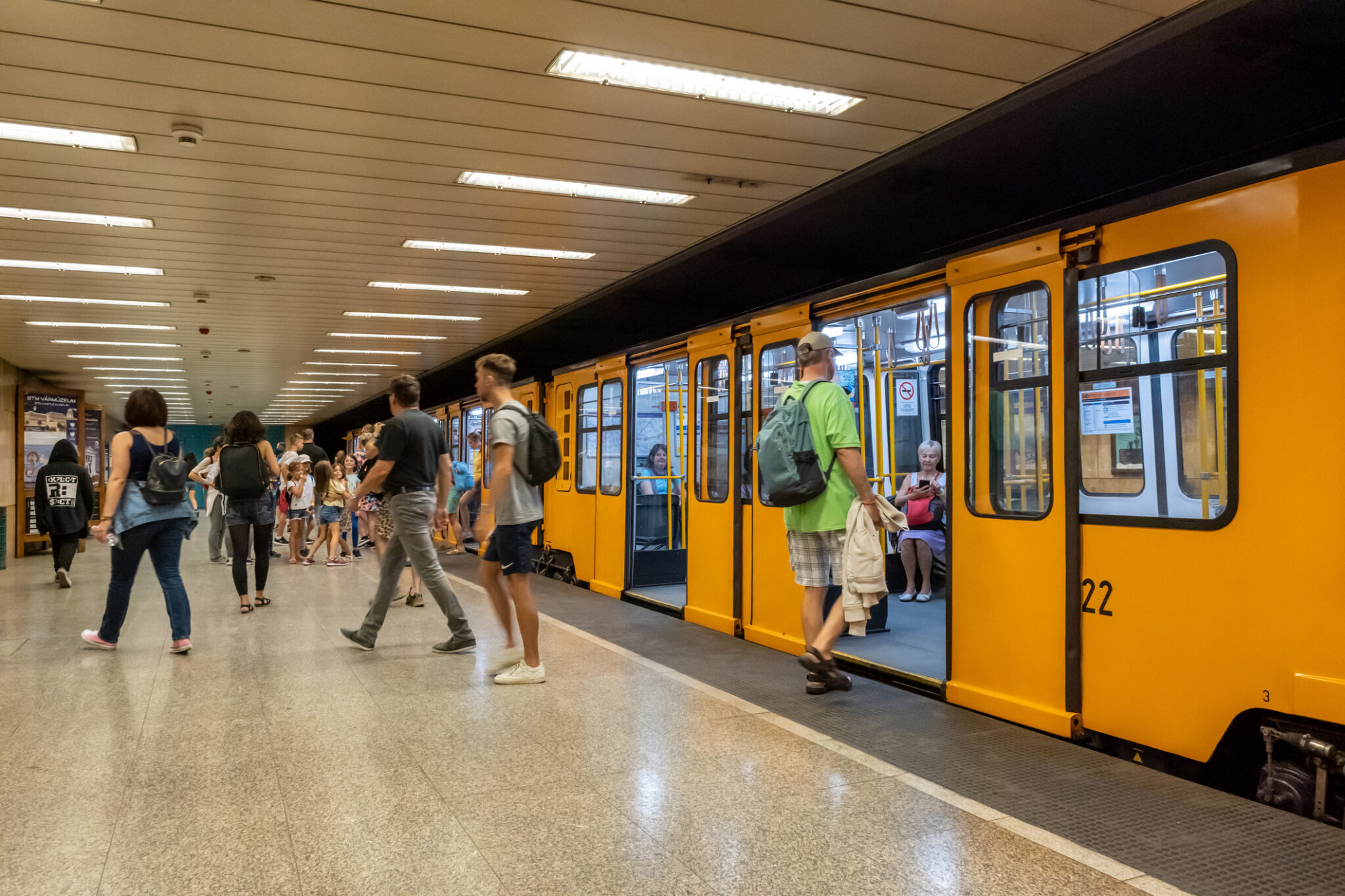
One unique feature of the network is the historic Millennium Underground line (M1), which opened in 1896 and still runs beneath Andrássy Avenue. It was the first metro built in continental Europe, and today it remains both a practical transport route and a small piece of living history.
This Budapest metro guide explains how the system works, where each line goes, how to buy tickets, and how to navigate stations with confidence. Once you understand the basics, travelling around Budapest becomes remarkably simple.
Budapest Metro Overview
Budapest currently operates four metro lines, identified by the letters M1 through M4. Each line is colour coded on maps and station signs, making it easy to identify the correct platform and route.
The network connects many of the locations visitors need most, including major railway stations, central squares, and popular sightseeing areas. Several metro lines also link directly with Budapest’s extensive tram and bus network, allowing passengers to continue their journey across the city.
Three stations act as particularly important interchange points. Deák Ferenc tér is the central hub where three metro lines meet, while Kálvin tér and Keleti pályaudvar allow transfers between other key routes. Because of this design, most journeys across the city require only one simple change of train.
The metro also connects with airport transport services. The 200E airport bus terminates at Kőbánya-Kispest, where travellers can transfer onto Metro Line M3 and continue toward the city centre.
For most visitors, the metro becomes the quickest way to move between districts such as Pest’s historic centre, the City Park area, and the major railway stations. It is reliable, clearly organised, and easy to learn after just a few trips.
Best if you want daily housekeeping and a front desk. Filter by area first, then by price.
Check availabilityBest for groups who want one address and separate bedrooms rather than three hotel rooms.
See holiday homesBest for double-checking. Runs the same Budapest search across several booking sites so you are not leaving money behind.
Compare pricesBudapest Metro Map
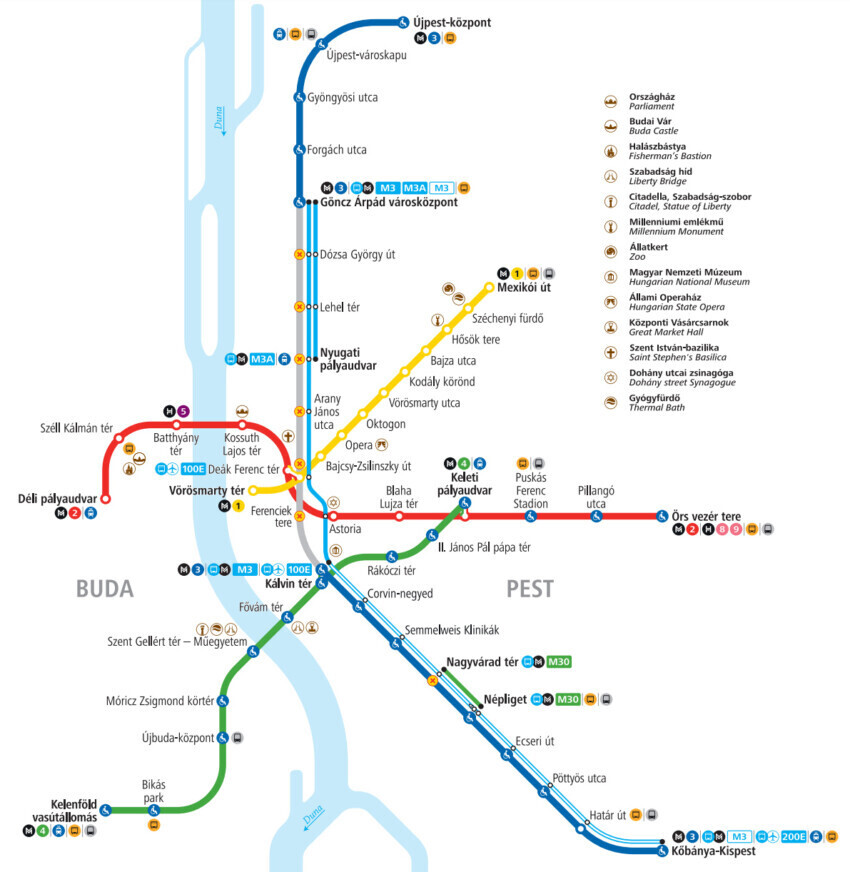
Understanding the system begins with looking at the Budapest metro map, which displays the four lines and the stations where passengers can change between them.
Each route is represented by a distinct colour. The yellow M1 line runs beneath Andrássy Avenue, the red M2 line crosses the city east to west, the blue M3 line runs north to south, and the green M4 line links key railway hubs and university districts.
Maps are displayed inside every station, on platforms, and inside metro trains, so travellers can easily check their route while travelling. The layout is straightforward and most stations are labelled in both Hungarian and English.
Several stations stand out as important transfer points. Deák Ferenc tér is the central hub of the network, where three metro lines meet. This station lies close to many attractions in central Pest and is often where travellers switch routes.
Studying the map for a few minutes before travelling makes it much easier to visualise how the metro lines cross the city and where transfers are required.
Budapest Metro Map Explained for Tourists
At first glance, the Budapest metro map can look more complicated than it really is, but the system is actually very easy to understand once you know how the lines connect. The entire network is built around just four metro lines, and most tourist journeys involve only one direct train or a single interchange.
Each metro line is identified by both a colour and a number. The yellow M1 line runs beneath Andrássy Avenue, the red M2 line crosses the city east to west, the blue M3 line runs north to south through Pest, and the green M4 line links major railway stations and university districts.
The most important station on the map is Deák Ferenc tér, where the M1, M2, and M3 lines all connect. Many visitors naturally pass through this station several times because it acts as the centre of Budapest’s metro network. If you understand where Deák Ferenc tér sits on the map, navigating the rest of the system becomes much easier.
The map also uses coloured interchange symbols to show where passengers can transfer between lines. Stations with multiple coloured circles or intersecting lines indicate major connection points. These are particularly important when crossing between Buda and Pest or travelling between railway stations and tourist districts.
Most attractions are located very close to metro stations, especially along the M1, M2, and M3 routes. The historic centre of Pest, Heroes’ Square, Széchenyi Baths, the Opera House, and several railway stations all sit directly on metro lines, which means visitors rarely need complicated routes.
One useful trick is to focus on the final station name shown on the platform signs. Budapest metro platforms display the direction of travel using the name of the line’s final stop rather than compass directions. Once you understand this system, navigating the metro becomes much easier.
For most visitors, the Budapest metro map quickly becomes less intimidating than metro systems in cities such as London or Paris because the network is relatively compact, logical, and heavily centred around the tourist districts.
Budapest Metro Lines Explained
Each metro line serves a different corridor of the city, linking residential districts, transport hubs, and popular sightseeing areas.
M1 – Yellow Line (Millennium Underground)
The M1 line is the oldest metro route in Budapest and one of the oldest in Europe. Opened in 1896 for the Millennium Exhibition, it runs beneath Andrássy Avenue from Vörösmarty tér to Mexikói út.
Stations along the route serve several famous attractions. Travellers can reach St Stephen’s Basilica, the Hungarian State Opera House, Heroes’ Square, and Széchenyi Thermal Baths directly from this line.
Because the platforms and trains are smaller than those on other lines, the M1 has a distinct historic feel that many visitors find memorable.
M2 – Red Line
The M2 line crosses Budapest from Déli railway station in Buda to Keleti railway station in Pest. This makes it extremely useful for travellers arriving by train or moving between the two sides of the city.
Stops include Széll Kálmán tér, Astoria, and Deák Ferenc tér, which place passengers close to many of the city’s busiest areas.
M3 – Blue Line
Metro Line M3 is the longest route in the system and runs north to south through Pest. It links major locations including Nyugati railway station, Deák Ferenc tér, and Kálvin tér.
This line also connects with the 200E airport bus at Kőbánya-Kispest, making it a key route for travellers arriving from Budapest Airport.
M4 – Green Line
The newest addition to the metro network is the M4 line, which connects Kelenföld railway station with Keleti railway station.
Along the way it serves Gellért Hill, university districts, and busy transport hubs, providing a fast cross-city link between western and eastern Budapest.
Which Budapest Metro Line Do You Need?
For most visitors, the easiest way to understand the Budapest metro system is to think about which attractions sit on each metro line. Many of Budapest’s most famous sights are directly connected by the underground, which makes travelling around the city surprisingly simple.
The historic M1 yellow line is one of the most useful routes for sightseeing. Running beneath Andrássy Avenue, it connects the city centre with attractions such as the Hungarian State Opera House, Heroes’ Square, City Park, and Széchenyi Thermal Baths. Because the line itself dates back to 1896, riding it also feels like part of the sightseeing experience.
The M2 red line is especially useful for travellers moving between Buda and Pest. It connects major transport hubs including Déli railway station and Keleti railway station, while also stopping near important central locations such as Astoria and Deák Ferenc tér.
The M3 blue line is often the most practical route for visitors arriving from the airport because it connects with the 200E airport bus at Kőbánya-Kispest. It also stops near several busy shopping and transport districts across Pest.
Meanwhile, the modern M4 green line provides quick connections between Kelenföld railway station, Gellért Hill, university districts, and Keleti station.
| Attraction | Metro Line | Station |
|---|---|---|
| Hungarian Parliament | M2 | Kossuth Lajos tér |
| Széchenyi Thermal Baths | M1 | Széchenyi fürdő |
| Heroes’ Square | M1 | Hősök tere |
| Hungarian State Opera | M1 | Opera |
| Great Market Hall | M4 | Fővám tér |
| St Stephen’s Basilica | M1 / M2 / M3 | Deák Ferenc tér |
| Keleti Railway Station | M2 / M4 | Keleti pályaudvar |
| Gellért Baths (closed until 2028) | M4 | Szent Gellért tér |
Understanding which attractions belong to which metro line makes planning your days in Budapest much easier and helps reduce unnecessary transfers across the city.
Budapest Metro Tickets & Prices
Budapest uses a simple citywide ticketing system operated by BKK, the capital’s public transport authority. The same tickets work across metro trains, trams, buses, and trolleybuses, making it easy to combine different forms of transport during one journey.
The most basic option is the single ticket, which allows travel on one metro line. If you need to change lines within the metro system, a transfer ticket is required. Many visitors prefer to avoid this complication by purchasing a travel pass instead.
For short visits, time-based travelcards are usually the most convenient option. A 24-hour, 48-hour, or 72-hour pass allows unlimited travel across the entire public transport network. This means you can use metro trains, trams, buses, and even some suburban rail services without buying separate tickets.
Typical prices are very reasonable compared with many European capitals. BKK lists a single ticket at 500 HUF (£1.20 / €1.40 / $1.60) when bought in advance, rising to 700 HUF (£1.65 / €1.95 / $2.25) if you buy it on the spot, while a 24-hour Budapest travelcard costs 2,750 HUF (£6.50 / €7.60 / $8.85). Longer passes offer better value if you expect to use public transport frequently. BKK publishes the current ticket and pass prices on its official site.
For most travellers, the best strategy is simple: buy a short travel pass and use the metro freely during your stay. This removes the need to worry about transfers, ticket validation rules, or additional purchases.
Where to Buy Metro Tickets
Metro tickets in Budapest are widely available and easy to purchase. Ticket machines are located inside every metro station and accept both cash and bank cards, including international payment cards.
These machines offer multiple language options, including English, making the purchase process straightforward for visitors. After selecting the ticket type, travellers simply pay and receive a printed ticket or pass.
Another option is to buy tickets at BKK customer service centres and staffed ticket offices, which are located at several major transport hubs such as Deák Ferenc tér, Keleti railway station, and Nyugati railway station.
Many travellers also choose to purchase digital tickets through mobile ticketing apps, which allow passengers to store travel passes directly on their smartphone instead of carrying paper tickets.
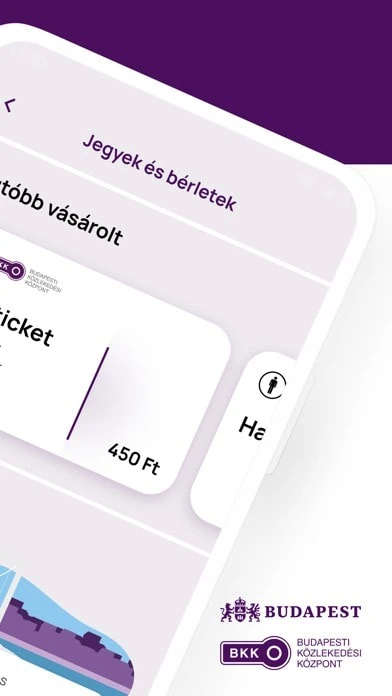
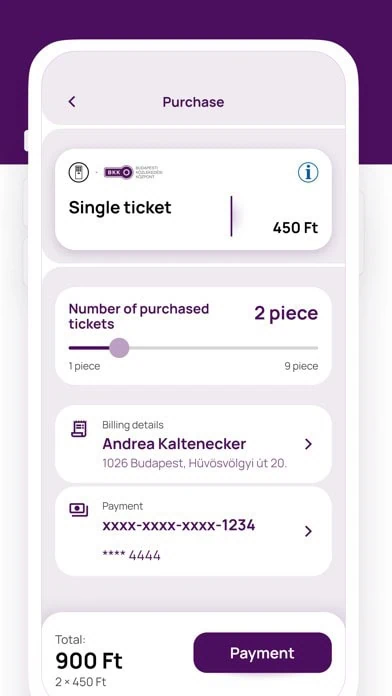
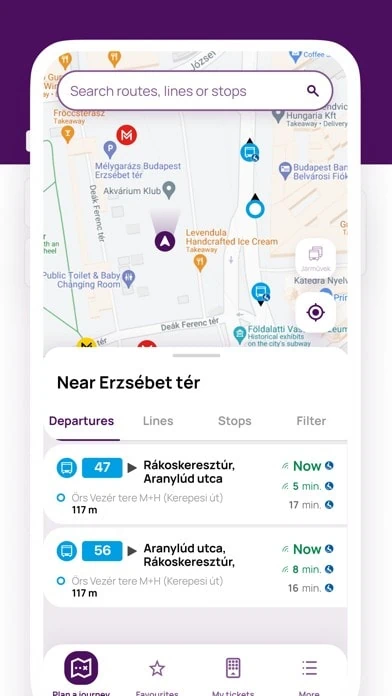
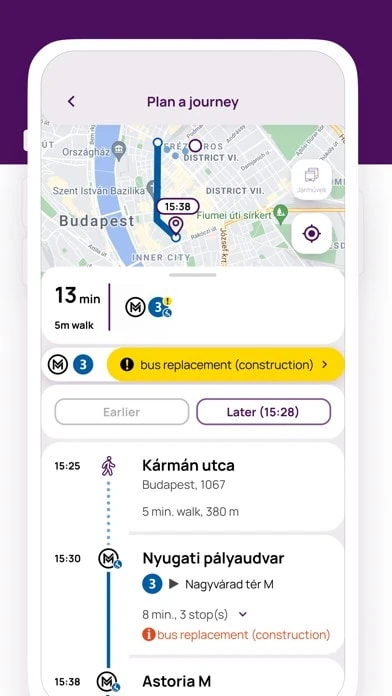
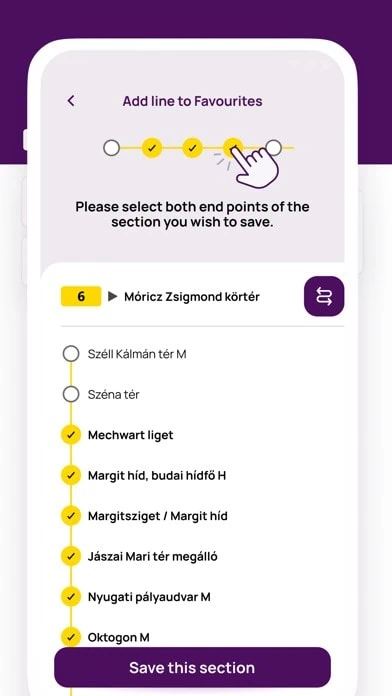
The official BudapestGO app, operated by the city’s transport authority BKK, allows travellers to buy single tickets, travel passes, and airport transport tickets directly within the app. After purchasing a ticket, passengers simply scan a QR code displayed at the metro entrance or near the escalators to validate it before entering the platform.
BudapestGO also provides live public transport information, route planning, and service updates, which can be useful when navigating the city’s metro, tram, and bus network.
Some visitors also use Google Maps or Citymapper for journey planning, as both apps integrate Budapest’s public transport network and show metro routes alongside tram and bus connections.
For many travellers, using a ticket app is the simplest way to manage metro travel in Budapest, especially during busy periods when ticket machines may have queues. Once the ticket is activated on your phone, you can move through the metro system without worrying about validating paper tickets.
Whichever option you choose, it is always wise to purchase your ticket before entering the platform area. Ticket inspections are common on Budapest’s public transport system, and inspectors regularly check passengers during their journeys.

App availability and prices vary by country. Some of these may not appear in your local App Store or Google Play.
Best for long or awkward journeys. Builds one itinerary out of separate flights.
View flightsBest for short trips. Install the eSIM at home and arrive in Budapest with working data, no shop queue.
Browse eSIMsBest after a long flight or a late landing. Price agreed before you travel, and no taxi queue.
Check transfersDo You Need to Validate Budapest Metro Tickets?
One of the biggest points of confusion for visitors using the Budapest metro is ticket validation. Unlike cities with modern tap-in systems such as London, Budapest still uses a validation process for many paper tickets, and failing to validate correctly can result in fines during ticket inspections.
If you are using a single paper ticket, you must validate it before entering the metro platform area. Validation machines are usually small orange devices positioned near escalators, station entrances, or platform access points. Once inserted into the machine, the ticket receives a printed timestamp confirming that it has been activated.
This step is extremely important because inspectors regularly check tickets throughout the network. Even if you have purchased a valid ticket, failing to validate it correctly may still result in a penalty fare.
Travellers using travel passes such as 24-hour, 48-hour, or 72-hour passes generally do not need to validate them each time they travel because the validity period is already printed on the pass itself. However, it is still important to keep the pass available for inspection at all times.
Passengers using the BudapestGO app follow a slightly different process. Mobile tickets are activated digitally by scanning QR codes located near station entrances or escalators. Once activated, the ticket becomes valid immediately within the app.
For most tourists, the simplest option is usually purchasing a short-term travel pass rather than using multiple single tickets. This removes the stress of repeated validations and makes travelling around Budapest much more convenient.
How to Use the Budapest Metro
Using the metro system in Budapest is straightforward once you understand the basic process. Stations are clearly marked, trains run frequently, and route information is displayed throughout the network.
First, travellers must purchase a valid ticket or travel pass before entering the metro platform. Single tickets need to be validated using the small orange stamping machines located near station entrances or escalators.
Once validated, passengers simply follow the colour-coded line signs to the correct platform. Each line uses a distinct colour and number, making it easy to confirm you are heading in the right direction.
Inside stations, digital boards display the next arriving trains and the direction of travel. Signs also indicate the final station on each route, helping passengers confirm which platform to use.
Metro trains run every two to five minutes during busy periods, and slightly less frequently later in the evening. The system generally operates from early morning until shortly after midnight, after which night buses replace many routes.
With clear signage and frequent services, most visitors find that navigating the metro becomes second nature after only a couple of journeys.
Step-by-Step: Taking Your First Budapest Metro Journey
Using the Budapest metro for the first time is much easier than many visitors expect. Once you understand the basic process, travelling around the city becomes quick, efficient, and straightforward.
First, buy a valid ticket or travel pass before entering the metro system. Tickets can be purchased from machines inside stations, ticket offices, or through the BudapestGO app.
If you are using a paper single ticket, the next step is extremely important. You must validate the ticket using the small orange validation machines near the station entrance or escalators. Travel passes normally do not require repeated validation.
After validating your ticket, follow the signs for the correct metro line colour and number. Each line uses a clearly marked colour system, making navigation relatively simple even for first-time visitors.
Before entering the platform, check the final destination station name shown on the signs. Budapest metro directions are displayed using the line’s final stop rather than compass directions, so this helps confirm you are travelling the correct way.
Once on board, metro trains display upcoming stations clearly inside the carriage. Most major tourist areas are announced visually and often audibly as well.
When you arrive at your destination, simply follow the station exit signs. Larger interchange stations such as Deák Ferenc tér and Keleti pályaudvar may involve longer underground corridors between platforms, so allow a few extra minutes when changing lines.
After one or two journeys, most travellers find the Budapest metro system extremely easy to use, especially compared with much larger underground systems elsewhere in Europe.
Key Interchange Stations
Several metro stations act as major connection points between lines, allowing travellers to change routes and continue across the city without leaving the system.
The most important hub is Deák Ferenc tér, located in the heart of central Pest. This station connects three metro lines (M1, M2, and M3) and is within walking distance of major attractions such as St Stephen’s Basilica and the Danube riverfront. Many travellers pass through this station at some point during their stay.
Another important interchange is Kálvin tér, where the M3 and M4 lines intersect. This station sits close to the Central Market Hall and the historic university district, making it a convenient point for both tourists and local commuters.
A third key station is Keleti pályaudvar, which connects the M2 and M4 metro lines with one of Budapest’s largest railway stations. Travellers arriving by international or intercity train can transfer here directly to the metro network.
Understanding these major interchange stations makes it much easier to plan efficient journeys across Budapest, especially when travelling between the city’s main districts.
Budapest Metro for Tourists
For visitors exploring the Hungarian capital, the metro is often the fastest way to move between the city’s main attractions. The network connects several of Budapest’s most famous landmarks, making it easy to travel between districts without relying on taxis or buses.
Many travellers begin their journeys at Deák Ferenc tér, the central hub where multiple metro lines meet. From here, it is only a short walk to St Stephen’s Basilica, the Danube promenade, and several of the city’s busiest shopping streets.
The historic M1 Millennium Underground line is particularly useful for sightseeing. Running beneath Andrássy Avenue, it provides quick access to the Hungarian State Opera House, Heroes’ Square, the City Park area, and the famous Széchenyi Thermal Baths. Because of this, many travellers use the line as a convenient route between the city centre and the park district.
Metro lines also connect with several important railway stations. Travellers arriving at Keleti, Nyugati, or Déli stations can transfer directly onto the underground system and continue into the city centre within minutes.
For many visitors, the metro becomes the simplest way to navigate Budapest, particularly when travelling between the historic Pest districts and areas further north or south of the centre.
Metro vs Trams vs Buses in Budapest
Budapest has one of the most extensive public transport networks in Central Europe, and each mode of transport plays a different role in moving passengers around the city.
The metro is generally the fastest option for longer journeys across the city, particularly when travelling between major transport hubs or crossing large distances through central districts. Trains run underground and avoid street traffic, which makes them reliable even during busy periods.
Trams, on the other hand, often provide the most scenic journeys. Some of the city’s most famous tram routes run along the Danube riverfront, offering views of landmarks such as the Hungarian Parliament and Buda Castle.
Buses and trolleybuses fill the gaps between the metro and tram networks. They serve neighbourhoods where rail transport is not available and provide connections to outer districts.
| Transport | Best For | Example Routes |
|---|---|---|
| Metro | Fast cross-city travel | M2, M3 |
| Trams | Scenic routes & riverfront | Tram 2 |
| Buses | Local neighbourhood access | Bus 16 |
For visitors exploring the city centre, a combination of metro lines and a few key tram routes usually covers most journeys.
Best for solo travellers and anyone watching the budget. Dorm beds and private rooms in the same search.
Browse hostelsBest arranged before you fly rather than after. Covers claim handling, plus lounge access on eligible delays.
Explore AirHelp+Best if your room is not ready yet. Left luggage booked in advance, so you are not hunting for a locker.
Check storageBudapest Metro vs Tram: Which Is Better for Tourists?
Visitors to Budapest quickly notice that the city relies heavily on both metro lines and tram routes, and many travellers wonder which option is better for sightseeing and daily travel.
In general, the metro is the fastest option for moving across the city. Because trains run underground, they avoid traffic completely and provide quick connections between railway stations, central districts, and major attractions. If your goal is speed and efficiency, the metro is usually the best choice.
However, Budapest’s tram network often provides the more scenic experience. Famous routes such as Tram 2 run directly along the Danube riverfront and pass landmarks including the Hungarian Parliament, Chain Bridge, and Buda Castle. Many travellers consider Tram 2 one of the most beautiful tram rides in Europe.
The metro is particularly useful for:
• crossing large distances quickly
• travelling between railway stations
• reaching thermal baths and museums
• avoiding traffic during busy hours
Meanwhile, trams are often better for:
• sightseeing along the river
• shorter central journeys
• photography and scenic travel
• exploring neighbourhood streets
Buses and trolleybuses fill the gaps where rail transport does not reach. They are useful in outer districts and hilly parts of Buda but are generally slower because they operate in normal street traffic.
For most tourists, the ideal strategy is combining the systems. Use the metro for speed, use key tram routes for sightseeing, and rely on buses only when necessary.
Metro Safety & Travel Tips
Budapest’s metro system is generally safe, efficient, and well maintained, but there are a few practical tips that can make travelling smoother.
First, always ensure your ticket has been properly validated before starting your journey. Ticket inspectors frequently check passengers on platforms and inside trains. If a ticket has not been validated correctly, passengers may receive a fine.
During busy hours, especially in the morning and late afternoon, trains can become crowded around major interchange stations such as Deák Ferenc tér. Keeping personal belongings secure and being aware of your surroundings is always sensible in busy urban transport systems.
Another helpful tip is to pay attention to the final station displayed on the platform signs. Metro lines run in two directions, and checking the last station name helps confirm that you are travelling the correct way.
Travellers should also note that metro services typically run until shortly after midnight. After this time, Budapest operates an extensive night bus network that continues to connect many parts of the city.
Common Tourist Mistakes on the Budapest Metro
Most visitors find the Budapest metro easy to use, but there are a few common mistakes that regularly catch tourists out during their first visit.
One of the biggest issues is forgetting to validate paper tickets. Buying a ticket is not enough on its own. Single tickets must be stamped using the orange validation machines before entering the platform area. Ticket inspectors regularly perform checks, and unvalidated tickets can result in fines even if the ticket itself was purchased correctly.
Another common mistake is boarding trains in the wrong direction. Budapest platforms display the direction of travel using the name of the line’s final station rather than northbound or southbound indicators. Checking the final destination before boarding helps avoid confusion.
Some visitors also misunderstand how transfer tickets work. Standard single tickets only allow one uninterrupted metro journey unless a specific transfer ticket is purchased. This is why many tourists prefer short-term travel passes instead.
Airport transport causes confusion as well. Budapest Airport does not currently connect directly to the metro network. Travellers must first take the 200E airport bus to Kőbánya-Kispest station before transferring onto the M3 metro line toward the city centre.
At major interchange stations such as Deák Ferenc tér, tourists sometimes underestimate walking times between platforms. Some connections involve long underground corridors and escalators, especially during busy periods.
Another frequent mistake is assuming Budapest uses a tap-in contactless system similar to London. At present, travellers still need to purchase tickets or activate digital tickets manually before travel.
Most of these problems are very easy to avoid once you understand how the system works. A few minutes of preparation makes using the Budapest metro extremely smooth and stress free.

Rupert’s Handy Travel Tips
Using the Budapest metro is easy once you know a few local tricks. Here are a few tips that can make your journeys smoother:
- Validate single tickets: stamp them at the orange machines before entering the platform, even if you have already paid.
- Buy a travel pass for longer stays: a 24-hour or 72-hour travel pass is usually better value than buying single tickets repeatedly.
- Check the final station name: platform signs show the direction of travel using the line’s last stop, so confirm it before boarding.
- Ride the M1 for its history: the Millennium Underground is one of the city’s oldest attractions, not just a way to get around.
- Allow extra time at rush hour: major interchange stations such as Deák Ferenc tér get busy during peak commuting hours.
Want to meet the reindeer behind our travel tips? Find out more in our page Who is Rupert?.


Frequently Asked Questions About the Budapest Metro
Is the Budapest metro easy for tourists to use?
Yes. The system is well organised, clearly signposted, and relatively small compared with many European capitals. Stations use colour-coded lines and clear direction signs, which makes navigation straightforward even for first-time visitors. Most major attractions are either located near a metro station or within a short walk from one, so the metro quickly becomes one of the most convenient ways to explore the city.
Do Budapest metro tickets work on trams and buses?
Yes. Budapest uses a unified public transport ticket system, meaning the same tickets and travel passes work across the metro, trams, buses, and trolleybuses. However, a standard single ticket is valid for one uninterrupted journey, so if you need to change lines you may require a transfer ticket unless you are using a travel pass.
Do metro trains run all night in Budapest?
No. The metro typically operates from early morning until shortly after midnight. After metro services stop running, the city switches to a network of night buses, which cover many of the same routes across Budapest. Night buses are clearly marked with numbers beginning with 9, and many depart from central locations such as Deák Ferenc tér.
Is the Budapest metro safe to use?
Yes. The metro system is generally safe and widely used by locals and visitors throughout the day. Stations are busy, well lit, and regularly patrolled. As in any large city, travellers should remain aware of their belongings in crowded areas, particularly during busy commuting hours.
Can you pay contactless on the Budapest metro?
At present, Budapest does not operate the same tap-in contactless system used in cities such as London. Travellers must buy a ticket, travel pass, or mobile ticket before entering the metro system. Digital tickets purchased through the BudapestGO app can be validated by scanning QR codes inside metro stations.
Further Reading & Related Travel Guides
Planning a trip to Budapest or exploring more of Hungary? These guides cover transport, major attractions, day trips and travel planning to help you make the most of your visit. For a full rundown of the city’s top sights, see our full guide to the best things to do in Budapest. If you’re arriving by air, the Budapest Airport Transfers Guide compares buses, taxis and private transfers into the centre, while the Budapest Hop-On Hop-Off Bus Tours Guide is a good option for sightseeing above ground. Travellers continuing on to Austria can also read our Budapest to Vienna Travel Guide for the best routes between the two capitals.
Once you’ve got the metro sorted, several of Budapest’s best-known sights are only a short ride away. The Budapest Parliament Tours Guide covers tickets and visiting the Hungarian Parliament building, the Budapest River Cruises Guide explains how to see the city from the Danube, and the Budapest Thermal Baths Guide details the best spas to visit, several of which sit directly on the metro network. If you’re weighing up a multi-attraction pass, the Budapest Card Guide breaks down whether it’s worth it for your trip.
For travellers planning further afield, the Best Day Trips from Budapest guide rounds up the top excursions outside the city, the Debrecen Travel Guide introduces Hungary’s second-largest city, and the Interrail Hungary Pass Guide explains how to explore the wider country by rail.