Reviewed by our editorial team Published
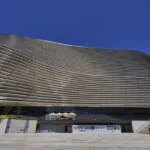
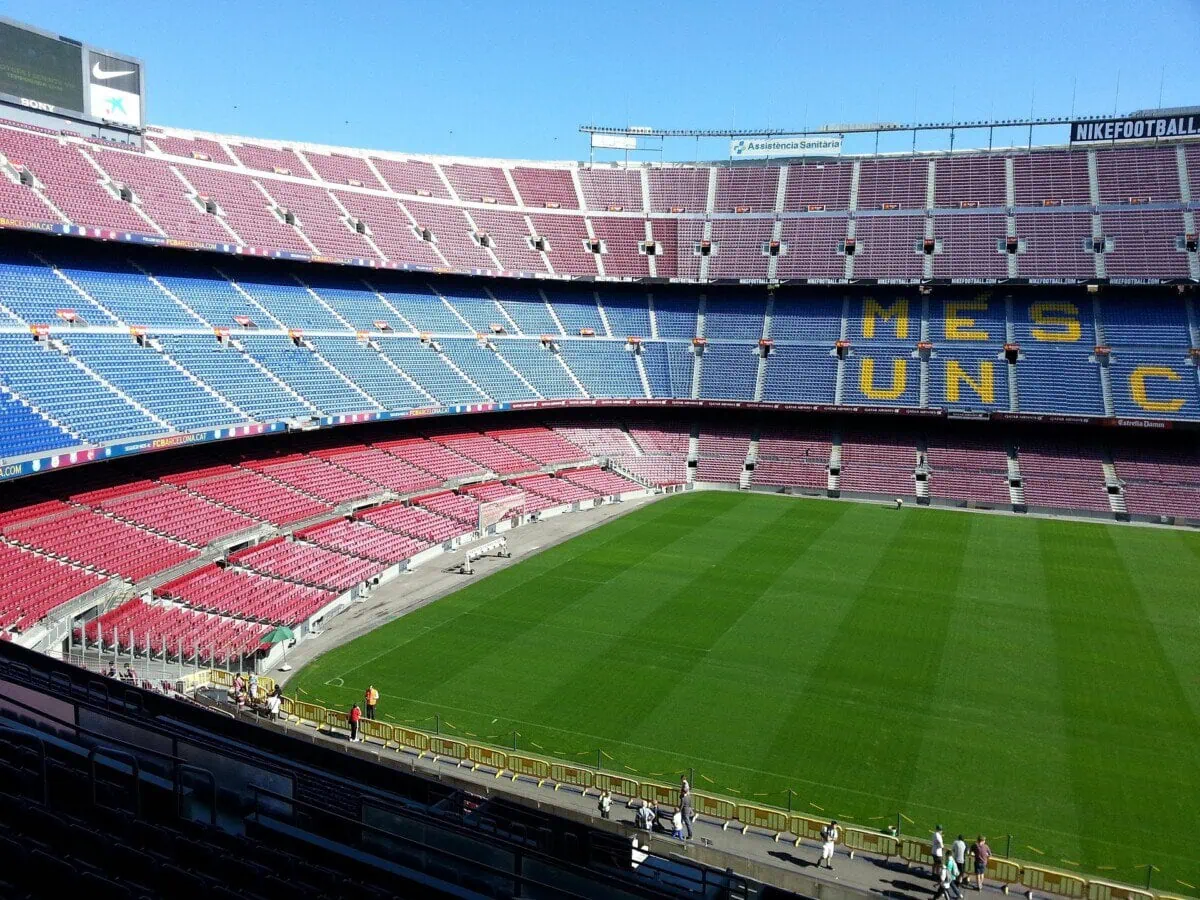
Camp Nou is FC Barcelona’s home stadium, sitting in the Les Corts district on the western side of Barcelona. It has hosted the club’s biggest nights since 1957, and it remains one of the most recognisable football grounds anywhere in the world.
It is FC Barcelona’s actual home ground rather than simply a Barcelona landmark, and that distinction shapes almost everything about visiting it. Camp Nou has long ranked among the largest club stadiums on the planet, a reputation built well before the current rebuild ever began.
Camp Nou is currently mid-way through a major renovation known as the Espai Barça project, and Barça are still playing their home matches here right now at a reduced capacity of around 62,000. That is the single most important thing to understand before planning a visit, since the ground you’ll actually see today is smaller and busier-feeling than the finished stadium will eventually be.
On 22 September 2026, the club approved a €510 million financing package to complete the renovation, and part of that plan sends Barça temporarily back to the Estadi Olímpic Lluís Companys on Montjuïc for the 2027/28 season while the final construction phase wraps up. A return to the fully renovated Camp Nou is pencilled in for January 2028, so anyone booking a trip from mid-2027 onward should double-check the actual match venue before locking in flights or a hotel.
This guide covers exactly what a visitor needs right now: the metro and bus routes that actually reach the current stadium entrances, matchday crowd handling, prohibited items, parking, ticket buying and the Camp Nou Experience tour on offer during construction. Everything below reflects the stadium as it stands today, with the Montjuïc move flagged wherever it genuinely matters for planning ahead.
| Stadium | Location | Capacity | Nearest Station | Primary Uses |
|---|---|---|---|---|
| Camp Nou (Spotify Camp Nou) | Les Corts, Barcelona | Around 62,000 currently; around 105,000 once the renovation is complete | Palau Reial (L3) / Collblanc (L5) | FC Barcelona La Liga and Champions League home matches |
Transport at a Glance: Every Station Worth Knowing
Camp Nou sits at the edge of several transport networks rather than directly beside one obvious metro exit, so picking the right station matters more than usual. The table below lists every genuine option, matched with realistic journey and walking times from the city centre.
| Mode | Station | Line | Journey from Central Barcelona | Walk Time to Stadium |
|---|---|---|---|---|
| Metro | Palau Reial | Line 3 (green) | Around 15 minutes from Plaça de Catalunya | Around 10 minutes |
| Metro | Collblanc | Line 5 (blue), interchange with L9/L10 | Around 20 minutes from Plaça de Catalunya | Around 10 minutes |
| Tram | Palau Reial (same stop) | T1/T2/T3 (Trambaix) | Varies by starting point in the western suburbs | Around 10 minutes |
| Bus | Stops around the stadium perimeter | Routes 7, 33, 54, 63, 67, 68, 75, 113 | Varies by route | A short walk from the nearest stop |
Getting to Camp Nou by Metro: Palau Reial and Collblanc
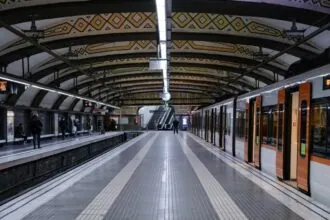
Line 3, the green line, is the route most first-time visitors reach for, and Palau Reial is its closest stop to the stadium. From Plaça de Catalunya the ride takes around 15 minutes, and the walk from the station to the current visitor entrances runs about 10 minutes through the university campus that surrounds this stretch of Les Corts.
Palau Reial also doubles as a tram interchange, with Trambaix’s T1, T2 and T3 lines calling at the same stop for anyone arriving from the western suburbs. That makes it the more useful option for arrival, since its wider concourse handles pre-match crowds more comfortably than Collblanc’s tighter layout.
Line 5, the blue line, reaches Collblanc instead, a station that also connects to L9 and L10 at the same interchange for anyone coming from the airport or northern Barcelona. The walk from Collblanc to the stadium is a similar 10 minutes, approaching from the opposite side of the ground.
Collblanc tends to work better for leaving after a match, since fans naturally split between the two stations rather than funnelling everyone back through one exit. Both stations run on the same Zone 1 ticket used across the rest of the city, covered in full in our Barcelona public transport guide.
Best for two or three nights. The widest choice of rooms, with filters for free cancellation and included breakfast.
View staysBest for longer stays. Whole apartments and houses, so you are not eating out three times a day.
View rentalsBest for double-checking. Runs the same search across several booking sites so you are not leaving money behind.
Compare pricesBus Routes and Buying the Right Ticket
TMB buses fill in the gaps the metro leaves, with routes 7, 33, 54, 63, 67, 68, 75 and 113 all stopping within a short walk of the stadium at various points around its perimeter. Buses work well for point-to-point trips from neighbourhoods the metro doesn’t reach directly, though matchday traffic can slow them down noticeably in the hour before kickoff.
A single bus fare covers the same Zone 1 ticket as the metro and tram, so there is no separate fare to work out once a valid ticket is in hand. The T-Casual ten-trip card remains the simplest option for a short stay that combines a match with normal sightseeing.
Full detail on ticket types, the Hola Barcelona travel card and which one suits a given trip length sits in our Barcelona public transport guide, worth reading before matchday rather than working it out at a ticket machine. Buying a ticket in advance removes one variable from an already busy evening.
Taxis and ride-hailing apps such as Uber and Cabify also serve the stadium, though drop-off points move further from the gates as kickoff approaches and traffic restrictions tighten around Les Corts. For most visitors, the metro remains the faster and more predictable choice on a matchday night.
Matchday Crowds: What Tens of Thousands of Fans Actually Look Like
Even at a reduced capacity, a Camp Nou matchday still moves tens of thousands of fans through a handful of station entrances in a narrow window, and the crush around Palau Reial and Collblanc in the hour before kickoff is genuinely significant. Arriving at least 60 to 90 minutes early gives enough buffer to clear security calmly rather than rushing.
Stewards direct fans toward specific gates based on ticket sector, and paying attention to the gate number printed on a ticket saves a lot of backtracking once inside the perimeter. Digital tickets should be screenshotted in advance, since patchy signal near the stadium can make live loading unreliable at the worst possible moment.
After the final whistle, the exit crowd disperses more slowly than it arrives, and both Palau Reial and Collblanc fill quickly with fans heading in opposite directions. Waiting 10 to 15 minutes on the surrounding streets before joining the metro queue often beats standing in the thickest part of the crowd.
Family and accessible sections have their own dedicated entrances, worth confirming in advance through the official ticket rather than guessing on the night. Camp Nou’s stewarding has stayed consistent through the renovation, even as the reduced capacity changes exactly which stands are open on a given date.
What You Can’t Bring: Camp Nou Prohibited Items and Bag Rules
Camp Nou runs a strict bag policy on matchday, and bulky bags, backpacks and suitcases aren’t permitted inside at all, so anything larger than a small personal bag should be left at the hotel. Objects over 500 grams or 500 millilitres that could be thrown, including rigid drink containers, cans, glass and ceramics, are also banned outright.
The prohibited list covers the obvious dangerous items, knives, fireworks, flares and corrosive substances, alongside a few less obvious ones worth knowing in advance: metal-tipped umbrellas, laser pointers, drones, professional cameras with interchangeable lenses and power banks. Face-covering masks and balaclavas are banned too, a rule enforced consistently by matchday stewards.
Every attendee passes through a security check before entry, and private security staff are authorised to carry out physical searches and request identification. Refusing either a search or an ID check when asked results in entry being denied, so it’s worth factoring a few extra minutes into arrival time for this alone.
Alcohol, drugs and animals other than service dogs are excluded as standard, and flags or banners larger than two metres by three metres need prior clearance too. None of this is unusual for a major European stadium, but packing light and checking a bag twice before leaving avoids an awkward conversation at the gate.
Driving and Parking Near Camp Nou
Les Corts is a dense, largely residential Barcelona neighbourhood, and driving to Camp Nou is rarely the easiest way to arrive on a matchday. Street parking near the stadium is heavily restricted on fixture days, and the club itself points visitors toward its own car park at Gate 14 on Carrer d’Arístides Maillol rather than street spaces.
That official car park offers free parking during normal museum hours and up to four hours before kickoff, with matchday rates running from around €20 (£17/$22) once a fixture is on. Several private paid lots, including BSM Tanatori Les Corts, Riera Blanca and Ronda Park, sit within a 10 to 12 minute walk and typically charge €10-15 (£9-13/$11-16) a day.
Arriving at least two hours before kickoff is the realistic minimum for anyone driving, since congestion builds steadily through the surrounding streets from around three hours out. Booking a space in advance through a platform such as Parclick removes the risk of circling for a spot once the area is already busy.
For most visitors, the honest verdict is that transit beats driving here by a wide margin. The metro delivers a fixed journey time regardless of traffic, and skips the post-match crawl of thousands of cars all trying to leave the same handful of streets at once.
Buying Tickets for Football and Events
FC Barcelona sells tickets through a tiered priority system built around club membership, and general public sale only opens once socio members and Culers members have had first access. For a routine La Liga fixture against a mid-table opponent, tickets often do reach general sale, but marquee matches such as El Clásico or a Champions League knockout tie can sell out before the public window ever opens.
League match tickets typically go on sale around four weeks before kickoff through fcbarcelona.com, with exact seat allocations confirmed roughly 48 hours out. The official site is the only channel worth trusting, since resale platforms and social media offers carry a real risk of invalid or duplicated tickets given how tight matchday security checks are.
Copa del Rey ties in the early rounds are usually the easiest fixtures to get into at face value without any membership, a useful fallback for a visitor whose trip dates don’t line up with league fixtures. Checking the official site regularly in the week before a sold-out match can also turn up returns as season members release unused passes.
Once the Montjuïc move begins for the 2027/28 season, ticketing details, gates and transport advice will all shift with the venue, so this section applies specifically to matches at Camp Nou itself. Anyone booking that far ahead should treat this page, and the official site, as the place to reconfirm the venue closer to the date.
The Camp Nou Experience: Worth the Trip Beyond a Match
The Camp Nou Experience has been reshaped by the renovation into something genuinely different from a standard stadium tour, and it’s worth going in with the right expectations. The current Barça Immersive Tour costs €28 (£24/$31) for a basic adult ticket, and includes the club’s new museum, an immersive audiovisual room and a dedicated viewpoint over the ongoing construction work.
A step up, the Players Experience Tour runs €42 (£37/$46) and adds a digital audio guide, a virtual reality experience and a personalised Barça jersey to take home. Both tiers give a genuinely close look at the club’s history and the scale of the Espai Barça project, even if the experience itself looks different from the finished tour that reopens later.
The honest caveat is that the pitch, the stands and the locker rooms aren’t currently accessible on either tour tier, a direct consequence of active construction across most of the stadium bowl. That’s a real trade-off compared with a completed-stadium tour elsewhere, and visitors expecting to walk out onto the turf should adjust expectations before booking.
Despite that limitation, the museum and immersive elements alone make this worth an afternoon for any football fan visiting Barcelona, particularly with match tickets in short supply for major fixtures. Booking a timed slot in advance through fcbarcelona.com’s official tour page avoids queuing on the day, and weekend slots can sell out even during construction.
Best for long or awkward journeys. Builds one itinerary out of separate flights.
View flightsBest for anyone whose home plan charges by the megabyte abroad. Pay a fixed price up front.
Check eSIMsBest after a long flight or a late landing. Price agreed before you travel, and no taxi queue.
Check transfersEating and Drinking Near Camp Nou
Les Corts isn’t a nightlife district, but it has a solid spread of genuine neighbourhood spots worth building a pre-match stop around. Can Cortada, a family-run Catalan restaurant on Avinguda de Joan XXIII, serves classic dishes like botifarra amb mongetes for around €25-35 (£22-30/$27-38) a head, roughly a 10-minute walk from the stadium.
La Barretina on Carrer de Vallespir is a smaller, home-style option with a daily menu around €15-18 (£13-16/$16-20), a good choice for an early lunch before an evening kickoff rather than a rushed pre-match meal. It sits about 15 minutes on foot from the ground.
For something quicker, Xurreria Barcelona on Travessera de les Corts serves bocadillos and churros for €5-8 (£4-7/$5-9), well suited to fans who’d rather grab something fast and get in line for the gates early. It’s roughly a 10-minute walk from the stadium, similar to Can Cortada.
A short trip further into neighbouring Sarrià brings Bar Tomás within reach, a spot locally famous for arguably the best patatas bravas in Barcelona at €6-8 (£5-7/$7-9) a plate. Booking ahead matters on a matchday, since all of these fill up two to three hours before kickoff as fans arrive early.
Football and What’s Actually On
FC Barcelona’s home fixture rhythm follows the familiar pattern of European football, with La Liga matches roughly every other weekend through the season, punctuated by Champions League group and knockout nights typically played midweek. Camp Nou’s reduced capacity has not slowed demand, and it remains one of the toughest tickets in world football for any fixture against a major rival.
Concerts and non-football events are essentially paused for now, an unsurprising consequence of active construction across most of the stadium bowl, so anyone hoping to catch something beyond football at Camp Nou in the near term is likely to be disappointed. That’s expected to change once the venue returns to its finished state.
The bigger structural change on the horizon is the temporary move to the Estadi Olímpic Lluís Companys on Montjuïc for the 2027/28 season, approved as part of the €510 million financing package the club’s members signed off on 22 September 2026. Barça used the same Olympic Stadium during the early phase of this renovation between 2023 and 2025, so the relocation follows a template the club has already run once before.
The plan calls for a return to the fully renovated Camp Nou in January 2028, with capacity climbing toward its eventual target of around 105,000 seats once every phase is complete. Anyone with a trip planned for the 2027/28 season specifically should treat the match venue as genuinely unconfirmed until closer to the date, and check fcbarcelona.com directly before booking flights or a hotel around a fixture.

Rupert’s Handy Travel Tips
Heading to a Barça match at Camp Nou? Here are a few tips worth knowing before you go.
- Pick Palau Reial for arrival, Collblanc for leaving: the wider concourse at Palau Reial handles the pre-match crush better, while Collblanc’s crowd thins out faster after the final whistle.
- Screenshot your digital ticket before you leave the hotel: mobile signal near the stadium gets patchy exactly when you need to show it.
- Leave the backpack at home: bulky bags aren’t allowed inside at all, and anything with a metal umbrella tip gets left at security too.
- Book the Camp Nou Experience online in advance: weekend slots can sell out even with construction limiting what’s currently on show.
- Double-check the venue for any 2027/28 fixture: Barça are due to play at Montjuïc’s Olympic Stadium that season while the final phase of the Camp Nou renovation completes, so confirm before booking flights or a hotel near Les Corts.
- Only buy tickets through fcbarcelona.com: unofficial resellers carry a real risk of invalid tickets given how tightly matchday security is run.
Want to meet the reindeer behind our travel tips? Find out more in our page Who is Rupert?.




Frequently Asked Questions
Is FC Barcelona still playing at Camp Nou?
Yes. Barça are currently playing all their home matches at Camp Nou, at a reduced capacity of around 62,000 while the Espai Barça renovation continues in phases.
Will Barcelona move stadiums again?
Yes, temporarily. The club is due to relocate to the Estadi Olímpic Lluís Companys on Montjuïc for the 2027/28 season while the final phase of construction completes, with a return to Camp Nou planned for January 2028.
Which metro station is closest to Camp Nou?
Palau Reial on Line 3 and Collblanc on Line 5 are both around a 10-minute walk from the current stadium entrances, and each works slightly differently depending on whether you’re arriving or leaving.
Can I tour Camp Nou right now?
Yes, through the Barça Immersive Tour, though the pitch, stands and locker rooms aren’t currently accessible because of ongoing construction. The tour instead covers the new museum, an immersive audiovisual room and a viewpoint over the building work.
How much does the Camp Nou tour cost?
The basic Barça Immersive Tour costs €28 (£24/$31) for an adult, and the Players Experience Tour, which adds a VR experience and a personalised jersey, costs €42 (£37/$46).
Is it worth driving to Camp Nou?
Generally no. Les Corts is a dense residential neighbourhood with limited matchday parking, and the metro is faster and more predictable than fighting traffic in and out of the area.
How do I buy FC Barcelona match tickets?
Through fcbarcelona.com only, where tickets release to members first and then to general sale roughly four weeks before kickoff for most league fixtures. Avoid unofficial resellers given the tight security checks in place on matchday.
What’s the current Camp Nou capacity?
Around 62,000, following the Phase 1C reopening of the Gol Nord stand and VIP tiers completed in March 2026. The eventual target once the full renovation finishes is around 105,000.
Further Reading
Getting comfortable with Barcelona’s wider transport network makes matchday considerably easier, since the same tickets that get you to Camp Nou cover the rest of the city too. Our Barcelona Public Transport Guide walks through the metro, bus and tram network in full, along with which ticket type actually suits a short stay built around a single match.
A trip built around one football match rarely fills an entire itinerary, and Barcelona has plenty to pair with a night at Camp Nou. Our Things to Do in Barcelona guide covers the city’s other headline sights, from Sagrada Família to the Gothic Quarter, worth building a full day around before or after kickoff.
Travellers stacking several attractions across a longer stay might also find value in one of the city’s sightseeing passes. Our Barcelona City Passes Compared guide breaks down six current options, while fcbarcelona.com’s own tour and visit page remains the definitive source for opening hours, ticket prices and any changes to what’s accessible as the Espai Barça project moves through its next phase.