
Reviewed by our editorial team Updated
Discover Scotland’s Historic Capital
Few cities pack as much history into such a compact area as Edinburgh. Scotland’s capital is a place where medieval closes tumble down from an ancient castle, elegant Georgian streets open onto grand squares, and extinct volcanoes provide spectacular viewpoints across one of Europe’s most beautiful skylines.
Home to the Scottish Parliament, the Scottish Government and Holyroodhouse, the King’s official Scottish residence in Scotland, Edinburgh has served as the nation’s capital since at least the fifteenth century. Although more than 530,000 people live here, the city’s historic heart remains wonderfully compact. The Old Town and New Town, together recognised as a UNESCO World Heritage Site, can easily be explored on foot, making Edinburgh one of Europe’s most rewarding cities for a weekend break.
Whether you’re fascinated by royal history, dramatic landscapes, museums, whisky or simply wandering centuries-old streets, Edinburgh offers far more than most visitors can experience in a single trip. It’s equally enjoyable whether you’re visiting for two days or using the city as a base for exploring the rest of Scotland.
In this guide we’ll take you through the city’s unmissable attractions, hidden corners and local favourites to help you plan the perfect visit. If you’re flying into Scotland, our Edinburgh Airport Transfers Guide explains the easiest ways to reach the city centre.
Edinburgh Castle: Scotland’s Most Iconic Landmark
Towering above the city on the dramatic volcanic crag of Castle Rock, Edinburgh Castle dominates the skyline and has watched over Scotland for well over a thousand years. Today it’s the country’s most visited paid attraction, welcoming visitors from around the world who come to explore its remarkable history and enjoy some of the finest views in Edinburgh.
Inside the fortress you’ll discover the Honours of Scotland, Britain’s oldest surviving Crown Jewels, alongside the legendary Stone of Destiny, which has played a central role in the coronation of Scottish monarchs for centuries. Other highlights include St Margaret’s Chapel, the oldest surviving building in Edinburgh, the impressive Great Hall, Mons Meg, the National War Museum and the famous One O’Clock Gun, which has fired almost every day since 1861.
To make the most of your visit, it’s well worth joining a guided Edinburgh Castle tour. Rather than simply wandering around the fortress on your own, an expert guide brings more than 3,000 years of history to life through stories of kings, queens, sieges, rebellions and legendary characters who shaped Scotland’s past. The highly rated Edinburgh Castle Guided History Tour includes your admission ticket, provides fast entry with pre-collected tickets and still leaves you free to continue exploring the castle independently once the guided tour has finished.
Allow at least two hours for your visit, although history enthusiasts could easily spend much longer. Booking tickets online is strongly recommended, particularly during the busy summer months, as the castle regularly sells out well in advance.
Compare hotels and other places to stay in Scotland.
Check availabilityBrowse apartments, homes and self-catering accommodation in Scotland.
Browse rentalsSee hotel prices from multiple booking sites in one search.
Compare ratesWander Along the Royal Mile
Stretching from Edinburgh Castle to the Palace of Holyroodhouse, the Royal Mile forms the historic backbone of the Old Town and is one of Europe’s most atmospheric city streets. Although referred to as a single road, it’s actually made up of four historic sections: Castlehill, Lawnmarket, High Street and Canongate, each with its own character and stories to discover.
Along the route you’ll pass many of Edinburgh’s most famous landmarks, including the magnificent St Giles’ Cathedral, whose distinctive crown-shaped steeple has overlooked the city for centuries. Step away from the crowds and you’ll find countless narrow closes and wynds, hidden alleyways leading to quiet courtyards, former tenements and fascinating reminders of medieval Edinburgh.
One of the most intriguing attractions is The Real Mary King’s Close, where guided tours descend beneath today’s streets into a remarkably preserved underground world. Nearby, Camera Obscura and World of Illusions continues to entertain visitors with interactive exhibits and rooftop views, while street performers, traditional musicians and independent shops ensure there’s always something happening along the Mile.
Rather than rushing from one end to the other, take your time. Pause to look up at the centuries-old buildings, explore a few of the hidden closes and stop in one of the historic pubs or cafés along the way. Early mornings and early evenings offer the most peaceful atmosphere, while the middle of the day can become extremely busy during the summer months.
Enjoy a Dram of Scotland at The Scotch Whisky Experience
No visit to Edinburgh feels quite complete without learning a little about Scotland’s national drink, and The Scotch Whisky Experience is one of the best places to do exactly that. Sitting beside the entrance to Edinburgh Castle, this award-winning attraction takes visitors on an entertaining journey through the history, production and regional styles of Scotch whisky, making it ideal whether you’re a complete beginner or already know your Speyside from your Islay.
The experience begins by explaining how Scotland’s most famous spirit is produced, from malting and mashing through to distillation and years of maturation in oak casks. Interactive displays, immersive presentations and knowledgeable guides make the process easy to understand before introducing the characteristics of Scotland’s five whisky-producing regions, each with its own distinctive flavours and aromas.
The highlight for many visitors is stepping inside the remarkable Scotch Whisky Collection, home to almost 3,500 bottles and regarded as one of the world’s finest collections. Depending on the tour you choose, you’ll also enjoy a guided whisky tasting, while younger visitors and non-drinkers receive a soft drink instead. Visitors selecting the Gold Tour can compare four different regional single malts under the guidance of an expert host.
Located just a few metres from Edinburgh Castle, it’s an easy attraction to combine with a morning exploring the fortress or an afternoon wandering along the Royal Mile. Even if you’re not usually a whisky drinker, the experience offers an excellent introduction to one of Scotland’s most important cultural traditions.
Spend a Day at Edinburgh Zoo
Located around four miles west of the city centre, Edinburgh Zoo is one of Scotland’s leading wildlife attractions and a fantastic option for families or anyone looking to escape the busiest parts of the Old Town for a few hours. Set across 82 acres of landscaped hillside, the zoo is home to more than 2,500 animals representing hundreds of species from around the world.
Among its biggest attractions are the UK’s only Queensland koalas, Scotland’s only sloths, Sumatran tigers, playful meerkats and one of Europe’s largest penguin enclosures. Daily keeper talks and feeding sessions provide fascinating insights into the animals, while the popular dinosaur trail and children’s play areas ensure younger visitors remain entertained throughout the day.
Because of the zoo’s hillside location, expect plenty of walking, but the elevated setting also provides some surprisingly good views back towards the Edinburgh skyline. Several cafés and picnic areas make it easy to spend most of the day here, particularly if you’re travelling with children.
Regular buses connect the zoo with the city centre in around fifteen minutes, making it an easy excursion without needing a car. If you’re visiting Edinburgh for several days and want a change from castles and museums, the zoo offers an enjoyable alternative.
Climb Arthur’s Seat for Edinburgh’s Finest View
Rising 251 metres above the city, Arthur’s Seat offers what many people consider to be the finest viewpoint in Edinburgh. The extinct volcano stands at the heart of Holyrood Park, providing spectacular panoramic views across the city’s rooftops, the Firth of Forth, and on clear days, all the way to the hills of Fife.
Although the summit looks imposing from below, the climb is well within the reach of anyone with a reasonable level of fitness. The most popular route begins near Holyrood Palace, follows the dramatic cliffs of Salisbury Crags, before climbing steadily towards the summit. The complete circular walk covers approximately 4.75 kilometres, usually taking between two and two and a half hours, depending on how often you stop to admire the scenery.
Unlike many of Edinburgh’s top attractions, Arthur’s Seat is completely free to visit, making it one of the city’s best-value experiences. Bring comfortable footwear, particularly if it’s been raining, as the upper slopes can become slippery and uneven.
For photographers, sunrise and sunset provide particularly memorable views, while early morning climbs often reward visitors with a peaceful atmosphere long before the city below begins to fill with tourists.
Step Inside the Palace of Holyroodhouse
Standing at the foot of the Royal Mile, the Palace of Holyroodhouse has served as the official Scottish residence of the British monarch for centuries. While Edinburgh Castle reflects Scotland’s military history, Holyroodhouse offers a fascinating glimpse into royal life, with lavish State Apartments, beautifully maintained gardens and some of the country’s most dramatic historical stories.
The palace is closely associated with Mary, Queen of Scots, who lived here during the sixteenth century. It was within her private apartments that her secretary, David Rizzio, was brutally murdered in 1566, one of the most infamous episodes in Scottish history. Visitors can still explore the rooms where these events unfolded while learning about the palace’s continuing role as a working royal residence used by King Charles III during official visits to Scotland.
A visit includes the magnificent State Apartments, the Great Gallery, Mary Queen of Scots’ historic chambers and the atmospheric ruins of Holyrood Abbey, founded in the twelfth century. The adjoining King’s Gallery regularly hosts exhibitions from the Royal Collection and can be combined with your visit if you’d like to delve further into Britain’s royal history.
For the best experience, consider booking your ticket in advance, particularly during the busy summer months when visitor numbers are at their highest. Audio guides are included with admission, allowing you to explore at your own pace while learning about the people and events that shaped Scotland’s royal history.
Admire Edinburgh from Calton Hill
If you’re looking for one of the best views in Edinburgh without tackling the climb to Arthur’s Seat, Calton Hill is the perfect alternative. Just a few minutes’ walk from Princes Street, this small hill offers magnificent panoramic views across the Old Town, Edinburgh Castle, Arthur’s Seat and the waters of the Firth of Forth.
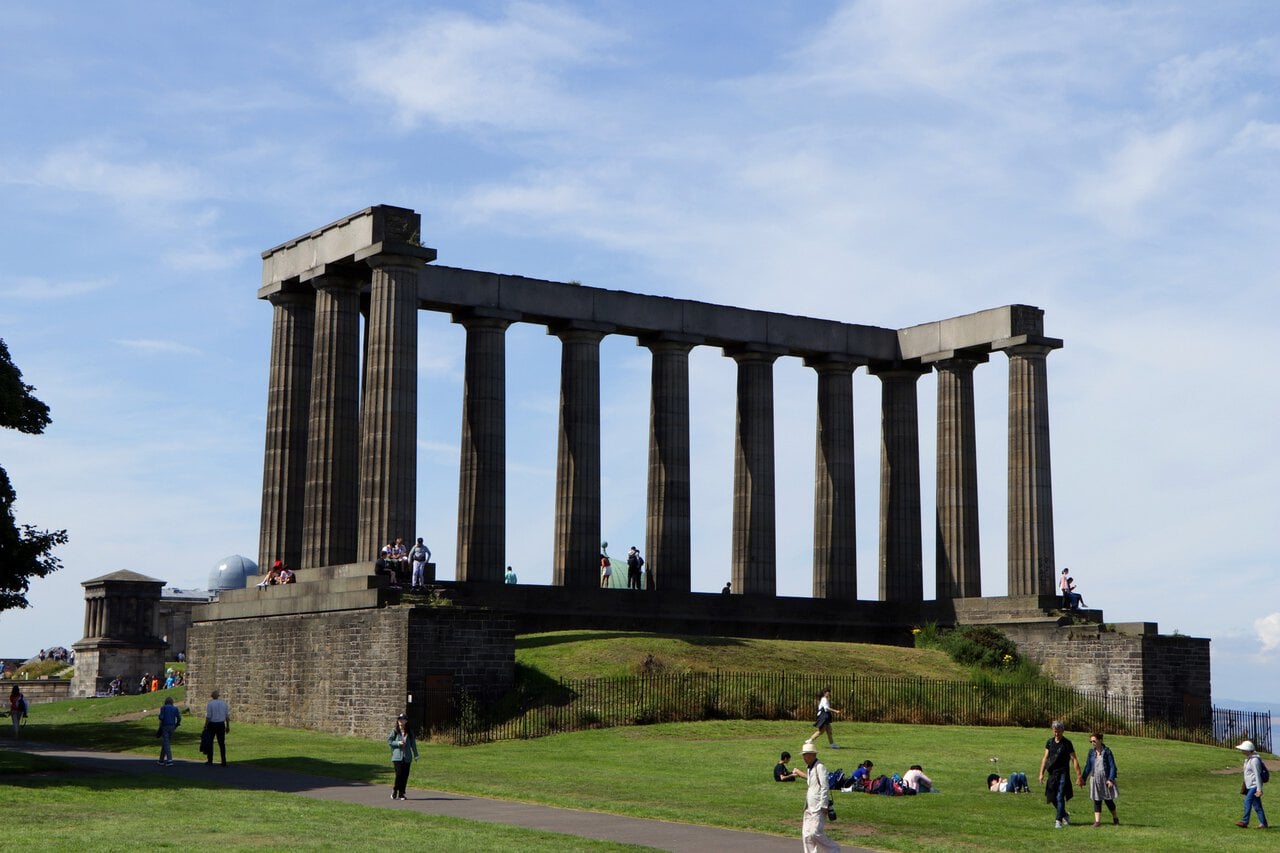
The hill is also home to several of Edinburgh’s most recognisable landmarks. The unfinished National Monument, inspired by Athens’ Parthenon, was begun in 1826 to honour Scottish soldiers who fought in the Napoleonic Wars. Funding ran out before completion, leaving Edinburgh with one of its most distinctive and photographed monuments, affectionately nicknamed “Scotland’s Disgrace.”
Nearby stands the elegant Nelson Monument, built in memory of Admiral Lord Nelson following the Battle of Trafalgar. Its famous time ball still drops each day in coordination with the One O’Clock Gun fired from Edinburgh Castle, a tradition that once helped ships on the Firth of Forth accurately set their marine chronometers.
Photography enthusiasts will also recognise the graceful Dugald Stewart Monument, whose silhouette frequently appears on postcards and tourism campaigns promoting Edinburgh. Visit around sunset and you’ll understand why Calton Hill has become one of the city’s favourite viewpoints.
Compare routes and fares for your journey to Scotland.
Compare flightsChoose an Airalo eSIM and arrange mobile data before you arrive.
Browse eSIMsCheck private pickup options and plan your onward journey before arrival.
View transfersFollow the Footsteps of Harry Potter
Although none of the Harry Potter films were filmed in Edinburgh, the city played an important role in the creation of the wizarding world. J.K. Rowling spent many years writing parts of the early novels while living in the city, and Edinburgh’s medieval streets, hidden closes and atmospheric architecture are widely believed to have helped inspire elements of the books.
A guided Harry Potter Walking Tour explores many of these literary connections, taking visitors through the historic Old Town while sharing stories about Rowling’s time in Edinburgh. Stops typically include Greyfriars Kirkyard, where you’ll find the grave of Thomas Riddell, often linked with the name Tom Riddle, along with colourful Victoria Street and several other locations connected with the books’ development.
The tours are designed around the inspiration behind the novels rather than filming locations, and the guides make it clear that no Harry Potter scenes were ever filmed in Edinburgh. Along the way you’ll also discover plenty of fascinating Edinburgh history, making the experience enjoyable even if you’re only a casual Harry Potter fan.
With interactive quizzes, Hogwarts house sorting and entertaining guides, it’s one of the city’s highest-rated walking tours and particularly popular with families and younger visitors.
Discover Scotland’s Story at the National Museum
One of Edinburgh’s greatest attractions is also completely free. The National Museum of Scotland, located on Chambers Street, brings together thousands of years of Scottish history alongside science, technology, fashion, world cultures and natural history, making it one of the city’s most rewarding places to spend a few hours.
Among the museum’s most famous exhibits is Dolly the Sheep, the world’s first mammal cloned from an adult cell, alongside the mysterious Lewis Chessmen, beautifully carved medieval chess pieces discovered on the Isle of Lewis. Visitors can also see the intriguing Arthur’s Seat Coffins, a collection of tiny handcrafted coffins whose purpose continues to puzzle historians to this day.
The museum itself is as impressive as the collections it houses. The spectacular Victorian Grand Gallery, with its soaring cast-iron balconies and glass roof, is one of Edinburgh’s finest architectural spaces and well worth seeing even if you’re short on time.
Whether you’re travelling with children, escaping a rainy afternoon or simply interested in Scottish history, the National Museum offers something for everyone. Best of all, with free admission, it’s easy to return more than once during your stay if there’s a particular gallery you’d like to explore in greater detail.
Escape the Crowds in Picturesque Dean Village
It’s hard to believe that Dean Village lies just a fifteen-minute walk from Edinburgh’s bustling city centre. Hidden away beside the Water of Leith, this peaceful former milling community feels more like a rural Scottish village than part of a capital city, making it one of Edinburgh’s most charming hidden gems.
For more than 800 years, the fast-flowing river powered a series of grain mills that supplied flour to Edinburgh. Although the mills have long disappeared, many of the historic buildings remain, including the beautiful red sandstone Well Court, built during the nineteenth century as housing for local mill workers. Stone plaques, millstones and historic bridges provide constant reminders of the village’s industrial heritage.
The riverside Water of Leith Walkway makes Dean Village particularly enjoyable to explore. You can continue north towards the fashionable district of Stockbridge, known for its independent cafés, galleries and Sunday market, or head back towards the city centre while enjoying one of Edinburgh’s most peaceful walks.
Early morning is undoubtedly the best time to visit. Before the photographers and tour groups arrive, the village is wonderfully quiet, with little more than the sound of the river flowing beneath the old stone bridges. It’s one of those places that reminds you Edinburgh still has plenty of hidden corners waiting to be discovered.
Experience the Historic Atmosphere of Grassmarket
Few places capture Edinburgh’s colourful past quite like Grassmarket. Nestled beneath the towering walls of Edinburgh Castle, this lively square has transformed from a medieval livestock market into one of the city’s most vibrant places to eat, drink and soak up the atmosphere. Today, outdoor terraces, traditional pubs and independent restaurants fill the square, but beneath the bustling crowds lies a history that’s both fascinating and surprisingly dark.
Grassmarket has been part of Edinburgh life since the 14th century, serving as the city’s main marketplace for cattle and horses for hundreds of years. It also became the site of public executions, where criminals, political prisoners and religious martyrs met their fate. A memorial commemorates the Covenanters executed here during the seventeenth century, reminding visitors that this attractive square witnessed some of Scotland’s most turbulent periods.
One of the area’s most famous stories is that of Maggie Dickson, who survived her own execution in 1724 after unexpectedly regaining consciousness while being transported for burial. Her remarkable survival led to a legal loophole that prevented her from being executed a second time, and today Maggie Dickson’s Pub proudly bears her name. Nearby, the White Hart Inn, dating back to the early eighteenth century, claims to be Edinburgh’s oldest pub and has welcomed notable figures including Robert Burns.
Whether you’re visiting during the day or after dark, Grassmarket is an excellent place to pause for a meal or a drink while enjoying one of the city’s finest views of Edinburgh Castle rising dramatically above the rooftops.
Stroll Along Colourful Victoria Street
Just a few steps from Grassmarket lies Victoria Street, one of Edinburgh’s most photographed and recognisable streets. Its sweeping curve, colourful shopfronts and beautifully preserved nineteenth-century buildings have made it one of the city’s most popular places to explore, whether you’re shopping, photographing the architecture or simply enjoying the lively atmosphere.
The street is filled with independent boutiques, artisan food shops, bookshops and cafés, making it a pleasant place to browse away from the busiest parts of the Royal Mile. Its distinctive appearance has also made it a favourite with visitors searching for Edinburgh’s Harry Potter connections.
Many people believe Victoria Street inspired Diagon Alley in the Harry Potter books. While J.K. Rowling wrote much of the early Harry Potter series in Edinburgh, she has never confirmed that Victoria Street inspired Diagon Alley, and none of the Harry Potter films were actually filmed anywhere in Edinburgh. Several locations around the UK claim to have inspired Rowling’s magical world, so it’s best to view the connection as part of the city’s folklore rather than established fact.
If you’re a Harry Potter fan, one of the best ways to explore these literary connections is by joining a Harry Potter Walking Tour. These highly rated guided walks visit places linked with Rowling’s time in Edinburgh, including Greyfriars Kirkyard, where you’ll find the grave of Thomas Riddell, often associated with the name Tom Riddle, along with other locations that may have influenced characters and settings in the books. The guides make it clear throughout that Edinburgh inspired elements of the stories, but no Harry Potter filming took place in the city, making it a fascinating experience for fans without blurring the distinction between inspiration and filming locations.
Take a Journey Through Edinburgh’s Underground Vaults
Hidden beneath the busy streets of the Old Town lies one of Edinburgh’s most fascinating attractions. The South Bridge Vaults were constructed during the late eighteenth century as storage spaces and workshops, but they soon became home to some of the city’s poorest residents. Damp, dark and lacking fresh air, the vaults developed a reputation for crime, poverty and disease that still captures visitors’ imaginations today.
Today, guided tours descend beneath the streets to explore these atmospheric chambers while uncovering the real history behind Edinburgh’s underground world. You’ll hear stories of the infamous Burke and Hare murders, the persecution of alleged witches and the harsh realities of life for those forced to live beneath the city. While many tours touch on Edinburgh’s ghostly reputation, the historical stories are every bit as compelling as the supernatural legends.
The Auld Reekie Underground Vaults Tour is one of the city’s highest-rated experiences, lasting around an hour and taking visitors into the authentic South Bridge Vaults with an experienced guide. Whether you believe the tales of hauntings or not, it’s a fascinating way to discover a side of Edinburgh that most visitors never see.
Compare hostels and lower-cost places to stay in Scotland.
Search hostelsFlying to Scotland? Get fast compensation payouts, eligible lounge benefits and expert help when flights go wrong.
See AirHelp+ benefitsUse convenient luggage storage around Scotland between arrival, check-in and departure.
Check storageDiscover Edinburgh’s Dark Side After Sunset
As daylight fades, Edinburgh takes on an entirely different character. The narrow closes, centuries-old buildings and atmospheric streets of the Old Town have inspired ghost stories for generations, while the city’s excellent restaurants, traditional pubs and live music venues ensure there’s something for every type of visitor once the sightseeing is over.
The lively Grassmarket and Cowgate districts are packed with traditional pubs, craft beer bars and music venues, while the elegant George Street offers stylish cocktail bars and late-night restaurants within the Georgian New Town. Down in Leith, you’ll find a more relaxed waterfront atmosphere, with excellent seafood restaurants and independent bars overlooking the docks.
If you’re interested in Edinburgh’s darker history, the city’s famous underground vaults provide one of its most memorable evening experiences. A guided Underground Vaults Tour takes you beneath the streets of the Old Town into the eerie South Bridge Vaults, where you’ll hear stories of plague, crime, Burke and Hare, witch trials and the harsh living conditions endured by some of Edinburgh’s poorest residents. Rather than relying on cheap jump scares, the best tours focus on the fascinating history of the vaults, making them one of the city’s highest-rated evening attractions.
Finish your evening with a stroll through Princes Street Gardens, where the floodlit silhouette of Edinburgh Castle dominates the skyline. It’s one of the most memorable views in Scotland and the perfect way to end a day exploring the capital.
See Edinburgh from the Top Deck of a Hop-On Hop-Off Bus
Although Edinburgh is an excellent city to explore on foot, a hop-on hop-off sightseeing bus can save a huge amount of time, particularly if you’re only visiting for a day or two. Instead of repeatedly climbing the city’s steep hills, you can travel between the major attractions while enjoying panoramic views from the open-top upper deck.
The route links many of Edinburgh’s biggest sights, including Edinburgh Castle, Grassmarket, the Royal Mile, the National Museum of Scotland, Holyrood Palace, Dynamic Earth and St Andrew Square. With buses running regularly throughout the day, you can jump off whenever something catches your eye before simply boarding the next service when you’re ready to continue.
The highly rated City Sightseeing Edinburgh Hop-On Hop-Off Bus includes unlimited travel for 24 hours, multilingual audio commentary and children’s commentary from Horrible Histories, making it particularly popular with families. If you’re visiting several attractions across the city, it can be a convenient and surprisingly relaxing way to get around while learning more about Edinburgh’s fascinating history.
Step Aboard the Royal Yacht Britannia
Moored permanently at Ocean Terminal in Leith, the Royal Yacht Britannia offers visitors the chance to step aboard one of Britain’s most famous ships. For more than forty years she carried members of the Royal Family on official visits around the world before being retired from service in 1997. Today she remains one of Scotland’s most popular visitor attractions.
As you make your way across the yacht’s five decks, you’ll explore everything from the elegant State Apartments and the Queen’s Bedroom to the surprisingly modest crew quarters and the impressive engine room deep below deck. The excellent audio guide brings the ship’s history to life, explaining how Britannia served as both a royal residence and a fully operational Royal Navy vessel.
One of the highlights is finishing your visit in the Royal Deck Tea Room, where you can enjoy coffee, cakes or the famous freshly baked scones while looking out across the harbour. Allow around two hours to explore the yacht properly, and consider combining your visit with a wander around the increasingly fashionable waterfront district of Leith.

Cruise the Firth of Forth with Forth Boat Tours
If you’re looking to escape the city for a couple of hours without travelling far, a cruise on the Firth of Forth is one of the most enjoyable excursions from Edinburgh. Departing from South Queensferry, just a short train or bus ride from the city centre, Forth Boat Tours combines spectacular scenery, fascinating history and the chance to spot some of Scotland’s marine wildlife.
The Three Bridges Sightseeing Cruise sails beneath the world-famous UNESCO-listed Forth Bridge, alongside the elegant Forth Road Bridge and the modern Queensferry Crossing, giving passengers a unique perspective of one of Scotland’s most recognisable engineering landmarks. Along the way you’ll enjoy magnificent views back towards the Edinburgh skyline, across the Kingdom of Fife and towards Inchcolm Island, home to one of Scotland’s best-preserved medieval abbeys.
One of the highlights of the cruise is the opportunity to spot local wildlife. Grey seals are regularly seen resting on the rocks, while seabirds fill the skies above the estuary. During the breeding season there’s also a good chance of seeing puffins, cormorants and other coastal birds, making the cruise particularly popular with photographers and wildlife enthusiasts.
The comfortable vessel features heated indoor lounges, spacious outdoor viewing decks and an onboard bar serving drinks and snacks, allowing you to enjoy the scenery whatever the Scottish weather decides to do. Lasting around 90 minutes, it’s an excellent half-day trip that offers a completely different perspective of Edinburgh and the surrounding coastline.
Sail Beneath the Three Bridges with Maid of the Forth
Another excellent way to experience the Firth of Forth is aboard the award-winning Maid of the Forth, one of South Queensferry’s best-known sightseeing cruises. Departing from Hawes Pier, this highly rated excursion focuses on the spectacular Three Bridges Experience, taking visitors beneath all three of the famous crossings while exploring the rich history and wildlife of the estuary.
As the boat leaves the harbour you’ll immediately pass beneath the magnificent red steel structure of the Forth Bridge, before continuing towards Inchcolm Island, where you’ll enjoy excellent views of the medieval abbey and the surrounding islands. Throughout the journey, the crew provide engaging commentary explaining the history of the bridges, the importance of the Firth of Forth and the wildlife that calls these waters home.
Keep your camera ready throughout the cruise, as it’s common to see grey seals basking on the rocks, along with oystercatchers, guillemots, cormorants and, during the right time of year, Atlantic puffins. The vessel’s spacious panoramic top deck offers superb uninterrupted views, making this one of the best photography trips close to Edinburgh.
The cruise lasts approximately 90 minutes, and onboard facilities include a licensed bar serving hot and cold drinks while you relax and enjoy the scenery. If you’re looking for a leisurely excursion that combines Scottish history, remarkable engineering and beautiful coastal landscapes, the Maid of the Forth Three Bridges Experience is an excellent addition to any Edinburgh itinerary.
Planning the Perfect Edinburgh Itinerary
Edinburgh rewards visitors who take their time. While it’s possible to see many of the headline attractions in a weekend, spending an extra day or two allows you to experience a completely different side of the city, from peaceful riverside walks to fascinating museums and memorable day trips beyond the capital.
A two-day visit is enough to cover the essentials, including Edinburgh Castle, the Royal Mile, Arthur’s Seat, Holyroodhouse and the National Museum of Scotland. Add a third day, and you’ll have time to explore places such as Dean Village, Stockbridge, or enjoy a trip to North Berwick, Rosslyn Chapel or Stirling. With four days or more, Edinburgh becomes an excellent base for discovering much more of Scotland, including the Highlands, St Andrews and the beautiful East Neuk of Fife.
If you can choose when to visit, early July often offers the perfect balance of long daylight hours, pleasant weather and smaller crowds. September is another excellent month, with fewer visitors after the festival season and the first hints of autumn colour appearing across the city’s parks. During August, the Edinburgh Festival Fringe transforms the capital into one of the world’s greatest arts festivals, creating an unforgettable atmosphere but also significantly increasing accommodation prices and demand.
Whatever time of year you visit, Edinburgh is a city that effortlessly combines history, scenery, culture and modern attractions. It’s somewhere that rewards repeat visits, with every trip revealing another hidden close, fascinating story or spectacular viewpoint waiting to be discovered.

Rupert’s Handy Travel Tips
Planning your sightseeing? Here are a few things worth knowing before you set off:
- Book the castle online: it’s cheaper than walk-up and saves queuing in peak season.
- Arthur’s Seat needs proper shoes: the path is rocky and can be slippery after rain.
- The museum is free: a great option if you’re trying to stretch your budget.
- Avoid August if you dislike crowds: the Fringe brings huge numbers of visitors city-wide.
Want to meet the reindeer behind our travel tips? Find out more in our page Who is Rupert?.


Frequently Asked Questions
How many days do I need in Edinburgh?
Two days covers the essentials, while three or four days allows for hidden closes and day trips such as Rosslyn Chapel.
Is the National Museum of Scotland free?
Yes, general entry is free, though some temporary exhibitions carry a separate charge.
How long does it take to climb Arthur’s Seat?
The full circular walk takes around two to two and a half hours, covering roughly 4.75 kilometres.
Is Victoria Street really the inspiration for Diagon Alley?
It’s a popular fan theory linked to Edinburgh being where J.K. Rowling wrote much of Harry Potter, but it has never been officially confirmed.
When is the Edinburgh Festival Fringe?
The 2026 Fringe runs from 7 to 31 August, and accommodation prices rise sharply during this period.
Further Reading
Ready to explore beyond the city? Our Day Trips from Edinburgh guide covers St Andrews, Stirling and Rosslyn Chapel, while Glasgow to Edinburgh compares your options if you’re combining both cities.
Flying in or catching a match? Our Edinburgh Airport Transfers and How to Get to Murrayfield Stadium guides have you covered.
Arriving by sea? See our Edinburgh Cruise Ports Guide for transport options from each of the city’s four ports.











