
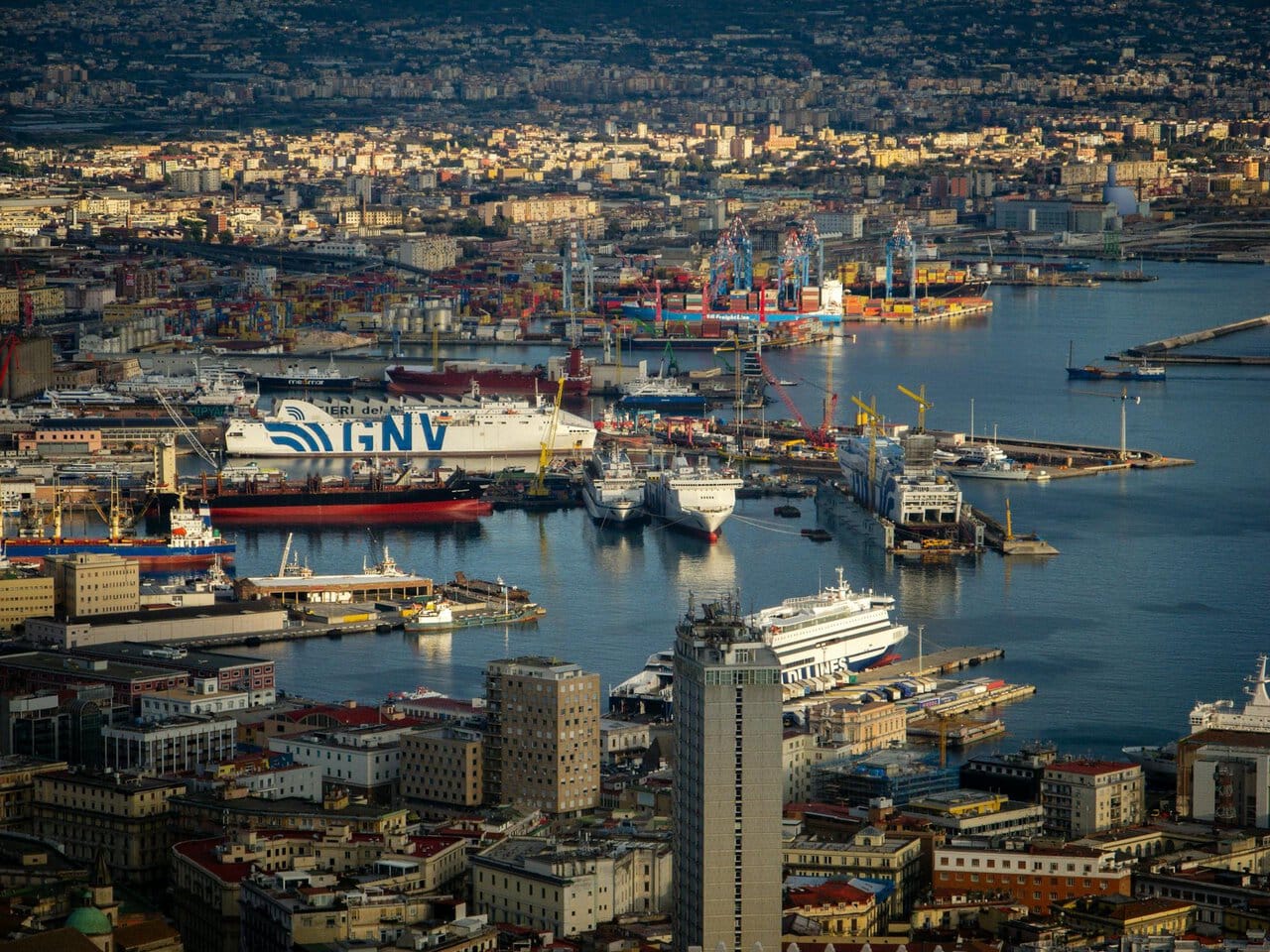
Why Take the Naples to Sicily Ferry
The Naples to Sicily ferry is one of the most underrated long distance ferry journeys in southern Europe. While many travellers immediately think about flying into Sicily, overnight ferries from Naples offer a far more flexible, comfortable, and surprisingly atmospheric alternative.
For many travellers, the biggest advantage is simple geography. Instead of driving all the way through southern Italy toward Calabria and then crossing via the short Villa San Giovanni to Messina ferry, travellers can board an overnight ship directly in Naples and wake up in Palermo or elsewhere in Sicily the following morning.
This saves enormous amounts of driving time, especially for travellers arriving from northern Italy, France, Switzerland, Germany, or wider central Europe. The motorway journey through southern Italy can be extremely long, particularly during peak summer periods when traffic around Calabria becomes heavily congested.
The route is especially popular with travellers carrying vehicles. Cars, motorcycles, campervans, caravans, and even freight vehicles regularly use overnight ferries to Sicily because they remove the need for exhausting full day drives through the Italian peninsula.
Another major attraction is comfort. Unlike the short but functional Messina Strait crossing, the Naples to Sicily ferry feels much closer to a traditional Mediterranean sea journey. Many vessels include private cabins, restaurants, lounges, bars, outdoor decks, and onboard facilities that make the crossing feel part of the holiday rather than simply transport.
For travellers avoiding flights, this route is particularly valuable. It allows passengers to travel from mainland Italy into Sicily entirely by rail and ferry while carrying far more luggage than airlines typically allow.
The crossing also works exceptionally well for overland travellers building larger Mediterranean itineraries. Many passengers combine the ferry with rail travel through Rome, Florence, Milan, or even wider Interrail journeys before continuing into Sicily.
One overlooked advantage is arriving directly into Palermo, one of Sicily’s most important transport hubs and cultural cities. Instead of entering Sicily via the northeastern corner around Messina, travellers step immediately into western Sicily with direct access toward destinations such as Cefalù, Trapani, Agrigento, and the island’s western coastline.
The ferry experience itself can also be surprisingly memorable. Watching the lights of Naples disappear while sailing past the shadow of Mount Vesuvius creates a far more dramatic departure than simply boarding a short haul flight.
For travellers wanting a slower, more atmospheric, and often more practical route into Sicily, the Naples to Sicily ferry remains one of the Mediterranean’s great overnight journeys.
Quick Ferry Route Overview
The main Naples to Sicily ferry route connects Naples with Palermo, Sicily’s largest city and one of the Mediterranean’s most important historic ports. This is by far the most popular and widely available Sicily ferry route from Naples.
Most crossings operate overnight, allowing passengers to board during the evening before arriving in Sicily the following morning. Crossing times usually range from around 10 to 12 hours depending on operator, sea conditions, and the exact vessel being used.
Unlike the short Villa San Giovanni to Messina ferry, this is a proper long distance Mediterranean sailing. Travellers generally book cabins, reclining seats, or overnight accommodation onboard rather than simply remaining in public seating areas.
Several operators run services between Naples and Sicily, with GNV (Grandi Navi Veloci) and Tirrenia among the best known companies on the route. Both operators carry foot passengers, motorcycles, cars, campervans, freight vehicles, and coaches.
The vast majority of sailings arrive at the Port of Palermo, located directly beside the Sicilian capital’s city centre. This gives travellers immediate access to hotels, rail connections, buses, and wider transport networks across western Sicily.
Some seasonal or alternative services may also connect mainland Italy with other Sicilian ports, including Catania, though these are generally less frequent than the core Palermo route.
One major advantage of the Naples route is avoiding the long drive through southern mainland Italy. Travellers driving from northern Europe can effectively “skip” much of the Italian peninsula overnight while sleeping onboard the ferry.
The route is also extremely popular with campervan travellers because Sicily works exceptionally well for road trips. Ferries allow travellers to bring their own vehicles directly onto the island without relying on flights or car hire.
Summer is the busiest period by far. During July and August, ferries often operate close to full capacity, especially for vehicle spaces and private cabins. Early booking becomes extremely important during these months.
Weather conditions on the Tyrrhenian Sea are generally manageable during summer, though winter crossings can occasionally become rougher than the more sheltered Strait of Messina route.
For many travellers, the Naples to Palermo ferry represents one of the best combinations of practicality, comfort, and Mediterranean atmosphere anywhere in southern Europe.
Compare hotels and other places to stay in Naples.
Check availabilityBrowse apartments, holiday homes and self-catering stays in Naples.
View rentalsSee hotel prices from multiple booking sites in one search.
Compare ratesNaples to Sicily Ferry Routes Table
| Route | Departure Port | Arrival Port | Typical Duration | Main Operators |
|---|---|---|---|---|
| Naples → Palermo | Port of Naples, mainland Italy | Port of Palermo, Sicily | Around 10 to 12 hours | GNV, Tirrenia |
| Palermo → Naples | Port of Palermo, Sicily | Port of Naples, mainland Italy | Around 10 to 12 hours | GNV, Tirrenia |
| Naples → Catania (limited/seasonal) | Port of Naples | Port of Catania, Sicily | Varies by operator | Seasonal operators |
| Naples → Sicily with vehicle | Naples ferry terminals | Various Sicilian ports | Overnight crossing | Multiple operators |
| Naples → Sicily overnight ferry | Naples | Palermo primarily | Overnight sailing | GNV, Tirrenia |
Where Is Naples Ferry Port?
The main departure point for the Naples to Sicily ferry is the huge Port of Naples, one of the busiest passenger ports anywhere in the Mediterranean. Located directly beside central Naples, the port acts as a major gateway for ferries heading toward Sicily, Sardinia, Capri, Ischia, Procida, and wider Mediterranean destinations.
For travellers unfamiliar with Naples, the scale of the port can initially feel overwhelming. This is not a small regional harbour but a major working maritime complex handling cruise ships, freight traffic, fast ferries, overnight ferries, hydrofoils, and international shipping simultaneously.
The main overnight ferries to Sicily usually depart from terminals around Molo Beverello, Calata Porta di Massa, or nearby ferry zones depending on operator and vessel scheduling.
One of the port’s biggest advantages is proximity to the city itself. Unlike many ferry terminals located far outside urban centres, Naples port sits extremely close to central Naples. Travellers can often reach terminals relatively quickly from Napoli Centrale railway station, nearby hotels, or the historic centre.
The surrounding area is intensely busy and very urban. Roads around the port frequently experience heavy traffic, especially during summer and around major ferry departure times. Travellers driving toward Sicily should therefore allow additional time when approaching the port area.
For foot passengers, the location is relatively convenient. Metro services, taxis, buses, and walkable city streets all connect directly into the ferry terminals.
The atmosphere around Naples port feels very different from the calmer ferry environments found elsewhere in Italy. It is loud, fast moving, chaotic, energetic, and unmistakably Neapolitan. Ferries, cruise ships, scooters, freight trucks, tourists, and local traffic all combine into one of southern Europe’s most intense transport hubs.
Despite this chaos, the port is generally well organised once travellers locate the correct terminal area. Large electronic signs, ferry company branding, and staff assistance help direct passengers toward the right boarding zones.
One of the most memorable parts of departing Naples by ferry is the scenery. Ships leaving the harbour often pass with dramatic views of Mount Vesuvius, the Bay of Naples, and the densely packed skyline of southern Italy’s largest city.
For many travellers, simply sailing out of Naples becomes one of the highlights of the entire Sicily journey.
How to Reach Naples Ferry Port
Reaching the Port of Naples is relatively straightforward thanks to the city’s strong rail, metro, airport, and motorway connections. However, travellers should not underestimate how busy and chaotic the area around the port can become, particularly during summer or major holiday weekends.
Most rail passengers arrive through Napoli Centrale, the city’s main railway station and one of southern Italy’s most important transport hubs. High speed rail services operated by Frecciarossa, Italo, and Intercity trains connect Naples directly with Rome, Florence, Milan, Bologna, Venice, and much of mainland Italy.
From Napoli Centrale, travellers can reach the ferry terminals using taxis, local buses, metro connections, or occasionally on foot depending on luggage levels and the exact departure terminal. Taxis are usually the simplest solution for travellers carrying heavy bags or ferry luggage.
The Naples Metro Line 1 also provides useful connections toward the waterfront and ferry areas. Stations such as Municipio sit relatively close to major passenger ferry terminals and can significantly reduce journey times through Naples traffic.
Travellers arriving by air typically use Naples International Airport (Capodichino Airport). The airport sits northeast of the city centre and connects with major destinations across Europe. Taxi transfers between the airport and the port are usually relatively quick outside peak traffic hours, though congestion can increase dramatically during busy periods.
Drivers approaching the port should prepare carefully. Central Naples traffic is famously chaotic, and roads around the ferry terminals often become heavily congested before major departures. Arriving early is strongly recommended, especially for campervans, larger vehicles, or travellers unfamiliar with driving in southern Italy.
One major advantage of Naples is flexibility. Travellers can easily combine rail travel, flights, ferries, and local transport within the same journey. This makes the city one of the Mediterranean’s most important multimodal transport hubs.
Coach services operated by companies such as FlixBus also connect Naples with wider Italy and parts of Europe. Budget travellers frequently combine overnight coaches with overnight ferries to reduce accommodation costs during longer Mediterranean journeys.
For travellers staying overnight before departure, many hotels sit within relatively easy reach of the ferry terminals. Areas around the historic centre, Via Toledo, and the waterfront all provide practical bases before boarding ferries to Sicily.
Because the ferry port is integrated directly into the city, travellers can also spend time sightseeing before departure. Major attractions such as Castel Nuovo, Piazza del Plebiscito, and the Naples waterfront are all located surprisingly close to the terminals.
For most travellers, the key to reaching Naples port successfully is simple: allow extra time, especially during summer, and expect a far busier environment than smaller Mediterranean ferry ports.

Main Ferry Operators
Several major companies operate the Naples to Sicily ferry route, with the market primarily dominated by GNV (Grandi Navi Veloci) and Tirrenia, two of Italy’s most important ferry operators.
GNV is one of the Mediterranean’s largest ferry companies and operates extensive services across Italy, Sicily, Sardinia, Spain, North Africa, and wider Mediterranean routes. Their ships on the Sicily crossings are generally modern, large, and heavily focused on overnight passenger comfort.
Travellers using GNV ferries can usually expect a proper cruise ferry style experience. Ships often include restaurants, bars, cafés, outdoor decks, lounges, shops, private cabins, and substantial vehicle capacity.
The company is particularly popular with families, campervan travellers, and passengers carrying cars because of the combination of onboard facilities and large vehicle decks.
Tirrenia is another major Italian ferry operator with a long history of connecting mainland Italy with Sicily and Sardinia. The company operates large overnight ferries and remains one of the most recognisable maritime brands in Italy.
Compared with the short and practical Messina Strait ferries, the vessels operating from Naples feel much more like floating hotels. Passengers spend the entire night onboard, meaning accommodation quality becomes significantly more important.
Both operators carry a huge mix of travellers. Tourist traffic is extremely strong during summer, though ferries also transport freight vehicles, local Sicilian traffic, motorcycles, coaches, and year round commercial transport.
Vehicle capacity is a major part of the business model. Cars, campervans, caravans, and freight trucks occupy enormous sections of the ships, particularly during busy summer sailings.
One thing travellers should understand is that vessel quality can vary between sailings. Some ferries feel modern and polished, while older ships may appear more functional. Checking the specific ship operating the crossing before booking can therefore be worthwhile.
Cabin selection matters heavily on these routes. Because crossings typically last around 10 to 12 hours, most travellers strongly prefer private cabins rather than public seating areas.
The onboard atmosphere also changes significantly depending on season. Summer crossings often feel lively and holiday focused, while winter sailings tend to be quieter and more transport oriented.
For most travellers, both GNV and Tirrenia provide reliable overnight crossings into Sicily. The biggest differences usually involve departure times, cabin availability, pricing, and the exact vessel operating the route.

Organise Your Naples Ferry Journey with Direct Ferries
You can use Direct Ferries to research ferry travel for Naples, check sailing schedules and compare operators before booking.
Having the available crossings together can make it easier to build your itinerary around the most convenient departure and arrival times.
Want to compare ferry prices? You can also check Ferryhopper and FerryScanner before booking.
Naples to Palermo Ferry
The Naples to Palermo ferry is the main overnight ferry connection between mainland Italy and Sicily and remains one of the Mediterranean’s most important long distance domestic ferry routes.
The crossing links Naples, southern Italy’s largest city, with Palermo, the capital of Sicily and one of the island’s main transport hubs. For travellers wanting to avoid flying or the long drive through Calabria, this route provides one of the easiest ways to reach Sicily.
Most crossings operate overnight and take roughly 10 to 12 hours depending on operator and sea conditions. Passengers usually board during the evening before arriving in Palermo early the following morning.
The overnight format is one of the route’s biggest strengths. Instead of spending an exhausting full day driving through southern Italy, travellers effectively sleep through a large portion of the journey while moving directly into Sicily.
For vehicle travellers, the route is especially attractive. Campervans, motorcycles, caravans, and family cars all regularly use the crossing, particularly during summer.
The onboard experience is significantly more comfortable than shorter Italian ferry routes. Most ships include restaurants, bars, outdoor decks, lounges, shops, and multiple cabin categories ranging from budget internal cabins to larger family rooms with sea views.
The arrival into Palermo can be spectacular, especially at sunrise. Ferries enter one of the Mediterranean’s great historic port cities with mountains rising behind the urban skyline and Sicily gradually appearing after the overnight crossing.
Palermo itself works exceptionally well as a starting point for wider Sicilian travel. Rail lines, motorways, buses, and regional roads all spread outward toward destinations such as Cefalù, Trapani, Agrigento, San Vito Lo Capo, and western Sicily.
One major advantage of arriving in Palermo rather than Messina is geographic positioning. Travellers heading toward western Sicily avoid the need to drive across the entire island after arrival.
Summer demand is extremely strong. Private cabins and vehicle spaces can sell out surprisingly early during July and August, particularly on weekends and around Italian holiday periods.
For many travellers, the Naples to Palermo ferry strikes the ideal balance between practicality and atmosphere. It transforms what could be a long exhausting drive into a relaxed overnight Mediterranean crossing.
Naples to Catania Ferry
The Naples to Catania ferry exists more as a limited or seasonal route compared with the much more established Naples to Palermo ferry. Services can vary considerably depending on operator schedules, commercial demand, and time of year.
When available, the route provides direct access into eastern Sicily, making it attractive for travellers heading toward destinations such as Mount Etna, Taormina, Siracusa, and Sicily’s Ionian coastline.
For some travellers, arriving in Catania makes far more sense geographically than landing in Palermo. Eastern Sicily contains many of the island’s most famous tourist destinations, and direct arrival can significantly reduce onward driving times.
Crossing durations are generally similar to Palermo sailings, though schedules vary depending on vessel type and routing. Most services still operate overnight because of the distance involved between mainland Italy and Sicily.
The onboard experience is broadly comparable to other long distance Mediterranean ferries. Travellers usually have access to cabins, restaurants, lounges, outdoor decks, and vehicle transport facilities.
One challenge with the route is consistency. Unlike Palermo, which maintains strong year round ferry demand, Catania services are more vulnerable to seasonal fluctuations and operator adjustments.
Travellers specifically wanting eastern Sicily should therefore always verify schedules carefully before planning itineraries around the route.
Despite this, direct access into Catania can be extremely convenient. The city itself is one of Sicily’s major transport hubs and provides strong onward rail and road connections across the eastern side of the island.
The port also sits relatively close to Catania Airport, creating useful combinations between ferries, flights, and wider Sicilian transport networks.
For travellers carrying vehicles, arriving directly in eastern Sicily can save substantial driving time compared with crossing into Palermo and then traversing the island.
Although less famous than the Palermo route, the Naples to Catania ferry still represents an important option for travellers wanting direct access into Sicily’s eastern coastline without flying.
Compare hostels and budget-friendly accommodation around Naples.
Browse hostelsGet help with compensation, eligible lounge access and disruption support.
Explore AirHelp+Arriving before check-in or leaving later? Store your luggage and make more of your time in Naples.
Store your bagsOvernight Ferries and Crossing Times
One of the defining features of the Naples to Sicily ferry is that most sailings operate overnight. Unlike the extremely short Villa San Giovanni to Messina crossing, this is a full Mediterranean sea journey where passengers spend the night onboard before arriving in Sicily the following morning.
Most ferries between Naples and Palermo take around 10 to 12 hours, though exact timings vary depending on the ferry operator, sea conditions, vessel type, and seasonal scheduling.
Departures are usually scheduled during the evening, allowing travellers to board after spending the day in Naples before waking up in Palermo the next morning. This makes the crossing feel far more efficient than losing an entire day driving through southern Italy and Calabria.
For many travellers, the overnight format is one of the route’s biggest strengths. Instead of enduring a long motorway drive, passengers effectively combine both transport and overnight accommodation into a single journey.
Crossing conditions on the Tyrrhenian Sea are generally calm during summer, though winter sailings can occasionally become rougher than the sheltered Strait of Messina crossings. Travellers prone to seasickness should therefore consider booking lower deck cabins positioned closer to the centre of the ship.
Unlike shorter ferry crossings where passengers remain awake throughout, overnight ferries to Sicily are built around sleeping onboard. This means that cabins, lounges, restaurants, and overnight comfort become extremely important parts of the experience.
Arrival times are usually early enough to allow full onward travel days across Sicily. Travellers can continue immediately toward destinations such as Taormina, Cefalù, Agrigento, Catania, or the Sicilian interior after disembarking.
One of the highlights of the crossing is departure from Naples itself. Watching the city skyline disappear beneath the looming outline of Mount Vesuvius creates one of the most memorable ferry departures anywhere in southern Europe.
For travellers combining rail and ferry travel across Europe, the route works exceptionally well. Many passengers arrive into Napoli Centrale during the afternoon before boarding ferries later the same evening.
For anyone wanting a slower, more atmospheric, and genuinely enjoyable alternative to flying, the Naples to Palermo overnight ferry remains one of the Mediterranean’s great travel experiences.
Cabins, Seating and Onboard Facilities
The onboard experience on the Naples to Sicily ferry is dramatically different from the short and highly practical ferries further south around Messina. These are proper overnight Mediterranean ferries designed for long distance passenger comfort.
Because crossings usually last around 10 to 12 hours, most travellers strongly prefer booking some form of overnight accommodation rather than remaining in public areas.
The cheapest option is usually a deck passage ticket. This allows access to public lounges and seating areas but does not include private cabins or reserved seats. Budget travellers sometimes sleep in lounges, cafés, or open seating areas, though this can become uncomfortable during busy summer sailings.
Reclining seats provide a much better mid range option. These airline style seats sit inside dedicated lounges and are significantly more comfortable for overnight crossings.
Private cabins are by far the most popular choice. Ferries normally offer multiple categories including internal cabins, sea view cabins, family cabins, and occasionally larger premium suites.
Internal cabins are usually the cheapest private rooms and work well for travellers prioritising sleep over scenery. Sea view cabins cost more but provide windows or portholes overlooking the Mediterranean during the crossing.
Family cabins become especially important during summer because the route carries huge numbers of families travelling with cars, campervans, and luggage into Sicily.
Onboard facilities are generally excellent compared with many European ferry routes. Most vessels include restaurants, cafeterias, bars, lounges, outdoor decks, shops, and extensive passenger seating areas.
Some ferries also provide children’s play spaces and pet friendly cabin options, particularly on ships heavily focused on family travel.
The outdoor decks are one of the highlights of the journey. Travellers can enjoy views of the Bay of Naples, the open Mediterranean, and eventually the mountains and coastline of Sicily appearing at sunrise.
Wi Fi quality varies significantly depending on operator and vessel. Some ferries offer paid onboard internet while others provide only limited connectivity during parts of the crossing.
One important thing travellers should remember is that vehicle decks are normally closed during sailing. Passports, medication, valuables, chargers, and overnight bags should therefore always be removed from vehicles before departure.
For many travellers, the onboard atmosphere becomes part of the holiday itself. Unlike airports or domestic flights, overnight ferries encourage slower, more relaxed Mediterranean travel.
Taking a Car, Campervan or Motorcycle
The Naples to Sicily ferry is hugely popular with travellers carrying vehicles, especially during summer when Sicily becomes one of Europe’s great road trip destinations.
Cars, motorcycles, campervans, caravans, coaches, and freight vehicles all regularly use the route. For many travellers arriving from northern Italy, France, Germany, Switzerland, or wider central Europe, the ferry removes the need for another exhausting full day driving through southern Italy.
Instead of continuing all the way through Calabria toward the Strait of Messina, travellers can simply board the ferry in Naples and wake up directly in Palermo the following morning.
Campervan travel is especially common. Sicily works exceptionally well for long road trips thanks to its beaches, mountain scenery, coastal drives, historic towns, and strong network of campsites.
Vehicle boarding procedures are generally efficient, though travellers should still arrive well ahead of departure during busy summer periods. Vehicle queues around the Port of Naples can become extremely long during July and August, particularly on Fridays and weekends.
Vehicle size matters significantly when booking. Larger campervans, caravans, and roof boxes increase pricing because operators charge according to both height and length.
Motorcycles are usually cheaper to transport than cars and remain extremely popular with touring riders exploring southern Europe and Sicily.
Travellers should also prepare for different driving conditions after arrival. Traffic in cities such as Palermo and Catania can feel considerably more aggressive and chaotic than in northern Italy.
Parking in older Sicilian towns can also become difficult during peak season, especially inside historic centres with restricted traffic zones.
One of the biggest advantages of bringing your own vehicle is flexibility. While Sicily’s public transport network works reasonably well along major corridors, having a car or campervan allows access to beaches, archaeological sites, volcanic landscapes, and rural mountain areas far beyond the rail network.
Fuel prices, motorway tolls, and parking should still be factored into overall journey costs. For many travellers, the ferry crossing itself is not the most expensive part of reaching Sicily by road.
For travellers wanting maximum freedom once arriving on the island, taking a vehicle onboard the Naples to Palermo ferry remains one of the smartest ways to enter Sicily.
Foot Passenger Experience
Although the route carries enormous vehicle traffic, the Naples to Sicily ferry also works exceptionally well for foot passengers. Backpackers, rail travellers, budget tourists, and overland travellers regularly use the crossing without bringing vehicles onboard.
For train travellers, the route is particularly convenient. Napoli Centrale connects directly with high speed rail services from Rome, Florence, Milan, Bologna, and much of mainland Italy, allowing passengers to arrive by rail before boarding the overnight ferry later the same evening.
Foot passengers avoid many of the vehicle queues and generally experience a simpler boarding process overall.
Once onboard, foot passengers have access to the same restaurants, lounges, bars, outdoor decks, and overnight facilities as vehicle travellers. Many backpackers intentionally use the ferry as overnight accommodation while continuing wider Mediterranean journeys.
The route is especially attractive for travellers avoiding flights. Combining rail and ferry travel creates a far slower, richer, and more atmospheric arrival into Sicily than simply flying domestically.
Another major advantage is luggage flexibility. Ferries are significantly less restrictive than airlines regarding baggage allowances, making them ideal for long term travellers carrying larger bags.
The onboard atmosphere also feels very different from airports or trains. Travellers can walk around freely, enjoy proper meals, spend time on deck, and experience the crossing itself as part of the journey rather than simply transport.
Arrival into Palermo feels particularly dramatic for foot passengers. Ferries dock directly beside one of Sicily’s great historic cities, allowing travellers to step almost immediately into the urban energy of the island.
Rail travellers continuing beyond Palermo can connect onward toward destinations such as Cefalù, Messina, and parts of western Sicily, though Sicily’s rail system moves at a noticeably slower pace than mainland Italy’s high speed network.
For many overland travellers, the Naples to Sicily ferry remains one of the best examples of classic slow Mediterranean travel still operating in modern Europe.
Ticket Prices and Cost Expectations
The cost of the Naples to Sicily ferry can vary sharply depending on season, operator, cabin choice, vehicle size, and how early you book. This is not usually an expensive route for a simple foot passenger, but it can become a much higher value booking once you add a car, campervan, motorcycle, or private cabin.
The cheapest fares are normally found outside the peak summer season, especially in May, June, September, and October. During these quieter months, foot passengers can often find much better value, while travellers with vehicles usually get a wider choice of cabins, departure times, and vehicle deck spaces.
The lowest ticket category is usually deck passage, which gives passengers access to public areas onboard but does not include a private sleeping space. This can work for very budget focused travellers, but on a 10 to 12 hour overnight crossing, many passengers find it uncomfortable. For most people, especially families, older travellers, and anyone arriving after a long rail or road journey, a reclining seat or private cabin is usually worth the extra cost.
Private cabins create the biggest price increase, but they also transform the journey. An internal cabin is usually the cheapest private option, while sea view cabins and family cabins cost more. During July and August, cabins on the Naples to Palermo ferry can sell out early, particularly on weekend sailings and during major Italian holiday periods.
Vehicle transport is the other major cost factor. A standard car adds a substantial charge, while campervans, caravans, and larger vehicles cost more because they take up extra deck space. Motorcycles are usually much cheaper than cars and remain one of the best value ways to combine the Naples to Sicily ferry with independent road travel around the island.
Peak summer pricing can be intense. During August, the same crossing can cost far more than a shoulder season departure, especially for travellers booking late. This is why advance booking matters so much for vehicle passengers, families, and anyone wanting a proper cabin rather than the cheapest public seating option.
Travellers should also budget for onboard spending. Food, coffee, drinks, snacks, and small shop purchases can add up during an overnight crossing. Bringing water, chargers, snacks, and essential overnight items onboard can help keep costs under control, especially for families travelling with children.
The important thing to remember is that the Naples to Sicily ferry replaces both transport and accommodation. A cabin fare may look expensive at first, but it can remove the cost of a hotel night while moving you from mainland Italy to Palermo as you sleep. For many overland travellers, that makes the overall value much stronger than it first appears.
How to Buy Ferry Tickets
Booking the Naples to Sicily ferry is now much easier than it used to be, with online comparison tools, direct operator websites, and mobile ticketing all available before you reach the port. For most travellers, booking online in advance is the safest option, especially if travelling during summer, carrying a vehicle, or wanting a private cabin.
The easiest starting point is usually Direct Ferries, because it lets travellers compare Naples to Palermo ferry sailings, operators, prices, vehicle categories, and cabin options in one place. This is particularly useful if you are unfamiliar with Italian ferry companies or trying to understand whether GNV or Tirrenia has the better departure time for your itinerary.
Travellers can also book directly through operators such as GNV and Tirrenia. Direct booking can occasionally reveal promotional fares or operator specific offers, but it usually requires checking each company separately. For quick comparison, Direct Ferries is normally easier, especially when planning a wider Italy to Sicily ferry journey.
When booking, the most important thing is to check exactly what your fare includes. A very cheap ticket may only be deck passage, which means no cabin and no reserved sleeping space. On a short daytime ferry this might be fine, but on an overnight ferry to Sicily, it can make the journey much less comfortable.
Vehicle passengers need to enter details carefully. A car, motorcycle, campervan, caravan, or vehicle with a roof box may fall into different price categories. Incorrect height or length information can create problems at the Port of Naples, including extra charges or boarding delays.
Digital tickets are increasingly common, but travellers should still keep a screenshot, a charged phone, and ideally a printed copy if possible. Ferry ports can be busy, mobile signal can be patchy, and boarding staff may need to check documents quickly during the evening rush.
Cancellation and amendment rules also deserve attention. The cheapest ferry tickets are often restrictive, while more flexible fares may cost more but allow easier changes if your road journey, train connection, or flight into Naples is delayed.
For July, August, Easter, and major Italian holiday weekends, booking early is not just convenient. It can be the difference between getting a comfortable sea view cabin and being left with only basic seating. This matters even more for families, campervan travellers, and anyone using the ferry as part of a long overland journey into Sicily.
Book Ferry Tickets from Naples
Whether you’re travelling to Capri, Ischia, Procida, Sorrento, the Amalfi Coast or even Sicily, booking your ferry in advance is often the easiest way to secure the best departure times and avoid long queues at the port.
Direct Ferries lets you compare routes from multiple ferry operators in one place, making it simple to check timetables, fares and availability before you travel. If you’re planning to explore beyond Naples by sea, it’s a convenient way to compare your options and book your ferry tickets with confidence.
Organise Your Naples Ferry Journey with Direct Ferries
You can use Direct Ferries to research ferry travel for Naples, check sailing schedules and compare operators before booking.
Having the available crossings together can make it easier to build your itinerary around the most convenient departure and arrival times.
Want to compare ferry prices? You can also check Ferryhopper and FerryScanner before booking.
Direct Ferries vs Booking Direct
One of the most useful decisions when planning the Naples to Sicily ferry is whether to book through Direct Ferries or go straight to operators such as GNV and Tirrenia. Both approaches can work well, but they suit slightly different travellers.
Direct Ferries is usually the best place to start if you want to compare the route quickly. It brings together sailing times, prices, operators, vehicle options, and cabin categories in one search, which is extremely helpful on a route where the details matter. For many travellers, especially those booking a car ferry to Sicily or an overnight cabin, that comparison saves time and reduces confusion.
The platform is especially useful for first time ferry passengers. Italian ferry websites can vary in layout, wording, and booking flow, while a comparison platform gives a clearer overview of what is available. If you are trying to decide between deck passage, reclining seats, internal cabins, and sea view cabins, seeing the options side by side makes the decision easier.
Booking direct with GNV or Tirrenia can still be worthwhile. Operators may occasionally show promotional fares, loyalty offers, or specific cabin combinations that are not as obvious on comparison sites. Direct booking can also make customer service more straightforward if there are schedule changes, weather issues, or disruption close to departure.
For most travellers, the smartest approach is to use Direct Ferries first to understand the market, then decide whether to book through the comparison platform or check the ferry company directly before paying. This gives you the best of both worlds without wasting time opening multiple websites blindly.
During peak season, convenience becomes more important. If you are travelling in July or August, carrying a campervan, booking a family cabin, or trying to match the ferry with a train arrival into Napoli Centrale, the ability to compare quickly is genuinely valuable.
The one thing no booking method can remove is port congestion. Even with an advance ticket, you still need to arrive at the Port of Naples in good time, especially with a vehicle. Online booking helps secure your place, but it does not make summer traffic around Naples disappear.
For a simple foot passenger outside peak season, booking direct or buying online through a comparison site can both be fine. For vehicle travellers and families, Direct Ferries is often the easiest route into a confident booking decision.
Best Time to Travel
The best time to take the Naples to Sicily ferry depends on whether your priority is price, weather, cabin availability, smooth seas, or avoiding crowds. The route operates across the year, but the experience in August can feel completely different from the experience in May or October.
The busiest period is July and August, when Sicily reaches peak holiday season. Ferries fill with families, campervans, motorcycles, returning Sicilian residents, tourists, and freight traffic. The atmosphere can be lively and exciting, but prices rise sharply and the best cabins often sell out early.
Summer usually offers the calmest conditions on the Tyrrhenian Sea, which is good news for nervous sailors. Outdoor decks are more pleasant, departures from Naples feel atmospheric, and arriving in Palermo under warm morning light can be a brilliant start to a Sicilian trip. The trade off is cost and crowding.
For most travellers, the best balance comes in May, June, September, and early October. These shoulder season months usually offer warm weather, lower fares, better cabin choice, and less pressure around the port. Sicily is still extremely rewarding at this time, but the journey feels calmer and more comfortable.
Spring crossings are especially good for travellers building a wider Italy to Sicily ferry itinerary. The weather is mild, Naples is easier to manage, and Sicily is not yet overwhelmed by high summer tourism. Autumn is equally strong, particularly for road trips, food travel, archaeological sites, and coastal towns without extreme heat.
Winter crossings are possible, but they feel more functional. Tourist numbers fall, onboard spaces are quieter, and ferries carry a larger share of freight and essential traffic. The main drawback is weather. Between November and February, the Tyrrhenian Sea can become rougher, and occasional delays or timetable changes are more likely.
Travellers with vehicles should be especially careful around Easter, Italian public holidays, and summer weekends. These dates can create sudden spikes in demand even outside the absolute peak of August.
For the smoothest experience, avoid last minute August bookings, choose a shoulder season sailing where possible, and secure cabins early if sleep quality matters. For many travellers, June and September are the sweet spots for the Naples to Palermo ferry, offering the best mix of comfort, value, and Mediterranean atmosphere.
How Busy Ferries Get in Summer
The Naples to Sicily ferry becomes extremely busy during the summer months, particularly between late June and the end of August. What feels like a relatively calm overnight crossing in spring can turn into one of the Mediterranean’s busiest domestic ferry routes once the peak holiday season begins.
The pressure comes from multiple types of travellers all using the route at the same time. Families heading to Sicilian beach resorts, Sicilian residents returning home, campervan travellers touring southern Italy, freight traffic, motorcycle groups, backpackers, and road trippers all compete for the same ferry spaces.
The busiest period is usually around mid July through late August, especially during the major Italian holiday window around Ferragosto in mid August. At this point, both the Port of Naples and the ferries themselves can become extremely crowded.
Vehicle queues are often the biggest issue. Travellers with cars, campervans, and motorcycles may find themselves waiting in long traffic lines around the port area before boarding even begins. This is one reason why arriving early matters so much during summer departures.
Cabins also disappear surprisingly quickly. The most popular options are usually sea view cabins and larger family cabins, particularly on weekend sailings. Travellers leaving booking until the last minute may discover that only basic seating or deck passage remains available.
The onboard atmosphere changes significantly during peak season as well. Ferries feel much more social and energetic during summer, especially on evening departures from Naples. Restaurants, outdoor decks, lounges, and bars remain busy late into the night as passengers settle into the crossing.
Despite the crowds, summer crossings can still feel highly atmospheric. Watching the ferry leave Naples beneath the silhouette of Mount Vesuvius while the decks fill with travellers beginning Sicilian holidays creates a genuinely memorable Mediterranean travel experience.
Foot passengers usually cope better than vehicle travellers because they avoid the long loading procedures. However, even foot passengers should arrive with plenty of time during peak departures because security checks, terminal queues, and boarding lines can all slow down significantly.
One thing many travellers underestimate is the heat. Naples can become extremely hot during summer evenings, and waiting areas around the ferry terminals may feel uncomfortable before boarding begins. Carrying water, chargers, snacks, and light luggage makes the experience much easier.
For travellers wanting the smoothest possible crossing, the smartest strategy is usually simple. Avoid major August weekends if possible, book cabins early, and choose shoulder season departures where the ferries remain busy enough to feel lively without becoming chaotic.
Common Mistakes Travellers Make
One of the biggest mistakes travellers make with the Naples to Sicily ferry is assuming it works like a short ferry crossing. This is a long overnight Mediterranean sailing, and treating it casually can make the journey far more stressful than necessary.
A very common error is booking the absolute cheapest ticket without thinking about comfort. A deck passage ticket may look attractive financially, but spending 10 to 12 hours overnight without a proper seat or cabin can become exhausting, especially during crowded summer departures.
Another major mistake is underestimating how busy the Port of Naples becomes. Travellers often assume they can arrive shortly before departure, only to discover heavy traffic, long vehicle queues, and crowded terminal areas. During July and August, arriving early is essential, particularly for anyone carrying a vehicle.
Vehicle travellers also frequently enter incorrect dimensions during booking. Even small differences in campervan height, vehicle length, or roof box measurements can create problems at check in. Ferry operators take vehicle sizing seriously because deck planning depends on accurate dimensions.
Some travellers fail to remove important belongings from their vehicles before boarding. Once the ferry departs, vehicle decks are normally closed. Passports, chargers, medication, overnight bags, and valuables should therefore always be carried upstairs before sailing.
Another mistake is assuming all cabins are the same. Older ferries can vary significantly in comfort, layout, and noise levels. Checking the exact vessel operating the route before booking can help avoid disappointment, especially for travellers prioritising sleep quality.
Many visitors also underestimate the geography of Sicily itself. Arriving in Palermo is ideal for western Sicily, but travellers heading immediately toward Taormina or eastern Sicily should understand that there is still substantial onward travel after disembarkation.
Weather is another overlooked factor. Summer crossings are usually calm, but winter sailings on the Tyrrhenian Sea can occasionally become rough. Travellers prone to seasickness should prepare accordingly, especially outside the peak summer season.
One of the smartest things travellers can do is treat the ferry as part of the holiday rather than just transport. The people who enjoy the crossing most are usually those who slow down, eat properly onboard, enjoy the decks, and embrace the overnight Mediterranean atmosphere instead of rushing through the experience.
Naples Ferry vs Villa San Giovanni Ferry
Travellers planning a journey to Sicily often face a major decision. Should they take the long overnight Naples to Palermo ferry, or drive through southern Italy and use the short Villa San Giovanni to Messina ferry instead?
The answer depends entirely on what type of journey you want.
The Villa San Giovanni crossing is dramatically shorter, usually taking only around 20 to 30 minutes across the Strait of Messina. Ferries operate almost continuously throughout the day and night, making it the fastest and most flexible way to physically cross from mainland Italy into Sicily.
However, reaching Villa San Giovanni requires driving all the way through Calabria, which can add many exhausting hours onto a road trip from northern Italy or wider Europe.
The Naples to Sicily ferry solves this problem by effectively skipping the long southern motorway journey overnight. Instead of driving through the entire lower half of the Italian peninsula, travellers board in Naples, sleep onboard, and wake up in Palermo the next morning.
For travellers coming from Rome, Florence, Milan, France, Germany, or Switzerland, the overnight ferry can feel far more relaxing and efficient overall.
The route also changes the geography of arrival. The Messina crossing places travellers in northeastern Sicily, which is ideal for Taormina, Mount Etna, and eastern Sicily. The Naples to Palermo ferry places travellers immediately into western Sicily, which works better for destinations such as Cefalù, Trapani, Agrigento, and Palermo itself.
Cost differences can also be significant. The short Messina Strait ferry is usually much cheaper, especially for foot passengers. The overnight Naples route costs more because it involves long distance sailing, overnight facilities, and cabin accommodation.
Comfort is another major difference. The Villa San Giovanni ferry is purely functional and designed around rapid crossings. The Naples to Palermo ferry feels much more like a traditional Mediterranean voyage with restaurants, cabins, bars, lounges, and overnight facilities.
For campervan travellers and families, the overnight route often feels less tiring because it removes a full day of motorway driving.
For travellers wanting speed and flexibility, the Messina Strait crossing usually wins. For travellers prioritising comfort, atmosphere, and avoiding long drives through southern Italy, the Naples to Sicily ferry is often the better experience overall.


Train Connections to Naples Port
One of the biggest strengths of the Naples to Sicily ferry is how well it connects with Italy’s rail network. Travellers can comfortably arrive into Naples by train from across mainland Italy before continuing onward to Sicily overnight by sea.
The main rail hub is Napoli Centrale, one of southern Italy’s busiest stations. High speed services operated by Frecciarossa and Italo connect Naples directly with major cities including Rome, Florence, Bologna, Milan, and Venice.
The journey from Rome to Naples is particularly fast, often taking just over an hour on high speed trains. This makes it entirely realistic for travellers to leave northern or central Italy during the day and board a Sicily ferry later the same evening.
Regional trains also connect Naples with wider southern Italy, including destinations across Campania, Calabria, and the Amalfi Coast region.
From Napoli Centrale, travellers can reach the ferry terminals using taxis, metro services, local buses, or combinations of public transport and walking depending on luggage levels and the exact departure terminal.
The Naples Metro Line 1 is particularly useful because stations such as Municipio sit relatively close to the port area. This can reduce the need for taxis during periods of heavy traffic.
Travellers carrying larger luggage or travelling with families often prefer taxis because the roads around Naples can feel chaotic and busy for first time visitors.
One of the great advantages of combining trains with the Naples to Palermo ferry is that it creates a genuine overland Mediterranean journey. Travellers can move from northern Europe through mainland Italy and into Sicily without needing domestic flights at all.
The ferry also works extremely well with wider Interrail itineraries. Many rail travellers intentionally use Naples as the transition point between Italy’s high speed rail system and Sicily’s slower but highly scenic regional railway network.
Connections should still be planned carefully. Italian rail strikes, delays, and traffic around the Port of Naples can all affect timing. Leaving generous transfer time between train arrival and ferry check in is strongly recommended, especially during summer.
For travellers wanting a slower and more atmospheric alternative to flying, the combination of Italian high speed rail and overnight Sicily ferries remains one of Europe’s best transport experiences.
Accessibility at Naples Port and Onboard
Accessibility on the Naples to Sicily ferry has improved steadily in recent years, though the overall experience still varies depending on the exact ferry operator, terminal area, and vessel being used. Travellers with reduced mobility should plan carefully before departure because the Port of Naples is a large and extremely busy working port rather than a compact modern cruise terminal.
Most major ferry operators serving the Naples to Palermo ferry route, including GNV and Tirrenia, provide some level of accessibility support. Larger vessels usually include lifts between decks, accessible toilets, wider corridors, and adapted cabins designed for wheelchair users and travellers with mobility needs.
Accessible cabins are limited in number and can sell out quickly during summer, particularly on overnight departures. Travellers needing adapted accommodation should therefore book as early as possible, especially during July and August.
The terminals themselves can be more challenging than the ferries. Distances between check in points, vehicle zones, waiting areas, and boarding gates may be significant, and the atmosphere around the port can become crowded and noisy during peak departures.
Travellers who require assistance should contact ferry operators before travelling. Most companies can arrange priority boarding, wheelchair support, or help moving through terminal areas if informed in advance.
Boarding procedures vary depending on the ship. Some ferries use enclosed gangways connected directly to the terminal, while others require passengers to board using ramps that may feel steep during rough weather or busy loading periods.
Travellers with visual impairments or hearing difficulties may also find the port environment overwhelming at peak times due to loud announcements, freight traffic, crowds, and the general intensity of central Naples.
One advantage of overnight ferry travel is the extra space onboard. Compared with planes or long distance coaches, ferries allow passengers to move around freely, access restaurants and lounges, and spend time outdoors during the crossing.
Travellers carrying mobility equipment or medical supplies should keep important items with them rather than leaving them inside vehicles, since vehicle decks normally remain closed during sailing.
While accessibility standards are not perfectly consistent across all ships and terminals, the major overnight ferries to Sicily are generally manageable for most travellers who prepare properly in advance.
Food, Hotels and Waiting Areas Near Naples Port
One of the biggest advantages of the Naples to Sicily ferry is that the port sits directly beside one of southern Europe’s most energetic and rewarding cities. Unlike isolated ferry terminals located far outside urban areas, the Port of Naples places travellers immediately beside restaurants, hotels, historic landmarks, and the famous waterfront of Naples itself.
For travellers arriving early before departure, this makes a huge difference. Instead of sitting inside a terminal for hours, passengers can explore the city, eat properly, and enjoy the atmosphere before boarding the overnight ferry to Sicily.
The area surrounding the port is packed with food options ranging from quick cafés and takeaway counters to traditional Neapolitan restaurants. Unsurprisingly, pizza dominates much of the local food scene, and many travellers intentionally eat in Naples before departure rather than relying entirely on onboard ferry restaurants.
Seafood is also extremely popular around the waterfront, with many restaurants serving fresh fish, squid, shellfish, pasta dishes, and classic southern Italian cuisine close to the harbour area.
Closer to the ferry terminals themselves, travellers will usually find cafés, convenience shops, snack bars, and small waiting areas aimed at ferry passengers. These become especially busy during evening departures.
Hotels near the port range from basic budget accommodation to more comfortable waterfront properties. Many travellers choose to stay overnight in Naples before boarding the ferry, particularly if arriving from long rail journeys or early flights into Naples International Airport.
Areas around Via Toledo, the historic centre, and the waterfront all work relatively well for ferry departures. Travellers wanting easy access to both the city and the port often stay somewhere between Napoli Centrale and the harbour.
Summer demand can become intense. Hotels near the ferry terminals and central Naples often fill quickly during July and August, particularly on weekends when both tourism and ferry traffic peak simultaneously.
The waiting areas inside the ferry terminals themselves are functional rather than luxurious. Travellers should not expect airport style comfort. Seating may become limited during busy departures, and terminal buildings can feel crowded and noisy before overnight sailings.
Because of this, many experienced travellers spend as little time inside the terminal as possible. Instead, they stay in nearby restaurants or along the waterfront until closer to check in time before returning for boarding.
One of the highlights before departure is simply walking along the Naples seafront during the evening. Seeing ferries, cruise ships, and the silhouette of Mount Vesuvius across the bay creates one of the Mediterranean’s most atmospheric port environments.


Alternative Ferry Routes to Sicily
Although the Naples to Palermo ferry is one of the best known overnight routes into Sicily, it is far from the only option. Travellers heading toward the island can choose from several different ferry strategies depending on budget, vehicle type, arrival location, and overall travel style.
The most famous alternative is the Villa San Giovanni to Messina ferry. This short crossing operates almost continuously throughout the day and night and is the fastest physical route between mainland Italy and Sicily. The crossing itself only takes around 20 to 30 minutes, making it dramatically shorter than the overnight Naples route.
However, travellers using the Messina Strait crossing must still drive all the way through southern Italy to reach Calabria, which can add many additional hours onto longer European road trips.
Another important option is Brindisi, further east in Puglia. While Brindisi is primarily focused on ferries toward Greece and the Balkans, some travellers combine Adriatic crossings with onward overland travel toward Sicily.
There are also ferry connections from Genoa, Livorno, Civitavecchia, and other Italian ports depending on season and operator schedules. These routes are often useful for travellers arriving from northern Italy or wider western Europe with vehicles.
The biggest difference between routes is usually arrival geography. The Naples to Palermo ferry places travellers directly into western Sicily, while the Messina crossing enters the island in the northeast.
This matters more than many travellers realise. Travellers heading toward Palermo, Trapani, or Agrigento may strongly prefer overnight ferries into western Sicily, while travellers aiming for Taormina, Mount Etna, or Catania may find the Messina route more logical.
Flights also remain a major competitor. Sicily has busy airports in Palermo, Catania, and other cities, with extensive domestic and European air connections. However, flights lack the flexibility of ferry travel, especially for travellers carrying vehicles, larger luggage, or camping equipment.
For overland travellers, ferries remain one of the most rewarding ways to enter Sicily. They create a genuine sense of arrival that domestic flights rarely match.
The best route ultimately depends on your priorities. If speed matters most, the Messina Strait crossing usually wins. If comfort, atmosphere, and avoiding long drives matter more, the Naples to Palermo overnight ferry is often the better overall experience.

Rupert’s Handy Travel Tips
Rupert absolutely loves arriving in Sicily by ferry rather than by plane. He says waking up onboard and watching the coastline of Palermo slowly appear across the morning light feels far more exciting than landing at an airport. For Rupert, the journey itself should feel like part of the adventure, not just a way of getting somewhere.
- Book a private cabin if possible, especially on summer crossings. Rupert says proper sleep makes a huge difference when arriving in Sicily the next morning.
- Carry a small overnight bag upstairs before departure. Vehicle decks are normally closed during sailing, and Rupert warns many travellers forget chargers, medication, or passports inside the car.
- Spend time on the outdoor decks when leaving Naples. The views of Mount Vesuvius and the illuminated coastline are one of the highlights of the entire crossing.
- If travelling during July or August, arrive early at the Port of Naples. Rupert says summer traffic around the terminals can become far more chaotic than many visitors expect.
Want to meet the reindeer behind our travel tips? Find out more in our page Who is Rupert?.
Frequently Asked Questions About the Naples to Sicily Ferry
How long is the Naples to Sicily ferry?
The main Naples to Palermo ferry usually takes around 10 to 12 hours depending on the operator, vessel, sea conditions, and exact departure schedule. Most crossings operate overnight.
Can you take a car on the Naples to Sicily ferry?
Yes. The route is heavily designed around vehicle transport and regularly carries cars, motorcycles, campervans, caravans, freight vehicles, and coaches between mainland Italy and Sicily.
Which is better, Naples to Palermo or Villa San Giovanni to Messina?
The answer depends on your travel style. The Villa San Giovanni to Messina ferry is much shorter and cheaper, but it requires driving all the way through southern Italy first. The Naples to Palermo ferry costs more but removes a full day of motorway driving and feels significantly more comfortable.
Do I need a cabin on the overnight ferry?
Technically no, because travellers can book deck passage or reclining seats, but most passengers strongly prefer cabins on a crossing lasting 10 to 12 hours. Cabins make a major difference to comfort and sleep quality.
How early should I arrive at Naples ferry port?
Foot passengers should normally arrive well before departure, while vehicle travellers should allow even more time. During July and August, traffic and boarding queues around the Port of Naples can become extremely busy.
Can foot passengers use the ferry easily?
Yes. The route works very well for foot passengers, particularly travellers arriving by rail into Napoli Centrale. Many backpackers and overland travellers use the ferry without bringing vehicles onboard.
Are ferries from Naples to Sicily expensive?
Prices vary heavily depending on season, vehicle size, and cabin choice. Summer crossings with cars and private cabins can become expensive, while shoulder season foot passenger tickets are often much more affordable.
Can you sleep onboard the ferry?
Yes. Most travellers sleep onboard because the crossing is overnight. Ferries provide cabins, reclining seats, lounges, and public seating areas depending on ticket type.
What is the main arrival port in Sicily?
Most overnight ferries from Naples arrive into the Port of Palermo, one of Sicily’s largest and most important transport hubs.
Is the Naples to Sicily ferry rough?
Summer crossings are usually relatively calm, but winter weather on the Tyrrhenian Sea can occasionally create rougher conditions. Travellers prone to seasickness may prefer lower deck cabins positioned centrally onboard.
Further Reading & Related Guides
Travelling on the Naples to Sicily ferry often becomes part of a much larger Mediterranean or overland European journey rather than a simple point to point crossing. Many travellers combine the route with wider rail adventures across Italy, longer Sicilian road trips, or onward ferry connections deeper into the Mediterranean.
Don’t miss our complete Things to Do in Naples Guide, packed with the city’s best attractions, museums, viewpoints and food experiences, explore our Best Day Trips from Naples Guide for unforgettable excursions to Pompeii, Herculaneum, Capri, Ischia, Procida, Mount Vesuvius and the Amalfi Coast, and discover whether the Campania Artecard could save you money on attractions and public transport during your stay. Together, these three guides will help you plan the perfect Naples itinerary.
If you are continuing through Sicily by rail, our upcoming Sicily Train Guide explains how to travel around the island using regional trains, including routes between Palermo, Catania, Messina, Siracusa, and other major Sicilian destinations.
Travellers arriving into Sicily with vehicles should also explore our wider Sicily road trip coverage, including scenic coastal drives, mountain routes, and practical guidance for driving in Palermo, Catania, and rural Sicily.
If you are considering alternative crossings into Sicily, our detailed Villa San Giovanni to Messina Ferry Guide explains the much shorter crossing between Calabria and northeastern Sicily. This route works especially well for travellers driving through southern Italy before entering the island.
For wider Mediterranean ferry planning, our Ferry Routes from Bari: Italy to Greece, Albania & Croatia guide explores another of southern Europe’s major ferry hubs and helps travellers build larger Adriatic and Balkan itineraries.
Rail travellers should also explore our growing coverage of European sleeper trains and wider European railway journeys, especially if combining Sicily ferry travel with overnight rail routes across mainland Europe.
Connectivity is also important once travelling through southern Italy and Sicily. Our detailed eSIM Apps Guide explains the best mobile data solutions for travellers moving across Europe without relying on expensive roaming charges.
For travellers wanting a slower and more atmospheric way to explore southern Europe, combining ferries, trains, and overland travel across Italy and Sicily remains one of the Mediterranean’s most rewarding travel experiences.