Reviewed by our editorial team Updated
Why Sofia Is the Perfect Base for Exploring Bulgaria
Many visitors arrive in Sofia expecting to spend a few days exploring Bulgaria’s capital before moving on. What they often discover is that Sofia is one of the best bases in the Balkans for exploring an entire country. Thanks to its central location, excellent transport connections and proximity to mountains, monasteries, historic towns and natural landmarks, it is possible to experience some of Bulgaria’s most famous destinations without changing hotels.
One of Sofia’s greatest advantages is the sheer variety of day trips available. Within a few hours of the city, visitors can explore the UNESCO-listed Rila Monastery, hike among the spectacular Seven Rila Lakes, wander through the historic streets of Plovdiv, discover the colourful houses of Koprivshtitsa or stand among the extraordinary rock formations of Belogradchik. Few European capitals offer such a diverse range of experiences within easy reach.
The city also acts as Bulgaria’s principal transport hub. Regular trains radiate from Sofia Central Railway Station, while an extensive coach network serves destinations throughout the country. This makes independent travel relatively straightforward and allows visitors to reach many attractions without needing to hire a car.
For rail travellers, Sofia is particularly attractive. Several of Bulgaria’s most rewarding day trips can be completed using the country’s rail network, making them ideal for travellers using an Interrail Pass or Eurail Pass. Routes to destinations such as Plovdiv, Koprivshtitsa and the spectacular Iskar Gorge are not only practical but often form part of the experience itself.
Whether you are interested in history, mountain scenery, hiking, architecture, rail travel or photography, Sofia provides access to some of Bulgaria’s finest attractions while allowing you to return to the capital each evening.
Day Trips at a Glance
Before choosing where to go, it helps to compare the most popular destinations within reach of Sofia.
| Destination | Typical Journey Time | Best For | Transport |
|---|---|---|---|
| Rila Monastery | 2 hours | History, Culture, UNESCO | Car, Tour, Bus |
| Seven Rila Lakes | 2 hours | Hiking, Scenery | Car, Tour |
| Plovdiv | 2 hours | History, Architecture | Train, Coach, Car |
| Koprivshtitsa | 2–2.5 hours | Heritage, Architecture | Train, Car |
| Belogradchik Rocks | 3–4 hours | Natural Wonders | Car, Tour |
| Iskar Gorge | 1–2 hours | Scenic Rail Travel | Train |
| Vitosha Mountain | Under 1 hour | Hiking, Nature | Metro, Bus, Taxi |
| Melnik | 3 hours | Wine, History | Car, Tour |
| Veliko Tarnovo | 3 hours | Medieval Bulgaria | Train, Car |
While all of these destinations can be visited from Sofia, some are considerably easier than others. Vitosha Mountain, Plovdiv and the Iskar Gorge are among the most straightforward independent trips, while destinations such as Belogradchik and Melnik often require a longer day or organised tour.
Travellers using Interrail will find that Plovdiv, Koprivshtitsa, Iskar Gorge and Veliko Tarnovo are particularly attractive options, allowing them to combine sightseeing with some of Bulgaria’s most interesting rail journeys.
See hotel options and places to stay in Sofia.
Browse hotelsBrowse apartments, homes and self-catering accommodation in Sofia.
Browse rentalsCompare hotel deals in Sofia from multiple booking sites.
Compare pricesRila Monastery
No list of day trips from Sofia would be complete without Rila Monastery. Located deep within the Rila Mountains, this UNESCO World Heritage Site is widely regarded as Bulgaria’s most important cultural and religious landmark and is often considered the country’s most beautiful attraction.
Public transport to Rila Monastery is possible but not always straightforward. During the tourist season, direct buses usually operate from Ovcha Kupel Bus Station in Sofia to the monastery, taking around 2 hours. Services can be limited, so many visitors prefer organised tours. There is no railway station at Rila Monastery, making it one of the few major Bulgarian attractions that is not easily reached by train.
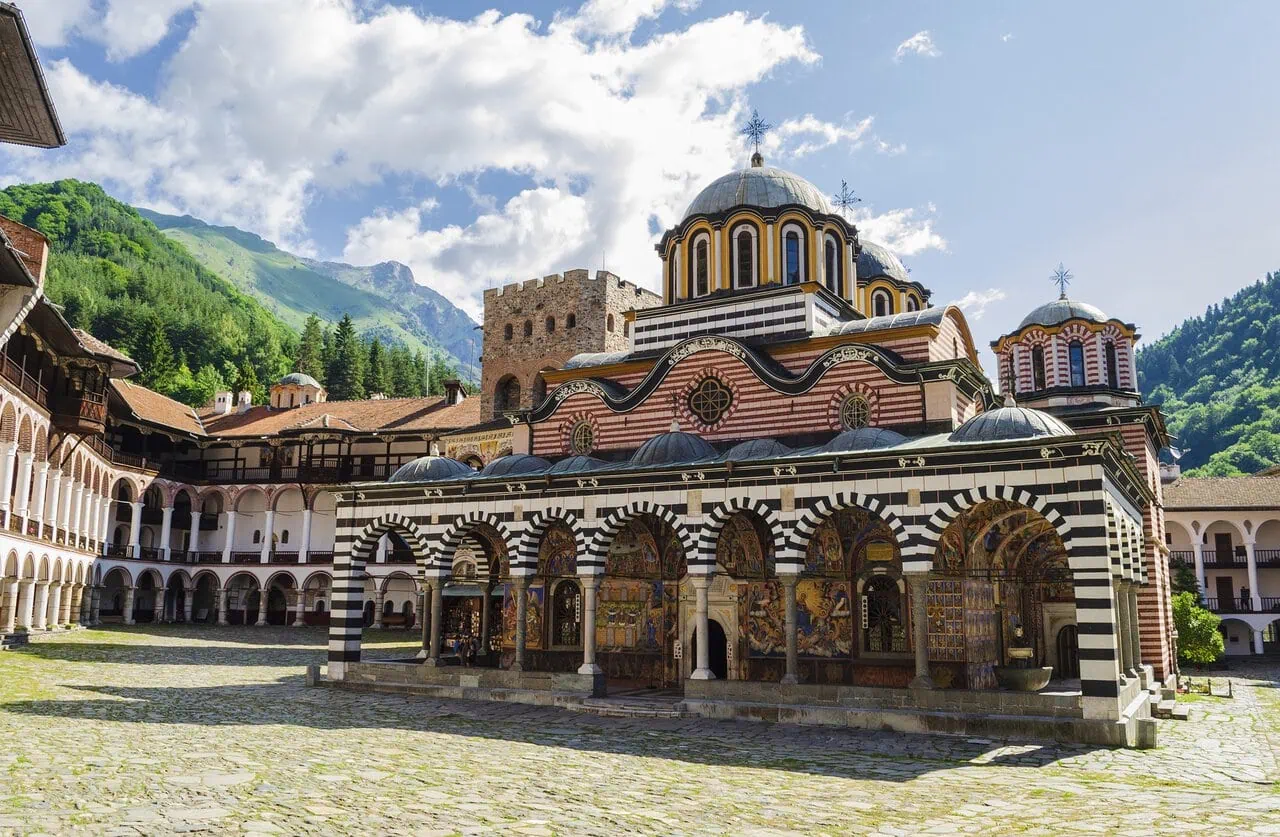
Founded in the tenth century by Saint Ivan of Rila, the monastery played a crucial role in preserving Bulgarian culture, language and religious traditions during centuries of foreign rule. Today, visitors are greeted by one of the most impressive sights in south-eastern Europe. The monastery’s striped arches, colourful frescoes and mountain setting create an unforgettable first impression.
The main courtyard is the highlight of any visit. Surrounded by distinctive black-and-white arcades and richly decorated buildings, it feels more like a film set than a functioning religious complex. The detailed frescoes covering the walls and ceilings are among the finest examples of Bulgarian religious art and reward close inspection.
Inside the monastery church, visitors will find elaborate wood carvings, religious icons and centuries of history. The atmosphere remains surprisingly peaceful despite the site’s popularity, particularly outside the busiest summer periods.
Most visitors reach Rila Monastery by organised tour, rental car or direct coach services. The journey from Sofia typically takes around two hours each way, passing through attractive mountain scenery before arriving at the monastery complex.
Facilities at the site include cafés, restaurants, souvenir shops, toilets and visitor amenities, making it easy to spend several hours exploring the monastery and its surroundings. A combined ticket covering the monastery’s museum exhibits costs €12 (£10 / $14, about 23 BGN). For many travellers, it becomes the highlight not only of their time in Sofia but of their entire visit to Bulgaria.
Learn More from UNESCO
This destination is connected to a UNESCO World Heritage Site, recognised for its outstanding cultural, historical, or natural importance. You can explore official listings, background information, and protected heritage sites through UNESCO’s global database.
Seven Rila Lakes
For outdoor enthusiasts, the Seven Rila Lakes are often considered the most spectacular day trip available from Sofia. Located high within the Rila Mountains, these glacial lakes form one of Bulgaria’s most famous natural landscapes and attract hikers from across Europe.
The lakes sit at elevations between approximately 2,100 and 2,500 metres, surrounded by dramatic mountain scenery that changes dramatically throughout the seasons. During summer, green meadows and clear skies dominate the landscape, while spring and autumn bring entirely different colours and conditions.
Most visitors begin their journey at the Pionerska area before taking the chairlift towards Rila Lakes Hut. This significantly reduces the amount of climbing required and allows walkers to reach the main lake circuit more easily. From there, a network of well-marked trails links the individual lakes, each of which has its own distinctive shape and name.
The route passes lakes known as The Tear, The Eye, The Kidney, The Twin, The Trefoil, The Fish Lake and The Lower Lake. Together they form one of Bulgaria’s most iconic landscapes and provide some of the country’s best hiking opportunities.
Unlike Rila Monastery, reaching the lakes independently can require more planning. Most visitors either join organised tours from Sofia or hire a car. Those willing to make the effort are rewarded with scenery that rivals many of Europe’s better-known mountain destinations.
The combination of alpine landscapes, fresh mountain air and spectacular viewpoints makes the Seven Rila Lakes one of the most rewarding excursions from Sofia and an essential destination for travellers who enjoy nature and hiking.
Plovdiv
If you only have time for one city day trip from Sofia, Plovdiv is arguably the strongest choice. Often described as one of Europe’s oldest continuously inhabited cities, Plovdiv combines Roman history, colourful architecture, creative neighbourhoods and a lively café culture into a destination that feels completely different from Sofia.
The city’s main attraction is the remarkably well-preserved Ancient Theatre of Philippopolis. Built during the Roman period and still used for performances today, it ranks among the finest ancient theatres in Europe. Nearby, visitors can explore the winding streets of Plovdiv Old Town, where beautifully preserved nineteenth-century mansions sit above Roman ruins and archaeological sites.
Many visitors also spend time in Kapana, the city’s creative district. Once a neglected neighbourhood, it has evolved into one of Bulgaria’s most vibrant areas, filled with independent cafés, bars, galleries and artisan shops. The contrast between Kapana’s modern atmosphere and the historic streets of the Old Town is one of the reasons Plovdiv feels so distinctive.
The city is also surprisingly compact. Most of the major attractions can be explored comfortably on foot, making it ideal for a day trip. Visitors can spend the morning exploring Roman ruins, enjoy lunch in Kapana and finish the afternoon wandering through the historic centre before returning to Sofia.
Getting to Plovdiv is straightforward. Frequent trains depart from Sofia Central Railway Station throughout the day, with journey times typically between 2 and 2.5 hours. Interrail and Eurail Passes are valid on most services, making Plovdiv one of the easiest and most rewarding rail-based day trips in Bulgaria. Regular coaches also operate from Sofia Central Bus Station, although many travellers prefer the comfort and scenery offered by the train.
Koprivshtitsa
For visitors wanting to experience traditional Bulgaria, few destinations can match Koprivshtitsa. Nestled among the mountains east of Sofia, this historic town feels like stepping back into the nineteenth century and offers one of the most authentic glimpses of Bulgaria’s National Revival period.
The town played an important role in the April Uprising of 1876, one of the key events in Bulgaria’s struggle for independence from Ottoman rule. Today, many of the colourful houses associated with that period have been preserved as museums, allowing visitors to explore the homes of revolutionary leaders, merchants and influential local families.
Walking through Koprivshtitsa is the main attraction. Cobbled streets wind between brightly painted houses, stone bridges cross small streams and mountain scenery surrounds the town on all sides. Unlike larger tourist destinations, Koprivshtitsa retains a peaceful atmosphere that encourages visitors to slow down and explore at their own pace.
Several house museums provide insight into Bulgarian history and daily life during the nineteenth century. Together, they create one of the country’s most important open-air historical experiences. Photography enthusiasts will also find plenty to enjoy, as the town contains some of Bulgaria’s most distinctive architecture.
Travelling to Koprivshtitsa by train is part of the adventure. Frequent services from Sofia Central Railway Station reach Koprivshtitsa Station in around two hours, making it one of the most practical day trips for Interrail users. Visitors should note that the railway station is located approximately 8 kilometres from the town itself, requiring a short taxi ride or local transfer for the final section of the journey.
Belogradchik Rocks
Among Bulgaria’s natural attractions, few places are as visually striking as the Belogradchik Rocks. Rising dramatically above the surrounding countryside, these extraordinary sandstone and limestone formations create one of the most unusual landscapes in Europe.
Over millions of years, erosion has sculpted the rocks into towering pillars, cliffs and formations that resemble people, animals and mythical figures. Local legends have given names to many of the most recognisable formations, adding an additional layer of intrigue to the landscape.
One of the highlights of any visit is the historic Belogradchik Fortress, which has been built directly into the rocks themselves. The combination of natural geology and military architecture creates one of Bulgaria’s most impressive sights. From the fortress walls, visitors enjoy sweeping views across the surrounding region and the vast rock formations stretching into the distance.
Unlike destinations such as Plovdiv or Koprivshtitsa, Belogradchik requires a longer journey and therefore demands an earlier start. However, the uniqueness of the scenery more than justifies the effort. Many visitors consider it one of the most memorable landscapes in the Balkans.
Reaching the Belogradchik Rocks independently requires some planning. Trains from Sofia reach nearby Oreshets, but journey times are long and onward transport is required. Most visitors travel by coach, organised tour or rental car. Driving from Sofia usually takes around 3.5 to 4 hours, making it the fastest independent option and the method chosen by many travellers.
Iskar Gorge
For railway enthusiasts and lovers of dramatic scenery, Iskar Gorge is one of the finest day trips available from Sofia. Better still, the journey itself is part of the attraction.
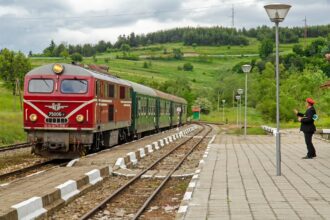
The gorge follows the course of the Iskar River as it cuts through the Balkan Mountains, creating steep cliffs, forested slopes and some of Bulgaria’s most impressive landscapes. The railway line running through the gorge is widely regarded as one of the country’s most scenic train routes and provides a completely different experience from the urban environment of Sofia.
Many visitors choose to disembark at Lakatnik, perhaps the most famous stop along the route. From here, walking trails lead to spectacular viewpoints overlooking the gorge and the surrounding mountains. The dramatic cliffs above the village have become one of the most photographed landscapes in Bulgaria.
Other popular stops include Bov and Zverino, both of which provide access to hiking routes, riverside scenery and quieter sections of the gorge. The flexibility of the railway makes it easy to tailor the trip according to your interests and available time.
One of the greatest strengths of Iskar Gorge is its accessibility. Unlike many scenic mountain areas, there is no need for complicated transfers or organised tours. Simply board a train in Sofia and enjoy the journey.
Frequent regional services depart from Sofia Central Railway Station towards Mezdra, passing directly through the heart of the gorge. Interrail and Eurail Passes are fully valid, making Iskar Gorge arguably the best rail-based day trip from Sofia. For many travellers, the combination of spectacular scenery, easy access and scenic railway travel makes it one of Bulgaria’s most underrated attractions.
Search flights and useful route combinations for your trip.
View flightsChoose an Airalo eSIM and arrange mobile data before you arrive.
Browse eSIMsHave a private airport pickup arranged before you travel.
Book a transferVitosha Mountain
One of the easiest and most rewarding day trips from Sofia doesn’t actually require leaving the city. Rising dramatically above the capital, Vitosha Mountain provides hiking trails, panoramic viewpoints, mountain restaurants and winter sports facilities within easy reach of the centre. Few European capitals can offer such immediate access to genuine mountain scenery.
For many visitors, the main destination is Aleko Hut, located at approximately 1,800 metres above sea level. This mountain base serves as the gateway to Vitosha’s higher slopes and provides access to numerous walking routes. Visitors will find restaurants, cafés, mountain lodges and spectacular views across Sofia and western Bulgaria.
More adventurous travellers often continue towards Cherni Vrah, the highest summit on the mountain at 2,290 metres. The route is one of Bulgaria’s most popular hikes and rewards walkers with some of the finest views in the country. Other attractions include Golden Bridges (Zlatnite Mostove), a remarkable stone river formed by huge boulders flowing down the mountainside, and Dragalevtsi Monastery, which adds a cultural element to any visit.
Getting to Vitosha is surprisingly straightforward. From central Sofia, take the M2 Metro Line to Vitosha Metro Station beside Paradise Center Shopping Mall. Outside the station, board Bus 66, which runs directly to Aleko Hut. The bus journey typically takes around 35 to 45 minutes, meaning most visitors can travel from Sofia’s historic centre to the mountain in around an hour. Few capital cities offer such easy access to mountain scenery, which is one of the reasons Vitosha remains one of the best day trips from Sofia.
Melnik and Rozhen Monastery
For travellers interested in history, wine and unusual landscapes, the combination of Melnik and Rozhen Monastery makes for one of Bulgaria’s most distinctive day trips.
Despite being officially recognised as Bulgaria’s smallest town, Melnik possesses a rich history and a character entirely unlike Sofia. Stone houses climb the hillsides, narrow streets wind through the settlement and traditional architecture reflects centuries of trade and cultural influence. The town is particularly famous for its wine production, with the surrounding region producing some of Bulgaria’s best-known wines.
Perhaps even more striking than the town itself are the Melnik Sand Pyramids. These extraordinary natural formations rise from the surrounding landscape and create an almost desert-like environment that feels very different from the forests and mountains found elsewhere in Bulgaria.
A short distance away lies Rozhen Monastery, one of the country’s most important religious sites. Surrounded by mountain scenery and vineyards, the monastery offers a peaceful atmosphere and provides an excellent complement to a visit to Melnik. Many visitors choose to combine the two attractions into a single excursion.
There is no direct railway connection to Melnik. Most visitors travel by organised tour, rental car or coach. Regular buses operate from Sofia towards Sandanski, where onward local transport can be taken to Melnik. Driving usually takes around 2.5 to 3 hours and remains the most flexible option for visitors wishing to explore both Melnik and Rozhen Monastery at their own pace.
Veliko Tarnovo
Before Sofia became Bulgaria’s modern capital, Veliko Tarnovo served as the centre of the Second Bulgarian Empire and remains one of the country’s most historically important cities. Perched dramatically above the Yantra River, it offers medieval fortresses, spectacular viewpoints and one of Bulgaria’s most attractive historic centres.
The city’s undisputed highlight is Tsarevets Fortress. Sitting atop a hill overlooking the river valley, the fortress was once the heart of medieval Bulgaria. Visitors can explore reconstructed walls, towers and gates while enjoying panoramic views across the surrounding landscape.
Beyond Tsarevets, Veliko Tarnovo rewards exploration. Historic houses cling to steep hillsides, narrow streets weave through the old town and traditional restaurants overlook the river below. The city’s dramatic setting gives it a character unlike any other destination in Bulgaria.
Although the journey is longer than some of Sofia’s other day trips, many visitors find the effort worthwhile. The combination of history, scenery and architecture creates one of the most complete visitor experiences in the country.
Veliko Tarnovo can be reached by both train and coach. Trains depart from Sofia Central Railway Station and generally take between 3.5 and 4.5 hours, depending on the service. Interrail and Eurail Passes are valid on the route. Coaches from Sofia Central Bus Station are often slightly faster and provide another practical option for independent travellers.
The Best Day Trips by Train from Sofia
One of the advantages of using Sofia as a base is the number of attractions that can be reached by rail. For travellers holding an Interrail Pass or Eurail Pass, Bulgaria offers some surprisingly rewarding railway excursions that combine sightseeing with scenic journeys.
The easiest rail day trip is undoubtedly Plovdiv. Frequent trains connect Bulgaria’s two largest cities throughout the day, allowing visitors to spend several hours exploring the Roman Theatre, Old Town and Kapana District before returning to Sofia. The route is fully covered by Interrail and remains one of the country’s most popular rail journeys.
Another excellent option is Koprivshtitsa. Although a short taxi ride is required from the station to the town itself, the journey offers one of the easiest ways to experience traditional Bulgarian architecture and history without needing a car.
For railway enthusiasts, Iskar Gorge is the standout choice. The train passes through dramatic mountain scenery, tunnels and river valleys, creating one of the most scenic railway journeys in Bulgaria. Stops such as Lakatnik, Bov and Zverino provide opportunities for hiking and photography before returning to Sofia later the same day.
Travellers willing to spend longer on the train can also reach Veliko Tarnovo, while numerous regional services open up lesser-known destinations throughout western and central Bulgaria.
One of the strengths of travelling by rail in Bulgaria is affordability. Even visitors without an Interrail Pass will often find train tickets inexpensive compared with Western European standards. Combined with scenic routes and a relaxed pace of travel, this makes the railway network one of the most enjoyable ways to explore beyond Sofia.
Choosing the Right Day Trip
With so many excellent destinations within reach of the Bulgarian capital, choosing the right excursion can sometimes be difficult. Fortunately, each of Sofia’s major day trips offers a very different experience, making it easier to match your destination to your interests.
If this is your first visit to Bulgaria and you only have time for one excursion, Rila Monastery is usually the strongest choice. The combination of UNESCO World Heritage status, spectacular mountain scenery, colourful frescoes and historical significance makes it one of the country’s most iconic attractions. For many visitors, it becomes the highlight of their trip.
Travellers looking for Bulgaria’s most impressive urban destination should head to Plovdiv. Its blend of Roman ruins, historic architecture and vibrant cultural districts creates a completely different atmosphere from Sofia and offers one of the finest city experiences in the Balkans.
Those seeking dramatic natural scenery will often prefer the Seven Rila Lakes. The combination of mountain landscapes, hiking trails and alpine views creates one of Bulgaria’s most rewarding outdoor adventures. Visitors should be prepared for a more active day, but the scenery more than rewards the effort.
For railway enthusiasts and Interrail travellers, Iskar Gorge is difficult to beat. The railway journey itself is part of the attraction, and the combination of scenic trains, mountain landscapes and walking routes creates a uniquely AST-style excursion.
Visitors interested in traditional Bulgarian culture should consider Koprivshtitsa, where colourful National Revival houses and cobbled streets preserve an important chapter of the country’s history. Those looking for something truly unusual may prefer the spectacular rock formations of Belogradchik, while wine lovers often gravitate towards Melnik and its surrounding vineyards.
The good news is that there is no wrong choice. Each destination offers a different perspective on Bulgaria, which is one of the reasons Sofia works so well as a base for exploration.

Rupert’s Handy Travel Tips
Planning a day trip from Sofia? Here are a few practical tips Rupert recommends before leaving the capital.
- Start early. Many of Bulgaria’s best attractions are located in mountainous regions where journey times can be longer than they initially appear.
- If you’re travelling with an Interrail Pass, make the most of Bulgaria’s surprisingly scenic railway network. Routes to Plovdiv, Koprivshtitsa and Iskar Gorge are particularly rewarding.
- Carry cash as well as a bank card. Smaller towns and rural attractions can sometimes have fewer payment options than Sofia.
- Pack an extra layer when visiting the Rila Mountains or Vitosha Mountain. Temperatures at altitude are often significantly cooler than in the capital.
- Don’t underestimate journey times to destinations such as Belogradchik and Melnik. These are achievable day trips, but they require a full day.
- Consider staying overnight in destinations such as Plovdiv or Veliko Tarnovo if your itinerary allows. Both cities deserve more than a few hours.
Rupert’s verdict: If you’re only taking one day trip from Sofia, choose Rila Monastery. If you’re taking two, add Plovdiv. Together they provide an excellent introduction to Bulgaria.
Want more practical travel tips? Visit our Who is Rupert? page to learn more.




Frequently Asked Questions
What is the best day trip from Sofia?
For most visitors, Rila Monastery is the best day trip from Sofia thanks to its UNESCO status, mountain setting and cultural importance.
Can you visit Plovdiv as a day trip from Sofia?
Yes. Frequent trains and coaches connect Sofia and Plovdiv, making it one of the easiest and most popular day trips in Bulgaria.
Which day trips from Sofia can be reached by train?
The best rail-based day trips include Plovdiv, Koprivshtitsa, Iskar Gorge and Veliko Tarnovo. All can be reached from Sofia Central Railway Station.
Can I use an Interrail Pass for day trips from Sofia?
Yes. Interrail Passes are valid on Bulgaria’s national railway network, making destinations such as Plovdiv, Koprivshtitsa, Iskar Gorge and Veliko Tarnovo particularly attractive excursions.
Is Rila Monastery accessible by train?
No. There is currently no railway station at Rila Monastery. Most visitors travel by coach, organised tour or rental car.
What is the closest day trip to Sofia?
Vitosha Mountain is the closest major excursion and can be reached in around an hour using the Sofia Metro and Bus 66.
Are the Seven Rila Lakes worth visiting?
Absolutely. The Seven Rila Lakes offer some of Bulgaria’s most spectacular mountain scenery and are considered one of the country’s premier hiking destinations.
Can Belogradchik be visited in a day from Sofia?
Yes. It is a long day trip, but many visitors successfully visit the Belogradchik Rocks and fortress from Sofia, particularly by car or organised tour.
Further Reading & Related Guides
If you’re using Sofia as your base for exploring Bulgaria, our Things to Do in Sofia guide will help you discover the city’s Roman ruins, cathedrals, museums and mountain scenery before heading further afield.
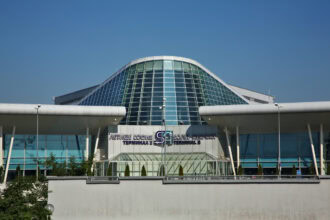
Travellers arriving in the capital should also read our Sofia Airport Transfers Guide, while rail enthusiasts may find our Night Trains from Sofia guide useful for continuing their journey across Bulgaria and beyond. If you’re planning to continue your journey, our Interrail Bulgaria Guide explains how to travel across the country by rail.
Don’t forget to organise mobile data before travelling with our eSIM Guide.