Reviewed by our editorial team Updated
Why Bulgaria Is Hosting Eurovision 2027
Eurovision 2027 in Bulgaria will be one of the most significant cultural events in the country’s modern history. For the first time ever, Bulgaria will host the Eurovision Song Contest, following its dramatic victory at Eurovision 2026 in Vienna, Austria.
The winning entry was DARA’s “Bangaranga”, a performance that captivated juries and televoters across Europe and beyond. Competing against one of the strongest Eurovision fields in recent years, Bulgaria secured its first-ever Eurovision victory and earned the right to host the contest for the first time.
For Bulgarian Eurovision fans, the result was the culmination of more than two decades of participation. Since debuting in 2005, Bulgaria has experienced highs, lows, withdrawals, near misses, and several memorable performances. The country came heartbreakingly close to victory in 2017, when Kristian Kostov finished second with “Beautiful Mess”, but the ultimate prize remained elusive until Vienna 2026.
The celebrations that followed DARA’s victory were immediate. Across Sofia, Plovdiv, Varna, Burgas, and countless smaller towns and cities, fans gathered to celebrate a moment many had waited years to witness. Eurovision had finally been won by Bulgaria.
For visitors planning to attend Eurovision 2027, this means something rather special. Unlike countries that have hosted multiple editions of the contest, Bulgaria will be experiencing Eurovision hosting duties for the very first time. There is a genuine sense of excitement surrounding the event, not only among Eurovision fans but also within the tourism industry, hospitality sector, local governments, and the wider public.
The result is likely to create a Eurovision unlike any other. Visitors can expect the familiar elements of the contest, including rehearsals, fan events, EuroClub, Eurovision Village, and the Grand Final itself, while also experiencing a country eager to showcase its culture, history, cuisine, landscapes, and hospitality to a global audience.
For many Eurovision fans, Eurovision 2027 Bulgaria will not simply be another contest. It will be the first opportunity to experience one of Europe’s most underrated countries during its biggest international event, and it all happens in Burgas on the Black Sea in May 2027.
Bulgaria at a Glance
For many Eurovision fans travelling to Eurovision 2027, Bulgaria may be a completely new destination. While millions of Europeans recognise the country from Eurovision, relatively few international visitors know just how diverse Bulgaria actually is.
Located in Southeastern Europe, Bulgaria sits at the crossroads of the Balkans, sharing borders with Romania, Serbia, North Macedonia, Greece, and Turkey. To the east lies the beautiful Black Sea Coast, while inland visitors will discover mountain ranges, historic cities, Roman ruins, medieval fortresses, ski resorts, monasteries, and vibrant modern urban centres.
The capital city, Sofia, serves as Bulgaria’s political, economic, and cultural heart. Surrounded by mountains and packed with history, the city combines Roman archaeology, Orthodox churches, communist-era architecture, modern shopping districts, and an increasingly lively food and nightlife scene.
Beyond Sofia, visitors will find Plovdiv, one of Europe’s oldest continuously inhabited cities; Varna, Bulgaria’s maritime capital on the Black Sea; and Burgas, the growing coastal city that will host Eurovision 2027.
One of Bulgaria’s greatest strengths is affordability. Compared with many Western European destinations, accommodation, dining, local transport, attractions, and entertainment often remain surprisingly good value. This makes the country particularly attractive for Eurovision fans planning to stay for the entire contest week.
| Quick Fact | Information |
|---|---|
| Capital | Sofia |
| Currency | Euro (EUR) |
| Language | Bulgarian |
| Population | Approximately 6.4 Million |
| EU Member | Yes |
| Schengen Area | Yes |
| Time Zone | Eastern European Time (EET) |
| Main Airport | Sofia Airport |
| Coastline | Black Sea |
| Highest Mountain | Musala (2,925m) |
| Eurovision 2027 Host City | Burgas |
| Eurovision 2027 Venue | Arena Burgas |
| Eurovision 2027 Grand Final | Saturday 15 May 2027 |
Whether you’re planning a quick Eurovision weekend or a two-week exploration of the country, Bulgaria offers considerably more than many first-time visitors expect.
Browse hotels and accommodation for your visit to Bulgaria.
View staysBrowse apartments, holiday homes and self-catering stays in Bulgaria.
View rentalsCompare hotel deals in Bulgaria from multiple booking sites.
Compare pricesWhere Eurovision 2027 Will Be Held
The biggest question surrounding Eurovision 2027 Bulgaria has been answered. The contest will be staged in Burgas, on Bulgaria’s Black Sea Coast, at Arena Burgas. The host city was confirmed on 13 August 2026.
The live shows fall in the middle of May 2027. Semi-Final One takes place on Tuesday 11 May 2027, Semi-Final Two on Thursday 13 May 2027, and the Grand Final on Saturday 15 May 2027. The host broadcaster is Bulgarian National Television (BNT).
Hosting Eurovision is a major undertaking. The European Broadcasting Union (EBU) requires a venue capable of handling thousands of spectators, hundreds of journalists, broadcasting infrastructure, rehearsals, delegation facilities, security operations, and fan events. The successful host city must also provide sufficient hotel capacity, transport links, media facilities, and visitor infrastructure.
Because this is Bulgaria’s first Eurovision as host nation, the selection process attracted enormous attention at home. Four Bulgarian cities submitted bids. Burgas and Sofia progressed to the final stage, while the bids from Plovdiv and Varna fell away earlier in the process.
Organisers pointed to the venue and technical potential of Arena Burgas, backed by the city’s accommodation capacity, its transport and international connectivity, the commitment shown by the municipality, and a stated vision to involve the whole city rather than a single arena district.
For Eurovision fans, the host city matters enormously. Burgas will become home not only to the live shows but also to Eurovision Village, EuroClub, fan gatherings, press activities, rehearsals, national delegation events, and countless unofficial celebrations along the seafront.
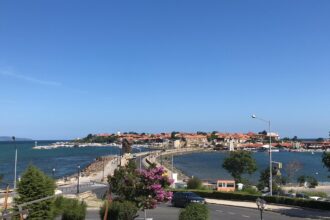
Eurovision visitors will also find that Bulgaria is relatively compact compared with many European countries. Basing yourself in Burgas still leaves time to reach Nessebar, Sozopol, Varna, Plovdiv, or even Sofia on the same trip, using domestic trains, long-distance coaches or a hire car.
The three cities that missed out have not been written out of the story. Sofia, Plovdiv and Varna will all take part in the accompanying programme around the contest, so Eurovision 2027 should showcase a great deal more of Bulgaria than the host arena alone.
Burgas: The Eurovision 2027 Host City
While Varna often receives more international attention, Burgas has quietly become one of Bulgaria’s most dynamic and ambitious cities, and in May 2027 it takes centre stage. Located further south along the Black Sea Coast, it pairs excellent tourism infrastructure with a fast-growing reputation as an events destination. Our Things to Do in Burgas guide covers the city in full.
Over the last decade, the city has invested heavily in public spaces, cultural facilities, waterfront development, and visitor amenities. Today, many travellers regard Burgas as one of Bulgaria’s most pleasant coastal cities, with attractive parks, modern promenades, lively nightlife, and easy access to some of the country’s most famous beach destinations.
The contest will be staged at Arena Burgas, which opened in 2023 and is one of Bulgaria’s newest indoor venues. Designed for major sporting and entertainment events, its flexible event space and modern technical infrastructure sat at the heart of the winning bid. Our arena guide explains how to reach it and where to park.
Accessibility was another factor in the decision. Burgas Airport handles extensive seasonal traffic and lies only a short drive from the city centre. By mid-May the summer schedules are building, so Eurovision 2027 visitors should find a widening choice of direct European routes.
Accommodation capacity is also substantial. In addition to hotels within Burgas itself, nearby destinations such as Sunny Beach, Nessebar, Sozopol, Pomorie, and St Vlas offer thousands of additional rooms. Few Eurovision host cities have been able to draw upon such a large surrounding tourism ecosystem.
For visitors, Burgas offers a compelling blend of city life and coastal relaxation. Eurovision fans can spend the day exploring the Sea Garden and waterfront, visiting UNESCO-listed Nessebar, or discovering the historic charm of Sozopol, then head to rehearsals, fan events and live shows in the evening.
Perhaps most importantly, Eurovision in Burgas provides an opportunity to introduce millions of viewers to a part of Europe that remains relatively undiscovered by international audiences. The combination of Black Sea scenery, modern infrastructure, and Bulgarian hospitality will create a memorable backdrop for the contest.
Burgas is also a working Black Sea port, and the seasonal ferry across to Batumi in Georgia offers adventurous fans an unusual way to continue their journey once the Grand Final confetti has been swept away.
Sofia: The Other Finalist and Main Gateway
Sofia was the other city to reach the final stage of the host selection, and although Burgas took the prize, the capital still matters to visitors. Many international fans will land here, connect onwards, or add a few days in the city either side of Eurovision week.
As Bulgaria’s capital and largest city, Sofia already possesses many of the ingredients required to host a modern Eurovision Song Contest. The city is home to the country’s largest airport, most extensive hotel stock, strongest transport network, and largest concentration of event infrastructure.
The biggest advantage is Sofia Airport, which serves as Bulgaria’s principal international gateway. Airlines connect Sofia with destinations across Europe, making it far easier for fans, journalists, delegations, and broadcasters to travel to the contest. During Eurovision week, this connectivity becomes enormously important.
Accommodation is another major strength. Sofia offers everything from luxury international hotels and boutique properties to budget accommodation and hostels. This variety helps accommodate the wide range of visitors that Eurovision attracts, from media organisations and national delegations to independent fans travelling on a budget.
Transport within the city is also among the best in Bulgaria. The expanding Sofia Metro, combined with trams, buses, taxis, and ride-hailing services, allows visitors to move relatively easily between airports, hotels, attractions, fan zones, and the city’s main event venues.
The venue behind the capital’s bid was Arena Sofia (formerly Arena Armeec), which has hosted major sporting events, concerts, international competitions, and large-scale entertainment productions. It will not stage Eurovision 2027, yet it remains one of Bulgaria’s busiest indoor venues and is worth checking during your stay.
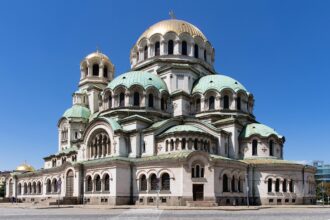
Beyond logistics, Sofia also offers plenty for visitors outside the contest itself. Eurovision fans could spend their mornings exploring Alexander Nevsky Cathedral, wandering along Vitosha Boulevard, visiting Roman ruins, enjoying museums, or taking day trips into the nearby Vitosha Mountains before returning for evening rehearsals and live shows.
For all these reasons, Sofia is worth building into a Eurovision 2027 trip even though the contest itself sits on the coast. Frequent domestic flights, direct trains and long-distance coaches make the journey east to Burgas straightforward once you have seen the capital.

Plovdiv: Bulgaria’s Cultural Capital
Plovdiv bid for Eurovision 2027 and did not reach the final shortlist, yet it remains the most atmospheric city in Bulgaria and one of the easiest additions to a contest trip. Widely regarded as one of the most beautiful cities in the Balkans, it combines millennia of history with a thriving cultural scene.
The city has a remarkable pedigree. Often described as one of the oldest continuously inhabited cities in Europe, Plovdiv’s history stretches back thousands of years. Visitors can walk through layers of Thracian, Roman, Byzantine, Ottoman, and Bulgarian history within a relatively compact city centre. For Eurovision fans looking to combine the contest with sightseeing, few locations in Europe can match the city’s historic appeal.
One of Plovdiv’s greatest assets is its reputation as Bulgaria’s cultural capital. The city successfully held the title of European Capital of Culture 2019, leading to major investment in cultural infrastructure, public spaces, events, and tourism facilities. That experience demonstrated that Plovdiv is capable of welcoming large numbers of international visitors and organising major cultural events.
The city’s most famous landmark is the spectacular Ancient Theatre of Philippopolis, a remarkably well-preserved Roman theatre that still hosts performances nearly two thousand years after it was built. Eurovision itself needs a modern indoor arena, which is why the contest is staged in Burgas, but landmarks such as this give visiting fans an extraordinary reason to head inland before or after Eurovision week.
The venue behind the city’s bid was the Kolodrum Plovdiv, a modern indoor arena built for large sporting and entertainment events. Smaller than the arenas in Sofia and Burgas, it nonetheless remains one of Bulgaria’s most significant venues and stages concerts and championships throughout the year.
Accessibility remains one of the city’s key strengths. Located approximately 150 kilometres from Sofia, Plovdiv is connected to the capital by one of Bulgaria’s busiest transport corridors. Frequent trains, long-distance coaches, and modern motorways make travel between the two cities relatively straightforward. The city also benefits from Plovdiv Airport, although Sofia Airport currently offers considerably more international connections.
For Eurovision fans adding a side trip, Plovdiv offers something very different from the coast. Instead of beaches and promenades, visitors find a compact city filled with Roman ruins, cobbled streets, historic houses, creative districts, and some of Bulgaria’s best restaurants and cafés.
Plovdiv sits roughly midway between Sofia and Burgas on the main road and rail corridor, which makes it a natural stop on the way to or from the contest rather than a separate journey in its own right.
Varna: Bulgaria’s Other Black Sea City
Varna also bid for the contest and lost out at the first stage, but it sits a short journey up the coast from the host city and makes an obvious extension. Bulgaria’s third-largest city combines urban infrastructure, beach culture, maritime heritage, and serious tourism capacity.
Often referred to as Bulgaria’s Maritime Capital, Varna serves as the country’s principal northern Black Sea city and one of its most important tourist destinations. Every summer, hundreds of thousands of visitors arrive to enjoy the beaches, coastal promenades, parks, restaurants, festivals, and nearby resorts such as Golden Sands.
One practical advantage is Varna Airport, which handles substantial international traffic and supports large numbers of seasonal visitors. It gives Eurovision 2027 travellers a useful third arrival option alongside Burgas Airport and Sofia Airport, with road and rail links running south to the host city.
The city itself offers a wide variety of accommodation. From luxury seafront hotels and modern apartment complexes to budget-friendly guesthouses and hostels, Varna already possesses much of the tourism infrastructure that Eurovision requires. The nearby resorts of Golden Sands, St Constantine and Helena, and Albena add thousands more rooms within easy reach of the city.
Beyond logistics, Varna offers an outstanding visitor experience. Fans arriving early can spend a day relaxing on the beach, exploring the famous Sea Garden, visiting museums, dining at waterfront restaurants, or taking boat trips along the Black Sea Coast before travelling south for Eurovision week.
The city’s cultural attractions should not be overlooked either. The Varna Archaeological Museum, home to the world’s oldest processed gold, and the impressive Roman Baths of Varna demonstrate that the city offers much more than simply sun and sand.
The same is true of the Bulgarian coast as a whole. A Black Sea Eurovision will feel unlike most recent contests, and the combination of seaside promenades, beach bars, coastal sunsets and warm May evenings should produce one of the most distinctive Eurovision experiences in decades.
For fans hoping to combine Eurovision 2027 with a longer beach holiday, Varna is an easy add-on either before or after the contest week in Burgas.
How to Get to Eurovision 2027 in Bulgaria
One of the advantages of Eurovision 2027 Bulgaria is that the country is far easier to reach than many first-time visitors expect. Situated at the crossroads of Europe, the Balkans, and the edge of the Middle East, Bulgaria is connected by air, rail, coach, and road to a large number of destinations across the continent.
With Burgas confirmed as the host city, travel planning is far simpler than it was. Visitors can fly straight to the coast, land at Sofia or Varna and continue overland, or approach Bulgaria entirely by rail, coach or car from neighbouring countries.
For the majority of international fans, flying will remain the simplest choice. Bulgaria’s airports are well connected to major European cities, while low-cost carriers, flag carriers, and charter airlines all operate substantial networks into the country.
Rail enthusiasts have increasingly attractive options too. International train services link Bulgaria with neighbouring countries, while domestic rail routes connect the major cities. Eurovision visitors travelling through Europe by train may find Bulgaria easier to reach than expected, particularly from Romania, Turkey, and other parts of the Balkans.
Long-distance coach operators also serve the country extensively. While slower than flying, coaches often provide economical travel options from neighbouring countries and can be particularly useful for fans travelling on tighter budgets.
Visitors planning road trips will find Bulgaria’s motorway network continues to improve. Modern highways now connect many of the country’s principal cities, making self-drive travel a practical option for those combining Eurovision with a wider Balkan adventure.
The country’s relatively compact size is another major advantage. Unlike some previous host nations where internal travel can consume an entire day, journeys between Bulgaria’s major cities are generally manageable. This allows Eurovision visitors to explore destinations beyond the host city without sacrificing significant amounts of time.
Search flights and useful route combinations for your trip.
View flightsChoose an Airalo eSIM and arrange mobile data before you arrive.
Browse eSIMsCheck private pickup options and plan your onward journey before arrival.
View transfersFlying to Bulgaria for Eurovision 2027
For most visitors attending Eurovision 2027, the journey will begin at one of Bulgaria’s international airports.
The country’s primary aviation gateway is Sofia Airport, which handles the largest number of international routes and serves as Bulgaria’s main hub for European travel. Airlines connect Sofia with destinations throughout the United Kingdom, Germany, Spain, Italy, France, Scandinavia, Central Europe, and the Balkans, and it remains a common arrival point for fans connecting onwards to Burgas.
Sofia Airport works well if you are spending a night in the capital first. Visitors reach the city centre via the Sofia Metro in under an hour, while taxis, buses and transfer services provide additional options before an onward flight, train or coach to the coast.
For most fans, though, the obvious choice is Burgas Airport, the closest gateway to the host city and the arena. Varna Airport serves as a useful backup further up the coast. Both handle large seasonal volumes and make it easy to combine Eurovision with a Black Sea holiday, something few previous contests have offered.
Plovdiv Airport is a distant third option. Considerably smaller than Sofia, it supports limited international operations, but it sits on the main corridor between the capital and the coast if a cheap fare happens to line up with your Eurovision 2027 dates.
Because Eurovision week attracts huge numbers of visitors, fans should expect flights to become more expensive as the event approaches. Previous contests have demonstrated that accommodation and airfares rise rapidly once ticket details are announced, and the host city is already known this time.
Visitors planning to attend the live shows, rehearsals, and fan events would therefore be wise to monitor flight availability early and remain flexible regarding airports where possible.
International Trains to Bulgaria
For many Eurovision fans, travelling by train has become an important part of the adventure. Fortunately, Bulgaria remains connected to the wider European rail network, although international rail travel into the country is often overlooked.
The most significant international rail route links Romania and Bulgaria via the Danube Bridge between Giurgiu and Ruse. During the summer season, international services also connect Bucharest with destinations including Sofia, Varna, and Istanbul, providing direct international rail access into Bulgaria.
The route from Bucharest to Sofia is particularly useful for Eurovision visitors exploring southeastern Europe. While journey times are longer than flying, the train provides a comfortable and scenic way to cross the Danube and enter Bulgaria.
Connections with Turkey also play an important role. International trains linking Istanbul (Halkalı) and Sofia continue to provide one of Europe’s most interesting cross-border rail journeys. Overnight services allow travellers to wake up in Bulgaria after departing Turkey the previous evening.
Domestic rail services then connect major Bulgarian cities including Sofia, Plovdiv, Varna, and Burgas, making onward travel to the host city relatively straightforward. The Sofia to Black Sea Coast journey is the one most Eurovision visitors will need.
For Eurovision fans already travelling across Europe using Interrail or Eurail, Bulgaria can fit naturally into a wider rail itinerary. While rail travel may not be the fastest way to reach the contest, it often provides one of the most memorable.
Where to Stay During Eurovision 2027
One lesson from previous Eurovision contests is simple: book accommodation early. Burgas is a mid-sized coastal city rather than a capital, and its hotel stock will be under real pressure during contest week in May 2027.
Now that the host city is known, thousands of Eurovision fans, journalists, broadcasters, artists, delegations, volunteers, and event staff are already searching for places to stay. Availability disappears surprisingly quickly, particularly close to Arena Burgas and the central seafront.
Fortunately, Bulgaria offers a wide range of accommodation options. Visitors can choose from luxury hotels, international chains, boutique properties, apartments, guesthouses, and hostels, depending on budget and travel style.
If you are adding nights in the capital, our guide to where to stay in Sofia is worth reading first. Areas such as Vitosha Boulevard, Serdika, and Lozenets make convenient bases for sightseeing before you travel east to the coast.
Central Burgas is compact enough that many hotels, restaurants and the seafront lie within walking distance of one another, which is a genuine advantage during a busy contest week. Expect properties nearest the Sea Garden and the arena to sell out first.
The surrounding coast acts as a release valve. Resort towns such as Sunny Beach, Nessebar, Pomorie, Sozopol, and St Vlas add thousands of rooms within roughly an hour of the arena, giving visitors beaches and coastal attractions alongside the Eurovision festivities.
Apartments are likely to be especially popular during Eurovision week. Groups of friends travelling together often find that renting an apartment provides better value and more flexibility than booking multiple hotel rooms.
Accommodation prices are likely to climb sharply once ticket sales begin. The most experienced Eurovision fans have already secured cancellable bookings in and around Burgas, which remains the simplest way to avoid the dramatic price increases that accompany every contest.
Eurovision Week Explained
For many first-time visitors, one of the biggest surprises about Eurovision is that the contest is far more than a single Saturday night television show. In reality, Eurovision Week is a packed programme of rehearsals, fan events, live shows, parties, media activities, and celebrations that transforms the host city into one of Europe’s largest annual entertainment events.
Most dedicated Eurovision fans arrive several days before the Grand Final. By doing so, they can experience the full atmosphere of the contest rather than simply attending one performance. During the week, the host city becomes a meeting point for fans from across Europe, Australia, and beyond, creating a unique international atmosphere that is difficult to replicate elsewhere.
The week usually begins with the arrival of national delegations and the start of rehearsals. These sessions allow artists, broadcasters, and production teams to perfect their performances before the live broadcasts. While many rehearsals are closed to the public, they generate significant discussion among fans and often provide the first glimpse of staging concepts, costumes, special effects, and camera work.
One of the major attractions is Eurovision Village, a free fan zone typically located in a central public space. Previous editions have featured live music, food and drink stalls, merchandise, sponsor activities, giant screens, and performances from Eurovision artists. In Burgas, where the sea and the Sea Garden sit at the heart of the city, Eurovision Village is likely to become one of the focal points of the entire week.
Another key element is EuroClub, the official nightlife venue of Eurovision. Open throughout the contest week, EuroClub hosts artists, delegations, DJs, fan events, after-parties, and countless Eurovision-themed celebrations. For many visitors, EuroClub is almost as important as the live shows themselves.
The contest schedule then builds towards the televised events. Semi-Final One airs on Tuesday 11 May 2027 and Semi-Final Two on Thursday 13 May 2027. Both are accompanied by additional dress rehearsals and jury shows, giving fans multiple opportunities to experience Eurovision live.
The climax, of course, is the Grand Final on Saturday 15 May 2027. Watched by hundreds of millions of viewers worldwide, it is the moment the next Eurovision champion is crowned, and for Burgas it will be the largest international broadcast the city has ever staged.
For visitors planning to attend Eurovision 2027 Bulgaria, staying for the entire week is highly recommended. The atmosphere, community spirit, and constant activity are a huge part of what makes Eurovision such a special event.
How to Buy Eurovision 2027 Tickets
For many readers, this is likely to be the most important section of the entire guide.
Demand for Eurovision tickets is notoriously high. The contest attracts dedicated fans from across Europe and beyond, meaning that popular shows often sell out extremely quickly once tickets become available.
With Burgas and Arena Burgas confirmed, attention now turns to tickets. Sale timings for Eurovision 2027 have not been announced yet, but one requirement is already clear and worth acting on months before the shows.
To take part in the sale you must sign up to Eurofan, the official free Eurovision fanclub. Registration is what puts you in the queue when tickets are released, through the official channels approved by Bulgarian National Television and the European Broadcasting Union (EBU).
Importantly, Eurovision is not just one event. Fans can often purchase tickets for a variety of shows throughout the week. These may include rehearsal performances, jury shows, family shows, both semi-finals, and the Grand Final itself. As a result, visitors who miss out on Grand Final tickets often still have opportunities to experience Eurovision live.
The most difficult tickets to obtain are almost always for the Grand Final Live Show. These are the tickets that attract the greatest international demand and frequently sell out within a very short period of time.
Visitors should be extremely cautious when purchasing tickets. Every year, unofficial resellers attempt to exploit Eurovision’s popularity by offering overpriced or fraudulent tickets. Fans should only purchase through officially announced channels and avoid unverified third-party websites whenever possible.
Experienced Eurovision attendees often begin planning long before tickets are released. Monitoring announcements from the EBU, the host broadcaster, and official Eurovision channels can provide valuable advance notice of ticket sales and registration processes.
If Bulgaria follows the pattern established by previous contests, expect the ticket announcement several months before May 2027. Demand should be significant, both because of Bulgaria’s first-ever Eurovision as host nation and because Arena Burgas is a compact venue by contest standards.
What Else to See While Visiting Bulgaria
While Eurovision 2027 will undoubtedly be the main attraction, many visitors will discover that Bulgaria is worth exploring far beyond the contest itself. The country’s compact size makes it surprisingly easy to combine Eurovision with additional sightseeing, whether you have a few extra days or a full week available.
Many visitors will still make time for Sofia, Bulgaria’s capital and largest city. Highlights include the magnificent Alexander Nevsky Cathedral, the historic Saint Sofia Basilica, the lively Vitosha Boulevard, Roman archaeological remains, excellent museums, and the nearby Vitosha Mountains. The city offers a fascinating blend of history, culture, architecture, and modern urban life.
Those willing to travel further should strongly consider Plovdiv, one of Europe’s oldest continuously inhabited cities. The beautifully preserved Old Town, the spectacular Ancient Theatre of Philippopolis, and the vibrant Kapana Creative District make it one of Bulgaria’s most rewarding destinations.
Because the contest sits on the coast, every visitor gets easy access to the stunning Black Sea Coast. Resorts such as Sunny Beach, St Vlas, Golden Sands, and Albena attract visitors from across Europe, while historic Nessebar and Sozopol offer a more cultural day out.
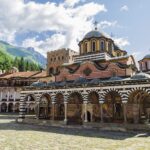
Nature lovers may wish to explore the famous Rila Monastery, one of Bulgaria’s most important landmarks and a UNESCO World Heritage Site. Nestled among the mountains, it provides an unforgettable glimpse into Bulgaria’s religious and cultural heritage.
For visitors arriving outside the summer season, the country’s mountain regions offer another dimension entirely. Resorts such as Bansko, Borovets, and Pamporovo attract winter sports enthusiasts and provide some of southeastern Europe’s best-value skiing.
One of Bulgaria’s greatest strengths is diversity. Within a relatively small area, visitors can experience Roman ruins, Orthodox cathedrals, medieval towns, mountain scenery, ski resorts, Black Sea beaches, and vibrant modern cities. Eurovision may be the reason you arrive, but many visitors find themselves leaving with a much broader appreciation for the country itself.

Rupert’s Handy Travel Tips
Heading to Eurovision 2027 in Bulgaria? Rupert has a few practical suggestions that could save both money and stress during Eurovision week.
- Book accommodation in Burgas now. The host city is already confirmed, and hotel prices during Eurovision week can rise dramatically within days.
- If you’re flying, compare Burgas Airport with Varna and Sofia. Flexible routing plus a train or coach transfer can save a surprising amount of money.
- Don’t focus solely on the Grand Final. Semi-finals, jury shows, and rehearsals can be easier to obtain tickets for and often provide just as much entertainment.
- Allow extra time to explore Bulgaria. Destinations such as Plovdiv, Rila Monastery, Varna, and Nessebar are well worth adding to your itinerary.
- Public transport in Bulgaria is generally affordable, making it easy to explore beyond the Eurovision host city.
- Sign up to Eurofan, the official free fanclub, long before tickets go on sale. Without it you cannot enter the ticket sale at all.
Rupert’s verdict: Many fans will arrive for Eurovision and discover one of Europe’s most underrated destinations. Give yourself a few extra days and you’ll experience far more than just the contest itself.
Want to learn more about Rupert? Visit our Who is Rupert? page.




Browse hostels and budget-friendly stays around Bulgaria.
See hostelsGet help with compensation, eligible lounge access and disruption support.
Explore AirHelp+Use convenient luggage storage around Bulgaria between arrival, check-in and departure.
Check storageFrequently Asked Questions About Eurovision 2027 Bulgaria
Where will Eurovision 2027 be held?
Eurovision 2027 will be held in Burgas, on Bulgaria’s Black Sea coast, at Arena Burgas. The host city was announced on 13 August 2026. Four Bulgarian cities bid, with Burgas and Sofia reaching the final stage of the selection process.
Why is Bulgaria hosting Eurovision 2027?
Bulgaria earned the right to host the contest after winning Eurovision 2026 in Vienna, Austria. The winning entry was DARA’s “Bangaranga”, which secured Bulgaria’s first-ever Eurovision victory and the country’s first opportunity to host the contest.
Has Bulgaria ever hosted Eurovision before?
No. Eurovision 2027 will be the first Eurovision Song Contest ever staged in Bulgaria, making it a historic occasion for both the country and Bulgarian Eurovision fans.
What is the Eurovision 2027 venue?
The contest will be staged at Arena Burgas, a modern indoor arena that opened in 2023. Its venue and technical potential were among the main reasons the city won the hosting rights ahead of Sofia.
When will Eurovision 2027 take place?
Semi-Final One is on Tuesday 11 May 2027, Semi-Final Two on Thursday 13 May 2027, and the Grand Final on Saturday 15 May 2027. The host broadcaster is Bulgarian National Television (BNT).
When will Eurovision 2027 tickets go on sale?
Sale dates have not been announced yet. To take part you must register with Eurofan, the official free Eurovision fanclub, which is how fans enter the sale once it opens. Avoid unofficial resellers entirely.
Which airport should I fly into for Eurovision 2027?
Burgas Airport is the closest gateway to the host city and the arena. Varna Airport and Sofia Airport are workable alternatives if fares or schedules suit, with onward trains, coaches and domestic flights available.
Is Bulgaria expensive to visit?
Compared with many previous Eurovision host countries, Bulgaria is generally regarded as excellent value. Hotels, restaurants, public transport, attractions, and entertainment often cost considerably less than in many Western European destinations.
Can I travel to Bulgaria by train for Eurovision?
Yes. International rail services connect Bulgaria with Romania and Turkey, while domestic trains link major cities including Sofia, Plovdiv, Varna, and Burgas. Rail travel can be an enjoyable option for fans already exploring Europe.
How many days should I stay for Eurovision?
Most experienced Eurovision fans recommend staying for at least five to seven days. This allows time to attend rehearsals, fan events, semi-finals, Eurovision Village activities, and the Grand Final while also exploring the host city and wider country.
What else should I visit while in Bulgaria?
Popular destinations include Sofia, Plovdiv, Rila Monastery, Varna, Burgas, Nessebar, Sozopol, the Black Sea Coast, and the mountain resorts of Bansko and Borovets.
Further Reading & Related Guides
If you’re planning a trip for Eurovision 2027 Bulgaria, our Bulgaria Travel Guide is the perfect starting point for understanding the country, its regions, transport networks, and top attractions. Start with our host city guide to Burgas and our guide on how to get to Arena Burgas, then add the city guides to Sofia, Plovdiv, and Varna if you are extending your trip.
Visitors arriving by air should read our detailed Sofia Airport Transfers Guide, Varna Airport Transfers Guide, and Burgas Airport Transfers Guide. Rail travellers can continue with our International Rail Connections to Bulgaria Guide, while anyone planning to explore further afield should consider our guides to Rila Monastery, the Black Sea Coast, and Bulgaria’s Ski Resorts.
If you’re extending your stay before or after Eurovision week, Bulgaria’s combination of historic cities, UNESCO World Heritage Sites, mountain scenery, and Black Sea beaches makes it one of Europe’s most rewarding countries to explore.