Reviewed by our editorial team Updated
Why Visit Plovdiv from Sofia?
Travelling from Sofia to Plovdiv is one of the most rewarding journeys in Bulgaria. While many visitors spend their entire trip in the capital, those who make the journey east discover a city that feels completely different from Sofia in both atmosphere and character. Plovdiv is widely regarded as Bulgaria’s cultural capital and is one of the oldest continuously inhabited cities in Europe, with evidence of settlement stretching back thousands of years.
The city’s greatest attraction is its remarkable blend of ancient history and modern creativity. Visitors can walk through the spectacular Ancient Theatre of Philippopolis, explore the remains of the Roman Stadium, wander the cobbled streets of Plovdiv Old Town, and then spend the evening in the lively bars, restaurants, and cafés of the Kapana Creative District. Few cities in southeastern Europe combine so many different historical periods within such a compact and walkable area.
One reason the route has become increasingly popular is convenience. Plovdiv sits approximately 145 kilometres east of Sofia, making it close enough for a comfortable day trip yet substantial enough to justify a longer stay. Excellent rail and road connections mean travellers can move between the two cities quickly and affordably, while frequent departures make planning straightforward.
The route also appeals to a wide range of travellers. History enthusiasts come for the Roman monuments. Food lovers arrive to explore Bulgaria’s growing culinary scene. Wine enthusiasts use the city as a gateway to the famous Thracian Valley, while photographers are drawn by the colourful architecture and panoramic viewpoints scattered across the city’s hills.
Whether you are planning a day trip, a weekend break, or the start of a wider Bulgarian adventure, Plovdiv is one of the easiest and most rewarding destinations to reach from Sofia.
Sofia to Plovdiv at a Glance
| Method | Typical Journey Time | Typical Cost | Best For |
|---|---|---|---|
| Train | 2 hr 20 min to 3 hr | Low | Rail travellers, Interrail users |
| Bus | 2 hr to 2 hr 30 min | Low | Budget travellers |
| Car | 1 hr 45 min to 2 hr | Medium | Flexibility |
| Private Transfer | 1 hr 45 min to 2 hr | High | Convenience |
| Sofia Airport Transfer | 2 hr to 2 hr 30 min | Varies | International arrivals |
See hotel options and places to stay in Plovdiv.
Browse hotelsBrowse apartments, holiday homes and self-catering stays in Plovdiv.
View rentalsSee hotel prices from multiple booking sites in one search.
Compare ratesTaking the Train from Sofia to Plovdiv
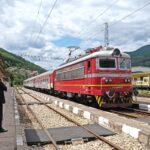
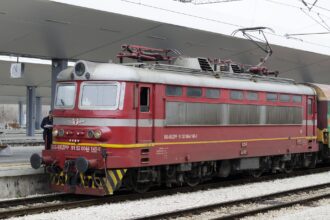
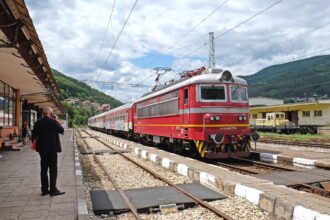
For many travellers, the Sofia to Plovdiv train is the best combination of cost, comfort, convenience, and authenticity. Bulgaria’s rail network may not be as modern as those found in parts of Western Europe, but the route between the country’s two largest cities remains one of the strongest services in the national system.
Most trains depart from Sofia Central Station, Bulgaria’s largest railway station and the hub of the national rail network. The station is conveniently connected to the Sofia Metro, making it easy to reach from most parts of the city. Travellers staying near popular areas such as Vitosha Boulevard, Serdika, or the city centre can usually reach the station quickly using Metro Line 1 or Line 2.
One advantage of travelling by train is frequency. Multiple departures operate throughout the day, allowing considerable flexibility. Both fast and stopping services run on the route, with journey times generally ranging from around 2 hours 20 minutes to 3 hours, depending on the service selected.
Ticket prices remain remarkably affordable by European standards. Even travellers purchasing tickets shortly before departure will often find fares significantly cheaper than equivalent rail journeys in Western Europe. This makes the route particularly attractive for backpackers, budget travellers, and Interrail users.
The journey itself offers an interesting glimpse into the Bulgarian countryside. After leaving Sofia, trains gradually move eastwards across agricultural landscapes, passing smaller towns and villages before approaching the Thracian Plain surrounding Plovdiv. While not among Europe’s great scenic railways, the route provides an enjoyable and relaxing alternative to motorway travel.
First-class accommodation is available on many services and is generally worth considering given the relatively small difference in ticket price. Compartments are often quieter and less crowded, particularly during busy periods.
One of the biggest advantages of the train is city-centre to city-centre convenience. Unlike air travel, there are no lengthy security queues, baggage restrictions, or airport transfers. Passengers simply arrive at the station, board the train, and travel directly to Plovdiv Railway Station, which sits relatively close to the city’s main attractions.
For visitors holding an Interrail Pass, the route is particularly attractive because reservations are generally straightforward and inexpensive compared with many Western European countries. Bulgaria remains one of the best-value Interrail destinations on the continent.
The train is especially suitable for travellers planning to explore Plovdiv Old Town, Kapana, or the city’s museums and cultural attractions. Upon arrival, taxis are readily available, while many hotels can be reached within a short drive or moderate walk from the station.
For most visitors travelling between Bulgaria’s two largest cities, the train remains the option against which all other transport methods should be judged.
Taking the Bus from Sofia to Plovdiv
For travellers prioritising speed and simplicity, the Sofia to Plovdiv bus is often the strongest alternative to the train. Bulgaria has a well-developed intercity coach network and the route between the country’s two largest cities is one of the busiest in the nation. Frequent departures, competitive pricing, and relatively short journey times make the bus a popular choice among both locals and visitors.
Most services depart from Sofia Central Bus Station, which is located directly beside Sofia Central Railway Station. This makes the bus station exceptionally easy to reach using the Sofia Metro, local buses, taxis, and airport transport links. International visitors arriving at Sofia Airport often find the bus particularly convenient because they can simply take the Metro into the city and continue onwards without complicated transfers.
Journey times typically range from around 2 hours to 2 hours 30 minutes, making buses slightly faster than many rail services. The reason is simple. Coaches use the modern A1 Trakia Motorway, allowing them to maintain higher average speeds than trains on much of the route.
The frequency of departures is one of the biggest advantages. During busy periods there can be multiple services every hour, meaning travellers rarely need to structure their day around a specific departure. If you miss one coach, another is often available relatively soon afterwards.
Modern coaches operating between Sofia and Plovdiv are generally comfortable. Most provide air conditioning, luggage storage beneath the vehicle, and allocated seating. However, facilities vary between operators, so travellers should not automatically assume the presence of Wi-Fi, charging sockets, or onboard toilets.
One factor worth considering is traffic. While the motorway is generally efficient, holiday weekends, summer travel periods, and major events can cause delays. Unlike trains, buses remain vulnerable to road congestion. During particularly busy periods, journey times can occasionally exceed expectations.
Upon arrival in Plovdiv, buses generally terminate at one of the city’s central transport hubs, placing passengers within easy reach of taxis, local buses, and many city-centre hotels. Travellers heading to Kapana or Plovdiv Old Town can usually reach their accommodation quickly from the arrival point.
For visitors looking for a balance between affordability and speed, the bus remains one of the strongest transport options available.

Check Bus Routes for Sofia with Busbud
If your plans include travelling by bus to or from Sofia, Busbud provides a convenient way to search routes and compare tickets.
Instead of checking individual operator websites, you can see several options together and choose the journey that best fits your itinerary.
Driving from Sofia to Plovdiv
Driving from Sofia to Plovdiv is the fastest and most flexible transport option available. The route follows the modern A1 Trakia Motorway, one of Bulgaria’s most important roads, and connects the capital directly with the country’s second-largest city.
Under normal conditions, the journey takes approximately 1 hour 45 minutes to 2 hours, making driving noticeably faster than both rail and coach travel. For travellers planning wider exploration beyond Plovdiv, the convenience of having a vehicle can be a major advantage.
Leaving Sofia is generally straightforward. Most drivers join the A1 Trakia Motorway on the eastern side of the capital before following it almost all the way to Plovdiv. The motorway is modern, well-maintained, and significantly easier to navigate than many travellers expect. Unlike some Balkan countries where road conditions can vary dramatically, this particular corridor is one of Bulgaria’s strongest transport links.
Visitors hiring a car should ensure they have a valid Bulgarian vignette, which functions as the country’s motorway toll system. Rental vehicles normally include this automatically, but travellers should always verify the details before departing.
One advantage of driving is the ability to explore attractions along the way. Rather than travelling directly between Sofia and Plovdiv, visitors can detour towards smaller towns, monasteries, viewpoints, and wineries located within the Thracian Valley. This flexibility is impossible when travelling by train or coach.
Parking in Plovdiv requires some planning. Modern city-centre hotels frequently offer parking facilities, but accommodation within Plovdiv Old Town can present challenges due to narrow historic streets, restricted access areas, and limited parking availability. Visitors staying in the Old Town should check parking arrangements before arrival.
Driving becomes particularly attractive for travellers planning onward exploration of destinations such as Bachkovo Monastery, Asen’s Fortress, the Rhodope Mountains, or the vineyards surrounding Plovdiv. In these cases, a car often unlocks attractions that are difficult to access using public transport.
For travellers seeking maximum freedom and the fastest overall journey time, driving remains a highly attractive option.
Private Transfers Between Sofia and Plovdiv
For visitors who value convenience above all else, a private transfer from Sofia to Plovdiv offers the simplest travel experience available. Rather than navigating stations, purchasing tickets, or worrying about timetables, passengers are collected directly from their chosen location and transported to their final destination.
Private transfers are particularly popular among families, business travellers, older visitors, and travellers arriving on long-haul flights. After spending hours travelling internationally, many people appreciate the ability to simply meet a driver and continue directly to Plovdiv without additional logistics.
The journey time is broadly similar to driving independently, typically taking around 1 hour 45 minutes to 2 hours depending on traffic conditions. Because transfers operate door-to-door, the total travel time can actually be competitive with trains and coaches once station transfers and waiting times are considered.
One major advantage is flexibility. Drivers can collect passengers from Sofia Airport, city-centre hotels, railway stations, apartment rentals, or virtually any other location. Likewise, passengers can be dropped directly at accommodation in Plovdiv Old Town, Kapana, the city centre, or elsewhere in the region.
Private transfers are also useful for groups. When the cost is divided among several passengers, the difference compared with train or coach travel often becomes less significant than many travellers expect. For groups of four or more, transfers can sometimes represent surprisingly good value.
Business travellers frequently favour private transfers because they provide predictable journey times and a professional environment. Many services offer modern vehicles, English-speaking drivers, and fixed pricing agreed in advance.
While private transfers are unquestionably more expensive than buses or trains, they deliver a level of comfort and convenience that many travellers consider worthwhile, particularly when arriving in Bulgaria for the first time.
Pre-Book a Sofia Airport Transfer
If you would prefer your onward journey to be organised before landing in Sofia, you can reserve a private airport transfer through Welcome Pickups.
Your driver meets you on arrival and takes you directly to your accommodation, which can make the first part of your visit considerably simpler.
Compare airport transfer prices in Sofia. You can also check another transfer provider before booking.
Travelling from Sofia Airport to Plovdiv
For many international visitors, the real question is not how to get from Sofia to Plovdiv, but how to get from Sofia Airport to Plovdiv. Because Sofia Airport offers far more international flights than Plovdiv Airport, thousands of visitors make this journey every year.
The good news is that the connection is straightforward, with several viable options available depending on budget, schedule, and travel preferences.
The most popular rail-based option involves taking the Sofia Metro from the airport to Sofia Central Station. Metro Line 4 connects the airport with the city centre, allowing passengers to reach the railway station relatively quickly and inexpensively. From there, travellers can board one of the many trains operating towards Plovdiv throughout the day.
This option is particularly attractive for Interrail travellers and visitors already planning to use Bulgaria’s rail network. The main drawback is the number of steps involved. Travellers must navigate the Metro, reach the station, purchase tickets if necessary, and then board the train.
Coaches provide another strong option. After reaching Sofia Central Bus Station, passengers can choose from numerous departures towards Plovdiv. Because buses are generally more frequent than trains and often slightly faster, many visitors find this the simplest public transport solution.
Private transfers are arguably the easiest overall option. A driver meets passengers directly at the arrivals hall before travelling straight to Plovdiv via the A1 Trakia Motorway. There are no station transfers, no timetable concerns, and no luggage issues. For families or travellers carrying substantial luggage, this convenience can be invaluable.
Car hire represents another practical solution, particularly for visitors intending to explore the Thracian Valley, Rhodope Mountains, or wider regions of Bulgaria. Collecting a rental car directly at the airport allows travellers to begin their journey immediately without entering Sofia itself.
For most independent travellers, the choice ultimately comes down to train versus coach. For most families, groups, and business travellers, a direct transfer from Sofia Airport to Plovdiv is often the most comfortable and stress-free option available.
Can You Visit Plovdiv as a Day Trip from Sofia?
One of the most common questions travellers ask is whether Plovdiv is worth visiting as a day trip from Sofia. The answer is an emphatic yes. Thanks to the relatively short distance between the two cities and the excellent transport links connecting them, Plovdiv is arguably the best day trip available from the Bulgarian capital.
The key advantage is travel time. Whether travelling by train, bus, car, or private transfer, most visitors can reach Plovdiv in around two to three hours. This allows a full day of sightseeing without the need to change hotels or carry luggage. Early departures from Sofia and evening return services make the journey entirely practical.
A typical day-trip itinerary might begin with an early departure from Sofia Central Station or Sofia Central Bus Station, arriving in Plovdiv before mid-morning. From there, visitors can spend the day exploring the city’s most famous attractions on foot. The compact nature of the historic centre means that many of the highlights sit within a relatively small area.
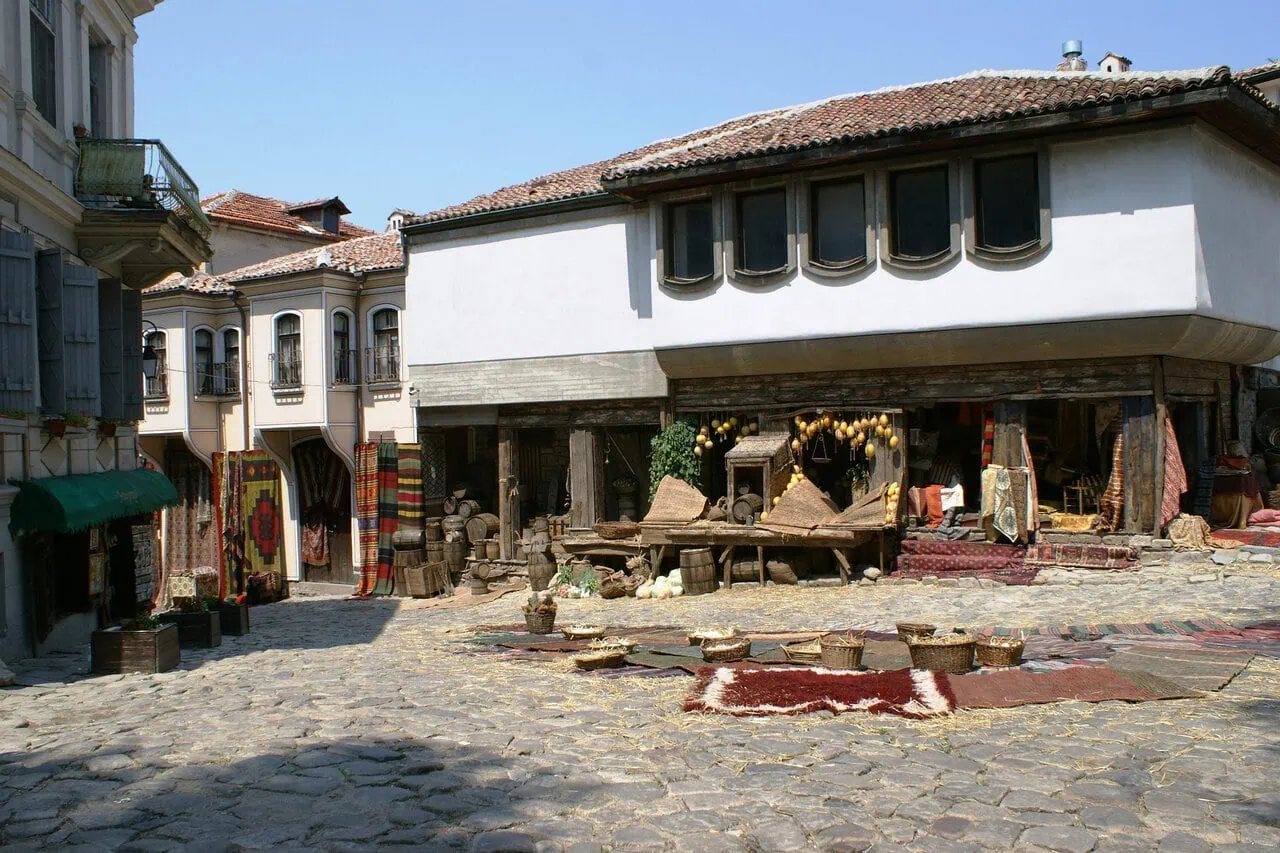
Most visitors start in Plovdiv Old Town, one of the best-preserved historic districts in southeastern Europe. The district’s cobbled streets, colourful National Revival houses, churches, galleries, and hilltop viewpoints create an atmosphere completely different from Sofia. Walking through the Old Town feels more like exploring a living museum than a modern city centre.
The spectacular Ancient Theatre of Philippopolis is usually the centrepiece of any visit. Built during the Roman era and remarkably well preserved, it remains one of Bulgaria’s most impressive archaeological sites. The theatre continues to host concerts and performances today, creating a rare combination of ancient history and modern cultural life.
From there, many visitors continue to the remains of the Roman Stadium, which sits beneath the modern city centre. Unlike many archaeological sites hidden behind fences, the stadium is integrated directly into daily life, allowing visitors to see Roman history emerging from beneath contemporary Plovdiv.
Lunch is often spent in the vibrant Kapana Creative District. Once a neglected quarter of workshops and narrow streets, Kapana has become one of Bulgaria’s most fashionable neighbourhoods. Independent cafés, restaurants, bars, art galleries, and boutique shops create a lively atmosphere that contrasts beautifully with the historic character of the Old Town.
Visitors with more time often climb to Nebet Tepe, one of Plovdiv’s famous hills. The viewpoint offers panoramic views across the city and provides an excellent perspective on how Plovdiv developed across multiple historical periods.
The biggest limitation of a day trip is simply time. While it is possible to see the major highlights in a single day, many visitors leave wishing they had booked an overnight stay. Plovdiv’s atmosphere changes considerably after dark, particularly around Kapana, where restaurants, bars, and cultural venues become increasingly lively during the evening.
If your schedule only allows a day trip, Plovdiv is absolutely worth the effort. If time permits, however, spending at least one night in the city provides a much deeper appreciation of what makes it one of Bulgaria’s most fascinating destinations.
Search flights and useful route combinations for your trip.
View flightsChoose an Airalo eSIM and arrange mobile data before you arrive.
Browse eSIMsArrange a private airport pickup for your trip to Plovdiv.
Check transfersArriving in Plovdiv
Regardless of whether you arrive by train, bus, car, or private transfer, understanding the city’s layout will help you begin exploring more efficiently.
Passengers arriving by train will use Plovdiv Railway Station, one of Bulgaria’s busiest rail hubs. Located south of the city centre, the station provides easy access to taxis, local buses, and onward rail connections. Most visitors can reach the central areas of Plovdiv within a short taxi journey.
Travellers arriving by coach generally use one of the city’s central bus facilities, which are also well connected to the surrounding districts. Taxis are widely available and relatively inexpensive compared with many Western European cities.
One thing that surprises first-time visitors is how compact the main tourist areas are. The historic attractions, shopping districts, Kapana, and city centre all sit within relatively close proximity to one another. Once you reach the centre, much of the city can be explored comfortably on foot.
Plovdiv Old Town sits on elevated ground and contains numerous cobbled streets. Visitors staying within the historic district should be prepared for some uphill walking and may find rolling large suitcases challenging. This is one reason why taxis and private transfers remain popular, particularly for those staying in boutique hotels within the Old Town.
The nearby Kapana Creative District is considerably flatter and has become one of the city’s most popular accommodation areas. Its central location places visitors within walking distance of the Roman sites, shopping streets, restaurants, and nightlife.
Visitors arriving by car should check parking arrangements before travelling. While modern hotels often provide parking facilities, access within parts of the historic centre can be restricted and spaces can be limited.
One of Plovdiv’s greatest strengths is that once you arrive, transport becomes largely unnecessary. Unlike many European cities, the main attractions are concentrated within a walkable area, allowing visitors to spend more time exploring and less time navigating.
Which Option Is Best?
There is no single best way to travel from Sofia to Plovdiv, as the ideal choice depends entirely on your priorities.
For most visitors, the train offers the best overall balance of cost, comfort, and convenience. The city-centre to city-centre nature of rail travel, combined with affordable fares and regular departures, makes it the option that suits the widest range of travellers. Rail enthusiasts and Interrail users will naturally find this the most appealing choice.
Travellers seeking the quickest public transport option often favour the bus. Coaches are generally slightly faster than trains and operate with impressive frequency throughout the day. They are particularly useful for travellers making spontaneous journeys who do not want to plan around a fixed timetable.
Those who value flexibility above all else should consider driving. Having a car opens up opportunities to explore the Thracian Valley, nearby monasteries, mountain villages, and vineyards that are difficult to reach using public transport. For travellers planning a wider Bulgarian itinerary, this flexibility can be invaluable.
For families, groups, business travellers, and anyone arriving directly at Sofia Airport, private transfers often represent the least stressful option. The ability to travel directly from door to door eliminates many of the small inconveniences associated with trains and buses.
If budget is your primary concern, both trains and buses provide excellent value. If comfort and simplicity matter most, private transfers are hard to beat. If exploration beyond Plovdiv is part of the plan, a car may be the best investment.
The encouraging reality is that there are no bad choices. The transport links between Sofia and Plovdiv are among the strongest in Bulgaria, making one of the country’s most rewarding city breaks accessible regardless of how you choose to travel.

Rupert’s Handy Travel Tips
Travelling between Sofia and Plovdiv is one of Bulgaria’s easiest journeys, but Rupert has picked up a few useful tricks that can make the trip even smoother.
- For most travellers, the train offers the best overall balance of cost, comfort, and convenience. The stations are centrally located and there is no need to worry about motorway traffic.
- If you’re arriving at Sofia Airport with luggage, don’t underestimate the convenience of a direct transfer. The journey is relatively short and can save considerable time and effort.
- Visitors planning a day trip should aim to arrive in Plovdiv before 10am. This provides enough time to explore the Ancient Theatre, Old Town, Kapana, and still enjoy a relaxed meal before returning to Sofia.
- Accommodation inside Plovdiv Old Town is incredibly atmospheric, but the cobbled streets and hills can be challenging with large suitcases. Some visitors may prefer staying around Kapana instead.
- If you have an extra day available, consider exploring the nearby Thracian Valley, one of Bulgaria’s most important wine regions and an easy extension to any Plovdiv itinerary.
Rupert’s verdict: If you only visit one city outside Sofia during your time in Bulgaria, make it Plovdiv. The journey is easy, affordable, and rewards travellers with some of the country’s best history, food, and culture.
Want to learn more about Rupert? Visit our Who is Rupert? page.




Frequently Asked Questions
How far is Plovdiv from Sofia?
Plovdiv is located approximately 145 kilometres east of Sofia. Depending on your chosen transport method, the journey usually takes between 1 hour 45 minutes and 3 hours.
What is the fastest way to get from Sofia to Plovdiv?
Driving or using a private transfer is generally the fastest option, with journey times typically around 1 hour 45 minutes to 2 hours via the A1 Trakia Motorway.
Is the train from Sofia to Plovdiv worth it?
Yes. The Sofia to Plovdiv train is affordable, comfortable, and provides a direct city-centre to city-centre connection. For many travellers, it is the best overall transport option.
How much does the Sofia to Plovdiv train cost?
Ticket prices vary depending on train type and class of travel, but rail travel in Bulgaria remains inexpensive compared with most Western European countries.
Can I travel directly from Sofia Airport to Plovdiv?
Yes. Private transfers and hire cars provide direct journeys from Sofia Airport to Plovdiv. Travellers can also use the Metro to reach Sofia’s rail or bus stations before continuing by public transport.
Is Plovdiv worth a day trip from Sofia?
Absolutely. The city’s compact historic centre, Ancient Theatre, Roman Stadium, Kapana Creative District, and Old Town make it one of the best day trips available from Sofia.
How long should I spend in Plovdiv?
A full day allows visitors to see the major attractions, but many travellers find that one or two nights provides a much better experience and allows time to enjoy the city’s atmosphere after dark.
Can I use an Interrail Pass between Sofia and Plovdiv?
Yes. BDZ services between Sofia and Plovdiv are included within the Interrail network, although reservation requirements should always be checked before travelling.
Which is better, Sofia or Plovdiv?
The two cities offer very different experiences. Sofia provides the energy of a capital city, while Plovdiv is generally considered more historic, atmospheric, and relaxed. Many visitors enjoy combining both.
What is the best area to stay in Plovdiv?
Most visitors choose either Plovdiv Old Town for its historic atmosphere or the Kapana Creative District for its restaurants, bars, and central location.
Further Reading & Related Guides
If you’re planning to spend time in Bulgaria’s cultural capital, our Things to Do in Plovdiv Guide explores the city’s Roman monuments, historic districts, museums, viewpoints, and food scene in far greater detail. Visitors continuing their journey should also read our Best Things To Do In Sofia Guide, which covers the Bulgarian capital’s attractions, transport network, and neighbourhoods.
Travellers arriving internationally may find our Sofia Airport Transfers Guide useful, while rail enthusiasts should continue with our Bulgaria Interrail Pass Guide, International Rail Connections to Bulgaria Guide, and Night Trains in Bulgaria Guide. Before travelling, don’t forget to compare connectivity options in our eSIM Guide so you’re connected throughout your Bulgarian adventure.